
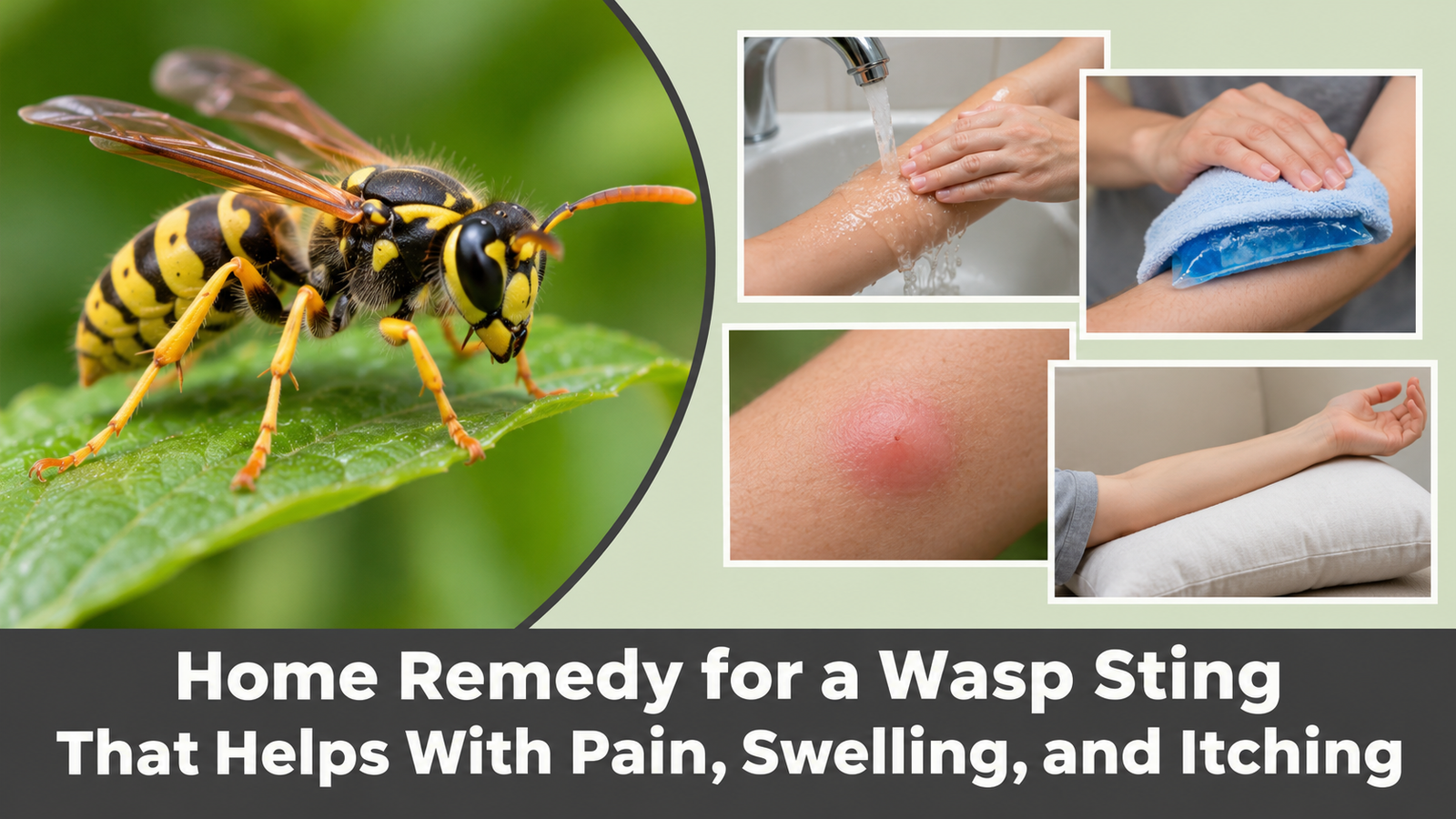
The best home remedy for a mild wasp sting is to wash the area with soap and water, then apply a cold compress for 10 to 20 minutes. Use an ice pack wrapped in a towel or a clean cloth soaked in cold water. If the sting is on your arm or leg, raise the limb while you rest. These steps can help when pain, itching, and swelling stay near the sting. If you develop trouble breathing, throat or tongue swelling, or feel faint, call emergency services immediately and use an epinephrine auto-injector if available.
What to Do Immediately After a Wasp Sting
Move away from the area where you were stung, especially if you see other wasps nearby. Wasps can sting more than once and usually leave no stinger behind. If you can see a stinger sticking out of the skin, remove it promptly. If you see only a small puncture mark, leave the skin alone and move on to cleaning and cooling the area.
Wash the Sting With Soap and Water
Gently wash the sting and the surrounding skin with soap and running water. Pat it dry with a clean towel. The skin may already feel tender, so use a light touch when washing it.
If you were stung on a finger, hand, or wrist, remove rings, bracelets, or a watch early. A ring that slides off easily right after the sting can become difficult to remove once the finger swells. Get medical help promptly if a stuck ring is making the finger numb or changing its color.
Apply a Cold Compress for 10 to 20 Minutes
Wrap an ice pack in a thin towel and rest it over the sting. A cold, damp washcloth also works if you have no ice. Leave the compress in place for 10 to 20 minutes, then take it off. Keep a layer of cloth between the ice and your skin.
Repeat as needed if the area starts throbbing or feels swollen again. If the sting is on your hand, prop your forearm on a pillow while you use the compress. For a sting on the foot or ankle, sit down and support the leg so the swollen area is raised.
How to Relieve Wasp Sting Pain, Swelling, and Itching
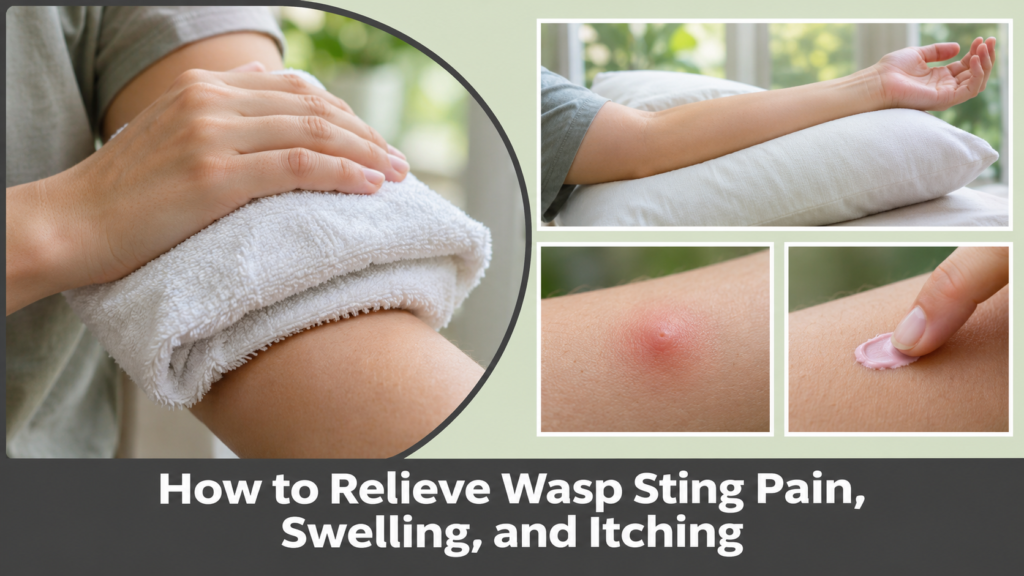
A wasp sting can burn at first and become itchier later. Choose a treatment based on what bothers you most. A cold compress is a good first step for pain and swelling. If itching persists, a topical anti-itch product or an oral antihistamine may help.
| Main symptom | What you can try at home |
|---|---|
| Burning or throbbing pain | Apply a wrapped cold pack for 10 to 20 minutes. Consider acetaminophen or ibuprofen if you can take it safely. |
| Swelling around the sting | Use a cold compress, elevate the affected arm or leg, and remove tight jewelry early. |
| Itching around the sting | Try calamine lotion or hydrocortisone cream according to the label. An oral antihistamine is another option if appropriate for you. |
For Pain and Swelling
Start with cold and elevation. If the sting still hurts enough to interfere with everyday activities, an over-the-counter pain reliever such as acetaminophen or ibuprofen may help. Follow the package directions and ask a pharmacist if you’re unsure which product is safe with your health conditions or other medicines.
Pay attention to how the swelling affects movement. A sting on a knuckle or ankle can feel worse when you bend the joint or put on a shoe. If swelling makes it hard to move your hand, walk, or use the affected area, seek medical advice.
For Itching
For itch confined to the sting area, try calamine lotion or a thin layer of over-the-counter hydrocortisone cream on intact skin. Follow the product label for how often to apply it and how long to use it. Avoid scratching, which can break the skin and increase the risk of infection.
An oral antihistamine such as cetirizine or loratadine may help if the itch persists. Ask a pharmacist before giving an antihistamine to a young child or if you’re unsure whether it’s suitable for you. If hives appear away from the sting, seek emergency help because this can signal a more serious allergic reaction.
Do Vinegar, Baking Soda, or Toothpaste Help a Wasp Sting?
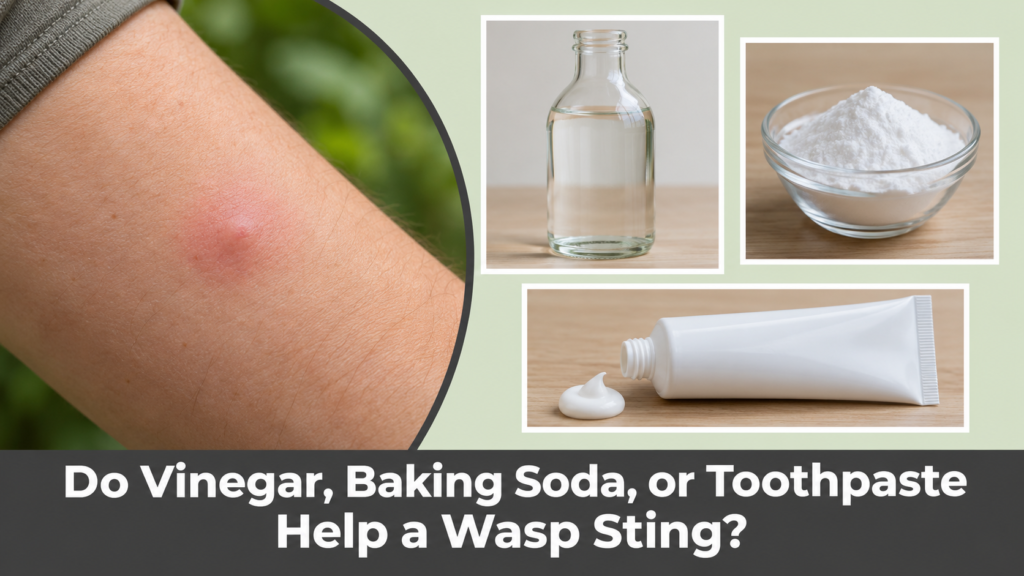
Vinegar, baking soda, and toothpaste often come up in searches for a natural remedy for wasp stings. Soap, water, and a cold compress are the simplest treatment to start with. You can use them right away, even if you’re unsure which insect stung you.
Vinegar and Toothpaste
The idea behind vinegar is that an acid applied to the skin will neutralize wasp venom. The wasp injects venom beneath the skin, so applying vinegar to the surface is an unreliable way to treat the sting. Skip toothpaste as well and reach for a cold washcloth if the area is burning.
If you’ve already applied a household product and it makes the area sting more, gently wash it off with soap and water. Then apply a cold compress.
Baking Soda Paste
First-aid guidance differs on baking soda. Mayo Clinic lists baking soda paste as one option for mild insect-sting symptoms, while the NHS advises against using home remedies such as bicarbonate of soda. A cold compress is a practical first choice, and calamine or hydrocortisone are options if itching is your main concern.
How Long Does Wasp Sting Swelling Last?
Pain, itching, and swelling from a mild wasp sting often ease within a day or two. Some people develop a large local reaction, where swelling extends well beyond the sting spot. For example, a sting on a finger may cause much of the hand to swell. This swelling can increase over the first two or three days and take a week or longer to settle.
Signs the Sting May Be Infected
Swelling in the first couple of days can come from the reaction to the sting itself. Get medical advice if pain and warmth increase several days later, especially if you had started to feel better. Pus, fever, or worsening swelling are also reasons to get the area checked.
Skin color changes can be subtle on brown or black skin. Pay attention to increasing tenderness, warmth, swelling, and discharge as well as any visible change in color. If you’re unsure whether the sting is improving, a photo taken under the same lighting can help you compare it from day to day.
When a Wasp Sting Needs Medical Care
Call emergency services immediately if the person has trouble breathing, wheezing, throat tightness, difficulty swallowing, swelling of the lips or tongue, dizziness, fainting, or widespread hives after a sting. Vomiting or stomach cramps alongside other allergic symptoms can also signal a severe reaction. Anaphylaxis can happen without a rash.
If an epinephrine auto-injector is available, use it promptly according to the device instructions and call emergency services. The person still needs emergency assessment if they feel better after the injection. An oral antihistamine can help with mild local itching, but epinephrine is the first-line treatment for anaphylaxis.
Seek urgent medical advice for a sting in the mouth or throat, near the eye, or after multiple stings. Also seek urgent advice if you’ve previously had a serious reaction to an insect sting, or if your symptoms are worsening or failing to improve. Swelling in the mouth or throat can affect breathing, so call emergency services immediately if swallowing or breathing becomes difficult.
Frequently Asked Questions
1. What is the fastest home remedy for a wasp sting?
After washing the area, apply a cold compress for 10 to 20 minutes. If you don’t have an ice pack, soak a clean washcloth in cold water and wring it out. Repeat as needed for pain or swelling.
2. Can I put ice directly on a wasp sting?
Wrap the ice or cold pack in a thin towel before applying it. The towel protects your skin while still letting the area cool. A cold, damp cloth is another option.
3. Why is my wasp sting more swollen the next day?
A large local reaction can build over the first two or three days, so swelling may be more noticeable the next morning. Get medical advice if it keeps worsening, becomes increasingly painful several days later, or comes with fever or pus.
4. What can I put on a wasp sting on a child?
For a mild reaction, wash the area and apply a cold, damp cloth or a wrapped cold pack. Before using medicated creams, antihistamines, or pain relievers, check the product’s age guidance and ask a pharmacist or clinician if you’re unsure.
5. Can a wasp sting itch for several days?
Yes. Itching can continue while the local reaction settles, especially if the swelling covers a larger area. A cool compress or calamine lotion can help. If an itchy rash or hives appears elsewhere on the body soon after the sting, seek emergency help.
