

Ground wasps are a group of stinging insects that build their nests in soil, making them a hidden hazard in yards, gardens, and outdoor recreational areas. While these wasps play an important role in controlling pests, their ability to sting—and their aggressive defense of their nests—can make them a threat to humans and pets.
This article explains what ground wasps are, their sting behavior, symptoms of a sting, potential dangers, and how to avoid or manage encounters with them.
Understanding Ground Wasps
Ground wasps are a broad category of wasps that build their nests in burrows, old rodent holes, or directly in loose soil. They may belong to various species, such as yellow jackets (Vespula spp.) or digger wasps (Sphecidae and Crabronidae families). While not all ground-nesting wasps are aggressive, some—particularly yellow jackets—are highly defensive.
Identification of Ground Wasps
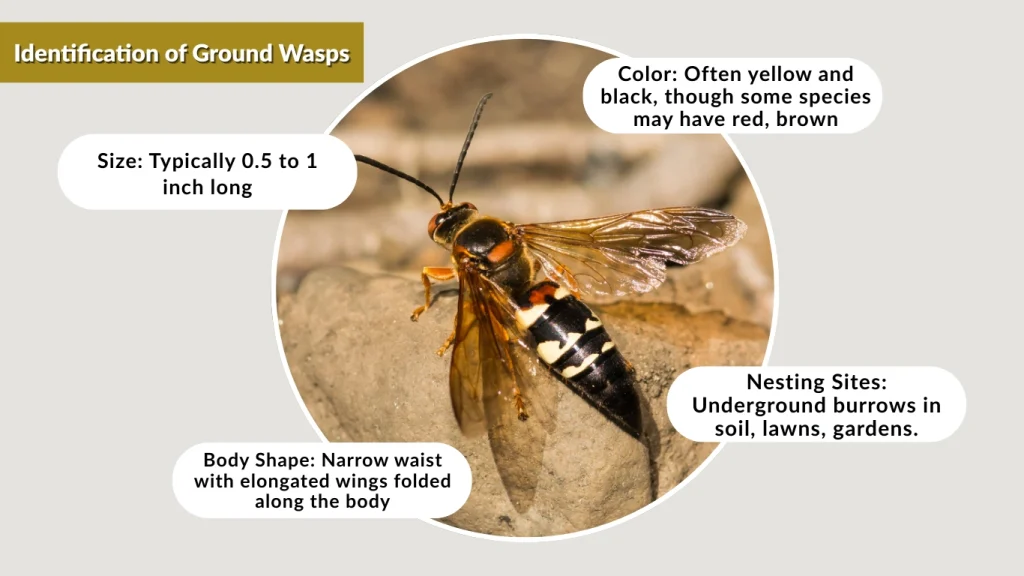
- Size: Typically 0.5 to 1 inch long
- Color: Often yellow and black, though some species may have red, brown, or metallic blue coloring
- Body Shape: Narrow waist with elongated wings folded along the body
- Nesting Sites: Underground burrows in soil, lawns, gardens, or sandy areas
- Behavior: Increased activity around nest entrances during warm daylight hours
Do Ground Wasps Bite or Sting?
Ground wasps do not bite humans in the way some insects do. Instead, they sting using a venomous stinger. Some people confuse the term “bite” with “sting,” but wasps primarily use their jaws for feeding or nest-building—not for attacking humans.
When defending their nest, ground wasps can sting multiple times because, unlike bees, their stingers do not remain in the skin.
Symptoms of a Ground Wasp Sting
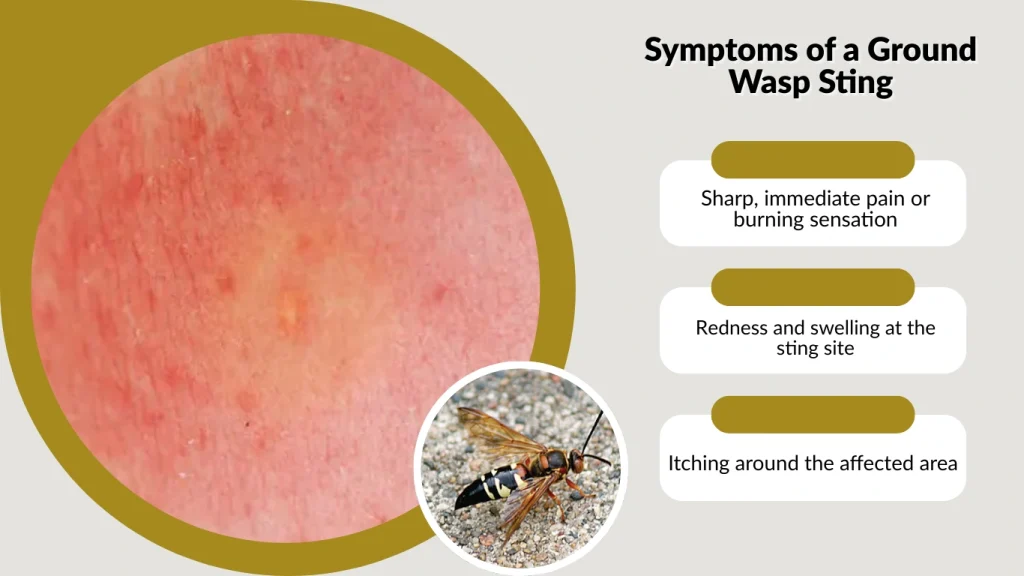
A ground wasp sting can cause symptoms that range from mild discomfort to severe allergic reactions.
Common Symptoms
- Sharp, immediate pain or burning sensation
- Redness and swelling at the sting site
- Itching around the affected area
Moderate to Severe Symptoms
- Increased swelling spreading from the sting site
- Headache, dizziness, or nausea
- Hives or rash in other parts of the body
Severe Allergic Reaction (Anaphylaxis)
- Difficulty breathing
- Swelling of the face, throat, or tongue
- Rapid heartbeat
- Drop in blood pressure leading to dizziness or fainting
Are Ground Wasps Dangerous?
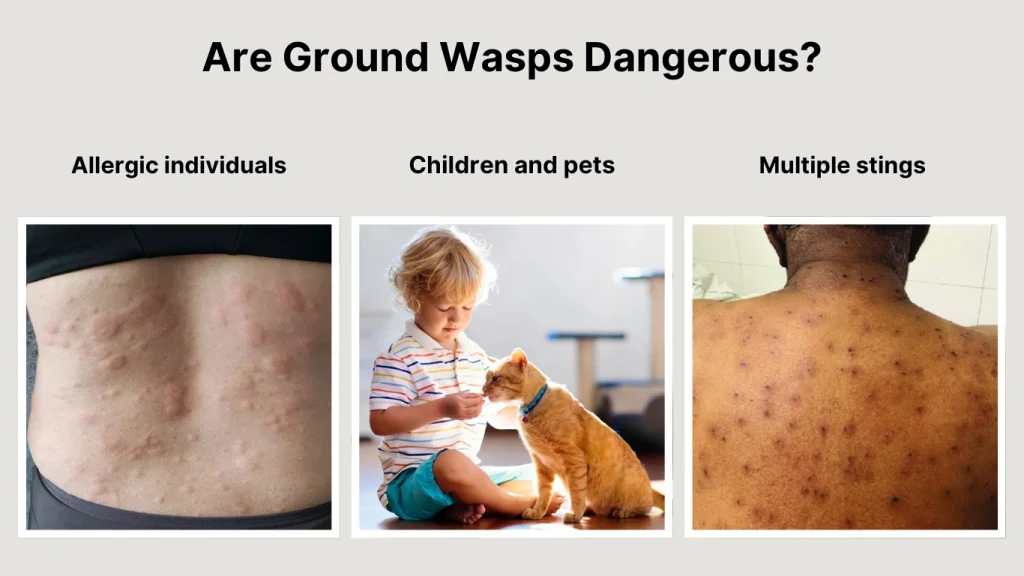
The danger of ground wasps depends on the species, the situation, and an individual’s reaction to stings.
For most healthy adults, a single sting causes temporary pain and swelling. However, ground wasps can be dangerous for:
- Allergic individuals — Risk of anaphylaxis
- Children and pets — Smaller body size means venom affects them more quickly
- Multiple stings — Can cause venom overload, leading to systemic symptoms
Yellow jackets, in particular, are aggressive and may swarm in large numbers if their nest is disturbed, making them more dangerous than solitary ground wasps.
Why Ground Wasps Sting
Ground wasps typically sting for self-defense, not to hunt humans. They will become aggressive when:
- Their nest is disturbed by mowing, digging, or walking nearby
- They feel threatened by sudden movements or vibrations
- A predator tries to raid their nest
First Aid for a Ground Wasp Sting

1. Move to a Safe Area
As soon as you’re stung, calmly but quickly leave the area where the wasp attack occurred. Ground wasps, especially yellow jackets, can release pheromones that attract other wasps to join in the defense. Staying near the nest increases the chance of multiple stings.
2. Clean the Sting Site
Gently wash the affected area with soap and cool water for at least 30 seconds. This removes dirt, venom residue, and bacteria, reducing the risk of infection. Avoid using hot water, as it can increase swelling and spread venom faster through the skin.
3. Reduce Swelling and Pain
Place a cold pack, wrapped in a thin cloth, on the sting site for 10–15 minutes at a time. This constricts blood vessels, reduces pain, and minimizes swelling. Rest for a few minutes between applications, and if the sting is on a limb, elevate it above heart level to slow venom circulation.
4. Relieve Itching and Discomfort
Over-the-counter remedies such as antihistamine tablets (diphenhydramine) or topical creams containing hydrocortisone or calamine can help control itching, redness, and swelling. Avoid scratching the sting site, as this can break the skin and introduce bacteria.
5. Watch for Allergic Reactions
Stay alert for at least 30 minutes after being stung, especially if you have a history of allergic reactions. Signs of a severe reaction (anaphylaxis) include trouble breathing, swelling of the face or throat, rapid heartbeat, dizziness, and hives spreading across the body. If any of these symptoms occur, call emergency services immediately and, if available, use an epinephrine auto-injector (EpiPen).
How to Avoid Ground Wasp Stings
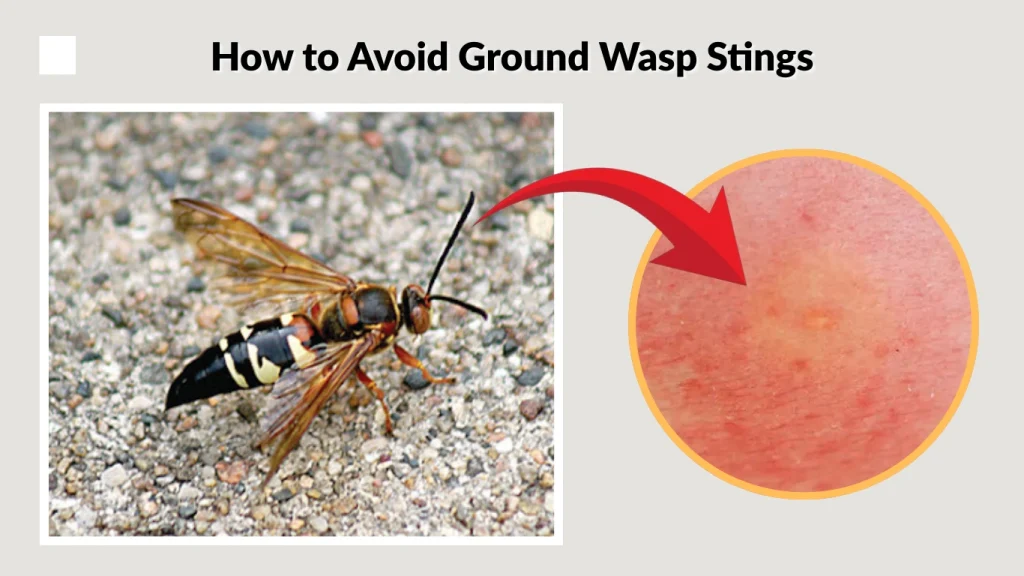
Locate and Avoid Nests
Pay attention to areas with constant wasp activity. If you see multiple wasps entering and exiting a small hole in the ground, it’s likely a nest entrance. Avoid walking, mowing, or disturbing these areas, especially during peak daytime activity.
Wear Protective Clothing
When working or walking in grassy or sandy areas, wear closed-toe shoes, long pants, and socks to protect your skin. If you know there are wasps in the area, a light, long-sleeved shirt can add an extra layer of protection against unexpected stings.
Maintain Your Yard
Ground wasps often take over abandoned burrows or loose soil areas. Regularly fill in rodent holes, keep grass trimmed, and remove excess mulch or debris that can provide cover for nests. This makes your yard less attractive to nesting wasps.
Avoid Sweet Scents Outdoors
Wasps are strongly attracted to sweet smells and sugary substances. When spending time outside:
- Skip heavily scented perfumes, hair sprays, or lotions.
- Keep food and drinks covered, especially soda cans or fruit juices.
- Clean up spills quickly to avoid attracting foraging wasps.
When to Remove a Ground Wasp Nest
If a nest is in a high-traffic area where children or pets play, it’s best to remove it. Professional pest control services are recommended because attempting to destroy a ground wasp nest without proper protection can result in multiple stings.
Final Thoughts
Ground wasps are a natural part of the ecosystem, controlling insect pests and pollinating plants. However, their aggressive defense of underground nests makes them potentially dangerous—especially for those allergic to stings.
By learning to identify, avoid, and respond to ground wasp encounters, you can reduce the risk of painful stings and keep your outdoor spaces safe.
FAQs
1. Do ground wasps die after stinging?
No. Ground wasps can sting multiple times without dying because their stinger is smooth and does not detach.
2. How long does swelling from a ground wasp sting last?
Mild swelling usually lasts a few hours, but in some cases, it can persist for 1–3 days.
3. Are all ground-nesting wasps aggressive?
No. Some solitary species are non-aggressive and rarely sting unless directly handled.
4. Can I remove a ground wasp nest myself?
It’s risky. Professional removal is safer, especially with aggressive species like yellow jackets.
5. What time of year are ground wasps most active?
They are most active in late summer and early fall when colony populations peak.
