

Ground hornets, often confused with yellowjackets or other stinging insects, are large wasps that nest in soil. The term most commonly refers to the Cicada Killer Wasp (Sphecius speciosus) in North America, though some people also use it for European hornets or other ground-nesting species. Their impressive size, loud buzzing, and habit of digging burrows in lawns make them intimidating, but in reality, they are far less aggressive than their reputation suggests. To understand these misunderstood insects, it’s important to look at their biology, life cycle, behavior, and role in the ecosystem.
What Are Ground Hornets?
Ground hornets are not a single species but rather a group of wasps that share the behavior of nesting in the ground. The most well-known is the Cicada Killer Wasp, a solitary wasp found across North America. Unlike true hornets, which build large paper nests in trees or cavities, ground hornets dig individual burrows in sandy or loose soil.
Scientific Classification
- Kingdom: Animalia
- Phylum: Arthropoda
- Class: Insecta
- Order: Hymenoptera
- Family: Crabronidae (for cicada killers)
- Genus: Sphecius
- Species: Sphecius speciosus
Although commonly called hornets, they are technically wasps. The name “ground hornet” simply reflects their large size and habit of nesting in soil.
Common Names
Depending on location, they may be called cicada killer wasps, digger wasps, or ground hornets. The name often causes alarm, but these insects are generally less aggressive than social hornets or yellowjackets.
Physical Characteristics

Ground hornets are among the largest wasps people encounter in yards and gardens. Their appearance and sound can cause panic, yet they rarely sting unless directly threatened.
Identification
Adult ground hornets can be recognized by a few key traits:
- Size: females are the largest, reaching 1.5–2 inches (38–50 mm), while males are slightly smaller.
- Coloration: reddish-brown thorax, black and yellow-banded abdomen, resembling oversized yellowjackets.
- Wings: smoky brown wings that produce a deep buzzing sound in flight.
Females also have strong mandibles and digging legs designed for excavating soil. Their sheer size and markings make them look intimidating, but appearances are deceiving.
Ground Hornets vs Other Hornets
Ground hornets are very different from true hornets like the European Hornet or Asian Giant Hornet. While hornets build communal paper nests and defend them aggressively, ground hornets are solitary nesters. They rarely sting humans, and males—despite their territorial flights—cannot sting at all.
Habitat and Distribution

Ground hornets have adapted to a wide range of environments but prefer sandy, well-drained soil where they can dig their characteristic burrows.
Native Range
Cicada killer wasps are native to North America, found throughout the United States, parts of Mexico, and southern Canada. Other related species exist in Europe and Asia, but the name “ground hornet” most often refers to those in North America.
Preferred Habitat
Ground hornets seek out:
- Bare patches of soil in gardens or lawns.
- Sandy hillsides, playgrounds, and golf courses.
- Areas with plenty of cicadas or other prey.
They favor sunny locations with loose soil that makes digging easier. Their presence is often noticed by the small mounds of soil marking burrow entrances.
Global Spread
Unlike invasive hornets, ground hornets are not global pests. They remain in their native ranges and are considered beneficial insects in most cases. Their visibility in human spaces, however, often causes unnecessary concern.
Nesting and Life Cycle
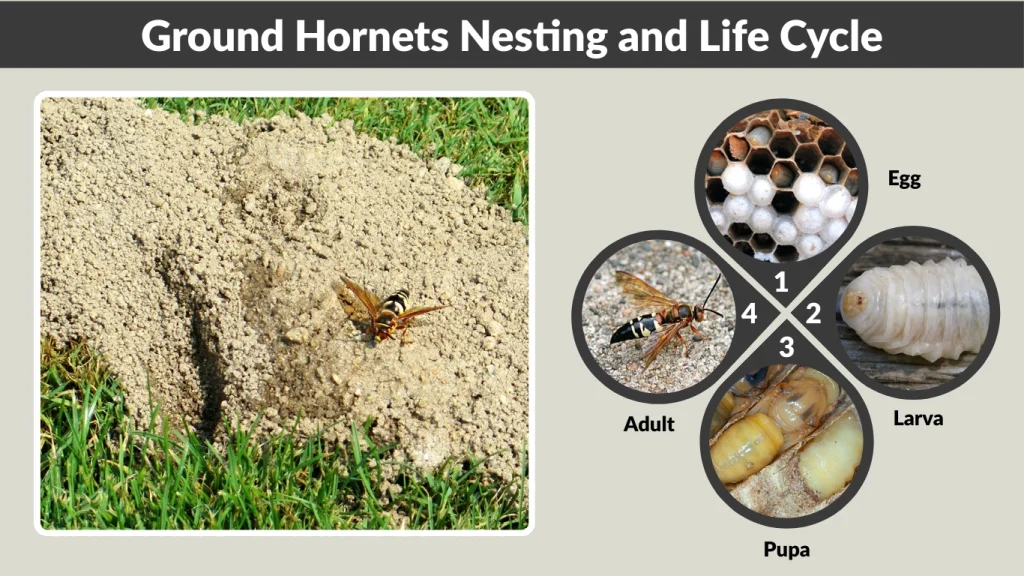
The nesting behavior of ground hornets is what sets them apart from other wasps.
Nest Construction
Females dig burrows up to 2 feet long with side chambers. The entrance is marked by a pile of loose soil. Each chamber is provisioned with paralyzed cicadas or other insects, which serve as food for the developing larvae. Nests may appear in clusters, but each female builds and maintains her own burrow.
Life Cycle Stages
The life cycle follows a typical wasp pattern:
- Egg: laid on a paralyzed cicada within the burrow chamber.
- Larva: hatches and feeds on the cicada.
- Pupa: develops inside the soil chamber.
- Adult: emerges the following summer to repeat the cycle.
Seasonal Patterns
Ground hornets are most active in mid to late summer, when cicadas are abundant. By autumn, adults die off, leaving only developing larvae and pupae underground. These remain dormant through winter and emerge as adults the following year.
Behavior and Characteristics
Ground hornets may look menacing, but their behavior is generally non-aggressive.
Social vs Solitary Ground Hornets
Unlike social hornets, ground hornets are solitary nesters. Each female constructs and provisions her own nest. While multiple nests may occur close together, this is due to shared suitable habitat rather than cooperation.
Hunting Behavior
Ground hornets are skilled hunters. Females capture cicadas mid-flight, sting them to induce paralysis, and drag them back to the burrow. This process can be dramatic to watch, as the hornet sometimes carries prey larger than itself. Once underground, the cicada becomes food for the next generation of hornets.
Aggression and Defense
Ground hornets are surprisingly docile. Males patrol nesting sites and may fly aggressively at intruders, but they cannot sting. Females are capable of stinging but generally save their venom for prey. They only sting humans when handled or directly threatened, making them less dangerous than yellowjackets or true hornets.
Ground Hornet Sting

Despite their docile nature, stings do occur when ground hornets are provoked.
Pain and Venom
The sting of a ground hornet is painful but not typically severe. The venom is designed to paralyze prey rather than harm large mammals. Pain is sharp and localized, usually subsiding within a few hours.
Symptoms in Humans
Most people experience redness, swelling, and mild itching at the sting site. Severe reactions are rare but possible in individuals allergic to wasp venom.
Medical Risks
Unlike social hornets, ground hornets rarely sting in groups, so the risk of multiple stings is low. For allergic individuals, however, a single sting can trigger dangerous anaphylaxis and requires immediate medical care.
Diet and Feeding Habits

Ground hornets, especially cicada killers, have a diet that reflects their dual roles as pollinators and hunters.
Adults
Adult ground hornets primarily feed on nectar, tree sap, and fruit juices. These sugary foods give them the energy needed for flight, nest excavation, and hunting. Despite their intimidating look, adults often spend time on flowers, feeding much like bees.
Larvae
The larvae, on the other hand, require protein. Female hornets provide this by hunting cicadas or similar insects. After stinging and paralyzing the prey, she places it in a burrow chamber and lays an egg on it. When the larva hatches, it consumes the still-living but immobilized cicada. This ensures a fresh food source for weeks until the larva pupates.
Role in the Ecosystem
Though feared, ground hornets are beneficial insects with important ecological roles.
Natural Pest Control
By hunting cicadas and other insects, they help regulate populations that could otherwise damage trees and crops. In areas with high cicada activity, these wasps significantly reduce noise and leaf damage caused by cicada feeding.
Soil Aeration
Their digging activity naturally loosens and aerates soil. This improves drainage and allows nutrients to penetrate deeper, indirectly benefiting plant life.
Ecological Balance
Ground hornets also serve as prey for birds, mammals, and larger insects. This places them as both predator and prey in the food web, contributing to biodiversity and ecological balance.
Ground Hornets vs Yellowjackets
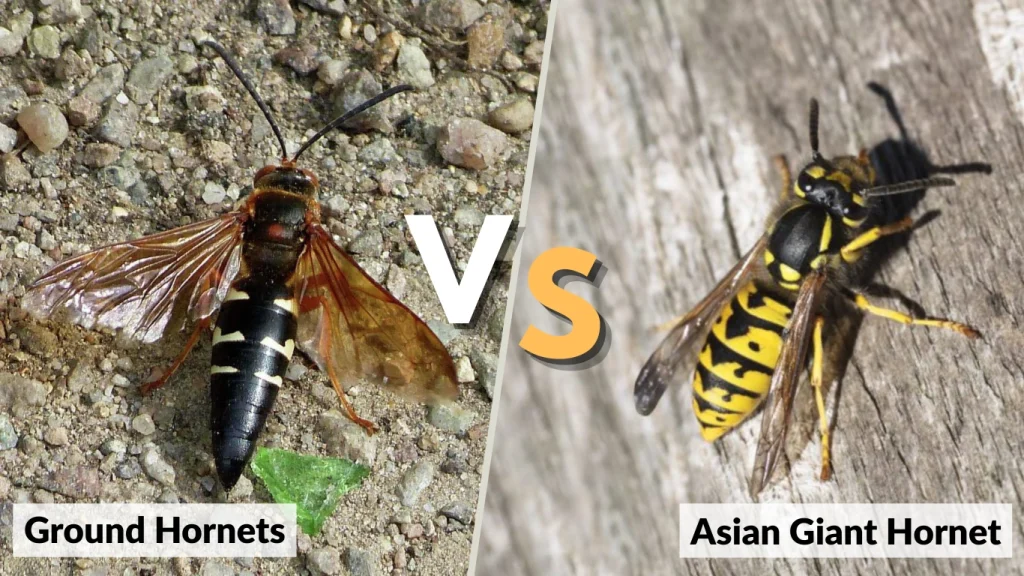
Ground hornets are often confused with yellowjackets because both are seen nesting in soil. However, their behavior and risks to humans differ greatly.
Nesting Differences
- Ground Hornets: solitary nesters, each female digging her own burrow.
- Yellowjackets: social insects, building large underground paper nests with hundreds of individuals.
Behavior Differences
- Ground hornets are docile, stinging rarely and only when directly threatened.
- Yellowjackets are highly aggressive, defending their nests with swarms capable of stinging repeatedly.
This distinction is crucial for homeowners: spotting soil mounds usually means ground hornets, while seeing swarms emerge from one hole suggests yellowjackets.
Interaction with Humans
Ground hornets often come into contact with people because they favor sunny lawns, gardens, and sandy areas for nesting.
Common Sightings
Homeowners usually notice them in mid-summer, when large hornets buzz around the yard or piles of soil appear in open areas. Their large size and loud flight can be alarming, but these insects are rarely a danger unless disturbed.
Myths and Misconceptions
A common misconception is that ground hornets will “attack” people. In truth, they are far less aggressive than their reputation suggests. Males may fly toward humans in a territorial display, but they lack stingers. Females sting only when handled or threatened at close range.
Risks Near Homes
While generally harmless, their nests can be problematic if located near playgrounds, walkways, or heavily used parts of a yard. Accidental encounters increase the risk of stings, especially for children or pets.
Control and Prevention
In most cases, ground hornets should be left alone. However, when nests pose a risk to people, certain control methods may be necessary.
When to Remove Ground Hornets
- If nests are far from human activity, they can be left undisturbed.
- If nests are near doorways, patios, or play areas, removal may be necessary.
Professional Removal
Because stings are possible, professional pest control is the safest choice. Exterminators use protective clothing and apply targeted treatments to active burrows at night when hornets are less active.
Prevention Tips
- Keep lawns watered and healthy; compact soil deters burrowing.
- Reduce bare sandy patches where hornets prefer to dig.
- Seal old burrows during winter to prevent reuse.
- Limit bright outdoor lighting that may attract flying hornets at night.
Interesting Facts about Ground Hornets
- Females hunt and dig, while males only guard territories.
- A single female can capture dozens of cicadas in one summer.
- They can drag prey heavier than themselves into their burrows.
- Despite their name, they are technically wasps, not true hornets.
- Their loud buzzing is often mistaken for aggression but is usually just flight noise.
FAQs
Are ground hornets dangerous to humans?
Ground hornets look intimidating, but they are generally not dangerous. Females can sting, but they rarely do unless provoked. Males cannot sting at all. Most encounters involve harmless buzzing, not attacks.
What do ground hornets eat?
Adults feed on nectar, sap, and fruit juices, while larvae are fed paralyzed cicadas or similar insects. This diet makes them both pollinators and natural pest controllers.
How do I know if I have ground hornets in my yard?
Look for small mounds of loose soil with a round entrance hole. You may also see large wasps flying low over the ground or carrying cicadas into burrows. Nests often appear in clusters but belong to individual females.
Do ground hornets sting like yellowjackets?
No, they are much less aggressive. While females can sting if threatened, they do not swarm or defend nests aggressively like yellowjackets. Stings are painful but usually mild compared to social hornets.
How can I safely get rid of ground hornets?
If nests are in a high-risk area, contact a professional exterminator. For prevention, keep soil healthy and compact, reduce bare sandy patches, and cover burrows in winter. Avoid trying to eliminate them during the day, as active hornets may sting in defense.
