
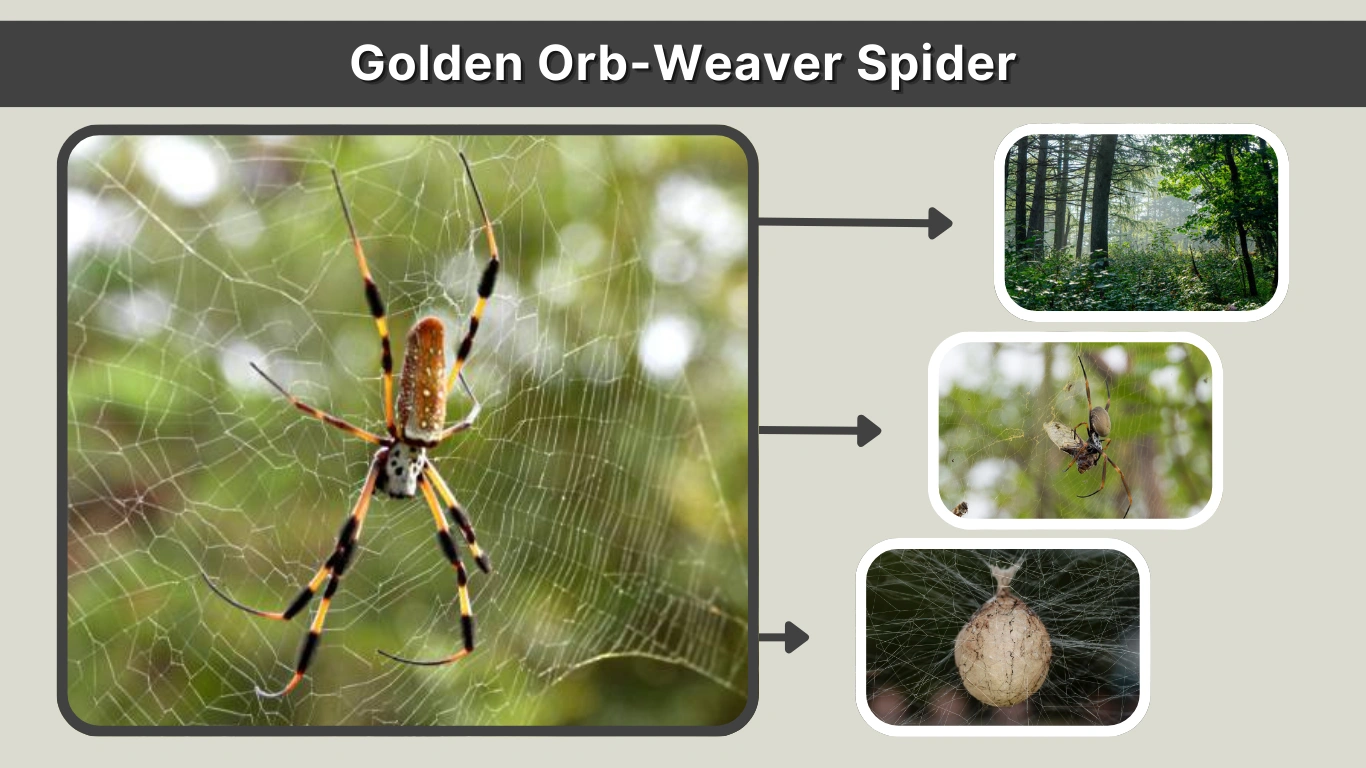
The golden orb-weaver spider is one of the most striking spiders found in nature, known for its massive size and shimmering golden webs. Often seen stretched across forest paths or gardens, this spider easily captures attention due to its bold colors and impressive web architecture. Despite its intimidating appearance, the golden orb-weaver is generally harmless to humans and plays an important ecological role. Its unique silk, complex behavior, and widespread distribution make it a fascinating subject for nature lovers and researchers alike.
Scientific Classification and Species Overview
Taxonomic Classification
The golden orb-weaver belongs to a group of large web-building spiders known for their durable silk. Scientifically, these spiders fall under the orb-weaver family, which is famous for producing circular, symmetrical webs. Over time, taxonomic revisions have refined their classification, but they remain closely associated with the genera Nephila and Trichonephila, both well-known for golden silk production.
Common Species of Golden Orb-Weavers
Several species are commonly referred to as golden orb-weavers. These include species found across Asia, Australia, Africa, and the Americas. While they share similar web structures and coloration, individual species may differ slightly in size, color intensity, and habitat preference depending on their geographic location.
Physical Size and Body Structure
Golden orb-weaver spiders are among the largest orb-weaving spiders in the world. Females are significantly larger than males, often reaching a body length of 3–5 centimeters, with a leg span that can exceed 12 centimeters. Males are much smaller and less noticeable, usually living near the edges of the female’s web.
Their bodies are elongated and well-adapted for web life. Long, slender legs allow them to move efficiently across large webs, while their strong abdomens support silk production. This dramatic size difference between males and females is a classic example of sexual dimorphism in spiders.
Coloration and Distinctive Markings
Golden orb-weavers are easily recognized by their vivid coloration. Females typically display combinations of yellow, gold, black, and sometimes blue or red markings on the abdomen. Their legs often feature dark segments with bright yellow bands, giving them a striking, almost patterned appearance.
Coloration can vary by species, age, and even environment. Juveniles may appear duller, while mature females develop brighter, more contrasting colors. These bold markings may help deter predators or make the spider more visible to potential mates.
Identification Features
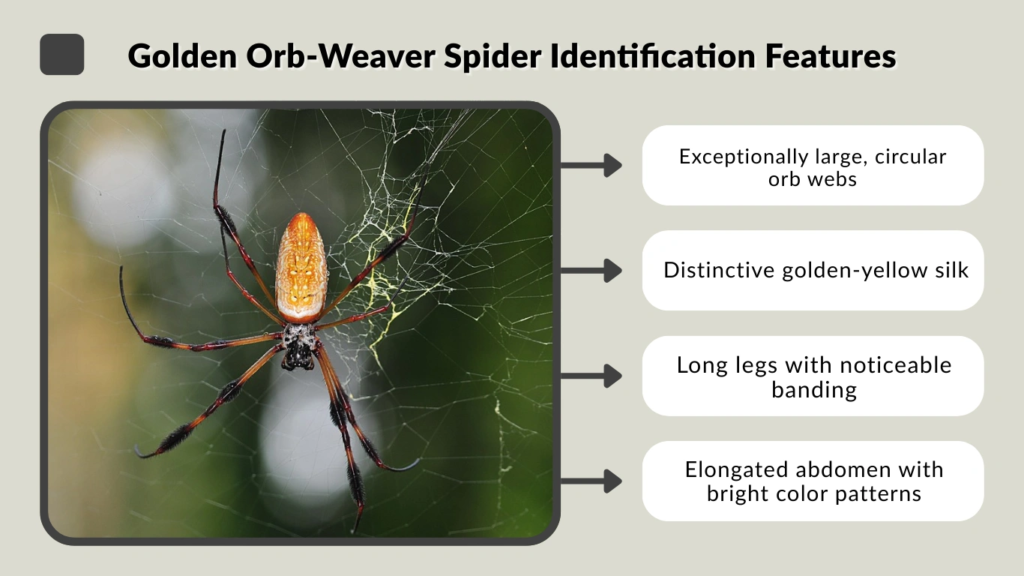
Key features that help identify a golden orb-weaver include:
- Exceptionally large, circular orb webs
- Distinctive golden-yellow silk
- Long legs with noticeable banding
- Elongated abdomen with bright color patterns
- Very small males compared to females
Habitat and Geographic Distribution
Natural Habitats
Golden orb-weavers prefer warm climates and are most commonly found in tropical and subtropical regions. They thrive along forest edges, open woodlands, gardens, and near human structures where flying insects are abundant. Their webs are often stretched between trees or across open paths.
Global Distribution
These spiders have a wide geographic range. They are commonly found in Southeast Asia, Australia, parts of Africa, and the Americas. Their adaptability to different environments has allowed them to spread across multiple continents while maintaining similar behavioral traits.
Web Structure and Silk Characteristics
The web of a golden orb-weaver is one of its most remarkable features. These spiders build large, perfectly rounded orb webs that can span several feet in diameter. The web is often positioned high above the ground, stretched between trees or shrubs to intercept flying insects.
What makes the web truly unique is its golden-colored silk. This silk is not only visually striking but also exceptionally strong and elastic. Scientists believe the golden hue may help attract prey or provide UV protection, while the silk’s strength allows the spider to capture large insects with ease.
Behavior and Daily Activity Patterns
Web-Building Behavior
Golden orb-weavers usually construct or repair their webs during the early morning or late evening. They may reuse parts of existing webs, reinforcing damaged sections rather than rebuilding from scratch. The spider typically sits at the center of the web, head down, waiting for vibrations that signal trapped prey.
Feeding and Resting Behavior
During the day, golden orb-weavers remain relatively still, conserving energy. When prey hits the web, they quickly immobilize it with silk before delivering a bite. After feeding, they often retreat to a nearby resting spot or remain motionless in the web.
Diet and Hunting Techniques
Golden orb-weavers are carnivorous and rely on their webs to hunt. Their diet mainly consists of:
- Flies, moths, and mosquitoes
- Bees and wasps
- Grasshoppers and large flying insects
- Occasionally small vertebrates, such as tiny lizards
Their strong silk allows them to subdue prey larger than themselves, making them highly efficient hunters.
Reproduction and Life Cycle
Mating in golden orb-weavers is risky, especially for males. The much smaller males cautiously approach the female’s web to avoid being mistaken for prey. After mating, the female produces one or more egg sacs, which she attaches to nearby vegetation.
Each egg sac can contain hundreds of eggs. Spiderlings hatch after several weeks and disperse using silk threads carried by the wind, a process known as ballooning. Only a small percentage survive to adulthood.
Predators and Defense Mechanisms
Despite their size, golden orb-weavers face several natural threats:
- Birds that snatch spiders from webs
- Parasitic wasps that attack egg sacs
- Lizards and frogs in forested areas
- Web vibrations and rapid movement as warning signals
Their bright coloration and large size may help deter some predators.
Relationship With Humans
Golden orb-weavers are not aggressive and rarely bite humans. Even when bites occur, symptoms are usually mild and comparable to a bee sting. These spiders are beneficial, as they help control insect populations in gardens and forests.
In some cultures, their silk has been studied for textile and medical applications due to its strength and durability. Overall, they are considered harmless and ecologically valuable.
FAQs
Are golden orb-weaver spiders dangerous to humans?
Golden orb-weaver spiders are not considered dangerous. They are shy and prefer to flee rather than bite. If a bite does occur, it usually causes mild pain, redness, or swelling, similar to an insect sting, and does not pose a serious medical risk.
Why is their web golden in color?
The golden color comes from pigments in the silk proteins. This coloration may help attract insects by reflecting sunlight or blending with foliage. It may also protect the silk from UV damage, increasing the web’s durability in sunny environments.
How big can a golden orb-weaver get?
Female golden orb-weavers can grow up to 5 centimeters in body length, with leg spans exceeding 12 centimeters. Males are much smaller, often less than one-quarter the size of females, making the size difference very noticeable.
Where are golden orb-weavers most commonly found?
They are most commonly found in tropical and subtropical regions, including Southeast Asia, Australia, Africa, and parts of the Americas. They prefer forest edges, gardens, and open areas with abundant flying insects.
Do golden orb-weavers rebuild their webs every day?
Golden orb-weavers do not always rebuild their webs daily. Instead, they often repair and reinforce existing webs. However, heavily damaged or ineffective webs may be completely rebuilt, usually during early morning or evening hours.
