
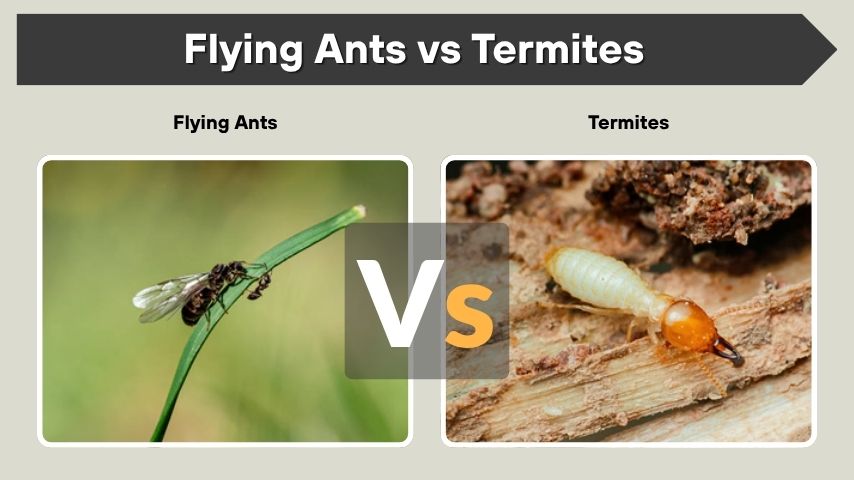
Seeing winged insects inside or around your home can be alarming, especially when you are unsure whether they are flying ants or termites. Both can swarm, both may appear near windows or lights, and both can signal a nearby colony. The key difference is that termites can cause serious structural damage, while flying ants are usually less destructive. This guide explains how to identify them quickly.
Flying Ants vs Termites: Quick Comparison
Flying ants and winged termites may look similar at first glance, but their bodies, wings, antennae, and behavior are different. Learning these signs can help you decide whether you are dealing with a seasonal ant swarm or a possible termite infestation.
| Feature | Flying Ants | Winged Termites |
| Body shape | Narrow waist with three clear body sections | Broad, straight body with no pinched waist |
| Antennae | Bent or elbowed | Straight or bead-like |
| Wings | Front wings are larger than back wings | Four wings are equal in size |
| Wing texture | Usually clearer and stronger | Often pale, fragile, and easily shed |
| Color | Black, brown, red, or reddish-black | Cream, tan, brown, or dark depending on species |
| Main concern | Nuisance or carpenter ant damage | Possible structural wood damage |
Why Flying Ants and Termites Are Often Confused
Both insects produce winged reproductives, also called swarmers. These swarmers leave mature colonies to mate and start new colonies. Because this often happens in groups, homeowners may suddenly see dozens or hundreds of winged insects near doors, windows, lights, porches, or basements.
The confusion is understandable because both insects are small, winged, and active during warm or humid weather. However, flying ants are ants in their reproductive stage, while termite swarmers are termites leaving a colony. If the insects are termites, the swarm may indicate an active colony nearby or inside the structure.
The Biggest Visual Clues
Look closely at these four areas:
- Waist: Flying ants have a narrow, pinched waist. Termites have a thicker, straight body.
- Antennae: Flying ants have bent antennae. Termites have straight antennae.
- Wings: Flying ants have uneven wing sizes. Termites have equal-length wings.
- Body color: Flying ants are often darker, while termites are often lighter, though some termite swarmers can be dark.
What Flying Ants Look Like
Flying ants are reproductive ants with wings. They are not a separate species. Many ant species produce winged males and queens during mating season. These ants leave the nest, mate, and try to create new colonies.
Common Flying Ant Features
Flying ants usually have a more defined body shape than termites. Their head, thorax, and abdomen are easy to notice, especially because the waist is narrow. Their antennae bend sharply, which is one of the easiest ways to separate them from termites.
Their wings are also uneven. The front pair is longer than the back pair. This difference may be hard to see from far away, but it becomes clearer if the insect is resting on a window, wall, or floor.
Are Flying Ants Dangerous?
Most flying ants are not dangerous to people. They usually do not bite unless handled, and they are not known for eating structural wood the way termites do. However, carpenter ants can damage wood by excavating galleries for nesting. They do not eat wood, but a carpenter ant infestation can still weaken damaged or moisture-softened areas over time.
What Winged Termites Look Like
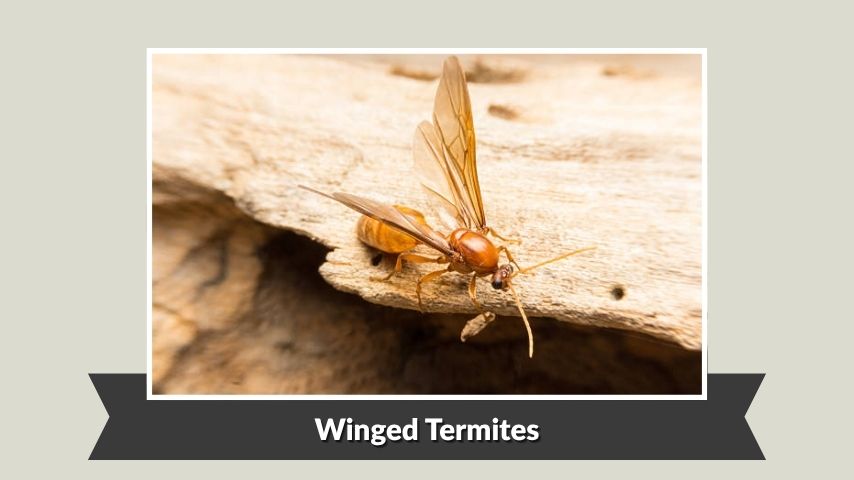
Winged termites are often called termite swarmers or alates. They are reproductive termites that leave an existing colony to start new ones. Their appearance is one of the most important warning signs of a termite problem.
Common Termite Swarmer Features
Termite swarmers have a straight, broad body with no narrow waist. Their antennae are straight rather than bent. Their four wings are the same length and usually extend beyond the body.
Termite wings are delicate and may break off easily. One common sign of termite activity is a pile of discarded wings near windowsills, baseboards, doors, vents, or light fixtures. If you see loose wings but few insects, termites may have already swarmed and moved on.
Why Termite Swarmers Matter
A termite swarmer does not usually cause the damage itself. The bigger concern is what it represents. Swarmers often come from a mature colony. If they are emerging indoors, it may mean termites are already active inside walls, flooring, framing, or other hidden wood areas.
Flying Ant Wings vs Termite Wings
Wings are one of the best ways to identify flying ants vs termites, especially when the body is hard to see.
| Wing Feature | Flying Ants | Termites |
| Wing length | Front wings longer than back wings | All four wings about the same length |
| Wing durability | Usually stronger | Fragile and easily shed |
| Wing position | Often angled or uneven | Often stacked evenly over the body |
| Discarded wings | Less common in large piles | Common near windows, doors, and floors |
If you only find wings, look at their size and shape. Termite wings are usually uniform and may appear in groups. Flying ant wings are less likely to be found in neat piles, though they can still shed wings after mating.
Flying Ants vs Termites in the House
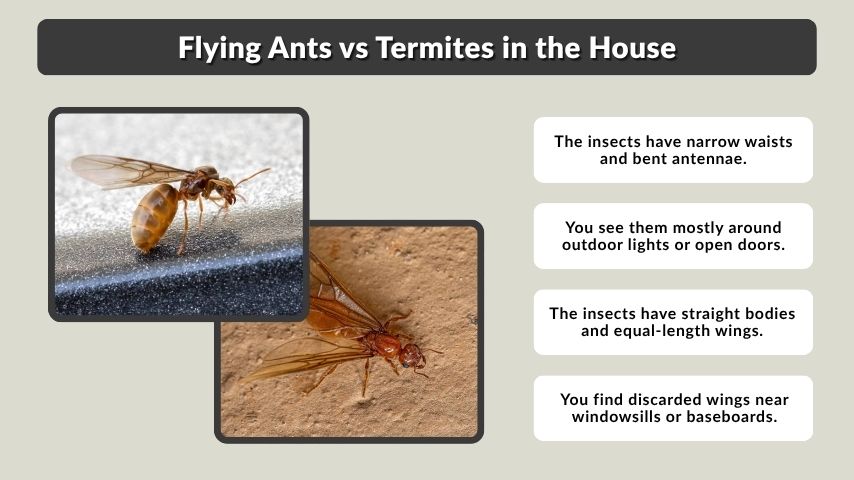
Finding either insect indoors deserves attention, but termites require faster action. A few flying ants near a window may be seasonal swarmers that entered from outside. Termite swarmers indoors are more concerning because they may be coming from a hidden colony.
Signs It May Be Flying Ants
You may be seeing flying ants if:
- The insects have narrow waists and bent antennae.
- You see them mostly around outdoor lights or open doors.
- They appear briefly during warm weather and disappear quickly.
- There are no mud tubes, damaged wood, or piles of equal-sized wings.
- The insects look black, reddish, or brown with uneven wings.
Signs It May Be Termites
You may be seeing termites if:
- The insects have straight bodies and equal-length wings.
- You find discarded wings near windowsills or baseboards.
- You notice mud tubes along walls, foundations, or crawl spaces.
- Wood sounds hollow when tapped.
- Paint bubbles, floors sag, or trim looks damaged without an obvious reason.
Termite Swarmers vs Flying Ants
The phrase “termite swarmer vs flying ant” usually refers to the winged reproductive stage of both insects. Swarming does not automatically mean your home is infested, but indoor termite swarmers should never be ignored.
| Situation | More Likely Flying Ants | More Likely Termites |
| Seen outside after rain | Common | Common |
| Found indoors in large numbers | Possible | Concerning |
| Wings in piles by windows | Less likely | Very likely |
| Mud tubes nearby | No | Yes |
| Damaged wood present | Possible with carpenter ants | Very likely |
| Equal-size wings | No | Yes |
A termite swarm inside a home is often a sign that a colony is nearby or already established. Flying ants indoors may still require treatment, especially if they are carpenter ants, but the urgency is usually lower than with termites.
Carpenter Ants vs Termites
Carpenter ants are often compared with termites because both are associated with wood. The difference is how they use it. Termites eat cellulose in wood. Carpenter ants excavate wood to create nesting galleries.
How to Tell Them Apart
Carpenter ants usually look larger and darker than termites. They have a narrow waist, bent antennae, and uneven wings when in their winged form. You may also see small piles of wood shavings, called frass, near nesting areas.
Termites often remain hidden. Instead of sawdust-like debris, they may leave mud tubes, discarded wings, or damaged wood that looks layered, blistered, or hollow.
Flying Ants vs Termites Pictures: What to Look For
Many people search for flying ants vs termites pictures because visual comparison is the fastest way to identify them. When looking at photos, focus on structure rather than color alone.
Key Photo Details
In pictures, check for:
- Pinched waist: Ants have it; termites do not.
- Bent antennae: Ants have elbowed antennae; termites have straight ones.
- Wing length: Ant wings are uneven; termite wings are equal.
- Loose wings: Termite swarmers often leave matching wings behind.
- Body thickness: Termites look more uniform from head to abdomen.
Color can help, but it should not be your only clue. Some termite swarmers are dark, and some flying ants can look pale under certain lighting.
Flying Ants vs Termites by Size and Color
Size varies by species, so it is not the best identification method by itself. However, it can support other clues.
Flying ants are often black, brown, reddish, or red and black. Carpenter ant swarmers may be relatively large compared with many other household ants. Termite swarmers may be tan, brown, black, or smoky-colored depending on the species.
Small flying ants vs termites can be especially hard to identify without a close look. In that case, antennae and wing shape are more reliable than size.
What Causes Flying Ant or Termite Swarms?
Swarming usually happens when a colony is mature enough to produce reproductive insects. Warm temperatures, humidity, and rain can trigger swarms. Indoor swarms may happen near windows or lights because insects are attracted to brightness.
Common Swarm Triggers
Swarming may happen because of:
- Warm, humid weather
- Recent rainfall
- A mature nearby colony
- Moisture around the home
- Wood-to-soil contact
- Cracks or gaps around windows, doors, or foundations
Outdoor swarms are not always a problem. Indoor termite swarms, repeated swarms, or swarms near damaged wood should be inspected.
How to Get Rid of Flying Ants vs Termites
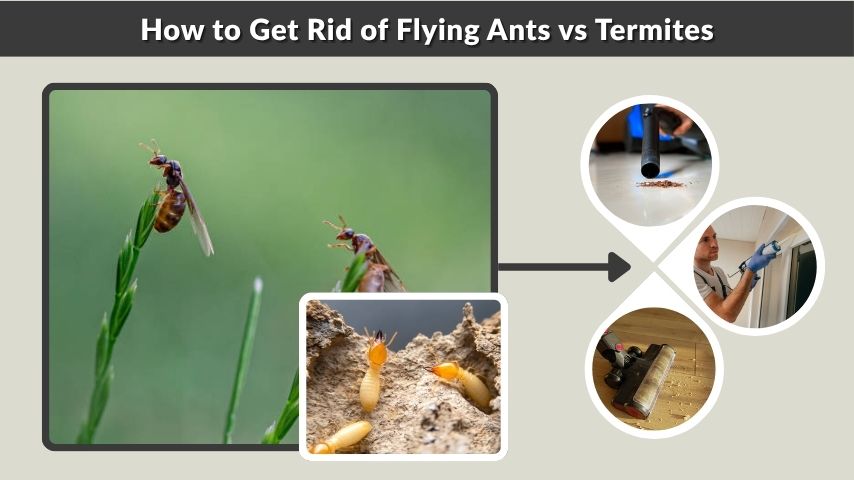
Treatment depends on which insect you have. Using the wrong method can waste time and allow a termite colony to continue damaging your home.
If They Are Flying Ants
For flying ants, you can:
- Vacuum visible swarmers indoors.
- Seal cracks around windows, doors, and siding.
- Remove food crumbs and moisture sources.
- Trim branches and vegetation touching the house.
- Use ant baits for recurring ant activity.
- Call a pest professional if carpenter ants are suspected.
If They Are Termites
For termites, avoid relying only on sprays. Spraying visible swarmers may kill the insects you see, but it usually does not eliminate the hidden colony.
A termite professional may use bait systems, soil treatments, wood treatments, or targeted treatments depending on the termite species and infestation location. If you find termite swarmers, save a sample or take clear photos before cleaning the area.
When to Call a Pest Control Professional
You should call a professional if you cannot confidently identify the insect or if you see signs of termite activity. Early inspection can prevent more expensive damage later.
Call for Help If You Notice
- Winged insects emerging indoors
- Piles of equal-sized discarded wings
- Mud tubes on walls, foundations, or crawl spaces
- Hollow-sounding wood
- Bubbling paint or warped flooring
- Repeated swarms in the same area
- Carpenter ants with wood shavings nearby
Professional identification is especially useful because termites often stay hidden. By the time visible damage appears, the colony may have been active for months or longer.
FAQs
Are flying ants the same as termites?
No. Flying ants are reproductive ants, while termite swarmers are reproductive termites. Flying ants have pinched waists, bent antennae, and uneven wings. Termites have straight bodies, straight antennae, and four equal-length wings. Termites are usually more concerning because they can damage structural wood.
Do flying ants mean I have termites?
Flying ants do not mean you have termites. They may come from an ant colony indoors or outdoors. However, because flying ants and termite swarmers look similar, you should inspect the insects closely. If you see equal wings, straight bodies, or discarded wings, termites are more likely.
What is the easiest way to tell flying ants from termites?
The easiest way is to check the waist, antennae, and wings. Flying ants have a narrow waist, bent antennae, and front wings longer than the back wings. Termites have a broad waist, straight antennae, and four wings that are about the same size.
Are termite swarmers harmful?
Termite swarmers do not usually bite or damage wood directly, but they are a warning sign. Their presence may indicate a mature termite colony nearby. If swarmers appear indoors, schedule an inspection because the main colony may be hidden inside walls, floors, or structural wood.
Should I spray flying termites?
Spraying visible termite swarmers may kill some insects, but it does not solve the colony problem. Termites usually live hidden in soil, wood, walls, or crawl spaces. A professional termite inspection is the safest next step if you find swarmers or discarded wings indoors.
