
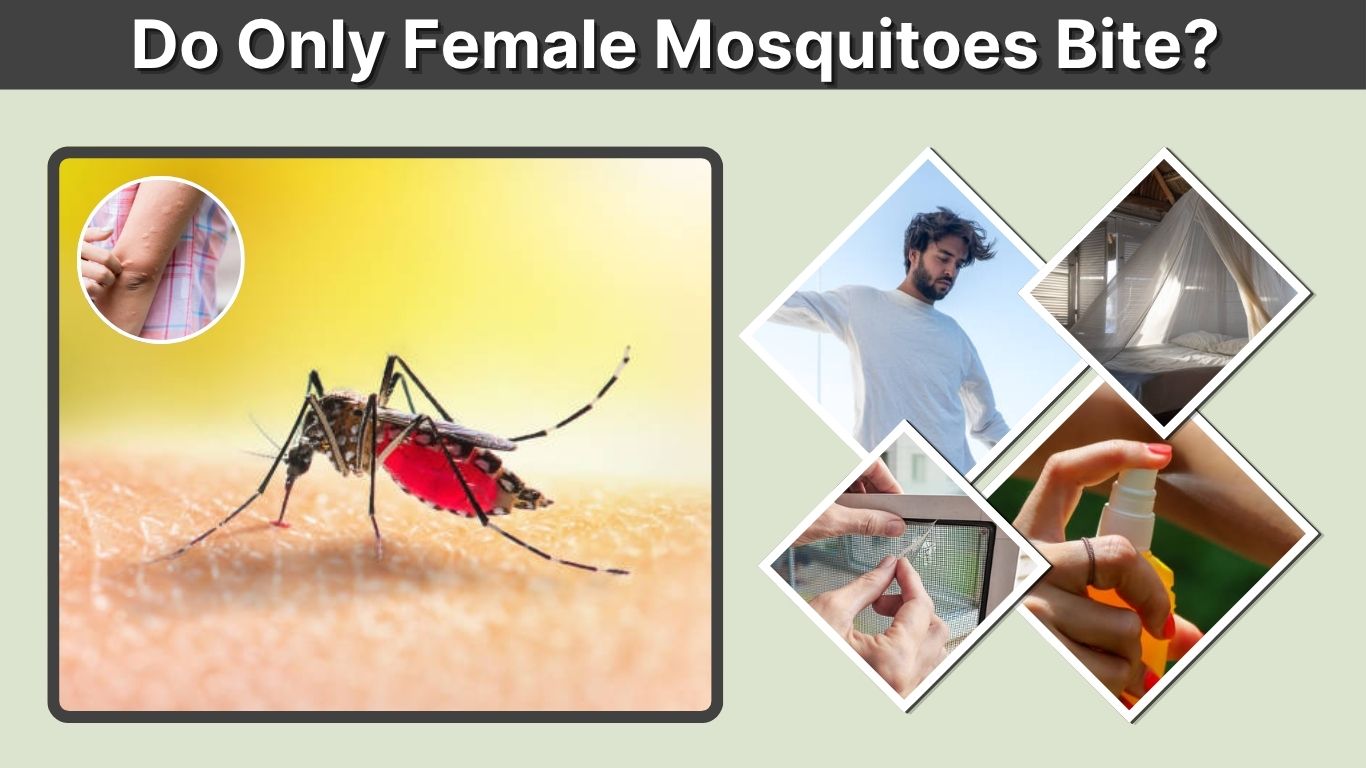
Mosquitoes are among the most common biting insects, but not every mosquito is responsible for those itchy red bumps on your skin. If you have ever wondered whether male or female mosquitoes bite, the answer involves their biology and reproductive needs. Female mosquitoes generally require blood to develop eggs, while males survive on plant sugars. However, not every female mosquito species feeds on blood. Understanding these differences helps explain why mosquitoes bite humans, how females obtain blood meals, and what makes certain species more dangerous than others.
Do Only Female Mosquitoes Bite?
Yes, only female mosquitoes bite humans and animals to obtain blood. Male mosquitoes do not bite because their mouthparts are not adapted to pierce skin. Most female mosquitoes require nutrients from blood to produce healthy eggs.
However, not all female mosquito species bite. Some obtain enough nutrients for reproduction without feeding on blood.
Do Male or Female Mosquitoes Bite Humans?
Female mosquitoes are responsible for mosquito bites. They use specialized mouthparts to penetrate human skin and withdraw blood.
Male mosquitoes cannot take blood meals. Instead, they obtain energy from nectar and other natural sugar sources.
Both sexes can live around humans, but only blood-feeding females are responsible for the familiar itchy mosquito bumps.
Why Do Only Female Mosquitoes Bite?
The main reason female mosquitoes bite is reproduction. Blood provides proteins and other nutrients necessary for egg development in most mosquito species.
Unlike female mosquitoes, males do not produce eggs and therefore have no biological need for blood meals.
Why Do Female Mosquitoes Need Blood?
Female mosquitoes use nutrients from blood to develop their eggs. After obtaining a sufficient blood meal, a female typically digests it while her eggs mature.
Once the eggs are ready, she searches for a suitable location to lay them. Many mosquito species deposit eggs in standing water or locations that will eventually become wet.
Do Female Mosquitoes Bite Only When Pregnant?
No. Mosquitoes do not become pregnant like mammals. Female mosquitoes develop eggs within their bodies, and blood meals support that process in most species.
Depending on the species and reproductive stage, females may seek blood before laying eggs. Some species can even produce their first batch of eggs without a blood meal.
Male vs Female Mosquitoes: Key Differences
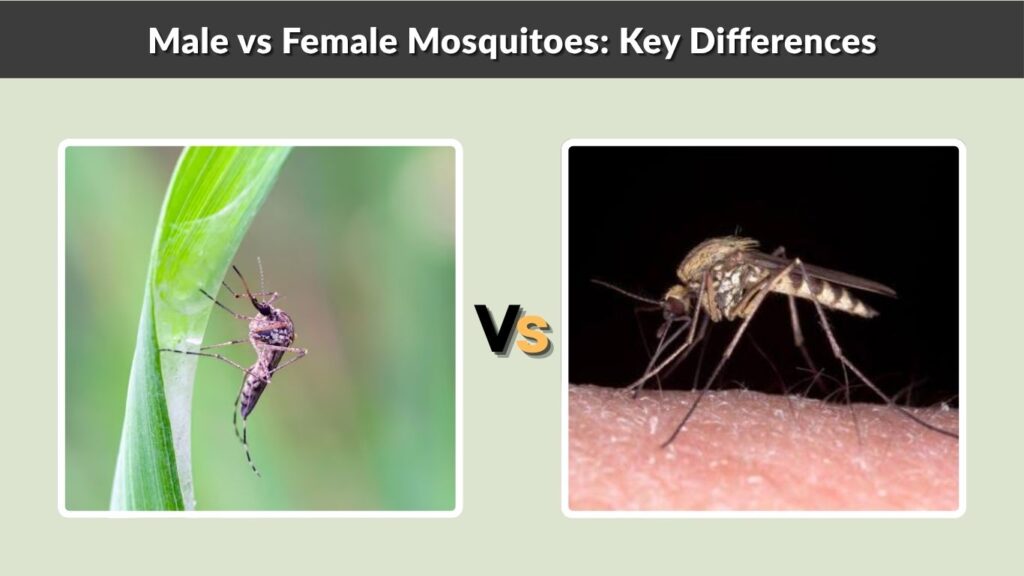
Male and female mosquitoes belong to the same species but differ in feeding behavior, physical characteristics, and reproductive functions. These distinctions explain why females are responsible for almost all mosquito blood feeding.
Main Differences Between Male and Female Mosquitoes
- Biting behavior: Female mosquitoes of blood-feeding species bite humans and animals. Males never take blood meals.
- Mouthparts: Females possess specialized piercing structures, while male mouthparts are adapted for consuming liquids such as nectar.
- Antennae: Males generally have bushier, more feathery antennae than females.
- Food sources: Both sexes consume plant sugars, but most females additionally require blood for reproduction.
- Reproductive role: Females develop and lay eggs, while males contribute sperm during mating.
- Lifespan: Female mosquitoes often live longer than males, although survival depends on species and environmental conditions.
How Do Female Mosquitoes Bite Humans?
Female mosquitoes use specialized sensory organs to locate suitable hosts. They detect carbon dioxide, body warmth, and skin odors before approaching exposed skin.
Once a mosquito finds a feeding location, it inserts its needlelike mouthparts through the skin and withdraws blood.
How the Mosquito Biting Process Works
- Detecting a host: The female senses carbon dioxide released through breathing.
- Approaching the person: Body warmth, moisture, and skin odors guide her toward a feeding location.
- Piercing the skin: Specialized mouthparts inside the proboscis penetrate the skin.
- Releasing saliva: Mosquito saliva contains substances that help the insect obtain blood.
- Taking blood: The mosquito withdraws blood until it obtains enough or is interrupted.
- Leaving the host: After feeding, the female typically rests while digesting her meal and developing eggs.
Why Do Female Mosquito Bites Itch?
Mosquitoes itch because the immune system reacts to proteins in mosquito saliva. This reaction can cause redness, swelling, and irritation.
Some individuals develop larger reactions than others. Scratching can worsen inflammation and increase the risk of a secondary skin infection.
Do All Female Mosquitoes Bite?
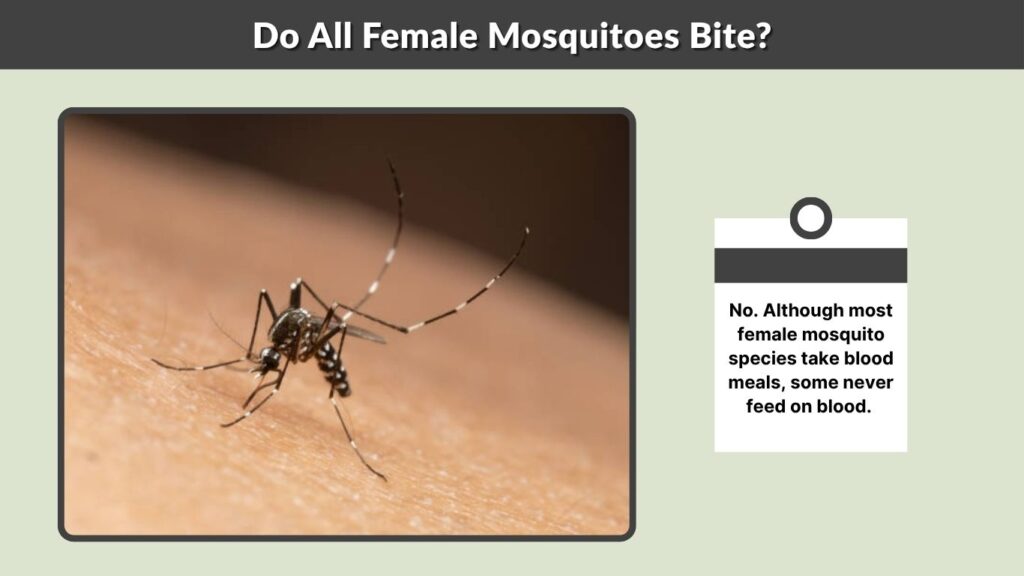
No. Although most female mosquito species take blood meals, some never feed on blood. Their reproductive biology allows them to develop eggs using nutrients obtained through other means.
Which Female Mosquitoes Do Not Bite?
Female mosquitoes belonging to the genus Toxorhynchites, commonly called elephant mosquitoes, do not bite humans or animals.
Both male and female elephant mosquitoes feed on nectar and other sugar sources.
Their larvae prey on other mosquito larvae, allowing them to accumulate nutrients useful for adult development and reproduction.
Other mosquito species may develop some eggs without blood, a reproductive ability known as autogeny.
When Do Female Mosquitoes Bite?
Female mosquitoes bite at different times depending on their species. Some are most active during daylight, while others prefer dusk, nighttime, or early morning.
Temperature, humidity, and the availability of suitable hosts also influence their feeding behavior.
Do Female Mosquitoes Bite During the Day?
Yes. Aedes aegypti and Aedes albopictus frequently bite during daylight hours, particularly in the morning and late afternoon.
These mosquitoes are important because some populations can transmit diseases such as dengue, chikungunya, and Zika.
When Do Female Anopheles Mosquitoes Bite?
Many female Anopheles mosquitoes primarily bite between dusk and dawn. However, feeding schedules vary among species and environments.
Some Anopheles mosquitoes transmit malaria parasites when feeding on infected and subsequently susceptible hosts.
Nighttime protection, including appropriate mosquito nets, can help reduce exposure.
Do Female Mosquitoes Bite More Than Once?
Yes. Female mosquitoes can bite repeatedly during their lifetime. A single female may also attempt several bites if disturbed before completing a blood meal.
After processing blood and laying eggs, many females search for another host to support their next reproductive cycle.
Do Female Mosquitoes Die After Biting?
No. Female mosquitoes do not normally die after biting humans or animals.
Unlike honeybees that may die after stinging mammals, mosquitoes can withdraw their mouthparts and fly away.
A female may survive long enough to take several blood meals and lay multiple batches of eggs.
Can Female Mosquitoes Spread Diseases?
Yes. Female mosquitoes can transmit pathogens through infected saliva when taking blood meals. However, not every mosquito species carries disease-causing organisms, and not every bite leads to infection.
Mosquito-borne diseases include malaria, dengue, West Nile virus infection, chikungunya, and Zika.
Disease transmission depends on the mosquito species, pathogen, geographical location, and local conditions.
Male mosquitoes do not transmit these diseases through biting because they do not take blood meals.
How to Prevent Female Mosquito Bites
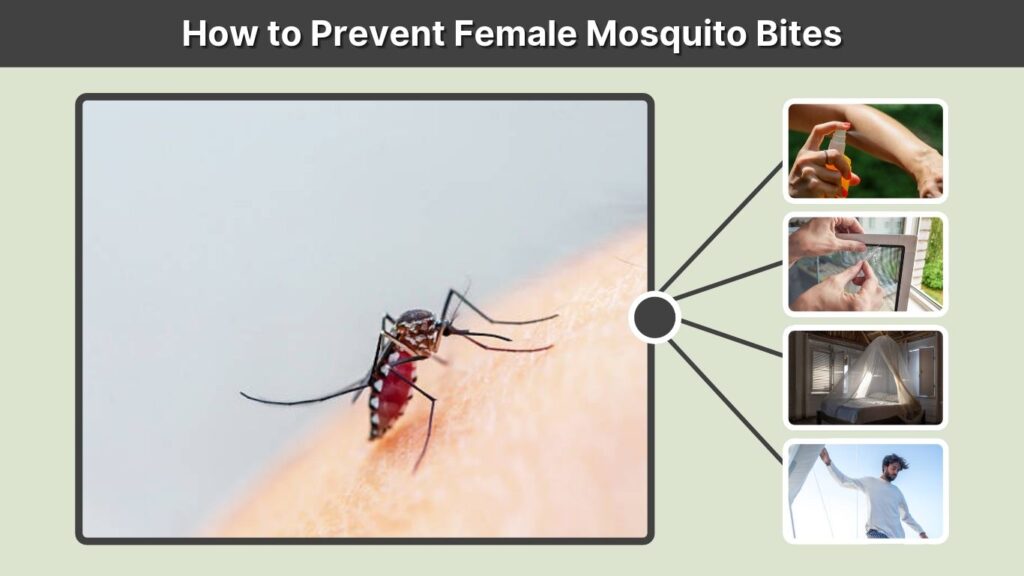
Preventing mosquito bites involves limiting contact with blood-feeding females and reducing mosquito breeding habitats. Effective protection is especially important in places where mosquito-borne diseases occur.
Effective Ways to Avoid Female Mosquito Bites
- Use insect repellent: Choose a proven repellent containing DEET, picaridin, or another approved active ingredient.
- Wear protective clothing: Cover exposed skin with long sleeves, trousers, and socks.
- Remove standing water: Empty buckets, flowerpot saucers, and containers where mosquitoes may breed.
- Install window screens: Repair damaged screens to prevent mosquitoes from entering.
- Use mosquito nets: Protect sleeping areas, particularly where nighttime-biting mosquitoes are common.
- Follow product instructions: Apply repellents as directed, especially when protecting children.
These precautions work against biting female mosquitoes regardless of their feeding preferences.
FAQs
1. Do Both Male and Female Mosquitoes Bite Humans?
No. Only female mosquitoes of blood-feeding species bite humans. Male mosquitoes obtain nutrients from nectar and other sugar sources. Their mouthparts cannot pierce human skin, making them incapable of taking blood meals. Some female mosquito species also never bite.
2. What Do Male Mosquitoes Eat if They Don’t Bite?
Male mosquitoes feed on flower nectar, plant juices, and other natural sugar sources. These foods provide energy for flying, mating, and survival. Female mosquitoes also consume plant sugars, although most species require additional nutrients from blood to develop eggs.
3. Do Female Mosquitoes Bite Animals as Well as Humans?
Yes. Female mosquitoes can bite humans, dogs, cats, birds, livestock, and other vertebrate animals. Different mosquito species prefer different hosts. Some primarily target humans, while others feed on birds or mammals, depending on their biological preferences and environmental conditions.
4. Do Female Mosquitoes Bite More in Autumn?
Some mosquito species remain active during autumn when temperatures are suitable. Certain females also prepare for winter dormancy by building energy reserves. However, increased autumn biting is not universal and depends on the mosquito species, climate, and local conditions.
5. Do Mosquitoes Bite Men More Than Women?
Mosquitoes can bite both men and women. Individual attraction depends on body odor, carbon dioxide production, skin chemistry, temperature, and exposure. There is no universal rule that mosquitoes prefer one human sex over the other across all species and environments.
