

The dark paper wasp is a fascinating yet sometimes feared insect, known for its sleek dark coloration and distinctive paper-like nests. Often mistaken for hornets or yellowjackets, this species plays a valuable role in controlling garden pests while also contributing to pollination. However, their stings and defensive behavior can make them unwelcome guests near homes.
In this guide, we’ll explore everything you need to know about the dark paper wasp — from its size and color patterns to nesting habits, habitat, lifecycle, and how to stay safe around them.
Size of the Dark Paper Wasp
Dark paper wasps are medium-sized compared to other wasp species. Adults typically measure between 0.6 to 0.8 inches (15–20 mm) in body length, with queens sometimes reaching slightly larger sizes. Their wingspan ranges from 1 to 1.2 inches (25–30 mm), giving them a strong and direct flight. Males and females are similar in size, although females tend to be more robust due to their role in nesting and reproduction.
Color and Markings
True to their name, dark paper wasps have a predominantly black or deep brown body, often with subtle reddish or bronze undertones. Their wings are usually smoky brown or slightly translucent, adding to their darker appearance. The abdomen is slender and segmented, sometimes showing faint bands that are less vivid than those of yellowjackets. Their long legs often dangle noticeably during flight, making them easier to recognize in motion.
Identification Guide

Physical Features
- Slender body with a narrow waist connecting thorax and abdomen
- Long legs that hang down when flying
- Elongated antennae with a slight curve
- Smooth, shiny exoskeleton
Behavioral Traits
Dark paper wasps are generally less aggressive than hornets but will defend their nests fiercely when threatened. They often fly in a slow, deliberate manner when searching for food or inspecting potential nesting sites.
Differentiation from Similar Species
Unlike hornets, which have bulkier bodies, dark paper wasps are leaner and have more elongated legs. Compared to yellowjackets, their coloration is less bright, and their nests are exposed rather than enclosed in a paper shell.
Sting and Aggression
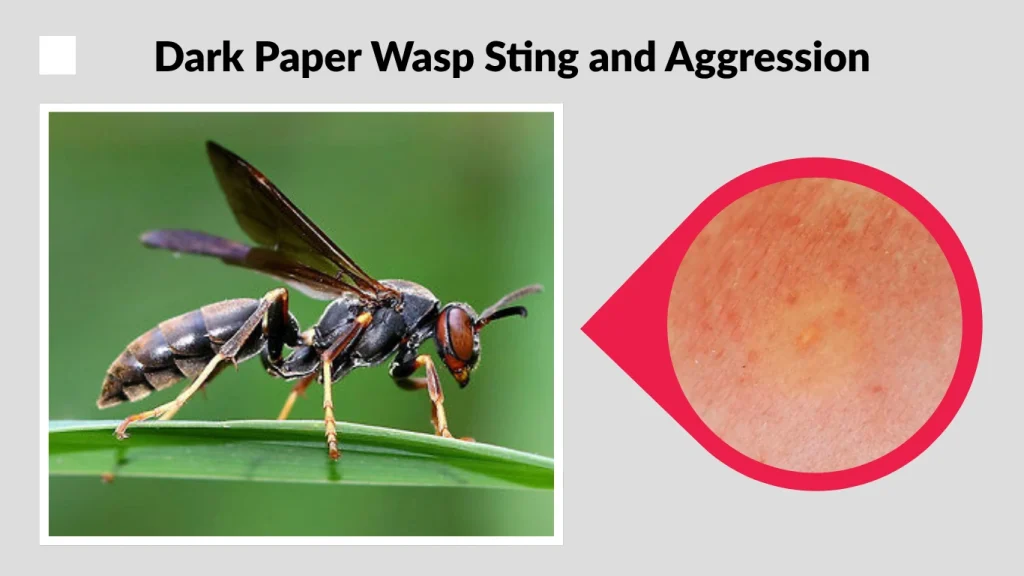
The sting of a dark paper wasp can be sharp and painful, delivering venom that causes immediate burning, redness, and swelling. While most stings are mild and subside within a few hours to a day, people with allergic reactions may experience more severe symptoms such as dizziness, difficulty breathing, or widespread swelling. Dark paper wasps are generally non-aggressive when away from their nest, but they will quickly defend it if they sense danger. Multiple stings are possible since, unlike bees, they do not lose their stinger.
Nesting Habits
Nest Structure
Dark paper wasps create open, umbrella-shaped nests made from chewed wood fibers mixed with saliva, forming a papery texture. The nests consist of hexagonal cells where eggs are laid and larvae develop.
Common Nesting Locations
They prefer sheltered spots such as under eaves, porch ceilings, inside sheds, or on tree branches. In the wild, they may attach nests to rocks, shrubs, or abandoned structures.
Seasonal Nest Building
Nest construction usually begins in spring when a queen starts the first cells. As the colony grows, worker wasps expand the nest throughout summer, and it reaches peak size by late summer or early fall.
Habitat and Distribution
Dark paper wasps are found in temperate and subtropical regions across North America, parts of Europe, Asia, and Australia. They favor areas with access to both nectar sources and insect prey, making gardens, meadows, and woodland edges ideal. In urban environments, they adapt well to human-made structures. They thrive in warm, dry climates but can survive in cooler areas during summer months.
Lifecycle of the Dark Paper Wasp
Egg Stage
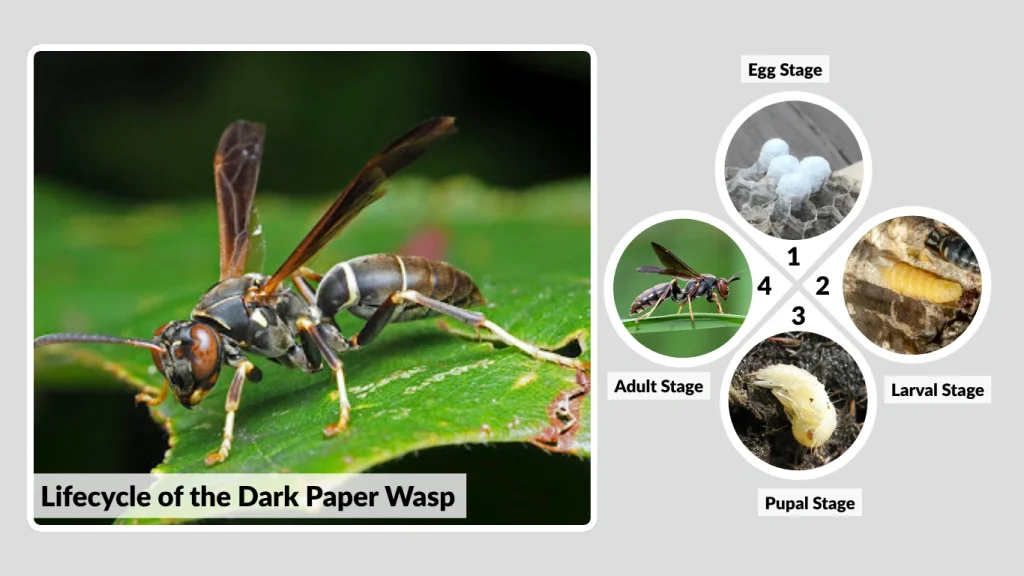
The lifecycle begins in spring when the queen lays eggs in the first nest cells. These eggs are small, oval, and white.
Larva Stage
After a few days, larvae hatch and are fed a diet of chewed-up insects provided by worker wasps. This stage lasts about 10–14 days, during which the larvae grow rapidly.
Pupa Stage
Larvae spin silk caps over their cells and transform into pupae. Inside, they develop wings, legs, and full adult structures over the course of 10–12 days.
Adult Stage
Adults emerge and take on roles as workers, males, or new queens. The total lifecycle from egg to adult averages 3–4 weeks, with colonies surviving only one season in most climates.
Diet and Feeding Behavior

Adult dark paper wasps primarily feed on nectar, fruit juices, and sugary substances, making them minor pollinators in gardens. They also hunt caterpillars, flies, and other small insects to feed their larvae. This dual diet benefits ecosystems by controlling pest populations while aiding plant pollination. Workers spend much of their day foraging for food and returning to the nest to share it with the colony.
Role in the Ecosystem
Dark paper wasps play a crucial role as both predators and pollinators. By hunting caterpillars, beetle larvae, and other plant-eating insects, they help protect crops and gardens from damage. While visiting flowers for nectar, they inadvertently transfer pollen, aiding plant reproduction. They are also a food source for birds, reptiles, and larger predatory insects, making them an integral part of the food chain.
Risks and Precautions
While dark paper wasps are beneficial in controlling pests, their stings can pose risks, especially to those allergic to wasp venom. Multiple stings can be dangerous, leading to more intense pain, swelling, or even systemic reactions. It’s best to avoid disturbing their nests, maintain a safe distance, and wear protective clothing when working in areas where wasps are active. Keeping food and sugary drinks covered outdoors also reduces the chance of attracting them.
Removal and Prevention
When to Call a Professional
If a nest is located near a doorway, window, or high-traffic area, it’s safest to hire pest control experts for removal.
DIY Preventive Measures
- Seal cracks and gaps around roofs and walls
- Remove abandoned nests in winter to discourage reuse
- Hang decoy wasp nests to deter new colonies
- Keep trash bins tightly closed
Safe Distance Recommendations
Maintain at least a few meters away from active nests, as wasps may become defensive when you get too close.
Interesting Facts
- Dark paper wasps can recognize individual faces of other wasps in their colony.
- They reuse building materials from abandoned nests.
- A single colony may consume hundreds of caterpillars in a season.
- Their flight speed can reach up to 7 mph.
- Unlike hornets, their nests are not fully enclosed, leaving the combs exposed.
FAQs
1. How painful is a dark paper wasp sting compared to a bee?
A dark paper wasp sting is often sharper and more intense than a bee sting, with a burning sensation that can last several minutes. Swelling and redness usually develop quickly. While both are painful, wasp venom may cause stronger localized reactions in sensitive individuals.
2. Can dark paper wasps sting multiple times?
Yes, dark paper wasps can sting repeatedly because their stingers remain intact after use. This allows them to deliver multiple stings in quick succession if they feel threatened. Their aggressive defense of the nest makes encounters potentially more dangerous than single-sting insects like bees.
3. Do they reuse their nests each year?
No, dark paper wasps do not reuse old nests. Each spring, new queens build fresh nests from scratch, often in different locations. Old nests remain abandoned, although some wasps may recycle the papery material for new construction later in the season.
4. Are they dangerous to pets?
Dark paper wasps can be dangerous to pets if the animals disturb their nest. Pets may suffer swelling, pain, and irritation from stings. Multiple stings or allergic reactions can cause more serious issues, so it’s important to keep pets away from wasp nesting areas.
5. What attracts them to a home?
Dark paper wasps are drawn to areas with abundant nectar sources, sheltered nesting sites, and accessible food or drinks. Gardens with flowering plants, open trash bins, or sugary residues can attract them. Keeping surroundings clean and sealing entry points reduces the likelihood of infestations.
