
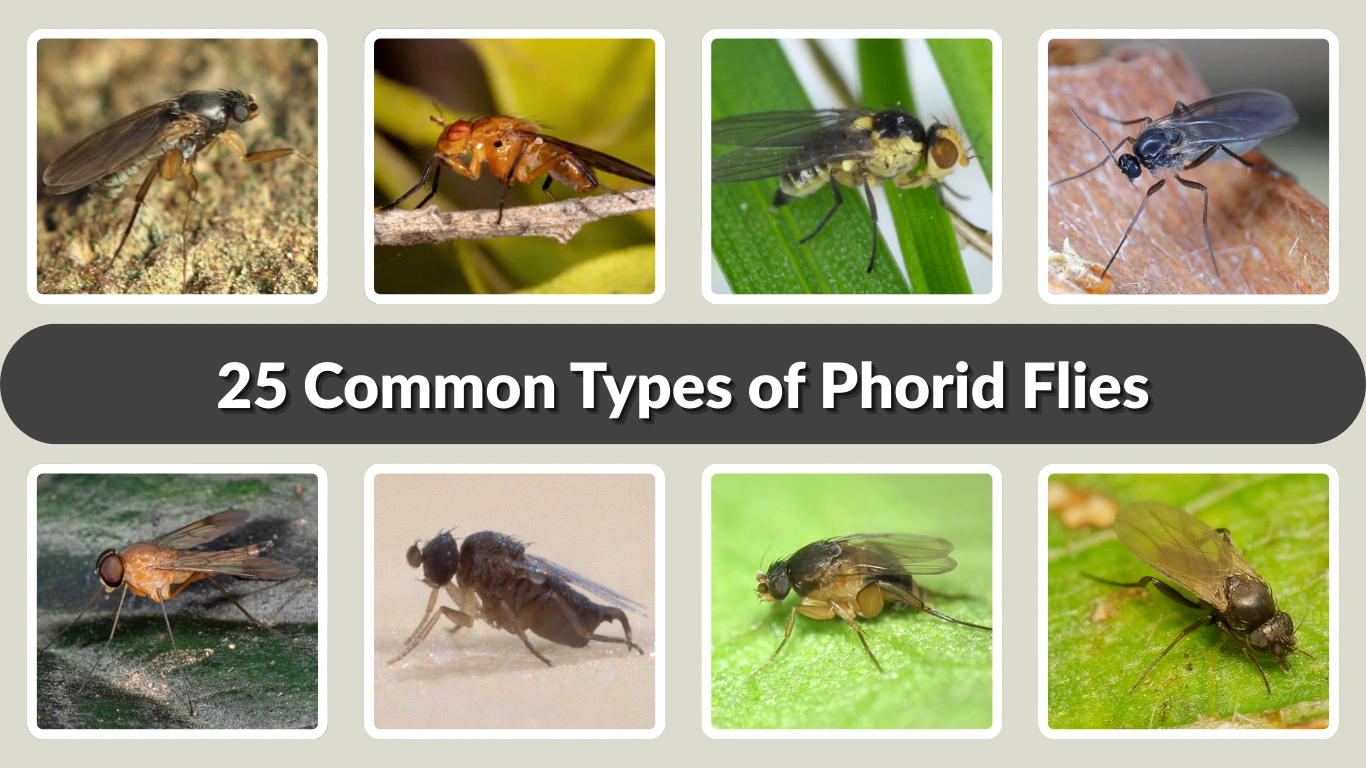
Phorid flies are small, humpbacked insects known for their quick, darting movement and preference for moist, decaying environments. Found in homes, drains, compost, and natural habitats, these flies breed rapidly and thrive anywhere organic matter breaks down. This guide highlights 25 common phorid fly species, along with their key traits, habitats, and behaviors to help with accurate identification and understanding of their biology and habits.
1. Megaselia scalaris
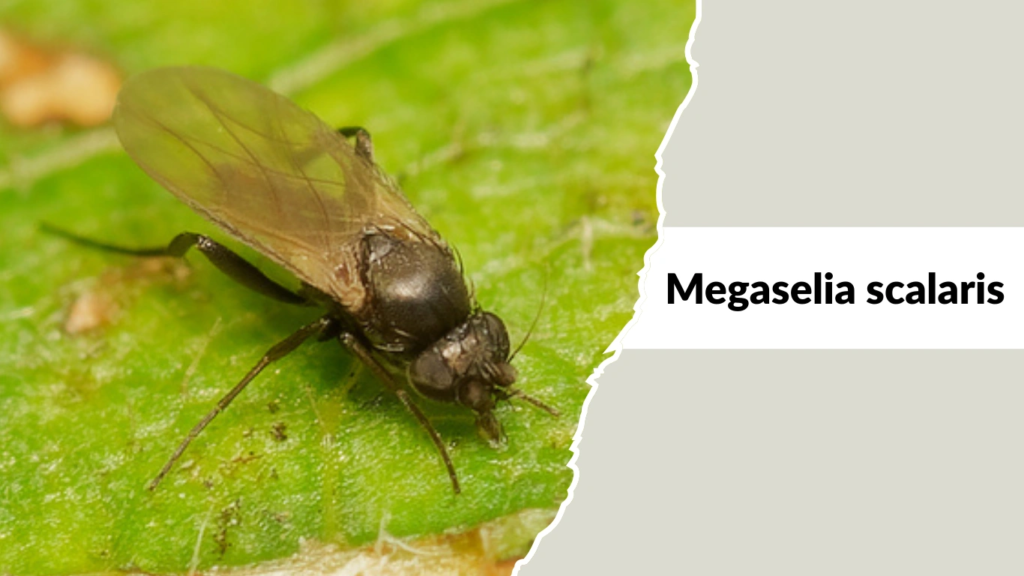
Megaselia scalaris, commonly called the scuttle fly or humpbacked fly, is one of the most widespread and adaptable phorid fly species. Known for its rapid movement and ability to thrive in nearly any decaying organic material, it frequently appears in homes, drains, laboratories, and medical facilities.
Identification
- Small (1–2 mm) with a pronounced humpbacked thorax
- Yellowish-brown to dark brown body
- Clear wings with distinct venation
- Erratic, fast “scuttling” movement across surfaces
- Slightly flattened wing posture when at rest
Habitat
Megaselia scalaris thrives in moist, warm environments with decaying organic matter. It commonly inhabits drains, garbage areas, compost, sewage, rotting vegetation, and various indoor problem sites. The species adapts extremely well to human environments, making it one of the most frequent phorid invaders.
Behaviors
This fly is known for its rapid running behavior before taking flight. It readily seeks out small openings to enter buildings and is highly opportunistic when locating food or breeding material. Females lay eggs on moist, decaying substrates, and the species is capable of surviving in a wide variety of unexpected habitats, including medical and research settings.
Diet and Lifecycle
Larvae primarily feed on decaying organic matter, fungi, and various waste materials. Adults are attracted to moisture and decomposing substrates. The lifecycle is quick—often completing in 14–21 days—allowing rapid population growth. After eggs hatch, larvae pass through three instars, pupate, and emerge as adults ready to reproduce again.
2. Megaselia halterata
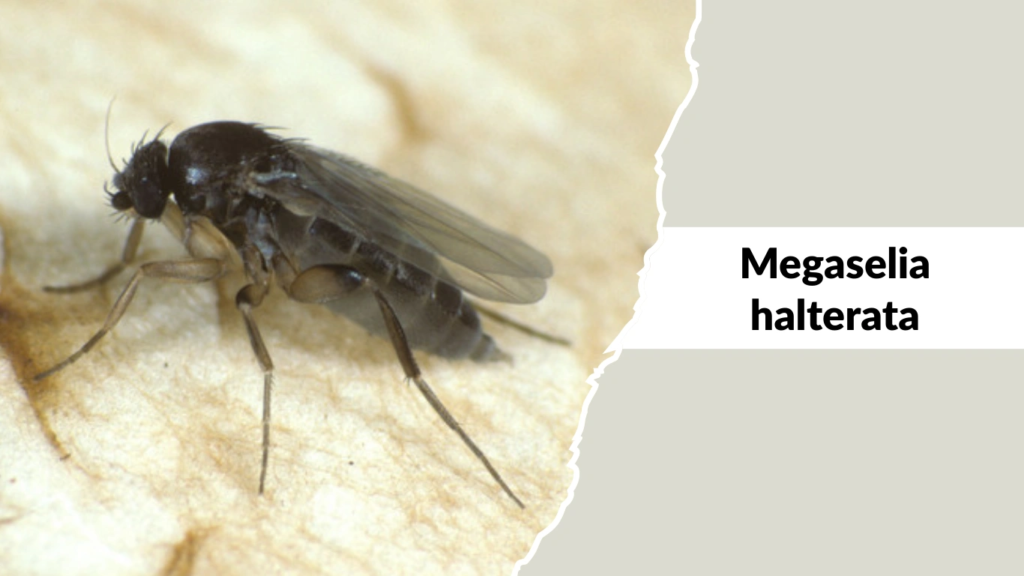
Megaselia halterata is a common phorid fly frequently associated with mushroom farms and damp organic environments. It is often referred to as the fungus scuttle fly due to its strong attraction to fungal growth and decaying vegetative material.
Identification
- Small (about 2 mm) with a slightly humpbacked thorax
- Grayish-brown body coloration
- Clear wings with typical phorid venation
- Quick, scuttling movement when disturbed
- Often found near fungal or mold-rich areas
Habitat
This species thrives in environments rich in fungal growth, especially mushroom cultivation facilities. It inhabits moist soil, compost, decaying plant matter, and areas with active fungal breakdown. Indoors, it may appear near potted plants, damp basements, or moldy structural materials.
Behaviors
Megaselia halterata is highly attracted to fungal odors and seeks out mycelium for both feeding and egg-laying. It moves rapidly across surfaces and can spread mold spores between growing areas, making it a recognized pest in mushroom production. The flies tend to stay low and run more than fly when disturbed.
Diet and Lifecycle
Larvae feed primarily on fungal mycelium, spores, and decaying organic debris. In mushroom farms, they may damage crops by feeding on developing mycelium. The lifecycle is quick, with development influenced by moisture and fungal availability. Eggs are laid on or near fungal substrates, and larvae pass through three instars before pupating and emerging as adults.
3. Megaselia rufipes
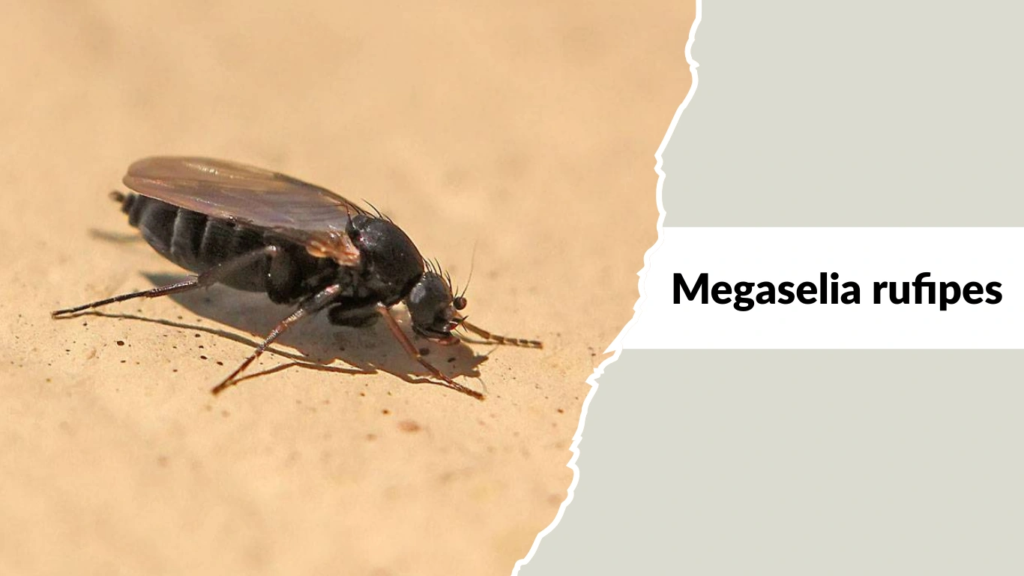
Megaselia rufipes, often called the red-legged scuttle fly, is a widely distributed phorid species recognized for its reddish legs and frequent presence around decaying organic material. It is commonly found in both natural and urban environments.
Identification
- Small (1.5–2.5 mm) with a humpbacked thorax
- Yellowish-brown body with distinct reddish legs
- Clear wings with typical phorid venation
- Quick, running movement before flight
- Often seen near decomposing plant or animal matter
Habitat
This species thrives in moist, organic-rich environments. It can be found in compost piles, decaying vegetation, garbage sites, animal remains, and damp indoor areas such as drains or basements. Megaselia rufipes is highly adaptable and frequently appears in residential and agricultural settings.
Behaviors
Known for its characteristic scuttling movement, this species actively searches for decomposing substrates suitable for egg-laying. It often congregates around organic waste and is capable of entering structures through tiny cracks. Its strong attraction to decaying material makes it a common nuisance fly.
Diet and Lifecycle
Larvae feed on decomposing plant and animal matter, fungi, and occasionally stored food products. Adults are drawn to moisture and decaying smells. The lifecycle is relatively fast, typically completing within 2–3 weeks depending on temperature. Eggs hatch into larvae that develop through three instars before pupating and emerging as adults.
4. Megaselia agarici
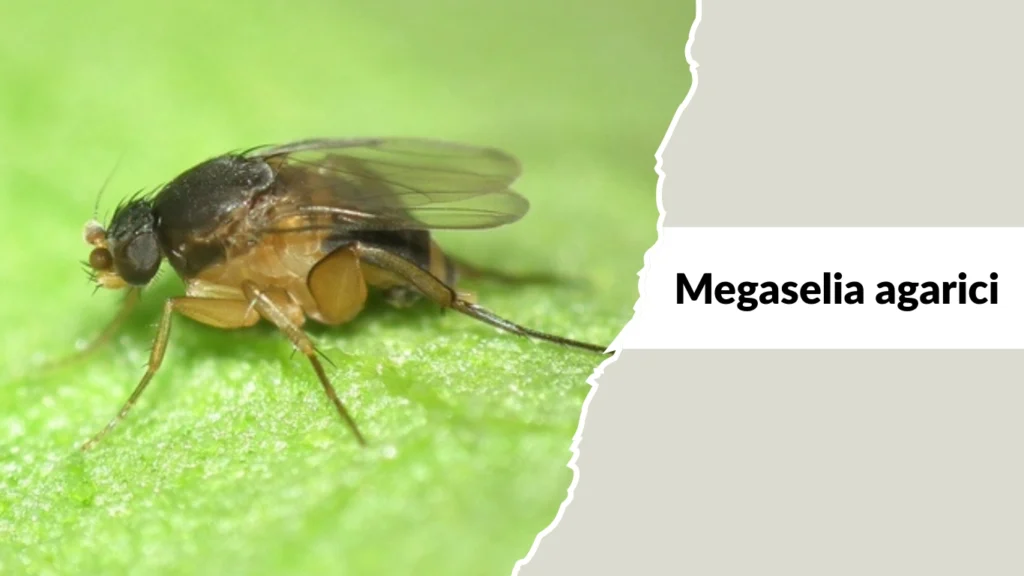
Megaselia agarici is a phorid fly strongly associated with mushrooms and decaying fungal matter. It is frequently encountered in mushroom-growing operations and damp environments rich in fungal growth.
Identification
- Small (approximately 2 mm) with a humpbacked thorax
- Light brown to yellowish body
- Clear wings with characteristic phorid venation
- Quick, erratic running movement
- Often found near mushroom beds or moist, decaying fungi
Habitat
This species thrives in environments where fungi are abundant. It is common in mushroom farms, compost piles, decaying logs, damp basements, and other areas where fungal activity is high. Indoors, it may appear near moldy materials or overwatered plants that support fungal growth.
Behaviors
Megaselia agarici is highly attracted to fungal odors and actively seeks out mushroom beds for feeding and reproduction. It scuttles rapidly when disturbed and may spread fungal spores in cultivation environments, making it a notable pest for mushroom growers. The species prefers to remain close to moist, shaded areas.
Diet and Lifecycle
Larvae feed primarily on fungal tissue, spores, and decaying organic matter. In commercial mushroom production, they may damage young fungi by feeding on developing mycelium. The lifecycle is relatively rapid, allowing populations to grow quickly in warm, moist conditions. Eggs are laid on fungal substrates, and larvae pass through three instars before pupation and adult emergence.
5. Megaselia imitatrix
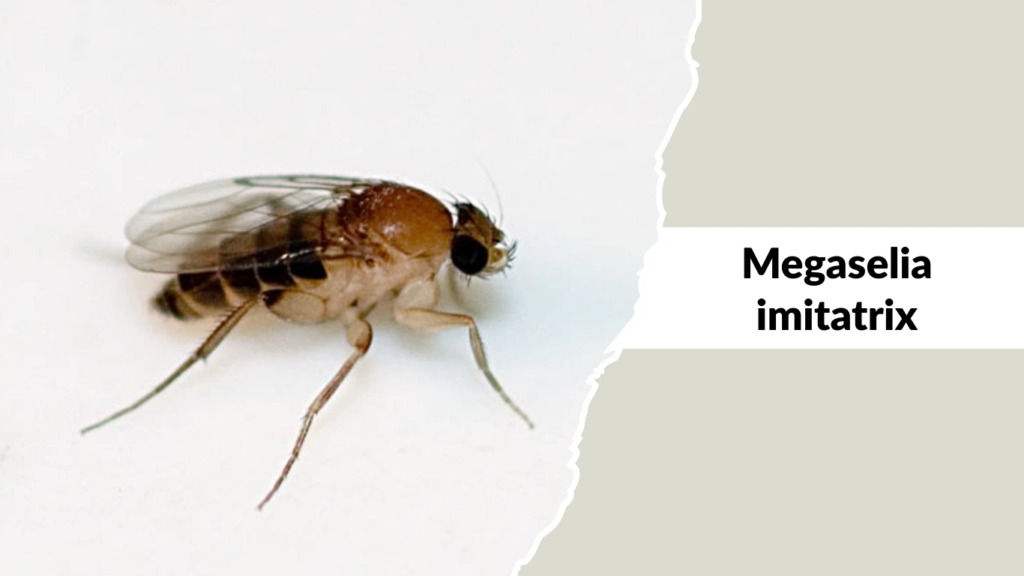
Megaselia imitatrix is a lesser-known phorid fly species but is commonly encountered in moist, decaying environments. It is recognized for its subtle appearance and association with decomposing plant and organic materials.
Identification
- Small (1.5–2 mm) with a slightly humpbacked thorax
- Pale brown to grayish body
- Clear wings with typical phorid venation
- Quick, surface-running behavior
- Often found near decaying vegetation or moist organic debris
Habitat
This species thrives in damp environments rich in decomposing plant matter. It occurs in compost piles, leaf litter, rotting logs, damp basements, neglected potted plants, and other moisture-rich areas. Megaselia imitatrix is commonly seen outdoors but can easily enter homes seeking suitable breeding material.
Behaviors
Megaselia imitatrix exhibits the characteristic “scuttle” movement of phorid flies, often running rapidly before taking flight. It is attracted to decomposing vegetation and may follow moisture gradients into buildings. Like many phorids, it uses small cracks and crevices to locate breeding sites and safe resting areas.
Diet and Lifecycle
Larvae feed on decaying plant material, fungi, and various organic substrates. Adults seek moist environments to lay eggs, and development occurs quickly in warm conditions. The lifecycle typically takes 2–3 weeks, progressing from egg to larva, then pupa, and finally adult. This rapid reproduction can lead to recurring infestations if organic material remains undisturbed.
6. Megaselia abdita
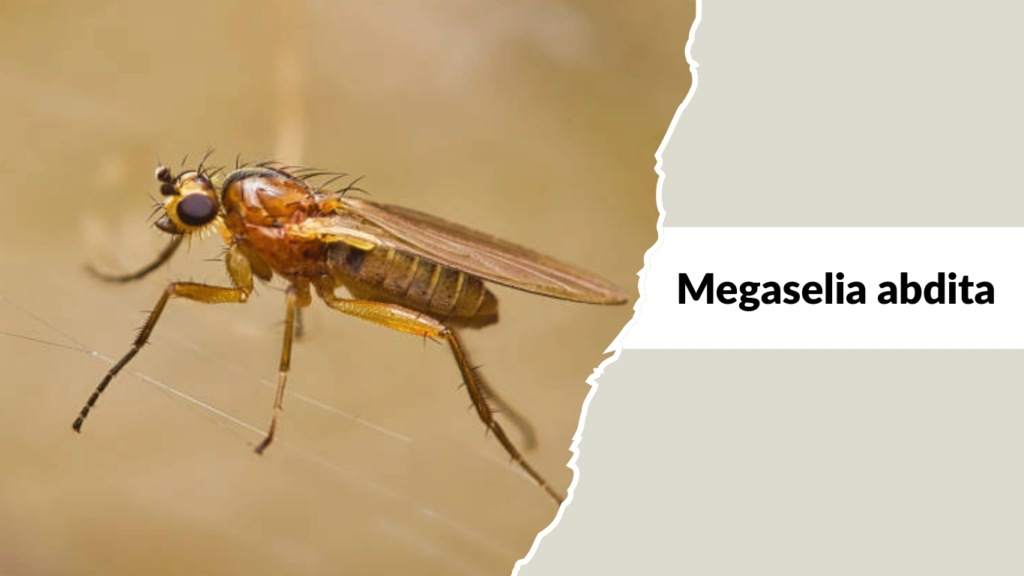
Megaselia abdita is a common phorid fly species found in both natural and human-made environments. It is well adapted to moist, decomposing organic materials and is frequently found around decaying vegetation, waste, and damp structural areas.
Identification
- Small (around 2 mm) with a noticeable humpbacked thorax
- Light brown to tan body coloration
- Clear wings with standard phorid venation
- Quick, erratic running motion when disturbed
- Often found near decomposing plant material or moist waste
Habitat
Megaselia abdita thrives in damp habitats containing plenty of decaying organic matter. It occurs in compost piles, leaf litter, sewage areas, garbage bins, drains, and other moisture-rich environments. Indoors, it can appear in bathrooms, basements, and kitchens where organic residue is present.
Behaviors
This species actively searches for decaying substrates suitable for egg-laying. It displays typical phorid behavior, scuttling over surfaces before taking short flights. Megaselia abdita is highly opportunistic and can enter buildings through small openings, quickly establishing populations if moisture and organic matter are available.
Diet and Lifecycle
Larvae feed on decaying plant material, organic waste, fungi, and similar substrates. Adults are drawn to moist, decomposing environments. The lifecycle is rapid, usually spanning 2–3 weeks depending on temperature. Eggs hatch into larvae that pass through three instars before pupation, allowing multiple generations throughout the year.
7. Megaselia spiracularis
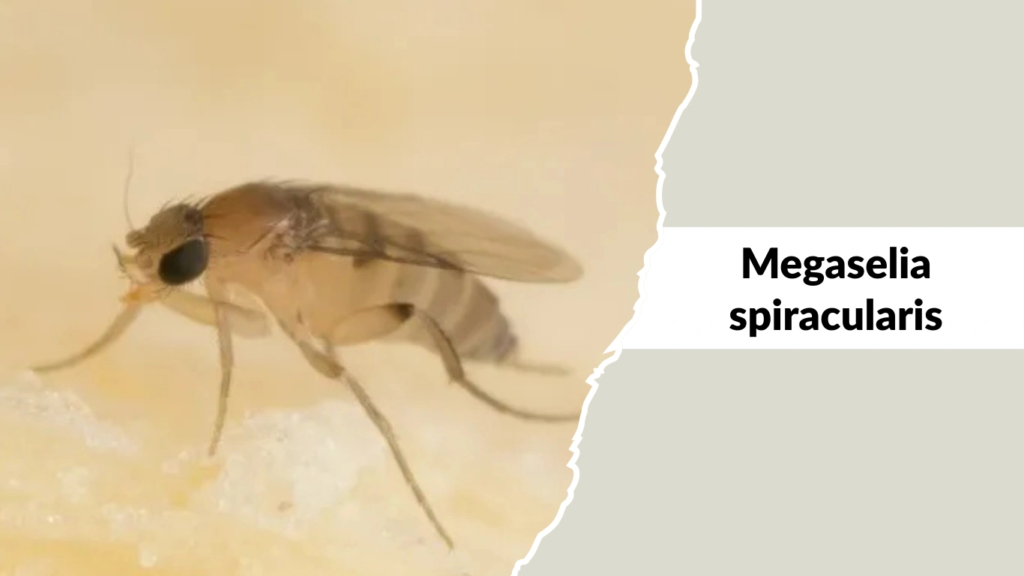
Megaselia spiracularis is a well-known phorid fly species often associated with decaying organic matter, medical waste, and occasionally forensic cases. It is recognized for its ability to exploit a wide range of decomposing substrates.
Identification
- Small (1.5–2.5 mm) with a characteristic humpbacked thorax
- Light brown to yellowish body
- Clear wings held slightly flat when at rest
- Rapid scuttling movement across surfaces
- Commonly found around decaying animal material or moist waste
Habitat
This species thrives in environments rich in decomposing organic matter. It can be found near garbage sites, carcasses, drains, sewer areas, compost, and moist indoor spaces. Megaselia spiracularis is also known to appear in medical or laboratory settings where biological waste is present.
Behaviors
Megaselia spiracularis displays strong attraction to decomposing animal material and moist organic waste. It often runs quickly over surfaces before taking short, controlled flights. The species can locate small openings to enter structures and may appear in forensic settings due to its presence on animal remains.
Diet and Lifecycle
Larvae feed on decaying animal tissue, organic waste, and occasionally fungi. Adults seek out strong decomposing odors for egg-laying. The lifecycle is fast, typically completing within 2–3 weeks under favorable temperatures. Larvae progress through three instars before pupating and emerging as adults capable of rapid population growth.
8. Megaselia nigriceps
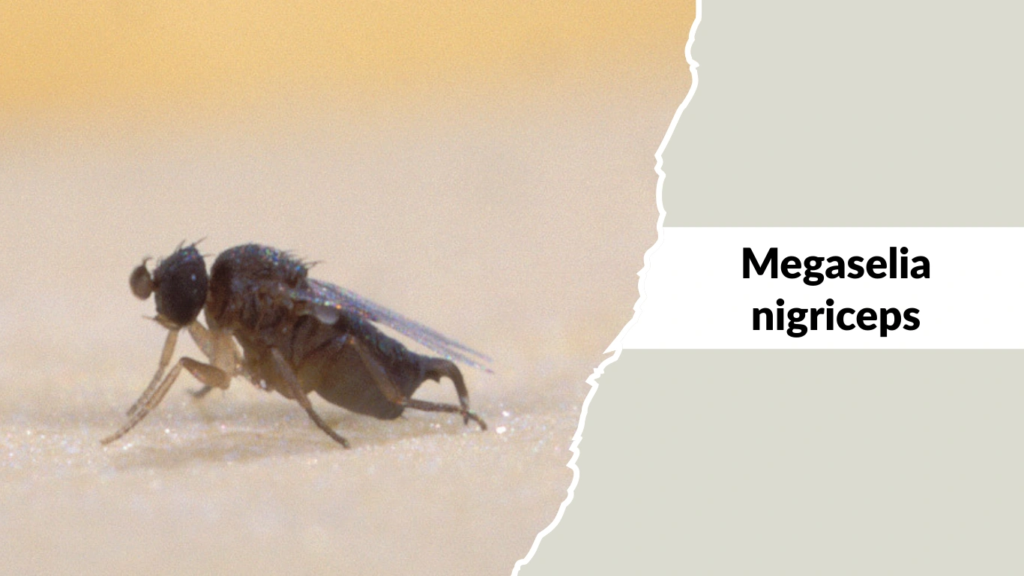
Megaselia nigriceps is a relatively common phorid fly that inhabits moist, decaying environments. It is frequently found outdoors in natural debris but can enter buildings when suitable organic material is available.
Identification
- Small (about 2 mm) with a humpbacked thorax
- Darker head (a key feature, giving the species its name “nigriceps”)
- Brown to tan body coloration
- Clear wings with typical phorid venation
- Quick, erratic running behavior
Habitat
This species thrives in moist environments rich in decomposing organic matter. It is commonly found in leaf litter, compost, rotting vegetation, and damp soil. Indoors, Megaselia nigriceps may appear in basements, bathrooms, or areas with mold, moisture, or organic residue.
Behaviors
Megaselia nigriceps exhibits the classic scuttle movement, running rapidly before short bursts of flight. It actively searches for moist decomposition sites for breeding. The species can exploit tiny structural gaps to enter homes and may become a persistent nuisance if organic matter is not removed.
Diet and Lifecycle
Larvae feed on decaying plant material, fungi, and decomposing soil organic matter. Adults are drawn to moisture-rich substrates with mild to strong decomposing odors. The lifecycle is short, typically lasting 2–3 weeks, allowing populations to grow quickly. After three larval instars, pupation occurs in soil or organic debris before adult emergence.
9. Megaselia opacifrons
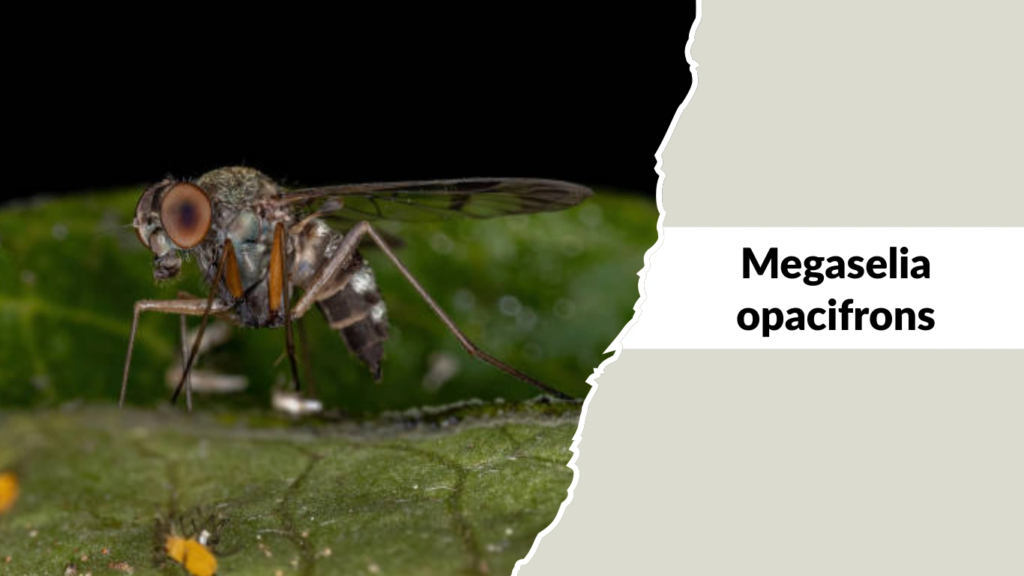
Megaselia opacifrons is a widespread phorid fly species commonly associated with moist organic habitats. It is frequently found in natural environments as well as human-occupied spaces where decomposing material is present.
Identification
- Small (1.5–2.5 mm) with a characteristic humpbacked thorax
- Light brown to dark brown body
- Slightly opaque forehead (a distinguishing feature)
- Clear wings with typical phorid venation
- Fast, erratic scuttling movement
Habitat
This species thrives in damp locations that contain decaying organic matter. It is commonly found in compost piles, rotting vegetation, manure, drains, garbage areas, and moist basements. Megaselia opacifrons can easily adapt to both outdoor and indoor environments where organic decomposition occurs.
Behaviors
Megaselia opacifrons is known for its active surface-running behavior and preference for moist, shaded habitats. It readily seeks out decomposing materials for egg-laying and can enter homes through tiny openings. The species is opportunistic and may form persistent infestations if breeding sources remain available.
Diet and Lifecycle
Larvae feed on decomposing plant material, fungi, and other organic substrates. Adults are attracted to moisture and the scent of decay. The lifecycle is relatively fast, usually completing in 2–3 weeks depending on temperature and humidity. Larvae pass through three instars before pupating and emerging as adults capable of rapid reproduction.
10. Megaselia pleuralis
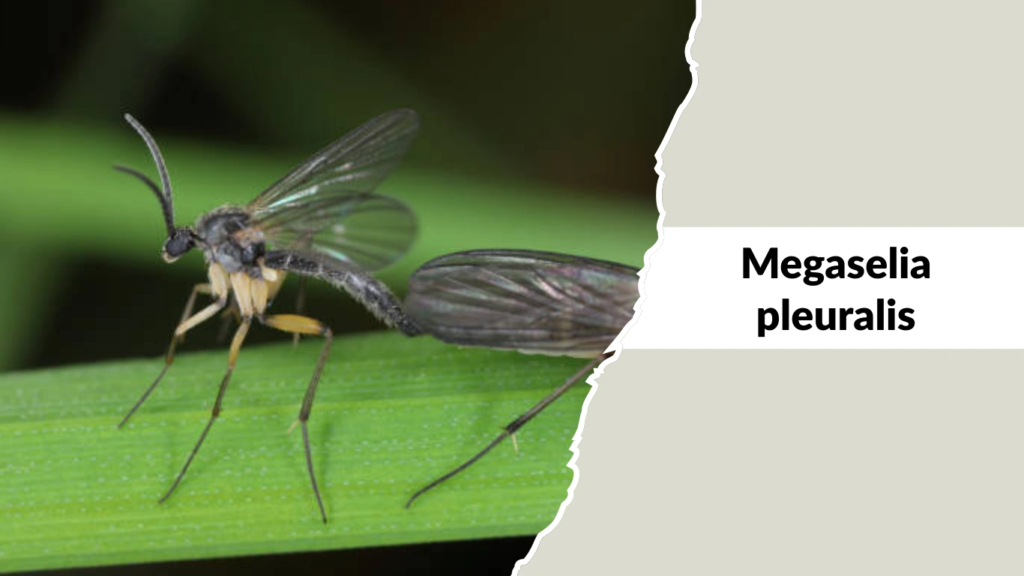
Megaselia pleuralis is a common phorid fly species found in both natural and built environments. It is closely associated with moist, decomposing organic matter and is frequently seen near vegetation, soil, and household waste areas.
Identification
- Small (around 2 mm) with a distinct humpbacked thorax
- Light brown to medium brown body
- Clear wings with typical phorid venation
- Rapid, erratic scuttling behavior
- Often found near decaying vegetation or moist soil
Habitat
Megaselia pleuralis thrives in environments rich in moisture and organic breakdown. It is commonly found in compost piles, decaying plant material, leaf litter, and moist garden soil. Indoors, it may appear in basements, bathrooms, kitchens, or anywhere with damp, decomposing organic residue.
Behaviors
This species actively searches for moist decomposing substrates suitable for egg-laying. It displays the typical scuttle movement, darting across surfaces before taking brief flights. Megaselia pleuralis can easily enter buildings through small gaps and may persist if organic debris or moisture remains available.
Diet and Lifecycle
Larvae feed on decomposing plant matter, fungi, and other organic materials. Adults are attracted to decaying odors and moisture-rich environments. The lifecycle is rapid—typically taking 2–3 weeks. After hatching, larvae pass through three instars before pupating and eventually emerging as adults capable of fast reproduction.
11. Megaselia curtineura
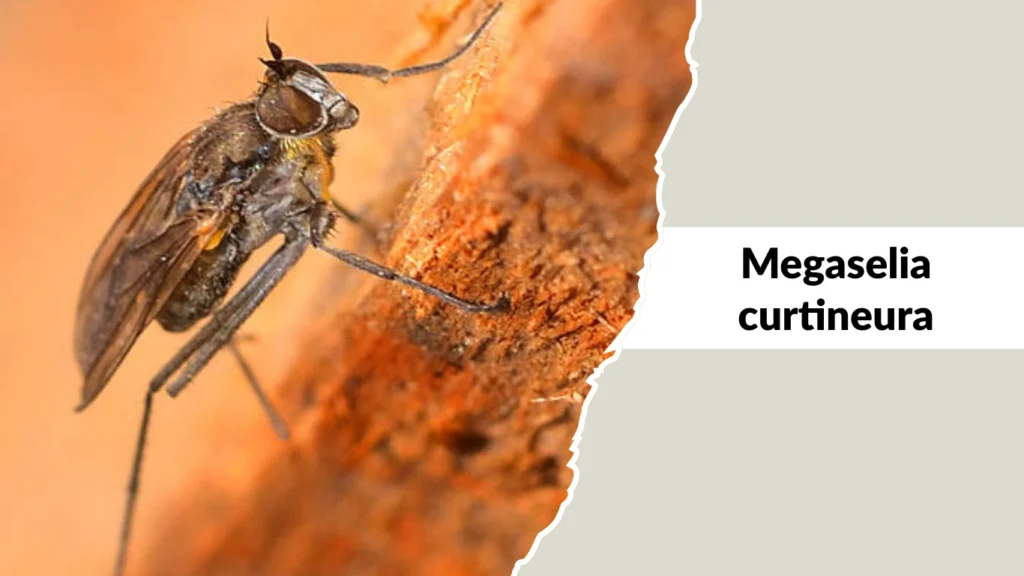
Megaselia curtineura is a phorid fly species commonly found in environments rich in decaying organic matter. It is frequently encountered outdoors in natural debris but can also enter buildings when moisture and decomposing substrates are available.
Identification
- Small (about 2 mm) with the typical humpbacked thorax
- Light brown to tan body
- Distinctive bristle patterns on the wings and thorax (species trait)
- Clear wings with characteristic phorid venation
- Quick scuttling movement across surfaces
Habitat
This species thrives in moist environments with plenty of organic decomposition. It is found in leaf litter, compost piles, rotting vegetation, and damp soil. Indoors, Megaselia curtineura may appear in basements, bathrooms, and kitchens where moisture and organic residue accumulate.
Behaviors
Megaselia curtineura demonstrates the classic surface-running behavior of phorid flies. It is attracted to decomposing plant and animal materials and readily seeks out small cracks or crevices for shelter and egg-laying. The species is opportunistic and capable of establishing small indoor populations.
Diet and Lifecycle
Larvae feed on decaying organic matter, fungi, and moisture-rich debris. Adults are strongly drawn to damp environments and decaying odors. The lifecycle is fast, usually completing within 2–3 weeks. After eggs hatch, larvae progress through three instars before pupation and emerging as adults ready to reproduce.
12. Megaselia sulphuripes
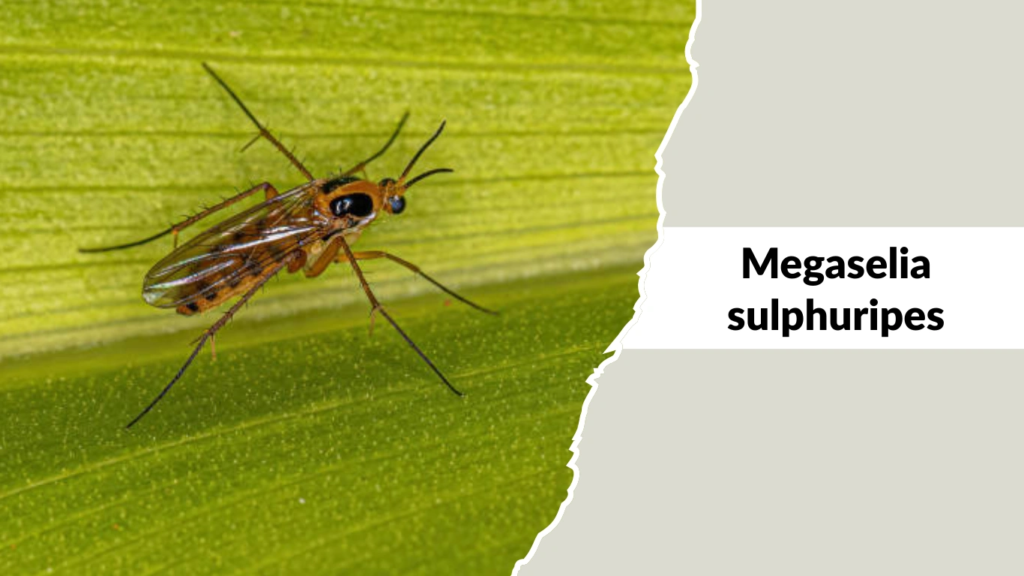
Megaselia sulphuripes is a widespread phorid fly species recognized for its association with decaying vegetation, fungi, and moist organic substrates. It is commonly found around natural debris but frequently enters buildings where suitable breeding conditions exist.
Identification
- Small (1.5–2.5 mm) with a noticeable humpbacked thorax
- Yellowish body (“sulphur-colored”), which helps distinguish it
- Clear wings with typical phorid venation
- Quick, erratic scuttling movement
- Often observed near fungi or decomposing plant materials
Habitat
This species thrives in moist, shaded environments rich in organic decomposition. It is commonly seen in leaf litter, compost piles, mushroom-rich areas, damp soil, and rotting vegetation. Indoors, it may appear in bathrooms, kitchens, basements, or anywhere where organic debris remains moist.
Behaviors
Megaselia sulphuripes shows strong attraction to fungal and decomposing plant odors. It frequently runs across surfaces before taking short flights. This species is adept at finding small cracks and crevices for shelter and may become an indoor nuisance when fungal or organic growth is present.
Diet and Lifecycle
Larvae feed on fungi, decaying vegetation, and moisture-rich organic material. Adults seek out decomposing or moldy environments for egg-laying. The lifecycle is rapid, typically taking 2–3 weeks. Larvae progress through three instars before pupating and emerging as adults capable of quick reproduction.
13. Megaselia cavernicola
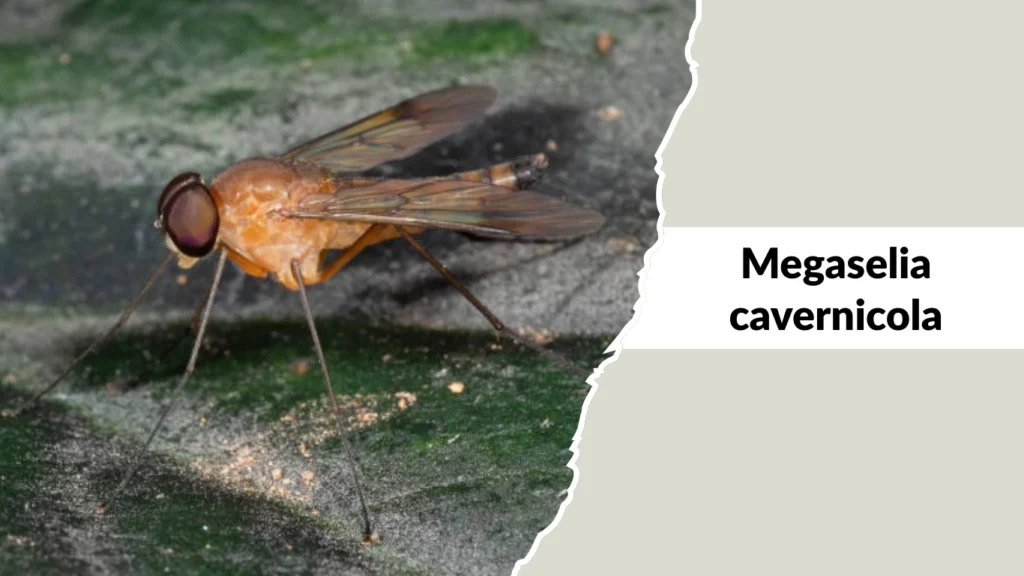
Megaselia cavernicola is a phorid fly species commonly associated with caves, dark crevices, and other sheltered environments rich in moisture and organic decomposition. It is adapted to low-light habitats and thrives in naturally humid spaces.
Identification
- Small (about 2 mm) with a distinct humpbacked thorax
- Pale brown to grayish body
- Clear wings with typical phorid venation
- Rapid, scuttling movement across surfaces
- Often found in cave environments or dark, damp areas
Habitat
This species is strongly associated with caves, mines, underground tunnels, and moist crevices. It also inhabits leaf litter, rotting wood, and damp soil in shaded forested areas. Indoors, Megaselia cavernicola may appear in basements, crawlspaces, or moisture-prone structural voids.
Behaviors
Megaselia cavernicola prefers dim or dark environments and is adept at locating decomposing organic material in sheltered spaces. It moves rapidly along surfaces and often remains close to walls or structural features. The species is highly moisture-dependent and seeks out humid locations for breeding.
Diet and Lifecycle
Larvae feed on decomposing plant material, fungi, and other organic substrates commonly found in dark, damp environments. Adults search for moisture-rich decomposing material for egg-laying. The life cycle is relatively fast, usually taking 2–3 weeks, with larvae passing through three instars before pupating and emerging as adults.
14. Megaselia giraudii
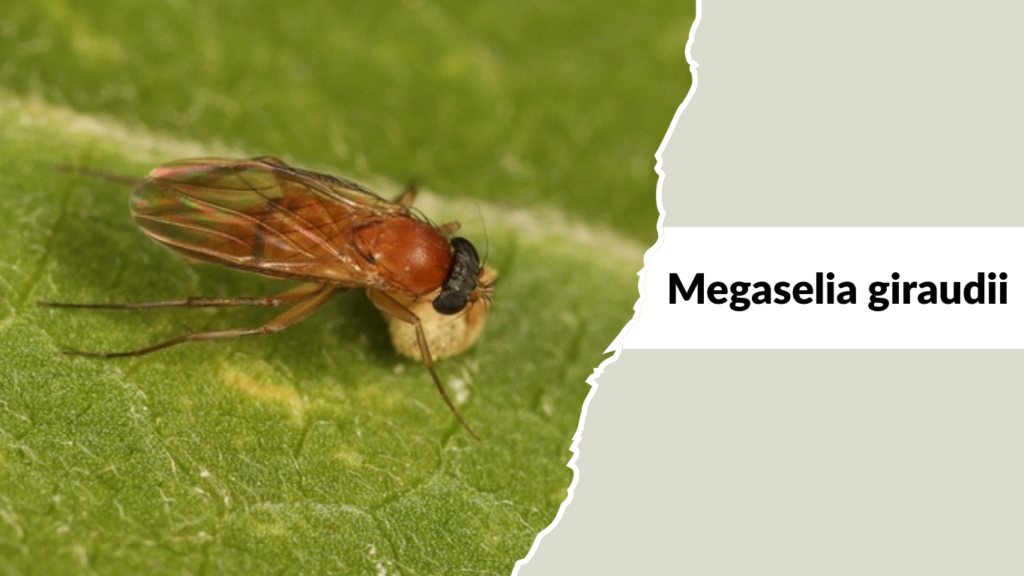
Megaselia giraudii is a widely distributed phorid fly species found in damp, decomposing environments. It is often encountered around decaying vegetation, moist soil, and organic waste, both outdoors and indoors.
Identification
- Small (1.5–2.5 mm) with a humpbacked thorax
- Light brown to medium brown body
- Clear wings with typical phorid venation
- Fast, erratic scuttling movement
- Often found near rotting vegetation or moist organic debris
Habitat
Megaselia giraudii thrives in moist environments rich in decomposing matter. It is common in compost piles, garden soil, leaf litter, and decaying plant material. Indoors, it may occur in basements, bathrooms, kitchens, and areas where moisture and organic residue accumulate.
Behaviors
This species actively searches for suitable decomposing substrates for egg-laying. It displays typical phorid behavior—running rapidly over surfaces before taking short, controlled flights. Megaselia giraudii can easily enter structures through small gaps and may become persistent if organic material remains available.
Diet and Lifecycle
Larvae feed on decomposing plant matter, fungi, and moist organic debris. Adults are strongly attracted to decaying odors and damp environments. The lifecycle is fast, usually taking 2–3 weeks. Larvae pass through three instars before pupation, eventually emerging as adults capable of multiple generations per year.
15. Megaselia cinerea
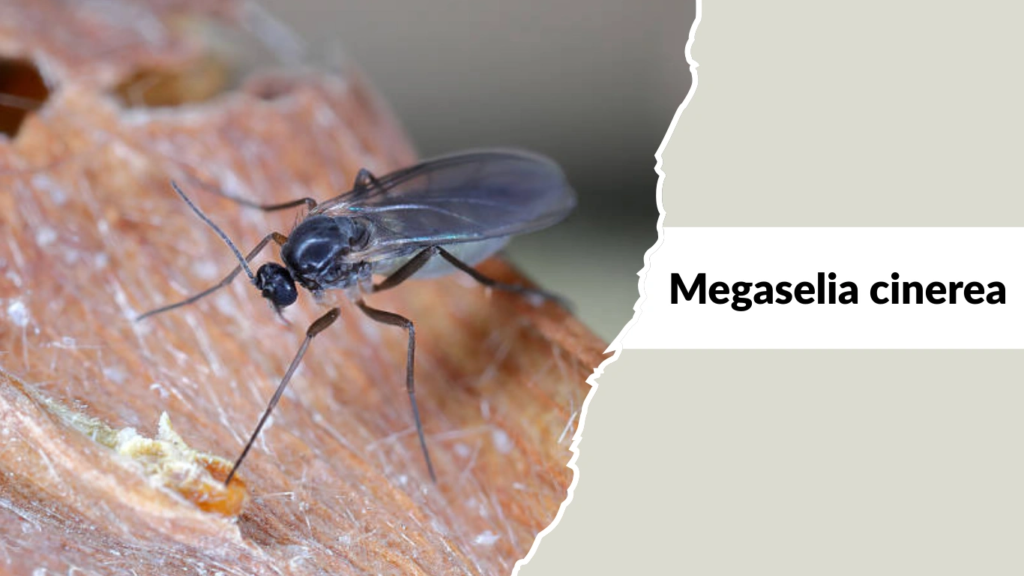
Megaselia cinerea is a phorid fly species commonly found in moist, organically rich habitats. It is known for its association with decaying vegetation, fungi, and soil rich in organic debris, making it a frequent visitor to compost and garden environments.
Identification
- Small (about 2 mm) with the typical humpbacked thorax
- Grayish to pale brown body coloration (“cinerea” meaning ash-colored)
- Clear wings with standard phorid venation
- Quick, surface-running, erratic movement
- Often found near decaying plant or fungal material
Habitat
Megaselia cinerea thrives in damp, decomposing environments. It is commonly found in compost piles, leaf litter, rotting logs, and fungus-rich soil. Indoors, it may appear in basements, bathrooms, and kitchens where moisture and organic residue support its development.
Behaviors
This species frequently searches for moist, decaying substrates ideal for egg-laying. It runs rapidly across surfaces and takes short, controlled flights when disturbed. Megaselia cinerea can easily infiltrate buildings through small gaps and may remain present if decomposing organic matter is undisturbed.
Diet and Lifecycle
Larvae feed on decomposing vegetation, fungi, and organic waste. Adults are attracted to decay-related odors and high-moisture environments. The lifecycle typically completes in 2–3 weeks, progressing through egg, three larval instars, pupation, and adult emergence. Multiple generations can occur annually in warm conditions.
16. Megaselia costalis
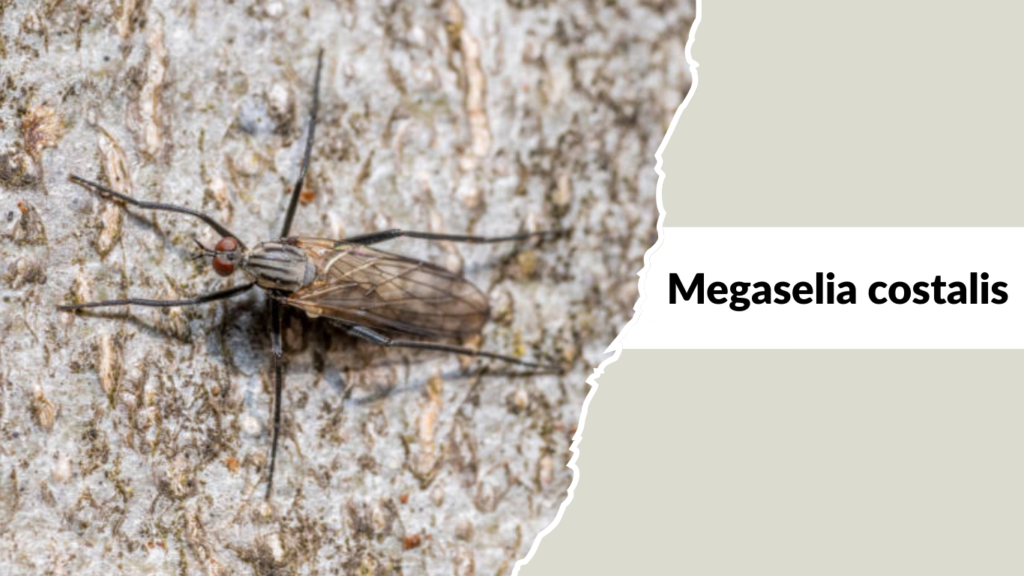
Megaselia costalis is a widespread phorid fly species often found in moist, decomposing environments. It is associated with decaying plant material, fungi, and organic waste, making it a common inhabitant of both natural and domestic locations.
Identification
- Small (1.5–2.5 mm) with a distinct humpbacked thorax
- Light brown to tan body coloration
- Clear wings with typical phorid venation
- Quick, erratic scuttling movement
- Commonly seen around decaying vegetation or moist organic debris
Habitat
This species thrives in environments rich in organic decomposition. It is frequently found in compost piles, garden soil, rotting leaves, and damp wooded areas. Indoors, Megaselia costalis may appear in basements, kitchens, bathrooms, and other moisture-prone sites that contain decaying residue.
Behaviors
Megaselia costalis exhibits the classic phorid running behavior, darting across surfaces before taking short flights. It actively seeks out damp decomposing material for egg-laying and can easily enter structures through small gaps. When breeding material remains available, small indoor populations can develop.
Diet and Lifecycle
Larvae feed on decomposing plant matter, fungi, and various organic wastes. Adults are strongly attracted to moisture and the scent of decay. The lifecycle is rapid, typically taking 2–3 weeks. After hatching, larvae go through three instars before pupating and emerging as adults capable of producing multiple generations annually.
17. Megaselia producta
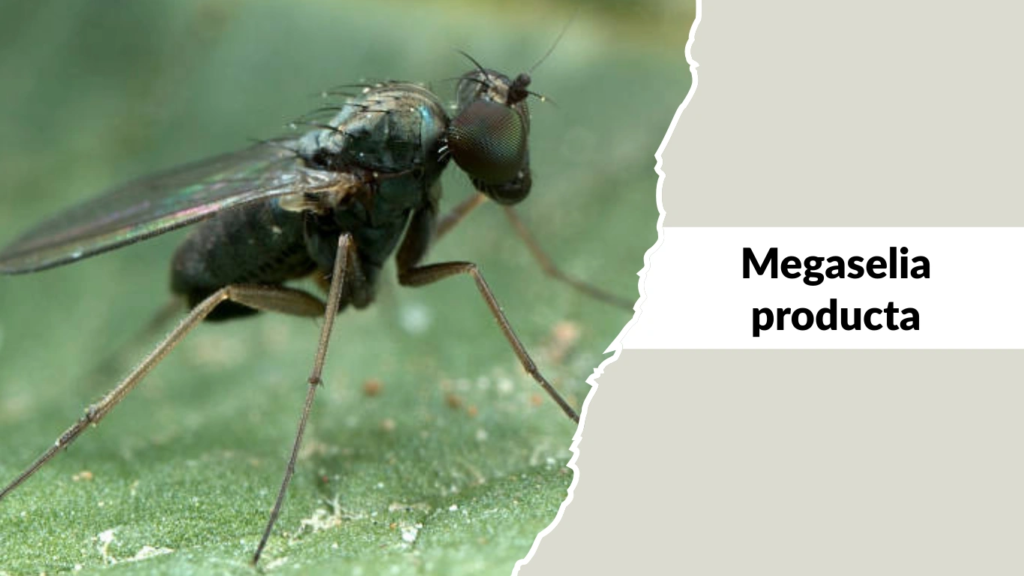
Megaselia producta is a commonly encountered phorid fly species found in moist, decaying environments. It thrives in natural debris as well as human-impacted areas where organic waste accumulates.
Identification
- Small (about 2 mm) with the typical humpbacked phorid thorax
- Light brown to yellowish body coloration
- Clear wings with characteristic phorid venation
- Fast, erratic scuttling motion
- Often located near decomposing plant or fungal material
Habitat
Megaselia producta is frequently found in leaf litter, compost piles, rotting wood, and moist garden soil. Indoors, it may appear in kitchens, bathrooms, drains, and basements where damp organic residue is present. Its adaptability allows it to colonize a wide range of moist environments.
Behaviors
This species exhibits the characteristic running behavior of phorid flies, rapidly moving across surfaces before taking short flights. It actively seeks out decomposing organic material for egg-laying and can infiltrate structures through tiny openings. Persistent moisture and decay encourage population growth.
Diet and Lifecycle
Larvae feed on decaying vegetation, fungi, and various organic wastes. Adults are attracted to damp environments and decomposing odors. The lifecycle is fast—typically 2–3 weeks—allowing several generations per year. After three larval instars, pupation occurs in soil or debris before adult emergence.
18. Megaselia flavoscutellata
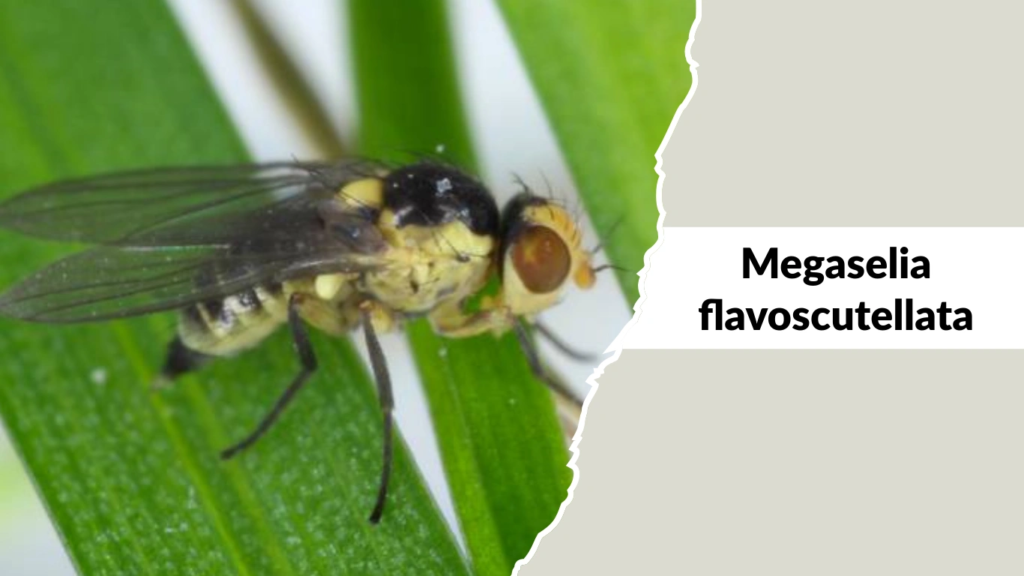
Megaselia flavoscutellata is a phorid fly species recognized for its association with decaying vegetation, fungi, and moist organic habitats. Its name refers to the yellowish scutellum (a small shield-like plate on the thorax), which helps distinguish it from related species.
Identification
- Small (1.5–2.5 mm) with a noticeable humpbacked thorax
- Light brown body with a yellowish scutellum
- Clear wings with typical phorid venation
- Quick, surface-running behavior
- Often found near fungus-rich or decaying plant materials
Habitat
This species thrives in environments with abundant moisture and organic decomposition. It is common in compost piles, leaf litter, damp soil, and decaying vegetation. Indoors, it may appear in basements, kitchens, bathrooms, or areas where mold and moisture accumulate.
Behaviors
Megaselia flavoscutellata is active around decomposing organic matter and fungus-rich areas. It scuttles rapidly when disturbed and can enter buildings through small gaps and cracks. Its preference for moist, shaded habitats makes it more common in environments where organic materials remain damp.
Diet and Lifecycle
Larvae feed on fungi, decaying vegetation, and moist organic debris. Adults are highly attracted to decomposing material and fungal odors. The lifecycle is quick, typically completing in 2–3 weeks. Larvae pass through three instars before pupation, allowing populations to grow steadily in favorable conditions.
19. Megaselia aurea
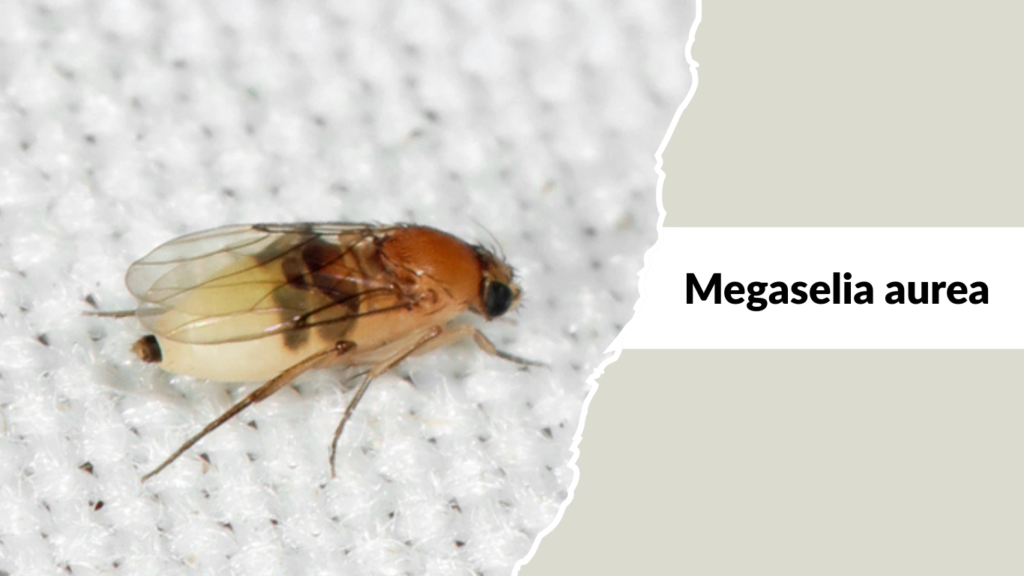
Megaselia aurea is a phorid fly species often found in moist, decomposing environments rich in organic material. It is recognized for its slightly golden or yellowish hue, which distinguishes it from many darker phorid species.
Identification
- Small (1.5–2.5 mm) with the characteristic humpbacked thorax
- Yellowish to golden-brown body coloration
- Clear wings with typical phorid venation
- Quick, surface-running movement before short flight bursts
- Common near decaying plant or fungal matter
Habitat
Megaselia aurea thrives in moist, organic-rich environments such as leaf litter, compost piles, rotting vegetation, and fungus-rich soil. Indoors, it may appear in areas with damp organic residue, such as basements, bathrooms, and neglected potted plants.
Behaviors
This species actively searches for decomposing materials suitable for egg-laying. It performs rapid scuttling movements across surfaces and can easily enter structures through small openings. Megaselia aurea typically remains close to moisture sources and decomposing organic matter.
Diet and Lifecycle
Larvae feed on decaying vegetation, fungi, and organic waste materials. Adults are drawn to moisture and the scent of decay. The lifecycle is rapid—usually 2–3 weeks—allowing multiple generations each year. After eggs hatch, larvae pass through three instars before pupating and emerging as adults.
20. Megaselia fungicola
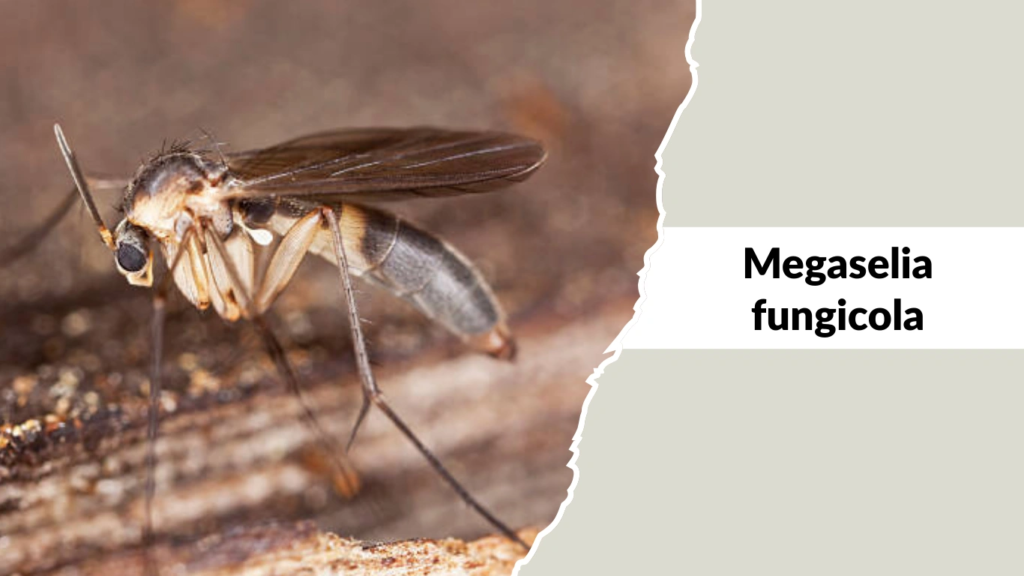
Megaselia fungicola is a phorid fly species strongly associated with fungi and damp, decaying organic material. It is commonly found in mushroom-rich habitats and environments where fungal growth is active.
Identification
- Small (around 2 mm) with a pronounced humpbacked thorax
- Light brown to tan body coloration
- Clear wings with standard phorid venation
- Rapid, scuttling movement typical of phorid flies
- Frequently found near mushrooms or moldy materials
Habitat
This species thrives in environments abundant with fungi. It is commonly found in mushroom farms, compost piles, damp forest floors, and rotting logs. Indoors, Megaselia fungicola may appear in mold-prone areas such as basements, bathrooms, and overwatered potted plants.
Behaviors
Megaselia fungicola is highly attracted to fungal odors and actively seeks out mycelium and mushroom beds for feeding and breeding. It scuttles quickly across surfaces and may spread fungal spores in cultivation environments, making it a concern for mushroom growers.
Diet and Lifecycle
Larvae feed primarily on fungal tissue, spores, and decomposing organic matter. Adults are drawn to heavily fungal environments and moisture-rich substrates. The lifecycle is relatively fast—usually completing in 2–3 weeks. Larvae develop through three instars before pupation and adult emergence.
21. Megaselia lutzi
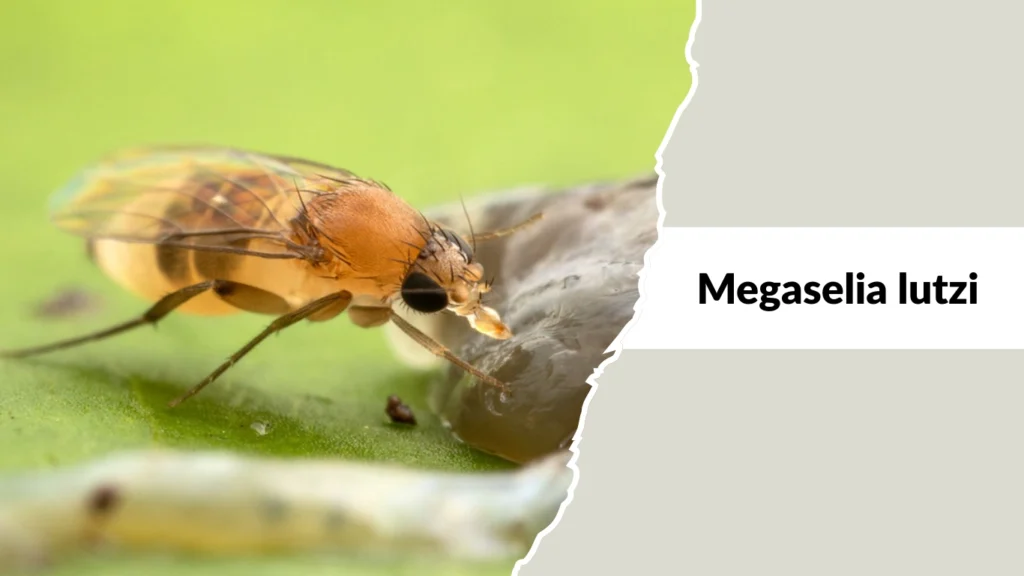
Megaselia lutzi is a phorid fly species commonly encountered in damp, organically rich environments. It is often associated with decaying vegetation, fungi, and various moist substrates where organic matter accumulates.
Identification
- Small (1.5–2.5 mm) with the typical humpbacked thorax
- Light brown to medium brown body coloration
- Clear wings with characteristic phorid venation
- Quick, erratic scuttling movement
- Commonly found around decaying plant or fungal materials
Habitat
Megaselia lutzi thrives in environments rich in decomposing organic matter. It is often found in compost piles, leaf litter, damp soil, rotting vegetation, and fungus-rich outdoor areas. Indoors, it may appear in basements, bathrooms, kitchens, or mold-prone spaces.
Behaviors
This species actively seeks out moist, decomposing substrates for egg-laying. It shows typical phorid behavior, darting across surfaces before taking short flights. Megaselia lutzi readily enters buildings through small structural openings and may persist if moisture and organic residue remain accessible.
Diet and Lifecycle
Larvae feed on decaying vegetation, fungi, and a range of organic debris. Adults are drawn to decay-related odors and damp environments. The lifecycle is rapid, generally taking 2–3 weeks. After passing through three larval instars, pupation occurs in soil or organic matter before adults emerge.
22. Megaselia diversa
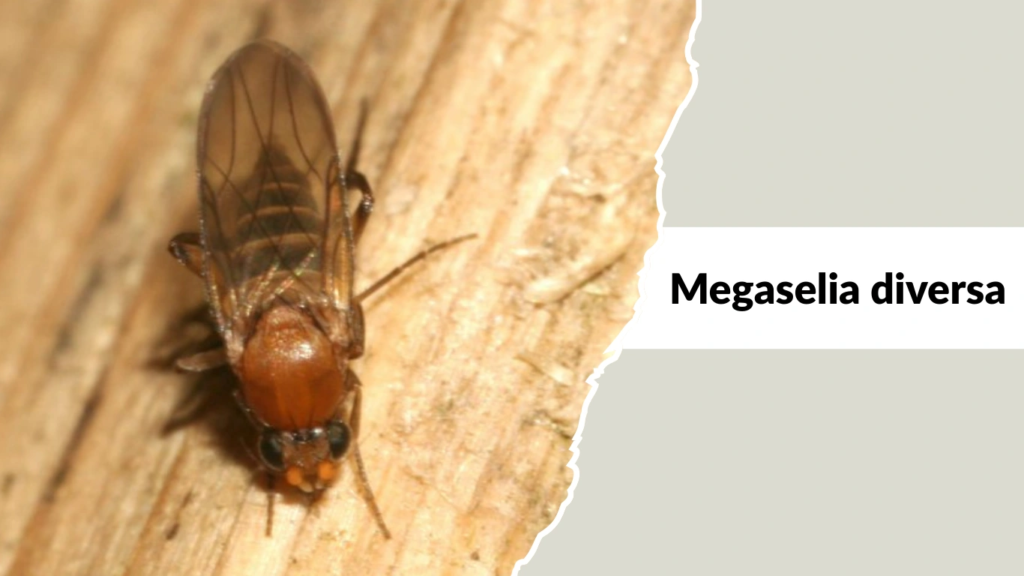
Megaselia diversa is a widely distributed phorid fly species that inhabits moist, decomposing environments. Its adaptability allows it to thrive in both outdoor natural habitats and indoor spaces where organic material is present.
Identification
- Small (1.5–2.5 mm) with a characteristic humpbacked thorax
- Light brown to pale tan body coloration
- Clear wings with typical phorid venation
- Rapid, erratic surface-running movement
- Often found near decomposing vegetation or damp organic debris
Habitat
This species thrives in moist, shaded environments rich in organic decomposition. It is frequently found in compost piles, leaf litter, damp soil, garden beds, and decaying vegetation. Indoors, Megaselia diversa may occur in bathrooms, kitchens, basements, or areas with mold or moisture buildup.
Behaviors
Megaselia diversa actively searches for decomposing substrates for egg-laying. It displays typical phorid behavior, quickly scuttling across surfaces before taking short flights. The species is highly opportunistic and readily enters buildings through tiny cracks or gaps.
Diet and Lifecycle
Larvae feed on decaying organic matter, fungi, and moisture-rich debris. Adults are drawn to the scent of decay and high-moisture environments. The lifecycle is rapid—usually 2–3 weeks—allowing multiple generations per year. Larvae pass through three instars before pupation and emergence as adults.
23. Megaselia setulosa

Megaselia setulosa is a phorid fly species commonly associated with moist, decomposing environments. It is recognized for its presence around decaying vegetation, fungi, and organic-rich habitats both outdoors and indoors.
Identification
- Small (1.5–2 mm) with a typical humpbacked thorax
- Light to medium brown body
- Fine bristle (setae) patterns on the thorax and abdomen
- Clear wings with standard phorid venation
- Quick, erratic scuttling movement
Habitat
Megaselia setulosa thrives in moisture-rich environments filled with decaying organic matter. It can be found in compost piles, leaf litter, rotting vegetation, damp forest floors, and fungus-rich soil. Indoors, it may appear in basements, kitchens, bathrooms, drains, and other moist, organic-prone sites.
Behaviors
This species actively searches for decomposing substrates suitable for egg-laying. It runs rapidly across surfaces and takes short, controlled flights. Megaselia setulosa can easily infiltrate buildings through small gaps and may persist if suitable breeding sources remain available.
Diet and Lifecycle
Larvae feed on decomposing plant material, fungi, and moist organic debris. Adults are attracted to decaying odors and warm, humid environments. The lifecycle is fast—typically completing in 2–3 weeks. Larvae pass through three instars before pupating and emerging as adults capable of multiple generations each year.
24. Puliciphora borinquenensis
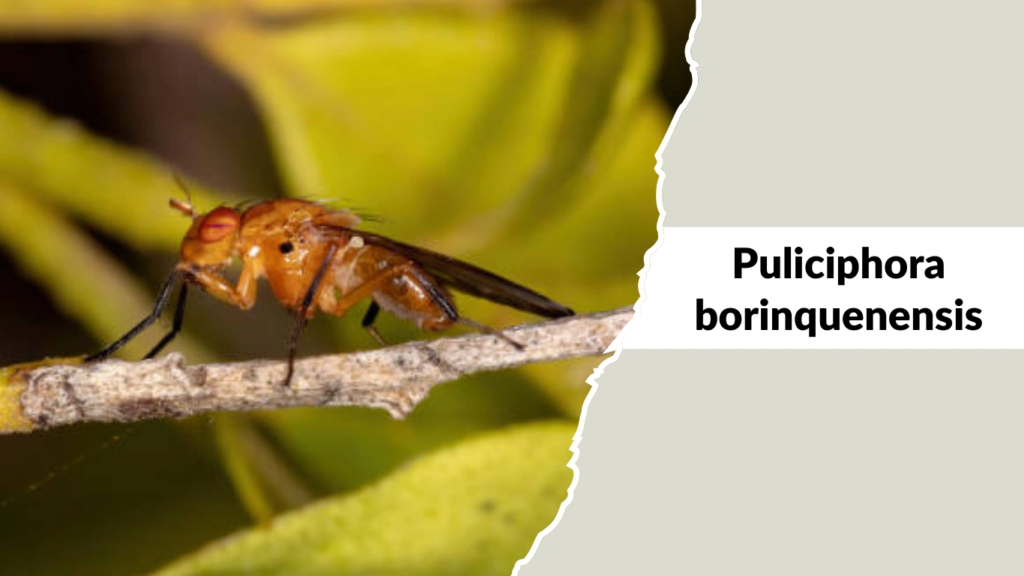
Puliciphora borinquenensis is a distinctive phorid fly species known for its flea-like jumping behavior. Unlike many phorid flies that primarily scuttle, this species is capable of making strong leaps, which helps differentiate it from related species.
Identification
- Very small (1–2 mm) with a compact, rounded body
- Dark brown to black coloration
- Highly developed hind legs used for jumping
- Clear wings, though adults often rely more on jumping than flying
- Frequently found near decaying organic or fungal materials
Habitat
This species thrives in humid, organic-rich environments. It is commonly found in leaf litter, compost piles, rotting vegetation, and fungus-rich soil. Puliciphora borinquenensis may also appear indoors in basements, bathrooms, or kitchens where damp organic material accumulates.
Behaviors
Puliciphora borinquenensis exhibits unique jumping behavior rather than the typical scuttling of most phorid flies. It uses strong hind legs to leap away quickly when disturbed. The species actively searches for decomposing organic substrates for breeding and may enter buildings when moisture and organic debris are present.
Diet and Lifecycle
Larvae feed on decaying plant material, fungi, and moist organic debris. Adults prefer humid environments and are attracted to decomposing odors. The lifecycle is moderately fast—usually completing in about 2–3 weeks. Larvae develop through three instars before pupating and emerging as adults capable of jumping rather than running.
25. Dohrniphora cornuta
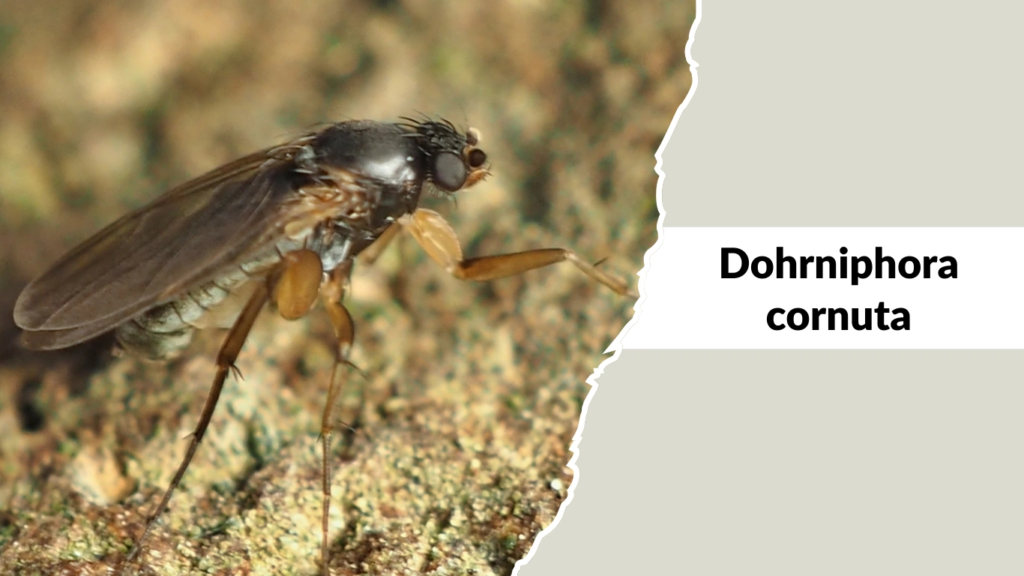
Dohrniphora cornuta is one of the most recognizable species in the phorid fly group due to its dark coloration and strong attraction to decaying organic matter. It is frequently found in both natural and urban environments, especially where decomposing waste is present.
Identification
- Small (1.5–3 mm) with a pronounced humpbacked thorax
- Dark brown to black body coloration
- Clear wings with characteristic phorid venation
- Rapid scuttling movement across surfaces
- Common near decomposing organic or waste materials
Habitat
This species thrives in moist habitats rich in organic breakdown. It is frequently found in garbage areas, compost heaps, decaying vegetation, sewage zones, and carcasses. Indoors, Dohrniphora cornuta may appear in drains, basements, bathrooms, and any area with damp, decomposing matter.
Behaviors
Dohrniphora cornuta actively searches for decomposing animal and plant materials for egg-laying. It runs quickly over surfaces before taking short flights, and its dark coloration often makes it more noticeable than lighter phorid species. It is considered a nuisance pest and may spread bacteria if populations grow near food or waste sites.
Diet and Lifecycle
Larvae feed on decaying organic matter, including animal tissues, plant debris, and fungi. Adults are attracted to strong decomposing odors and moisture. The lifecycle is relatively quick—typically taking 2–3 weeks. After three larval instars, pupation occurs in soil or organic debris, followed by adult emergence.
FAQs
1. What attracts phorid flies the most?
Phorid flies are primarily attracted to moisture and decomposing organic matter. This includes rotting food, drains, sewage leaks, compost, fungi, and decaying plant debris. Any moist environment with organic residue can serve as a strong breeding site, allowing populations to grow quickly.
2. How do phorid flies get inside homes?
They enter through tiny gaps, cracks, window screens, and drain openings. Phorid flies are small enough to slip through extremely narrow spaces. Indoors, they follow moisture and odor sources, often appearing around sinks, bathrooms, basements, and garbage areas.
3. Are phorid flies harmful to humans?
While they don’t typically bite, phorid flies can contaminate surfaces by transferring bacteria from decaying material. Some species can affect medical environments by spreading pathogens. In rare cases, larvae may infest open wounds, but this is uncommon in everyday settings.
4. How can I permanently get rid of phorid flies?
Eliminating breeding sources is the most effective method. Fix moisture leaks, clean drains, remove decaying organic matter, and dry out damp areas. Traps and insecticides can help control adult flies, but long-term removal requires addressing the underlying source of organic material.
5. How long does it take phorid flies to reproduce?
Phorid flies have a rapid lifecycle, usually completing development in 14–21 days. Warm, moist conditions speed up reproduction, allowing multiple generations per month. This fast lifecycle is why infestations can expand quickly if breeding sources are not removed.
