

A wasp nest near your home can be more than just a nuisance—it can be a real danger, especially for families with children or people allergic to stings. While many homeowners reach for insect spray right away, the timing of when you spray makes a huge difference. Spraying a nest at the wrong time of day—or even in the wrong season—can lead to painful stings and ineffective results.
In this guide, we’ll explain exactly when the best time to spray a wasp nest is, why timing matters, and how to approach the task safely and effectively. Whether it’s a new spring nest or a large summer colony, knowing the right moment can save you time, protect your home, and avoid unnecessary risks.
Why Timing Matters When Spraying a Wasp Nest

Spraying a wasp nest might seem straightforward, but doing it at the wrong time can lead to aggressive attacks or a failed extermination. Wasps are territorial and react defensively when they sense a threat. If they’re fully active—as they are during the warmest parts of the day—you’re more likely to get stung and less likely to reach all the insects in the nest.
Another key factor is ensuring most of the wasps are inside the nest when you spray. If you attack while they’re out foraging, you may only kill part of the colony. The survivors can return and rebuild, creating an ongoing problem.
Wasp Behavior Throughout the Day
- Wasps are most active from late morning to late afternoon, especially in warm, sunny weather.
- At dawn and dusk, they become sluggish and retreat into their nests.
- During cooler temperatures, their movement and reaction time slow significantly.
Risks of Spraying at the Wrong Time
- Incomplete kill: Many wasps will be outside the nest and survive.
- Aggressive swarming: Active wasps are more likely to attack when threatened.
- Repeat infestation: Survivors may rebuild the nest or start new ones nearby.
Best Time of Day to Spray a Wasp Nest
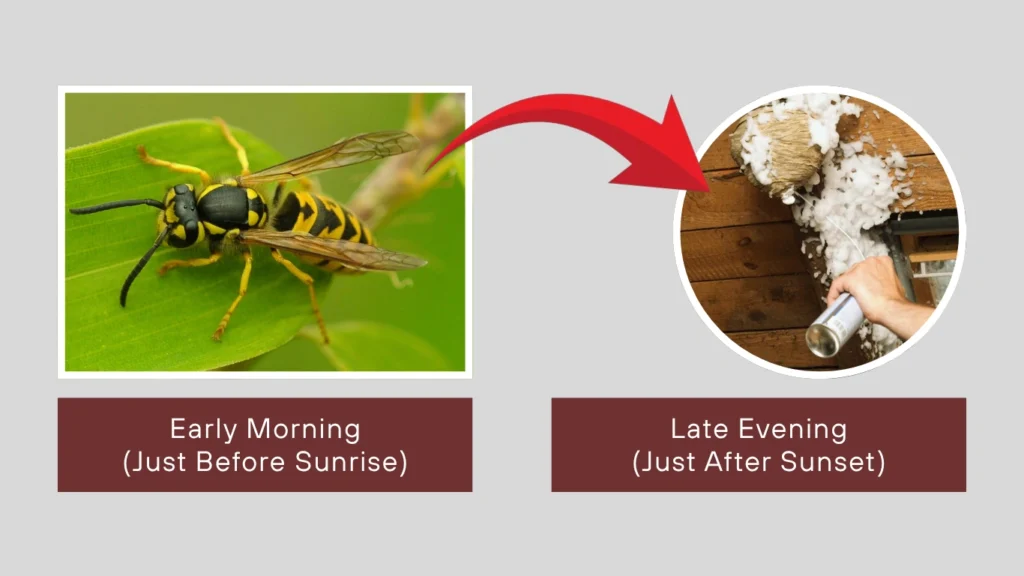
To maximize your safety and ensure the entire colony is affected, the best times of day to spray are either early morning (just before sunrise) or late evening (just after sunset). These periods are when wasps are least active, meaning they’re slower to react and more likely to be inside the nest.
Early Morning (Just Before Sunrise)
- Wasps are still inactive and cold, making them sluggish.
- Most of the colony, including the queen, is present inside the nest.
- The cool air keeps them from flying or swarming aggressively.
Late Evening (Just After Sunset)
- Wasps have returned from foraging and are settled in.
- Similar to morning, the low light and temperature reduce their movement.
- Ideal for nests located higher up or near doorways where daytime activity would be dangerous.
12 Best Wasp & Hornet SpraysSpraying at either of these times not only minimizes your risk but also ensures maximum effectiveness by targeting the whole nest while wasps are least prepared to defend themselves.
Best Season to Spray a Wasp Nest

Just like time of day matters, the season you choose for spraying can drastically affect success. The earlier you act in the wasp life cycle, the easier it is to remove the colony with minimal risk and effort.
Late Spring to Early Summer
- Ideal time when nests are still small and developing.
- Fewer adult wasps present, and the queen is often still establishing the colony.
- Easier to eliminate the nest before it grows in size and aggression.
Why Not to Wait Until Late Summer
- Nests can house hundreds to thousands of wasps by August.
- Wasps are more territorial and aggressive as food becomes scarce.
- Larger colonies require more product, more caution, and potentially multiple treatments.
- Late-season spraying increases your risk of getting stung and may not fully destroy the nest.
Acting early helps control wasps before they become a serious danger around your home, especially in areas where children or pets play.
Weather Conditions That Impact Spraying

Even at the right time of day or season, weather can influence the effectiveness of your wasp treatment. Choosing the right conditions ensures the spray works properly and reduces the chance of complications.
Ideal Conditions
Dry Weather: Prevents the spray from washing off or evaporating quickly.
Low Wind: Keeps the spray directed at the nest, avoiding drift to unintended areas.
Cool Temperatures (Below 60°F / 15°C): Keeps wasps sluggish and reduces movement.
Conditions to Avoid
Rain or High Humidity: Dilutes spray and makes it less effective.
Windy Conditions: Spray can blow back at you or miss the nest entirely.
Hot, Sunny Weather: Increases wasp activity, aggression, and the chance of getting stung.
Always check the forecast and plan your spraying around calm, cool, and dry conditions for the best results.
Tools and Sprays You’ll Need

Choosing the right products and protective gear is just as important as timing. Using poor-quality sprays or skipping safety gear can lead to ineffective results or painful stings. Here is the 9 Best wasp nest removal.
Types of Wasp Sprays
Foaming Sprays: Expand to cover the nest, ideal for visible aerial nests.
Jet Sprays: Shoot from a distance (15–20 feet), great for safety.
Dust Insecticides: Best for ground nests or nests hidden in wall voids.
Safety Gear Checklist
Thick Clothing: Long sleeves, pants, and gloves reduce sting risk.
Eye Protection: Safety goggles or face shield to guard against spray and wasps.
Flashlight (with red lens if spraying at night): Helps you see the nest clearly without attracting wasps.
Ladder or Extension Pole: If needed for high or hard-to-reach nests.
Using the right tools ensures better accuracy, less risk, and more complete removal in just one attempt.
Step-by-Step: How to Spray Safely
Once you’ve chosen the best time and gathered the proper tools, it’s time to spray. Follow this method carefully to stay safe and ensure the nest is fully treated.
Prepare and Plan
- Identify the exact location of the nest—note the entrance hole.
- Inform household members to stay indoors during spraying.
- Dress fully in protective clothing, covering skin completely.
- Wait for early morning or evening when wasps are inside and less active.
Execution
- Approach slowly and quietly to avoid alarming the wasps.
- Stand at a safe distance, ideally using a long-range jet spray.
- Aim directly at the entrance hole or the outer nest wall.
- Spray continuously for 10–15 seconds, coating the surface and inside.
Aftercare
- Leave the area immediately after spraying to avoid stragglers.
- Wait at least 24 hours before checking activity.
- If wasps are still present, reapply spray or use dust insecticide.
- Once the nest is inactive (no visible wasps for a day or two), remove it carefully using a long stick or tool.
Alternative Approaches to Consider
Spraying isn’t the only method available. If you’re hesitant or the situation seems risky, consider these options:
Calling a Professional
Best for large nests, hidden or hard-to-reach locations (attics, walls, roofs).Professionals use stronger treatments and know how to manage aggressive colonies.Recommended if you are allergic to stings or live in a highly populated area.
Natural and DIY Methods
- Peppermint Oil Sprays: Repels wasps but doesn’t kill—use for prevention.
- Soap and Water Solution: Effective on small paper wasp nests; clogs their breathing pores.
- Fake Nest Decoys: Discourage wasps from building near existing “nests.”
Note: Natural methods work best before a nest is built, not for full colonies.
Prevention Tips After Removal
Preventing wasps from returning is just as important as removing a nest. After treatment, take these steps to avoid future infestations:
Seal Entry Points
- Inspect your home’s exterior, especially eaves, vents, chimneys, and soffits.
- Use caulk or expanding foam to block any small gaps.
- Cover vents with fine mesh to prevent wasps from entering attic spaces.
Regular Maintenance
- Hang wasp decoys to discourage nesting.
- Keep outdoor trash covered and clean up food scraps, especially meat and sugary drinks.
- Inspect frequently, especially during spring and early summer, for signs of new nest building.
Final Safety Warnings
Treating a wasp nest always carries some risk. Be prepared and know when to seek help.
Allergic Reactions and First Aid
- If stung, move away immediately from the nest to avoid further stings.
- For allergic individuals, carry an epinephrine auto-injector (EpiPen).
- Seek medical attention if you experience swelling, difficulty breathing, or dizziness.
When to Avoid DIY Completely
- Nest is located inside a wall, roof, or attic
- Nest is larger than a basketball
- You have been previously stung and had a reaction
- There are multiple nests in close proximity
FAQs About Spraying Wasp Nests
Can I spray a wasp nest during the day?
No. Wasps are most aggressive and active during the day. Spraying then increases the risk of getting stung and may not kill the whole colony.
What if it rains right after spraying?
Rain can wash away the insecticide, especially if it occurs within 2–4 hours. Try to spray on a dry day or check the weather forecast beforehand.
How long after spraying can I remove the nest?
Wait at least 24–48 hours. Ensure there is no visible wasp activity around the nest before attempting removal. You can see the 7 Best Wasp Nest Killers.
Do wasps return to a destroyed nest?
No, wasps typically don’t reuse an old or destroyed nest. However, if the queen survives, she may build a new one nearby.
Is it better to use foam or jet spray?
Both work well, but foam sprays are best for exposed nests, while jet sprays are better for distance and high-placed nests.
