

Bald-faced hornets are striking, black-and-white wasps known for their large, paper-like nests and fierce territorial behavior. Despite the name, they aren’t true hornets but are actually a type of yellowjacket with distinct features and powerful stings. Found throughout North America, these social wasps play both beneficial and potentially dangerous roles in the ecosystem.
In this complete guide, we’ll explore everything you need to know about bald-faced hornets—from their nesting habits and aggressive sting to their queen’s role, colony structure, life cycle, and how to safely handle an encounter near your home.
What Is a Bald-Faced Hornet?
The bald-faced hornet (Dolichovespula maculata) is a large, black-and-white wasp native to North America. Despite its name, it’s not a true hornet but belongs to the yellowjacket subfamily. It earns its “bald-faced” title from the white markings on its face and body, which contrast sharply with its dark exoskeleton. These wasps are known for their impressive paper nests, aggressive defense behavior, and role in controlling pest insect populations.
Identification and Appearance
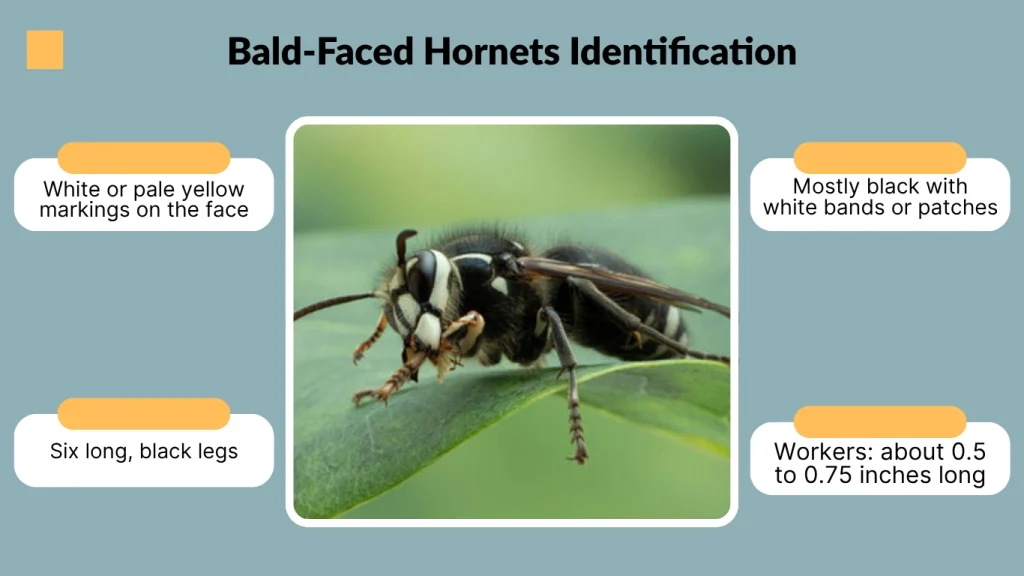
Bald-faced hornets are visually distinct wasps with black bodies and sharp white markings. Their bold contrast makes them easy to recognize, especially when seen near their large, papery nests. They are larger than most yellowjackets and have a more streamlined shape.
Head and Face
- White or pale yellow markings on the face
- Large, black compound eyes
- Strong mandibles for chewing wood and capturing prey
Thorax and Abdomen
- Mostly black with white bands or patches
- Smooth, glossy surface without visible hairs
- Wasplike “waist” connecting thorax and abdomen
Legs and Wings
- Six long, black legs
- Two pairs of dark, transparent wings held flat over the back when at rest
Male vs. Female vs. Queen
- Workers: about 0.5 to 0.75 inches long
- Males: slightly slimmer with longer antennae
- Queen: up to 0.9 inches long, thicker body, starts colony alone in spring
Size Comparison
Bald-faced hornets are among the largest wasps found in North America, and their size often contributes to the fear they inspire. Their substantial build and striking markings make them stand out compared to other wasps and bees.
Average Size
Most worker bald-faced hornets measure between 0.5 to 0.75 inches in length. Males are similar in size but have longer antennae and slightly more slender bodies.
Queen Size
The queen is noticeably larger, reaching up to 0.9 inches long, especially during early spring when she begins building the nest and laying the first batch of eggs. Her broader abdomen and thicker thorax make her visibly different from the workers.
Comparison with Other Wasps
Compared to yellowjackets (typically 0.4–0.6 inches), bald-faced hornets are significantly larger and more robust. However, they are smaller than true hornets like the European hornet (Vespa crabro), which can exceed 1 inch in length.
Their size alone doesn’t necessarily indicate aggressiveness, but it does mean their sting packs more force—and they’re not shy about using it when their nest is threatened.
Bald-Faced Hornet Nest

Bald-faced hornets are famous for their impressive nests, which are large, enclosed structures made of gray paper-like material. These nests are usually suspended above the ground and can grow quite large over the season, sometimes reaching the size of a basketball.
Nest Structure and Material
The nest is constructed from chewed wood pulp mixed with the hornets’ saliva, creating a paper-mâché texture. It’s layered for insulation and protection, with a single opening near the bottom for entry and exit.
Common Nest Locations
- Tree branches or dense shrubs
- Under eaves of buildings
- On utility poles, sheds, or overhangs
- Occasionally inside wall voids if access is available
Seasonal Development
The queen starts building the nest in spring. As the colony grows, workers expand the nest throughout summer. By late summer, it may house 400–700 individuals. The nest is abandoned in winter and never reused.
Nesting Behavior and Colony Life

Bald-faced hornets live in highly organized colonies that operate with a strict caste system. The entire colony is centered around the queen, and all other individuals serve specific roles to support the nest.
Queen’s Role
The queen starts the nest alone in spring, laying the first batch of eggs and caring for the larvae until the first workers hatch. Afterward, she focuses solely on laying eggs while workers take over construction, foraging, and defense.
Workers and Males
Workers build and defend the nest, feed larvae, and forage for food. Male hornets appear later in the season and do not sting. Their only role is to mate with new queens.
Colony Timeline
- Spring: Queen emerges and starts the nest
- Summer: Colony rapidly grows
- Late summer/fall: New queens and males are produced
- Winter: Colony dies off; only fertilized queens overwinter
The colony’s growth and behavior are closely tied to temperature and food availability, peaking in size and activity in late summer when they become most aggressive.
Habitat and Distribution
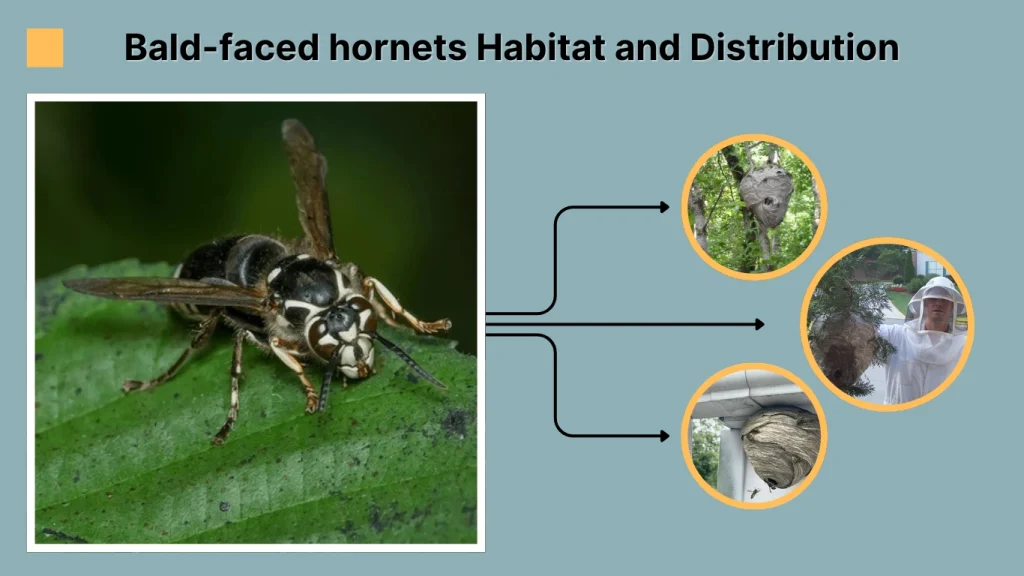
Bald-faced hornets are native to North America and are found throughout Canada, the United States, and parts of Mexico. They thrive in both natural and human-developed environments.
Preferred Environments
They typically inhabit areas with a mix of vegetation and shelter, such as:
- Wooded forests and tree lines
- Suburban yards with bushes and trees
- Farmlands and garden areas
- Urban locations with building eaves and sheds
They avoid open, treeless areas and prefer elevated, protected spots for nest building.
Range
Their range extends coast to coast in the U.S., particularly common in the Northeast, Midwest, and Pacific Northwest. They’re less active in extremely hot or desert-like regions but still present in shaded areas.
Sting and Aggression
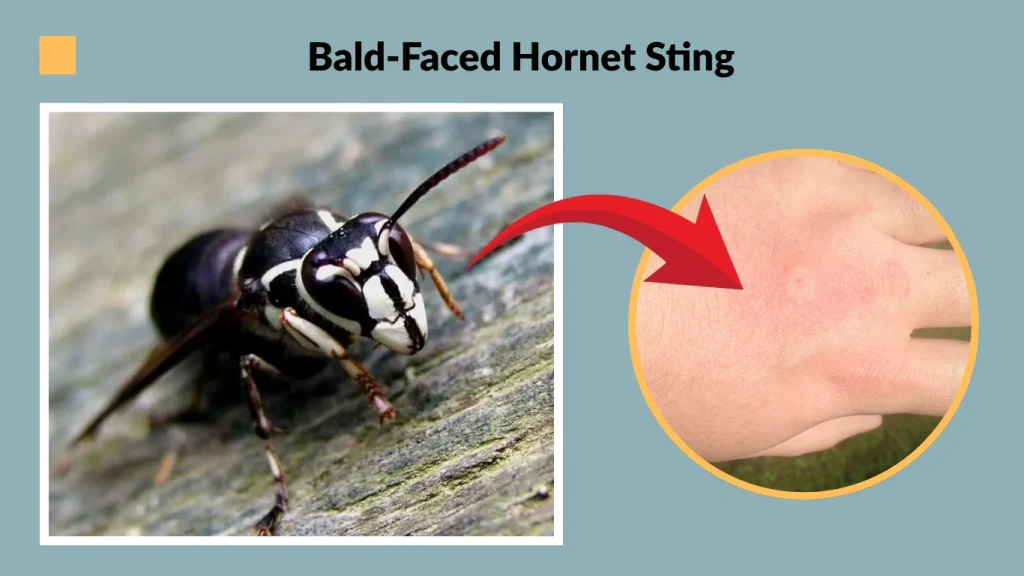
Bald-faced hornets are highly defensive of their nests and will sting aggressively when disturbed. Unlike bees, they can sting multiple times, making encounters especially painful.
Sting Characteristics
The sting is sharp, burning, and often followed by swelling, redness, and warmth at the site. For most people, the pain lasts a few hours, but symptoms may linger longer depending on sensitivity.
Aggression Level
These wasps are not randomly aggressive while foraging but become extremely territorial within a 10–15 foot radius of their nest. They will pursue perceived threats and may swarm in large numbers if the nest is touched or vibrated (even mowing the lawn nearby can trigger an attack).
Medical Risk
- Most people experience moderate pain and swelling
- Some individuals may have allergic reactions, including hives, dizziness, or anaphylaxis
- Seek medical help immediately if allergic symptoms develop
Protective clothing and professional removal are recommended when nests are located near human activity.
What to Do If You Find a Nest
Finding a bald-faced hornet nest near your home or in a frequently used area can pose a significant risk. Proper action depends on its location and whether it’s actively guarded.
Do’s and Don’ts
- Do keep a safe distance (15+ feet)
- Do not throw objects or spray the nest from a distance
- Do not mow or trim directly under an active nest
Removal Options
- Hire a professional pest control service – the safest and most effective method
- Avoid DIY approaches, especially during the day
- If you must attempt removal, only do so at night using protective gear and professional-grade insecticides
Never attempt to burn or flood the nest—this is dangerous and ineffective. If the nest is in a remote area, it may be best to leave it undisturbed until winter, when it will be abandoned.
Queen Bald-Faced Hornet

The queen is the central figure of the colony, responsible for reproduction and initiating the entire nest cycle. She is larger than the workers and has a slightly different body shape with a more robust thorax and abdomen.
Role in the Colony
In early spring, the queen emerges from winter hibernation and starts the nest alone, building the first few chambers and laying eggs. Once the first generation of workers matures, they take over all duties except egg-laying. The queen then focuses exclusively on reproduction.
Lifespan and Behavior
- The queen lives through one full season, from early spring to late fall.
- She lays hundreds of eggs over the summer, producing workers first, then males and new queens.
- By late fall, the original queen dies, and only newly fertilized queens survive the winter to start the next cycle.
Visibility
Queens are rarely seen once workers take over, as they remain deep inside the nest, laying eggs continuously.
Life Cycle and Reproduction
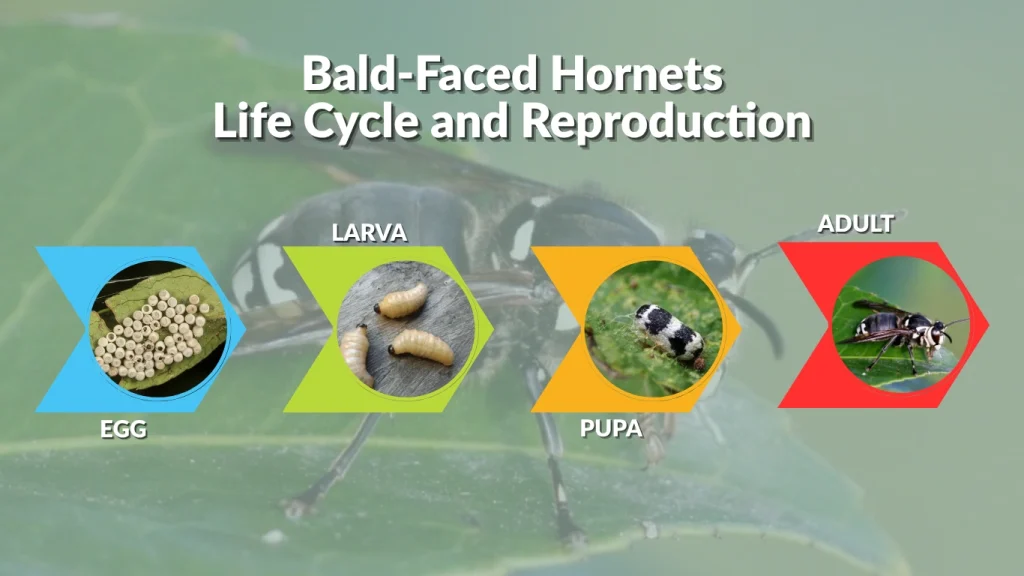
The life cycle of a bald-faced hornet colony is seasonal, starting with a single queen and ending with the production of new reproductive members. It typically lasts 4 to 5 months.
Stages of Development
- Egg – Laid by the queen in a paper cell
- Larva – Fed chewed insects by workers
- Pupa – Transforms inside a capped cell
- Adult – Emerges fully formed and takes on a colony role
Each new generation of workers expands the nest and increases colony size.
Reproductive Phase
In late summer, the queen produces males and fertile females (future queens). Mating occurs near or outside the nest. After mating, the males die, and fertilized queens seek shelter for the winter.
Diet and What They Eat
Bald-faced hornets are both predators and scavengers, playing a key role in the ecosystem by controlling insect populations.
Primary Food Sources
- Insects: They hunt flies, caterpillars, and other soft-bodied insects to feed larvae.
- Sugars: Adults feed on nectar, fruit juices, and tree sap.
- Carrion and garbage: Occasionally scavenge protein from meat or rotting material, especially late in the season.
Feeding Behavior
Adult workers chew up insects into a pulp and feed it to larvae. In return, larvae secrete a sugary fluid that workers consume—this mutual exchange is crucial for colony nutrition.
Late in the season, their increased sugar cravings bring them closer to human activity, especially at picnics, trash bins, and sugary drinks.
Predators and Threats
Despite their defensive nature, bald-faced hornets do have natural enemies and environmental challenges that can affect their survival.
Natural Predators
- Birds: Especially bee-eaters and tanagers, which may attack isolated hornets
- Praying Mantises: Can ambush and consume individual hornets
- Spiders: Occasionally catch lone hornets in webs
- Other Wasps: Some parasitic species may target hornet larvae or nests
While predators rarely attack an active nest due to the risk of stings, they may target stragglers or newly emerged queens in the fall.
Environmental Threats
- Cold weather: Entire colonies die off with the first hard frost, except for mated queens
- Heavy rain or wind: Can damage exposed nests, especially in trees
- Habitat destruction: Tree removal, construction, or yard maintenance can destroy or disturb colonies
Are Bald-Faced Hornets Beneficial or Dangerous?
Bald-faced hornets walk the line between helpful garden allies and stinging threats. Whether they’re viewed as a benefit or a hazard depends largely on their location and interaction with humans.
Beneficial Roles
- Pest control: They help manage populations of flies, caterpillars, and other insects
- Pollination: Though not primary pollinators, they do visit flowers for nectar
- Natural balance: As both predators and prey, they serve as part of the ecosystem
Dangerous Aspects
- Aggressive defense of nests
- Multiple stings per wasp
- Risk of allergic reactions in sensitive individuals
In open or wooded areas, they’re generally beneficial and should be left alone. But in populated spaces like backyards, porches, or near entrances, their nests can become a serious hazard.
How to Prevent Bald-Faced Hornets
Prevention is key to avoiding dangerous run-ins with bald-faced hornets—especially during the active nesting season from late spring through early fall.
Tips for Prevention
- Inspect early in the season: Spot small nests before they expand
- Seal entry points: Close gaps in soffits, attic vents, and wall cavities
- Remove food sources: Cover trash cans, clean up fruit and sugary drinks outdoors
- Keep trees and shrubs trimmed: Reduce potential nesting sites near the home
- Use decoy wasp nests: May deter queens from nesting nearby
If you’ve had hornet nests in the past, proactive inspection and yard maintenance in early spring can make a big difference in preventing a repeat invasion.
FAQs
Are bald-faced hornets active at night?
No, bald-faced hornets are strictly diurnal, meaning they are active only during the day. They return to the nest at dusk and remain inactive until daylight. If you plan to observe or remove a nest (professionally), evening or early morning is the safest time, when all members are inside and less alert.
Do bald-faced hornets die after stinging?
No. Unlike honeybees, which have barbed stingers that get stuck in the skin, bald-faced hornets have smooth stingers. This allows them to sting multiple times without injuring themselves. That’s part of what makes them more dangerous—especially when they sting in groups.
Can bald-faced hornets sting through clothing?
Yes. Their stingers are long and powerful enough to penetrate thin clothing, such as t-shirts or light pants. Tight clothing that presses against the skin can make stings more likely to reach the body. Wearing thick or loose-fitting layers offers better protection if you’re near a known nest.
Is the nest reused the following year?
No, bald-faced hornets never reuse old nests. Each spring, a new fertilized queen builds a completely new nest from scratch. However, new nests may be built near or even on top of old ones if the location is favorable. Removing abandoned nests is not required but can discourage nesting in the same area next season.
What should I do if I’m stung by a bald-faced hornet?
If stung, immediately:
- Clean the area with soap and water to prevent infection
- Apply a cold compress or ice to reduce pain and swelling
- Use antihistamines (e.g., Benadryl) for itching or redness
- Apply hydrocortisone cream to soothe inflammation
Seek emergency medical attention if you experience:
- Difficulty breathing or swallowing
- Swelling of the face, lips, or throat
- Dizziness or a drop in blood pressure
- Rapid heartbeat or confusion
These could indicate a severe allergic reaction (anaphylaxis), which can be life-threatening.
How far will they chase you from the nest?
Bald-faced hornets are extremely territorial and may chase threats up to 10–15 feet or more from the nest. If you disturb a nest, your best defense is to move away quickly in a straight line. Avoid swatting at them, as movement can escalate their aggression.
