
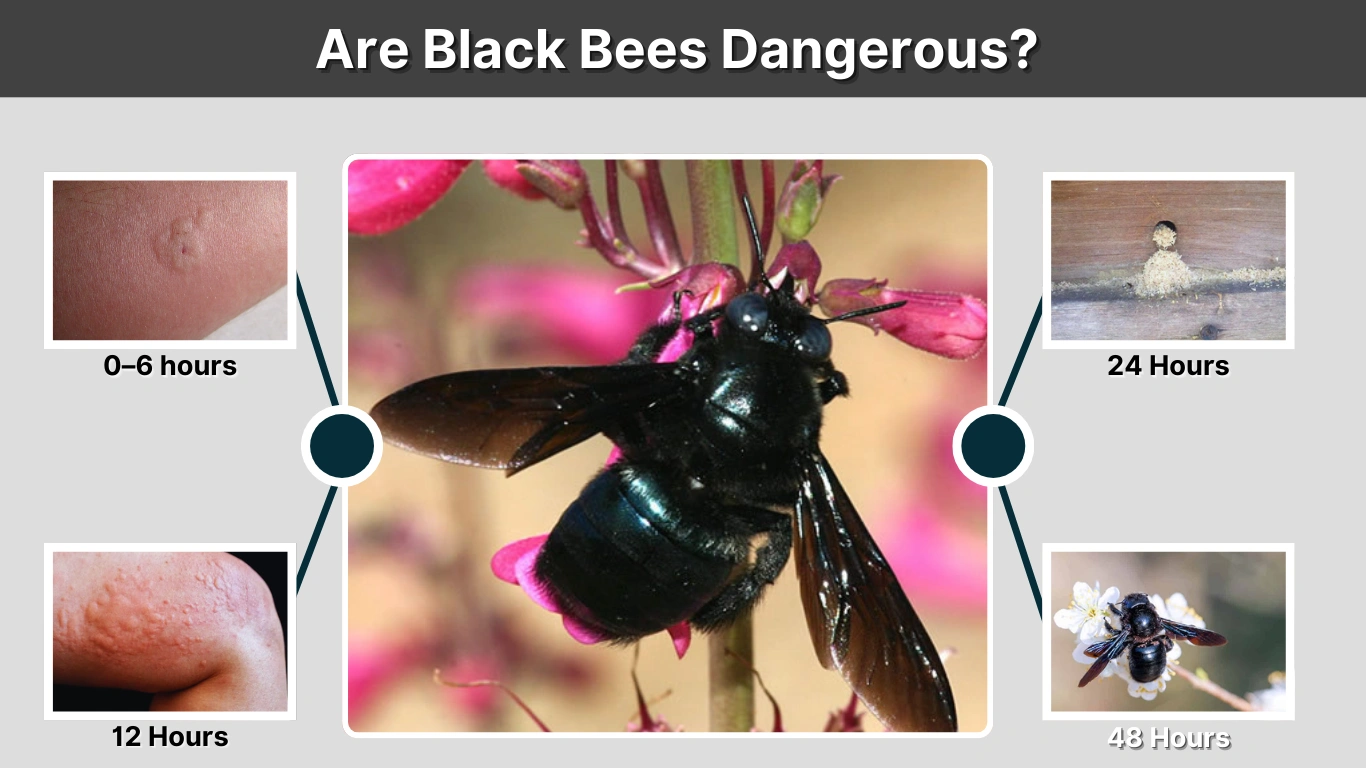
When most people see a bee buzzing nearby, their first instinct is to move away quickly, fearing a painful sting. The concern increases when the bee is larger, darker, or unfamiliar—such as a black bee. Black bees, often mistaken for aggressive species, spark curiosity and anxiety in equal measure. But are they truly dangerous, or are they misunderstood pollinators that deserve a better reputation? This article explores the truth about black bees, their behavior, risks, and the important role they play in nature.
What Are Black Bees?
The term “black bee” doesn’t describe a single species but refers to several types of bees with predominantly dark or black bodies. Common examples include:
- Carpenter bees: Large, shiny black bees that often bore holes in wood to create nests.
- Bumblebees: Fuzzy, black-and-yellow pollinators, some of which appear mostly black depending on the species.
- Stingless black bees: Found in tropical regions, these bees are harmless to humans and produce small amounts of honey.
- Dark European honeybees (Apis mellifera mellifera): A subspecies known for its darker body color.
What sets black bees apart from honeybees or wasps is their generally calm temperament. While their size and color might appear intimidating, they are rarely as aggressive as people assume.
Are Black Bees Dangerous to Humans?
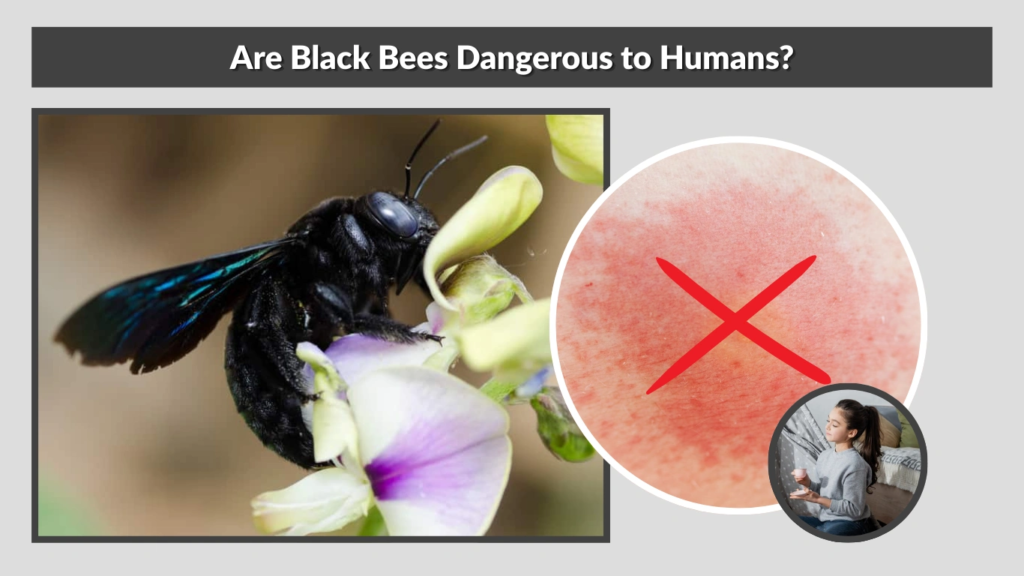
The first concern most people have is whether black bees sting. The answer depends on the species:
- Carpenter bees: Males cannot sting at all, though they often hover close to humans in a seemingly aggressive manner. Females can sting, but they rarely do unless directly handled or threatened.
- Bumblebees: Capable of stinging multiple times, but they are not naturally aggressive. They usually sting only if their nest is disturbed.
- Stingless black bees: As the name suggests, they cannot sting. Their only defense is a mild bite, which is not harmful.
In general, black bees are not dangerous to humans. Unlike wasps, which are quick to attack when disturbed, black bees tend to avoid confrontation. Most species will only sting in self-defense, meaning that if you leave them alone, they will leave you alone.
Health Risks from Black Bee Stings
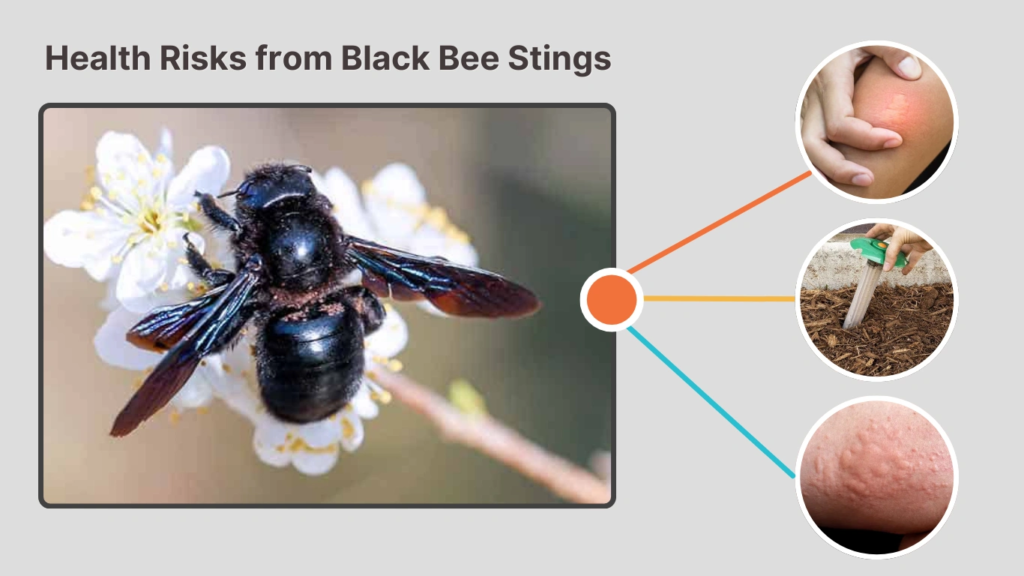
While stings are rare, they can happen, and the health risks vary:
- Mild Reactions: Most people experience pain, redness, swelling, or itching at the sting site. These symptoms usually fade within a few hours to a day.
- Severe Reactions: Individuals allergic to bee venom may develop hives, dizziness, or difficulty breathing. In rare cases, anaphylaxis can occur, requiring immediate medical attention.
- Comparison with Honeybees: Unlike honeybees, which die after stinging, bumblebees and carpenter bees can sting more than once. However, repeated stings from black bees are still uncommon unless the hive is seriously threatened.
For the majority of people, a sting from a black bee poses no serious danger. Basic first aid—such as applying ice, cleaning the area, and using antihistamines for itching—is usually sufficient.
Are Black Bees Dangerous to Property?
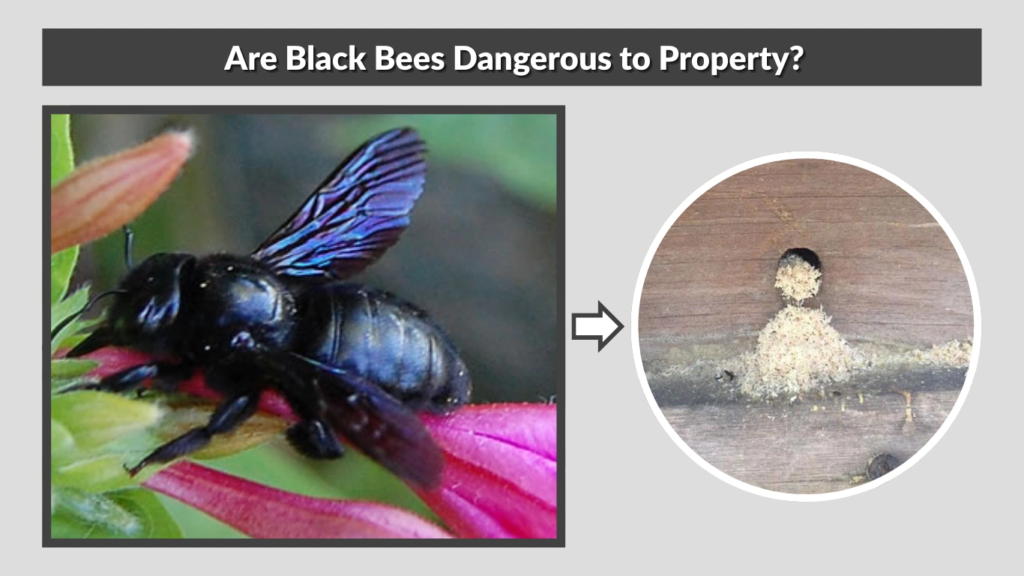
Even though they are not typically dangerous to humans, some species of black bees can pose risks to property. Carpenter bees, for instance, drill small, perfectly round holes into untreated wood to lay eggs. While one or two bees cause minimal damage, large infestations can weaken wooden structures over time. Signs of carpenter bee activity include:
- Small round holes in wooden beams, decks, or fences.
- Sawdust-like shavings near the holes.
- Increased bee activity around wooden surfaces.
Although the structural damage is slow and gradual, it can become costly if ignored. Homeowners often mistake carpenter bees for termites, but unlike termites, carpenter bees do not eat wood—they simply excavate it to create nesting tunnels.
Ecological Importance of Black Bees

Beyond concerns about stings or property damage, black bees play an essential role in our ecosystems. Like their honeybee cousins, they are excellent pollinators, helping flowers, fruits, and vegetables thrive. Carpenter bees, despite their reputation for damaging wood, are particularly efficient pollinators of open-faced flowers. Bumblebees are even more effective, using a process called buzz pollination—vibrating flowers to release pollen, something honeybees cannot do.
Without these pollinators, many plants we rely on for food and medicine would struggle to reproduce. In fact, some crops like tomatoes, blueberries, and peppers benefit greatly from bumblebee pollination. Far from being pests, black bees are vital contributors to biodiversity and food security.
Safety Tips When Around Black Bees
Living near black bees doesn’t mean you’re in danger. With a few precautions, you can safely coexist with them:
- Stay calm: If a black bee hovers near you, avoid swatting. Males are often curious but harmless since they cannot sting.
- Protect wood: If you’re concerned about carpenter bees, seal and paint exposed wood surfaces. They prefer untreated or weathered wood.
- Avoid nests: Bumblebees usually nest in the ground or old burrows. If you find a nest, don’t disturb it.
- Wear light clothing: Bees are less attracted to pale colors than to dark or bright ones.
- Natural deterrents: Planting mint, citronella, or eucalyptus may discourage bees from nesting near high-traffic areas without harming them.
These simple measures reduce unwanted encounters while allowing the bees to continue their vital work as pollinators.
Myths vs. Facts About Black Bees
There are many misconceptions about black bees, leading people to overestimate their danger:
- Myth 1: All black bees sting.
Fact: Male carpenter bees cannot sting, and many stingless black bee species exist. - Myth 2: Black bees are more aggressive than honeybees.
Fact: Most black bees are less aggressive and only sting when provoked. - Myth 3: Carpenter bees eat wood.
Fact: They do not eat wood; they bore tunnels only to nest. - Myth 4: Black bees have no value.
Fact: They are crucial pollinators that support ecosystems and agriculture.
Dispelling these myths helps shift the perspective from fear to appreciation, encouraging safer and more sustainable ways of interacting with black bees.
When to Call a Professional
Most black bees do not require intervention. However, there are situations when professional help is recommended:
- Large carpenter bee infestations: Multiple tunnels can weaken wooden decks, porches, or beams over time.
- Sensitive individuals: If someone in the household is allergic to bee stings, it’s wise to prevent close nesting.
- Difficult-to-access nests: Bumblebees or carpenter bees nesting in walls or attics may require expert relocation.
Professional pest control services often provide safe relocation rather than extermination. Relocating ensures the bees continue their role in the environment while protecting your property and health.
Conclusion
So, are black bees dangerous? The answer is nuanced. While some species can sting or cause minor structural damage, black bees are generally non-aggressive and essential to our environment. They are more beneficial than harmful, serving as pollinators for countless plants and crops. By taking simple precautions—such as sealing wood and avoiding nests—you can minimize risks while supporting their vital role in nature.
