

White moths are some of the most elegant and eye-catching insects found in nature. Their pale wings, soft patterns, and gentle nighttime behavior make them fascinating to observe across many regions. From forest edges to garden lights, these moths appear in various shapes and sizes. This collection highlights ten unique white moth species, offering simple identification details, habitats, behaviors, and life cycles to help you recognize them more easily.
1. White Satin Moth

The White Satin Moth (Leucoma salicis) is a striking pure-white moth known for its silky wings and strong attraction to light. Common across temperate regions, it is often found near willow and poplar trees, which serve as its primary host plants.
Identification
- Pure white, satin-like wings
- Wingspan: 40–50 mm
- Black eyes and feathery antennae
- Slender white body with a smooth texture
- Caterpillars are dark with orange markings and tufts of hair
Habitat
White Satin Moths thrive in areas where willow and poplar trees grow. They are commonly found in woodlands, forest edges, riverbanks, and urban parks. Their range spans Europe, Asia, and parts of North America, especially in cooler climates.
Behaviors
These moths are nocturnal and are strongly attracted to artificial lights. Adults are slow fliers with a gentle, floating flight pattern. They are generally solitary but can appear in significant numbers during population booms.
Diet and Lifecycle
Adult White Satin Moths do not feed, relying instead on stored energy. Their caterpillars consume the leaves of willow, poplar, and aspen trees. The life cycle includes egg, larva, pupa (overwintering), and adult stages, with one generation per year in most regions.
2. White Ermine Moth
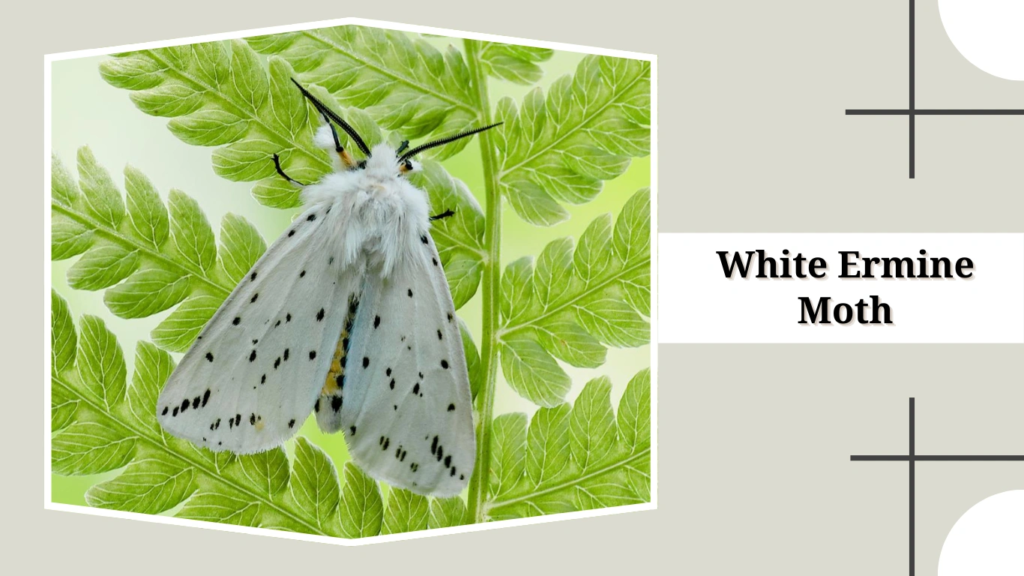
The White Ermine Moth (Spilosoma lubricipeda) is a beautifully patterned white moth known for its bold black spots and soft, furry body. It is widespread across Europe and parts of Asia, commonly seen in gardens, meadows, and grassy habitats during summer.
Identification
- White wings with numerous black spots
- Wingspan: 34–48 mm
- Furry white or cream-colored body
- Yellowish hindwings (sometimes with spots)
- Caterpillars are brownish with long hairs, often called “woolly bears”
Habitat
White Ermine Moths inhabit gardens, open fields, meadows, hedgerows, and forest edges. They prefer warm, dry environments and are active mostly in late spring through early autumn.
Behaviors
These moths are nocturnal and are attracted to lights at night. They have a quick, darting flight and often rest with wings flat. Their caterpillars are hardy and capable of feeding on a wide range of herbaceous plants.
Diet and Lifecycle
Adult moths do not feed, while caterpillars feed on various low-growing plants such as nettles, dandelions, and plantains. Their lifecycle includes egg, larva, pupa, and adult stages, with typically one generation per year.
3. Snowy Urola Moth
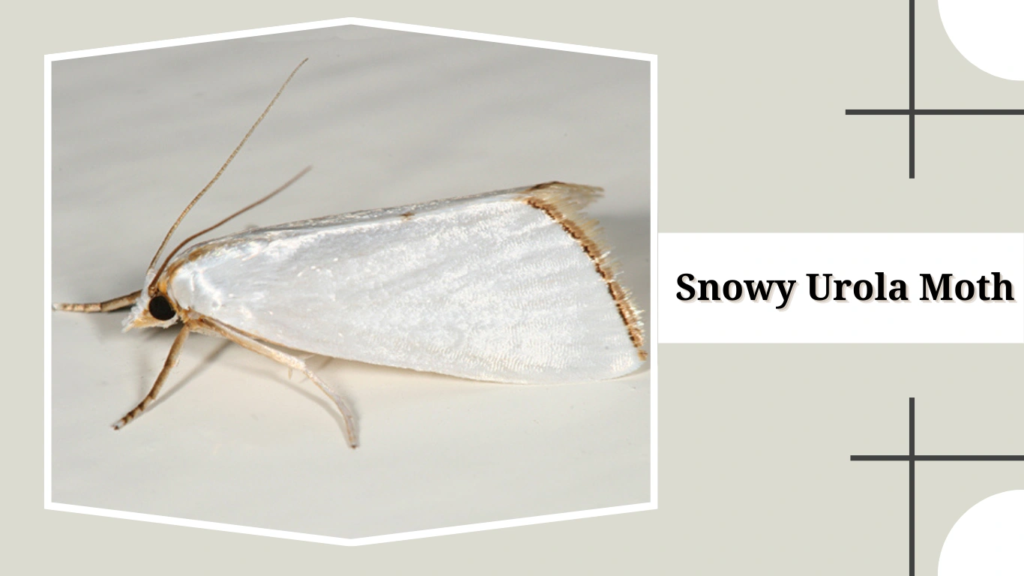
The Snowy Urola Moth (Urola nivalis) is a small, delicate white moth known for its clean, snowy appearance and subtle sheen. Found mainly in North America, it is commonly seen in grassy or weedy areas during the warmer months.
Identification
- Bright white wings with a slight silky sheen
- Wingspan: 15–22 mm
- Slim body with smooth scales
- Antennae thin and threadlike
- Caterpillars are pale and slender, often hidden within grasses
Habitat
Snowy Urola Moths inhabit grassy fields, meadows, roadsides, and open woodland edges. They prefer warm regions and are especially common in areas with dense grasses, which support their larval development.
Behaviors
These moths are nocturnal and are easily drawn to artificial lights. They have a quick, flickering flight style and often rest low on vegetation. Adults are short-lived and spend most of their time hiding during the day.
Diet and Lifecycle
Adults do not feed, while larvae feed primarily on grasses, hiding within folded blades for protection. Their lifecycle includes egg, larval feeding stage, pupation within grass shelters, and adult emergence, with multiple generations per year in warm climates.
4. Pale Tussock Moth
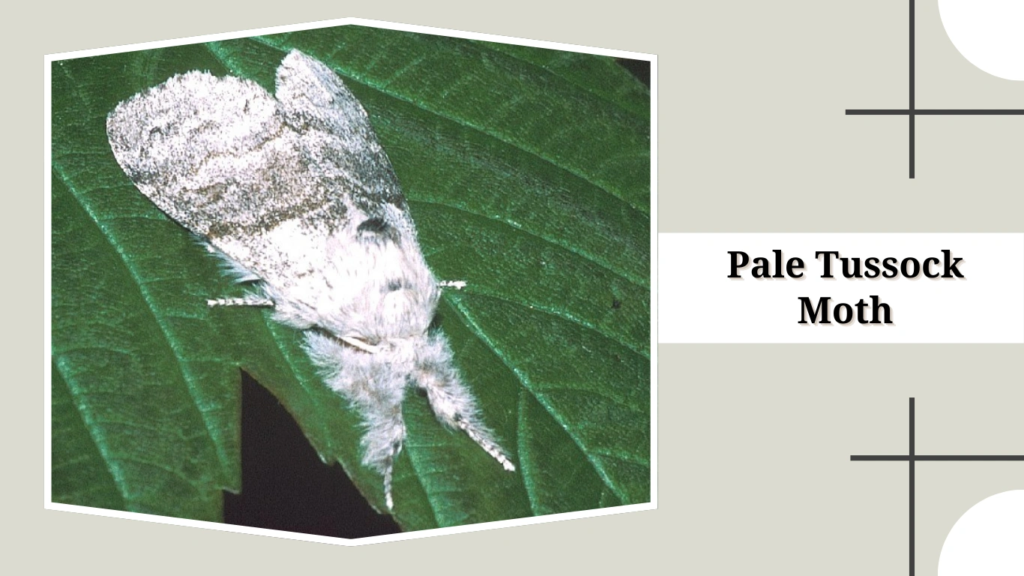
The Pale Tussock Moth (Calliteara pudibunda) is a fuzzy, pale-colored moth recognized for its unique caterpillars and soft, tufted appearance. It is widespread across Europe and parts of Asia, commonly found in woodlands and suburban areas.
Identification
- Pale gray or creamy-white wings with subtle darker markings
- Wingspan: 40–60 mm
- Furry body with soft tufts on legs and thorax
- Males have strongly feathered antennae
- Caterpillars are bright green or yellow with tufts and a distinctive tail “pencil”
Habitat
Pale Tussock Moths inhabit deciduous forests, hedgerows, gardens, and wooded suburban zones. They prefer areas rich in broadleaf trees such as oak, birch, and hazel, which support their larval development.
Behaviors
These moths are nocturnal and come readily to artificial lights. Males are more active and fly quickly in search of females, while females are slower and more sedentary. Their caterpillars are solitary feeders and often wander before pupation.
Diet and Lifecycle
Adults do not feed. Larvae feed on a wide range of deciduous trees including oak, birch, apple, willow, and hazel. Their lifecycle consists of egg, larva, pupa (overwintering in a cocoon), and adult stages. Usually one generation occurs per year.
5. White Spring Moth

The White Spring Moth (Lomographa vestaliata) is a delicate, early-season moth known for its bright white wings and soft, fluttering flight. It is widely found across North America, especially in wooded and shrubby habitats during early spring.
Identification
- Pure white wings with faint gray or brown lines
- Wingspan: 25–32 mm
- Slender body with fine, smooth scales
- Resting posture typically flat with wings spread
- Caterpillars are green and slender, resembling looping inchworms
Habitat
White Spring Moths inhabit deciduous woodlands, forest edges, parks, and shrubby areas. They are among the earliest moths to appear in spring, often emerging when temperatures are still cool.
Behaviors
These moths are mostly nocturnal but may occasionally be seen fluttering at dusk. They are gentle flyers and frequently visit lights at night. Their activity peaks in early spring, matching the fresh growth of host plants.
Diet and Lifecycle
Adults do not feed, while caterpillars feed on shrubs and trees such as cherry, apple, and hawthorn. The lifecycle includes egg, larva, pupa, and adult stages, with pupation occurring in leaf litter. Typically, there is one generation per year.
6. White-Striped Black Moth
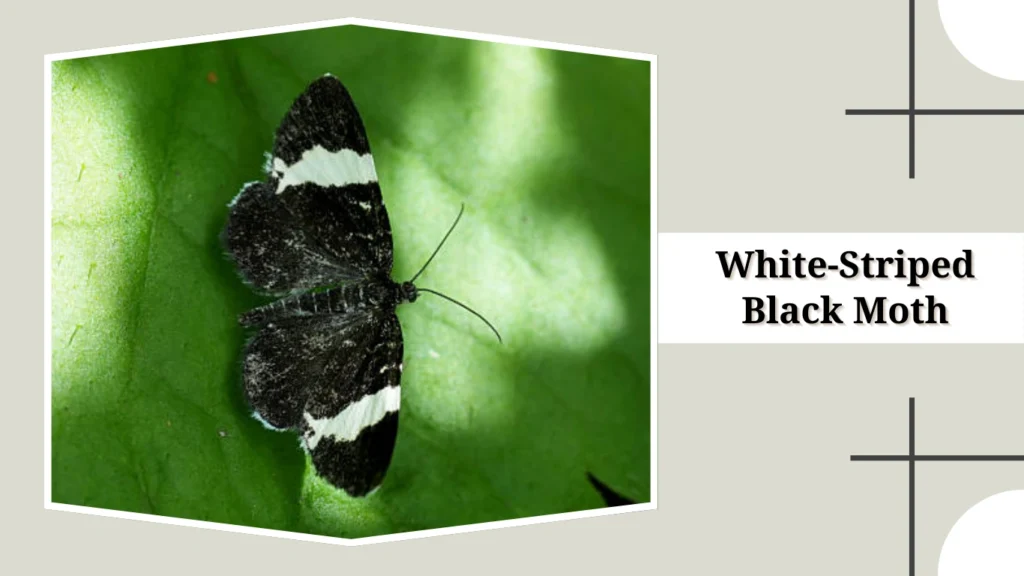
The White-Striped Black Moth (Trichodezia albovittata) is a striking moth known for its bold contrast of black wings adorned with bright white stripes. It is commonly found across North America, especially in cool, forested regions.
Identification
- Black wings with distinct, crisp white diagonal stripes
- Wingspan: 20–28 mm
- Slender dark body with subtle white markings
- Antennae thin and slightly curved
- Caterpillars are greenish with subtle striping, typical of geometrid larvae
Habitat
This species inhabits moist forests, shaded trails, and mountainous woodland areas. It favors cooler climates and is often seen in regions with dense undergrowth and abundant host plants.
Behaviors
The White-Striped Black Moth is active at dusk and night, frequently attracted to artificial lights. It has a rapid, fluttering flight and often rests with wings spread. It is most abundant in late spring and early summer.
Diet and Lifecycle
Adults do not feed. Larvae feed primarily on currant and gooseberry plants. The lifecycle includes egg, larval feeding stage, pupation within soil or leaf litter, and adult emergence. Most regions see one generation per year, though timing may vary with climate.
7. Virginian Tiger Moth
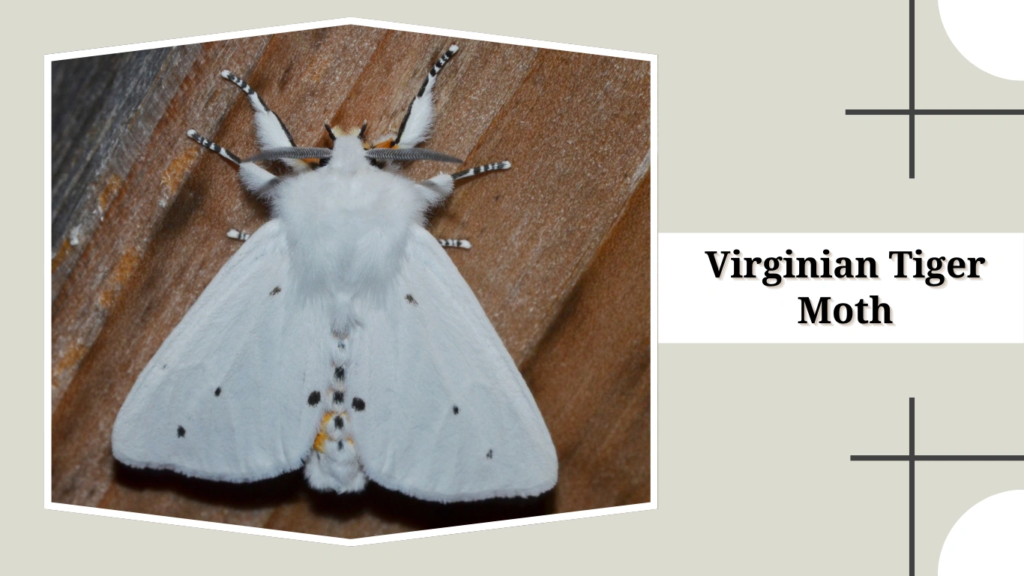
The Virginian Tiger Moth (Spilosoma virginica) is a soft, white moth known for its fluffy appearance and subtle black spotting. Widespread across North America, it is commonly found in gardens, fields, and forest edges.
Identification
- White wings with variable small black spots
- Wingspan: 30–40 mm
- Furry white thorax and abdomen
- Hindwings may show faint yellow or orange tones
- Caterpillars (yellow woolly bears) are hairy and yellowish-brown
Habitat
Virginian Tiger Moths inhabit meadows, gardens, grasslands, and open wooded areas. They are adaptable and thrive in both natural and suburban environments, often appearing in late spring through summer.
Behaviors
These moths are nocturnal and readily attracted to lights. They fly with a gentle, floating motion and often rest with wings tented over their bodies. Caterpillars are solitary feeders and may wander widely before pupation.
Diet and Lifecycle
Adults do not feed. Caterpillars consume a wide range of low-growing plants, including clover, dandelion, plantain, and various weeds. Their lifecycle includes egg, larva, pupa (in a silken cocoon), and adult, with typically two or more generations per year in warmer regions.
8. Isabella Tiger Moth (White Form)
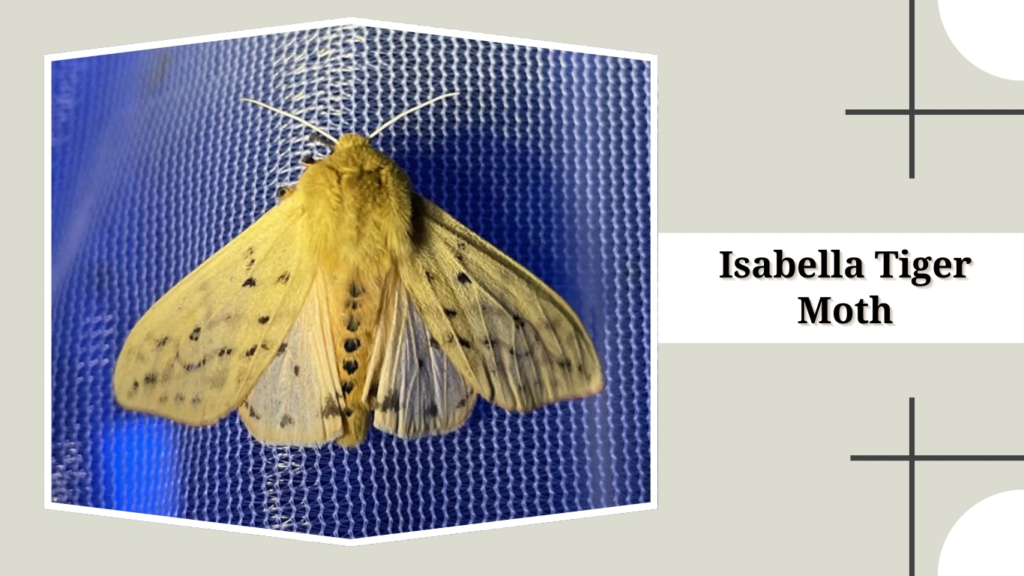
The Isabella Tiger Moth (Pyrrharctia isabella) is best known for its caterpillar stage—the Woolly Bear—but the adult moth can also appear in a pale or nearly white form. This variant features soft, muted coloration and a gentle appearance.
Identification
- Pale cream to nearly white wings
- Wingspan: 45–60 mm
- Fuzzy thorax and abdomen with orange or pinkish tones underneath
- Sparse black dots may appear on wings (variable)
- Caterpillars are the iconic brown-and-black “Woolly Bears”
Habitat
These moths inhabit meadows, grasslands, gardens, forest edges, and open rural areas. Their range covers most of North America, especially regions with abundant herbaceous plants for larval feeding.
Behaviors
Isabella Tiger Moths are nocturnal and attract strongly to artificial lights. Adults have a soft, fluttering flight and are often short-lived. Woolly Bear caterpillars are hardy, tolerate cold well, and overwinter in their larval stage before pupating in spring.
Diet and Lifecycle
Adults do not feed. Caterpillars feed on a wide variety of plants, including grasses, clover, dandelions, asters, and other low vegetation. The lifecycle includes egg, larva (overwintering), pupa, and adult stages, typically with one generation per year.
9. Common White Wave

The Common White Wave (Cabera pusaria) is a delicate, pale moth recognized for its smooth white wings and subtle wavy lines. It is widespread across Europe and parts of Asia, commonly seen in woodlands and shrubby habitats.
Identification
- White wings with faint, wavy gray crosslines
- Wingspan: 28–34 mm
- Slender, pale body
- Resting posture typically flat, wings spread
- Caterpillars are green with fine lines, typical of geometrid “loopers”
Habitat
Common White Wave moths inhabit deciduous forests, woodland edges, hedgerows, and gardens. They prefer areas rich in shrubs and small trees, especially birches, which serve as their primary larval host plants.
Behaviors
These moths are nocturnal and frequently attracted to lights. Their flight is gentle and fluttery, often occurring at dusk. They are most active during late spring and summer, depending on region.
Diet and Lifecycle
Adults do not feed. Caterpillars feed primarily on birch leaves but may also consume other shrubs and small trees. Their lifecycle includes egg, larva, pupa (often in leaf litter), and adult, with one to two generations per year depending on climate.
10. Ghost Moth

The Ghost Moth (Hepialus humuli) is a unique white moth known for its hovering courtship flights and strikingly pale male appearance. Found across Europe and parts of Asia, it is most active during summer evenings.
Identification
- Males are bright white; females are yellowish with brown markings
- Wingspan: 44–64 mm
- Thick, cylindrical body
- Short antennae and robust legs
- Caterpillars are creamy white and live underground
Habitat
Ghost Moths inhabit meadows, grasslands, gardens, and damp fields. They prefer areas with rich vegetation and soft soil, which supports their burrowing larvae.
Behaviors
These moths display a famous courtship behavior: males hover in place at dusk, glowing white as they attract females. They are generally nocturnal but this mating display makes them highly visible. Adults have a short lifespan.
Diet and Lifecycle
Adults do not feed. Larvae live underground for up to two years, feeding on roots of grasses and herbaceous plants. The lifecycle includes egg, long-lived larva, soil pupation, and adult emergence, typically producing one generation every one to two years.
FAQs
1. Are white moths dangerous?
White moths are harmless to humans. They do not bite, sting, or carry toxins. While some caterpillars may have hairs that irritate the skin, adult white moths pose no threat and are generally peaceful nighttime insects.
2. Why are some moths completely white?
Many moths are white for camouflage. Their pale coloration helps them blend into light-colored surfaces like bark, leaves, or flowers. In some species, white wings also play a role in attracting mates during nighttime displays.
3. Are white moths rare?
Not necessarily. Several white moth species are common and widespread. However, some specific regional or pale morph varieties may be less frequently seen depending on habitat, climate, and seasonal timing.
4. What attracts white moths to lights?
White moths, like many nocturnal insects, use natural light for navigation. Artificial lights disrupt this system, causing them to fly toward lamps, windows, and porch lights. The effect is especially strong in pale or reflective species.
5. Do white moths eat anything as adults?
Most adult white moths do not feed at all. They rely on energy stored from their larval stage. Instead, feeding occurs primarily in the caterpillar phase, when they consume leaves, grasses, or shrubs depending on the species.
