

Small butterflies are some of the most delicate and enchanting insects in the natural world. Despite their tiny size, they display impressive color patterns, unique behaviors, and remarkable adaptability. From shimmering blue species to miniature skippers and intricately patterned metalmarks, these butterflies add life to gardens, grasslands, forests, and open fields. This guide highlights 20 fascinating small butterfly species, each known for its distinctive appearance and habitat preferences.
1. Eastern Tailed-Blue Butterfly
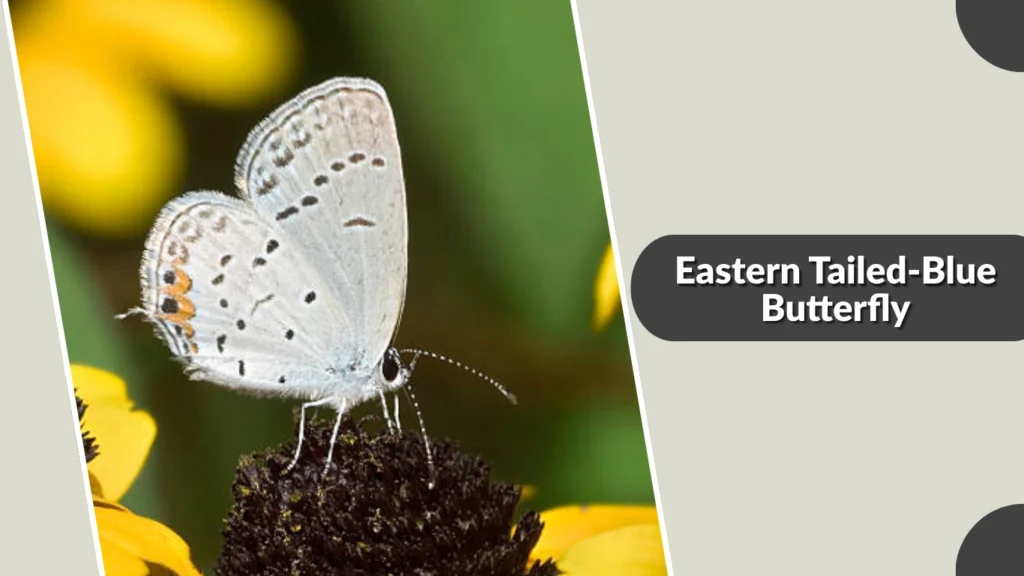
The Eastern Tailed-Blue (Cupido comyntas) is a tiny, delicate butterfly found throughout North America. Known for its small tails and shimmering blue wings, this species is commonly seen in open fields, gardens, and roadsides during warm months.
Identification
- Males have bright blue upperwings; females are gray-blue
- Hindwings feature tiny thin tails
- Underside pale gray with black spots and faint orange patches
- Wingspan: 0.75–1 inch (1.9–2.5 cm)
- Quick, low, fluttery flight near ground vegetation
Habitat
Occurs in meadows, grassy fields, gardens, pastures, woodland edges, and disturbed open areas. Thrives where low-growing legumes are present, as these serve as essential host plants.
Color Pattern
The upper surface in males is a vivid sky blue, while females show a darker bluish-gray tone. The underside is patterned with fine black dots and small orange crescents near the tails. The tiny tails and eye spots help mislead predators.
Lifecycle
Females lay eggs on legume plants such as clover, alfalfa, and vetch. Caterpillars are small green larvae that feed on flower buds and new leaves. Pupation occurs in a ground-level chrysalis. Adults emerge and produce multiple broods from spring through fall.
2. Western Pygmy Blue Butterfly

The Western Pygmy Blue (Brephidium exilis) is one of the smallest butterflies in the world, known for its tiny size and coppery wing coloration. Despite its miniature form, it is widespread in dry, open habitats across the southwestern United States and Mexico.
Identification
- Extremely small size: wingspan 0.5–0.75 inch (1.3–1.9 cm)
- Forewings copper-brown with blue dusting near base
- Hindwings gray with fine black spots
- No tails present
- Very low, skimming flight close to the ground
Habitat
Thrives in deserts, salt flats, coastal marshes, dry fields, vacant lots, and roadside edges. This butterfly prefers harsh, open environments where few other species survive.
Color Pattern
Upperwings show a mix of copper, brown, and faint bluish tones. The underside is pale gray with tiny black speckles. Its small size and dusty pattern help it blend into dry soil and vegetation.
Lifecycle
Eggs are laid on pigweed and saltbush (Chenopodiaceae family). Caterpillars feed on leaves and flowers of these hardy plants. Pupation takes place on the host plant or nearby ground. Adults breed continuously in warm climates, often producing many generations each year.
3. Small Blue Butterfly
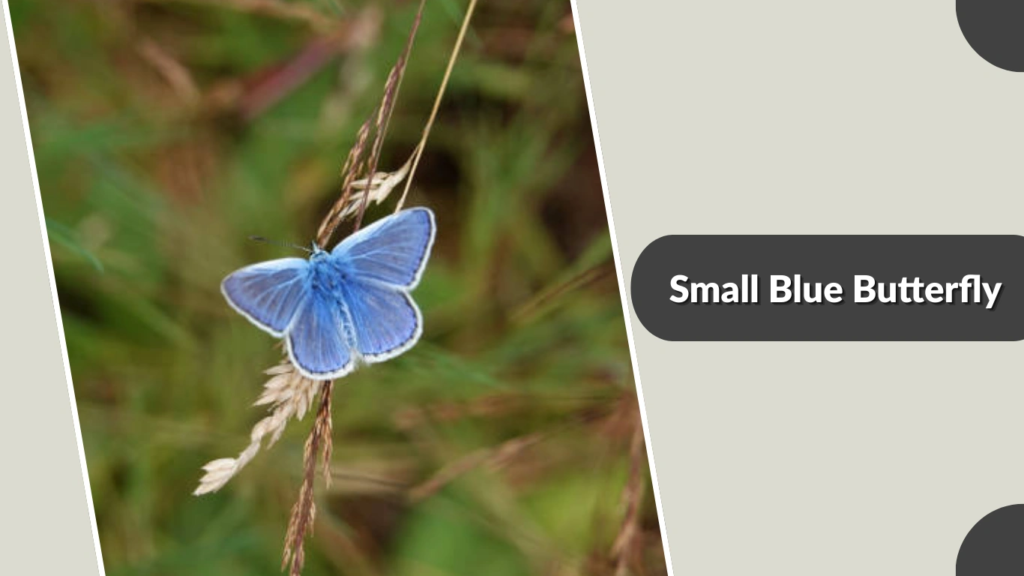
The Small Blue (Cupido minimus) is the smallest butterfly in Europe, loved for its understated beauty and soft bluish tones. It frequents chalky grasslands and sunny slopes where its host plants thrive.
Identification
- Wingspan 0.75–1 inch (1.8–2.6 cm)
- Upperwings dull blue-gray (males slightly bluer)
- Females appear mostly gray-brown
- Underside pale gray with small black spots
- Weak, close-to-ground fluttering flight
Habitat
Found in chalk grasslands, limestone hillsides, quarries, embankments, meadows, and open sunny slopes. Strongly associated with kidney vetch, its essential larval host plant.
Color Pattern
The Small Blue has subtle coloration: a smoky blue upper surface (especially in males) and a softly dotted gray underside. Its delicate tones allow it to blend into chalky soils and rocks.
Lifecycle
Eggs are deposited on kidney vetch (Anthyllis vulneraria). Caterpillars feed inside flowerheads, protected from predators. Pupation occurs in leaf litter near the plant base. Adults emerge from May to September, often with two broods depending on climate.
4. Common Blue Butterfly
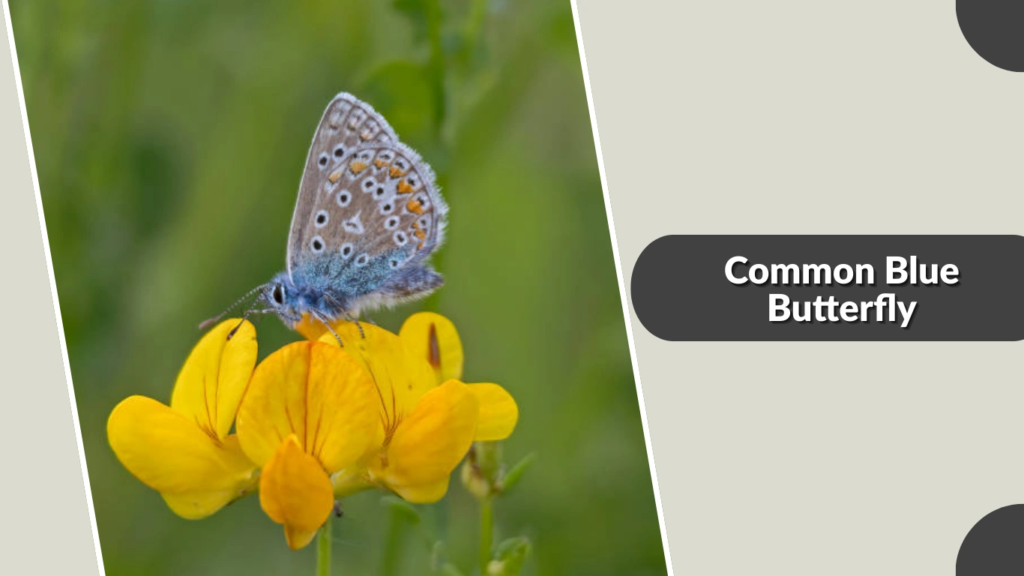
The Common Blue (Polyommatus icarus) is a widespread small butterfly known for its bright blue males and more subdued brownish females. It is commonly found across Europe and Asia in open sunny habitats.
Identification
- Males bright sky blue, females brown with blue dusting
- Underside pale tan with black spots and orange crescents
- Wingspan: 1–1.4 inches (2.5–3.5 cm)
- Low, fluttery flight over grasses and wildflowers
Habitat
Occurs in meadows, grasslands, roadsides, coastal dunes, heathlands, and garden edges. Prefers sunny, open habitats with plenty of nectar plants and legumes.
Color Pattern
Upperwings show sexual dimorphism: males are vivid blue, females brown with variable blue shading. The underside features delicate black spots and orange crescents, helping camouflage when wings are closed.
Lifecycle
Eggs laid on legumes such as clovers and trefoils. Caterpillars feed on leaves and stay hidden within low vegetation. Pupation occurs near ground level. Often produces two to three broods per year in warm regions.
5. Azure Blue Butterfly (Spring Azure Complex)
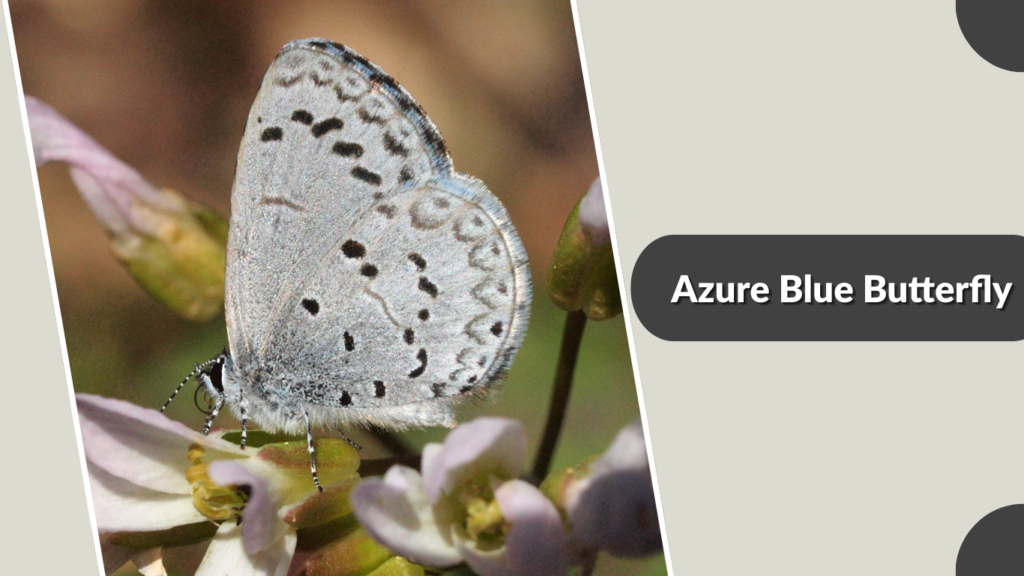
The Azure Blue (Celastrina ladon) is a small butterfly group known for its pale blue wings and early spring appearance. It is common in woodlands across North America.
Identification
- Upperwings pale powder-blue
- Underside white-gray with tiny black spots
- Wingspan: 1–1.25 inches (2.5–3.2 cm)
- Gentle, fluttery flight near shrubs and woodland edges
Habitat
Found in deciduous forests, woodland clearings, gardens, riparian areas, and shrublands. Appears earliest in spring when host plants begin to bud.
Color Pattern
Soft powder-blue upperwings and clean gray-white undersides distinguish this species. Subtle spotting provides light camouflage among flower buds and foliage.
Lifecycle
Eggs laid on buds of dogwood, blueberry, meadowsweet, and viburnum. Caterpillars feed on flowers and fruits. Pupation occurs in leaf litter, and some broods overwinter as pupae.
6. Spring Azure Butterfly

The Spring Azure (Celastrina ladon complex) is one of the earliest butterflies to appear each year in North America. Its tiny size and pale blue wings make it a familiar sight along woodland edges.
Identification
- Upperwings light blue with minimal markings
- Underside grayish-white with scattered dark specks
- Wingspan: 1–1.25 inches (2.5–3.2 cm)
- Soft, fluttering flight close to shrubs and low branches
Habitat
Found in deciduous forests, woodland paths, meadows, parks, and riparian zones. Prefers areas with abundant flowering shrubs.
Color Pattern
Features delicate pale blue upperwings and a softly dotted underside that helps it blend into blossoms and leaves.
Lifecycle
Eggs are laid on flower buds of dogwood, New Jersey tea, and meadowsweet. Caterpillars feed on developing flowers. Pupae overwinter, resulting in early spring emergence.
7. Holly Blue Butterfly
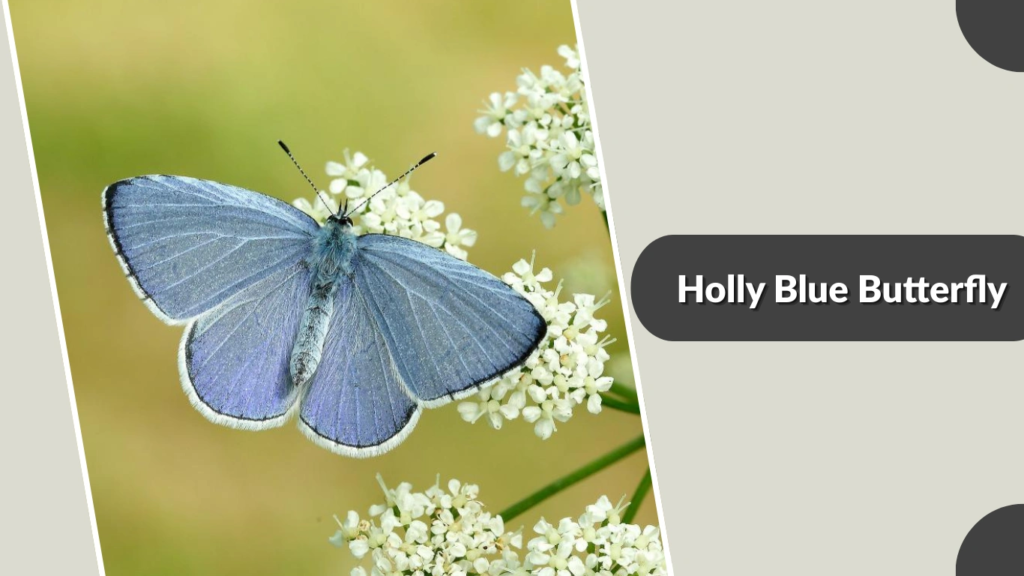
The Holly Blue (Celastrina argiolus) is a small butterfly common in Europe and Asia, named for its association with holly and ivy plants. It often flies high around trees and shrubs.
Identification
- Upperwings bright blue in males, pale blue in females
- Underside silver-gray with scattered dark dots
- Wingspan: 1–1.25 inches (2.5–3.2 cm)
- Fast, fluttery flight, often above head height
Habitat
Found in gardens, parks, woodland edges, hedgerows, and suburban areas. Strongly tied to holly (spring) and ivy (summer) as host plants.
Color Pattern
Displays a clean, bright blue upper surface with subtle black edging. The pale underside provides effective camouflage when perched.
Lifecycle
Eggs laid on holly in spring and ivy in summer. Caterpillars feed on flower buds. Pupation occurs on stems or leaves. Two broods are common yearly.
8. Red Pierrot Butterfly

The Red Pierrot (Talicada nyseus) is a tiny butterfly known for its dramatic contrast of white, black, and bright red. It is common across India and Southeast Asia and usually stays close to low plants.
Identification
- Forewings white with black border
- Hindwings black with a vivid red patch
- Underside patterned in orange, black, and white
- Wingspan: 1–1.25 inches (2.5–3.2 cm)
- Weak, low fluttering flight near ground vegetation
Habitat
Found in gardens, dry scrublands, rocky slopes, and open fields. Strongly associated with Kalanchoe plants, its primary larval host.
Color Pattern
The bright red patch on the hindwings stands out sharply against the white-and-black contrast of the forewings. The underside resembles intricate mosaic patterns.
Lifecycle
Eggs are laid on Kalanchoe leaves. Caterpillars bore into the leaf tissue. Pupation occurs inside or close to the host plant. Multiple broods occur year-round in warm climates.
9. Painted Lady (Small Form)
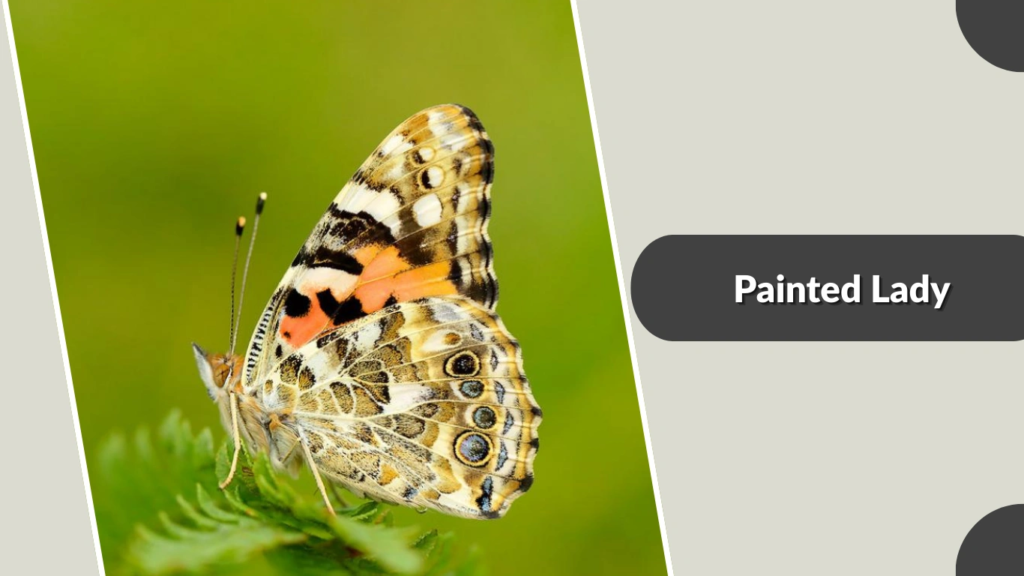
The Painted Lady (Vanessa cardui), while not always small, often appears in compact, light-bodied forms, especially during early-season broods. It is one of the most widespread butterflies globally.
Identification
- Forewings orange-brown with black-and-white tips
- Hindwings with row of black spots
- Underside cryptic with leaflike patterns
- Wingspan: 1.75–2.5 inches (4.5–6.5 cm)
- Rapid, strong flight suited for migration
Habitat
Occurs in meadows, gardens, fields, deserts, mountain slopes, and urban parks. Highly adaptable and migratory.
Color Pattern
Upperwings show orange-brown patches with bold black markings and white tips. The underside is dusty brown, helping camouflage when resting.
Lifecycle
Eggs laid on thistles, mallows, and various herbs. Caterpillars live in silk shelters on the host plant. Pupation occurs in a suspended chrysalis. Several broods may occur each year depending on climate.
10. Small Copper Butterfly
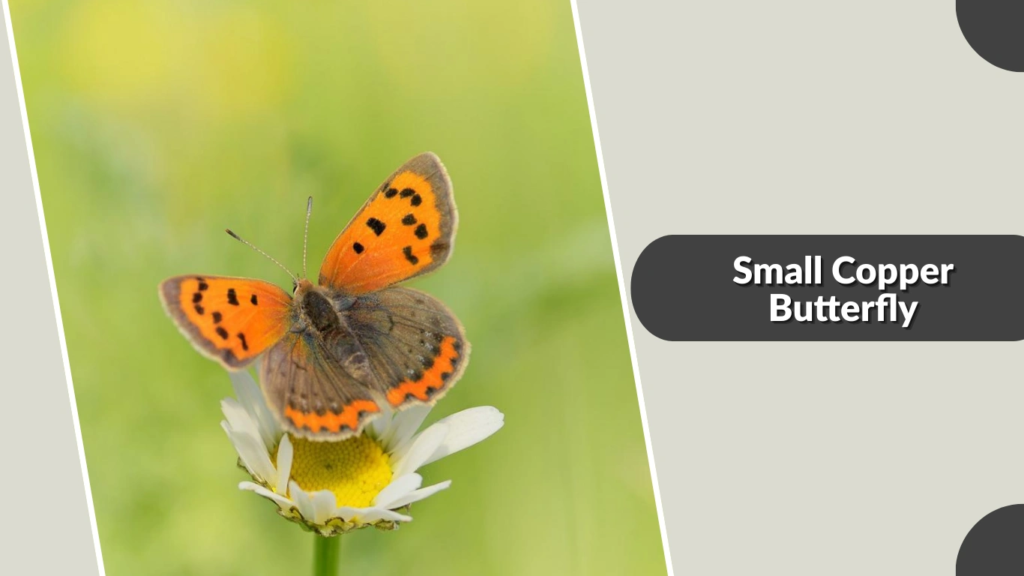
The Small Copper (Lycaena phlaeas) is a vibrant little butterfly found across Europe, Asia, and North America. Its bright orange wings make it easy to spot despite its small size.
Identification
- Upperwings bright copper-orange with black spots
- Hindwings dark brown with orange outer band
- Underside pale with fine dark specks
- Wingspan: 1–1.3 inches (2.5–3.2 cm)
- Quick, darting flight over low vegetation
Habitat
Occurs in meadows, grassy paths, heaths, gardens, and open sunny fields. Prefers dry areas rich in sorrel plants, its primary host.
Color Pattern
Shows a bold copper-orange upperwing contrasting with dark borders and spotted hindwings. Underside colors provide good camouflage among grasses and soil.
Lifecycle
Eggs laid on common sorrel and sheep’s sorrel. Caterpillars feed on leaves before pupating near the plant base. Two to three broods occur yearly in warm climates.
11. Blue Copper Butterfly

The Blue Copper (Lycaena heteronea) is a small North American butterfly admired for its shimmering violet-blue wings in males. It inhabits higher elevations and open mountain areas.
Identification
- Males iridescent violet-blue; females brown with blue shading
- Underside pale gray with black dots
- Wingspan: 1–1.4 inches (2.5–3.6 cm)
- Low, fluttery flight along slopes and meadows
Habitat
Found in mountain meadows, sagebrush slopes, pine clearings, and high-elevation grasslands. Prefers dry, sunny areas where buckwheat plants grow.
Color Pattern
Males display a glowing violet-blue upper surface, while females are more subdued. The underside features soft gray with pinpoint black spots.
Lifecycle
Eggs laid on wild buckwheat species. Caterpillars feed on leaves and pupate near the ground. Adults usually fly in a single summer brood.
12. Least Skipper Butterfly
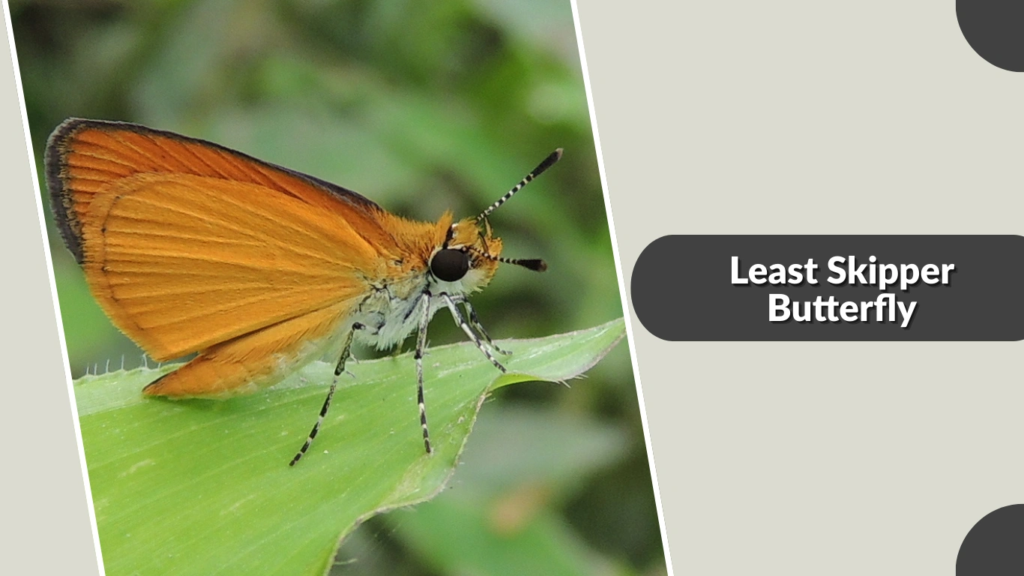
The Least Skipper (Ancyloxypha numitor) is one of the smallest skippers in North America, easily recognized by its delicate build and soft orange-brown coloring.
Identification
- Upperwings soft orange with dark brown borders
- Underside yellow-orange
- Slender body compared to other skippers
- Wingspan: 0.75–1 inch (2–2.5 cm)
- Weak, bouncing flight just above grasses
Habitat
Found in wet meadows, marsh edges, grassy ditches, pondsides, and low fields. Prefers moist habitats with abundant grasses.
Color Pattern
Displays warm orange wings bordered with dark brown, giving a gentle contrast. The underside is lighter, helping it blend into tall grasses.
Lifecycle
Eggs are laid on marsh grasses, especially rice cutgrass. Caterpillars roll leaves to create shelters where they feed and pupate. Multiple broods occur during warm seasons.
13. Fiery Skipper Butterfly
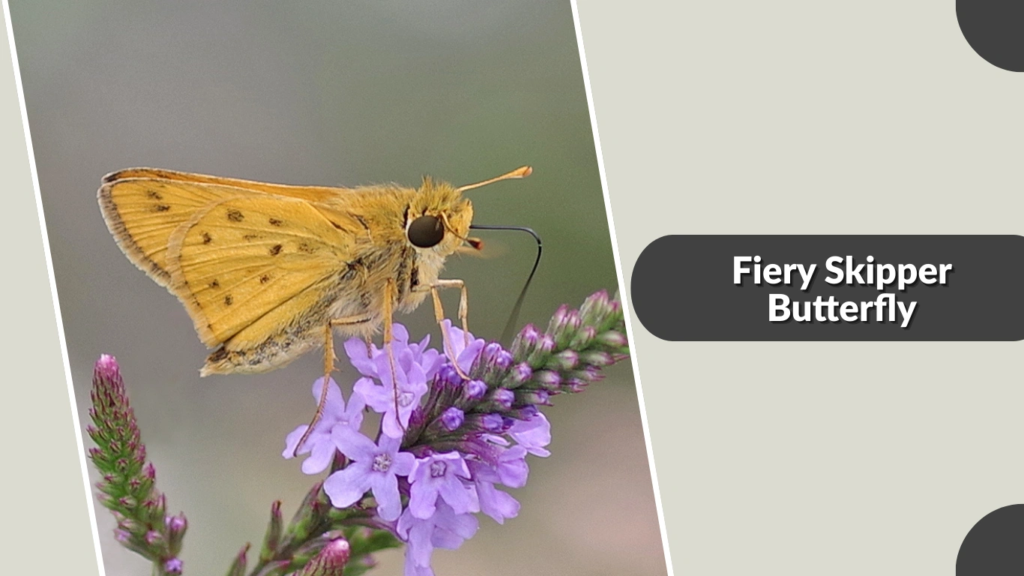
The Fiery Skipper (Hylephila phyleus) is a small, energetic butterfly common in gardens and lawns throughout the Americas. Its bright orange coloring makes it easy to spot.
Identification
- Males bright orange with black markings
- Females duller brown-orange
- Underside yellow with spots
- Wingspan: 1–1.25 inches (2.5–3.2 cm)
- Fast, dashing flight typical of skippers
Habitat
Occurs in lawns, parks, fields, golf courses, and gardens. Often found where Bermuda grass—its main host—grows.
Color Pattern
Males show fiery orange wings bordered by black. Females appear more muted with brownish tones. The underside is pale yellow with variably sized spots.
Lifecycle
Eggs laid on Bermuda grass and other turf grasses. Caterpillars create silk tunnels in the grass and feed within shelter. Several broods occur yearly in warm climates.
14. Checkered Skipper Butterfly
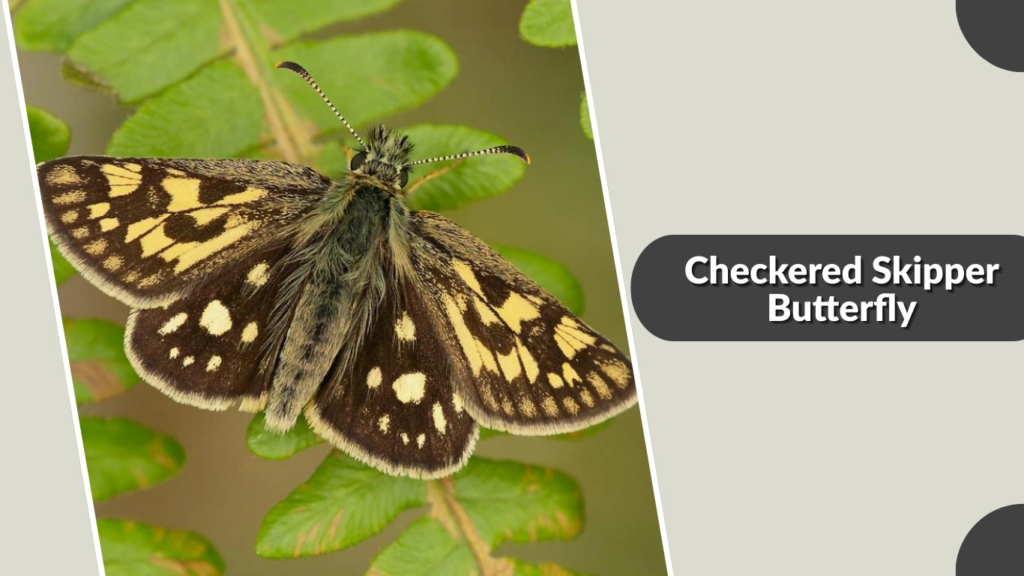
The Checkered Skipper (Pyrgus communis) is a small, distinctive butterfly recognized by its black-and-white checkered wing pattern. It is common across North America in sunny open spaces.
Identification
- Upperwings patterned in black and white checks
- Underside pale gray-green with light spots
- Short, stout body typical of skippers
- Wingspan: 1–1.25 inches (2.5–3.2 cm)
- Quick, jittery flight low over vegetation
Habitat
Found in meadows, prairies, roadsides, open fields, desert edges, and gardens. Prefers areas with abundant low-growing flowers and mallows, its host plants.
Color Pattern
Bold checkered wings make this species easy to recognize. The underside gives a softer, muted version of the check pattern, offering camouflage on dry soil and leaves.
Lifecycle
Eggs are laid on mallow plants. Caterpillars feed on leaves and form loose silk shelters. Pupation occurs near the plant base. Multiple broods are common in warm regions.
15. Small Heath Butterfly
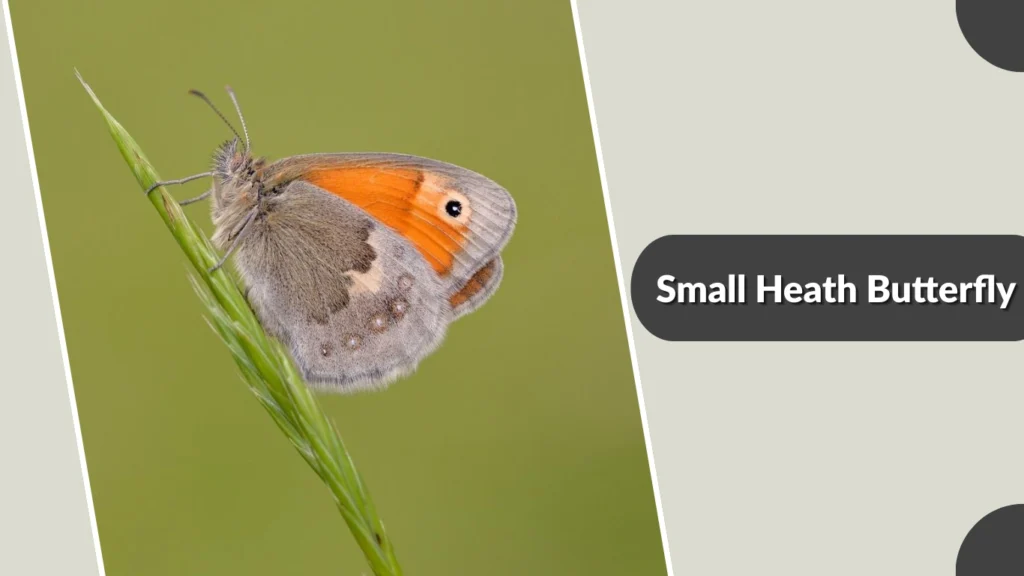
The Small Heath (Coenonympha pamphilus) is a tiny brown butterfly found across Europe and Asia. It often flies low over grass and rarely opens its wings when resting.
Identification
- Upperwings light brown with subtle orange wash
- Underside pale brown with a small eye spot
- Always rests with wings closed
- Wingspan: 1–1.25 inches (2.5–3.2 cm)
- Bouncing, low flight over grasses
Habitat
Found in grasslands, dunes, pastures, heaths, meadows, and roadside verges. Prefers dry, open areas with plentiful grasses.
Color Pattern
Displays soft brown and orange tones, with the underside more detailed and featuring a single small eye spot. This muted palette helps it blend seamlessly into dry grasses.
Lifecycle
Eggs are laid on fine grasses. Caterpillars feed during cool hours and often overwinter as larvae. Pupation occurs low in vegetation before adults emerge in late spring and summer.
16. Common Grass Blue Butterfly
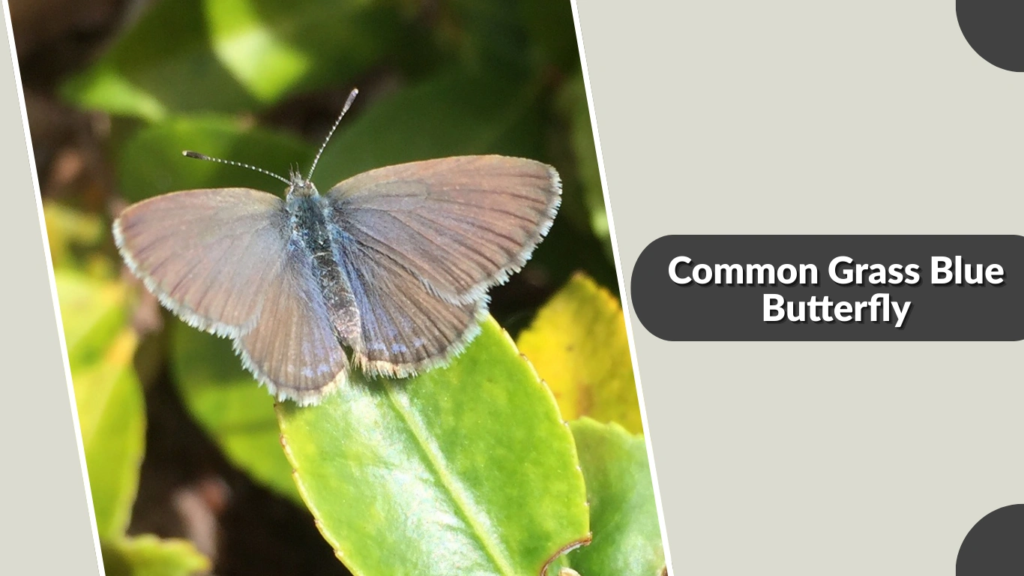
The Common Grass Blue (Zizina labradus) is a tiny butterfly widespread across Australia and parts of Asia. It is frequently seen fluttering above lawns and grassy fields.
Identification
- Upperwings pale blue in males, brownish-blue in females
- Underside light gray with small black spots
- Wingspan: 0.8–1 inch (2–2.5 cm)
- Low, delicate flight over grasses and flowers
Habitat
Found in grasslands, suburban lawns, gardens, road edges, and open fields. Thrives wherever legumes or low-growing herbs are present.
Color Pattern
Males show a soft lavender-blue upper surface, while females are browner with limited blue. The underside is lightly dotted, offering camouflage among dry grasses.
Lifecycle
Eggs laid on various legumes. Caterpillars feed on leaves and flower buds. Pupation occurs in leaf litter. Multiple generations appear yearly in warm climates.
17. Zebra Blue Butterfly
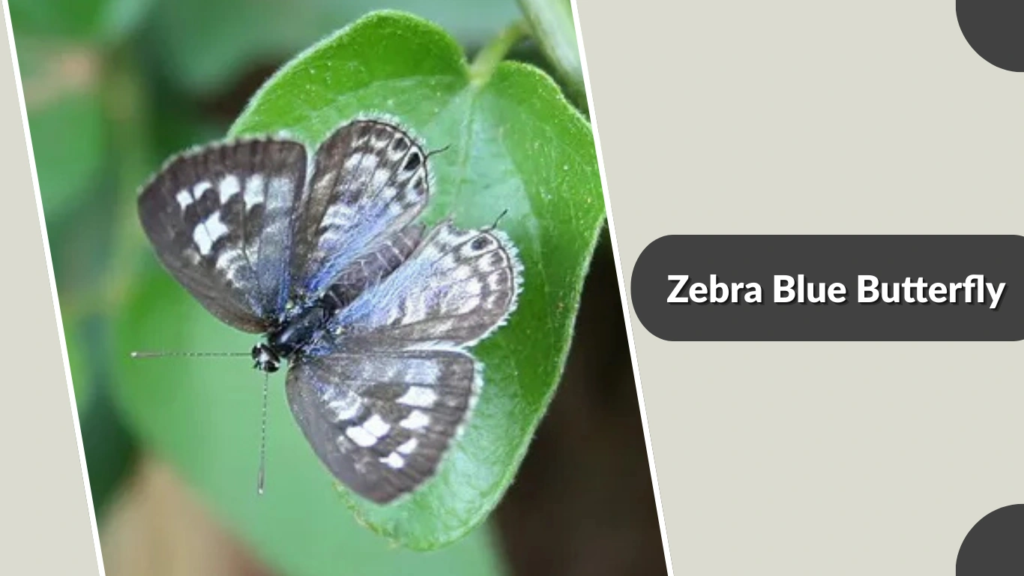
The Zebra Blue (Leptotes plinius) is a small, patterned butterfly recognized for its zebra-like stripes and delicate tails. It is common across Asia, Australia, and the Pacific.
Identification
- Forewings and hindwings marked with brown-and-white stripes
- Small hindwing tails
- Upper surface bluish in males
- Wingspan: 1–1.25 inches (2.5–3.2 cm)
- Quick, erratic flight near host plants
Habitat
Found in gardens, orchards, coastal scrub, open woodland, and urban areas. Often abundant where leguminous shrubs and ornamental plants grow.
Color Pattern
Features distinct zebra-like striping on the underside, with a hint of blue on the upperwings in males. The contrasting pattern helps break up its outline against bark and foliage.
Lifecycle
Eggs are laid on legume flowers and pods. Caterpillars feed inside flower clusters. Pupation occurs on stems or leaves. Populations can be present year-round in tropical climates.
18. Long-tailed Blue Butterfly
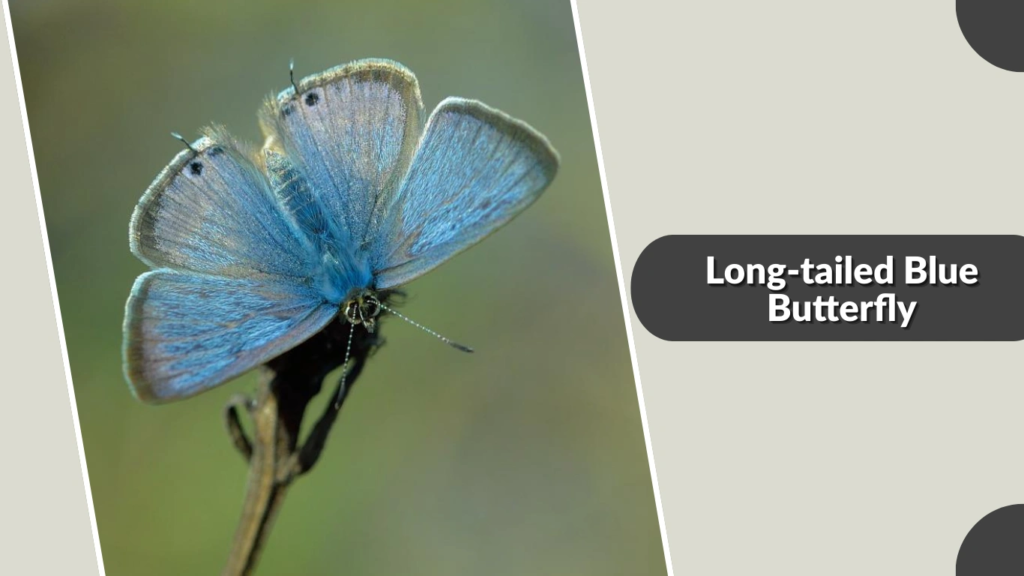
The Long-tailed Blue (Lampides boeticus) is a small but striking butterfly found across Europe, Asia, Africa, and Australia. Its delicate tails and shimmering blue wings make it easy to recognize.
Identification
- Upperwings shining violet-blue in males, brownish-blue in females
- Hindwings have two thin tails
- Underside tan with white bands and orange spots
- Wingspan: 1–1.4 inches (2.5–3.6 cm)
- Fast, graceful flight around host plants
Habitat
Found in grasslands, farmlands, gardens, scrublands, roadsides, and coastal areas. Strongly associated with pea-family plants.
Color Pattern
The upper surface glows violet-blue, while the underside shows elegant white-lined patterns and orange-black spots near the tails. These features confuse predators.
Lifecycle
Eggs laid on pea-family plants (Fabaceae). Caterpillars often feed inside flower buds and pods. Pupation occurs on leaves or stems. Several broods occur yearly in warm climates.
19. Tiny Metalmark Butterfly
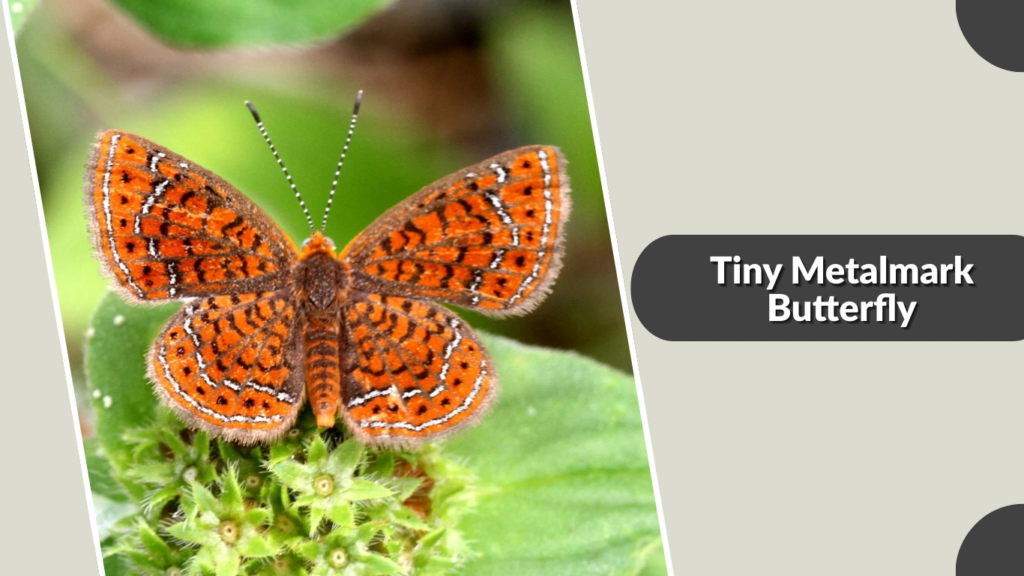
The Tiny Metalmark (Calephelis spp.) is one of the smallest butterflies in the Americas, noted for its metallic sheen and intricate wing patterns.
Identification
- Upperwings rusty orange or brown with metallic spots
- Underside patterned with shimmering scales
- Very small: wingspan 0.6–0.9 inches (1.5–2.3 cm)
- Short, hopping flight among low plants
Habitat
Found in prairies, savannas, scrublands, meadows, and open pine forests. Prefers sunny habitats with low vegetation.
Color Pattern
Wings show coppery-orange tones with tiny silver or metallic spots, giving a reflective appearance. The underside is equally ornate, camouflaging well against dry leaves.
Lifecycle
Eggs laid on Eupatorium and related plants. Caterpillars feed on leaves before pupating in a small, ground-level shelter. Several generations occur yearly in warm regions.
20. Harvester Butterfly
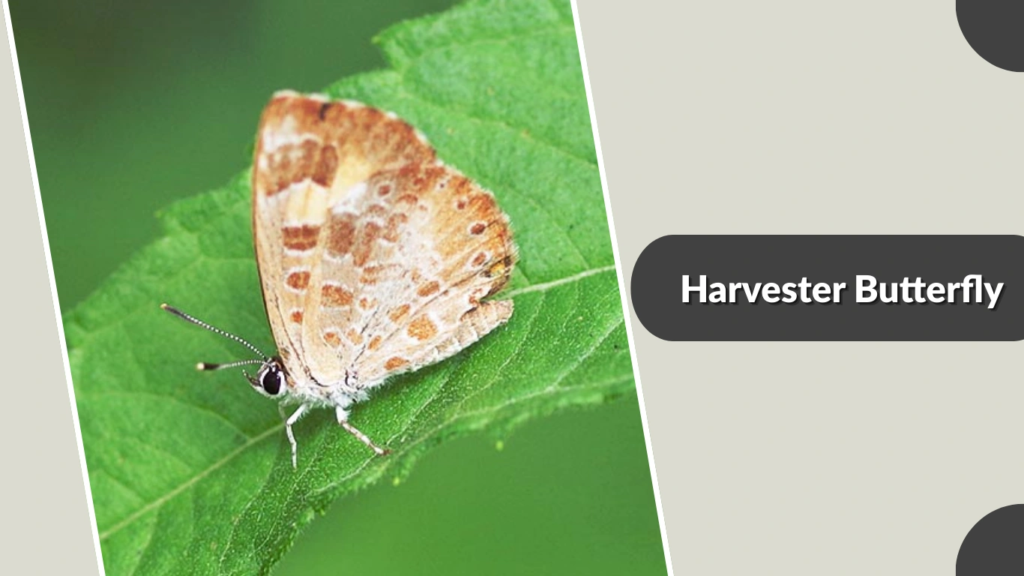
The Harvester (Feniseca tarquinius) is a unique small butterfly native to North America, known for being the only butterfly species on the continent whose caterpillars are carnivorous, feeding on aphids rather than plants.
Identification
- Upperwings orange-brown with dark borders
- Underside mottled with brown and white patches
- Small and compact with a wingspan of 1–1.25 inches (2.5–3.2 cm)
- Quick, flickering flight near shrubs and shaded edges
Habitat
Found in wet woodlands, stream edges, alder thickets, marshy zones, and forested ravines. Prefers areas where woolly aphids—its larval food—are abundant.
Color Pattern
Upperwings show rich orange-brown tones edged with black, while the underside is intricately marbled, giving it excellent camouflage on bark and leaves.
Lifecycle
Females lay eggs directly among colonies of woolly aphids. Caterpillars feed on aphids rather than plants, a rare behavior in butterflies. Pupation occurs on nearby stems, forming a compact chrysalis. Adults typically appear in one to two broods per year.
