

Yellow butterflies are among the most eye-catching and symbolic insects in the natural world. Their bright, uplifting coloration makes them easy to spot in gardens, forests, meadows, and tropical regions. This collection highlights 25 yellow and yellow-patterned butterfly species, focusing on their identification, color patterns, habitats, and lifecycles. Each species offers unique traits—from swallowtails to sulphurs—helping you recognize and understand these beautiful butterflies more easily.
1. Eastern Tiger Swallowtail (Papilio glaucus)
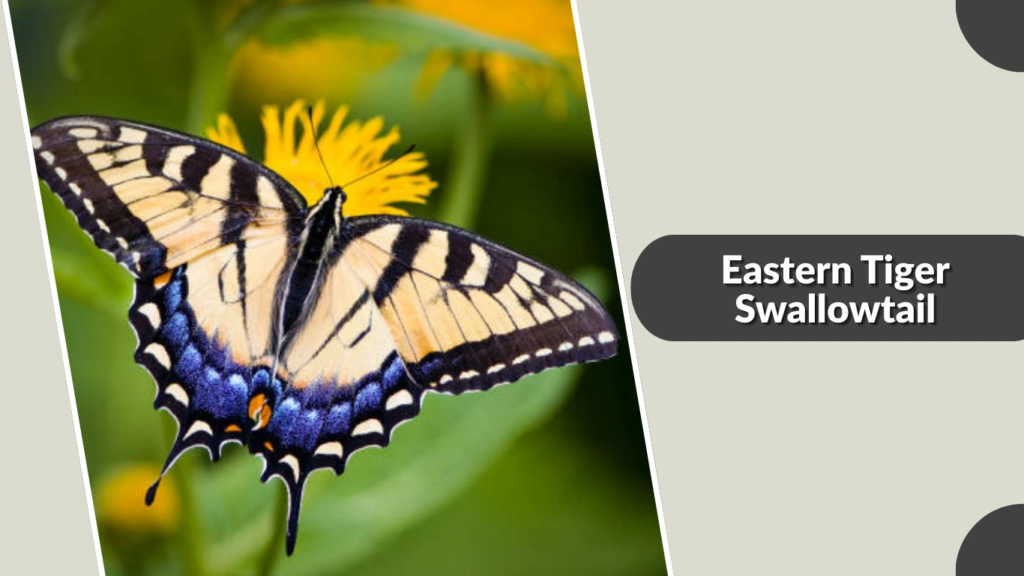
A large, bright yellow-and-black butterfly native to eastern North America, the Eastern Tiger Swallowtail is known for its bold tiger-striping, graceful flight, and widespread presence in forests, gardens, and river corridors.
Identification
- Bright yellow wings with bold black tiger-like stripes
- Thick black borders around the wings
- Blue and orange spots on the hindwings
- Distinct swallowtail extensions
- Females may be yellow or dark (melanic)
- Wingspan typically 3.5–5.5 inches
Color Pattern
The Eastern Tiger Swallowtail displays a vivid yellow base that contrasts sharply with several strong black vertical stripes on the forewings. A thick black border surrounds the wings, adding to its striking appearance. The hindwings feature attractive blue scaling and small orange patches, which are more prominent in females. Some females adopt a dark, almost black morph, replacing yellow with deep charcoal tones while keeping the blue hindwing accents.
Habitat
This species thrives in warm, temperate environments and adapts well to mixed landscapes. It is most commonly found along woodland edges, riverbanks, meadows, suburban gardens, and parks. The butterfly prefers areas where host plants such as tulip trees, wild cherry, ash, and sweetbay magnolia are abundant, enabling successful egg-laying and caterpillar development.
Lifecycle
The Eastern Tiger Swallowtail passes through four distinct life stages. Eggs are laid singly on host plant leaves and are small and yellow-green. The caterpillar begins by mimicking bird droppings before transforming into a bright green form with dramatic eye-like markings. Pupation occurs inside a green or brown chrysalis that blends with surrounding vegetation. Adults emerge in late spring through summer, with multiple generations occurring in warmer climates. They feed on nectar from lilac, milkweed, Joe-Pye weed, and other flowering plants.
2. Western Tiger Swallowtail (Papilio rutulus)
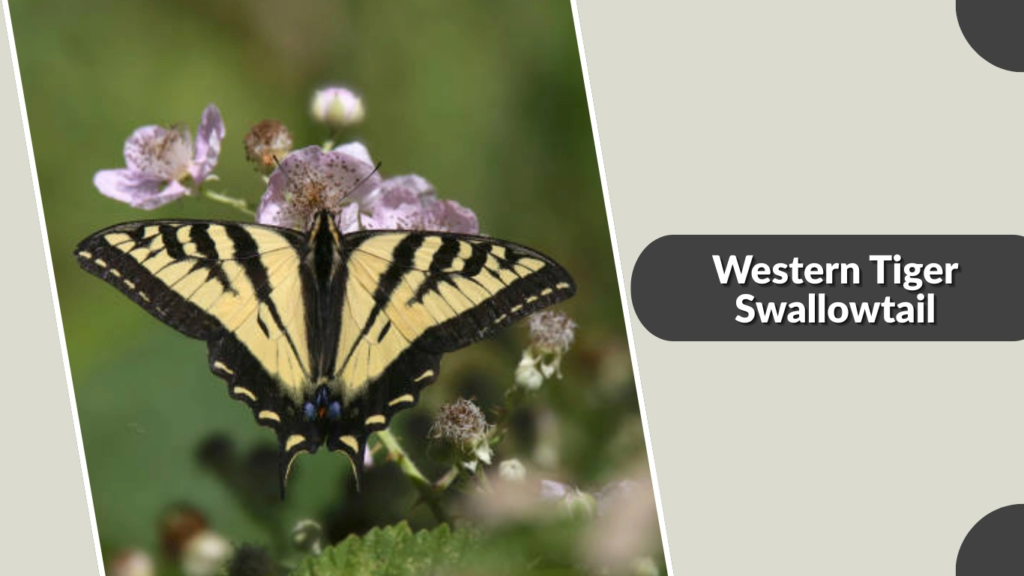
A large yellow-and-black butterfly found across western North America, the Western Tiger Swallowtail is known for its wide wingspan, sharp striped pattern, and strong flight over rivers, forests, and urban landscapes.
Identification
- Bright yellow wings with bold black tiger stripes
- Long, narrow swallowtail extensions
- Blue and orange spots on hindwings
- Wider black edging than the Eastern Tiger Swallowtail
- Wingspan typically 3.5–4.5 inches
Color Pattern
The Western Tiger Swallowtail shows a vibrant yellow base with bold black striping on the forewings, forming a dramatic tiger-like appearance. The wing edges are lined with thick black borders, and the hindwings include blue and orange accents that stand out more in females. The overall color contrast is bright and crisp, making this species easily visible in sunlight.
Habitat
This butterfly thrives in a wide range of western habitats, including river canyons, open forests, valleys, foothills, city parks, and residential gardens. It is especially common along waterways where cottonwoods, aspens, and willows grow, providing ideal host plants for egg-laying and caterpillar development.
Lifecycle
The lifecycle begins with single eggs laid on leaves of host trees such as cottonwood, willow, and ash. Caterpillars start camouflaged as bird droppings, later growing into green larvae with false eyespots for defense. Pupation occurs in a brown or green chrysalis suspended from vegetation. Adults emerge in late spring and summer, often producing one or two broods depending on climate. They feed on nectar from thistle, lilac, butterfly bush, and various wildflowers.
3. Giant Swallowtail (Papilio cresphontes)
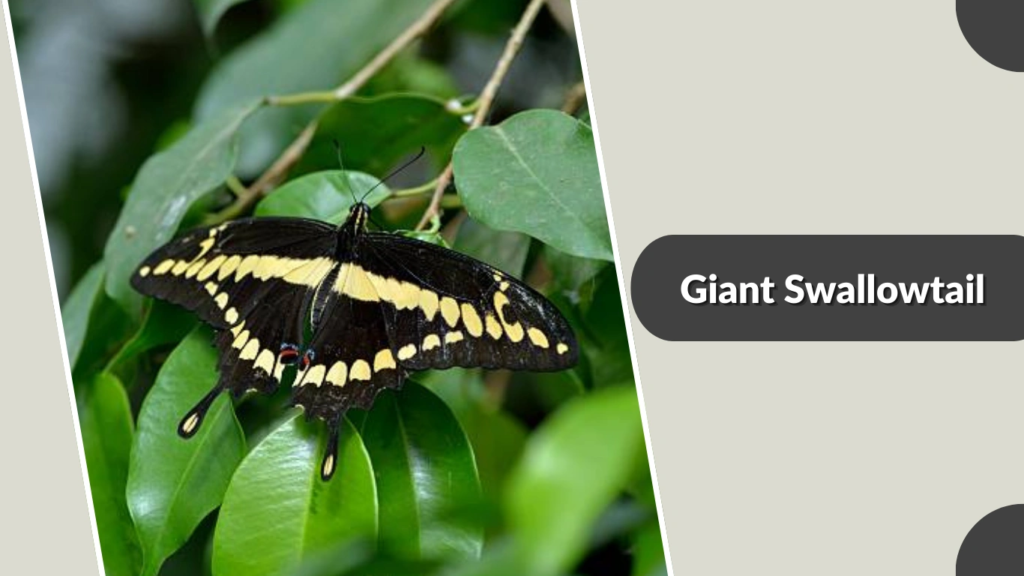
The Giant Swallowtail is the largest butterfly in North America, instantly recognizable by its bold yellow-and-black pattern and powerful flight. It is commonly found in woodlands, orchards, citrus groves, and warm southern regions.
Identification
- Black wings with large yellow diagonal bands
- Tail extensions with yellow spots
- Yellow body with black striping
- Caterpillars resemble bird droppings for camouflage
- Wingspan typically 4–6 inches, the largest in the U.S.
Color Pattern
This butterfly features a deep black background crossed by a prominent yellow band that forms a striking “X” when wings are open. The hindwings display smaller yellow spots and blue accents near the margins. The underside is lighter, with soft yellow and cream tones replacing darker colors. The bold contrast is what makes the Giant Swallowtail unmistakable in flight.
Habitat
The Giant Swallowtail thrives in warm climates such as the southern United States, Mexico, and the Caribbean. It prefers citrus orchards, open woodlands, rural fields, gardens, and scrublands. Because its caterpillars feed on citrus plants, the species is frequently found around cultivated groves and backyard citrus trees.
Lifecycle
Eggs are laid individually on leaves of citrus trees and related plants. The caterpillar initially mimics bird droppings to avoid predators before transitioning into a mottled brown-and-white larva. Pupation occurs on stems or branches where a brown chrysalis blends with bark. Adults emerge throughout spring and summer, feeding on nectar from lantana, zinnia, thistle, and wildflowers. In warm areas, they may produce multiple broods each year.
4. Cloudless Sulphur (Phoebis sennae)
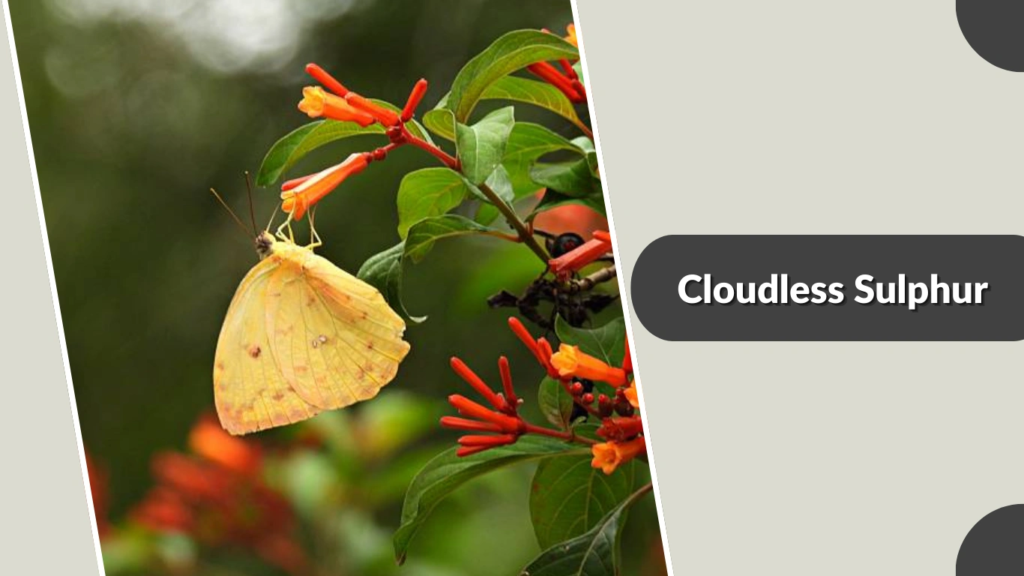
The Cloudless Sulphur is a bright lemon-yellow butterfly widely seen across the Americas. Its smooth coloration, rapid flight, and seasonal migrations make it one of the most familiar yellow butterflies.
Identification
- Strong lemon-yellow wings, often unmarked
- Males are pure yellow; females may have faint dark edging
- Slender body with long pointed wings
- Underside shows pale yellow with a small silver spot
- Wingspan typically 2.5–3 inches
Color Pattern
This species exhibits a clean, uninterrupted yellow surface on the wings, especially in males. Females may show scattered brown flecks or a thin dark border. The underside is softer and paler, often with a tiny white or silver spot at the center of the hindwing. Its bright, nearly uniform yellow coloring gives the butterfly its “cloudless” name.
Habitat
Cloudless Sulphurs are found in open, sunny areas such as fields, pastures, gardens, coastal plains, roadside edges, and tropical lowlands. They prefer warm climates and are known for long-distance migrations. Their host plants include cassia and senna species, which grow in disturbed or sunny locations.
Lifecycle
Eggs are laid singly on senna plant leaves. The caterpillar is green or yellow with fine stripes, feeding primarily on senna foliage and flowers. Pupation occurs in a green or brown angular chrysalis suspended from leaves or stems. Adults appear throughout the warm season and migrate across large regions. They feed on nectar from red and pink flowers such as hibiscus, lantana, and bougainvillea.
5. Clouded Sulphur (Colias philodice)
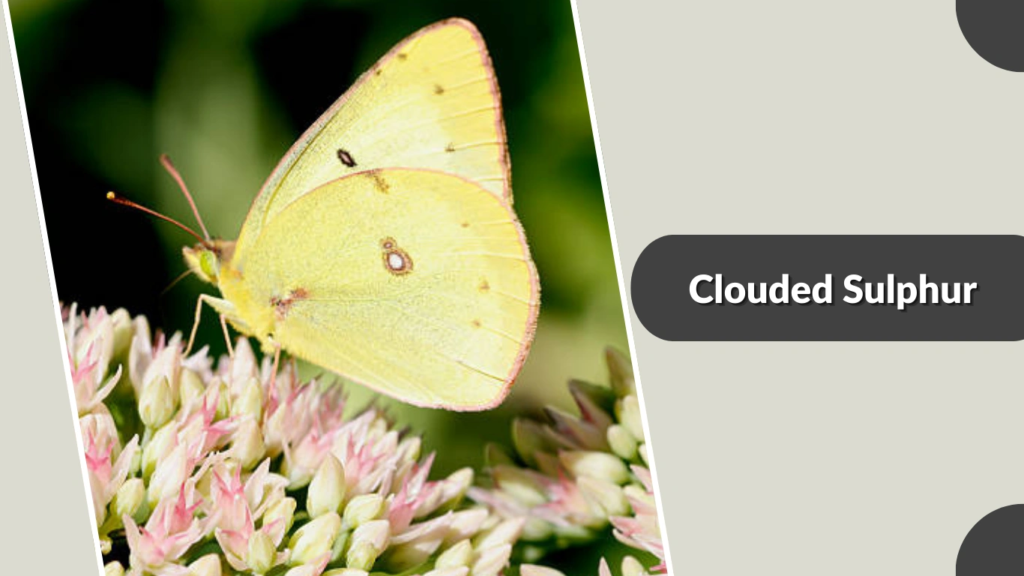
The Clouded Sulphur is a common yellow butterfly found across North America, recognized for its soft yellow wings, dark edging, and graceful flight over fields and meadows.
Identification
- Soft lemon-yellow wings with dark borders
- Females may show lighter or white (albino) forms
- Small central spot on forewing
- Hindwing underside shows a silver spot rimmed with pink
- Wingspan typically 1.5–2.5 inches
Color Pattern
This species has a gentle yellow base coloration accented by a wide charcoal border on the forewings, particularly in males. Females may display reduced borders or appear nearly white. The underside is mottled with greenish tones and features a distinct silver spot edged with pink, giving the butterfly a delicate, textured appearance.
Habitat
Clouded Sulphurs thrive in open environments such as meadows, pastures, roadsides, parks, and agricultural fields. They favor areas with abundant clover and alfalfa, which serve as primary host plants. They are widespread and adaptable, flourishing in both rural farmlands and suburban green spaces.
Lifecycle
Eggs are laid singly on clover or alfalfa leaves. Caterpillars emerge as green larvae with white stripes along the body, feeding steadily on legumes. Pupation occurs in a pale green chrysalis attached to stems or leaves. Adults appear from spring through fall, often forming large colonies. They feed on nectar from clover, milkweed, asters, and other meadow flowers.
6. Orange Sulphur (Colias eurytheme)
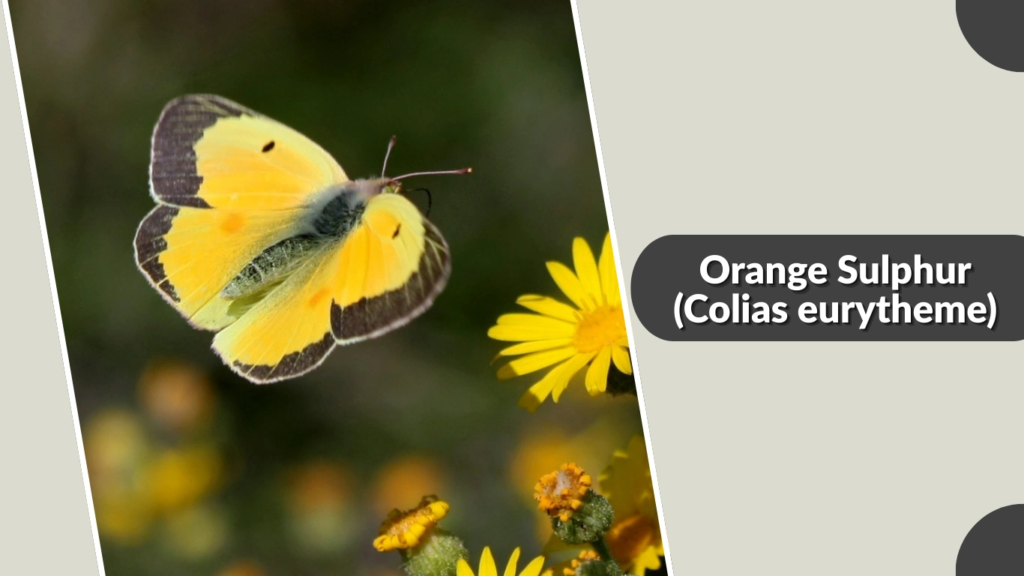
The Orange Sulphur, also known as the “Alfalfa Butterfly,” is a vibrant yellow-orange species common in open fields and farmland across North America. It is closely related to the Clouded Sulphur but displays richer coloration.
Identification
- Yellow-orange wings with bold dark borders
- Upper wings show an orange flush, especially in males
- Distinctive silver spot on hindwing underside
- White female form occurs occasionally
- Wingspan typically 1.5–2.5 inches
Color Pattern
The Orange Sulphur has a warm yellow-to-orange gradient across the wings, with males showing the strongest orange saturation. A thick charcoal border surrounds the forewings, creating a dramatic contrast. The underside is mottled yellow and green, featuring a single white-silver spot on the hindwing. Females may appear paler or wholly white with variable markings.
Habitat
This butterfly thrives in sunny, open landscapes such as farmland, hayfields, meadows, and roadside edges. It is particularly abundant where alfalfa, clover, and other legumes grow, as these plants serve as its primary hosts. The Orange Sulphur adapts well to disturbed areas and agricultural zones.
Lifecycle
Eggs are laid singly on the leaves of alfalfa or clover. Caterpillars are green with faint white side stripes, feeding extensively on legume foliage. Pupation occurs in a slender green chrysalis attached to stems or leaves. Adults fly from spring to late fall, feeding on nectar from thistle, asters, clover, and goldenrod. Two or more broods may occur in warm climates.
7. Sleepy Orange (Abaeis nicippe)
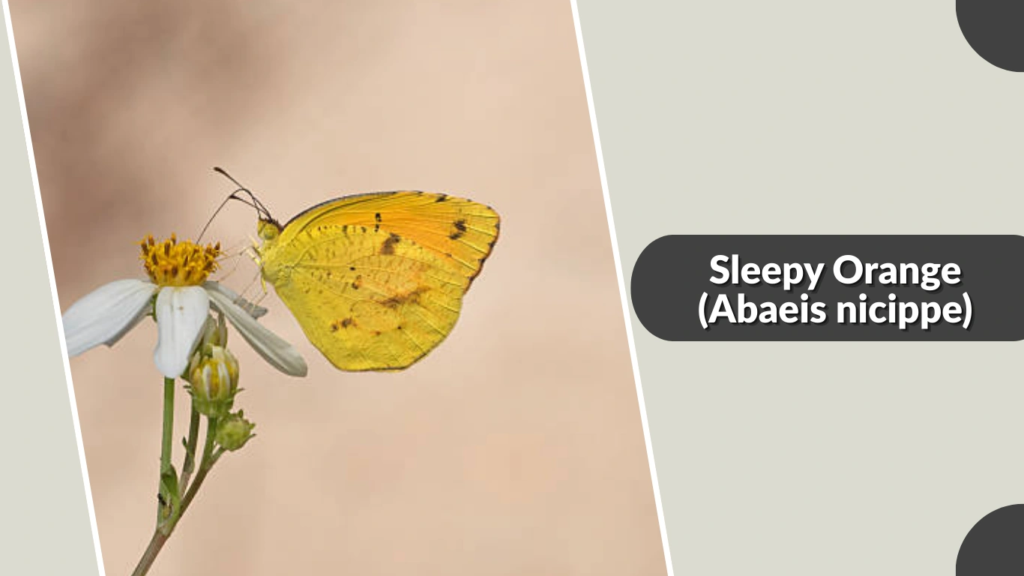
The Sleepy Orange is a bright golden-yellow butterfly known for its orange-tinted wings and seasonal color changes. It is common in the southern United States, Mexico, and Central America.
Identification
- Bright yellow wings with strong orange shading
- Thin black borders along the wing edges
- Underside varies seasonally: mottled brown in winter, yellow in summer
- Small curved spot on hindwing underside
- Wingspan typically 1.5–2 inches
Color Pattern
The Sleepy Orange displays a vivid golden-yellow color washed with orange, especially near the wing centers. The wingtips are outlined by dark borders that become thicker in summer forms. The underside shifts dramatically with the seasons—yellow and lightly marked in warm months, but brown and leaf-like in winter to aid camouflage.
Habitat
This species prefers warm, sunny areas such as open fields, pastures, prairies, roadsides, and garden edges. It is strongly tied to its host plants in the cassia family, commonly found in disturbed or semi-open habitats. The Sleepy Orange thrives in climates with long warm seasons and can be abundant in southern regions.
Lifecycle
Eggs are laid singly on cassia leaves. The caterpillar is slender and green with faint striping, feeding on senna and cassia plants. Pupation takes place in a green or brown chrysalis suspended from stems or leaves. Adults emerge in multiple generations throughout the warm season and feed on nectar from asters, clover, and various roadside flowers.
8. Large Lemon Pansy (Junonia lemonias)
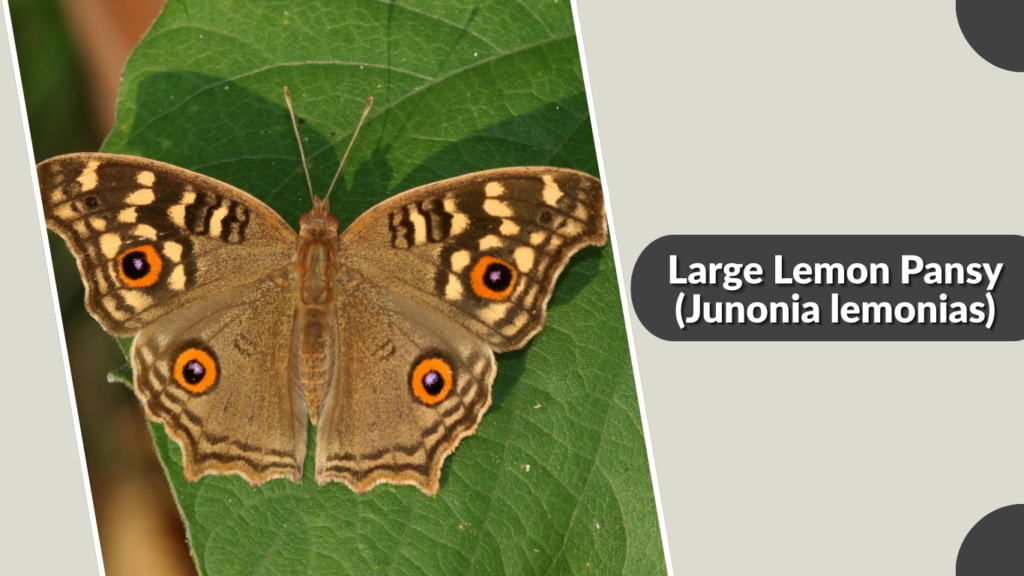
The Large Lemon Pansy is a yellow-brown butterfly native to South Asia, recognized for its lemon-tinted wings and prominent eye spots. It is commonly found in open grassy areas and garden landscapes.
Identification
- Yellow-brown wings with lemon tint
- Large eye spots on forewings and hindwings
- Wavy brown markings across wings
- Squared wing shape typical of pansies
- Wingspan typically 2–2.5 inches
Color Pattern
This butterfly’s wings are light brown with a warm yellow tone, decorated by several bold eye spots that serve as predator deterrents. Dark wavy lines stretch across the wings, creating a patterned appearance. The lemon tint gives it a softer, warmer look than many other pansy species, making it instantly recognizable.
Habitat
The Large Lemon Pansy thrives in open plains, grassy fields, gardens, parks, forest clearings, and scrublands. It prefers sunny locations with short vegetation and is often seen basking with wings open. The species adapts well to human-modified environments, especially areas with ornamental plants.
Lifecycle
Eggs are laid on host plants from the Acanthaceae family. Caterpillars are spiny and dark, feeding on herbs and shrubs within this plant group. Pupation occurs in a mottled chrysalis attached to stems or leaves. Adults emerge year-round in warm regions, feeding on nectar from low-growing flowers and enjoying frequent sunny basking.
9. Zebra Swallowtail (Eurytides marcellus)
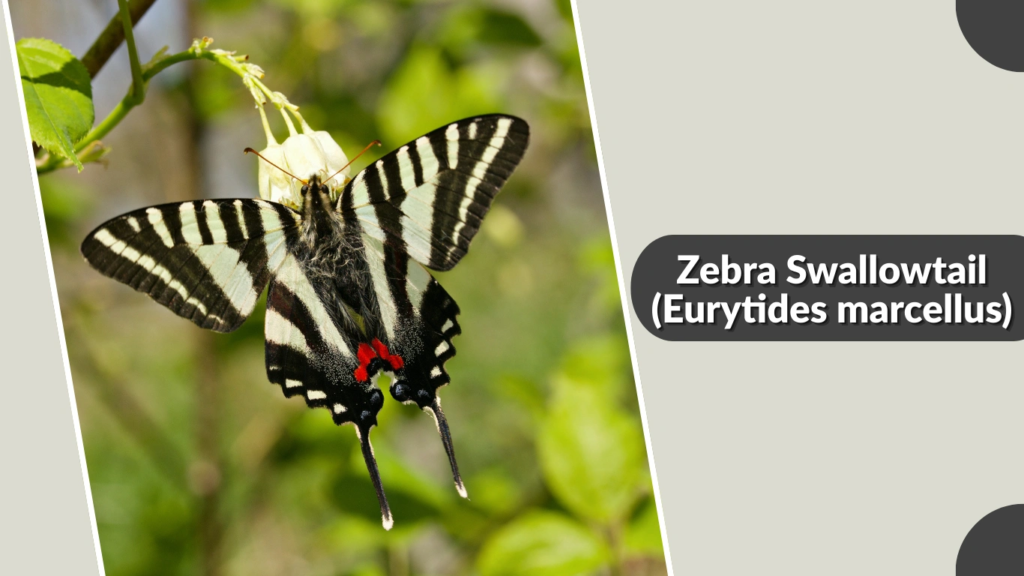
The Zebra Swallowtail is a striking black-and-white butterfly with subtle yellow tones, famous for its long tails and graceful gliding flight. It is strongly associated with pawpaw trees, its exclusive host plant.
Identification
- Black-and-white striped wings with slight yellow shading
- Long, sword-like swallowtail extensions
- Red and blue spots near hindwing base
- Narrow body with bold striping
- Wingspan typically 2.5–4 inches
Color Pattern
The Zebra Swallowtail displays sharp black-and-white banding reminiscent of a zebra pattern, with subtle creamy-yellow undertones that appear in strong sunlight. The hindwings feature red crescents and pale blue shading near the base. Its long, tapering tails are one of the most distinguishing features, giving the butterfly a sleek and elegant appearance.
Habitat
This butterfly is commonly found in areas where pawpaw trees grow—moist woodlands, riverbanks, stream edges, and shaded forest openings. It also appears in orchards, parks, and rural gardens located near natural pawpaw groves. The species thrives in warm, humid, and wooded environments across the eastern and southeastern United States.
Lifecycle
Eggs are laid singly on leaves of pawpaw trees. Caterpillars hatch green or brown and later develop stripes and a pair of horn-like structures for defense. Pupation occurs in a green or brown chrysalis that blends with twigs or foliage. Adults emerge from spring through late summer, often producing several broods. They feed on nectar from flowers such as butterfly bush, verbena, and milkweed.
10. Black Swallowtail (Papilio polyxenes)
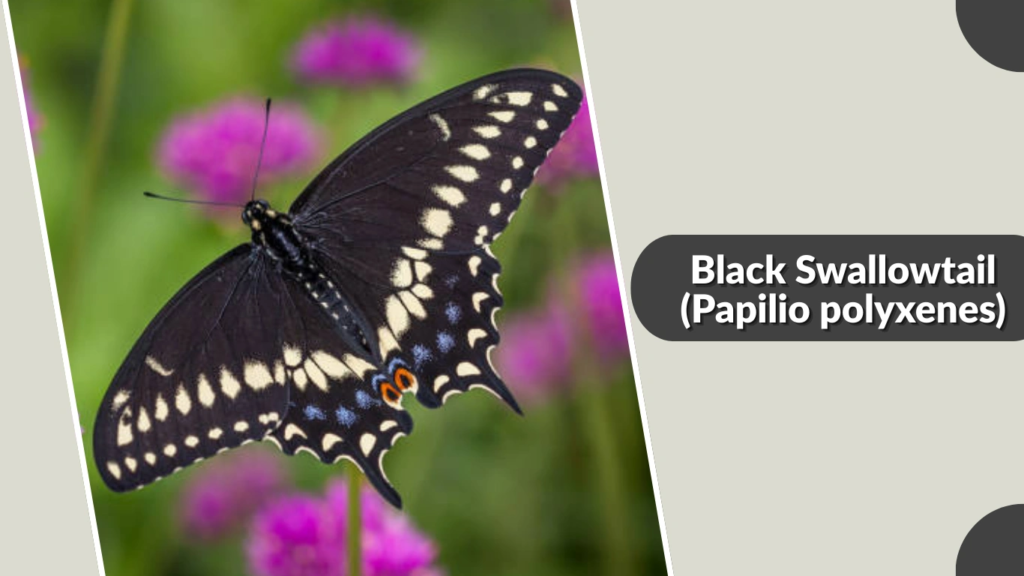
The Black Swallowtail is a dark butterfly with bold yellow spots, common in gardens, open fields, and meadows. It is often mistaken for the dark female morph of the Eastern Tiger Swallowtail.
Identification
- Black wings with two rows of yellow spots
- Blue band on hindwings (stronger in females)
- Small red-orange eyespot near tail
- Short swallowtail extensions
- Wingspan typically 3–4 inches
Color Pattern
This butterfly features a velvety black base with two clean rows of yellow spots along the forewings and hindwings. Females show a wider and more intense blue band across the hindwings, while males have brighter yellow spotting. The underside is lighter with orange crescents and soft yellow shading, creating a vivid contrast when wings are folded.
Habitat
The Black Swallowtail flourishes in open, sunny areas such as gardens, meadows, pastures, herb farms, and roadsides. It is especially common near cultivated parsley, dill, fennel, and carrot plants—the primary hosts for its caterpillars. This makes the species a frequent visitor to backyard gardens and herb patches.
Lifecycle
Eggs are laid on parsley-family plants. Caterpillars start as black with a white saddle, later turning green with black bands and yellow spots. Pupation takes place in a brown or green chrysalis attached by a silk girdle. Adults appear from spring through fall and may produce two or more broods. They feed on nectar from thistles, clover, zinnias, and other open-field flowers.
11. Two-tailed Swallowtail (Papilio multicaudata)
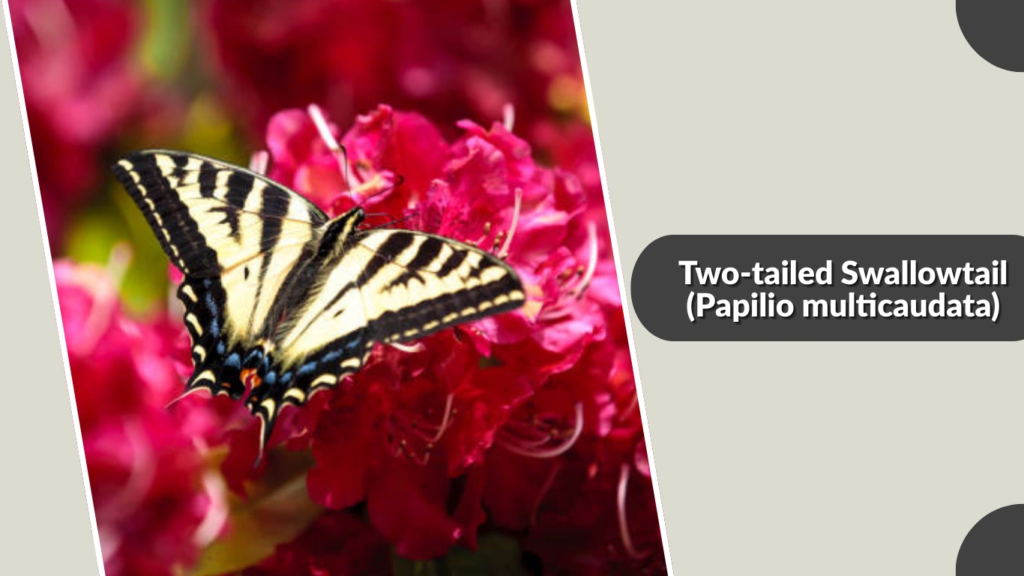
The Two-tailed Swallowtail is one of the largest and most impressive yellow-and-black butterflies in western North America, easily recognized by its double tail extensions.
Identification
- Bright yellow wings with bold black tiger stripes
- Two tail extensions on each hindwing
- Blue and orange spots on hindwings
- Thick black wing borders
- Wingspan typically 4–6.5 inches
Color Pattern
This butterfly features a vivid yellow background crossed by strong black striping, creating a dramatic tiger-like pattern. The most distinguishing trait is the pair of tail extensions on each hindwing. Blue and orange accents enhance the lower wings, while the underside is paler with softer shading. Its coloration is similar to other tiger swallowtails but more intense and expansive in area.
Habitat
The Two-tailed Swallowtail inhabits canyons, foothills, deserts, and mountain regions throughout the western United States. It is often seen near streams, forest edges, roadsides, and suburban areas. Host plants include ash, chokecherry, and various species of Arizona walnut and hoptree, making it common in drier habitats than most swallowtails.
Lifecycle
Eggs are laid individually on leaves of ash, cherry, or hoptree. Caterpillars begin by mimicking bird droppings before developing into green larvae with eye-like spots. Pupation occurs in a green or brown chrysalis attached to twigs. Adults emerge from spring to fall, feeding on nectar from lilac, thistle, butterfly bush, and native desert flowers.
12. Palamedes Swallowtail (Papilio palamedes)
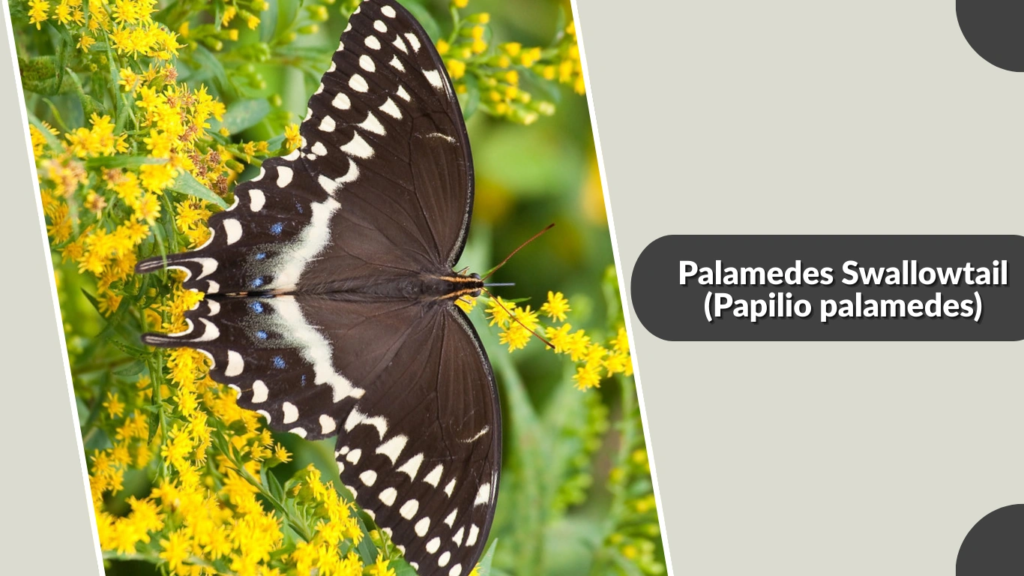
The Palamedes Swallowtail is a large dark swallowtail with bold yellow markings, commonly found in the southeastern United States, especially in wet, forested regions.
Identification
- Dark brown-to-black wings with thick yellow bands
- Blue spots on hindwings
- Short swallowtail extensions
- Yellow spot line across forewings
- Wingspan typically 4–5 inches
Color Pattern
This butterfly displays deep brown or black wings marked by a strong curved yellow band across the hindwings and a row of yellow spots along the forewings. The hindwings include subtle blue shading near the lower margin. The underside mirrors the top but with softer, warmer brown tones that blend into the environment, especially in shaded forests.
Habitat
The Palamedes Swallowtail thrives in wet, humid environments such as swamps, forested wetlands, cypress groves, and coastal plains. It is strongly associated with redbay and swampbay trees, its primary host plants. The species is also common along shaded trails, riverbanks, and southern woodland edges.
Lifecycle
Eggs are laid singly on leaves of redbay or swampbay. The caterpillar turns bright green with distinctive eye-like spots and usually rests on the midrib of leaves. Pupation occurs in a brown or green chrysalis attached to stems or branches. Adults appear from spring through fall, feeding on nectar from azalea, thistle, pickerelweed, and swamp flowers.
13. Anise Swallowtail (Papilio zelicaon)
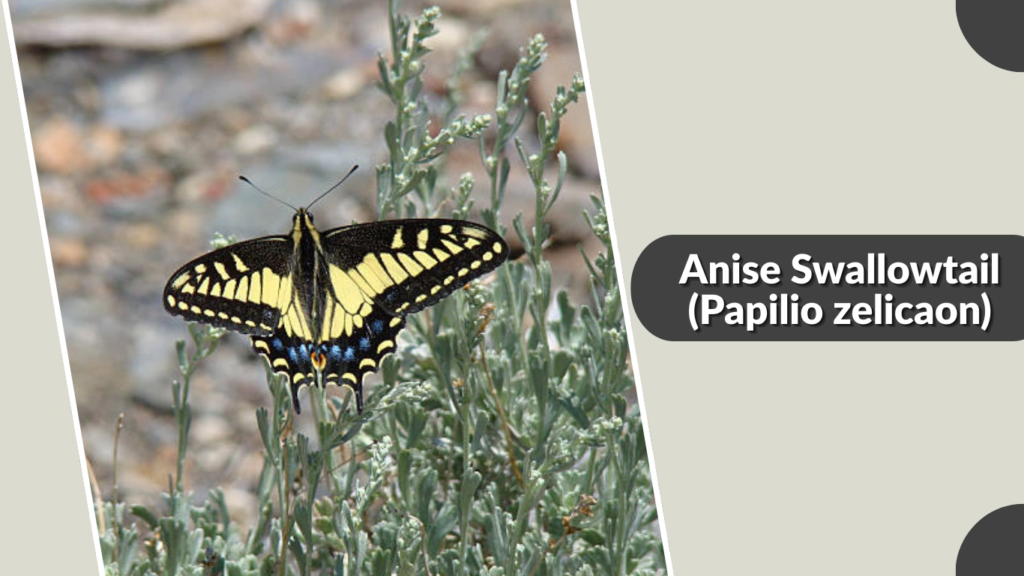
The Anise Swallowtail is a striking yellow-and-black butterfly found primarily along the western United States, especially in coastal and mountainous regions.
Identification
- Yellow wings with thick black borders and bands
- Blue and orange spots on hindwings
- Distinct black stripe through the center of the forewing
- Short swallowtail extensions
- Wingspan typically 2.5–3.5 inches
Color Pattern
This species features a bright yellow base color contrasted by bold black borders and a central diagonal black band on the forewings. The hindwings include a series of blue spots and a single orange eyespot near the tail. The underside resembles the top but with softer yellow shading. The strong contrast gives the butterfly a sharp and highly visible appearance in flight.
Habitat
The Anise Swallowtail inhabits coastal scrub, foothills, open meadows, rocky slopes, canyons, and urban gardens. It is especially common near fennel, anise, and parsley-family plants, which serve as hosts for its caterpillars. It adapts well to human-modified landscapes and thrives in sunny, open areas.
Lifecycle
Eggs are laid singly on fennel, anise, or wild carrot. Caterpillars start dark with a white saddle before becoming green with black bands and orange spots. Pupation occurs in a green or brown chrysalis attached by a silk girdle. Adults appear from spring to fall, producing multiple broods in warmer climates. They feed on nectar from thistle, yarrow, fennel blossoms, and buckwheat.
14. Southern Dogface (Zerene cesonia)
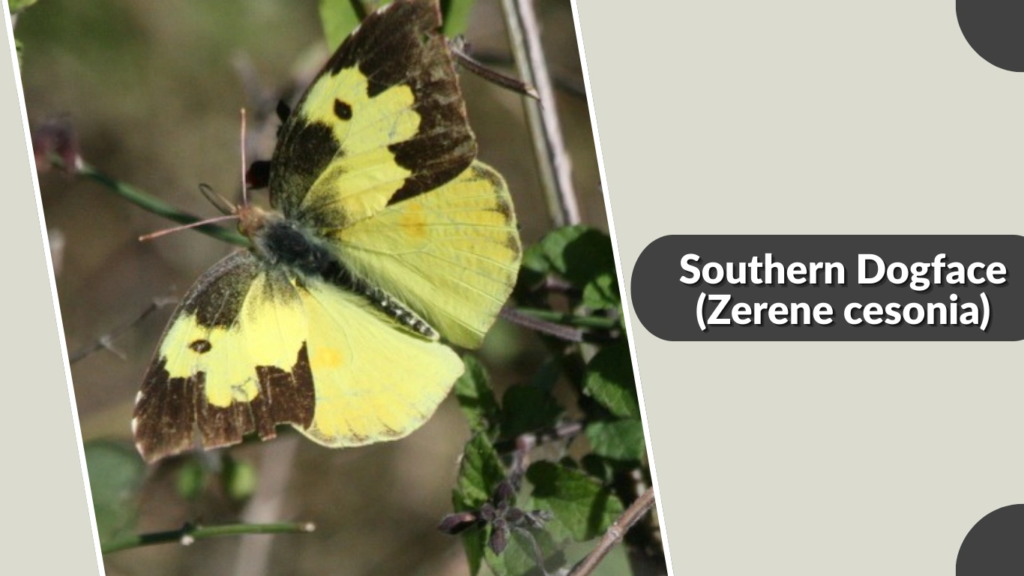
The Southern Dogface is a bright yellow butterfly named for the dog-head-shaped marking on its forewings. It is widespread in the southern United States and Central America.
Identification
- Bright yellow wings with dog-head black marking on forewing
- Thin dark borders on wing edges
- Rose-colored spot on hindwing underside
- Long, pointed forewings
- Wingspan typically 2–2.5 inches
Color Pattern
Its vivid yellow wings are accented by a distinct black pattern that resembles the profile of a dog’s head—hence the name. The wingtips and edges have narrow dark borders, and the underside shows mottled yellow with a rose-pink spot on the hindwing. The pattern is crisp and angular, giving the butterfly a unique silhouette.
Habitat
The Southern Dogface prefers sunny fields, prairies, open pastures, roadsides, and grasslands. It thrives in dry, warm environments and is frequently found in areas where its host plants—false indigo and various legumes—grow. The species also appears in suburban gardens that include nectar-rich flowers.
Lifecycle
Eggs are laid singly on legume plants. The caterpillar is slender and green with faint striping. Pupation occurs in a green chrysalis attached to stems or leaves. Adults fly from spring through fall, often forming multiple generations. They feed on nectar from clover, verbena, alfalfa, and other low-growing flowers.
15. Little Yellow (Pyrisitia lisa)

The Little Yellow is a small, bright yellow butterfly commonly found in the southern United States, Mexico, Central America, and parts of the Caribbean. Its quick, fluttering flight makes it easy to spot in sunny open areas.
Identification
- Small lemon-yellow wings
- Thin dark edging on forewings
- Underside pale yellow with faint brown speckling
- Rounded wing shape
- Wingspan typically 1–1.5 inches
Color Pattern
The Little Yellow displays a clean lemon-yellow coloration with a narrow dark border on the forewings. The underside is paler, sometimes lightly mottled with brown specks that help with camouflage among grasses. The butterfly’s brightness in sunlight makes it appear almost glowing during flight.
Habitat
This species thrives in warm, open environments such as pastures, fields, roadsides, coastal plains, and disturbed grassy areas. It prefers habitats where its primary host plants—various cassia species—are abundant. The butterfly is active in bright sunlight and rarely seen during cloudy weather.
Lifecycle
Eggs are laid individually on cassia leaves. The caterpillars are slender and green, feeding mostly on senna and cassia plants. Pupation occurs in a small green chrysalis attached to stems or leaf undersides. Adults produce multiple broods throughout warm seasons and feed on nectar from clover, shepherd’s needle, and other small wildflowers.
16. Dainty Sulphur (Nathalis iole)
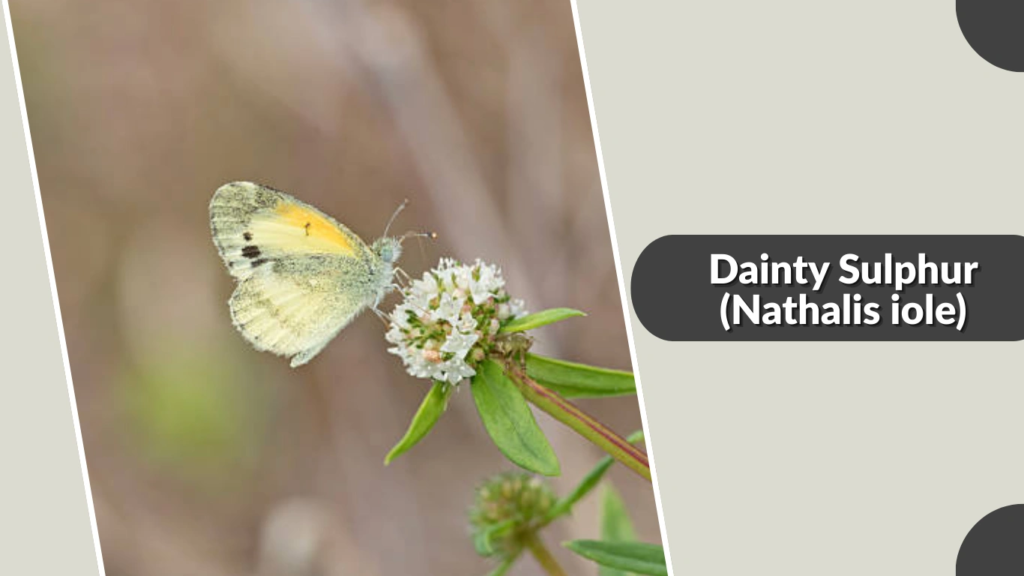
The Dainty Sulphur is the smallest butterfly in North America, easily recognized by its miniature size and delicate yellow coloring. It inhabits open, disturbed areas and warm regions year-round.
Identification
- Very small yellow wings with orange-tinted bases
- Fine brown patterning on forewings
- Underside pale yellow with scattered brown dots
- Short, rounded wings
- Wingspan typically 0.75–1.25 inches
Color Pattern
The Dainty Sulphur features soft yellow wings with orange shading near the wing bases and fine brown markings along the edges. The underside is muted with tiny brown speckles that help blend with dry grasses. In sunlight, the butterfly’s upper wings show a warm orange-yellow glow.
Habitat
This species thrives in disturbed open areas such as vacant lots, fields, roadsides, desert flats, and coastal plains. It prefers regions with abundant low-growing asters, which serve as both host plants and nectar sources. The butterfly is common in southern and southwestern climates and often forms small colonies.
Lifecycle
Eggs are laid on the leaves or flower buds of dwarf asters. Caterpillars are green with subtle striping, feeding on the tender parts of the plant. Pupation occurs in a small, inconspicuous chrysalis attached to stems or leaves. Adults may appear year-round in warm regions, feeding on nectar from tiny composite flowers and thriving in sunny, dry habitats.
17. Barred Yellow (Eurema daira)

The Barred Yellow is a small, fast-flying yellow butterfly found throughout the southern United States, Mexico, Central America, and the Caribbean. Its bright coloration and distinct bar markings make it easy to identify.
Identification
- Bright yellow wings with a dark diagonal bar on forewings
- Thin dark borders around wing edges
- Underside pale yellow with fine brown speckles
- Small, rounded wing shape
- Wingspan typically 1.25–2 inches
Color Pattern
The Barred Yellow shows a vivid yellow surface crossed by a bold brownish bar on the upper forewing, giving the species its name. The wing edges are outlined with narrow dark borders. The underside is softer and more muted, with delicate brown spotting that helps it blend into dry vegetation during rest.
Habitat
This butterfly thrives in warm, open environments such as meadows, coastal plains, pastures, scrublands, and roadsides. It is common in subtropical and tropical regions and often appears near flowering plants that provide nectar. Host plants include various legumes, especially those found in dry, sunny habitats.
Lifecycle
Eggs are laid singly on leaves of legume host plants. Caterpillars are slender, green, and lightly striped, feeding primarily on new growth. Pupation occurs in a small green chrysalis attached beneath leaves or stems. Adults may fly year-round in warmer regions, feeding on nectar from lantana, aster, and other low-growing flowers.
18. Florida Yellow Butterfly (Phoebis agarithe)

The Florida Yellow Butterfly, also called the “Orange-barred Sulphur,” is a large, bright yellow butterfly frequently seen in Florida, the Caribbean, and Central America. Its bold yellow color and seasonal orange shading make it highly distinctive.
Identification
- Large yellow wings with broad orange patches (mainly males)
- Females pale yellow or white with dark borders
- Long, slightly pointed wings
- Underside shows mottled yellow with subtle spots
- Wingspan typically 3–4 inches
Color Pattern
This species has a rich yellow base with strong orange wash on the forewings of males, especially during the breeding season. Females have darker edging and may be nearly white with faint yellow tones. The underside is more subdued with soft speckling that provides camouflage among leaves and flowers.
Habitat
The Florida Yellow Butterfly inhabits tropical and subtropical environments such as coastal areas, gardens, open woodlands, fields, and roadsides. It is especially abundant in southern Florida and island regions. Host plants include cassia and senna species, which thrive in warm, moist areas.
Lifecycle
Eggs are laid singly on senna plants. Caterpillars are green or yellowish with faint stripes, feeding on senna leaves and flowers. Pupation occurs in a pointed green or brown chrysalis suspended from stems. Adults emerge throughout the year in warm climates and feed on nectar from hibiscus, bougainvillea, lantana, and many tropical flowers.
19. Common Brimstone (Gonepteryx rhamni)
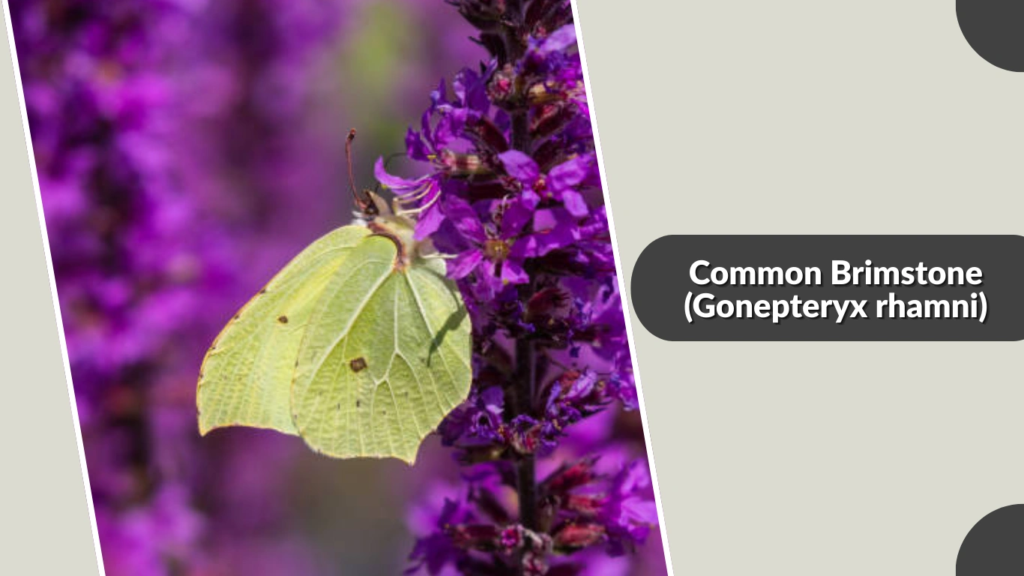
The Common Brimstone is a bright yellow butterfly native to Europe, Asia, and North Africa. Its leaf-shaped wings and vibrant coloration make it one of the most recognizable butterflies in its range.
Identification
- Lemon-yellow wings (males) and pale greenish-yellow wings (females)
- Distinct leaf-shaped wings with pointed tips
- Small reddish spot in the center of each wing
- Strong veining resembling leaf texture
- Wingspan typically 2.25–2.75 inches
Color Pattern
Males display a vivid lemon-yellow color that stands out strongly in sunlight, while females appear paler and more greenish-yellow. Both sexes have a small red dot on each wing and pronounced veining that mimics leaf structure. This leafy appearance provides excellent camouflage when the butterfly rests with wings closed.
Habitat
The Common Brimstone inhabits woodland edges, hedgerows, meadows, gardens, riverbanks, and scrublands. It is especially associated with buckthorn and alder buckthorn, the primary host plants for its caterpillars. The species is highly adaptable and often one of the first butterflies to appear in early spring.
Lifecycle
Eggs are laid on the leaves of buckthorn plants. Caterpillars are green and blend well with foliage, feeding until they pupate on twigs or stems. Pupation occurs in a slender chrysalis that resembles a leaf bud. Adults are long-lived and can overwinter, emerging early in spring to feed on nectar from primroses, thistles, and other early-season flowers.
20. Great Yellow Mormon (Papilio rumanzovia)
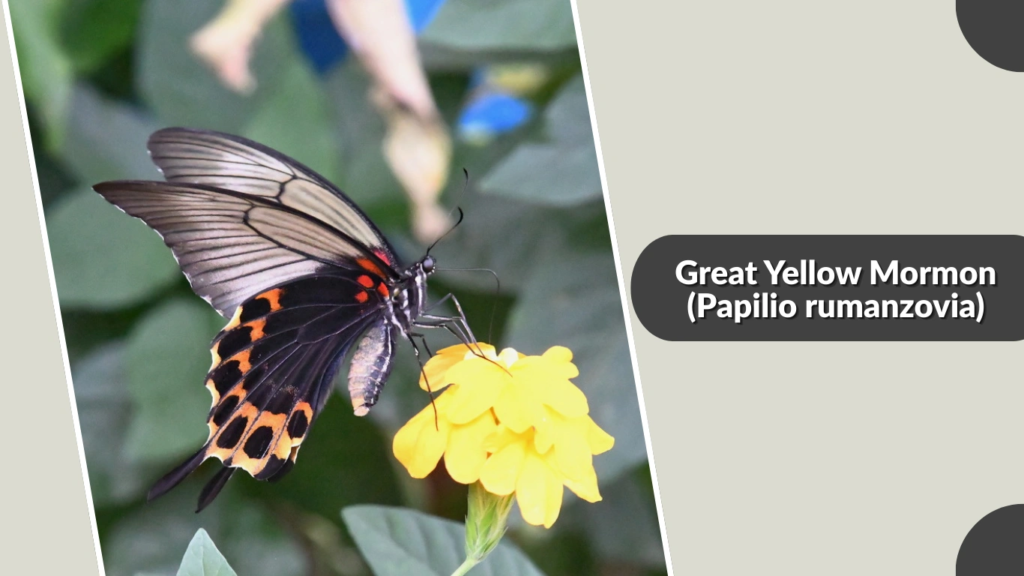
The Great Yellow Mormon is a large and visually striking swallowtail butterfly found in Southeast Asia. It is known for its bold yellow-and-black coloration and impressive wingspan.
Identification
- Large yellow wings with wide black borders
- Bold black veins on forewings
- Red spots on hindwings
- Short swallowtail extensions
- Wingspan typically 4.5–6 inches
Color Pattern
This butterfly features a bright yellow base color framed by thick, velvety black borders and strong black veining. The hindwings display red and blue accents near the lower edges. The underside is slightly paler but maintains the dramatic contrast. Its coloration is intense and highly visible, making it one of the most eye-catching swallowtails.
Habitat
The Great Yellow Mormon inhabits tropical forests, forest edges, plantations, gardens, and mountainous regions in Southeast Asia. It prefers humid environments rich in host plants such as citrus trees and shrubs from the Rutaceae family. It is especially common in lowland tropical zones.
Lifecycle
Eggs are laid individually on the leaves of citrus and related plants. Caterpillars mimic bird droppings when young and later become green with distinctive markings. Pupation occurs on stems or leaves in a brown or green chrysalis. Adults fly year-round in warm regions and feed on nectar from hibiscus, lantana, and various flowering forest plants.
21. Yellow Glassy Tiger (Parantica aspasia)
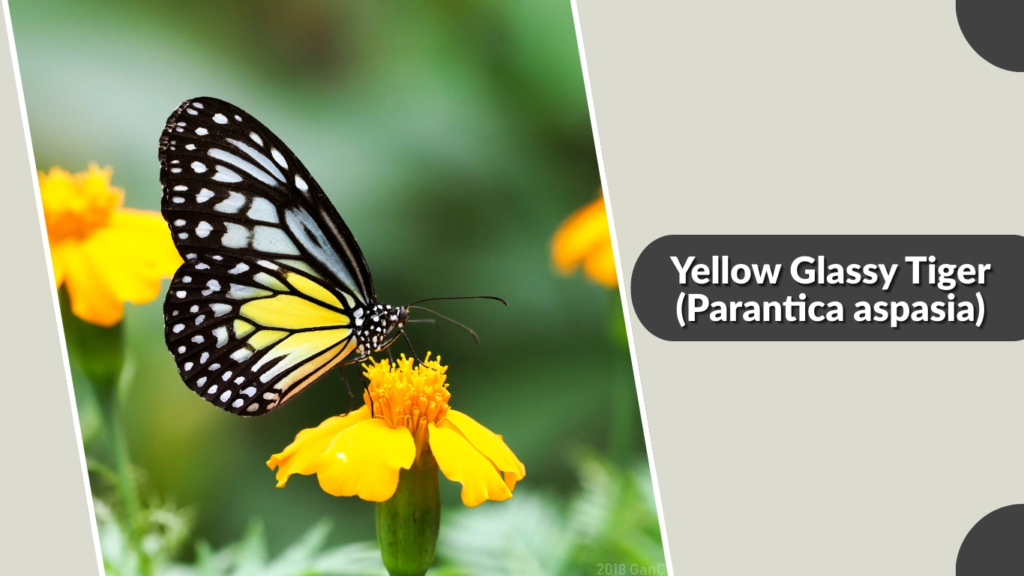
The Yellow Glassy Tiger is a graceful butterfly native to Southeast Asia, known for its translucent wing patches and soft yellow tones. It often glides slowly through forests and gardens.
Identification
- Pale yellow wings with black veins and borders
- Translucent glassy patches on forewings and hindwings
- Long, slender wings and gentle flight
- Black-and-white spotted body
- Wingspan typically 3–3.5 inches
Color Pattern
This butterfly’s wings feature a soft yellow base overlaid with bold black veining and margins. Distinct translucent patches give it a delicate “glassy” appearance. The hindwings show a slightly warmer yellow wash. The contrast of dark, lace-like veins on pale wings makes the species instantly recognizable.
Habitat
The Yellow Glassy Tiger thrives in tropical forests, mangrove edges, secondary growth areas, gardens, and coastal regions. It prefers humid environments with abundant flowering plants. Milkweed relatives serve as its host plants, making it common near forest edges where these plants grow.
Lifecycle
Eggs are laid on milkweed-family plants. Caterpillars are banded with black, white, and yellow stripes, feeding on toxic host plants that provide chemical protection. Pupation occurs in a shiny green or metallic-looking chrysalis. Adults emerge year-round in tropical climates and feed on nectar from lantana, ixora, and various forest blossoms.
22. Lemon Emigrant (Catopsilia pomona)
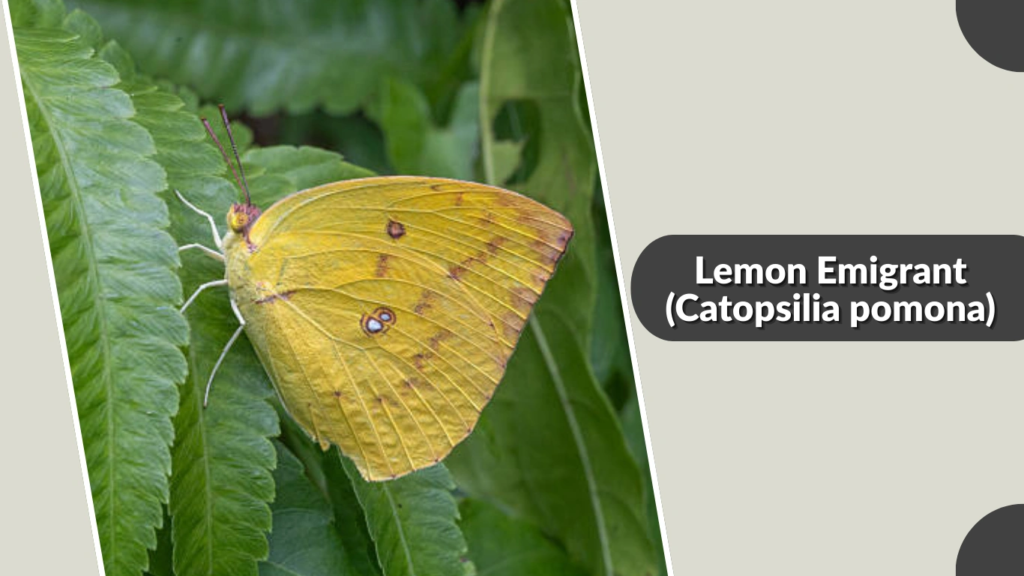
The Lemon Emigrant is a widespread yellow butterfly found across Asia, Australia, and tropical islands. Its bright color and migratory behavior make it highly noticeable.
Identification
- Yellow or white wings with faint markings
- Males usually bright lemon-yellow
- Females may have black-tipped forewings
- Underside varies from plain yellow to mottled green
- Wingspan typically 2.5–3 inches
Color Pattern
The Lemon Emigrant exhibits a soft lemon-yellow coloration in males, while females may be pale yellow or white with dark apical markings. The underside is variable—sometimes plain yellow, other times green-mottled for camouflage. Seasonal forms can shift in tone depending on climate and humidity.
Habitat
This species inhabits tropical and subtropical regions including forests, gardens, fields, riverbanks, and roadside vegetation. It is especially abundant near cassia and senna plants, its preferred hosts. The butterfly is migratory and often appears in large numbers during seasonal movements.
Lifecycle
Eggs are laid singly on leaves or buds of host plants. Caterpillars are green and slender with a pale side stripe, feeding mostly on senna and cassia species. Pupation occurs in a green chrysalis hanging from leaves or stems. Adults fly year-round in warm climates and feed on nectar from hibiscus, lantana, bougainvillea, and numerous garden flowers.
23. Yellow Orange Tip (Ixias pyrene)
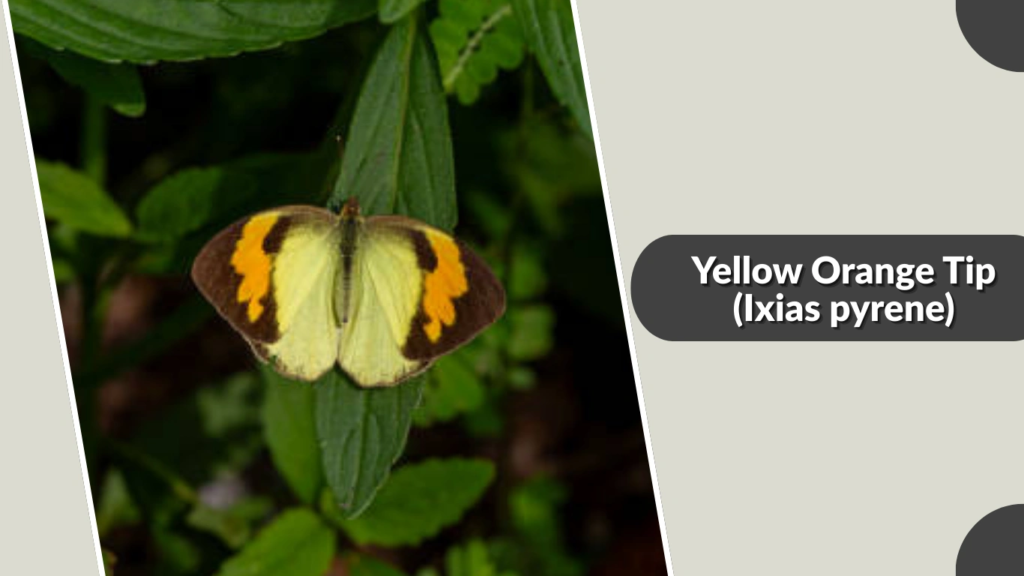
The Yellow Orange Tip is a vibrant butterfly widely found across South Asia. It is easily recognized by the bright orange tips on its yellow forewings, especially in males.
Identification
- Yellow wings with bold orange tips on forewings (males)
- Females pale yellow with dark borders
- Underside mottled yellow and brown for camouflage
- Distinct rounded wing shape
- Wingspan typically 2–2.5 inches
Color Pattern
The Yellow Orange Tip shows a strong contrast between the lemon-yellow base and the bright orange patches at the ends of the male’s forewings. Females have darker borders without the orange tips. The underside is mottled with brown, creating a leaf-like pattern that helps the butterfly blend with dry foliage during rest.
Habitat
This species thrives in open scrublands, forest edges, grasslands, gardens, and agricultural fields. It is especially common in sunny areas with abundant nectar sources. The host plants are primarily from the Capparis family, allowing the butterfly to flourish in warm, semi-dry environments.
Lifecycle
Eggs are laid on Capparis plants. Caterpillars are slender and green with faint stripes, feeding steadily on young leaves. Pupation occurs in a pale green or brown chrysalis attached to stems or branches. Adults emerge in multiple broods year-round in warm regions and feed on nectar from lantana, verbena, and roadside wildflowers.
24. Yellow Kaiser-i-Hind (Teinopalpus imperialis)
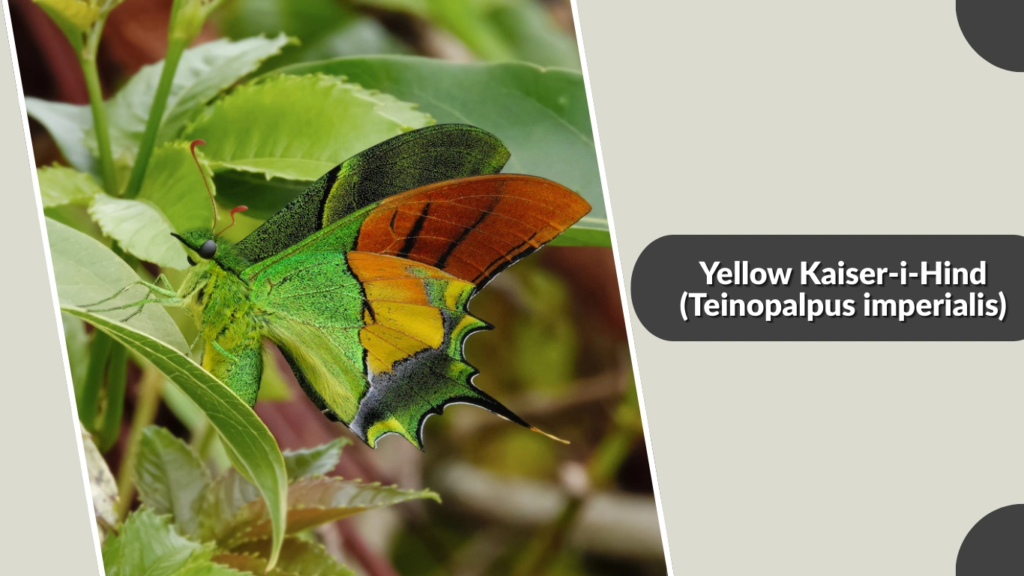
The Yellow Kaiser-i-Hind is a rare and majestic swallowtail butterfly found in the Himalayan regions. It is known for its large size, metallic tones, and striking yellow wings.
Identification
- Large yellow wings with bold black borders
- Metallic green and blue scaling near wing bases
- Long pointed tails on hindwings
- Black body with yellow markings
- Wingspan typically 3.5–5 inches
Color Pattern
This butterfly features a rich golden-yellow base color bordered by deep black margins. Metallic green and blue iridescence appears near the body, adding a shimmering effect in sunlight. The hindwings carry long, elegant tails. The underside is paler with subtle spotting, while the upper side is vivid and highly decorative.
Habitat
The Yellow Kaiser-i-Hind inhabits montane forests, high-altitude valleys, and cool subtropical woodlands in the Himalayan range. It prefers dense forests with tall trees where host plants such as Magnolia and Daphne species grow. Because of its specific habitat needs, it is considered rare and localized.
Lifecycle
Eggs are laid singly on host plant leaves. The caterpillar is green, camouflaging well among foliage, and feeds on shrubs and small trees. Pupation occurs in a sturdy chrysalis attached to twigs. Adults appear mainly in spring and early summer, feeding on nectar from flowering shrubs and moving gracefully through mountain forests.
25. Yellow Albatross (Appias paulina)

The Yellow Albatross is a bright and elegant butterfly found throughout Southeast Asia, Indonesia, and northern Australia. Its clean yellow coloration and swift flight make it a common sight in warm, open environments.
Identification
- Clear yellow wings with soft white accents
- Males have bright sulfur-yellow upperwings
- Females have darker tips with faint spots
- Rounded wings with smooth edges
- Wingspan typically 2–2.75 inches
Color Pattern
The Yellow Albatross displays a luminous yellow upper surface in males, often appearing almost glowing in sunlight. Females show a paler yellow tone with darker gray or black shading at the wingtips. The underside is softer, sometimes washed with white or pale green. Seasonal forms may show slight variations in brightness depending on humidity and temperature.
Habitat
This species thrives in tropical and subtropical environments such as open woodlands, coastal plains, gardens, forest edges, and fields. It is especially abundant in Southeast Asia and island regions where its host plants—various species of Capparis—are widespread. The butterfly prefers sunny, warm areas with plenty of flowering plants.
Lifecycle
Eggs are laid singly on Capparis plant leaves. Caterpillars are slender and green with faint side stripes, feeding on young foliage. Pupation occurs in a small green chrysalis attached to stems or leaf undersides. Adults fly year-round in warm climates and feed on nectar from lantana, ixora, hibiscus, and other brightly colored flowers.
