
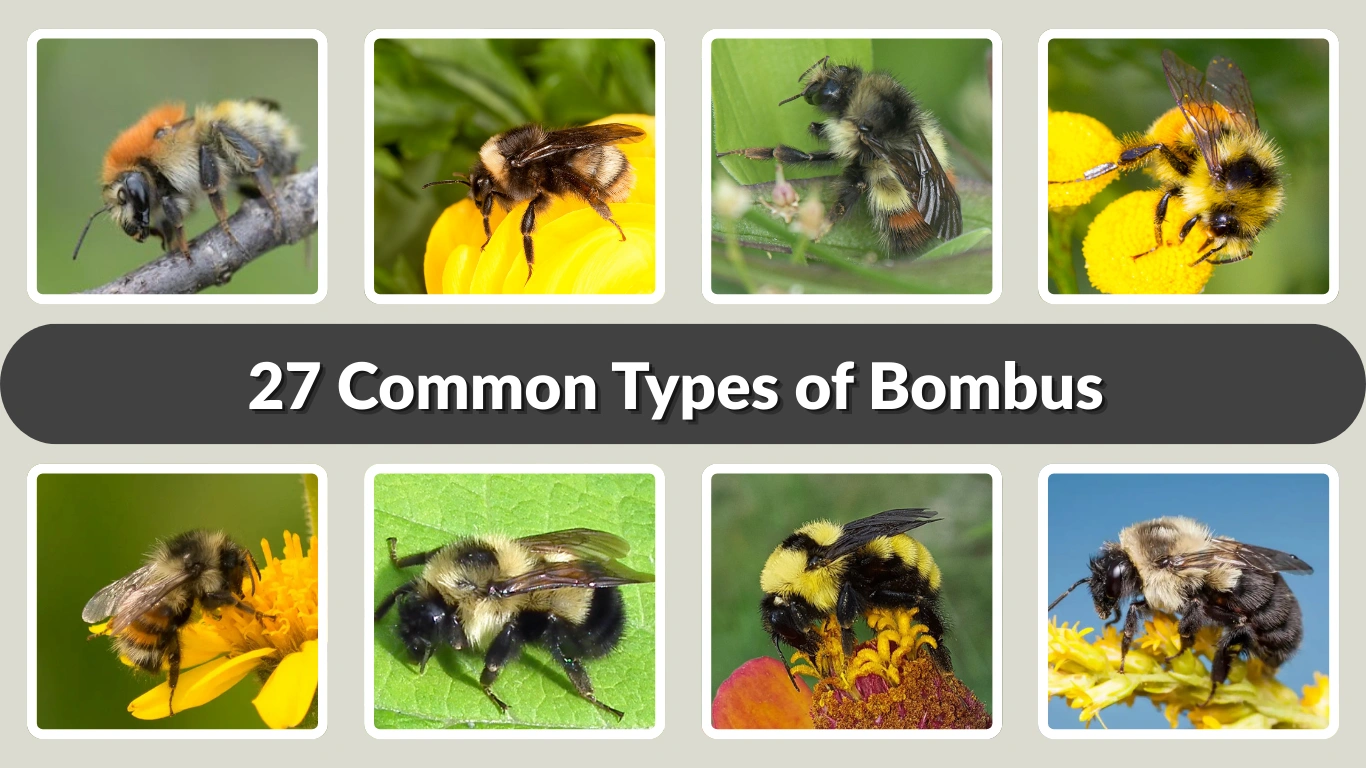
Bumblebees of the genus Bombus are among the most important pollinators in ecosystems worldwide. With species ranging from widespread garden visitors to rare specialists found only in remote habitats, Bombus diversity reflects remarkable adaptations in color, behavior, and ecology. This collection of 27 common Bombus species provides a clear overview of their distinctive traits, geographic ranges, and ecological roles—helping readers recognize and appreciate these vital pollinators.
1. Bombus terrestris
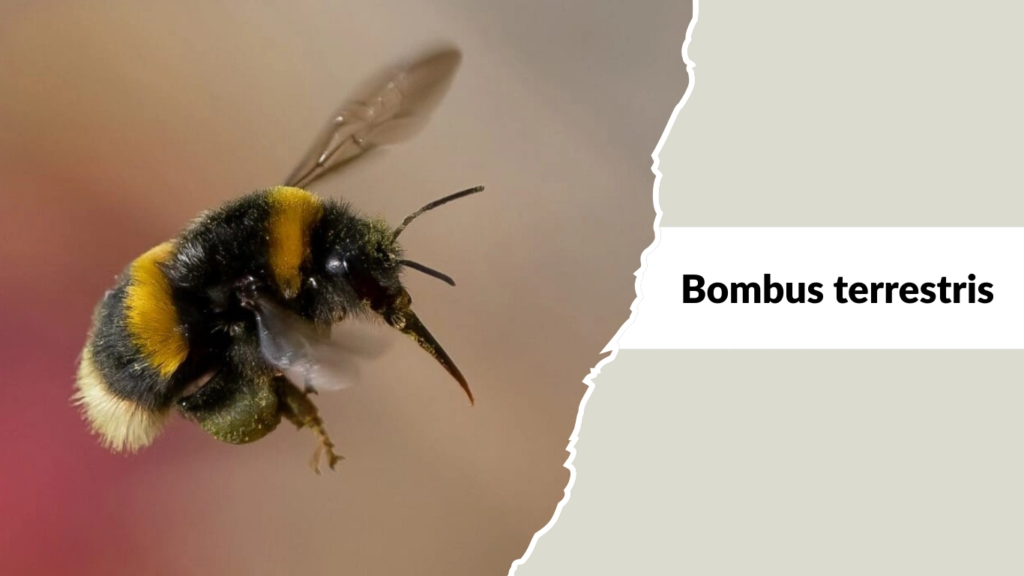
Bombus terrestris, commonly known as the buff-tailed bumblebee, is one of the most widespread and easily recognized bumblebee species across Europe. Known for its robust body, yellow banding, and buff-colored tail, this species plays a major role in pollination, agriculture, and ecological balance.
Identification
- Large, robust body with black and yellow bands
- Buff-colored tail (females/workers), white tail in males
- Short, even coat of dense hair
- Distinct yellow collar behind head
- Rapid, direct flight pattern
Habitat
Bombus terrestris inhabits gardens, meadows, farmlands, and wood edges. It adapts well to human-altered environments and is often seen visiting flowering plants in urban settings. Due to its resilience, this species thrives in varied climates and landscapes across Europe and introduced regions.
Behavior
This species forms annual colonies started by a single queen in early spring. Workers emerge shortly after and forage intensively throughout summer. Bombus terrestris is known for long foraging distances and consistent flower visitation, making it exceptionally efficient for pollination.
Range
Native to most of Europe and parts of Asia, Bombus terrestris is also introduced in New Zealand, Israel, and South America for crop pollination. Its range continues expanding due to commercial use in agriculture and adaptability to diverse climates.
2. Bombus lucorum

Bombus lucorum, commonly known as the white-tailed bumblebee, is a widespread species across Europe. It is often confused with closely related species but is identifiable by its bright yellow bands and clean white tail.
Identification
- Bright lemon-yellow thoracic and abdominal bands
- Clean, snow-white tail
- Females have a rounder face profile
- Males show longer antennae and brighter coloration
Habitat
Found in woodlands, gardens, meadows, and suburban areas. Bombus lucorum thrives in cool climates and is frequently seen in early spring foraging on flowering shrubs.
Behavior
This species is fast-flying and highly active on a wide variety of blooms. Colonies tend to be smaller than some other Bombus species but develop quickly in early summer.
Range
Widespread across Europe and parts of northern Asia, with sightings extending into higher altitudes and colder regions where few other bumblebees thrive.
3. Bombus lapidarius
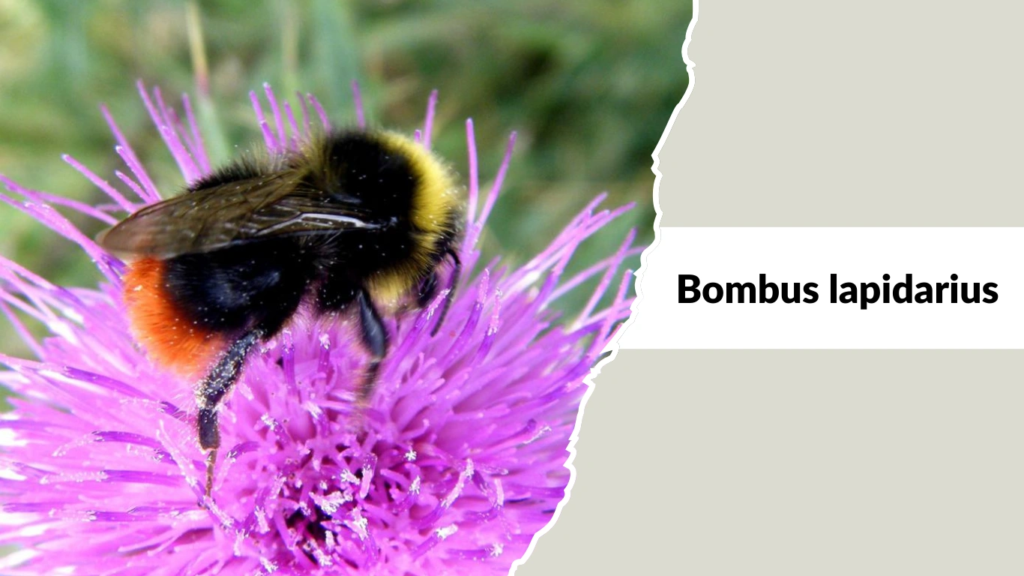
Bombus lapidarius, known as the red-tailed bumblebee, is one of Europe’s most striking species. Its jet-black body paired with a vivid orange-red tail makes it easy to identify in the field.
Identification
- Entire body black except for a bright red or orange tail
- Females are entirely black; males may show faint yellow bands
- Longer, slimmer appearance compared to many Bombus species
- Smooth, sleek hair texture
Habitat
Common in gardens, open fields, heathlands, and rocky areas. Bombus lapidarius prefers warm, sunny habitats and often nests in old walls or underground cavities.
Behavior
This species forms medium-sized colonies and forages extensively on legumes and other nectar-rich plants. It is known for its strong, fast flight and territorial foraging habits.
Range
Found throughout Europe and western Asia. It is especially abundant in temperate regions and noticeably absent from far northern latitudes.
4. Bombus hortorum

Bombus hortorum, commonly known as the garden bumblebee, is a long-tongued species frequently seen in flower-rich habitats. Its distinct banding pattern and extremely long tongue make it a specialist on deep tubular flowers.
Identification
- Black body with three clear yellow bands (thorax front, thorax rear, abdomen front)
- Very long tongue—one of the longest among bumblebees
- Slender body shape compared to other Bombus species
- White tail similar to other white-tailed bumblebees
Habitat
Common in gardens, hedgerows, meadows, and wildflower fields. Bombus hortorum prefers environments with long-corolla flowers such as foxgloves, honeysuckle, and clovers.
Behavior
This species specializes in deep flowers thanks to its long tongue, often ignoring shallow blooms. Colonies are small to medium-sized and tend to have longer foraging trips. Queens appear early in spring and persist well into late summer.
Range
Distributed across most of Europe and parts of western Asia. It is abundant in temperate climates and has stable populations in both rural and suburban environments.
5. Bombus pascuorum
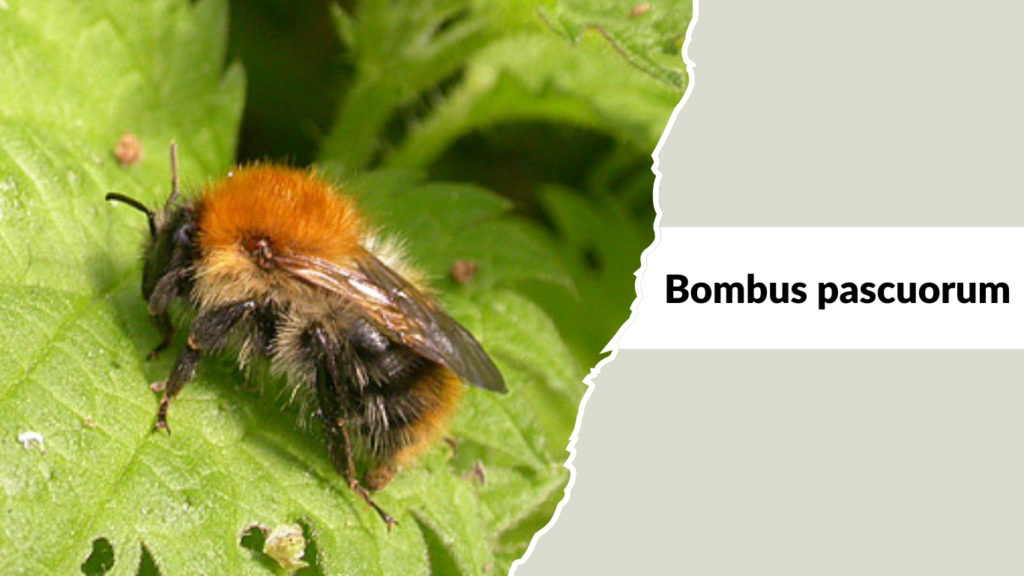
Bombus pascuorum, known as the common carder bee, is a warm-colored, ginger-toned species frequently found in grassy habitats. Unlike most Bombus species, its thorax is entirely ginger, giving it a soft, fuzzy appearance.
Identification
- Entire thorax covered in warm ginger or tawny hair
- Abdomen varies from ginger to darker brown or black
- Slim, elongated body compared to robust Bombus species
- Lacks distinct banding, giving it a uniform look
Habitat
Prefers meadows, grasslands, woodland edges, and urban parks. Bombus pascuorum is highly adaptable and thrives in areas with abundant flowering vegetation, especially clovers, thistles, and vetches.
Behavior
This species is gentle and non-aggressive. It forms colonies later in the season than many other Bombus and continues flying late into autumn. Workers forage close to the nest and are frequently seen on a wide variety of low flowers.
Range
Widespread across Europe, extending into northern Africa and western Asia. It is one of the most abundant and frequently observed bumblebees in temperate regions.
6. Bombus pratorum

Bombus pratorum, the early bumblebee, is one of the first species to emerge in spring. Its small size and compact form make it easy to distinguish from larger, more robust Bombus species.
Identification
- Small-bodied with a short, rounded appearance
- Bright yellow band on thorax and abdomen
- Orange-red tail, often brighter in males
- Fast, darting flight behavior
Habitat
Found in gardens, wood edges, scrublands, and meadows. It favors areas with early-blooming plants such as willow, primrose, and fruit blossoms, making it a key early-season pollinator.
Behavior
Bombus pratorum forms small colonies that finish their cycle early in summer. Males and new queens appear sooner than in most species, often by early June. Their quick colony turnover allows them to avoid competition later in the season.
Range
Widespread across Europe and parts of temperate Asia. It thrives in both rural and urban settings, especially where early flowering plants are abundant.
7. Bombus hypnorum

Bombus hypnorum, the tree bumblebee, is a distinctive species known for its rapid range expansion across Europe in recent decades. Its striking color pattern makes it instantly recognizable.
Identification
- Rusty-orange thorax
- Black abdomen
- Clean white tail
- Slightly rounded body with dense fur
Habitat
Commonly nests in tree cavities, bird boxes, roof spaces, and wall crevices. Bombus hypnorum prefers wooded areas, suburban gardens, and places with easy access to vertical nesting sites.
Behavior
This species often nests above ground, unlike many other Bombus. Colonies are energetic, with workers showing strong territorial defense near nest entrances. They are active from early spring into late summer, visiting a wide variety of flowers.
Range
Native to northern Eurasia but rapidly expanding across Europe, including the UK and Scandinavia. It adapts well to human-built environments and continues to enlarge its distribution each year.
8. Bombus jonellus
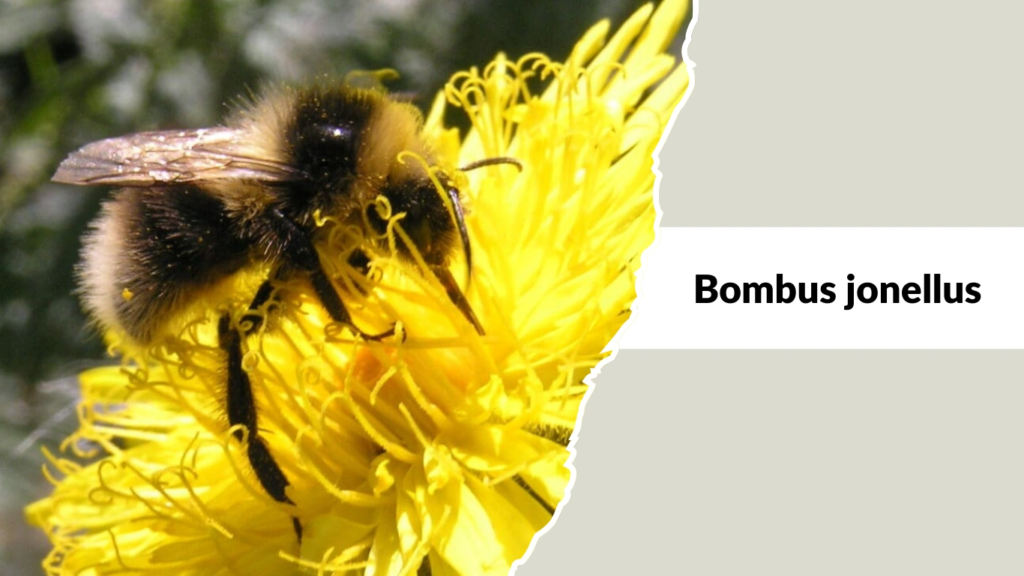
Bombus jonellus, the heath bumblebee, is a small northern species common in cool climates. Its compact size and short face help distinguish it from similar white-tailed species.
Identification
- Small, compact body
- Yellow bands on thorax and abdomen
- White tail, sometimes with a faint buff tint
- Short face compared to other white-tailed Bombus
Habitat
Typically found in heathlands, peat bogs, moorlands, and coastal areas. It favors cooler environments with abundant ericaceous plants such as heather and bilberry.
Behavior
A fast and agile forager, Bombus jonellus prefers low-growing shrubs. Colonies are small and often develop later in the season. Queens are known to forage close to the ground, especially in heath ecosystems.
Range
Widespread across northern Europe, Iceland, and parts of Siberia. It is especially common in the British Isles’ upland and coastal areas.
9. Bombus bohemicus
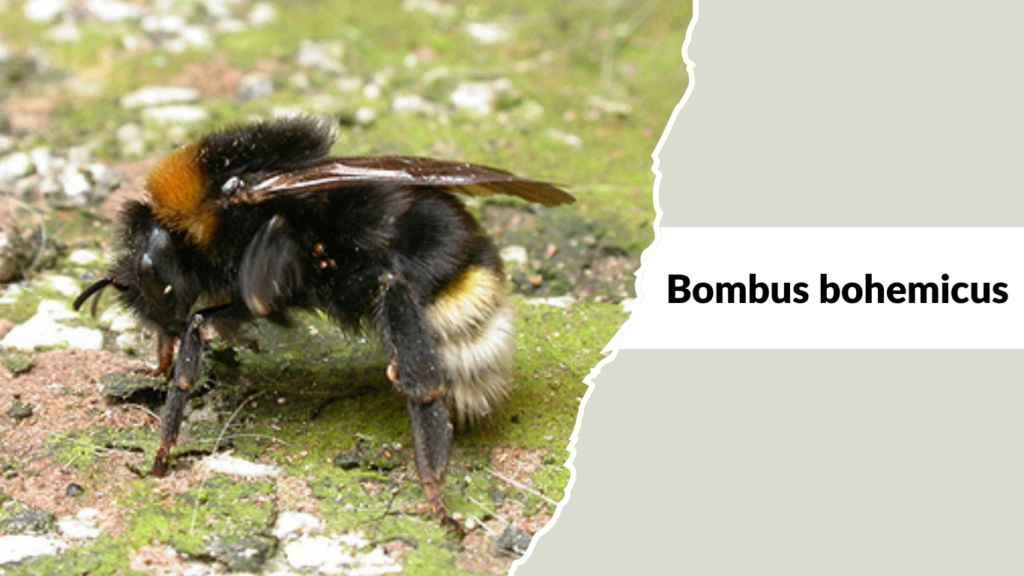
Bombus bohemicus, the bohemian cuckoo bumblebee, is a parasitic species that invades nests of closely related white-tailed bumblebees. It lacks pollen baskets because it does not collect pollen for its own nest.
Identification
- Black body with pale yellow/cream bands
- White tail similar to lucorum group
- No pollen baskets on hind legs
- Broader, more robust appearance than its host species
Habitat
Found where host species such as Bombus lucorum and Bombus terrestris are abundant. Common in forests, gardens, moorlands, and grasslands where nests can be infiltrated.
Behavior
As a cuckoo bumblebee, it does not build its own worker caste. The female invades a host nest, overpowers the resident queen, and forces the host workers to rear its offspring. It flies later in the season when host colonies are established.
Range
Occurs widely across Europe and parts of northern Asia. Its distribution closely follows that of its host species, making it common in both lowland and upland regions.
10. Bombus sylvestris
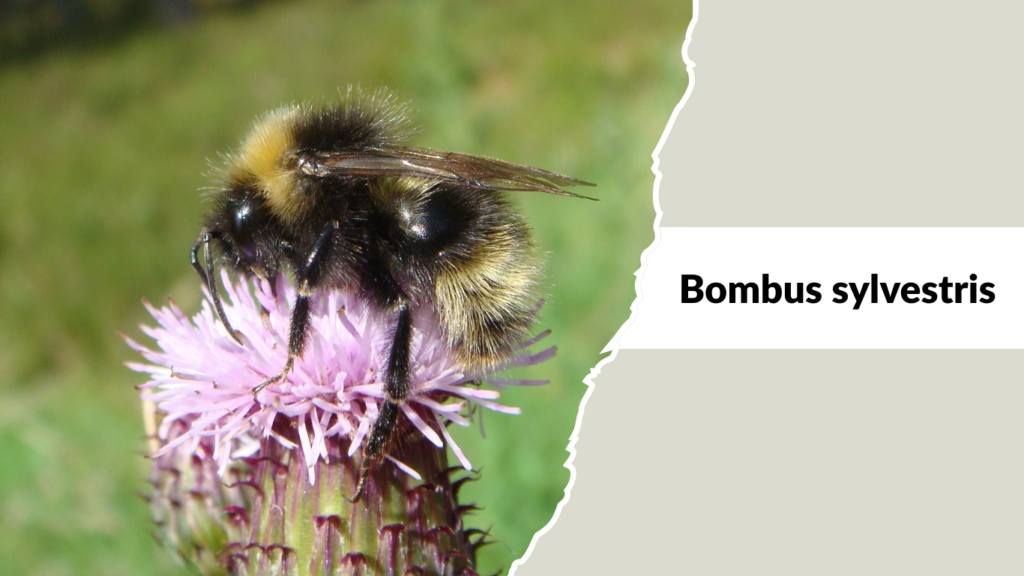
Bombus sylvestris, the forest cuckoo bumblebee, is a parasitic species that targets nests of Bombus pratorum and other early-emerging bumblebees. Its slender appearance and distinctive banding set it apart from many other cuckoo species.
Identification
- Slender body compared to other cuckoo bumblebees
- Yellow band on the thorax and first abdominal segment
- Predominantly black abdomen with a small white tail patch
- Lacks pollen baskets, as typical for cuckoo species
Habitat
Common in woodlands, hedgerows, gardens, and areas where early bumblebee hosts are abundant. It thrives in habitats rich in early spring flowers that support its host species.
Behavior
Bombus sylvestris emerges later than its hosts, infiltrating established colonies. The female takes over the host nest by suppressing or killing the resident queen. Workers from the host species raise its offspring, all of which are males and new cuckoo queens.
Range
Widespread across Europe, extending into western Asia. Most common in temperate regions with mixed woodland and open habitats.
11. Bombus ruderatus

Bombus ruderatus, the large garden bumblebee, is notable for its extremely long tongue—one of the longest of any Bombus species. It closely resembles Bombus hortorum but is larger and more elongated.
Identification
- Three yellow bands: two on thorax, one on abdomen
- Long, narrow face and extremely long tongue
- Black abdomen with a white tail
- More elongated body than Bombus hortorum
Habitat
Prefers flower-rich meadows, farmland, hedgerows, and gardens. Often associated with deep tubular flowers such as clover, vetch, and honeysuckle, which match its long tongue length.
Behavior
A gentle and efficient pollinator, Bombus ruderatus forms moderate-sized colonies. It has a strong preference for legume flowers and often conducts long foraging flights across open landscapes.
Range
Native to Europe and parts of western Asia, with introduced populations in New Zealand and South America. Its numbers have declined in some regions due to habitat loss and reduced availability of long-tubed wildflowers.
12. Bombus muscorum
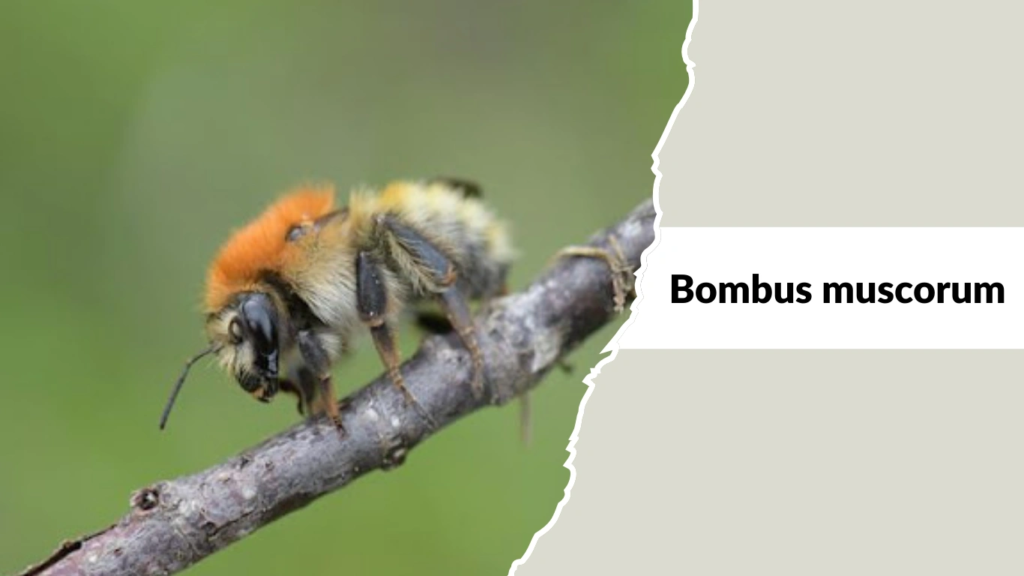
Bombus muscorum, the moss carder bee, is a warm-toned species known for nesting in mossy ground vegetation. Its soft orange coloring makes it easy to distinguish from darker Bombus species.
Identification
- Thorax covered in bright orange or ginger hair
- Abdomen pale with mixed orange, yellow, or brown tones
- Slender, carder-bee body shape
- Uniform coloration with no sharp banding
Habitat
Common in wetlands, coastal grasslands, meadows, and dune systems. Bombus muscorum favors cool, moist environments and nests in moss or long grass, where colonies remain well hidden.
Behavior
This species forms small colonies and flies relatively low to the ground. It shows strong preference for clovers, vetches, and knapweeds. Queens appear late in spring, and workers fly throughout summer into early autumn.
Range
Found across Europe, particularly abundant in northern and coastal regions. Declining in some countries due to loss of damp meadow habitats and intensive agriculture.
13. Bombus vestalis
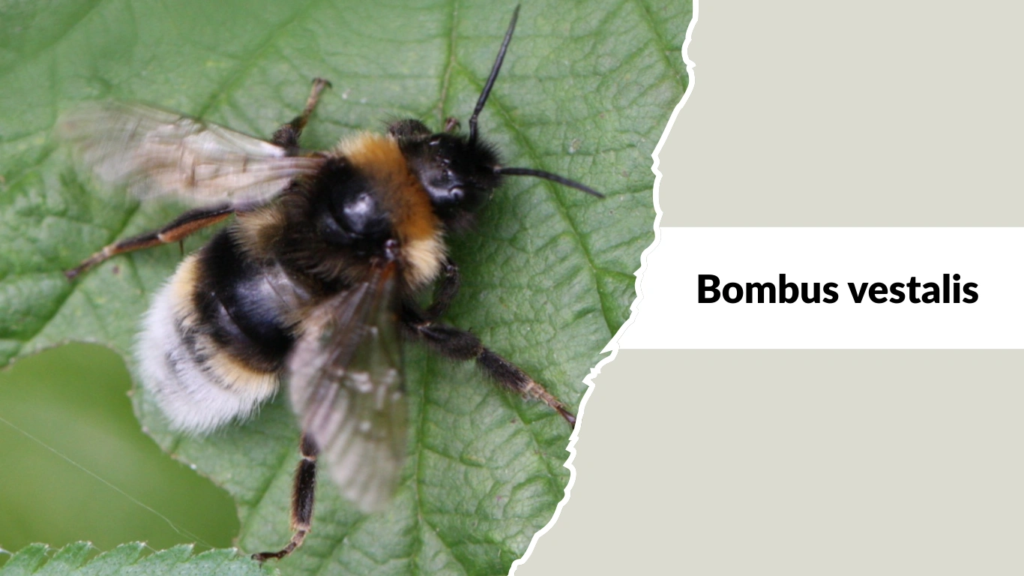
Bombus vestalis, the vestal cuckoo bumblebee, is a common parasite of Bombus terrestris. Its sleek body and cream-yellow banding distinguish it from other cuckoo species in the lucorum complex.
Identification
- Pale cream-yellow band on thorax
- Dark abdomen with clean white tail and a small yellow patch
- No pollen baskets on hind legs
- Larger and more elongated than its host, Bombus terrestris
Habitat
Found wherever Bombus terrestris occurs, including gardens, farmland, heathlands, and urban green spaces. Its presence closely follows its host’s abundance.
Behavior
As a cuckoo bumblebee, Bombus vestalis invades established B. terrestris nests. The female suppresses or kills the host queen, then relies on host workers to rear her offspring. Adults appear later in spring than their host colony cycles.
Range
Widespread across Europe, extending into parts of Asia and introduced regions where B. terrestris is used commercially. Its distribution expands with the spread of its host species.
14. Bombus distinguendus
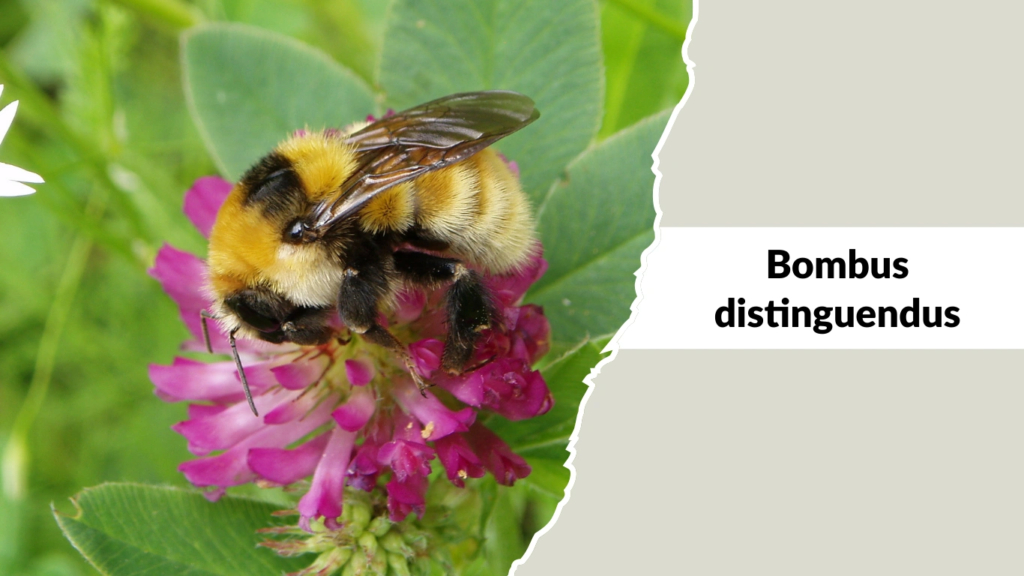
Bombus distinguendus, the great yellow bumblebee, is one of Europe’s rarest species. Its striking yellow coloration and shaggy appearance make it highly distinctive among Bombus.
Identification
- Entire body covered in long, shaggy pale yellow hair
- Subtle darker banding on mid-abdomen
- Slender, elongated form for a carder-type bee
- Lacks the strong contrasting bands seen in many Bombus
Habitat
Prefers coastal grasslands, machair, flower-rich meadows, and lightly grazed pastures. It is strongly associated with areas rich in red clover, vetches, and knapweed, requiring extensive wildflower resources.
Behavior
Bombus distinguendus forms relatively small colonies and forages low over grass. It has a slow, stable flight and shows strong fidelity to specific flower groups. Queens appear late, and the species has a short active season in northern regions.
Range
Formerly widespread but now highly localized across northern Scotland, Orkney, and parts of Ireland. Small, scattered populations survive in coastal northern Europe and some Arctic zones.
15. Bombus subterraneus
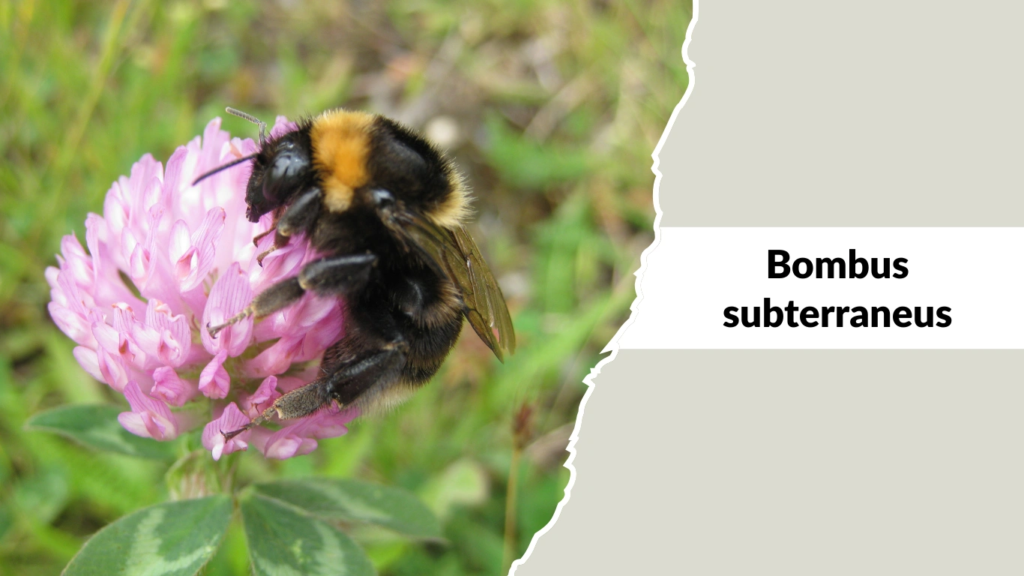
Bombus subterraneus, the short-haired bumblebee, is known for its pale appearance and ground-nesting behavior. It once declined sharply in Europe but has been part of notable reintroduction projects.
Identification
- Pale yellow bands with a soft, washed-out look
- White tail (in most populations)
- Longer, slimmer body compared to buff-tailed species
- Less vivid coloration than B. lucorum or B. terrestris
Habitat
Inhabits open grasslands, meadows, and farmland rich in flowering legumes. Prefers breezy, open landscapes with plentiful nectar sources such as red clover and sainfoin.
Behavior
This species nests underground (as its name suggests). Colonies are small to moderate in size. Queens emerge in early spring and often forage widely, showing strong preference for long-tubed flowers and legumes.
Range
Historically widespread across Europe. Now restricted to scattered populations in continental Europe, with ongoing reintroduction efforts in the UK to restore former native populations.
16. Bombus bimaculatus
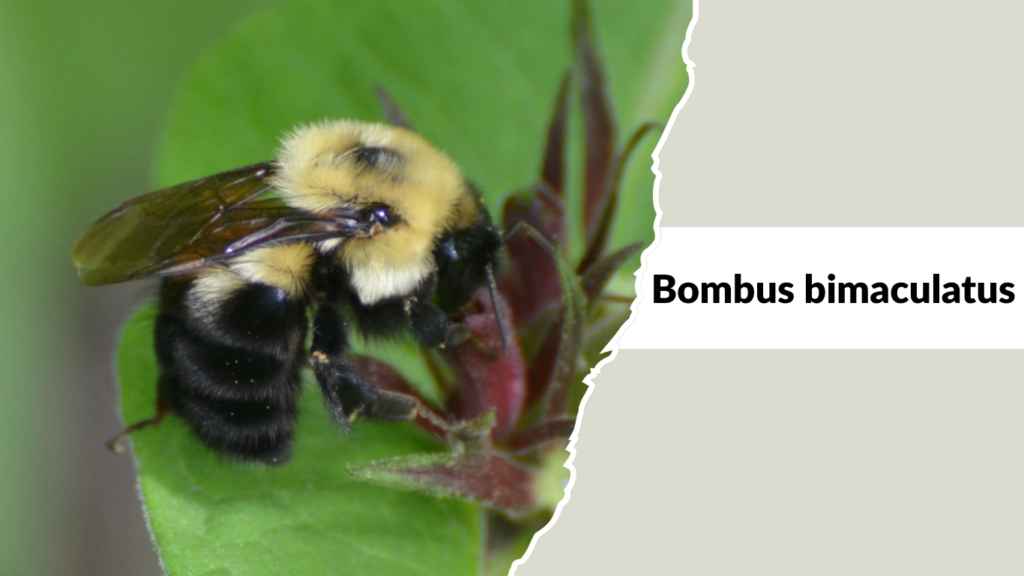
Bombus bimaculatus, the two-spotted bumblebee, is a North American species named for the two yellow spots on its abdomen. It is an early-season pollinator commonly seen in woodland and suburban areas.
Identification
- Black body with bright yellow thoracic band
- Two distinct yellow patches on the front of the abdomen
- Dense hair giving a fuzzy appearance
- Workers and males show similar coloration patterns
Habitat
Found in forests, suburban gardens, meadows, and edge habitats. It prefers areas with spring-blooming plants such as willows, blueberries, raspberries, and early wildflowers.
Behavior
Queens emerge early in spring and establish small to medium colonies. Bombus bimaculatus is a versatile forager and visits both shallow and moderately deep flowers. Its activity peaks in late spring to mid-summer.
Range
Widespread across eastern and central North America, from Canada to the southeastern United States. Especially common in wooded and suburban regions.
17. Bombus impatiens
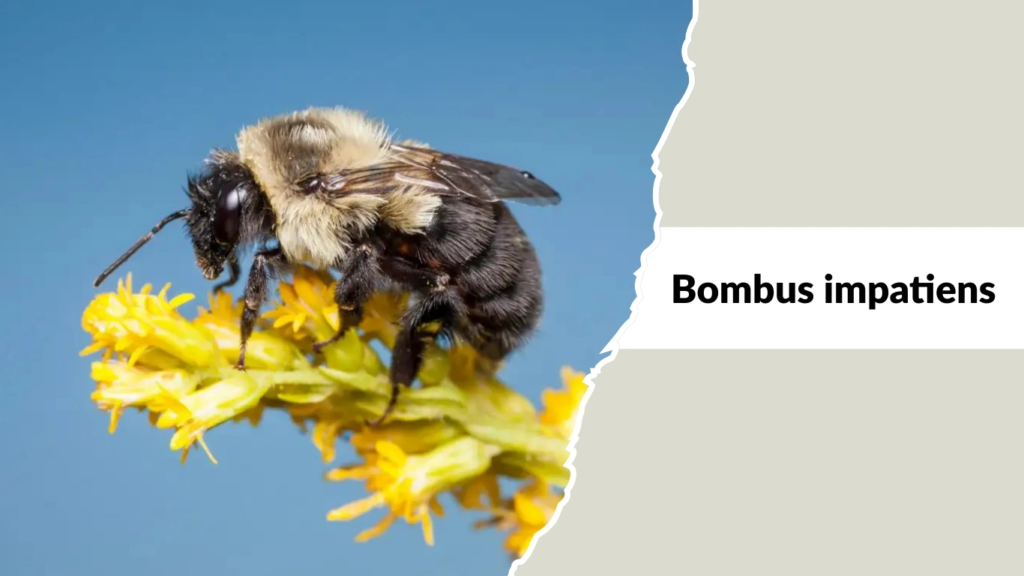
Bombus impatiens, the common eastern bumblebee, is one of the most abundant species in eastern North America. It is widely used in commercial pollination, especially for greenhouse crops.
Identification
- Black body with one bright yellow thoracic band
- Abdomen entirely black except for faint hairs
- Short, robust body typical of Bombus
- Queens noticeably larger than workers
Habitat
Thrives in gardens, farms, forests, parks, and urban landscapes. It adapts easily to human-altered environments and is frequently seen on sunflowers, clover, goldenrod, and berry crops.
Behavior
Forms large colonies compared to many native species. Workers are highly active and visit a broad range of flowers. Bombus impatiens is also known for strong pollination efficiency, making it valuable for agriculture.
Range
Native to eastern North America, from Canada to the Gulf Coast. Its range has expanded through commercial use, though regulations now limit distribution to avoid ecological disruption.
18. Bombus pensylvanicus
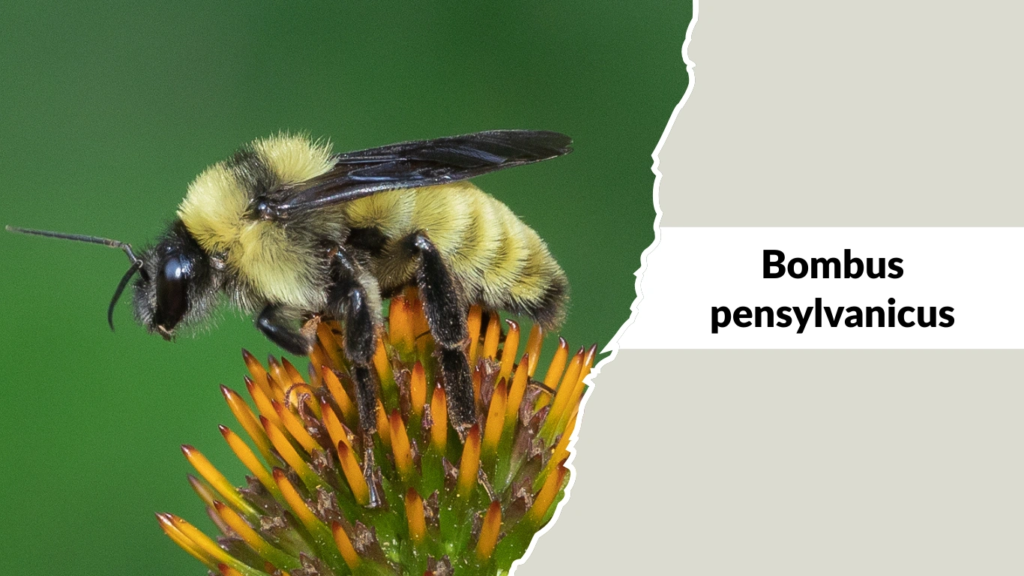
Bombus pensylvanicus, the American bumblebee, is a long-tongued species once common across the U.S. but now experiencing significant population declines. Its yellow-and-black pattern and elongated shape make it distinctive.
Identification
- Long, slender body with yellow thoracic hairs
- Black abdominal band followed by yellow segments
- Long tongue suited for deep flowers
- Males show more extensive yellow on the abdomen
Habitat
Prefers open prairies, meadows, farmlands, and grasslands with abundant wildflowers. Frequently visits clovers, goldenrods, sunflowers, and other prairie species.
Behavior
Forms medium to large colonies. Workers have a strong foraging range and prefer deep, nectar-rich blooms. Activity peaks from mid-summer to early autumn.
Range
Found across central and eastern North America, though now rare in many regions due to habitat loss and pesticide exposure.
19. Bombus griseocollis
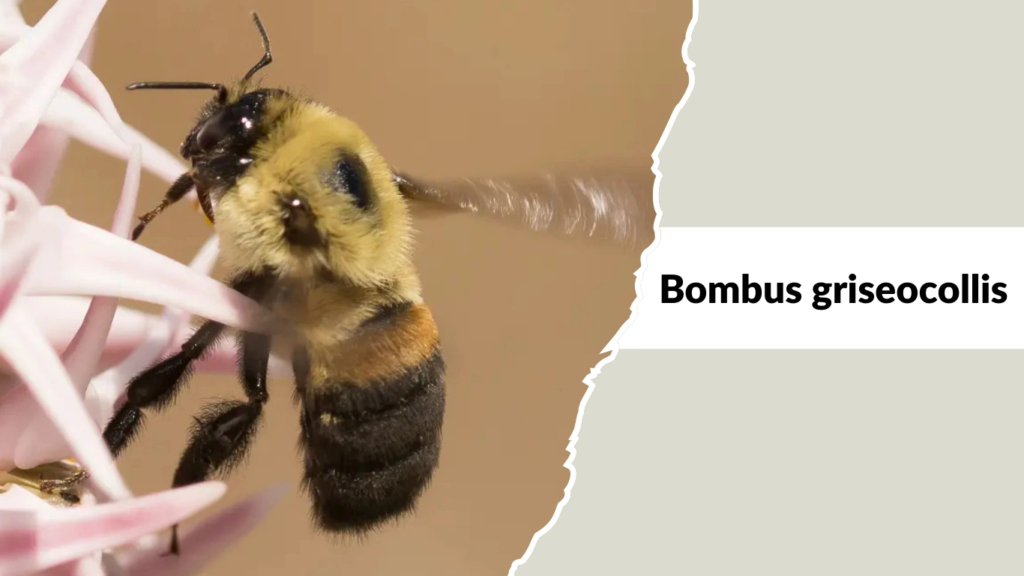
Bombus griseocollis, the brown-belted bumblebee, is a widespread North American species known for its distinctive brown abdominal band. It is common in cities, farms, and natural grasslands.
Identification
- Yellow thorax with black center patch
- Abdomen mostly black with a brown or orange band on segment two
- Dense hair with a compact, rounded body
- Males have extensive yellow on abdomen and face
Habitat
Inhabits gardens, fields, prairies, urban parks, and roadsides. Highly adaptable and often one of the most visible summer species across its range.
Behavior
Forms moderate-sized colonies. Bombus griseocollis forages broadly, visiting a wide variety of wildflowers and crops. Known for its persistent foraging and calm temperament.
Range
Widespread throughout the United States and southern Canada, especially common in central and eastern regions.
20. Bombus fervidus
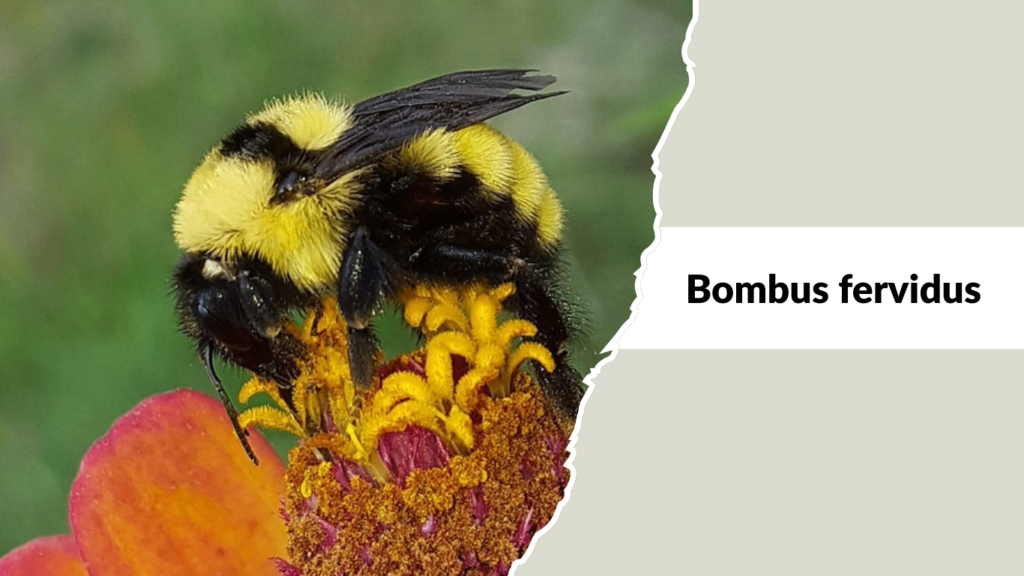
Bombus fervidus, the golden northern bumblebee, is one of North America’s brightest yellow species. Its vibrant coloration and long face make it easy to distinguish from darker Bombus species.
Identification
- Bright lemon-yellow thorax and abdomen
- Black band on the thorax center
- Long face and long tongue
- Males often show more extensive yellow than females
Habitat
Prefers open fields, tallgrass prairies, urban gardens, and areas rich in wildflowers. Strongly associated with legumes, milkweeds, thistles, and goldenrods.
Behavior
Forms medium-sized colonies and exhibits long foraging flights. Workers are highly active on deep, nectar-rich blooms. Known for strong pollination efficiency, especially in prairie ecosystems.
Range
Found across northern and central North America, particularly abundant in Canada and the northern U.S. Though still widespread, some populations show signs of decline.
21. Bombus vagans
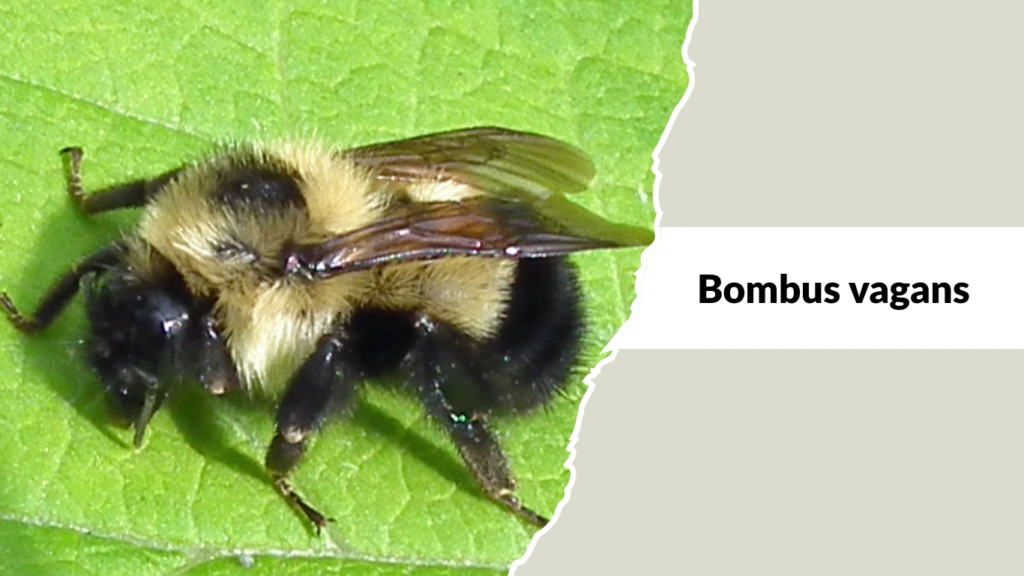
Bombus vagans, the half-black bumblebee, is a slender species common in woodland and shaded environments. Its muted coloration distinguishes it from brighter yellow Bombus species.
Identification
- Pale yellow thoracic band
- Abdomen mostly black with one pale band
- Slender body and short hair
- Males show more yellow on the abdomen
Habitat
Prefers forests, shaded edges, suburban yards, and cool upland meadows. Frequently visits blueberries, raspberries, clovers, and woodland flowers.
Behavior
Bombus vagans forms small to medium colonies and has a mid-season flight period. It forages quietly and steadily, often remaining close to forest edges and shaded flower patches.
Range
Widespread across the northeastern and central United States and southern Canada. Common in mixed forests and cooler northern habitats.
22. Bombus melanopygus
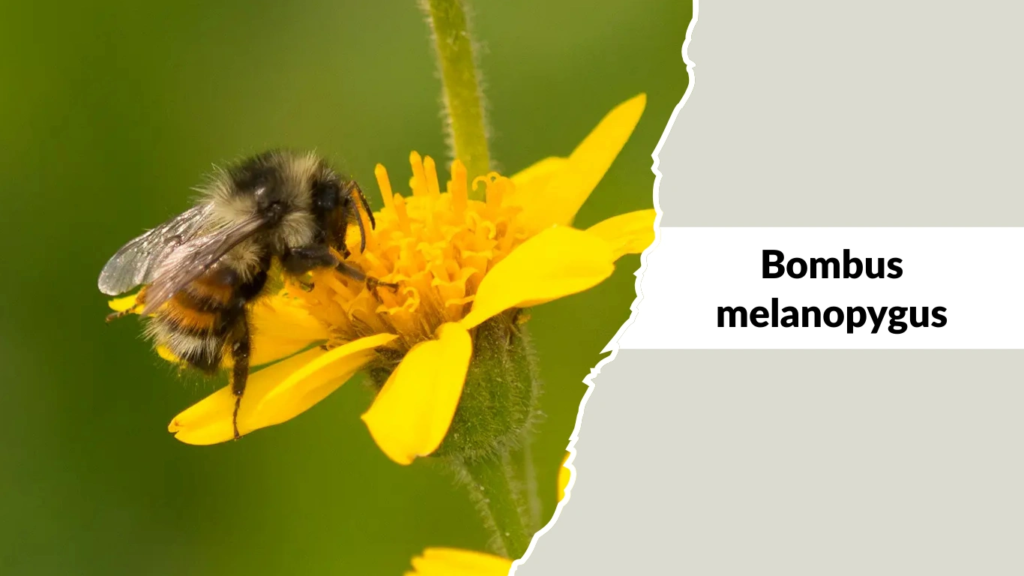
Bombus melanopygus, the black-tailed bumblebee, is a variable and widely distributed species of western North America. Its color forms range from red-tailed to black-tailed, making identification regionally dependent. Despite this variability, it is a highly adaptable and important early-season pollinator.
Identification
- Two main color forms: red-tailed (common in coastal areas) and black-tailed (inland)
- Yellow thoracic bands with a dark mid-patch
- Abdomen either mostly black or with bright orange-red segments
- Short, rounded body with dense hair
Habitat
Thrives in forests, coastal scrub, mountain meadows, prairies, gardens, and urban areas. Bombus melanopygus is especially abundant in early spring habitats with willow, flowering shrubs, and early wildflowers. It adapts well to elevation changes and diverse landscapes.
Behavior
Queens emerge very early—often one of the first bees seen buzzing in late winter or early spring. Colonies remain small to medium in size. Workers show strong fidelity to early-season blooms, including manzanita, currant, and blueberry species. This bee remains active well into summer at higher elevations.
Range
Distributed along the western coast of North America, from California through Oregon, Washington, British Columbia, and into Alaska. Inland populations extend into Idaho and Montana, with notable differences in coloration across regions.
23. Bombus vosnesenskii
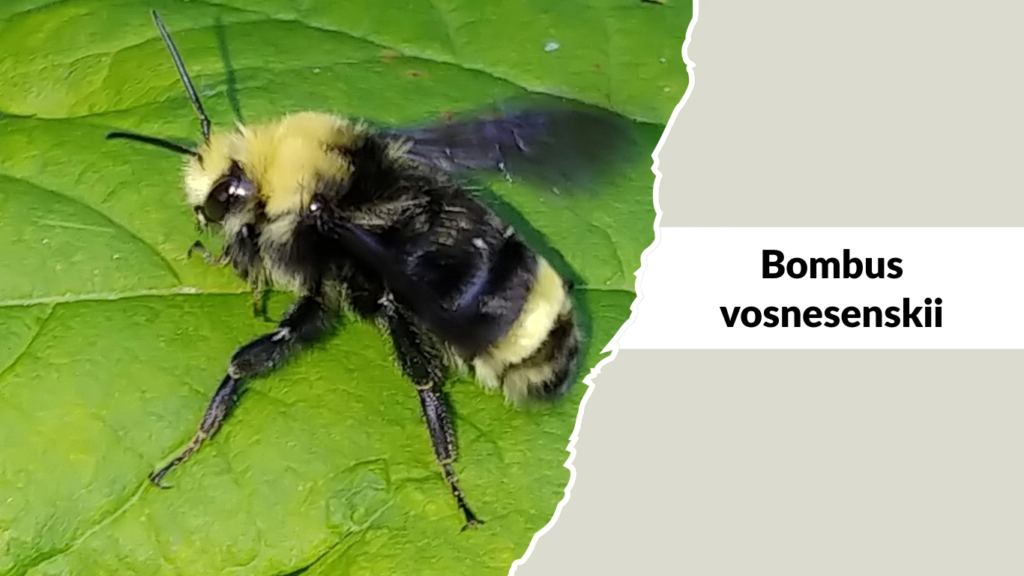
Bombus vosnesenskii, the yellow-faced bumblebee, is one of the most dominant and successful species on the U.S. West Coast. Its abundance makes it a key pollinator in agriculture, native ecosystems, and urban environments.
Identification
- Black body with two strong yellow bands (thorax front and abdomen front)
- Bright yellow face—its most distinctive trait
- Entire abdomen otherwise black
- Workers and queens share similar coloration; males may appear slightly paler
Habitat
Extremely adaptable: found in forests, grasslands, chaparral, suburbs, farmland, and city landscapes. Frequently nests in the ground, compost piles, or abandoned rodent burrows. It thrives in areas with year-round flowering plants.
Behavior
Bombus vosnesenskii forms large, vigorous colonies with long activity periods. Workers forage intensively on wildflowers, garden plants, and crops. Highly competitive and capable of displacing other species at floral resources. Known for long foraging distances, making it valuable to commercial berry and vegetable farms.
Range
Native to western North America, especially abundant from southern California to British Columbia. Also found in the Sierra Nevada and Cascade mountain ranges. Its range has expanded further north with warming climates and increased urban plantings.
24. Bombus flavifrons
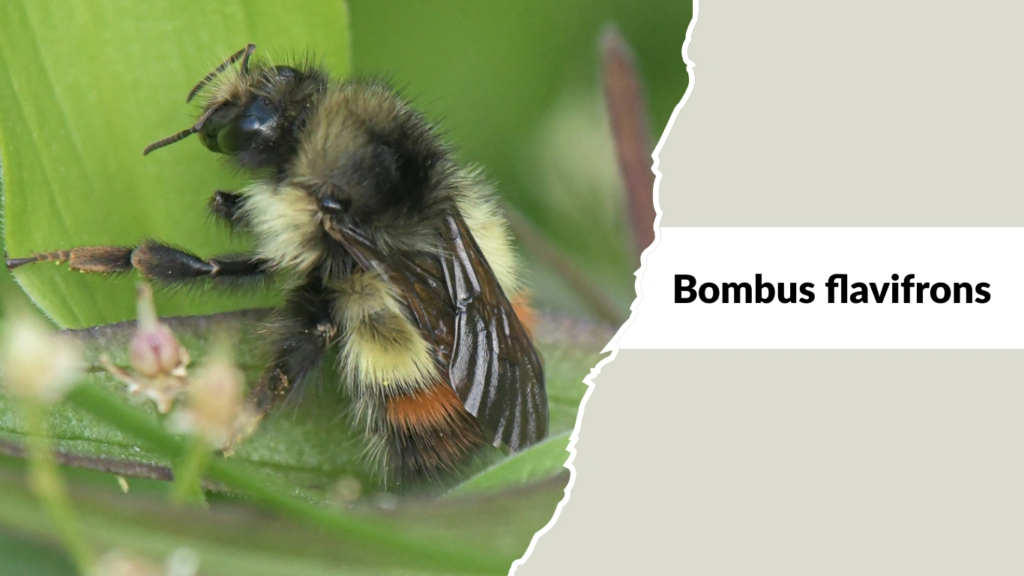
Bombus flavifrons, the yellow-fronted bumblebee, is a high-elevation and northern species recognized by its dense golden hair and mountain-adapted ecology. It thrives in cooler climates and alpine flower zones.
Identification
- Dense golden or yellow hair on the front of the head and thorax
- Abdomen typically black with yellow patches depending on region
- Robust, rounded body with thick fur for cold environments
- Males often show brighter yellow across head and thorax
Habitat
Found in alpine meadows, subalpine forests, tundra edges, and boreal zones. Prefers cold, flower-rich habitats dominated by lupine, paintbrush, and other mountain wildflowers.
Behavior
Active in colder temperatures than many Bombus species. Queens emerge late in spring and often forage at high elevations. Colonies remain small and short-lived due to harsh climates. Workers forage low among alpine flowers and show strong preference for legumes and asters.
Range
Occurs across western North America—Alaska, Yukon, British Columbia, and the Rocky Mountains. Populations are especially dense in high mountain regions with prolonged wildflower bloom seasons.
25. Bombus bifarius
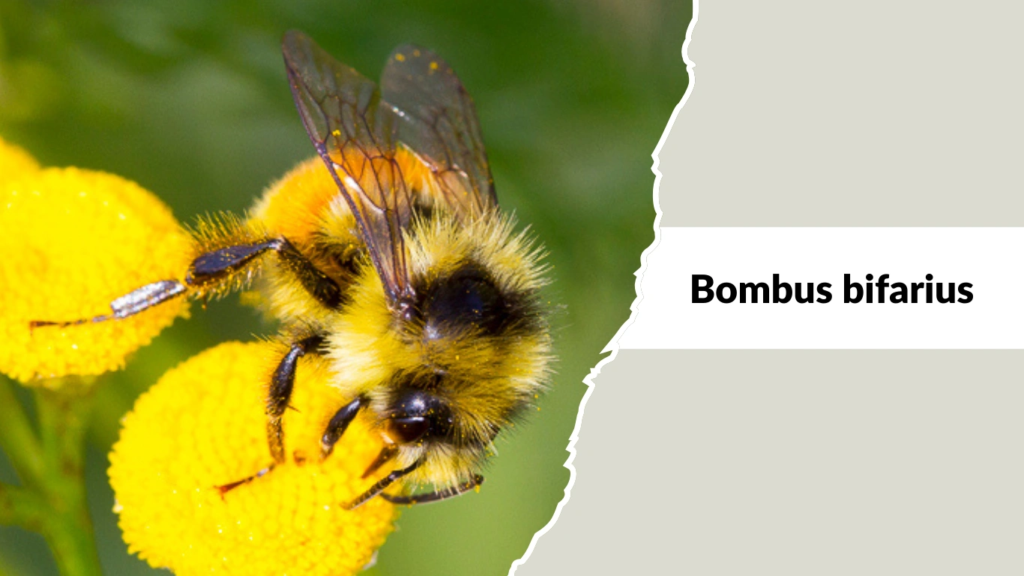
Bombus bifarius, the two-form bumblebee, is a variable mountain species notable for its red-banded and black-banded morphs. It is common throughout western montane habitats and plays a key role in alpine pollination.
Identification
- Two major color forms:
- Red-banded: bright red mid-abdomen patch
- Black-banded: all black abdomen except for yellow thorax bands
- Red-banded: bright red mid-abdomen patch
- Yellow thoracic front band with a dark center patch
- Compact, rounded body shape
Habitat
Lives in mountain meadows, foothill grasslands, forests, and dry shrublands. Strongly associated with western wildflowers such as lupine, penstemon, and rabbitbrush. Abundant in mid- to high-elevation ecosystems.
Behavior
Active later in the season compared to some Bombus. Workers show strong preference for tubular and brightly colored flowers. Colonies are small to medium in size and persist through late summer in alpine regions.
Range
Distributed throughout the western United States and southwestern Canada, especially the Rockies, Cascades, and Sierra Nevada. Color forms vary geographically, with red morphs more common in the north and mountainous regions.
26. Bombus occidentalis
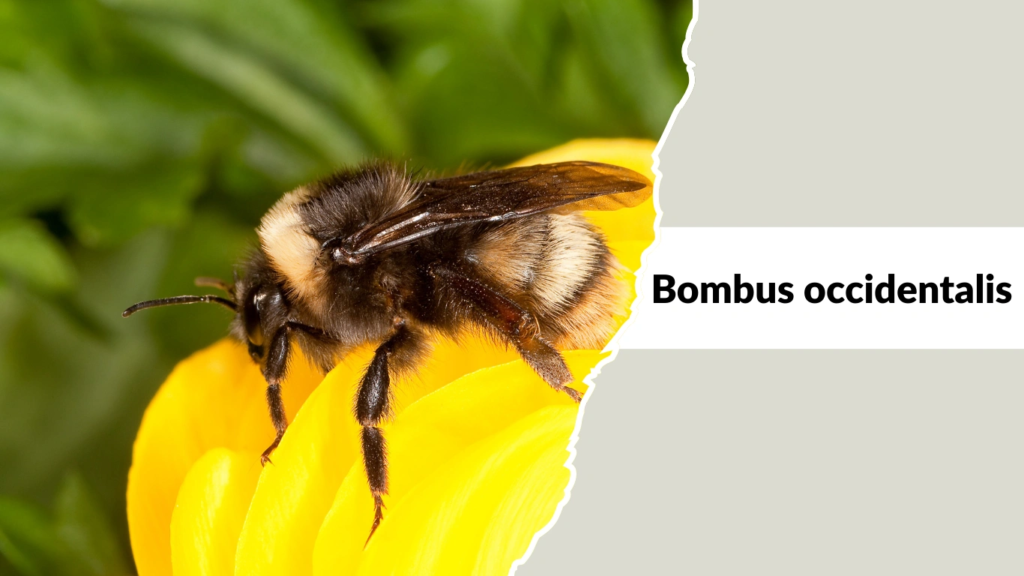
Bombus occidentalis, the western bumblebee, was once one of the most common species in western North America but has experienced sharp declines in recent decades. Its distinctive white-rumped pattern makes it easy to identify.
Identification
- Yellow thoracic front band, black mid-band, and yellow rear band
- White tail (rump)
- Broad, rounded body shape
- Workers and queens show similar patterns; males often slightly paler
Habitat
Found in meadows, prairies, open forests, wetlands, and agricultural landscapes. Historically abundant in areas rich in clover, alfalfa, and native wildflowers. Still common in some northern and high-elevation regions.
Behavior
Bombus occidentalis forms moderate colonies with early spring queens. It is a strong and versatile forager, visiting berries, legumes, and many native flowers. Declining populations show reduced genetic diversity, impacting colony success.
Range
Native to western North America—from Alaska and British Columbia south through Washington, Oregon, Idaho, Montana, Wyoming, and into northern California. Now scarce in many southern parts of its former range.
27. Bombus cryptarum
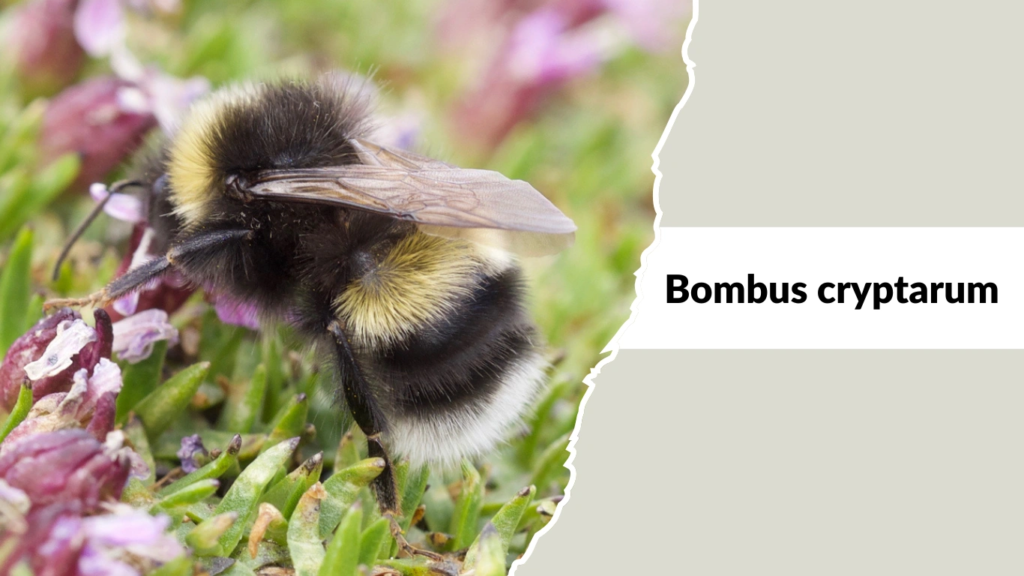
Bombus cryptarum, part of the cryptic lucorum complex, is a northern species often confused with Bombus lucorum and Bombus magnus. Subtle traits and habitat preference help distinguish it.
Identification
- White tail with a thin yellow fringe at the base
- Distinct, slightly darker “saddle” patch on thorax midline
- Yellow bands more subdued than B. lucorum
- Queens show a more domed thoracic profile
Habitat
Favors cool climates—upland meadows, moorlands, boreal forests, and heathlands. Often associated with northern wildflowers such as bilberry, heather, and willow.
Behavior
A cold-adapted forager active in cloudy, windy conditions. Colonies remain small but persistent. Bombus cryptarum has a mid-season flight period and is frequently seen feeding low among heather and berry shrubs.
Range
Distributed across northern Europe, Scandinavia, the British Isles, and parts of northern Asia. Most abundant in upland and boreal zones where temperatures remain cool.
