

Ground bees are a common concern for homeowners, especially during spring and summer when lawns and gardens are most active. These bees build nests underground, often leaving small holes in grass, soil, or mulch. While they can help with pollination, their presence near living areas poses safety risks. Understanding how to get rid of ground bees naturally or with professional help is key to maintaining a safe yard without harming the environment.
Understanding Ground Bees

Ground bees are a broad category that includes several species such as mining bees, digger bees, bumblebees, and even yellow jackets, which are often mistaken for bees. Unlike honeybees that live in hives, many ground bees are solitary, nesting in dry, sandy soil. Others, like bumblebees or yellow jackets, may form larger colonies underground.
These insects are not always aggressive, but they will sting if threatened, especially when protecting their nest. Identifying the species nesting in your yard is important because treatment methods differ for bees and wasps.
Identifying Ground Bee Nests

The first step in control is spotting the nest. Ground bees typically create small round holes in soil, lawns, or garden beds. You may notice loose dirt around the hole or see bees flying in and out.
Bumblebees often nest in abandoned rodent burrows, while yellow jackets form large underground colonies that can quickly become dangerous. Solitary bees, on the other hand, are less threatening and usually harmless, though their numbers can increase if conditions are favorable.
Knowing whether you’re dealing with harmless pollinators or aggressive stingers helps you decide the safest removal method.
Risks of Ground Bees
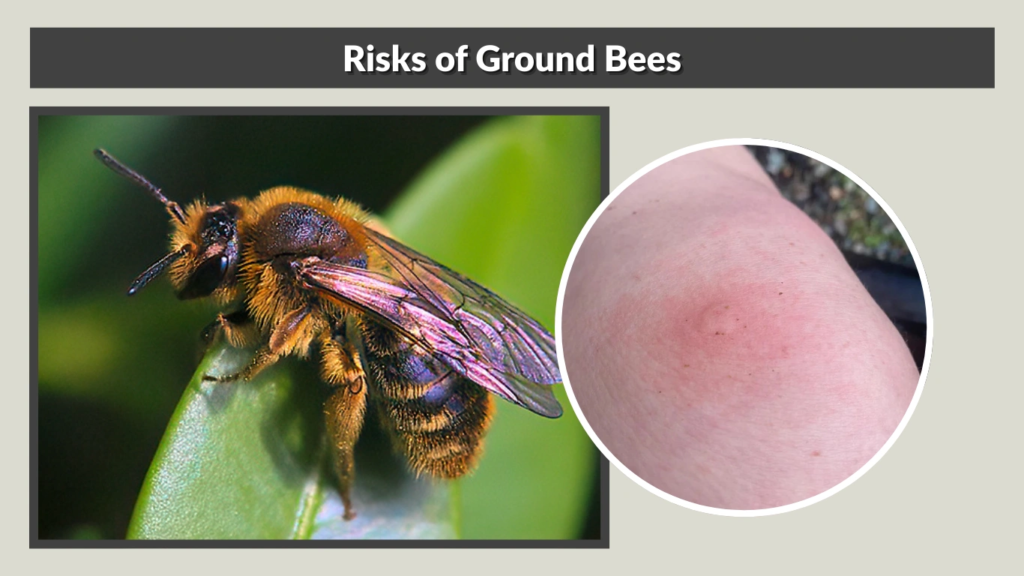
Ground bees play an important role in pollination, but when they nest too close to homes, play areas, or gardens, they can pose risks. Multiple stings may cause pain, allergic reactions, or medical emergencies. Pets digging in the yard are also at risk of being stung.
Yellow jackets, in particular, are aggressive and will defend their nests fiercely. Because their stings are more dangerous, removing them often requires professional help.
Natural Ways to Get Rid of Ground Bees
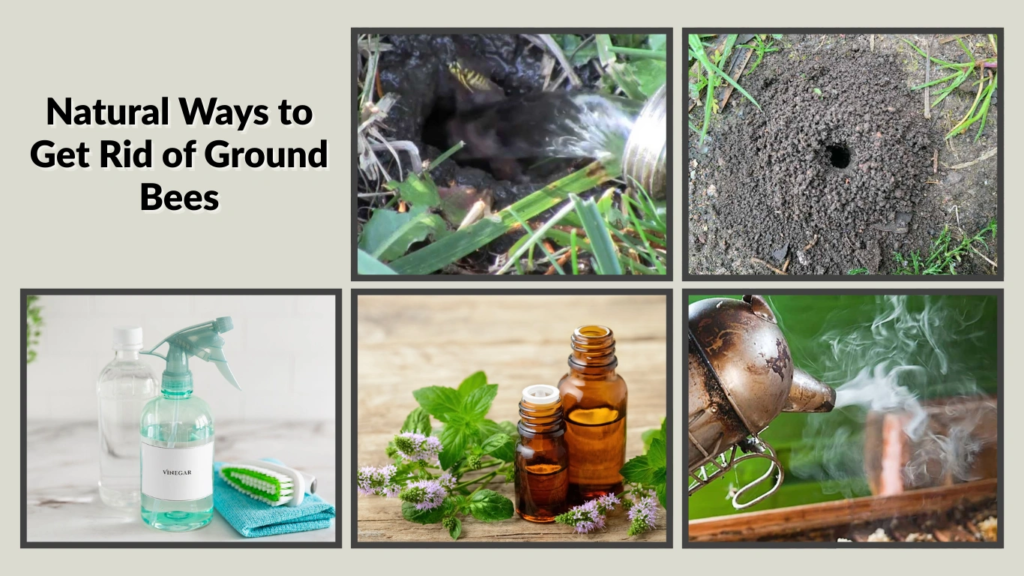
If you prefer not to use chemicals, there are several natural approaches to discourage or remove ground bees safely:
- Vinegar Spray – Mixing equal parts of water and vinegar can be sprayed into nest entrances. This method works best for small solitary bee nests but should be used cautiously to avoid harming plants.
- Flooding with Water – Pouring water into the hole at night can disrupt nesting activity. However, this is usually a temporary solution and may not work on larger colonies.
- Covering Nest Entrances – Adding soil, mulch, or thick grass over the holes prevents bees from accessing their nest. This method is effective for solitary ground-nesting bees.
- Natural Deterrents – Sprinkling cinnamon, peppermint oil, or citronella near nests can drive bees away gradually. These scents irritate bees without killing them.
- Smoke Treatment – Bees dislike smoke, which can be used to encourage them to relocate. Lightly smoking the entrance in the evening is safer since bees are less active at night.
Chemical and Professional Removal
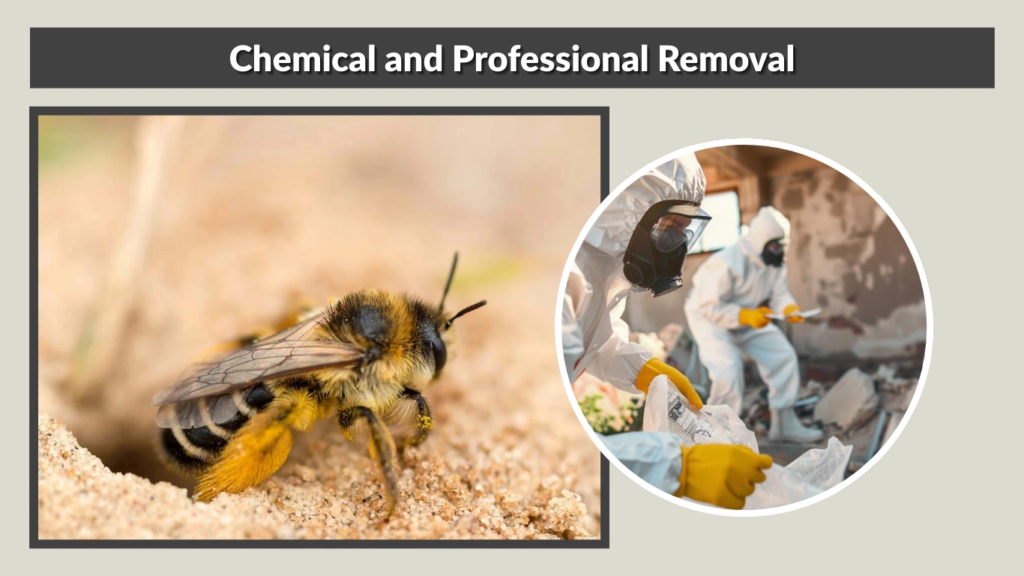
Sometimes natural methods are not enough, especially if the nest is large or contains aggressive species like yellow jackets. In these cases, chemical treatments or professional help may be necessary.
- Insecticidal Dusts – Products designed for ground-nesting bees and wasps can be applied directly into nest entrances. Dust works better than liquid sprays because it spreads through tunnels where bees travel.
- Aerosol Sprays – Fast-acting sprays can eliminate visible bees near the entrance, but they may not reach deep underground colonies. Always apply at night when bees are less active.
- Caution with Chemicals – Overusing pesticides can harm beneficial insects, contaminate soil, and pose risks to children and pets. Reserve these methods for dangerous infestations.
- Professional Pest Control – For large or aggressive nests, hiring an exterminator is the safest option. Professionals have protective gear and specialized products that eliminate bees and wasps effectively. This is especially important if the nest is under a deck, patio, or structure where DIY methods may be unsafe.
Preventing Ground Bees in the Future
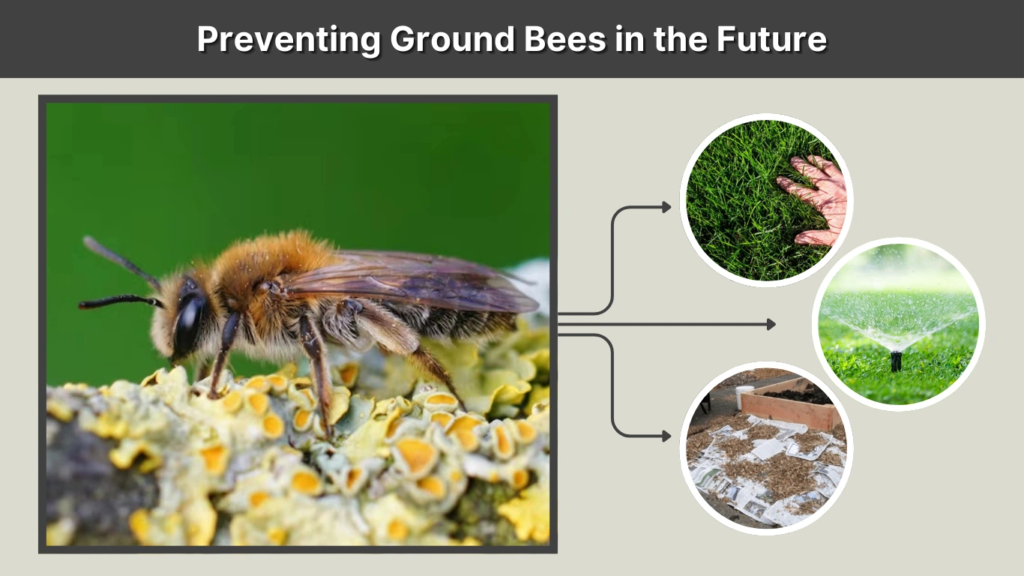
Once you’ve removed ground bees, prevention is the next step. Bees prefer dry, loose soil for nesting, so changing lawn and garden conditions can discourage them.
- Maintain Thick, Healthy Grass – A well-watered, dense lawn makes it difficult for bees to burrow into the ground.
- Regular Watering – Bees avoid moist soil, so irrigating your yard more often helps deter them.
- Mulching Garden Beds – A thick layer of mulch covers bare soil and prevents bees from digging holes.
- Filling Holes and Cracks – Repair rodent burrows and gaps in the yard to remove potential nesting sites.
- Seal Structures – Close gaps under decks, sheds, or patios to prevent hidden underground nests.
By combining these measures, you reduce the likelihood of bees returning year after year.
Special Cases
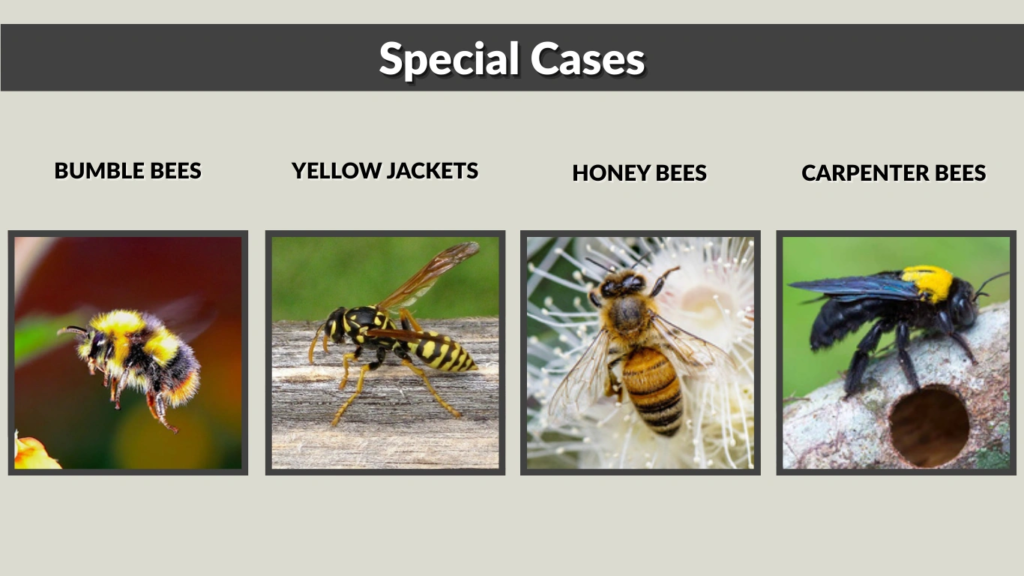
Not all ground bees are the same, and treatment can vary depending on the species.
- Bumble Bees – Usually non-aggressive but can sting if disturbed. Relocation is preferred over extermination.
- Yellow Jackets – Extremely aggressive and dangerous in large colonies. Chemical treatment or professional removal is strongly recommended.
- Honey Bees – Rarely nest underground but may use abandoned burrows. Because they are protected pollinators, contact a local beekeeper for safe relocation.
- Carpenter Bees – Typically bore into wood but sometimes nest in soil near wooden structures. Prevent by sealing holes and using repellents.
- Regional Differences – In areas like Michigan, Pennsylvania, or the UK, soil types and climate affect nesting behavior, so local pest control advice may be useful.
Safety Tips
When dealing with ground bees, safety should always come first.
- Work at the Right Time – Bees are less active at dawn or dusk, making it safer to apply treatments or block nests.
- Wear Protective Clothing – Long sleeves, pants, gloves, and a face covering reduce sting risks.
- Avoid Gasoline or Fire – Pouring gasoline into nests is extremely dangerous, toxic to soil, and harmful to the environment. Fire also poses serious hazards.
- Non-Lethal Options – If possible, try relocation or deterrents before extermination. Bees play an essential role in pollination and ecosystem balance.
FAQs
How can I get rid of ground bees naturally?
Natural options include vinegar sprays, flooding nests with water, covering holes with soil or mulch, and using deterrents like cinnamon or peppermint oil. These methods are safer for the environment and effective for solitary bees but may require repetition for lasting results.
What’s the safest way to remove a bumble bee nest in the ground?
The safest method is to contact a beekeeper or pest control expert for relocation. Bumble bees are beneficial pollinators, so extermination should be a last resort. If removal is necessary, smoke or natural deterrents may encourage them to leave without harm.
Do ground bees damage lawns or soil?
Ground bees rarely cause structural damage to lawns or soil. Their tunnels are shallow and temporary, often disappearing after the nesting season. However, multiple holes in one area can make a lawn look patchy and attract more bees in following years.
Can vinegar really get rid of ground bees?
Yes, vinegar is an effective natural repellent. Spraying a mixture of vinegar and water into the nest entrance can disrupt activity. It works best on small, solitary nests but may not be strong enough for large colonies or aggressive species like yellow jackets.
When should I call a professional for bee removal?
You should contact a professional if the nest is large, located in a high-traffic area, or belongs to aggressive species such as yellow jackets. Professional removal ensures safety, especially if you or family members are allergic to bee or wasp stings.
