

Carpenter bees are fascinating insects that often cause frustration for homeowners. Known for drilling perfectly round holes into wood, they play an important role as pollinators but can also damage wooden structures over time. To manage carpenter bees effectively, it’s important to understand not only their nesting behavior but also how long they live. Their lifespan varies depending on sex, environment, and season, and learning these details helps you know when and how to handle infestations.
In this article, we’ll cover the lifespan of carpenter bees, their living habits, seasonal survival, and lifecycle stages.
General Carpenter Bee Lifespan
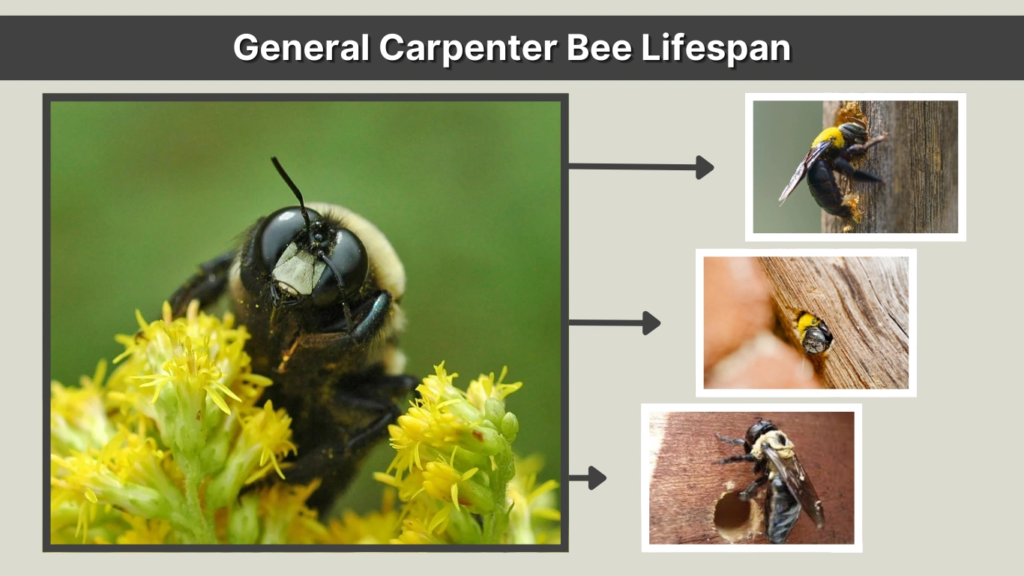
On average, carpenter bees live about one year from egg to adult. However, the exact length of time depends on many factors, including climate, availability of food, and whether they survive the winter.
Egg to Adult: Developing from egg to adult takes several weeks, typically during spring and early summer.
Adult Stage: Once mature, carpenter bees spend the rest of their lives foraging, nesting, or defending territory.
One-Year Cycle: Most carpenter bees complete a full cycle within one year, but females may overwinter and start nesting again the following spring.
This makes carpenter bees longer-lived than many other solitary bees, which often survive only a few months.
Male vs. Female Lifespan
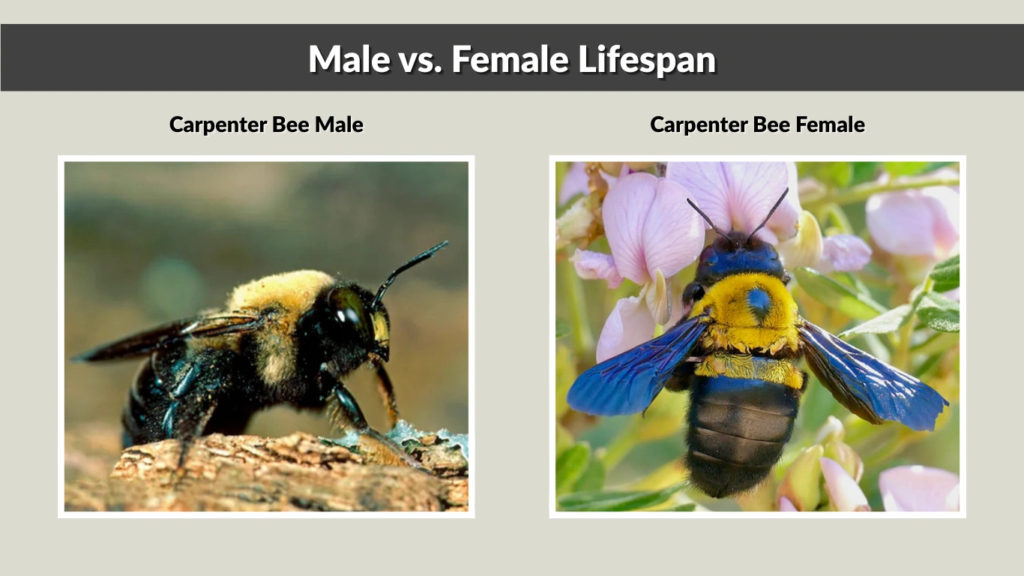
The lifespan of carpenter bees varies between males and females, largely because of their roles in reproduction and nesting.
- Male Carpenter Bees
- Generally live a few weeks to a couple of months.
- Their primary role is to defend territory and mate.
- Males are aggressive hoverers but harmless, since they cannot sting.
- Once mating season ends, males die off.
- Generally live a few weeks to a couple of months.
- Female Carpenter Bees
- Live significantly longer, often up to a full year.
- They drill tunnels, build nests, and lay eggs.
- After provisioning the brood with pollen, females may overwinter in their tunnels.
- In some species, older females may even reuse tunnels for multiple years.
- Live significantly longer, often up to a full year.
This division of lifespan explains why homeowners usually notice carpenter bee activity in spring and summer—when females are nesting and males are defending.
Lifespan Under Different Conditions
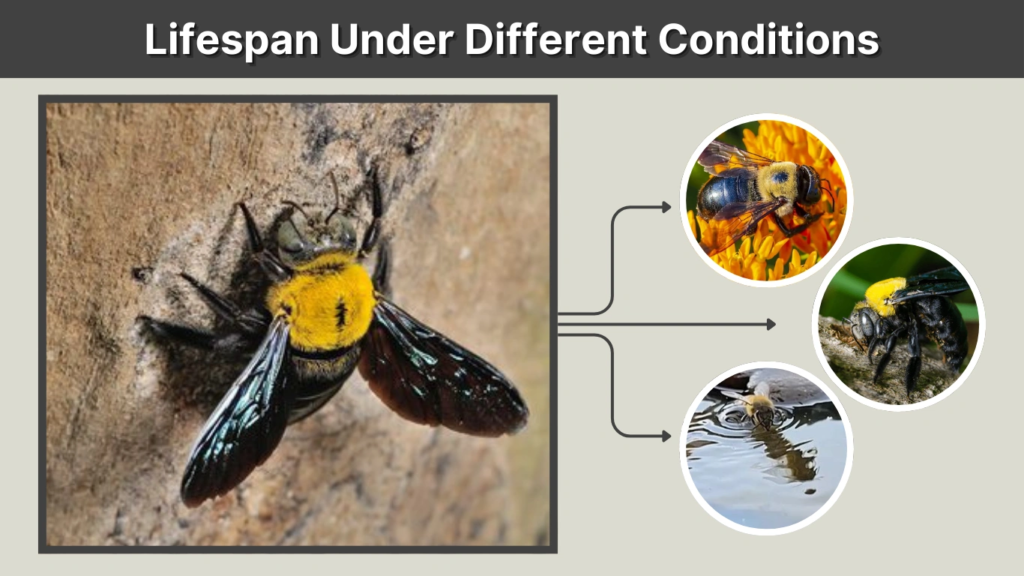
While carpenter bees follow a typical one-year cycle, their survival can change dramatically depending on conditions.
Without Food or Water
- Like most insects, carpenter bees need nectar and pollen for energy.
- Without access to food, they may survive only a few days.
- Water is less critical since they obtain moisture from nectar, but dehydration in hot climates shortens survival.
Indoors
- A carpenter bee trapped indoors without access to flowers may live only a few days.
- If it finds a way to rest undisturbed, survival could extend slightly, but lack of food will still shorten life.
Trapped Carpenter Bees
- When caught in traps, bees generally live a few days to a week before dying.
- Ventilation, temperature, and stress levels affect how long they last.
These variations show that carpenter bees thrive only when they have access to natural outdoor resources like flowers and nesting wood.
Where Do Carpenter Bees Live? (General Habitat)
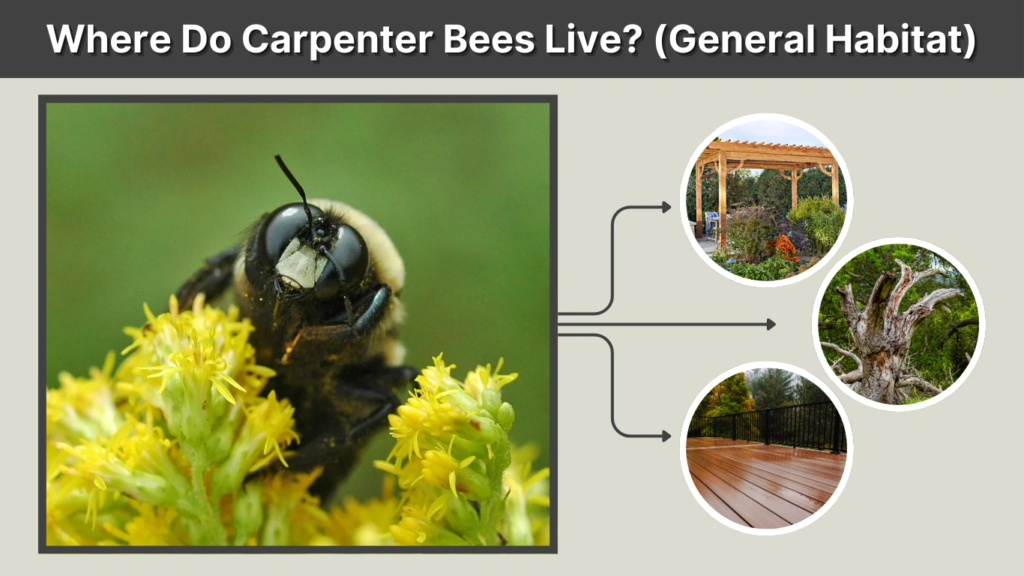
Carpenter bees are found in many regions worldwide and are adaptable to human environments. Their preferred habitats include:
- Wooden Structures: Decks, fences, eaves, pergolas, and siding.
- Natural Settings: Dead trees, branches, and logs.
- Soft, Untreated Wood: They prefer weathered pine, cedar, or redwood because it’s easier to drill.
They don’t eat wood, but they excavate it to create safe tunnels for nesting. Painted or pressure-treated lumber is less appealing, which is why sealing and painting wood is an effective prevention method.
Carpenter Bees in Specific Regions
Carpenter bees have a wide geographic range and can adapt to different climates.
- Blue Carpenter Bees: Found in Asia and parts of the Middle East, these striking metallic-blue bees prefer warm climates.
- Black Carpenter Bees: Common across the U.S. and other regions, often mistaken for bumblebees.
- United States: Carpenter bees are widespread, especially in the South and Midwest where wood structures are abundant.
- United Kingdom: Less common, but some species occur in warmer areas.
- Michigan and Wisconsin: Found in temperate climates, often active in late spring and summer.
- Florida: Carpenter bees thrive in warm, humid conditions, sometimes even nesting in attic spaces if wood is available.
Their adaptability means carpenter bees can live anywhere with access to pollen sources and suitable wood.
Winter and Seasonal Living
Carpenter bees face challenges during cold months. Unlike honeybees, they do not form warm hives to survive winter. Instead, their survival depends on tunnels.
Overwintering in Tunnels: Female carpenter bees seal themselves inside old tunnels during winter, entering a state of dormancy until spring.
Winter Survival Rates: Many die due to cold, predators, or lack of shelter, but some survive to emerge the following season.
New Generations: Eggs laid in summer develop into adults by fall, and these young bees often overwinter inside tunnels before emerging the next spring.
This explains why carpenter bee activity peaks in spring—survivors emerge, mate, and begin drilling new holes.
Nesting Habits: Where Carpenter Bees Live

Carpenter bees are unique in their nesting choices compared to other bees.
- Do Carpenter Bees Live in Wood?: Yes, their primary nesting habit is drilling into untreated or unpainted wood.
- Do They Live in Holes They Make?: Absolutely. Females use the tunnels they excavate to lay eggs and may reuse them each year.
- Do They Live in Trees?: Yes, they can also bore into dead branches or trunks.
- Do They Live in the Ground?: No, unlike bumblebees or mining bees, carpenter bees do not live in soil.
- Do They Live in Hives or Colonies?: No, carpenter bees are solitary. Each female creates and provisions her own tunnel, though multiple females may nest near each other.
This solitary lifestyle explains their behavior and the appearance of scattered, round holes in wood instead of large hives.
Social Behavior: Alone or Together
Carpenter bees are classified as solitary bees, which means they don’t live in large colonies like honeybees or bumblebees. However, their behavior isn’t entirely isolated.
- Living Alone: Each female drills her own tunnel, provisions it with pollen, and lays eggs independently.
- Living Near Others: Multiple females may create tunnels close together, often in the same wooden structure. This can give the impression of a colony, but each bee works alone.
- Limited Cooperation: In some species, daughters may help their mothers guard or maintain tunnels, showing a small degree of social behavior.
So, while carpenter bees don’t form hives, they sometimes live in loose communities when suitable wood is abundant.
How Many Carpenter Bees Live in One Nest?

Carpenter bee nests are small compared to the massive hives of social bees. A single tunnel usually houses only a handful of bees.
- One Female per Tunnel: A female carpenter bee is responsible for excavating and provisioning her own nest.
- 6–10 Brood Chambers: Each chamber holds one egg and a pollen supply.
- Generational Reuse: Tunnels may be reused by daughters or expanded over time, increasing the number of bees in one area.
- Not True Colonies: Even when multiple tunnels are clustered together, each female works independently.
This explains why homeowners may find clusters of holes in decks or siding—several females chose the same area to nest.
Lifecycle of Carpenter Bees
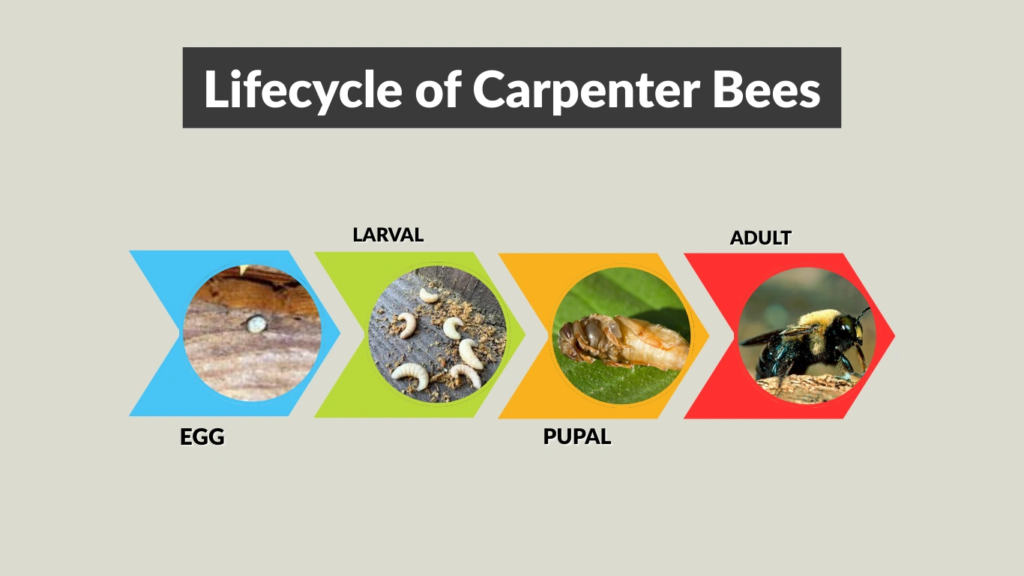
The lifecycle of carpenter bees plays a major role in their lifespan. Their development follows the same four stages as most bees: egg, larva, pupa, and adult.
Egg Stage
- Female lays eggs in sealed chambers inside the tunnel.
- Each egg is deposited on a pollen ball, which serves as food for the developing larva.
- Eggs hatch in a few days.
Larva Stage
- Newly hatched larvae are white, soft, and grub-like.
- They feed on the pollen ball provided by the female.
- The larval stage lasts several weeks as the bee grows.
Pupa Stage
- After feeding, larvae spin a protective cocoon and pupate.
- During this stage, the bee develops wings, legs, and adult features.
- Pupation lasts a few weeks, depending on temperature.
Adult Stage
- Fully developed adults emerge in late summer or fall.
- Some remain in tunnels to overwinter, while others die off before cold weather.
- Adults repeat the cycle the following spring.
From egg to adult emergence, the process takes about 7–8 weeks, but the entire life expectancy can stretch to nearly a year when overwintering is included.
Seasonal Cycle and Lifespan Connection
The lifecycle of carpenter bees ties directly into their seasonal patterns.
- Spring: Adults emerge, mate, and females begin drilling holes to lay eggs.
- Summer: Eggs hatch and larvae develop into pupae.
- Late Summer to Fall: New adults emerge; some survive into winter.
- Winter: Surviving adults remain dormant in tunnels until spring.
This explains why carpenter bee activity is most noticeable in spring and early summer, when nesting and drilling are at their peak.
Key Differences from Other Bees’ Lifespans
Comparing carpenter bees to other bee species helps highlight their uniqueness:
- Honeybees: Queens live several years, workers live weeks to months. Highly social colonies.
- Bumblebees: Colonies die off in winter except for queens, who start new nests.
- Carpenter Bees: Solitary, with females surviving up to a year and males only a few weeks.
This blend of solitary habits and long female lifespans makes carpenter bees unusual among bees.
