

Italian bees (Apis mellifera ligustica) are among the most widely kept honey bee subspecies in the world. Known for their golden color, gentle nature, and exceptional honey production, they have become a favorite choice for both beginner and commercial beekeepers. Originating in Italy, these bees have spread globally and are especially popular in North America and Europe. Understanding their traits, strengths, and comparisons with other breeds is essential for successful beekeeping.
Origins and Identity of Italian Bees
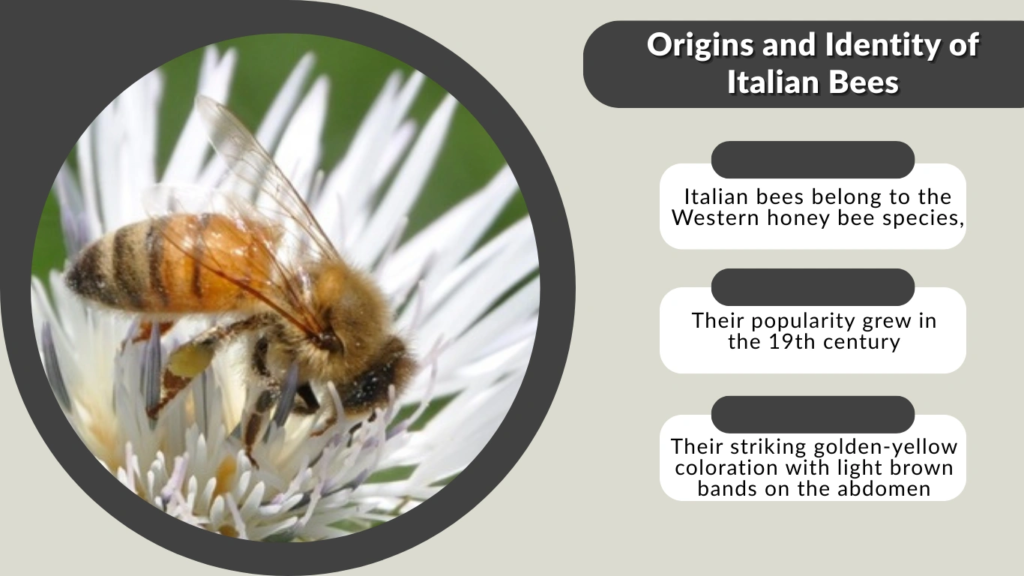
Italian bees belong to the Western honey bee species, Apis mellifera. Specifically, they are classified as Apis mellifera ligustica, a subspecies first identified in northern and central Italy. Their popularity grew in the 19th century, when beekeepers worldwide sought bees with high productivity and manageable temperaments. Today, they are the most common honey bee in the United States and are often the “default” breed sold in bee packages.
Identification Traits
Italian bees are easily recognized by their striking golden-yellow coloration with light brown bands on the abdomen. Their slender bodies, combined with smooth and relatively uniform coloring, make them stand out compared to darker breeds like Carniolan or Russian bees. They are medium-sized honey bees, well-suited for various beekeeping operations, from backyard hives to large-scale commercial pollination.
Characteristics of Italian Bees

Physical Appearance
The golden bands of Italian bees make them one of the most visually appealing breeds. Beekeepers often describe them as “blonde bees,” which differentiates them from the darker Carniolan and Russian types. There are also variations, such as Cordovan Italian bees, which display an even lighter, almost reddish-golden shade.
Temperament: Are Italian Bees Aggressive?
One of the most appealing traits of Italian bees is their docile temperament. They are considered gentle and easy to handle, making them a favorite for beginner beekeepers. While all honey bees can sting when threatened, Italian bees tend to be less defensive compared to Russian bees or Africanized honey bees. This gentleness allows easier hive inspections without excessive protective gear.
Stinging Behavior
Italian bees do sting when their hive is disturbed, but their overall defensive behavior is milder. Unlike more aggressive breeds, they are less likely to chase beekeepers after inspections. This makes them manageable even in suburban or semi-urban settings where human interaction is frequent.
Productivity and Honey Production
Italian honey bees are renowned for their high honey yields. They are excellent foragers and adapt well to abundant nectar sources. Their colonies build up quickly in spring and maintain strong worker populations throughout the summer. The honey produced is often light-colored, mild in flavor, and highly marketable.
Longevity and Colony Strength
The lifespan of Italian worker bees is similar to other breeds—typically a few weeks during summer and several months in winter. Queens, however, are prolific egg layers, capable of laying up to 1,500–2,000 eggs per day at peak season. This ensures strong, productive colonies with continuous brood rearing.
Climate Adaptability
Italian bees thrive in warm and temperate climates but are less suited for very cold winters. Their tendency to maintain large brood nests can become a disadvantage in northern climates, as they may consume food stores too quickly. Beekeepers in colder regions often choose Carniolan or Russian bees for better overwintering success.
Italian Queen Bees

Role in the Colony
The queen bee is the heart of any hive, and Italian queen bees are especially valued for their strong laying capacity. A healthy Italian queen ensures rapid colony growth, abundant foraging, and consistent honey production.
Traits of Italian Queen Bees
Italian queens are prolific and reliable, producing a steady brood pattern that ensures large worker populations. Their offspring are gentle and easy to manage. Beekeepers appreciate their ability to maintain hive stability and strong workforce numbers during the honey flow season.
Cordovan and Golden Strains
Within Italian bees, special strains like Cordovan Italians are selectively bred for unique traits. Cordovan queens produce bees with lighter coloration and are considered even gentler than standard Italians. Golden Italian strains are known for their striking appearance and strong honey yields. Both strains highlight the adaptability and versatility of the Italian bee lineage.
Hive Management and Behavior

Hive Structure and Tendency
Italian bees are active builders and maintain clean, well-structured hives. They produce large amounts of comb and brood, which supports their rapid colony expansion. However, their industrious nature also means they may consume stores quickly, requiring careful management in regions with long winters.
Nucleus Colonies (Nucs) and Packages
Beekeepers often purchase Italian bees in the form of nucleus colonies (nucs) or packaged bees. Italian nucs include a small, established colony with a queen, brood, and workers, while packages are starter groups shipped in ventilated boxes. Both methods allow beekeepers to establish thriving colonies quickly due to the Italians’ fast buildup.
Honey Production and Flavor
Italian bees are heavy producers of honey, often outpacing other breeds in favorable conditions. The honey is typically light in color and mild in taste, which appeals to consumers. This makes Italian honey not only abundant but also highly marketable.
Swarming and Overwintering
Italian bees have a moderate swarming tendency. While not as prone to swarming as some breeds, their rapid colony growth can lead to overcrowding. Proper hive management—such as providing adequate space—helps reduce swarming risk. Their overwintering ability, however, is less reliable in cold regions, as their large colonies require significant food reserves to survive.
Italian Bees vs. Other Bee Breeds

One of the most common questions among beekeepers is how Italian bees compare to other popular breeds. Each type has distinct strengths and weaknesses, and choosing the right bee depends on climate, goals, and beekeeper experience.
a. Carniolan vs. Italian Bees
Carniolan bees (Apis mellifera carnica) are another highly popular breed. Known for their darker bodies and strong overwintering skills, they are often favored in colder climates.
Key Differences:
- Temperament: Both Italian and Carniolan bees are gentle, but Carniolans are considered slightly calmer during inspections.
- Honey Production: Italians typically produce more honey in areas with continuous nectar flow, while Carniolans excel in variable climates.
- Climate Adaptation: Carniolans handle cold winters better, while Italians thrive in warmer regions.
- Appearance: Italians are golden-yellow, whereas Carniolans are darker with gray or brown bands.
Italian Bees vs. Other Bee Breeds (Continued)

b. Russian vs. Italian Bees
Russian bees (Apis mellifera strains imported from Russia) are well known for their strong resistance to Varroa mites, one of the most damaging pests in modern beekeeping.
Key Differences:
- Pest Resistance: Russians have a natural ability to detect and remove mite-infested brood, making them highly resilient. Italians, on the other hand, require more active mite management.
- Temperament: Italians are gentler, while Russians can be more defensive, especially when protecting food stores.
- Climate Adaptability: Russians excel in colder environments, whereas Italians thrive in warmer, nectar-rich areas.
- Productivity: Italians generally outproduce Russians in honey yield, but Russians compensate with reduced colony losses.
c. Buckfast vs. Italian Bees
Buckfast bees are a hybrid strain developed in England by Brother Adam in the 20th century. They were bred specifically to resist diseases and provide high productivity.
Key Differences:
- Disease Resistance: Buckfast bees show strong resistance to brood diseases, while Italians rely more on beekeeper intervention.
- Honey Production: Both are high-yield producers, though Buckfast bees maintain steadier output in inconsistent nectar conditions.
- Temperament: Italians are docile, while Buckfast bees vary depending on strain but are usually calm.
- Colony Growth: Italians build rapidly, sometimes consuming food reserves, whereas Buckfast bees regulate brood more efficiently.
d. Saskatraz vs. Italian Bees
Saskatraz bees are a relatively new hybrid originating in Canada, bred for honey production, mite resistance, and winter survival.
Key Differences:
- Varroa Tolerance: Saskatraz bees are superior to Italians in pest resistance.
- Cold Climate: With Canadian origins, Saskatraz bees survive harsh winters better than Italians.
- Productivity: Italians often yield more honey under ideal conditions, while Saskatraz bees balance production with survivability.
- Temperament: Italians remain the gentler option, though Saskatraz bees are generally manageable.
e. Hybrid Variants: Carniolan-Italian and Cordovan Italians
Hybridization between Carniolan and Italian bees is common in commercial beekeeping, aiming to combine Italian productivity with Carniolan wintering skills. Cordovan Italians, with their lighter, reddish-golden appearance, are prized for gentleness and striking color. These hybrids give beekeepers specialized options tailored to specific climates and goals.
Pros and Cons of Italian Bees
Like all breeds, Italian bees have strengths and weaknesses. Understanding both helps beekeepers decide if they are the right fit.
Advantages of Italian Bees
- Gentle Temperament: Easy to handle, ideal for beginners.
- High Honey Production: Excellent for nectar-rich areas.
- Rapid Colony Growth: Quick to build strong populations.
- Attractive Appearance: Golden color makes them easily identifiable.
- Good Brood Patterns: Queens are consistent egg layers, ensuring healthy hives.
Disadvantages of Italian Bees
- Poor Winter Survival in Cold Climates: Require heavy feeding during long winters.
- High Consumption: Large colonies eat food stores quickly.
- Robbing Behavior: Italians may raid weaker colonies for honey.
- Varroa Susceptibility: Require careful monitoring and treatment against mites.
FAQs
Are Italian bees aggressive?
No, Italian bees are known for their gentle temperament. They are considered one of the calmest breeds, making hive inspections easier and safer compared to more defensive bee types.
What makes Italian bees different from Carniolan bees?
Italian bees are golden and highly productive, while Carniolans are darker, winter-hardy, and adapt better to variable climates. Carniolans are slightly calmer, but Italians generally produce more honey in warmer areas.
How long do Italian honey bees live?
Worker Italian bees live a few weeks during active summer months and up to several months in winter. Queens, however, can live two to three years while continuously laying eggs to sustain the colony.
Do Italian honey bees produce more honey than other breeds?
Yes, in warm climates with steady nectar flow, Italians are often the top producers. However, in colder regions, Carniolans and Russians may outperform them due to better overwintering and resource management.
What does “bee” mean in Italian language?
In Italian, the word “bee” is “ape”. Related terms include ape da miele (honey bee) and alveare (beehive), reflecting Italy’s rich tradition in beekeeping and agriculture.
