

Ichneumon wasps belong to one of the most diverse insect families on Earth, with over 25,000 described species and likely tens of thousands more still undiscovered. These wasps are slender, long-bodied insects often mistaken for bees or hornets because of their striking colors. Despite their intimidating appearance and long “stingers,” ichneumon wasps are harmless to humans and play a critical role in nature by controlling populations of other insects. Let’s explore what makes them fascinating, from their looks to their behavior and importance in ecosystems.
What is an Ichneumon Wasp?
The ichneumon wasp belongs to the family Ichneumonidae, a group within the larger order Hymenoptera, which also includes bees, ants, and other wasps. Unlike social wasps (such as yellow jackets), ichneumon wasps are solitary parasites, meaning each female lays eggs individually rather than contributing to a shared colony.
They are sometimes referred to as parasitoid wasps, because their young feed inside or on a host insect, eventually killing it. This behavior may sound grim, but it is a natural way of keeping insect populations in balance. Farmers and gardeners often consider them allies, since many ichneumons target destructive pests like caterpillars and beetle larvae.
Do Ichneumon Wasps Sting Humans?

One of the most common questions about ichneumon wasps is whether they can sting. The answer is reassuring: most species do not sting humans at all.
What looks like a stinger on females is actually an ovipositor — a specialized organ used for laying eggs. In some species, the ovipositor can be longer than the wasp’s body, giving it an intimidating appearance. However, instead of injecting venom into people, it is designed to pierce wood, soil, or the bodies of host insects so the female can deposit her eggs.
A few ichneumon species have ovipositors capable of delivering a mild sting, but even then, they are not aggressive and rarely attempt to use it defensively. In general, ichneumon wasps pose no threat to humans or pets.
Is the Ichneumon Wasp Dangerous?
From a human perspective, ichneumon wasps are not dangerous at all. They are shy, solitary insects that prefer to avoid people. Unlike yellow jackets, they don’t swarm, defend colonies, or attack when disturbed.
For other insects, however, ichneumons are formidable predators. A female carefully locates a host, such as a caterpillar or beetle larva, and injects her eggs inside. The larvae hatch and consume the host slowly, ensuring food until they are ready to pupate. This parasitic method of reproduction makes them incredibly effective at controlling pest species naturally.
In fact, ichneumon wasps are considered one of the most important groups in biological pest control. They reduce the need for chemical pesticides by keeping populations of destructive insects under control.
Ichneumon Wasp Identification

General Appearance
Ichneumon wasps are easy to identify once you know what to look for. They typically have:
- Slender bodies with narrow waists
- Very long antennae (often with more than 16 segments)
- Clear or slightly tinted wings with distinctive vein patterns
- Long ovipositors in females, sometimes longer than the body itself
Their size varies greatly depending on the species. Some are just a few millimeters long, while others can reach over 5 centimeters.
Key Identification Features
- Unlike bees, ichneumons do not have hairy bodies or pollen baskets.
- Unlike yellow jackets, they are more delicate, with thinner bodies and longer antennae.
- Their flight is slower and less aggressive compared to stinging wasps.
Ichneumon Wasp Colors: Yellow and Black Varieties
Many ichneumon wasps are plain black, brown, or reddish, but some species display striking yellow-and-black patterns. This coloration mimics bees or yellow jackets, which helps deter predators by making them look more dangerous than they really are.
However, ichneumons can be distinguished from true yellow jackets by their:
- Slimmer, more elongated bodies
- Longer antennae
- Lack of aggressive behavior
- Ovipositor often visible extending from the abdomen
This mimicry is an excellent example of how insects evolve to survive in a world full of predators. While they look fearsome, yellow-and-black ichneumon wasps remain completely harmless to humans.
Ichneumon Wasp Species Spotlight
The ichneumon family is incredibly diverse, but a few species are more commonly discussed:
- Ichneumon suspiciosus – A distinctive European species with bold yellow-and-black markings, often confused with true wasps.
- Megarhyssa macrurus – Known as the giant ichneumon, females have an extremely long ovipositor used to drill into wood to parasitize horntail larvae.
- Ophion species – Slender, reddish ichneumons often seen flying at night near lights. Some species in this group can deliver a mild sting, though they rarely do so.
- Netelia species – Widespread ichneumons that parasitize caterpillars, frequently spotted in gardens.
Each species has evolved to specialize in particular hosts, making ichneumon wasps one of the most diverse and ecologically important insect families.
What Do Ichneumon Wasps Eat?
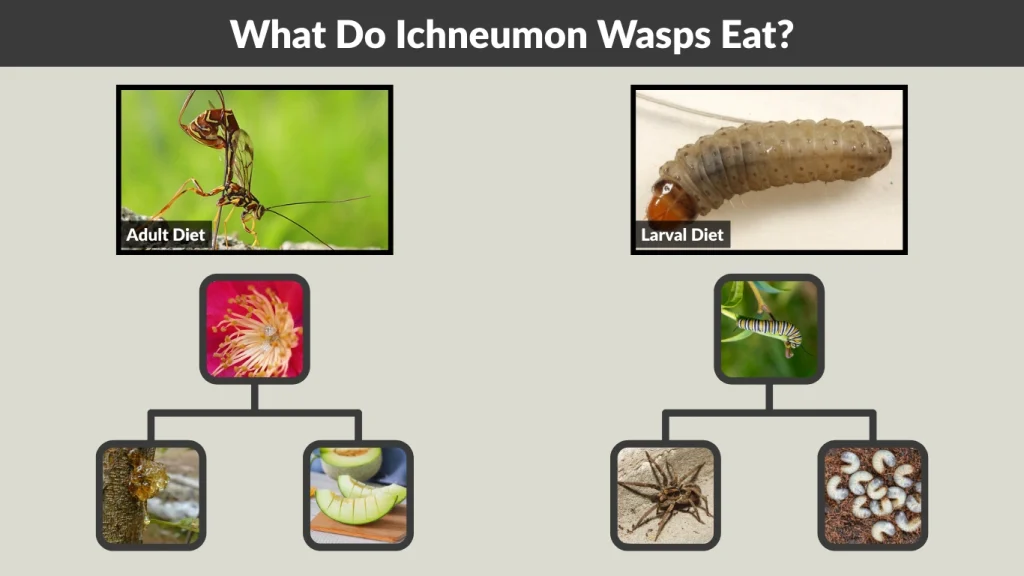
Adult Diet
Adult ichneumon wasps mainly feed on nectar, honeydew, and plant sap. This makes them occasional visitors to flowers, where they may assist in pollination, though not as efficiently as bees.
Larval Diet
The real predatory role comes from their larvae. Once the female lays eggs inside or on a host insect, the developing larvae feed on the host’s internal tissues. They consume non-vital organs first, keeping the host alive as long as possible until pupation. This slow process ensures a continuous fresh food supply for the larvae.
Hosts vary widely and include:
- Caterpillars (moths and butterflies)
- Beetle larvae
- Spiders
- Sawflies
- Other insect larvae hidden in wood or soil
This parasitic feeding is crucial for natural pest control and is why ichneumon wasps are considered highly beneficial to ecosystems.
Ichneumon Wasp Life Cycle

The ichneumon life cycle is fascinating and reveals their parasitic nature:
- Egg-laying – The female uses her ovipositor to deposit eggs directly into or on a host insect. Some species drill deep into wood to reach hidden larvae.
- Larval stage – Eggs hatch inside the host, and larvae begin feeding on tissues. They avoid vital organs at first to keep the host alive longer.
- Pupation – Once fully grown, larvae pupate either inside the host body or nearby.
- Adult emergence – A new ichneumon adult emerges, ready to find a mate and repeat the cycle.
This cycle ensures that ichneumons maintain population control over their host species, preventing outbreaks of caterpillars and beetles that could otherwise damage crops and forests.
Pictures and Visual Guide
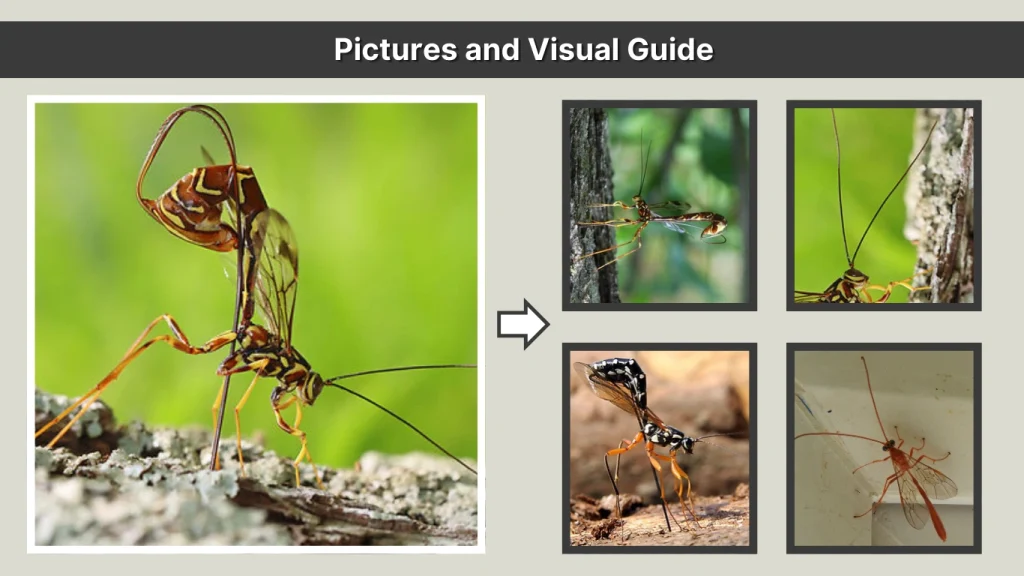
People often search for “ichneumon wasp pictures” to compare them with bees or hornets. Typical features in images include:
- Giant ichneumons perched on tree trunks with their long ovipositors extended.
- Yellow-and-black ichneumons resembling wasps but with longer antennae.
- Close-up photos of ovipositors drilling into wood.
- Delicate reddish-brown ichneumons flying near porch lights at night.
Visual identification is often the key to reassuring people that these insects are not stinging threats, but rather beneficial wasps.
Interesting Facts About Ichneumon Wasps
- The largest family of wasps in the world, with more species than all vertebrates combined.
- Charles Darwin famously reflected on ichneumon wasps, noting their parasitic lifestyle as an example of the “dark side of nature.”
- Some ichneumons can detect hosts hidden in wood by sensing vibrations.
- Giant ichneumons may have ovipositors up to 4 inches long, longer than their own bodies.
- Despite their frightening looks, they are some of the most harmless wasps to humans.
FAQs
Can ichneumon wasps sting humans?
Most ichneumon wasps cannot sting humans at all. Their long “stinger” is actually an ovipositor used for laying eggs inside host insects. A few species may deliver a mild sting, but they are not aggressive. In general, ichneumon wasps pose no danger to people and should not be feared.
What insects do ichneumon wasps parasitize?
Ichneumon wasps parasitize a wide variety of insects, depending on the species. Common hosts include caterpillars, beetle larvae, spiders, and sawflies. By laying eggs inside or on these hosts, the larvae consume them gradually. This parasitic behavior plays a vital role in keeping pest populations under control naturally.
How big can an ichneumon wasp get?
The size of ichneumon wasps varies greatly across species. Some are only a few millimeters long, while larger species, such as the giant ichneumon (Megarhyssa macrurus), can exceed 5 centimeters in length. Their ovipositors may be even longer than their bodies, making them appear intimidating but still harmless.
Are ichneumon wasps beneficial or harmful?
Ichneumon wasps are considered highly beneficial insects. They help regulate pest populations by parasitizing harmful species that damage crops, trees, and gardens. Unlike yellow jackets or hornets, they do not threaten humans or pets. Their presence in natural and agricultural environments reduces the need for chemical pest control methods.
Why do ichneumon wasps have such long stingers?
The long “stinger” is actually an ovipositor, a specialized organ used for egg-laying. It allows female ichneumon wasps to pierce wood, soil, or host insects to deposit eggs inside. While it looks intimidating, it is not used as a weapon against humans. Instead, it ensures their larvae have access to hidden hosts.
