
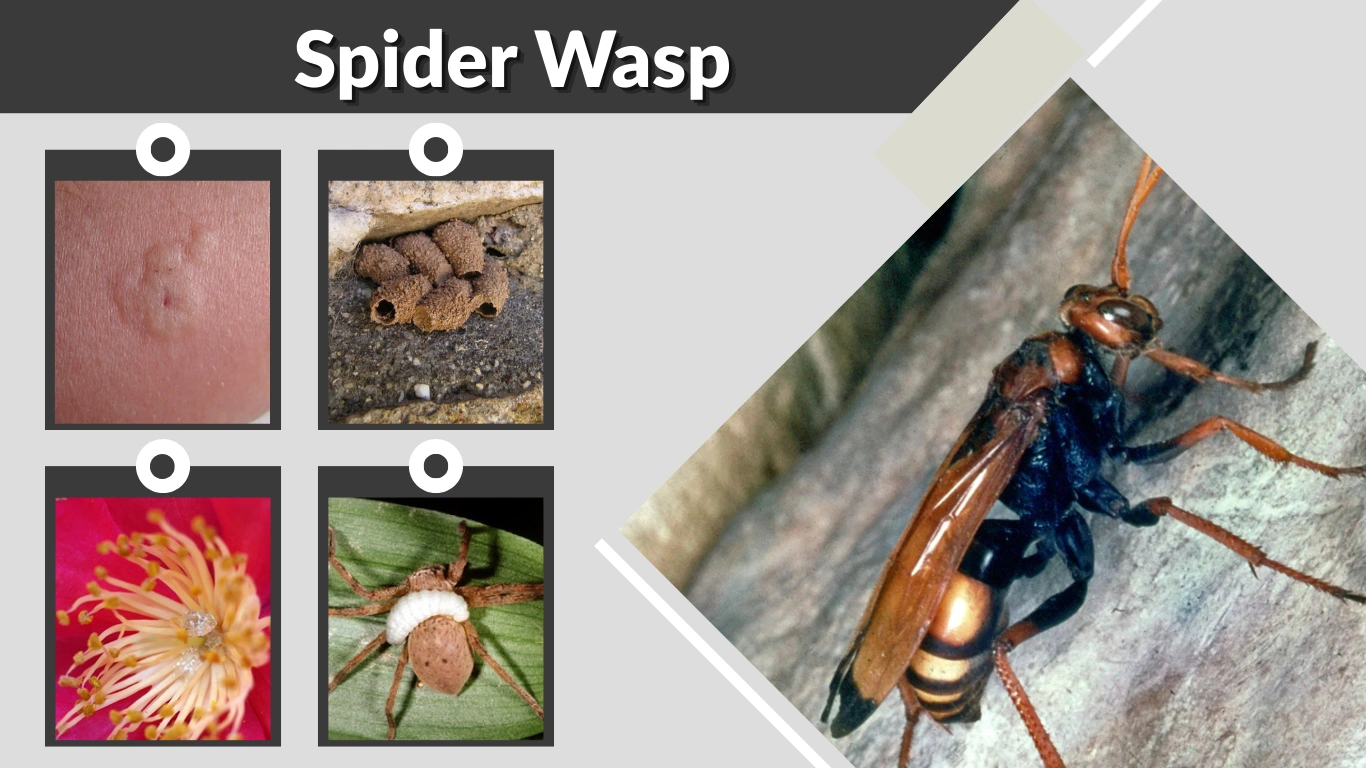
Spider wasps are some of the most fascinating insects in the world. Belonging to the family Pompilidae, they are solitary hunters that specialize in preying on spiders, including large species such as tarantulas. Their sleek bodies, powerful wings, and long legs make them excellent hunters, while their infamous sting has earned them a place in scientific studies of insect pain. While their appearance and behavior may seem intimidating, spider wasps play a crucial role in ecosystems by regulating spider populations and serving as pollinators when they feed on nectar.
What is a Spider Wasp?
Spider wasps are solitary wasps with more than 5,000 known species distributed worldwide. Unlike social wasps such as yellow jackets or hornets, spider wasps do not live in colonies or form large hives. Each female builds and provisions her own nest, ensuring the survival of her offspring independently.
What sets them apart is their unique relationship with spiders. A female spider wasp will track, paralyze, and drag a spider — sometimes many times larger than herself — into a burrow or cavity. She then lays an egg on the immobilized prey, providing a live meal for her larva once it hatches. This fascinating yet gruesome survival strategy has made spider wasps one of the most studied insect predators.
Spider Wasp Scientific Name and Types

The scientific family name of spider wasps is Pompilidae. Within this family are many species, ranging from small, delicate wasps that prey on orb-weaver spiders to large and powerful species capable of subduing tarantulas.
Some of the most well-known include:
- Tarantula Hawk Wasp (Pepsis grossa and Pepsis formosa) – These giant spider wasps are among the largest in the world, known for their massive size and extremely painful sting.
- Black Spider Wasp (Anoplius species) – Sleek, dark-colored wasps that commonly prey on wolf spiders and other ground-dwelling species.
- Other regional species – Found across North America, South America, Europe, Asia, and Australia (including Victoria), each adapted to local spider populations.
Despite their diversity, all spider wasps share the same basic life strategy: paralyzing a spider for their larvae to feed on.
Spider Wasp Size

The size of a spider wasp varies depending on the species.
- Smaller species may measure just ½ inch (12 mm) in length.
- Medium-sized species average 1 inch (25 mm) long, with long legs adapted for gripping prey.
- Tarantula hawks, the giants of the group, can reach 2 inches (50 mm) or more in body length, with wingspans exceeding 4 inches.
The sheer size of tarantula hawks makes them stand out in the insect world, and their ability to hunt tarantulas is directly tied to their strength and size. By comparison, smaller spider wasps are specialized for catching smaller spiders such as orb-weavers, crab spiders, and jumping spiders.
Spider Wasp Sting
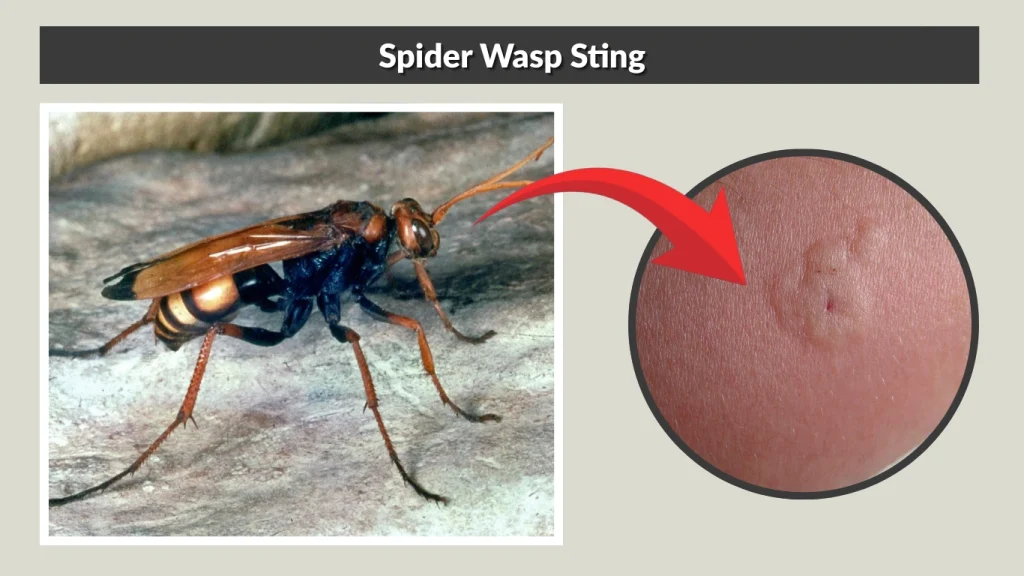
Perhaps the most famous feature of spider wasps is their sting. Scientists studying insect stings often rank spider wasps, especially tarantula hawks, as having one of the most painful stings in the animal kingdom. On the Schmidt Sting Pain Index, which measures the pain caused by different insect stings, the tarantula hawk ranks near the very top.
Pain and Danger
The sting of a tarantula hawk is described as blinding, fierce, and electric, but the pain is short-lived, usually lasting just a few minutes. While extremely painful, the sting is not considered medically dangerous for most people. The venom is designed primarily to paralyze spiders rather than harm large animals.
The black spider wasp and other smaller species also deliver painful stings, but they are generally less intense than the tarantula hawk. These wasps only sting humans defensively if they are handled or severely threatened.
Effects on Humans
- Immediate burning pain and swelling at the site.
- Redness and localized inflammation.
- Rare allergic reactions in sensitive individuals.
- No long-term damage for most people.
Unlike social wasps such as yellow jackets, spider wasps do not swarm, so stings usually involve only a single wasp. Their venom is adapted for spider paralysis, not for large-scale defense against mammals.
Spider Wasp Nest
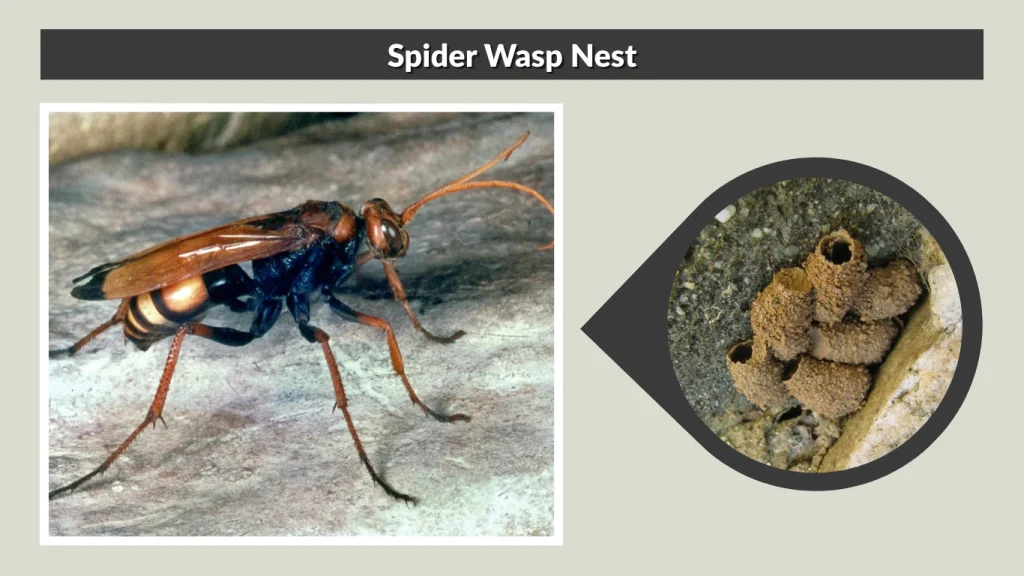
Unlike yellow jackets or hornets, spider wasps are solitary nesters. Each female independently finds a suitable site and prepares a nest for her offspring.
Nesting Behavior
- Spider wasps typically dig small burrows in sandy or loose soil, though some species use pre-existing cavities such as cracks in rocks or hollow stems.
- Once a burrow is prepared, the female hunts and paralyzes a spider. She drags the immobilized prey into the nest — a task that can be dramatic to watch, as the spider may be larger than the wasp herself.
- After placing the spider inside, she lays a single egg on it. The burrow is then sealed, creating a protected chamber for the developing larva.
Nesting Strategy
- Each nest is used only once, with one spider for one larva.
- Unlike bees or ants, there is no communal care — the female provisions the nest and leaves it.
- Multiple nests may be built in the same area, but each belongs to a separate female.
This solitary nesting behavior makes spider wasps less noticeable to people than social wasps. Still, finding a burrow with a paralyzed spider being dragged inside is a striking reminder of their unique lifestyle.
Spider Wasp Nest Pictures (Description Guide)
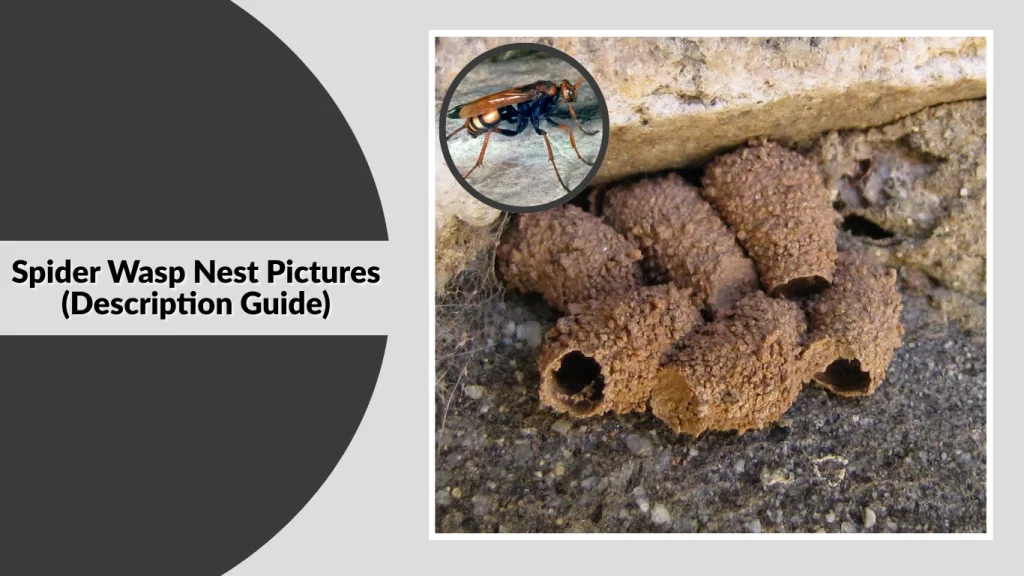
People often search for spider wasp nest pictures because their burrows are less obvious than the paper nests of yellow jackets or hornets. A spider wasp nest usually looks like a small hole in sandy soil or loose dirt. Some nests may be located in garden beds, cracks in pathways, or even soft banks along trails.
When observed closely, you might see a female wasp dragging a paralyzed spider into the burrow — a dramatic scene often photographed by nature enthusiasts. Inside, the nest chamber contains the immobilized spider and a single wasp egg, carefully sealed to protect against predators and weather. Unlike social wasps, these nests lack large comb structures; each one is a small, simple, single-use burrow.
Spider Wasp in Texas
Texas is home to some of the most impressive spider wasps, including the tarantula hawk, which thrives in desert and grassland environments. These wasps are especially striking due to their metallic blue-black bodies and fiery orange wings.
In Texas, they are commonly seen in summer, flying close to the ground while searching for tarantulas. Despite their intimidating size and painful sting, they are not aggressive toward people unless provoked. In fact, Texans often regard them with a mix of fear and respect, knowing they help control local spider populations. Other species, such as black spider wasps, are also present and frequently hunt wolf spiders across the state.
Spider Wasp in House
Finding a spider wasp inside your home can be alarming, but they are usually there by accident. They may wander indoors while chasing a spider or looking for shelter. Unlike social wasps, they do not build large nests inside houses, and they pose little risk unless handled directly.
If you encounter a spider wasp indoors, the best approach is to gently guide it back outside using a cup and paper or leave a window open so it can escape. Killing them is unnecessary since they do not infest homes or cause structural problems.
Spider Wasp Diet
Spider wasps have two very different diets depending on their life stage.
Adult Diet
Adult spider wasps feed primarily on nectar and plant juices, making them occasional pollinators. Some species are attracted to milkweed, mesquite, or other flowering plants, where they drink nectar for energy.
Larval Diet
The larvae, however, are strict carnivores. Their only food source is the paralyzed spider provided by their mother. The larva slowly consumes the spider while it is still alive, ensuring the prey remains fresh until the larva pupates. This gruesome but efficient survival strategy has evolved across all species in the Pompilidae family.
Spider Wasp Larvae
The larval stage is the most important part of the spider wasp’s life cycle. After the egg hatches, the larva attaches itself to the spider’s body and begins to feed. Unlike predators that kill their prey quickly, the larva eats in a very strategic way, consuming non-vital organs first to keep the spider alive as long as possible.
Once fully grown, the larva pupates either within the spider’s body or in a silken cocoon inside the burrow. Weeks or months later, depending on the season, a new adult spider wasp emerges to continue the cycle.
Spider Wasp Life Cycle

The life cycle of a spider wasp follows four main stages:
- Egg – Laid on a paralyzed spider inside a burrow.
- Larva – Hatches and feeds on the immobilized spider.
- Pupa – Develops within a cocoon or within the host body.
- Adult – Emerges, mates, and begins the process again.
Spider wasps are most active in warm months, with adult lifespans ranging from a few weeks to a couple of months. While their individual lives are short, their ecological role is significant, keeping spider populations balanced and reducing overgrowth of tarantulas, wolf spiders, and orb-weavers.
Spider Wasp in Victoria (Australia)
In Australia, including Victoria, spider wasps are also widespread. Local species target native spiders such as huntsman spiders and orb-weavers. Much like their American relatives, Australian spider wasps are solitary, nectar-feeding adults with larvae that depend on paralyzed spider hosts.
Australian species are less studied compared to the tarantula hawks of the Americas, but their behavior follows the same basic pattern: hunt, paralyze, drag, and nest. Gardeners in Victoria sometimes spot them around flower beds or chasing spiders, where they act as natural pest managers.
FAQs
Are spider wasps dangerous to humans?
Spider wasps are not considered dangerous to humans. While some, like the tarantula hawk, have extremely painful stings, they are not aggressive and rarely sting unless handled or provoked. They do not form colonies or swarm, which makes them less threatening than social wasps.
What does a spider wasp eat?
Adult spider wasps feed on nectar and plant juices, often visiting flowers. Their larvae, however, consume paralyzed spiders provided by the mother. Each larva gets one spider, which it slowly eats until it pupates. This dual diet makes spider wasps both pollinators and predators in ecosystems.
Where do spider wasps build their nests?
Spider wasps typically build solitary nests in sandy soil, cracks, or natural cavities. Each nest is stocked with one paralyzed spider and sealed after the female lays an egg. The nest does not resemble paper hives of yellow jackets but is a simple underground chamber.
How big can a spider wasp get?
Size varies depending on the species. Smaller spider wasps are about ½ inch long, while the largest, the tarantula hawk, can grow up to 2 inches in body length with wingspans over 4 inches. Their size often reflects the size of the spiders they hunt.
What is the difference between a tarantula hawk and a black spider wasp?
The tarantula hawk is a very large spider wasp species known for its bright orange wings and incredibly painful sting, specializing in hunting tarantulas. The black spider wasp, on the other hand, is smaller, all-black in color, and usually preys on wolf spiders or similar ground dwellers.
