
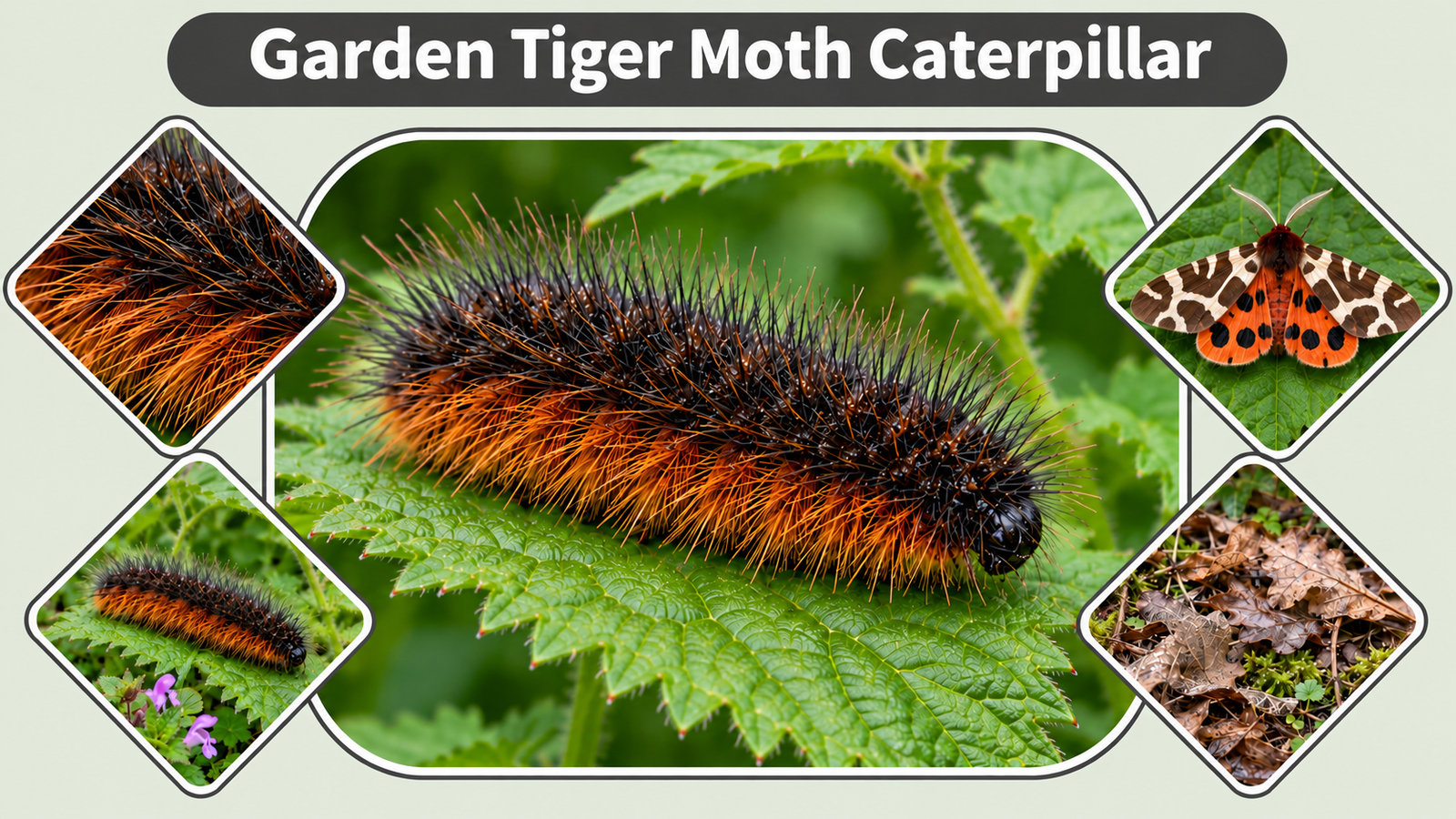
The garden tiger moth caterpillar is a large, shaggy larva with long black and rusty-brown hairs. Often called a woolly bear, it is the young stage of the striking garden tiger moth, Arctia caja. These caterpillars feed on a variety of plants, spend winter sheltering close to the ground, and pupate the following year. Their dense coat can cause irritation, so observe them without handling. This guide explains how to identify a garden tiger caterpillar, what it eats, whether it is harmful, and what to do if you find one.
Garden Tiger Moth Caterpillar at a Glance
The garden tiger caterpillar belongs to a widespread moth species in the tiger moth group. Its size, thick hairs, and dark coloring make it memorable, but common names like “woolly bear” can refer to different caterpillars in different countries. Use the full set of clues, including location, hair colors, host plant, and season, to make an identification.
| Feature | Description |
|---|---|
| Species | Garden tiger moth, Arctia caja |
| Larval nickname | Woolly bear |
| Appearance | Dark body covered with long black and reddish-brown hairs |
| Diet | Many low-growing plants, including nettles, docks, and dandelions |
| Winter stage | Caterpillar |
| Adult season | Usually summer; varies by region |
| Handling | Avoid touching; hairs may irritate skin |
How to Identify a Garden Tiger Moth Caterpillar
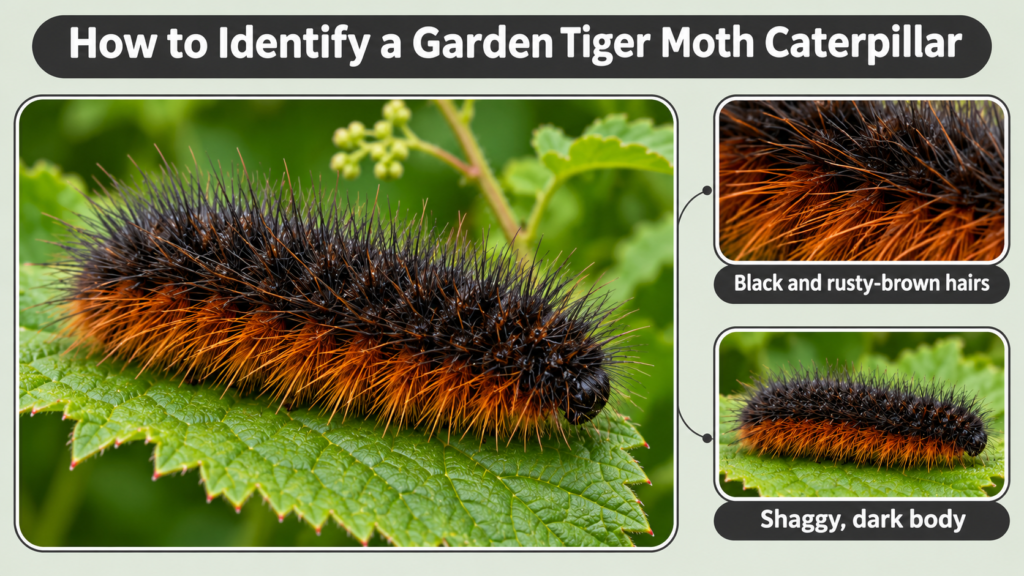
A garden tiger moth caterpillar looks densely furry rather than smooth or spiny. The body is dark, and the coat mixes long black hairs with ginger, reddish-brown, or rust-colored hairs. The exact balance of colors varies between individuals and as the larva grows, so not every specimen shows the same bright rusty bands.
Woolly bear appearance
Mature caterpillars are robust and can reach several centimeters long, though young larvae are much smaller and may not yet have the thick coat associated with the name. The hairs grow from small raised areas on the body and point outward, giving the caterpillar a shaggy outline. When it curls up, its coat can make its body shape hard to see.
Garden tiger caterpillars may move across paths or open ground, especially when searching for food or a sheltered place. Seeing one away from a plant does not mean it is lost. It may be traveling between feeding areas or looking for a place to hide.
Garden tiger versus other woolly bears
“Woolly bear” is not a species name used everywhere. In North America, people often use it for the banded woolly bear, the larva of the Isabella tiger moth, Pyrrharctia isabella. That caterpillar usually has a noticeable black-and-rust band pattern, while the garden tiger caterpillar is generally dark and shaggy with a mixture of black and ginger hairs.
Other tiger moth caterpillars and tussock moth larvae are also hairy. Hair color alone is not enough for certain identification. Geographic range is a useful clue: the garden tiger is widely known in Europe and northern Asia and occurs in parts of North America, while many look-alikes have more limited ranges. If identification matters, photograph the caterpillar from above and from the side, include the plant and surroundings, and ask a regional wildlife group.
Where Are Garden Tiger Moth Caterpillars Found?
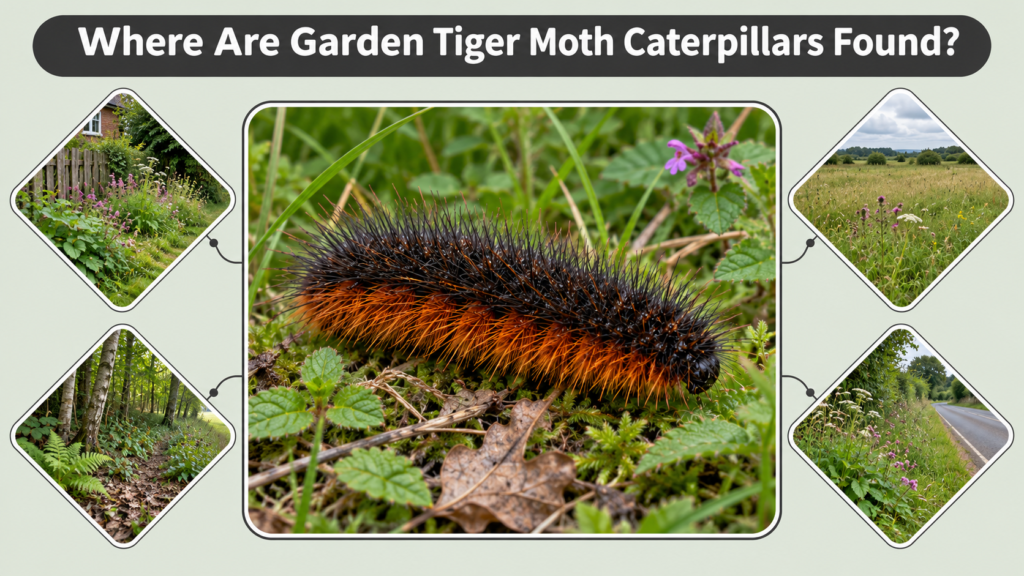
The caterpillars occur wherever the garden tiger moth can find suitable food plants and shelter. They are associated with gardens, meadows, grasslands, woodland edges, roadsides, and other open or partly open habitats. Within that range, local sightings depend on season and habitat conditions.
Garden and wild habitats
Garden tiger caterpillars feed on nettles, docks, dandelions, plantains, brambles, and other low-growing plants; shrubs such as willow and honeysuckle may also be used. During the day, a caterpillar may rest on a plant or shelter among dead leaves and stems. Its dark coat can blend with dry vegetation, so search gently around host plants and ground cover.
When to look for them
Caterpillars are present through much of the year. Young larvae feed during warmer months, overwinter near the ground, then resume development. In Britain, mature larvae are often seen in spring or early summer before pupating, while adults usually appear in summer. Timing varies with weather and location.
What Do Garden Tiger Moth Caterpillars Eat?
Garden tiger moth caterpillars are generalist plant feeders. Their diet includes nettles, docks, dandelions, plantains, brambles, and other garden plants, with the exact menu depending on local vegetation.
Do they eat garden plants?
Yes, it may feed on garden plants, but one caterpillar does not mean an infestation. Check how quickly leaves are disappearing and whether the plant is vulnerable before taking action. A small wild patch with suitable local plants can support the species without leaving every bed unmanaged.
Are Garden Tiger Moth Caterpillars Poisonous?
Garden tiger caterpillars do not sting like bees or wasps, but their hairs can irritate skin. Avoid touching them, especially if you have sensitive skin or do not know exactly what species you are looking at. “Woolly bear” includes several unrelated caterpillars, and some hairy larvae can cause stronger reactions than others.
What to do after accidental contact
If you brush against a caterpillar, avoid rubbing the area, since that can press loose hairs into the skin. Gently wash the exposed skin with soap and water. If hairs remain visible, remove them carefully without sweeping them across the skin. Seek medical advice if irritation is severe, spreading, or persistent, or if you have a significant reaction. Keep caterpillars away from children and pets, and do not handle one to test its hairs.
Garden Tiger Moth Caterpillar Life Cycle
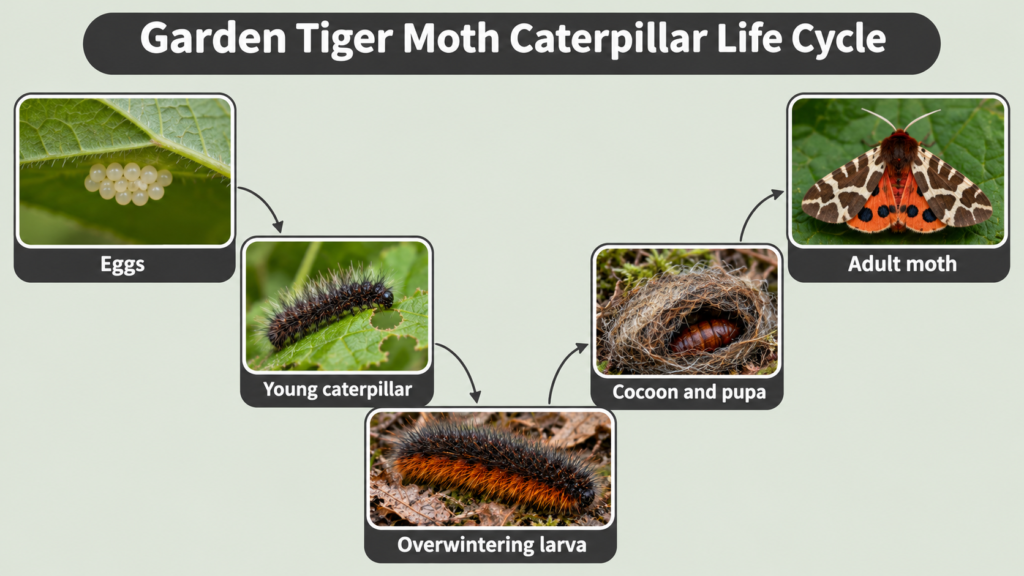
The garden tiger moth usually has one generation each year. Its life cycle moves through egg, caterpillar, pupa, and adult stages. The caterpillar is the main feeding and growth stage, and it is also the stage that survives winter.
Eggs and young larvae
After mating, a female lays clusters of eggs on or near plants that the larvae can eat. Small caterpillars hatch and begin feeding on leaves. As they grow, they molt several times. Their appearance changes with size, so a newly hatched larva looks much less like the familiar large woolly bear.
Overwintering
Garden tiger moth caterpillars overwinter while still small. They shelter in low vegetation, leaf litter, and other ground-level cover, becoming less active during cold weather. When spring conditions return, they resume feeding and continue growing. This is why tidying every leaf and cutting vegetation close to the soil in autumn can remove useful shelter.
Pupation and adult moth
Once mature, the caterpillar spins a loose cocoon close to the ground. The cocoon may incorporate silk, hairs, and nearby material. Inside it, the larva becomes a pupa and transforms into an adult moth. The adult emerges in summer, mates, and begins the next generation. Adult garden tiger moths do not feed, relying on energy stored during the caterpillar stage.
Should You Remove a Garden Tiger Caterpillar?
Usually, leave an isolated garden tiger caterpillar alone if it is causing little damage. Before acting, check how many are present, which plant they are using, and whether the plant is significantly affected.
If a caterpillar is on a plant you want to protect, you can allow it to move naturally or gently relocate the plant pot if practical. Avoid handling the caterpillar. Do not spray insecticide just because you find one woolly bear; first confirm its identity and assess whether control is actually needed. If there are many larvae and serious plant damage, seek local identification advice before choosing a response.
How to Help Garden Tiger Moth Caterpillars
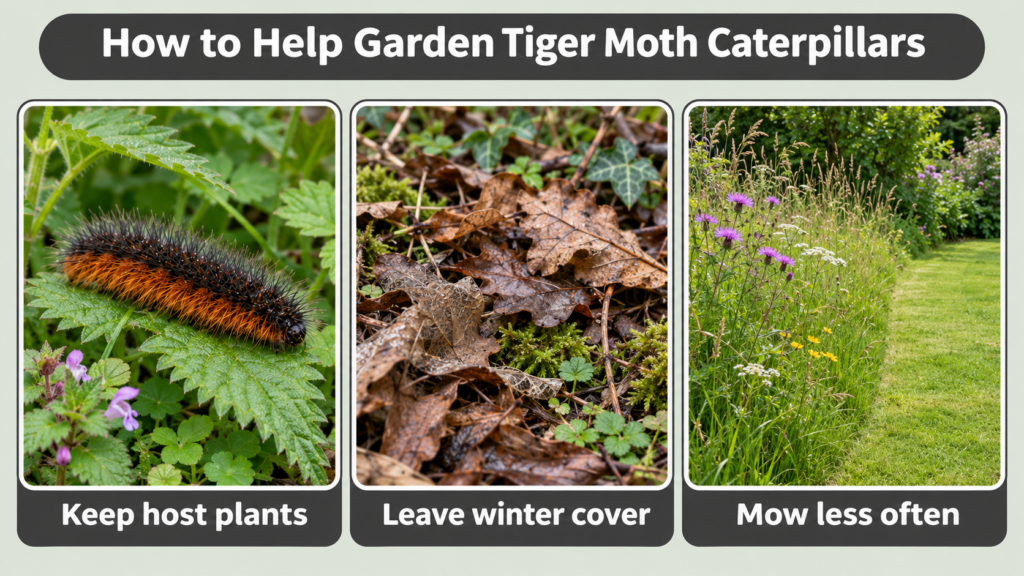
A few simple garden choices can provide both food and shelter. The goal is to keep some suitable vegetation available through the year, especially in quiet places that are not frequently mown or cleared.
- Leave a small area of nettles, bramble, or other useful plants in a low-traffic corner.
- Keep some leaf litter and ground cover undisturbed over winter.
- Mow selected areas less often and avoid cutting the whole garden at once.
- Reduce use of broad-spectrum insecticides.
- Check plants before pruning or clearing dense vegetation.
- Record sightings with a local moth or wildlife recording group.
These measures support other insects too. A diverse garden with flowering plants, rough edges, and sheltered ground usually offers more wildlife value than a space kept uniformly short and bare.
Frequently Asked Questions
Is a garden tiger caterpillar the same as a woolly bear?
Yes. “Woolly bear” is a common nickname for the garden tiger moth caterpillar in parts of its range. The nickname is also used for different hairy caterpillars, including the banded woolly bear in North America.
Can a garden tiger caterpillar sting?
It does not sting with a stinger, but its hairs may irritate skin. Do not handle it, and avoid rubbing if you accidentally brush against it.
What plants do garden tiger caterpillars eat?
They feed on many plants, including nettles, docks, dandelions, plantains, brambles, and some shrubs. The exact food plants depend on what grows in the local habitat.
What does the garden tiger caterpillar turn into?
It becomes the garden tiger moth, Arctia caja. After growing through the larval stages, it pupates in a loose cocoon near the ground and emerges as a patterned adult moth.
Why is a woolly bear caterpillar crossing my path?
It may be moving between food plants or searching for shelter or a pupation site. If it is not in immediate danger, leave it to continue on its own rather than picking it up.
