
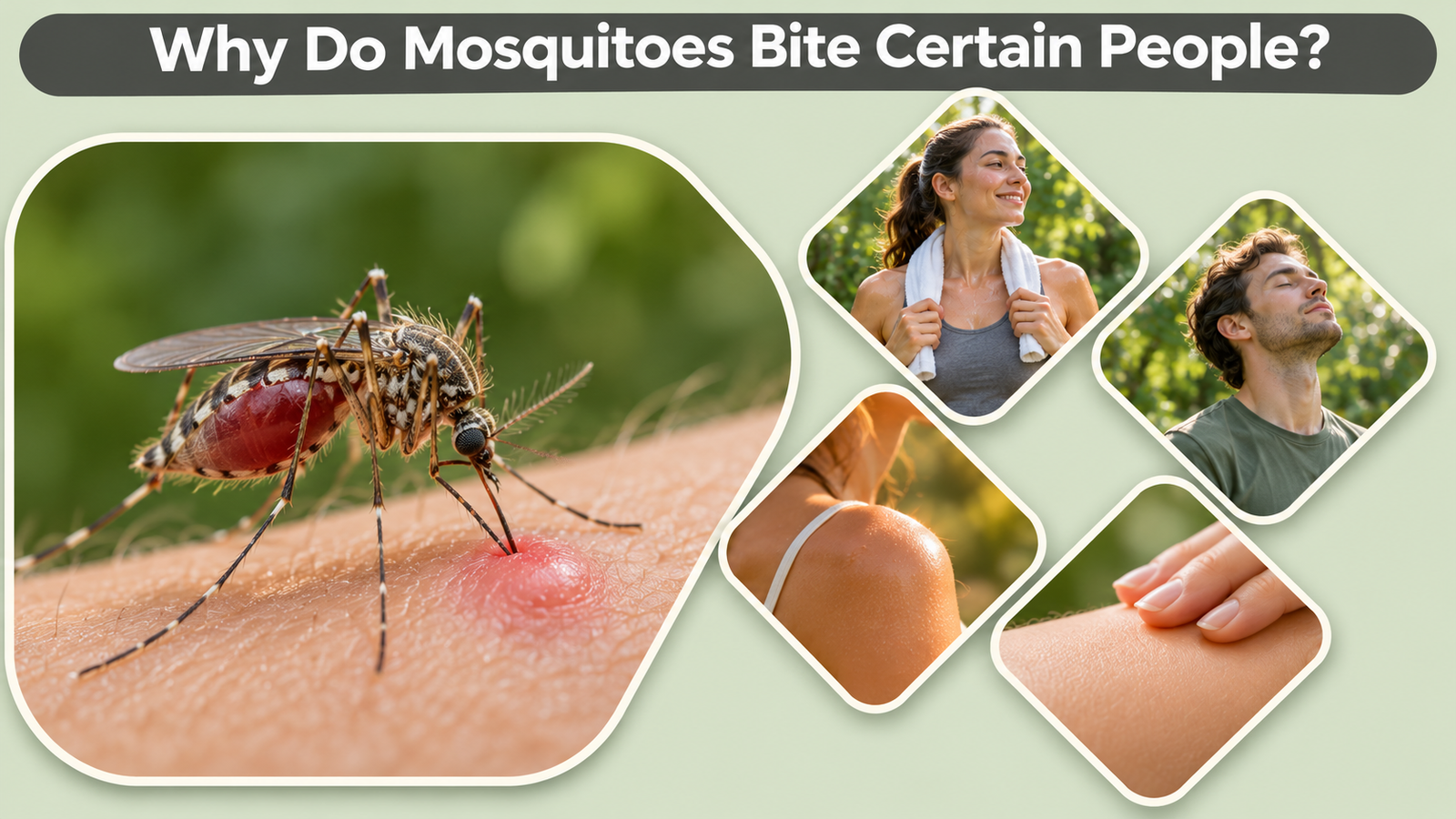
It can seem as if mosquitoes pick one person out of a group and ignore everyone else. They do show preferences, but there is no single reason that explains every bite. Mosquitoes use a mix of cues, including breath, body odor, warmth, and movement, to find a host. A person’s skin chemistry may also make them more attractive. This article explains the main factors, examines common claims such as blood type, and shares practical ways to reduce bites.
How Mosquitoes Find People
Mosquitoes locate people by combining signals from the air and their surroundings. A mosquito may first detect carbon dioxide from breathing, then use odor, warmth, and visual cues as it gets closer. Different mosquito species may respond to these signals differently, so one person’s experience can vary by place and situation.
Carbon dioxide from your breath
People breathe out carbon dioxide, and mosquitoes can detect it. The gas helps them locate a potential host from a distance. A person who is breathing heavily after exercise may release more carbon dioxide for a time, which could make them easier for mosquitoes to detect nearby. This is one cue among several, not a guarantee that mosquitoes will choose that person.
Body odor and skin chemistry
Mosquitoes also respond to odors from the skin. Skin compounds and sweat-related odors can differ among people. In a study of human attraction to Aedes aegypti mosquitoes, people who were more attractive to mosquitoes had higher levels of certain skin-derived compounds called carboxylic acids. The study found that this difference remained consistent over several years, but it does not mean one compound explains every mosquito bite.
Skin bacteria help shape individual body odor by interacting with substances on the skin. Those odors may affect how attractive a person is to some mosquitoes. But researchers are still studying how skin chemistry, mosquito species, and other factors interact. There is no simple “mosquito magnet” smell that applies to everyone.
Body heat, movement, and sight
As mosquitoes get closer, warmth and visual cues can help guide them. Movement may also make a person easier to notice. These cues work alongside odor and carbon dioxide. Wearing dark clothing could make someone more visually noticeable to some mosquitoes in certain settings, but clothing color is only one possible influence and does not explain why a person is repeatedly bitten.
What Can Make Someone Seem More Attractive?
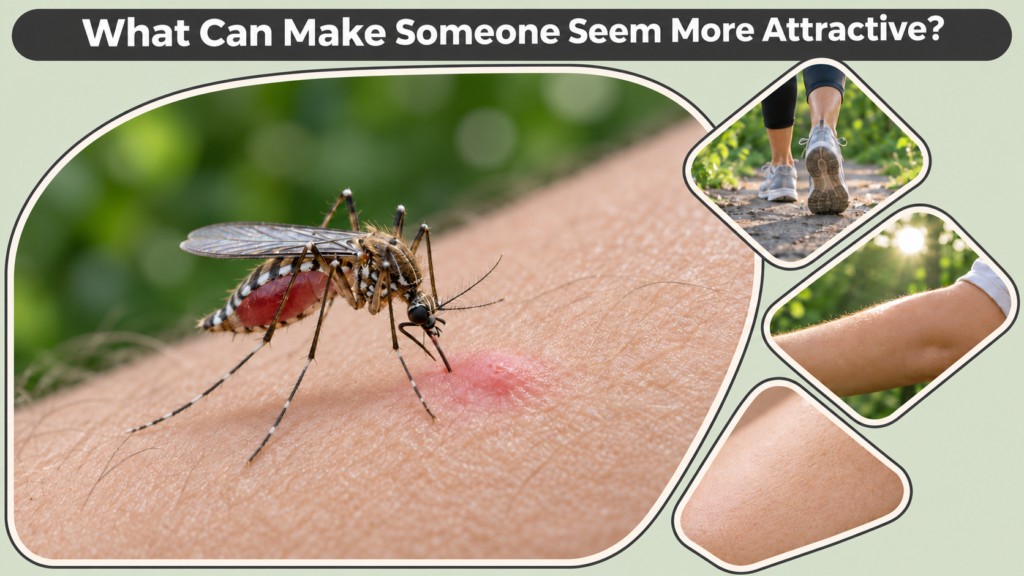
Some physical and situational factors may change how much a person attracts mosquitoes at a particular time. These influences are not the same for everyone, and they do not mean a person is doing anything wrong. Mosquito species, weather, surroundings, and the number of mosquitoes present all affect bite risk.
Exercise and body size
Exercise can temporarily increase breathing rate and body warmth. Both may make a person easier for mosquitoes to detect nearby. Body size can also influence how much carbon dioxide someone exhales, though it is only one factor. This does not mean mosquitoes will always prefer the larger or more active person; odor and other signals also matter.
Pregnancy
Some studies suggest that pregnant people may attract more mosquitoes. Possible reasons include increased carbon dioxide output and higher body temperature. These findings do not mean every mosquito species will prefer every pregnant person, and pregnancy is not the only factor that affects mosquito attraction.
Skin odor and personal differences
People naturally differ in skin odor and the chemical compounds released from their skin. These differences may help explain why two people sitting together can receive different numbers of bites. Researchers have found persistent differences in attraction in some controlled studies, but the exact mix of factors remains under investigation.
| Possible factor | How it may affect mosquito attraction | What to keep in mind |
|---|---|---|
| Carbon dioxide | Helps mosquitoes detect a nearby host | Breathing rate and surrounding airflow matter |
| Skin odor | Some skin compounds may attract mosquitoes | Odor chemistry differs between people and species |
| Body heat | May help mosquitoes locate a host at close range | Heat alone does not determine who gets bitten |
| Exercise | Can temporarily increase breathing and warmth | It may raise exposure in some situations |
| Pregnancy | May change temperature and carbon dioxide output | Evidence does not mean every mosquito responds the same way |
Do Mosquitoes Prefer Certain Blood Types?
The claim that mosquitoes always prefer one blood type is popular, but it is not a dependable way to predict who will be bitten. Studies have explored blood type and mosquito attraction, yet findings are not clear enough to say that one type consistently makes a person a target across mosquito species and settings.
Mosquitoes do not identify people by tasting their blood from a distance. They first use cues such as carbon dioxide and odor to find a potential host. Blood type should not be treated as the main explanation for why a person gets more bites than someone nearby.
Are Some People Actually Bitten More, or Do They React More?
A person may notice more bites because they develop more visible or itchy marks. Mosquito bites cause a reaction to mosquito saliva, and people’s skin can respond differently. One person may have a small bump that fades quickly, while another gets a larger itchy area from a similar exposure. Counting visible marks alone may not show exactly how many times each person was bitten.
If two people spend the same time in the same place, one could attract more mosquitoes, react more strongly, or both. Scratching can also make marks more noticeable. So when someone says, “Mosquitoes always bite me,” their experience may reflect a mix of mosquito preference, exposure, and skin reaction.
How to Reduce Mosquito Bites
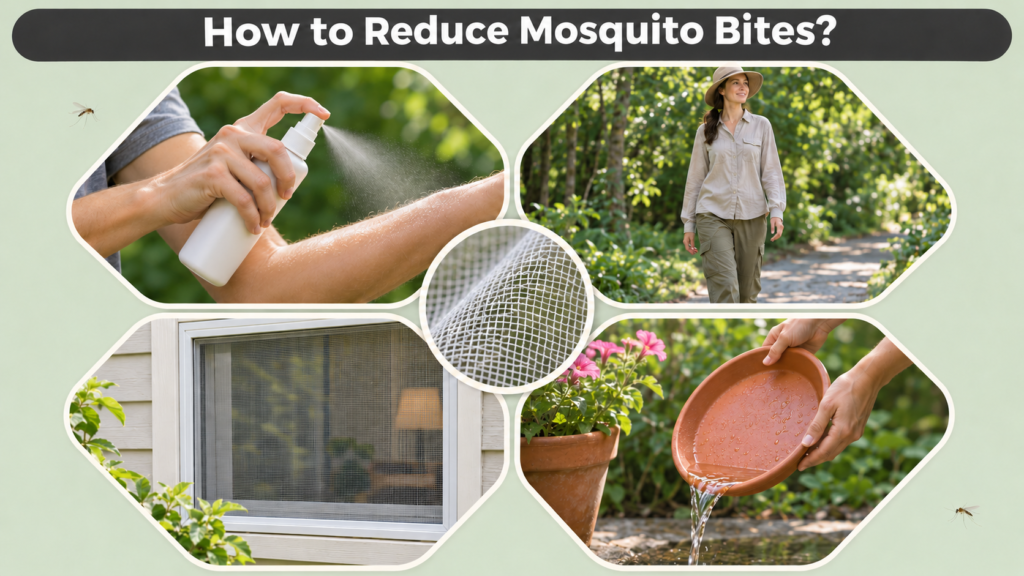
You cannot change your natural skin chemistry, but you can reduce the chances of mosquitoes reaching your skin. Use a combination of protection methods, especially when mosquitoes are active or when local health advice recommends extra precautions.
- Use an appropriate insect repellent. Choose a product with an active ingredient recommended by local health authorities, and follow its label directions.
- Cover exposed skin. Wear loose-fitting, long sleeves and trousers when practical.
- Use screens and bed nets. Repair window screens and use a mosquito net when sleeping in an exposed area.
- Reduce standing water. Empty or cover containers where water collects around the home.
- Be mindful outdoors. Mosquito activity varies by species and location, so follow local advice about peak activity and bite prevention.
Repellents work best when used exactly as directed. Do not apply them to eyes, mouth, irritated skin, or a child’s hands. If you are unsure which product is appropriate for a child, pregnancy, or a health condition, ask a healthcare professional or pharmacist.
Why Preventing Bites Matters
Most mosquito bites cause temporary itching and swelling. However, some mosquitoes can spread diseases, and the risks vary by region and species. Preventing bites is particularly important in places where mosquito-borne illnesses occur. If you develop fever or feel unwell after mosquito exposure, contact a healthcare professional and mention where and when the exposure happened.
FAQs
Why do mosquitoes bite me more than other people?
Mosquitoes respond to a combination of cues, including carbon dioxide, body odor, warmth, and movement. Your skin chemistry may also play a role. You may also react more visibly to bites than others, so marks alone cannot show exactly how many times each person was bitten.
Do mosquitoes prefer people with a certain blood type?
There is not enough consistent evidence to use blood type as a reliable predictor of mosquito bites. Mosquitoes first locate potential hosts through cues such as breath and odor. Attraction can vary with the mosquito species and environment, so blood type is only one proposed influence.
Does sweat attract mosquitoes?
Sweat itself is not a complete explanation, but substances and odors associated with skin and sweat can influence mosquito behavior. Skin chemistry differs from person to person. Researchers continue to study how these odors interact with carbon dioxide and other cues mosquitoes use to find hosts.
Are mosquitoes more attracted to pregnant people?
Some studies suggest mosquitoes may be more attracted to pregnant people, possibly because pregnancy can raise body temperature and carbon dioxide output. This does not apply equally to every person or mosquito species. Using repellent and covering exposed skin can help reduce bites.
Can I stop mosquitoes from preferring me?
You cannot reliably change the natural odor and skin chemistry that may influence attraction. You can lower exposure by using an appropriate repellent, wearing covering clothing, using screens or bed nets, and reducing standing water near your home. Follow local health guidance where mosquito-borne diseases occur.
