
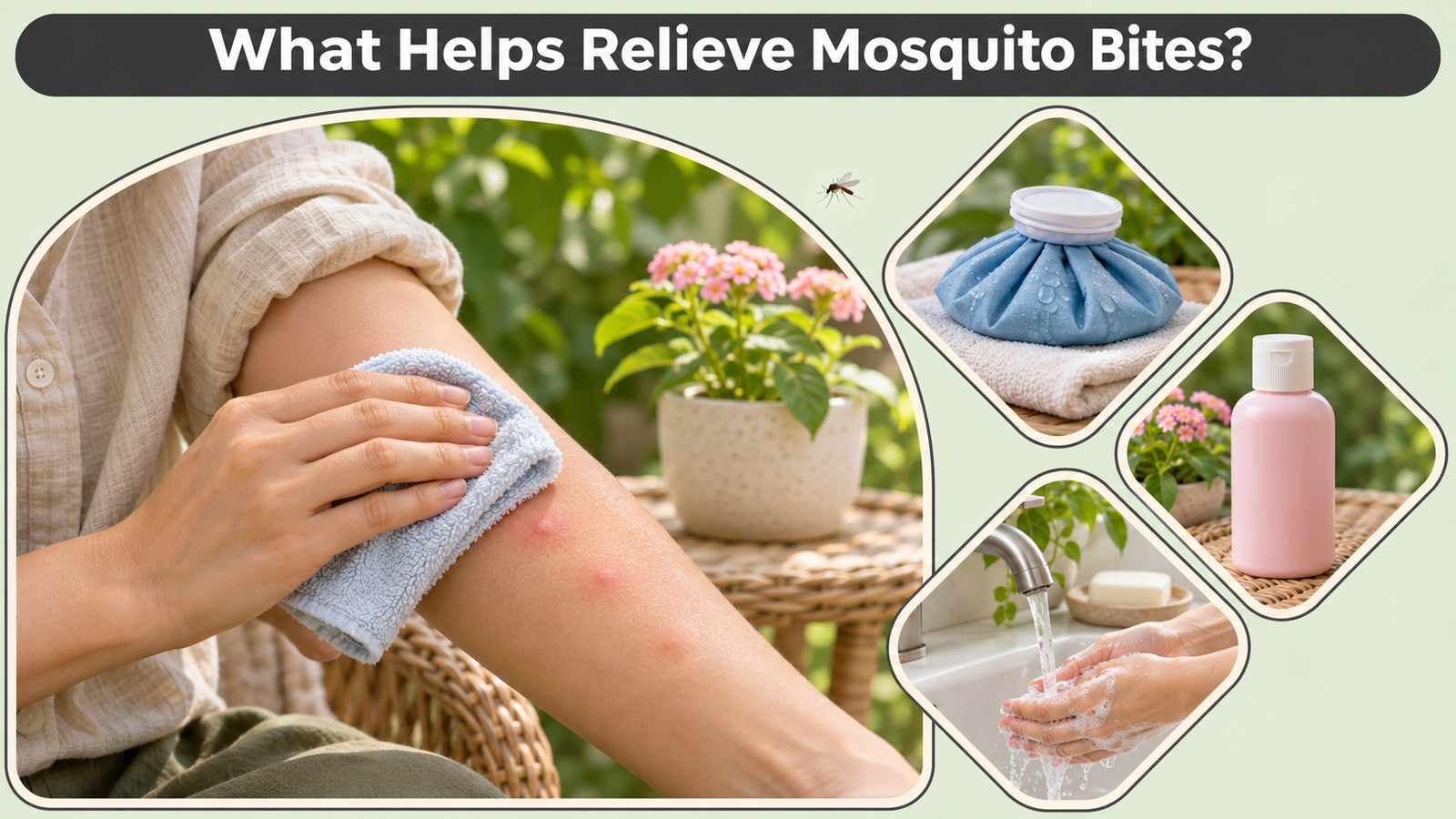
A mosquito bite can leave a small, itchy bump that becomes hard to ignore, especially at night. The itch happens because your body reacts to saliva introduced during the bite. Cooling the skin, washing the area, and avoiding scratching can help ease discomfort while the reaction settles. This guide explains practical ways to relieve mosquito bites, how to use common treatments safely, which popular remedies may irritate skin, and when swelling or other symptoms call for medical advice.
What to Do First for a Mosquito Bite
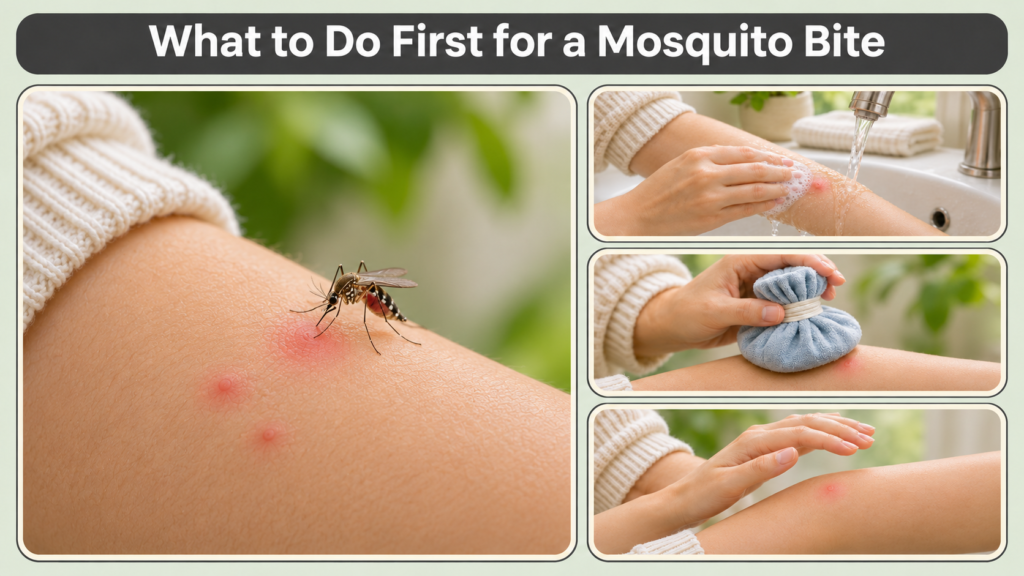
Start with simple skin care. Most mosquito bites can be managed at home, and the itching usually fades within a few days. The steps below may help reduce irritation and keep the bite from becoming worse through scratching.
- Wash the area: Use soap and water to clean the bite and surrounding skin.
- Apply something cool: Place a cold, damp cloth or a wrapped ice pack on the area for about 10 minutes. Remove it and repeat as needed.
- Avoid scratching: Scratching can break the skin and increase the chance of infection.
- Keep the area clean: If you scratch the bite accidentally, gently wash it again.
Do not put ice directly on your skin. Wrap it in a clean cloth to protect the area from excessive cold. The CDC recommends washing mosquito bites and using an ice pack for about 10 minutes to help reduce swelling and itching.
Home Treatments That May Ease Itching
A few simple treatments can make a mosquito bite feel less irritating. Pick one approach at a time, follow product directions, and stop using anything that causes burning, a rash, or increased discomfort.
Cold compress or wrapped ice pack
Cooling the bite can temporarily numb the area and reduce the urge to scratch. Use a clean, cool cloth or wrap an ice pack in fabric before placing it on the skin. Apply it for around 10 minutes, then give the skin a break before repeating. Do not press ice hard against the bite or leave it on for a long time.
Baking soda paste
The CDC suggests mixing baking soda with a little water to make a paste, applying it briefly, then washing it off after about 10 minutes. Some people find this soothing, but it may not work for everyone. Avoid using it on broken skin, and rinse it off if it stings or irritates your skin.
Gentle pressure
Some people find that pressing the bite gently for several seconds distracts from the itch. Use a clean fingertip and avoid digging your nails into the skin. This will not remove the cause of the reaction, but it may offer short-lived relief without scratching.
Creams and Medicines for Mosquito Bite Relief
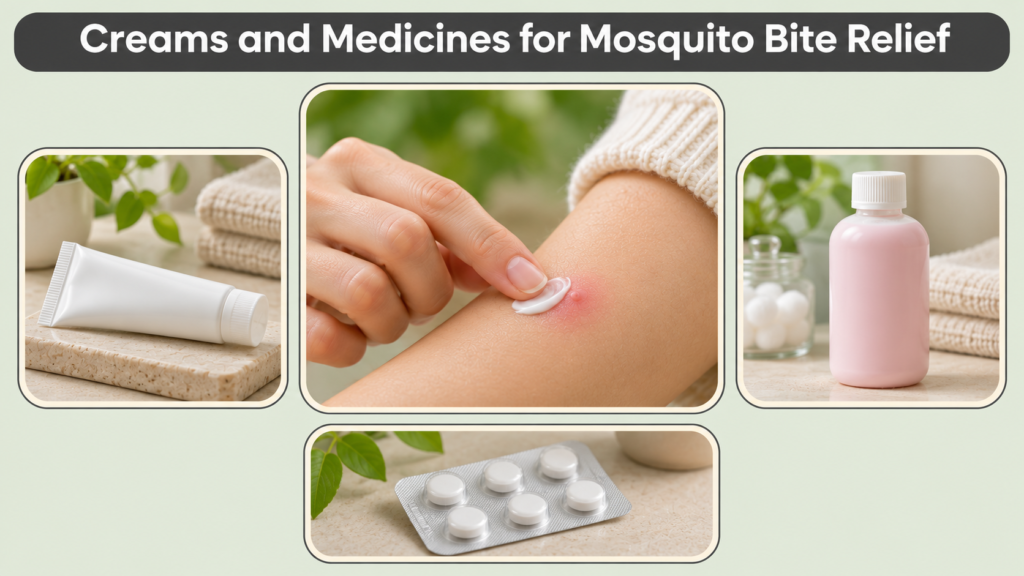
If cooling and basic skin care are not enough, an over-the-counter product may help. The right choice depends on the person’s age, health, other medicines, and where the bite is located. Read the label or ask a pharmacist if you are unsure which option is suitable.
| Option | How it may help | Use with care |
|---|---|---|
| Hydrocortisone cream | Can ease itch and inflammation | Follow the package directions; ask a pharmacist about use on children or sensitive areas |
| Antihistamine cream | May reduce itching for some people | Use only as directed; stop if the skin reacts |
| Oral antihistamine | May help with more bothersome itching | Check the label for age guidance, drowsiness, and medicine interactions |
| Calamine lotion | Can soothe irritated skin for some people | Apply as directed and avoid eyes or mouth |
Hydrocortisone cream
A mild hydrocortisone cream may reduce itching and swelling. Use it only as directed on the product label, and ask a pharmacist or doctor before applying it to young children, the face, or a large area of skin. Do not keep using it longer than the label allows; NHS guidance says not to use skin hydrocortisone for more than seven days unless a pharmacist or doctor advises you to.
Antihistamines
An antihistamine may help if the itching is difficult to manage. Some oral antihistamines can cause drowsiness, and medicines are not suitable for everyone. Check the label and ask a pharmacist or healthcare professional before giving one to a child, combining it with other medicines, or using it if you have a health condition.
Calamine lotion
Calamine lotion may soothe itchy, irritated skin for some people. Apply it according to the package directions and keep it away from the eyes, mouth, and broken skin. If the bite becomes more irritated after using it, wash the area and stop applying the product.
Popular Remedies to Avoid
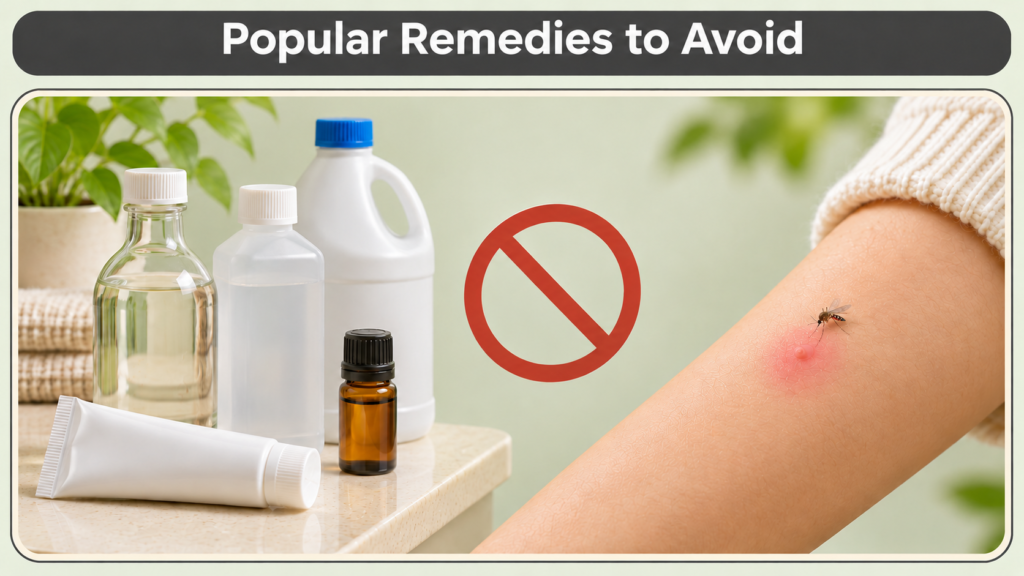
Some familiar household products may irritate skin rather than soothe it. Avoid putting toothpaste, undiluted vinegar, rubbing alcohol, bleach, or strong essential oils on a mosquito bite. These products can cause burning or dryness, particularly on sensitive or scratched skin. Do not use a remedy just because it is described online as “natural.”
Avoid scratching or cutting the bite, and do not try to drain a bump or blister. Scratching can break the skin and allow bacteria to enter. If a product causes a burning sensation, rash, or worsening redness, rinse it off gently and stop using it.
Why Mosquito Bites Itch and Swell
When a mosquito feeds, it uses a mouthpart to pierce the skin and introduces saliva. The body reacts to components in that saliva, which can produce a raised, itchy bump. Some people develop only a small mark; others have more noticeable redness, soreness, or swelling. A stronger reaction does not automatically mean the bite is infected.
The reaction can vary from one bite to another and from person to person. A small bump may appear quickly, while some bites become more noticeable later. Scratching can make irritation worse and may damage the skin, so focus on cooling the area and keeping it clean.
When to Seek Medical Advice
Most mosquito bites improve without medical treatment. Contact a healthcare professional if the bite keeps getting worse, the skin becomes increasingly painful or warm, redness spreads, pus appears, or you develop a red streak from the area. These may be signs of infection and should be assessed.
Seek urgent medical help for difficulty breathing, swelling of the lips, face, tongue, or throat, faintness, or a severe widespread reaction. These can signal a serious allergic reaction. Do not wait to see whether these symptoms pass on their own.
Mosquitoes can also spread infections in some regions. A bite itself does not mean you have an illness, but fever or other concerning symptoms after mosquito exposure deserve medical advice. This is especially important if you live in or recently traveled to an area where mosquito-borne diseases occur.
How to Prevent Mosquito Bites
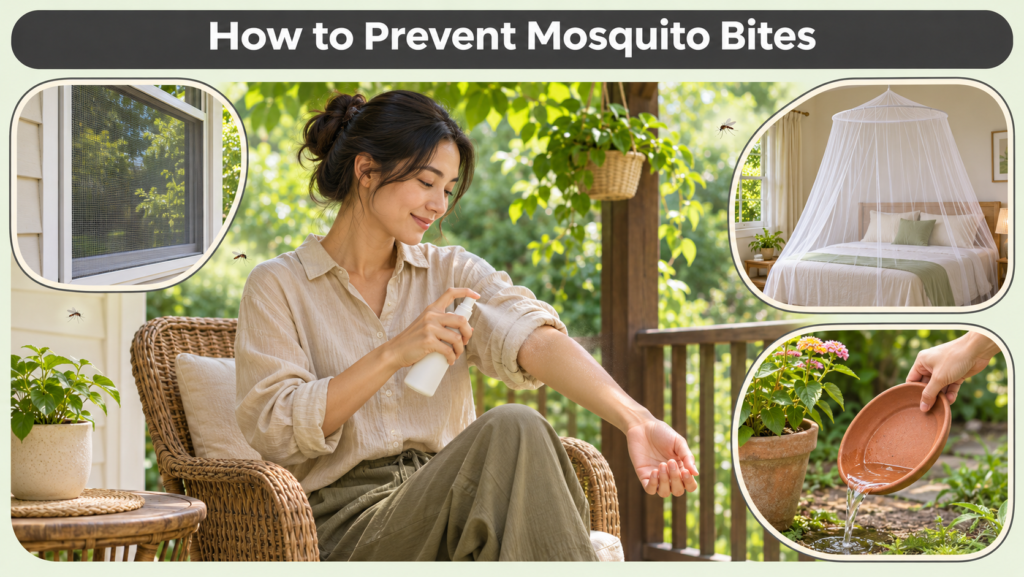
Preventing more bites can help you avoid repeated itching. Use a repellent appropriate for your age and situation, following its label. Wearing loose-fitting long sleeves and trousers can cover exposed skin. Window screens, bed nets, and reducing standing water around the home may also limit mosquito contact.
In Bangladesh and other places where mosquitoes can spread diseases, take local health guidance seriously. Use a bed net where needed, especially if the sleeping area is exposed to mosquitoes. If you use both sunscreen and insect repellent, follow each product’s directions for application.
FAQs
What is the fastest way to stop a mosquito bite from itching?
Wash the bite, then apply a wrapped ice pack or cool cloth for about 10 minutes. This may calm the itch and reduce swelling for a while. Avoid scratching; if discomfort continues, ask a pharmacist whether an anti-itch cream or antihistamine is suitable for you.
Is baking soda good for mosquito bites?
A baking soda and water paste may soothe itching for some people, and the CDC lists it as a home-care option. It does not work for everyone. Apply briefly, rinse it off, and stop if your skin stings or becomes irritated.
Should I put toothpaste on a mosquito bite?
Toothpaste is not a recommended bite treatment. Its ingredients can irritate or dry the skin, especially if the bite has been scratched. Use a cool compress or a product labeled for itch relief instead, and follow the directions on any medicine you apply.
How long does mosquito bite itching last?
Itching often improves over a few days, though the duration varies with the person and the bite reaction. Try not to scratch, since broken skin can become infected. Seek medical advice if the bite worsens, becomes increasingly painful, or shows signs of infection.
When should I worry about a mosquito bite?
Get medical advice if the bite becomes hot, increasingly painful, or more swollen, if redness spreads, or if pus appears. Seek urgent help for trouble breathing or swelling of the face or throat. Fever or feeling unwell after mosquito exposure also needs medical attention.
