
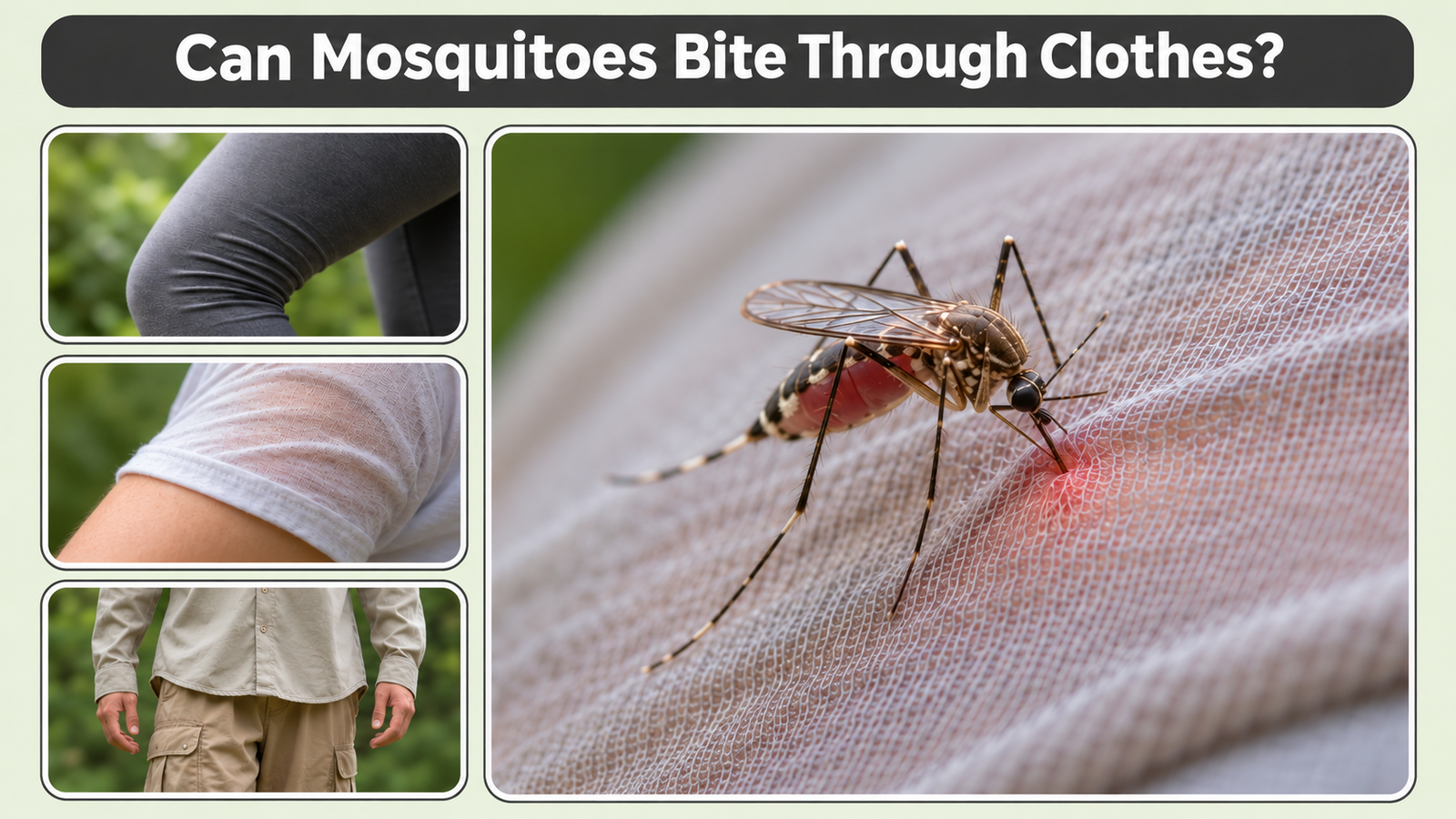
Yes, mosquitoes can bite through some clothes, especially when the fabric is thin, loosely woven, or pressed tightly against the skin. Clothing still helps cover your body, but it does not guarantee protection. The fabric’s weave, fit, and coverage all matter. Loose-fitting garments create space between the material and your skin, while a repellent can protect exposed areas. Here’s how to choose clothing that lowers your chance of being bitten and what to do when you spend time where mosquitoes are active.
Can Mosquitoes Bite Through Clothing?
Mosquitoes can bite through thin clothing, and tight-fitting fabric may make it easier for them to reach skin beneath it. Public health guidance recommends wearing loose-fitting long sleeves and pants, since clothing that covers skin can reduce exposure but may not block every bite.
Mosquitoes feed by inserting their slender mouthparts through the fabric and into skin when the material allows access. In practice, a stretchy shirt or leggings that cling to your body may offer less protection than loose clothing. The type and construction of fabric also affect how well it blocks bites.
Why Fit Matters
When clothing presses against your skin, a mosquito may be able to bite through the material. Loose sleeves and pant legs create a gap that makes it harder for the insect to reach your skin. This is why a loose long-sleeved shirt may protect better than a tight top with the same amount of coverage.
Clothing can also leave skin exposed at the wrists, ankles, neckline, or waist. Mosquitoes may bite through these openings or land on areas where fabric touches your body. Covering more skin helps, but your outfit should also leave as little exposed skin as is practical.
Which Clothes Offer Better Protection?
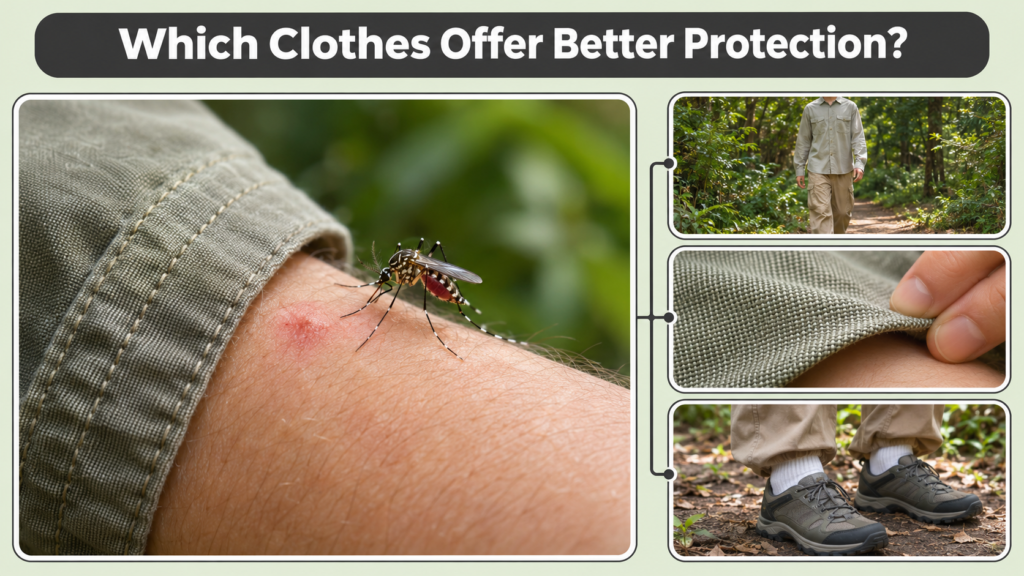
The best everyday choice is clothing that covers your arms and legs without clinging tightly. No ordinary outfit can promise complete protection, but covering skin with loose garments reduces the chance that mosquitoes can reach it.
| Clothing | Protection considerations |
|---|---|
| Loose long-sleeved shirt and pants | Covers more skin and leaves space between fabric and body |
| Tight leggings or thin fitted clothing | May sit close enough for mosquitoes to bite through |
| Open-weave or sheer fabric | May leave small openings that mosquitoes can reach through |
| Socks and closed shoes | Help cover ankles and feet |
| Permethrin-treated clothing | Adds insecticidal protection when used according to the label |
Choose Loose, Covering Layers
Wear long sleeves, long pants, socks, and closed shoes when mosquitoes are numerous. If you’re outdoors, tuck your shirt into your pants and your pants into your socks or shoes to close gaps. Choose a fit that allows air to circulate and keeps the material from resting tightly against your skin.
Light-colored clothing is sometimes recommended as part of mosquito protection, but coverage and fit remain important. Avoid relying on color alone to prevent bites. If the weather is hot, choose breathable garments that are still loose enough to keep fabric away from your skin.
Consider Fabric and Weave
Thicker, tightly woven fabric generally provides a stronger physical barrier than very thin or open-knit material. However, fabric thickness alone does not guarantee protection; the weave and how closely the garment fits can also matter. A thin shirt stretched over the skin may leave mosquitoes with an opportunity to bite.
Inspect clothes for holes, loose seams, and worn areas, particularly if you will be outside for a long time. If mosquitoes are getting through a layer, add a loose outer layer or use a repellent labeled for clothing. Follow the product label carefully.
Why Do Mosquitoes Bite Through Pants or Shirts?
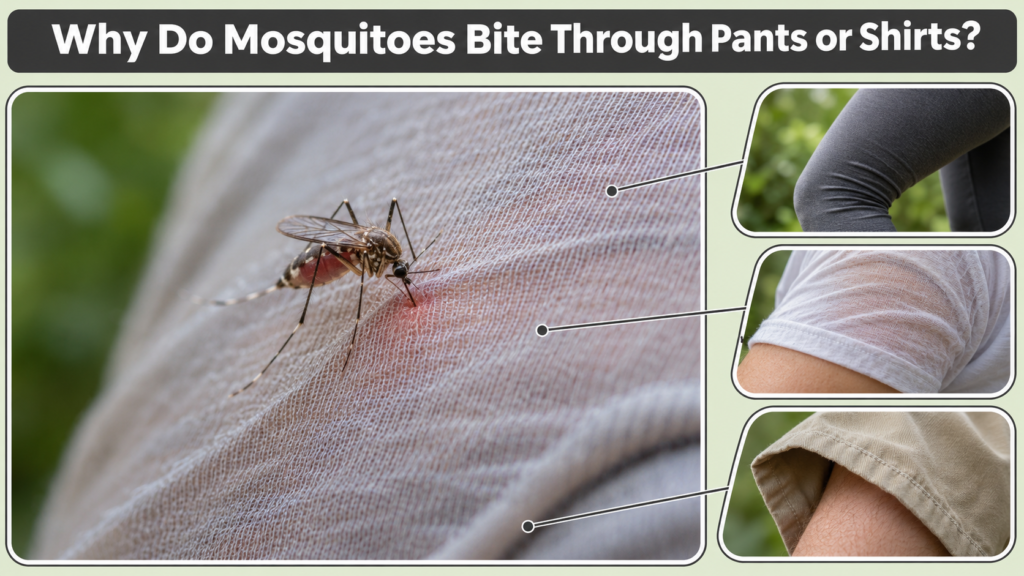
A bite through clothing may happen because the garment is tight, thin, or has an open weave. Leggings, thin T-shirts, and lightweight clothing stretched over skin are common examples of garments that may not form an effective barrier. Mosquitoes may also reach skin through openings at cuffs, waistbands, or hems.
Sometimes, a bite is not actually through the fabric. The mosquito may have reached an uncovered patch of skin near a sleeve, pant leg, or neckline. When you notice a bite after wearing long clothes, check whether the garment was close-fitting or whether skin was exposed at an opening.
To reduce the chance of bites:
- Wear loose sleeves and pant legs.
- Cover ankles with socks and closed shoes.
- Check clothing for holes and loose openings.
- Add a loose outer layer if mosquitoes can reach through a thin garment.
- Use a suitable repellent on exposed skin according to its label.
How to Protect Yourself Beyond Clothing
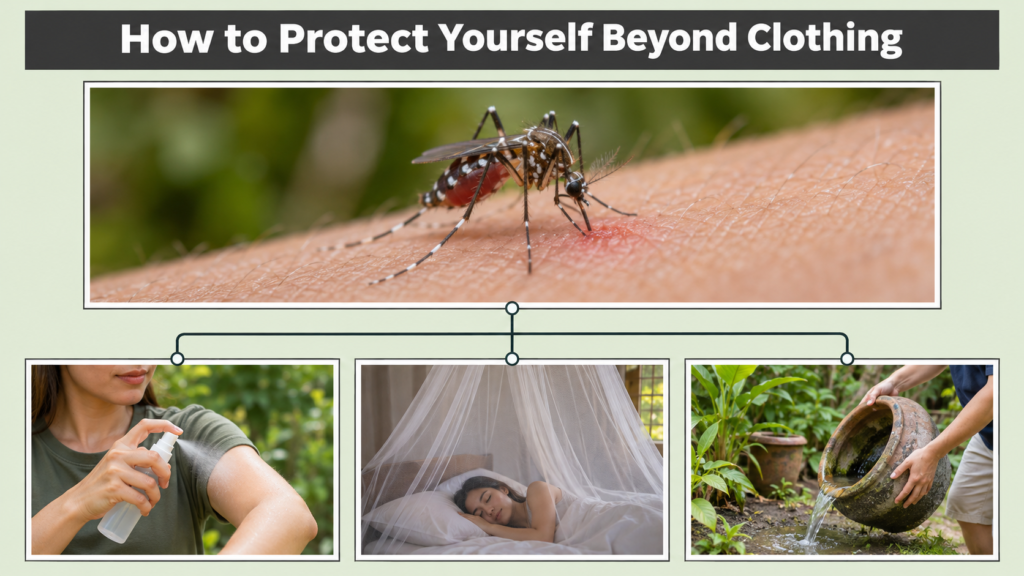
Clothes are one part of bite prevention. Repellent on exposed skin, treated clothing, window screens, and mosquito nets can provide additional protection. Choose methods that fit your activity and local public health guidance, and follow product instructions.
Use Repellent on Exposed Skin
Apply a locally registered mosquito repellent to uncovered skin according to its label. Common active ingredients in many public health recommendations include DEET and picaridin; some products contain other approved ingredients. Reapply only as directed, and do not put repellent under clothing. If you use sunscreen, apply it before the repellent.
For children, follow the product label and local medical guidance. Adults should apply repellent to their own hands first before applying it to a child, and avoid putting it on a child’s hands, eyes, or mouth. Keep products away from children when not in use.
Use Permethrin-Treated Clothing Correctly
Some clothing and outdoor gear can be treated with permethrin, an insecticide that kills or repels mosquitoes. You can buy pre-treated items or treat suitable clothing and gear yourself with a product labeled for that use. Do not apply permethrin products directly to your skin. Read the label to understand how to treat, wash, and re-treat items.
Permethrin-treated clothing protects the skin covered by that clothing. Apply a skin repellent to exposed areas when needed, following its directions.
Reduce Mosquitoes Around You
Screens on windows and doors help keep mosquitoes outside, while mosquito nets can protect people during sleep where screens are unavailable. Empty or change standing water in containers around the home regularly, since mosquitoes can use water-holding items as breeding sites.
What to Wear at Night or Outdoors
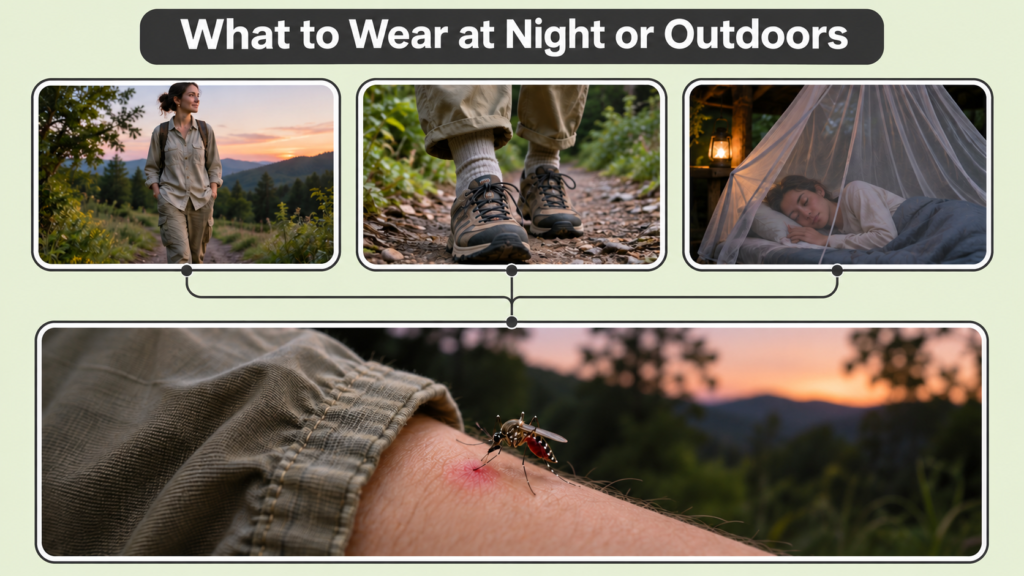
Mosquito activity varies by species and location, so bites may happen at different times of day. When sleeping outdoors or in a room without screens, use a mosquito net and cover as much skin as comfortably possible. If you are camping, choose long sleeves, pants, socks, and clothing or gear treated for mosquitoes.
For outdoor work or evening activities, keep repellent available and check that cuffs and hems stay in place. In hot weather, breathable loose layers can be more comfortable than tight clothing while still covering skin. If one fabric seems to let mosquitoes through, try a denser weave or add another loose layer.
FAQs
Can mosquitoes bite through jeans?
They may bite through tight-fitting or thin jeans, particularly where the fabric is stretched against skin. Loose-fitting pants create more space and may reduce the chance of a bite. Socks and closed shoes also help protect ankles, where pant legs can leave gaps.
Can mosquitoes bite through leggings?
Yes, they can sometimes bite through leggings, especially if the material is thin and closely pressed against the skin. Loose-fitting pants provide a better barrier. Consider adding a loose outer layer and applying repellent to exposed skin according to its label.
Do long sleeves stop mosquito bites?
Long sleeves reduce the amount of exposed skin, but thin or tight sleeves may still allow bites. Choose loose-fitting garments made from a denser fabric, and cover gaps at the wrists and neckline. Use repellent on exposed skin when needed.
What color clothes should I wear to avoid mosquitoes?
Light-colored clothing is commonly recommended as one part of bite prevention, but color alone does not stop bites. Wear loose, covering clothes and use repellent as directed. Screens, nets, and removing standing water can add protection around the home.
Should I spray mosquito repellent on my clothes?
Only use a product on clothing if its label says it is suitable for that use. Permethrin products are made for treating clothing or gear, not skin. Skin repellents should be applied only as their labels direct, and not under clothing.
