

An infected mosquito bite can become more painful, warm, and swollen over time. The skin change may spread beyond the original bump, and the bite may drain pus. An ordinary mosquito bite usually causes more itching than pain and gradually settles. A large reaction to mosquito saliva can also cause warmth and swelling, so the size of the bump alone tells you little. Pay attention to changes over time. If the area keeps spreading, starts draining pus, or comes with fever or red streaks, seek medical care promptly.
What Does an Infected Mosquito Bite Look Like?
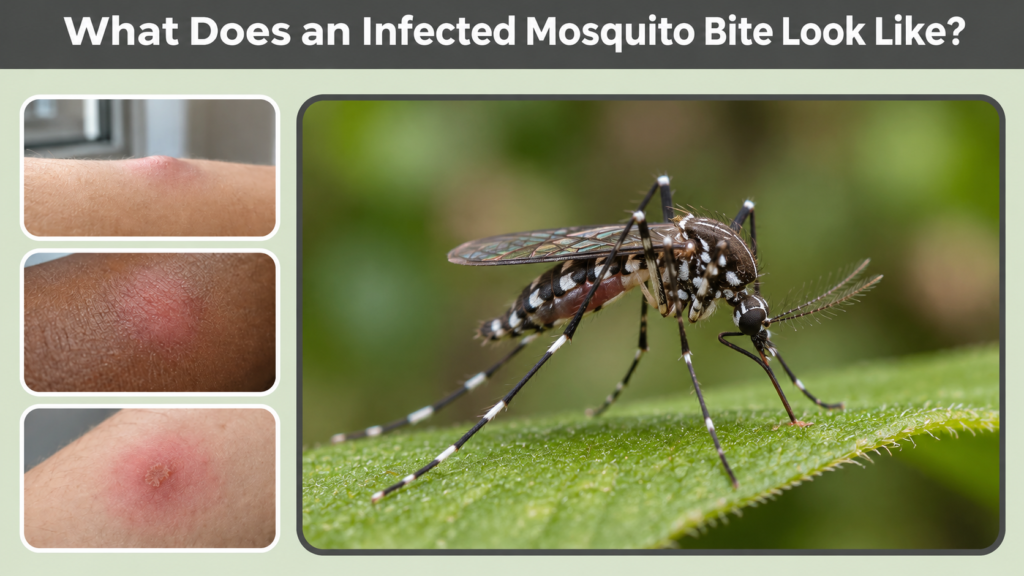
A possible infection often shows up as a change in a bite you already noticed. An itchy bump may become increasingly sore, the surrounding skin may feel warmer, or the swollen area may grow after you expected it to settle. Several changes occurring together are more concerning than the color or size of the bump alone.
Signs to Check Around the Bite
- Spreading skin discoloration. The affected area extends beyond the original bump. Redness can be harder to see on brown or black skin, so check for changes in warmth, swelling, and tenderness as well.
- Increasing pain. The area feels sorer than it did earlier or becomes painful to touch.
- Warm, swollen skin. The surrounding skin feels noticeably warmer than nearby skin, and the swelling continues to grow.
- Pus or cloudy drainage. Thick yellowish or white discharge can be a sign of infection.
- Streaking away from the bite. Red streaks extending from the area can indicate a spreading infection and need prompt assessment.
- Fever or chills. Feeling feverish, shivery, or generally unwell alongside worsening skin symptoms raises concern.
Is a Blister or Scab a Sign of Infection?
A mosquito bite can form a small blister as part of the skin’s reaction. Clear blister fluid or a small dry scab from scratching can occur during healing. Look at the skin around it. If the area is stable and gradually feels better, a blister or scab by itself is less concerning.
Cloudy drainage, increasing pain, and spreading warmth or swelling deserve more attention. If a blister breaks, gently wash the area and cover it with a clean dressing. Leave intact blisters alone so the skin over them can continue to protect the area.
How to Tell an Infection From a Normal Mosquito Bite
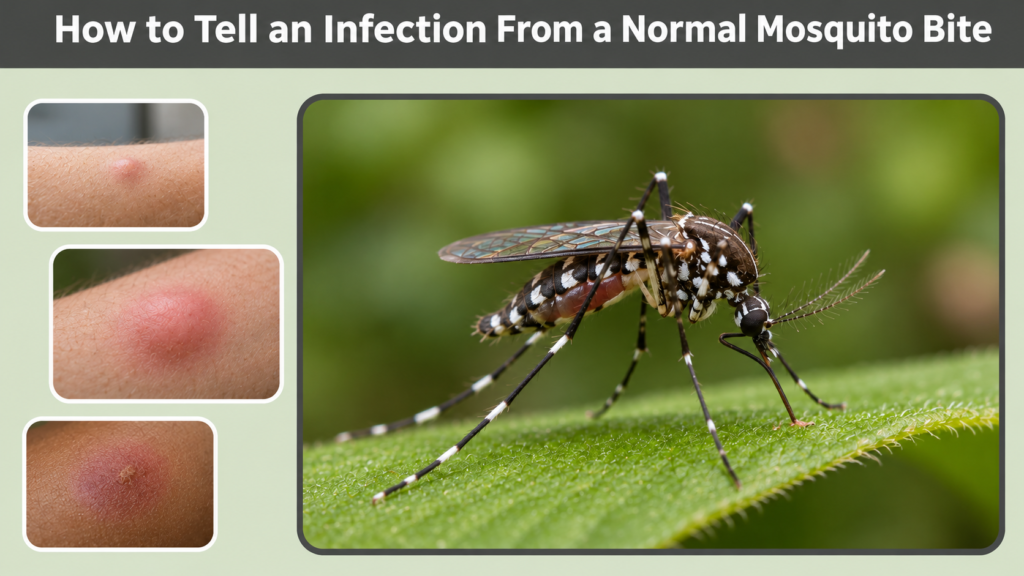
Mosquito saliva triggers an inflammatory reaction that can make the skin itch, swell, and feel warm. A stronger local reaction, sometimes called Skeeter syndrome, can produce a large welt within hours. A bacterial skin infection can develop later, including after scratching breaks the skin. The timing and symptoms can overlap, so use the pattern below to decide when to seek an assessment.
| Feature | Typical bite reaction | Large local reaction | Possible bacterial infection |
|---|---|---|---|
| Timing | Often starts soon after the bite or becomes noticeable by the next day | Often develops within hours | May appear later or worsen after the initial reaction |
| Main sensation | Itching | Strong itching, swelling, and sometimes soreness | Increasing tenderness or pain |
| Skin changes | Small raised bump, sometimes with a blister | Broad swollen area that can feel warm | Expanding warmth, swelling, or discoloration |
| Drainage | Usually none, though a blister may contain clear fluid | Sometimes blistering | Pus or cloudy drainage may occur |
| Progress | Gradually settles | May take several days to improve | Can keep spreading or become more painful without treatment |
Focus on How the Bite Changes
Imagine a bite that swells within a few hours, itches intensely, and becomes less uncomfortable over the following days. That pattern fits a local reaction. A bump that starts out itchy and then becomes steadily more painful, hot, or swollen follows a different course and deserves closer attention.
Seek medical advice if warmth, swelling, or pain is increasing, even if you cannot see pus. A deeper skin infection can occur without any visible drainage. If the area is already spreading or you feel unwell, seek care promptly.
Can an Infected Mosquito Bite Cause Cellulitis?
Yes. Cellulitis is a bacterial infection in deeper layers of the skin and the tissue underneath. Bacteria can enter through a scratch or another small break near a bite. A mosquito bite is one possible starting point. The infection may spread through the surrounding skin, producing an area that feels hot, tight, swollen, and painful.
When to Get Medical Care
Get same-day medical care if the swelling or discoloration is spreading, the skin is painful and hot, you see pus or streaks, or you develop fever or chills. Worsening swelling near an eye also needs prompt assessment. People with diabetes, poor circulation, or a weakened immune system should seek advice early when infection is suspected.
Seek emergency care if you have trouble breathing, swelling of your lips or throat, confusion, fainting, or severe illness with rapidly worsening skin symptoms. Breathing trouble and throat swelling can indicate a severe allergic reaction. Confusion or fainting alongside an apparent infection can signal a serious complication.
How to Care for a Mosquito Bite at Home

If the bite is mainly itchy and stable or improving, simple care can make you more comfortable and reduce scratching. Gently wash the area with soap and water, then pat it dry. A cold pack wrapped in a clean cloth can ease swelling and itching. If clothing rubs against scratched skin, use a clean dressing and change it when it gets wet or dirty.
Keep the Skin Clean and Avoid Squeezing
Try to leave the bump alone, even if it develops a pale center. Squeezing a bite, puncturing a blister, or picking a scab can damage the skin further. If fluid drains on its own, wash the area gently and cover it. Get medical advice if the drainage looks like pus or if pain, warmth, or swelling is increasing.
For an itchy bite on intact skin, a pharmacist can help you choose an appropriate anti-itch treatment. Follow the label, especially when treating a child or a bite on the face. If you suspect an infection, have the bite assessed before applying a steroid cream to the area.
How Doctors Treat an Infected Mosquito Bite

A clinician will look at the bite and surrounding skin, check whether the area is tender or spreading, and ask when the symptoms began. They may diagnose cellulitis or find a localized pocket of pus called an abscess. The treatment depends on what they find and how unwell you feel.
When Antibiotics or Drainage May Be Needed
Cellulitis usually requires prescription antibiotics. Many people can take them by mouth. More serious infections may require hospital treatment and antibiotics through a vein. If a clinician finds an abscess, they may need to drain it. Home care can protect the skin while you arrange an assessment.
If you’re prescribed antibiotics, take them as directed. Contact your clinician if symptoms worsen at any point or fail to start improving within two to three days of starting treatment. You can ask what recovery should look like for your particular infection and when to come back for a check.
What to Watch for in Children
Children can develop large, itchy reactions and may scratch without noticing. Check how the skin looks and how your child is acting. A child who guards an arm or leg, pulls away when the area is touched, or avoids walking on a sore foot may be experiencing more pain than they can describe.
When to Call a Pediatric Clinician
Seek same-day advice if the area keeps expanding, becomes increasingly painful, starts draining pus, or is accompanied by fever. A worsening bite near the eye also needs prompt attention. If possible, note when you first saw the bite and when the symptoms changed.
Keep fingernails short and use a clean, cool cloth to soothe itchy skin. Cover a scratched area with a clean dressing if your child keeps picking at it. Check with a pharmacist or pediatric clinician before using an over-the-counter product on a young child.
Frequently Asked Questions
Can a Mosquito Bite Be Infected Without Pus?
Yes. Cellulitis can cause spreading warmth, tenderness, and swelling without pus or an obvious open wound. If those symptoms are worsening, seek same-day medical advice.
Is It Normal for a Mosquito Bite to Feel Hot?
A local reaction can make the skin around a bite feel warm. Pay attention to what comes with the warmth. Increasing pain, spreading skin changes, or fever are more concerning than mild warmth around a stable, itchy bump.
Can Scratching a Mosquito Bite Cause an Infection?
Yes. Scratching can break the skin and give bacteria a way in. Washing the area and reducing itching can help you avoid reopening it. If the sore becomes more painful or begins to drain pus, have it checked.
Does a Yellow Crust Mean a Mosquito Bite Is Infected?
Dried blister fluid can leave a crust. A crust that keeps forming after the area oozes, especially alongside increasing pain or spreading skin changes, can indicate a skin infection. Seek medical advice if the area is getting worse.
How Long Does an Infected Mosquito Bite Take to Heal?
Recovery depends on the type and severity of the infection. With appropriate treatment, cellulitis should generally start improving within two to three days, though swelling or discoloration can take longer to fade. Get reassessed if the area keeps spreading, you develop fever, or symptoms fail to improve.
