

The best way to prevent mosquito bites while camping is to use an EPA-registered insect repellent on exposed skin, wear loose-fitting clothes that cover your arms and legs, and sleep in a tent with intact mesh. Where you camp matters, too. A breezy spot away from standing water can be more comfortable than a sheltered site beside a marsh or pond. The trick is to make protection easy to keep up with when you’re cooking, hiking, or getting ready for bed. Here’s how to set up your campsite and avoid common gaps in protection.
Choose a Campsite With Fewer Mosquitoes
If you have a choice of designated campsites, look for an open spot with some airflow. Low, sheltered areas near marshes, stagnant pools, or dense vegetation can feel buggy, especially on calm evenings. Choosing a drier spot farther from the water’s edge may make cooking and relaxing outside more comfortable.
Check the Area Before You Set Up
Spend a few minutes at the site before unloading your gear. Stand where you’ll cook or sit and see how quickly mosquitoes gather around you. If they’re already landing on your legs or hovering around your face, check whether another permitted site is available.
Once camp is set up, empty rainwater that collects in spare buckets, chair seats, and folds in tarps. Mosquitoes can breed in small amounts of standing water. At an established campground, let staff know about persistent standing water around shared facilities.
Use an Effective Mosquito Repellent

For a camping trip in the United States, look for an EPA-registered skin repellent. DEET and picaridin are practical options, and other registered ingredients include IR3535, oil of lemon eucalyptus (OLE), and para-menthane-diol (PMD). Read the product label for age restrictions, application instructions, and expected protection time. Two products with the same active ingredient can have different directions.
| Repellent ingredient | What to check before packing it |
|---|---|
| DEET | Check the stated protection time and keep the product away from plastics or gear the label says it can damage. |
| Picaridin | Choose a spray or lotion you’ll find easy to apply evenly outdoors. |
| IR3535 | Check the protection time on the specific product, especially for long evenings outside. |
| OLE or PMD | Avoid on children under age 3. Choose a registered repellent formulation. |
Apply It Where Mosquitoes Are Likely to Land
Cover exposed skin according to the label, paying attention to your ankles, the backs of your hands, and any skin exposed at your wrists or collar. To apply a spray to your face, put it on your hands first and then spread it carefully, avoiding your eyes and mouth. Skip cuts, irritated skin, and areas under clothing.
When you need sunscreen and insect repellent, apply sunscreen first. Pack the repellent somewhere easy to reach and follow the label for reapplication. If you go swimming or sweat heavily on a hike, check the directions before applying another dose.
Wear Clothing That Covers Exposed Skin

Loose-fitting long sleeves, long pants, socks, and closed shoes reduce the amount of skin mosquitoes can reach. Pack lightweight layers you’ll actually want to wear in warm weather. Thin fabric pulled tightly against your shoulders or knees can leave those areas easier to bite through.
Cover the Gaps Around Your Ankles and Wrists
Mosquitoes can reach the strip of skin between low socks and pant cuffs, especially when you sit down and your pants ride up. Taller socks and full-length pants help cover that gap. When mosquito activity is heavy, tucking your pant cuffs into your socks can give you extra coverage.
For trips where you expect sustained mosquito activity, consider factory-treated clothing or a permethrin product labeled for the clothing or gear you want to treat. Follow the label for application, drying, and washing. Keep permethrin off your skin and use a skin repellent on exposed areas.
Keep Mosquitoes Out of Your Tent
Check the tent’s mesh, seams, and zippers before leaving home. Repair holes with a mesh patch and make sure the door closes all the way. If you’re sleeping in a hammock or under an open shelter, use a mosquito net made for that setup and secure its edges so insects can’t enter underneath.
Zip the Door Every Time You Go In or Out
Arrange your sleeping gear during daylight so you spend less time moving things through the doorway later. Set down bulky gear near the entrance, move it inside in one trip, and close the mesh as soon as you’re through. Make this a habit even when you’re stepping out for a minute.
If mosquitoes get inside, use a headlamp to check the ceiling, mesh panels, and corners before bed. When using a separate sleeping net, tuck in the edges and keep the mesh off your face and arms. Mosquitoes can bite skin resting against the netting.
Plan for Mosquitoes During the Day and After Dark

Mosquitoes can bite during the day or at night, depending on the species and location. A quiet campsite at noon can become much busier during dinner, and a shaded trail can have mosquitoes in the middle of the afternoon. Pack clothing and repellent where you can reach them as soon as you need them.
Protect Yourself Before Camp Chores
Put on long sleeves or apply repellent before pitching a tent, washing dishes, or walking to a water source. These are easy times to get bitten because your hands are occupied and you may be standing still. If you’re in a particularly buggy area, a head net worn over a brimmed hat adds coverage around your face and neck.
A screened shelter can make meals more comfortable for a group. Close the screen after each person enters, and set chairs far enough from the mesh that exposed elbows and ankles don’t press against it. Keep the repellent handy for trips outside the shelter.
Protect Children While Camping
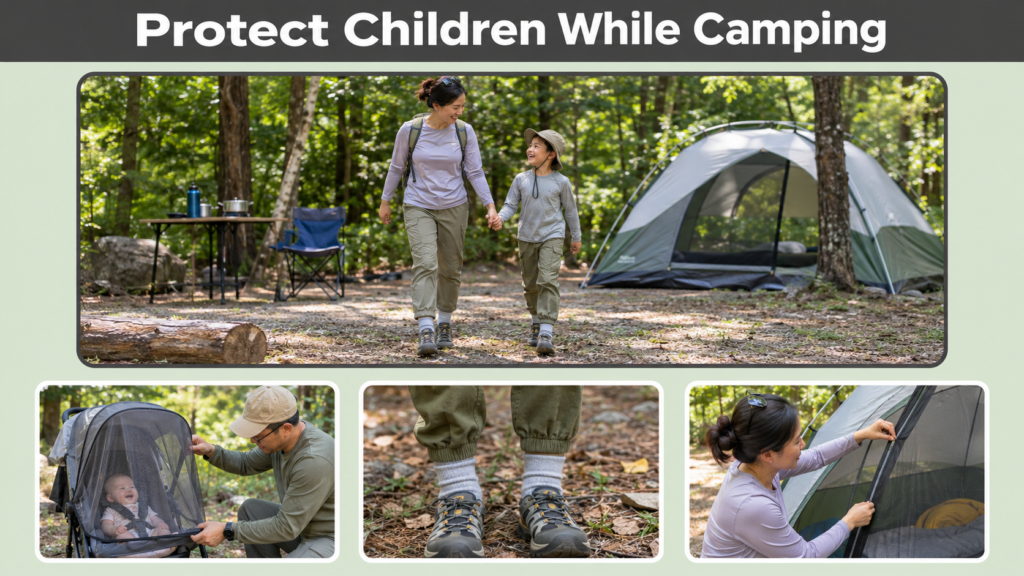
Start with lightweight long sleeves, pants, socks, and intact mesh around sleeping and rest areas. For a baby in a stroller or carrier, use fitted mosquito netting that stays clear of their face. Check that the edges are secured and that the baby has adequate airflow.
Apply Repellent for Your Child
Follow the product’s age directions and apply the repellent yourself. Keep it away from a child’s hands, eyes, mouth, and irritated skin. For the face, put the product on your hands first, then apply it carefully. Avoid products containing OLE or PMD on children younger than 3.
Check clothing after play, swimming, or a change into pajamas. A rolled-up sleeve or a switch to sandals can expose skin that was covered earlier. Keeping socks and a lightweight layer near the tent door makes it easier to cover up for trips to the restroom after dark.
Frequently Asked Questions
Do Campfires Keep Mosquitoes Away?
Campfire smoke may discourage some mosquitoes nearby, but its direction changes with the wind and leaves campers exposed when they step away. Use clothing and repellent around the fire, especially on your ankles and hands when you’re sitting outside for a while.
What Is the Best Mosquito Repellent for Camping?
An EPA-registered DEET or picaridin product is a practical choice for many campers. Look for a product whose stated protection time fits your activity. A short walk around the campground and a full evening of cooking, fishing, and sitting outdoors may call for different application plans.
Can Mosquitoes Bite Through Clothing?
Yes, mosquitoes can sometimes bite through thin fabric, particularly where it stretches tightly across your skin. Loose sleeves and pants offer better coverage. Checks at the cuffs and collar can help, too, since mosquitoes can land on exposed skin around clothing openings.
How Do You Keep Mosquitoes Out of a Tent at Night?
Use a tent with intact mesh and fully close the door between trips. Put on long sleeves and socks before stepping outside at night, and keep your headlamp near the door so you can zip it quickly when you return. Check the ceiling and corners before settling into your sleeping bag.
Do Citronella Candles Prevent Mosquito Bites While Camping?
A citronella candle may have a limited effect close to where it’s burning, and wind can reduce that effect. For protection as you move around the campsite, use a registered skin repellent, cover exposed skin, and spend time inside a screened shelter when mosquitoes are especially active.
