
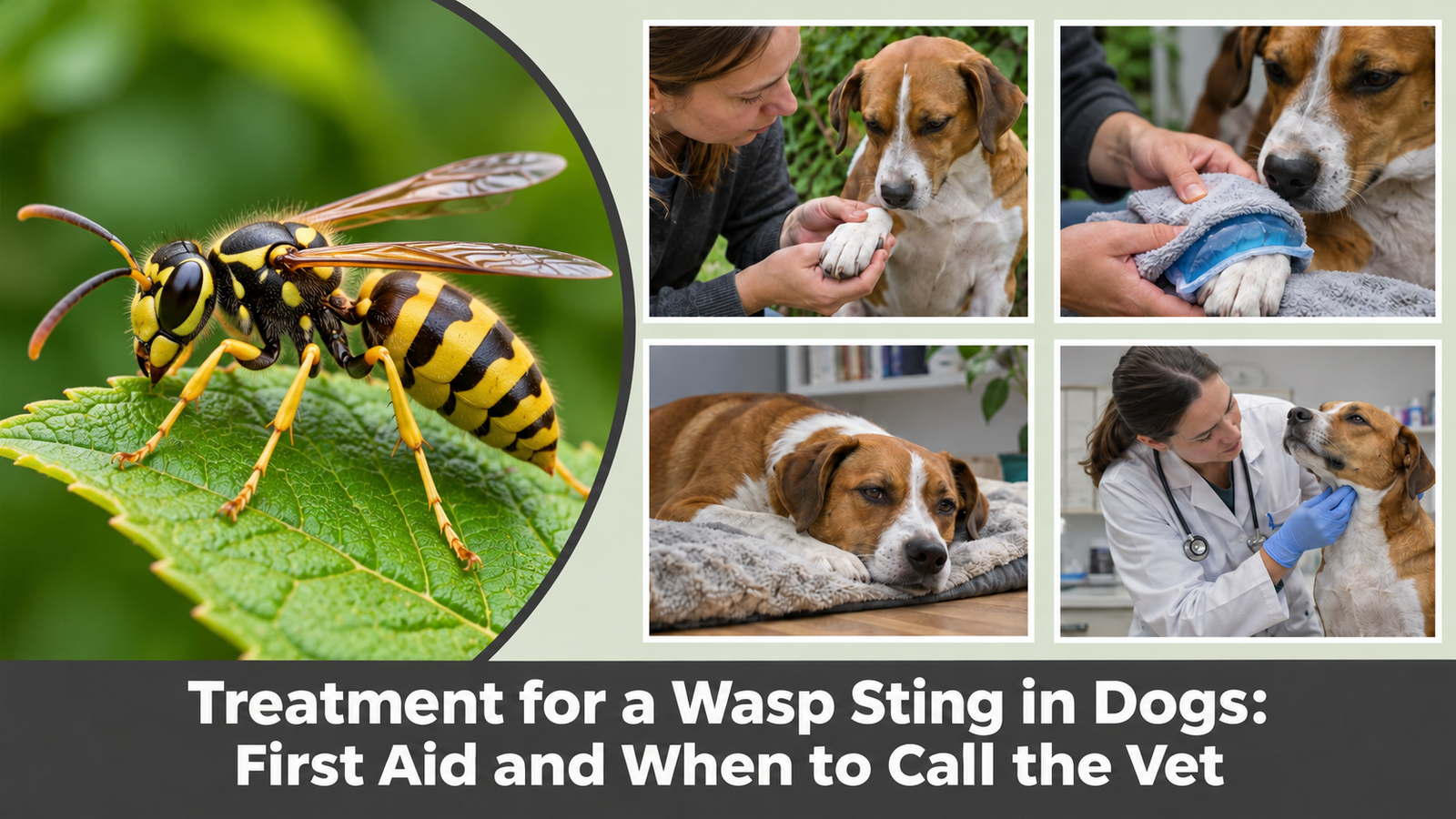
If your dog was stung by a wasp and has only a small, swollen spot, move them away from the insects and apply a cold pack wrapped in a towel for about 10 minutes. Watch them closely over the next several hours, since their symptoms can change. Go to an emergency vet immediately if your dog has trouble breathing, facial swelling that’s getting worse, widespread hives, vomiting, weakness, or collapse. A sting inside the mouth or throat also needs emergency care. If your dog was stung multiple times, contact an emergency vet right away, even if they seem fine at first.
What Does a Wasp Sting Look Like on a Dog?
A mild wasp sting can leave a small, raised, tender area. You may see redness on lightly pigmented skin, but swelling or a change in your dog’s behavior may be easier to spot through thick fur. Dogs often yelp, jerk away, or start licking the area right after being stung. They may limp if the sting is on a paw or rub their muzzle along the floor if they were stung on the nose.
Common Places Dogs Get Stung
Dogs often get stung on the nose or muzzle when they sniff around flowers, outdoor food, or a nest. A dog that steps on a wasp may suddenly lift a paw and refuse to put weight on it. Some dogs snap at flying insects and get stung inside the mouth.
Look gently at the area your dog is licking or guarding. Part the fur if they’ll let you and check between the toes if they’re limping. Stop if they pull away sharply or growl. If you suspect a sting inside the mouth, call an emergency vet and avoid forcing your dog’s jaws open.
Signs of a Mild Reaction
Mild reactions usually cause pain and swelling around a single spot. Your dog might lick the area or hold up the affected paw while remaining alert and breathing comfortably. A wasp usually leaves no stinger behind, so you may see only a bump or a small puncture mark.
Notice where the swelling starts and how much skin it covers. You can take a quick photo to help track changes. Swelling that spreads, new symptoms elsewhere on the body, or a change in how your dog is breathing or acting calls for veterinary attention.
How to Treat a Wasp Sting on a Dog at Home
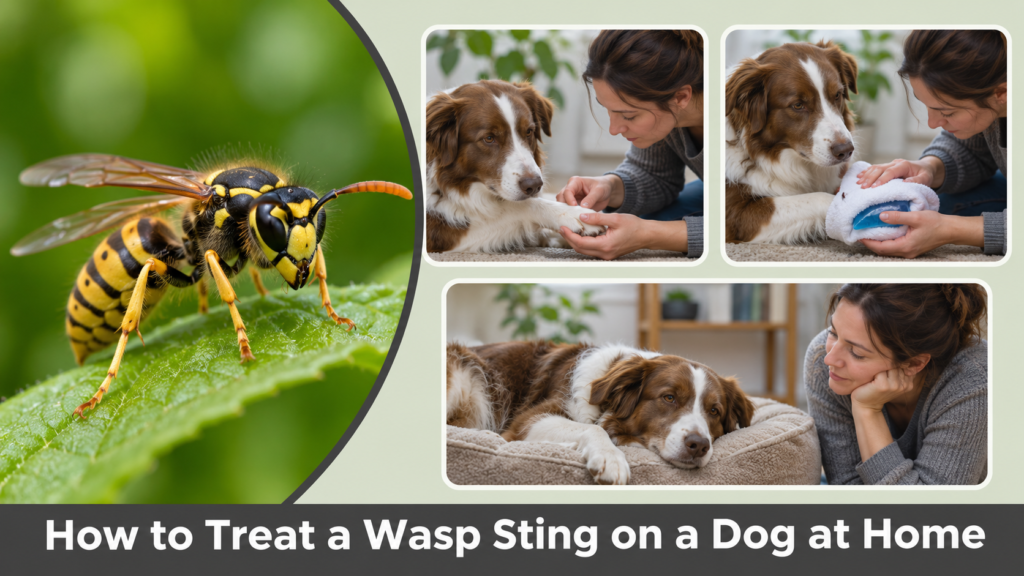
Home first aid is appropriate for a single sting on the skin when swelling stays small and your dog is otherwise acting normally. Start by getting them indoors or away from the area where they were stung. Then check the site, apply a cold compress, and keep them nearby so you can see how they respond.
1. Check the Sting Site
Look for a small bump or tender patch where your dog was stung. Wasps can sting repeatedly and usually keep their stinger. If you see a stinger clearly sticking out of the skin, it may have come from a bee. Gently scrape it away with the edge of a card if your dog will stay still. Avoid digging into the skin.
You can gently rinse dirt from the area with clean water. Stings near the eye need prompt veterinary advice. If your dog is squinting, holding the eye closed, or pawing at it, keep them from rubbing it while you arrange care. Avoid applying creams or trying to remove anything from the eye yourself.
2. Use a Cold Compress for Pain and Swelling
Wrap a cold pack in a thin towel and hold it gently against the sting for about 10 minutes, as long as your dog tolerates it. A clean cloth dampened with cold water also works. Keep a layer of cloth between the cold pack and the skin.
If your dog pulls away or becomes distressed, remove the compress. You can try again once they settle. For a paw sting, let your dog rest and keep walks short while the paw is tender. Call your vet if they continue to limp or won’t bear weight, since a thorn or another injury can look like a sting.
3. Monitor Your Dog for the Next Several Hours
Keep your dog close enough to see their face and hear their breathing. Watch for swelling around the muzzle or eyes, raised bumps elsewhere on the body, unusual drooling, vomiting, diarrhea, or a sudden drop in energy. A reaction can worsen after the sting, even if your dog initially seems comfortable.
Call your vet if the affected area becomes larger or more painful, or if your dog keeps chewing or licking it. If breathing changes, facial swelling progresses, or your dog becomes weak or collapses, head to an emergency clinic immediately.
When Does a Wasp Sting Need Emergency Veterinary Treatment?
A severe allergic reaction can affect breathing and circulation, and it can develop quickly. The sting’s location matters, too. Swelling inside the mouth or throat can interfere with breathing, and multiple stings can cause serious illness. If you see any of the emergency signs below, call the veterinary clinic while preparing to leave or have someone call on the way.
| What you notice | What to do |
|---|---|
| A small, swollen spot with normal breathing and behavior | Apply a cold compress and monitor closely. |
| Swelling or pain at the sting site that keeps worsening | Call your vet for guidance. |
| A sting on or near the eye | Contact a vet promptly for assessment. |
| A sting inside the mouth or throat, or multiple stings | Seek emergency veterinary care immediately. |
| Trouble breathing, increasing facial swelling, widespread hives, vomiting, diarrhea, weakness, or collapse | Go to an emergency vet immediately. |
What If Your Dog Swallowed a Wasp?
If your dog caught or swallowed a wasp and starts drooling, gagging, pawing at their mouth, or swallowing repeatedly, they may have been stung inside the mouth. Call an emergency vet right away. Swelling can occur farther back in the throat, where you may be unable to see it.
Keep your dog calm while you arrange transport. If they’re struggling to swallow or breathe, avoid giving food, water, or oral medication. Tell the clinic when the incident happened and what symptoms you’ve seen.
Can You Give a Dog an Antihistamine for a Wasp Sting?
A veterinarian may recommend an antihistamine for some dogs. Call before giving one and confirm the exact product, strength, and dose. Human allergy medicines come in different formulations, and some contain additional ingredients that may be unsafe for dogs. If your dog already has a vet-prescribed plan for sting reactions, follow that plan.
What About Human Painkillers or Anti-Itch Cream?
Keep ibuprofen, naproxen, and acetaminophen out of your dog’s first-aid routine unless a veterinarian specifically directs their use. Check with your vet before applying a human anti-itch cream as well, since your dog may lick and swallow it.
A wrapped cold compress is a practical first step for mild pain. If your dog needs more relief, a vet can recommend treatment based on their size, medical history, and symptoms. For signs of a severe reaction, leave for emergency care immediately rather than waiting for an oral medicine to take effect.
Frequently Asked Questions
1. How long does a wasp sting last on a dog?
A mild sting usually starts to settle within a day or two, though the timing varies. Check that pain and swelling are trending down. If they’re increasing, your dog is still limping, or new symptoms appear, call your vet.
2. What should I do if a wasp stings my dog’s paw?
If your dog is breathing and behaving normally, check between the toes and around the pads, then apply a wrapped cold pack for about 10 minutes if tolerated. Let them rest. Call your vet if they won’t put weight on the paw or the swelling spreads.
3. Is a wasp sting on a dog’s nose dangerous?
A small sting on the outside of the nose may cause local pain and swelling. Watch for swelling that spreads across the muzzle, noisy breathing, or difficulty breathing. Those symptoms need emergency care. A suspected sting inside the mouth or throat also needs immediate assessment.
4. Do wasps leave stingers in dogs?
Wasps usually keep their stingers and can sting more than once. If you spot a stinger clearly protruding from the skin, it may be from a bee. You can gently scrape it away if the area is easy to reach and your dog lets you handle it safely.
5. Can a dog have an allergic reaction after one sting?
Yes. Even a single sting can trigger a serious reaction. Watch for widespread hives, worsening facial swelling, breathing changes, vomiting, diarrhea, weakness, or collapse. If any of these appear, go to an emergency vet immediately.
