
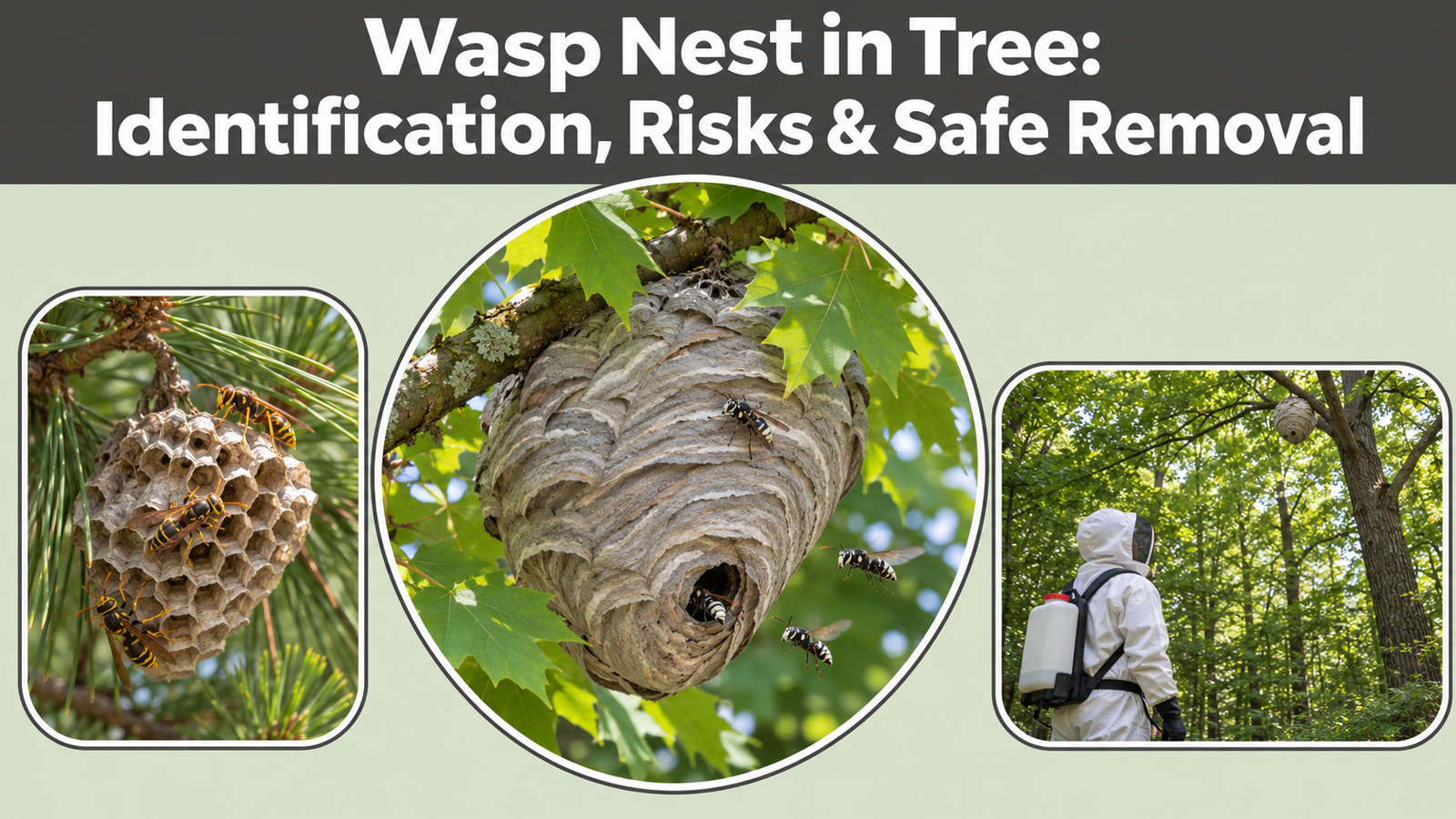
A wasp nest in a tree may look like a gray paper ball, a small exposed honeycomb, or a hidden colony inside a hollow trunk. Different wasps choose different nesting sites, including branches, tree cavities, and old stumps. Although these nests can appear alarming, many are harmless when left undisturbed. Problems arise when colonies develop near walkways, play areas, or frequently used gardens. This guide explains how to identify tree wasp nests, recognize common species, manage active colonies safely, and understand what happens during winter.
What Does a Wasp Nest in a Tree Look Like?
Wasp nests in trees vary considerably in size, shape, and structure. Some resemble large gray footballs hanging from branches, while others consist of small uncovered combs attached beneath leaves or twigs. Certain species establish colonies inside hollow trunks, making the nest difficult to see. Identifying the structure helps determine which wasps may be present.
Common Types of Wasp Nests in Trees
Several wasp species construct nests in or around trees:
- Paper wasps: Build small, umbrella-shaped nests with exposed hexagonal cells.
- Bald-faced hornets: Construct large, gray, enclosed paper nests hanging from branches.
- Yellowjackets: Some species build enclosed aerial nests, while others occupy tree cavities.
- European hornets: Usually establish nests inside hollow trees and other protected cavities.
- Mud daubers: Construct individual mud chambers, sometimes on sheltered tree surfaces or nearby structures.
What Does a Giant Wasp Nest in a Tree Look Like?
A giant wasp nest often resembles a large gray or brown paper-covered ball. Bald-faced hornet nests are especially recognizable because of their rounded or football-like appearance.
Mature nests can become larger than a basketball. Their outer paper envelope protects multiple internal combs containing developing wasps.
Why Do Wasps Build Nests in Trees?
Trees provide shelter, protection, and convenient access to food sources. Dense foliage can shield nests from wind, rain, and direct sunlight, while hollow trunks offer enclosed spaces for colony development. Wasps also hunt caterpillars, flies, and other insects found around trees. These conditions make wooded environments attractive nesting locations for several social wasp species.
Where Do Wasps Commonly Build Nests?
Common nesting locations include:
- Tree branches: Enclosed paper nests may hang from sturdy branches.
- Hollow trunks: European hornets and some yellowjackets use existing cavities.
- Tree stumps: Decaying wood and protected openings may provide nesting sites.
- Dense foliage: Leaves and branches help conceal developing colonies.
- Tree roots: Ground-nesting wasps may occupy underground cavities nearby.
Do Wasps Nest in Pine, Oak, and Apple Trees?
Yes, wasps can establish nests in pine, oak, apple, and many other tree species. The presence of suitable branches, cavities, and shelter is often more important than the tree species itself.
Conifers such as pine and cypress can conceal nests within dense foliage. Deciduous trees may reveal previously hidden nests after losing their leaves.
How to Find a Wasp Nest in a Tree
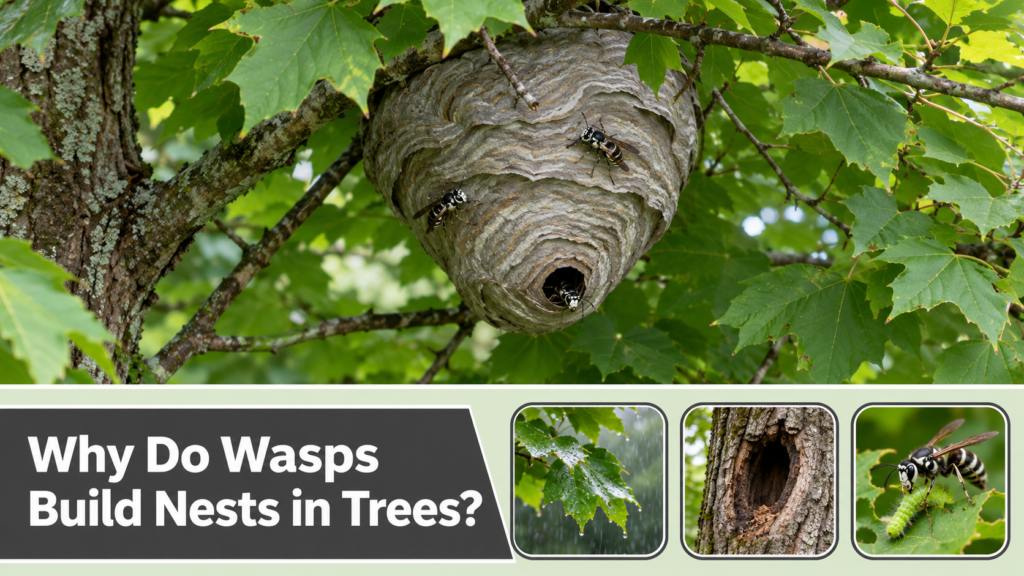
Finding a wasp nest requires careful observation because nests may remain hidden behind foliage or inside tree cavities. Wasps repeatedly travel between their colonies and surrounding feeding areas. Watching their movements from a safe distance can help identify possible nesting locations without disturbing the insects.
Signs of a Wasp Nest in a Tree
Look for these common indicators:
- Repeated flying activity: Multiple wasps travel toward the same branch or opening.
- Visible paper structure: A gray, rounded nest hangs among branches.
- Exposed honeycomb: Small groups of hexagonal cells appear beneath sheltered surfaces.
- Tree cavity activity: Wasps repeatedly enter and leave a hollow trunk.
- Defensive behavior: Wasps become noticeably agitated when people approach a particular area.
Can You Identify a Wasp Nest From Pictures?
Photographs can help distinguish exposed paper wasp nests from enclosed hornet or yellowjacket nests. Look closely at the nest’s shape, outer covering, and attachment point.
However, pictures may not identify every species reliably. Hidden nests require observing the insects themselves, preferably from a safe distance or through professional inspection.
How to Get Rid of a Wasp Nest in a Tree Safely
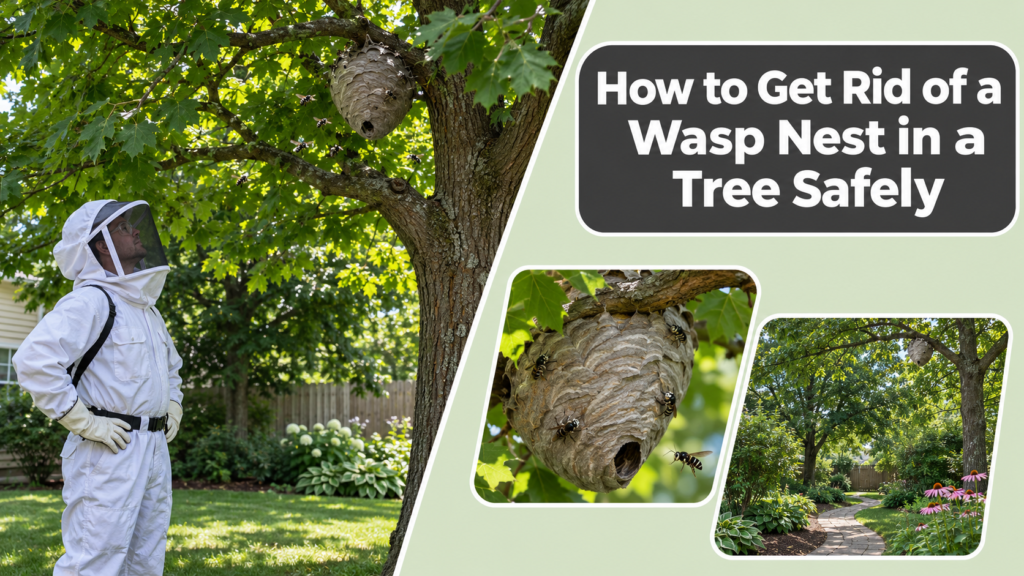
Removing an active wasp nest from a tree can be dangerous because colonies may contain numerous defensive workers. Large nests, elevated locations, and hidden cavities create additional hazards. Professional pest control is generally the safest choice when treatment is necessary. Nests located far from people can often remain undisturbed.
Safe Wasp Nest Management Steps
Follow these precautions when addressing a tree nest:
- Identify the insects: Confirm whether the colony contains wasps, hornets, or bees.
- Evaluate the location: Determine whether people regularly pass beneath the nest.
- Keep your distance: Prevent children and pets from approaching the area.
- Avoid disturbing branches: Do not shake, strike, or cut branches containing active nests.
- Contact a professional: Arrange treatment for large, high, or concealed colonies.
- Monitor afterward: Confirm the colony is inactive before considering physical nest removal.
How to Remove a Wasp Nest High in a Tree
High nests are particularly dangerous because reaching them may require ladders or specialized equipment. Disturbing an elevated colony can provoke defensive swarming and create a serious fall risk.
Never attempt to burn, flood, or knock down an active nest. If the colony presents little danger, leaving it undisturbed is often preferable to removal.
Why Are Wasps in a Tree but No Nest Is Visible?
Seeing numerous wasps around a tree does not necessarily mean a colony is nesting there. Adult wasps frequently visit trees to hunt insects, collect wood fibers, or consume sugary substances. Aphids and scale insects produce honeydew that attracts yellowjackets and other wasps.
What Attracts Wasps to Trees?
Wasps may gather around trees containing ripe fruit, exposed sap, honeydew-producing insects, or abundant caterpillars.
If no nest is visible, examine the area from a safe distance for these food sources. Repeated movement into a single trunk opening may indicate a hidden colony, but scattered feeding activity alone does not confirm nesting.
What Happens to a Wasp Nest in a Tree During Winter?
In temperate climates, most paper wasp, yellowjacket, and bald-faced hornet colonies die as freezing weather arrives. Newly mated queens typically leave their original colonies and overwinter elsewhere. Their abandoned paper nests may remain attached to tree branches throughout winter before gradually deteriorating.
Should You Remove an Old Wasp Nest in Winter?
Removing an abandoned nest is usually unnecessary because it generally poses little danger once completely inactive. Old nests may eventually break apart naturally due to wind, rain, and weathering.
However, some colonies in warmer climates can survive longer. Always confirm that the nest is inactive before touching it, particularly in regions with mild winters.
How to Prevent Wasps From Nesting in Trees
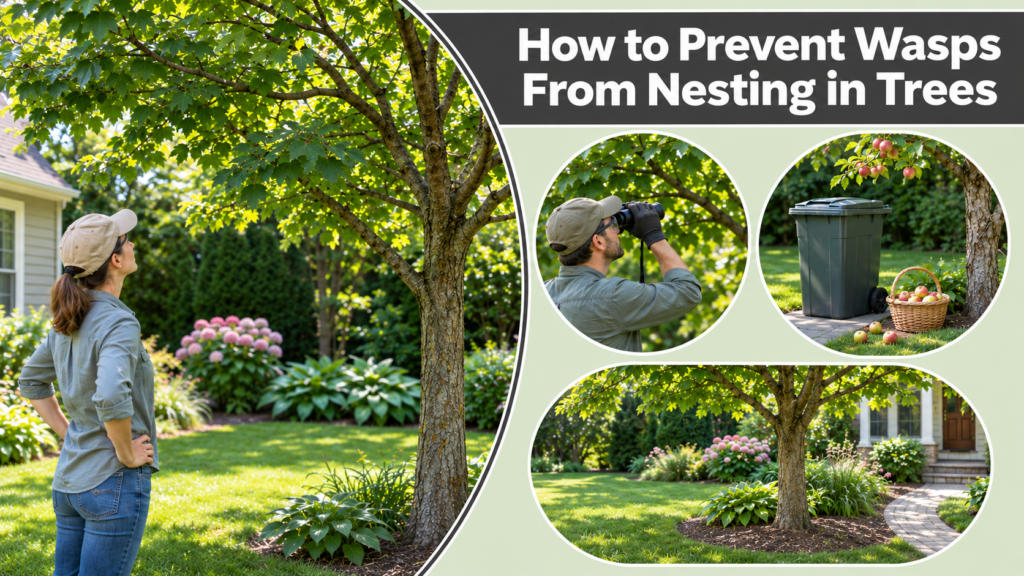
Preventing tree nests completely is difficult because trees provide natural habitats for many beneficial wasps. However, homeowners can reduce unwanted encounters by maintaining frequently used outdoor spaces and monitoring potential nesting locations. Prevention should focus on areas where colonies could threaten people rather than eliminating wasps throughout the garden.
Ways to Reduce Wasp Nesting Problems
Practical prevention measures include:
- Inspect low branches during spring for developing nests.
- Remove fallen fruit regularly from beneath fruit trees.
- Keep outdoor garbage containers tightly closed.
- Maintain clear pathways around heavily used garden areas.
- Avoid leaving sugary food and drinks outdoors.
- Monitor hollow trunks near entrances and play areas.
- Arrange professional assessment when active colonies pose a hazard.
FAQs
1. Are Large Wasp Nests in Trees Dangerous?
Large wasp nests can present a sting risk when people approach or disturb them. However, many colonies remain relatively undisturbed when located away from human activity. Professional assessment is recommended for nests near walkways, homes, and children’s play areas.
2. Should You Destroy a Wasp Nest in a Tree?
Not necessarily. Wasps help control caterpillars and other insect pests. A nest located high in a tree and away from people can often remain undisturbed. Removal becomes more appropriate when the colony creates an unavoidable safety hazard.
3. Do Wasps Reuse Nests in Trees?
Most temperate social wasps establish new colonies annually rather than reusing abandoned nests. However, some paper wasp species may reuse existing structures. Old enclosed hornet nests generally remain empty after the colony dies.
4. Can a Wasp Nest Damage a Tree?
Most wasp nests cause little direct damage to healthy trees. Paper nests attached to branches generally do not harm the tree significantly. However, some wasps collect wood fibers or strip small areas of bark while gathering materials or accessing sap.
5. How Long Does a Wasp Nest Stay in a Tree?
An active nest may develop from spring through autumn in temperate regions. After the colony dies, its paper structure can remain attached for several months or longer. Weather conditions determine how quickly the abandoned nest deteriorates.
