
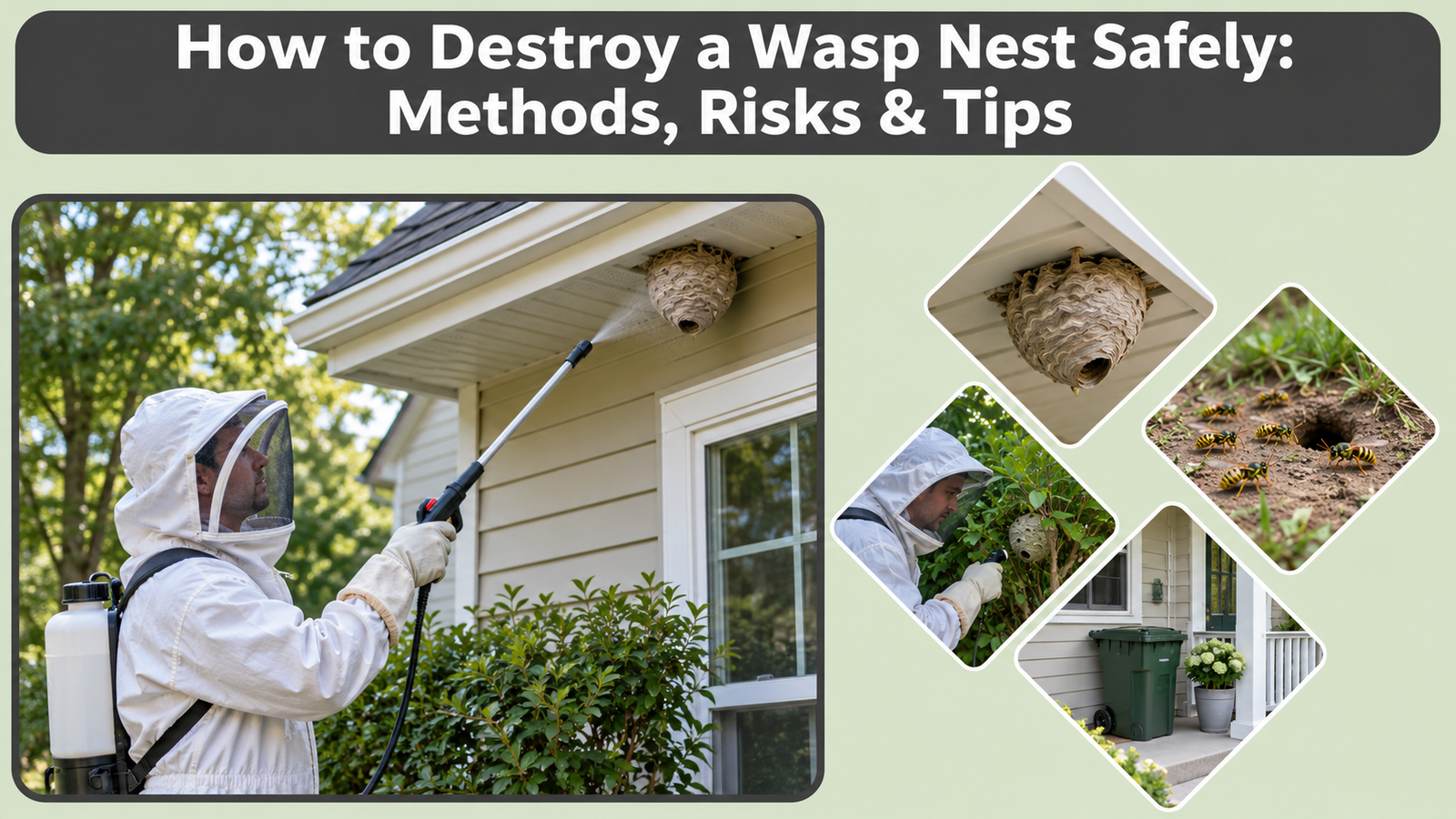
Knowing how to destroy a wasp nest safely is important when these stinging insects establish colonies near your home, garden, or outdoor living areas. Wasps can become defensive when their nests are disturbed, making improper removal dangerous. Small, exposed nests may sometimes be managed with appropriate precautions, while large, underground, or hidden colonies usually require professional treatment. Different wasp species also need different control methods. This guide explains how to identify hazardous nests, choose safer removal options, avoid common mistakes, and prevent wasps from returning.
How to Destroy a Wasp Nest Safely
The safest approach to destroying a wasp nest depends on its size, location, and the species involved. Before attempting removal, determine whether the nest is active and whether people can avoid it. Professional treatment is the safest option for established colonies, particularly when nests are concealed or difficult to reach.
Steps for Safe Wasp Nest Removal
Consider these precautions before addressing an active nest:
- Identify the species: Determine whether you have paper wasps, yellowjackets, hornets, or another insect.
- Assess the nest: Examine its approximate size and location from a safe distance.
- Protect the area: Keep children, pets, and other people away.
- Choose suitable treatment: Use professional pest control or a product specifically labeled for the wasp species and location.
- Follow safety instructions: Never exceed pesticide label directions or approach without adequate protection.
- Confirm inactivity: Have the nest removed only after the colony has been eliminated.
When Is the Best Time to Remove a Wasp Nest?
Early morning or late evening is often recommended for treating certain exposed nests because many wasps are less active during cooler periods.
However, wasps can still sting at these times. Reduced activity does not make a large or concealed nest safe to approach.
How to Destroy Wasp Nests in Different Locations
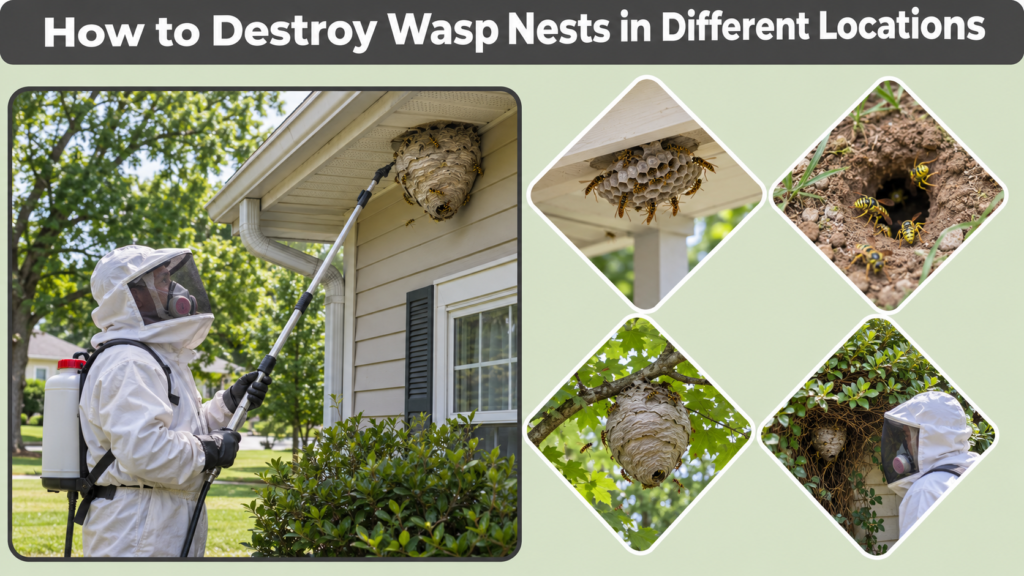
Wasp nests occur in various locations, including roof eaves, trees, bushes, walls, and underground cavities. Each location presents different challenges. Exposed paper nests may be easier to assess, while hidden nests can contain large colonies that are difficult to reach. Choosing the appropriate management method reduces unnecessary disturbances and sting risks.
Wasp Nest Removal by Location
- Small exposed nest: A properly labeled wasp-control product may be suitable when the nest is easily accessible and risks are low.
- Ground wasp nest: Hire a professional for active underground yellowjacket colonies.
- Large wasp nest: Professional removal is recommended because colonies may contain hundreds of defensive workers.
- Nest in a bush: Avoid trimming or shaking branches until the colony has been addressed.
- Nest inside a wall: Never block an active entrance; contact a pest-control specialist.
- Nest in an attic: Professional inspection is recommended because insects may enter occupied rooms.
- Nest in a tree: Leave it undisturbed when possible or arrange professional treatment if necessary.
How to Destroy a Paper Wasp Nest
Paper wasps build exposed umbrella-shaped nests, often beneath roof eaves or sheltered structures. Small colonies generally contain fewer wasps than large yellowjacket nests.
If removal is necessary, follow professional guidance or the directions on an appropriate registered pesticide. Never knock down an active nest with a stick or attempt removal from a ladder.
How to Destroy a Wasp Nest Naturally
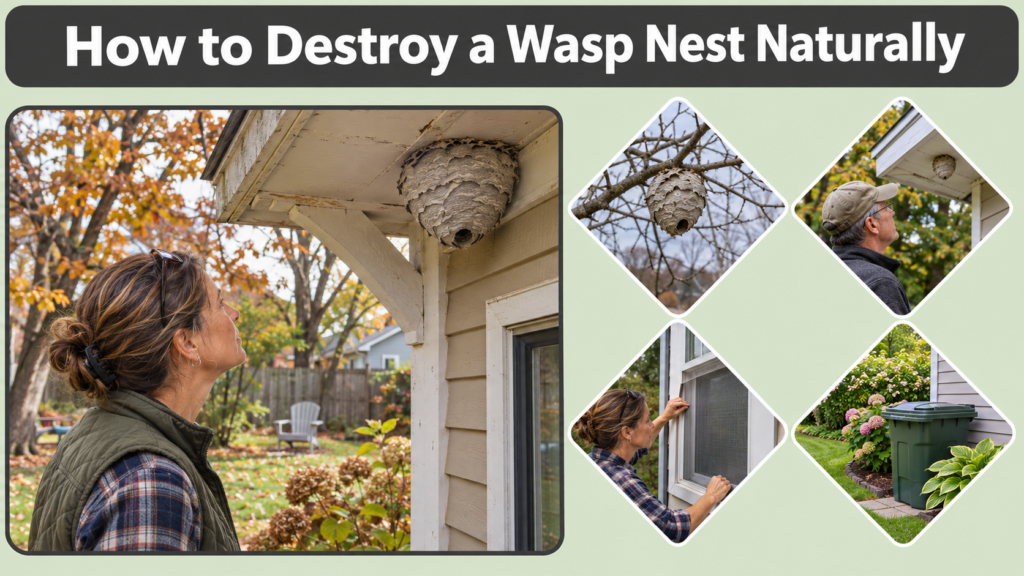
Natural wasp nest control focuses mainly on avoidance, prevention, and waiting for colonies to become inactive. There is no reliably safe homemade mixture that guarantees elimination of an established nest. Water, vinegar, and essential oils are not dependable methods for destroying large colonies. Where possible, leaving a nest undisturbed until seasonal abandonment is often the lowest-risk option.
Wasp Nest Removal Methods to Avoid
Avoid these dangerous or unreliable approaches:
- Fire: Burning nests can cause fires and provoke defensive wasps.
- Petrol or gasoline: Flammable liquids create severe fire and environmental hazards.
- Boiling water: Pouring hot water into nests risks burns and may not reach the colony.
- Garden hoses: Strong water sprays can scatter or provoke defensive insects.
- Blocking entrances: Trapped wasps may seek alternative exits, including into buildings.
- Homemade chemicals: Unverified mixtures may expose people and animals to unnecessary risks.
Can You Remove an Abandoned Wasp Nest Naturally?
Yes. Once a nest is confirmed to be completely inactive, its empty structure can often be removed without pesticides.
In temperate regions, many social wasp colonies die during colder months. However, some species and colonies in warmer climates can remain active longer, so never assume a nest is abandoned based on the season alone.
How to Prevent Wasps From Building New Nests
Preventing wasp nests is often easier than eliminating a mature colony. Wasps select sheltered locations with access to suitable nesting materials and food sources. Regular property inspections and good maintenance can reduce attractive nesting opportunities. Prevention is especially useful around porches, sheds, garages, and outdoor dining areas.
Effective Wasp Nest Prevention Tips
Practical prevention methods include:
- Inspect roof eaves and sheltered structures during spring.
- Seal unused wall gaps after confirming they contain no active colony.
- Repair damaged window screens and exterior fittings.
- Keep outdoor garbage containers securely closed.
- Remove fallen fruit and exposed food scraps.
- Inspect outdoor furniture and storage sheds regularly.
- Maintain landscaping around frequently used pathways.
These practices can reduce nesting opportunities but cannot guarantee that wasps will stay away.
Do Fake Wasp Nests Prevent Real Nests?
Artificial wasp nests are sometimes marketed as territorial deterrents. However, reliable scientific evidence supporting their effectiveness is limited.
Wasps may establish colonies near other nests when suitable resources and nesting sites are available. Regular inspections and proper maintenance are generally more dependable preventive measures.
How Long Will Wasps Return to a Destroyed Nest?
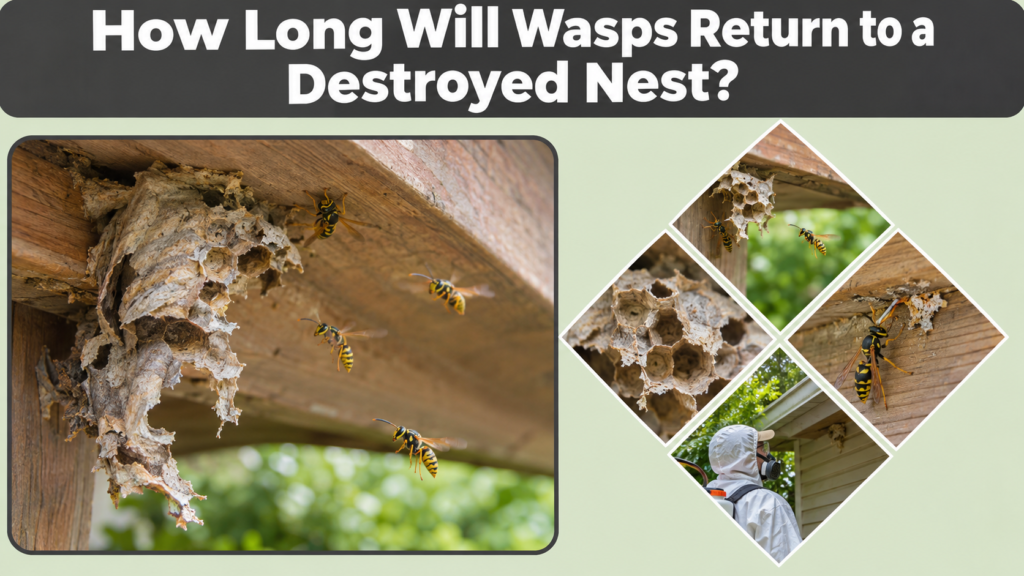
Wasps may return to a destroyed or treated nest because surviving workers recognize its location. Some may continue visiting for hours or days, depending on the colony and treatment outcome. Persistent activity can indicate that insects remain alive or that the original treatment failed to reach the entire colony.
Will Wasps Rebuild a Destroyed Nest?
Yes, surviving wasps may attempt to rebuild or establish another nest under suitable conditions. However, rebuilding depends on the species, season, and whether reproductive females survive.
Removing the visible structure alone does not necessarily eliminate an established colony. Successful control requires addressing living insects and preventing access to suitable nesting locations.
When Should You Call a Professional?
Professional wasp removal is recommended for large nests, underground colonies, wall cavities, attics, and difficult-to-reach structures.
Professional help is especially important when someone nearby has a known severe sting allergy. Avoid attempting removal if you cannot identify the insects or maintain a safe distance.
FAQs
1. How Do You Destroy a Wasp Nest Without Getting Stung?
There is no completely risk-free way to disturb an active wasp nest. Professional pest control offers the safest practical approach, particularly for large or hidden colonies. Avoid approaching, shaking, or blocking nests because these actions can trigger defensive stinging.
2. How Do You Destroy a Wasp Nest in the Ground?
Active underground yellowjacket nests are best handled by qualified pest-control professionals. These nests may contain numerous workers and extend beyond the visible entrance. Never pour petrol, boiling water, or other household chemicals into the opening.
3. Can You Destroy a Wasp Nest With Water?
Water is not a reliable way to eliminate an established wasp colony. Spraying a nest with a hose can provoke defensive behavior, while flooding underground nests may fail to reach hidden chambers. Professional treatment is safer for active colonies.
4. Will Wasps Return After Their Nest Is Destroyed?
Yes, surviving workers may continue returning to the former nesting location for hours or days. Persistent activity can indicate an incomplete treatment. Once the colony is eliminated, returning workers eventually disappear, although new wasps may establish nests nearby.
5. Should You Destroy a Wasp Nest in Winter?
In many temperate climates, social wasp colonies die during winter, leaving empty nests behind. Confirm that a nest is inactive before removing it. In warmer regions, some colonies may survive longer, so winter does not automatically guarantee safety.
