
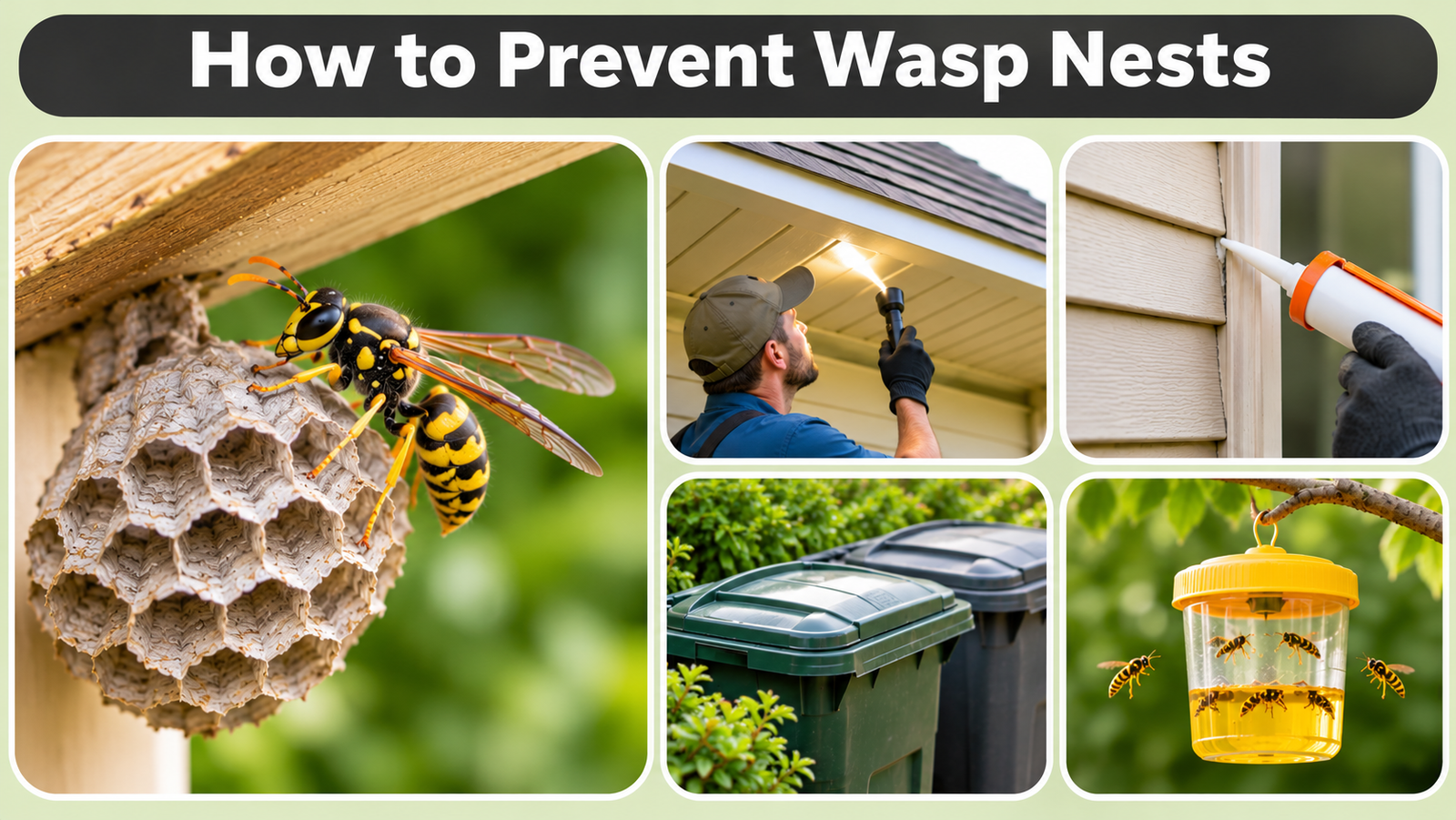
Wasps often build nests around homes, especially under roof eaves, porches, decks, and other sheltered spaces. Although these insects help control garden pests, having a nest near your home can increase the risk of painful stings. Fortunately, several simple prevention methods can help discourage them from settling on your property. Learning how to prevent wasp nests involves regular inspections, sealing potential entry points, and maintaining outdoor areas. This guide explains practical ways to reduce nesting opportunities and keep your home safer throughout the warmer months.
10 Effective Ways to Prevent Wasp Nests
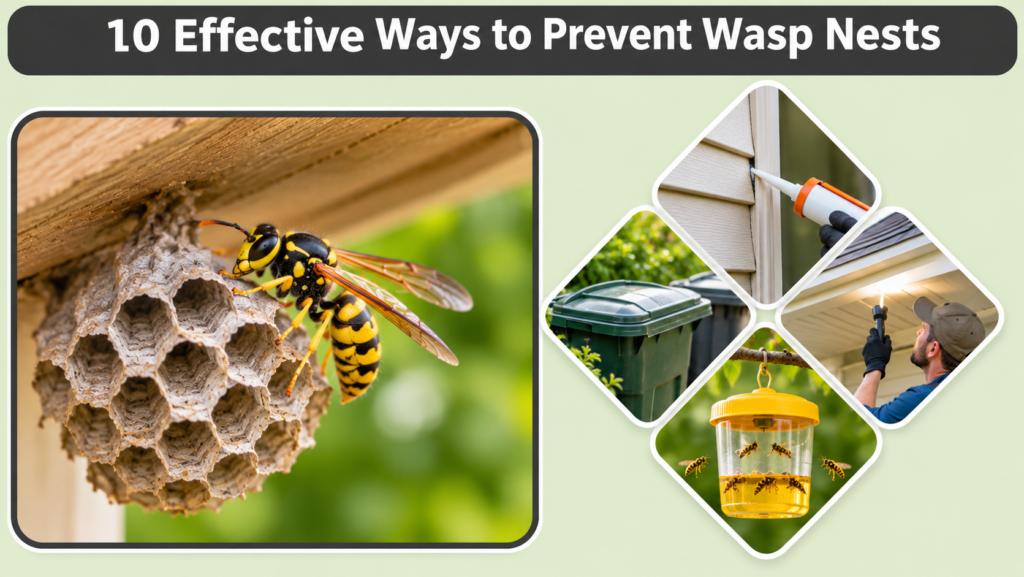
Preventing wasp nests starts with making your property less attractive to nesting queens. Wasps prefer sheltered locations protected from weather and disturbance. Regular maintenance, early inspections, and removing potential attractants can reduce nesting opportunities. Here are ten practical prevention methods that homeowners can follow before colonies become established.
1. Inspect Your Property Regularly
Check sheltered areas during spring and summer to identify early nesting activity.
- Examine roof eaves, porch ceilings, and window frames.
- Look for small paper combs or mud nests.
- Watch for wasps repeatedly visiting one location.
- Arrange safe removal when nests threaten occupied areas.
2. Seal Cracks and Openings
Small structural gaps may allow wasps to enter walls, attics, and other hidden spaces.
- Seal unused gaps around siding and exterior trim.
- Repair damaged window screens.
- Install suitable mesh over ventilation openings.
- Never seal entrances containing active colonies.
3. Maintain Exterior Surfaces
Some wasps attach nests to sheltered wooden or painted surfaces.
- Repair damaged boards and loose trim.
- Maintain painted or varnished exterior wood.
- Inspect outdoor ceilings and exposed rafters.
- Replace deteriorating materials that create cavities.
4. Remove Food Attractants
Food sources attract foraging wasps, increasing their activity around outdoor living spaces.
- Keep garbage containers tightly closed.
- Remove fallen fruit from yards.
- Clean outdoor tables after meals.
- Avoid leaving sugary drinks uncovered.
5. Reduce Outdoor Clutter
Unused equipment and stored materials can create protected nesting locations.
- Organize sheds and garages.
- Store unused containers properly.
- Inspect outdoor furniture before use.
- Remove unnecessary piles of materials.
6. Repair Water Leaks
Wasps collect water for various purposes, including cooling their colonies.
- Repair dripping outdoor faucets.
- Fix leaking irrigation systems.
- Empty unnecessary water containers.
- Maintain proper drainage around structures.
7. Maintain Roof Eaves and Gutters
Roof overhangs are common nesting locations for paper wasps.
- Inspect soffits and fascia boards.
- Repair damaged roofline materials.
- Keep gutters maintained.
- Close unnecessary openings after checking for occupants.
8. Install Protective Screening
Appropriate screening can prevent wasps from entering buildings through certain openings.
- Screen accessible attic vents.
- Repair torn window screens.
- Protect suitable ventilation openings.
- Ensure screening does not restrict airflow.
9. Monitor Previous Nesting Locations
A previously occupied location may attract another colony the following year.
- Inspect former nesting spots each spring.
- Maintain surrounding exterior surfaces.
- Remove old nests only after confirming inactivity.
- Watch for new queens investigating sheltered areas.
10. Use Appropriate Wasp Traps
Certain commercial traps can capture specific wasp species, particularly some yellowjackets.
- Choose traps designed for the target species.
- Follow manufacturer instructions.
- Place traps away from outdoor seating.
- Use trapping alongside other prevention methods.
How to Prevent Wasp Nests in Common Locations
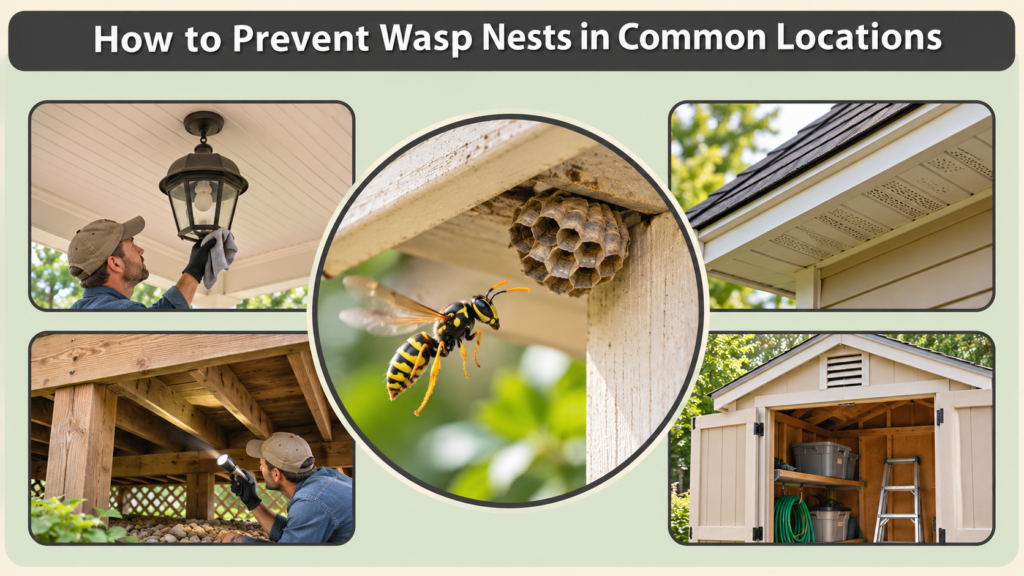
Wasps often choose locations that provide shelter from rain, wind, and frequent disturbance. Porches, decks, sheds, and rooflines are particularly attractive. Understanding where nests commonly appear helps homeowners target their preventive efforts. Inspecting these places before nesting season can reduce the likelihood of colonies developing near frequently used areas.
Prevent Wasp Nests on Porches
Porches provide sheltered ceilings and corners suitable for paper wasps.
- Inspect porch ceilings and light fixtures.
- Maintain painted wooden surfaces.
- Repair damaged trim and loose panels.
- Check areas around entry doors regularly.
Prevent Wasp Nests Under Eaves
Roof eaves offer protection from weather, making them common nesting locations.
- Inspect roof overhangs during spring.
- Repair damaged soffits and fascia.
- Seal suitable gaps after confirming they are empty.
- Monitor sheltered corners throughout summer.
Prevent Wasp Nests Under Decks
Decks contain shaded spaces beneath railings, boards, and support beams.
- Inspect accessible areas beneath decks.
- Remove stored clutter.
- Repair unnecessary structural gaps.
- Keep support beams properly maintained.
Prevent Wasp Nests in Sheds and Attics
Sheds and attics offer sheltered spaces where colonies may develop unnoticed.
- Keep shed doors closed when possible.
- Repair damaged screens and exterior openings.
- Inspect stored equipment carefully.
- Contact professionals about active nests in concealed spaces.
How to Prevent Different Types of Wasps From Nesting
Different wasps construct different types of nests. Paper wasps build exposed combs, mud daubers create mud structures, and yellowjackets may establish colonies inside underground cavities or walls. Recognizing these differences helps homeowners choose appropriate preventive methods while avoiding unnecessary disturbance of beneficial insects.
Preventing Paper Wasp Nests
Paper wasps frequently build umbrella-shaped nests beneath eaves, porch roofs, and exposed beams.
- Inspect overhead structures early in spring.
- Maintain painted or finished surfaces.
- Repair sheltered gaps and damaged trim.
- Monitor small nests without approaching them.
Preventing Mud Dauber Nests
Mud daubers are solitary wasps that construct mud cells on protected surfaces.
- Maintain exterior walls and rafters.
- Screen suitable building openings.
- Inspect garages and covered storage spaces.
- Leave harmless nests undisturbed when practical.
Preventing Yellowjacket Nests
Yellowjackets may establish colonies underground or inside structural cavities.
- Repair accessible foundation openings.
- Inspect exterior wall gaps.
- Avoid disturbing underground nest entrances.
- Seek professional help for colonies near people.
Preventing Hornet Nests
Some hornets construct large aerial nests, while others occupy protected cavities.
- Monitor trees and exterior structures.
- Maintain building surfaces and openings.
- Avoid approaching active colonies.
- Arrange professional removal when nests create hazards.
Seasonal Wasp Nest Prevention Checklist
Seasonal inspections help identify potential nesting opportunities before colonies grow. In temperate climates, spring is particularly important because overwintered queens begin establishing new nests. However, activity varies by climate and species. Maintaining a simple seasonal routine helps homeowners manage structural problems and recognize nesting activity throughout the year.
Spring Prevention
Spring is the ideal time to begin inspections in temperate regions.
- Check previously occupied nesting locations.
- Repair exterior gaps and damaged screens.
- Inspect roof eaves and porch ceilings.
- Watch for early nest construction.
Summer Prevention
Wasp colonies often grow during summer, increasing activity around established nests.
- Maintain outdoor cleanliness.
- Keep garbage containers closed.
- Inspect sheltered structures from a distance.
- Avoid disturbing active colonies.
Fall and Winter Prevention
In colder regions, many social wasp colonies decline as temperatures drop.
- Repair structural damage before the next season.
- Inspect inactive nesting locations.
- Maintain screens and exterior trim.
- Prepare a prevention plan for spring.
Do Natural Repellents and Fake Wasp Nests Work?
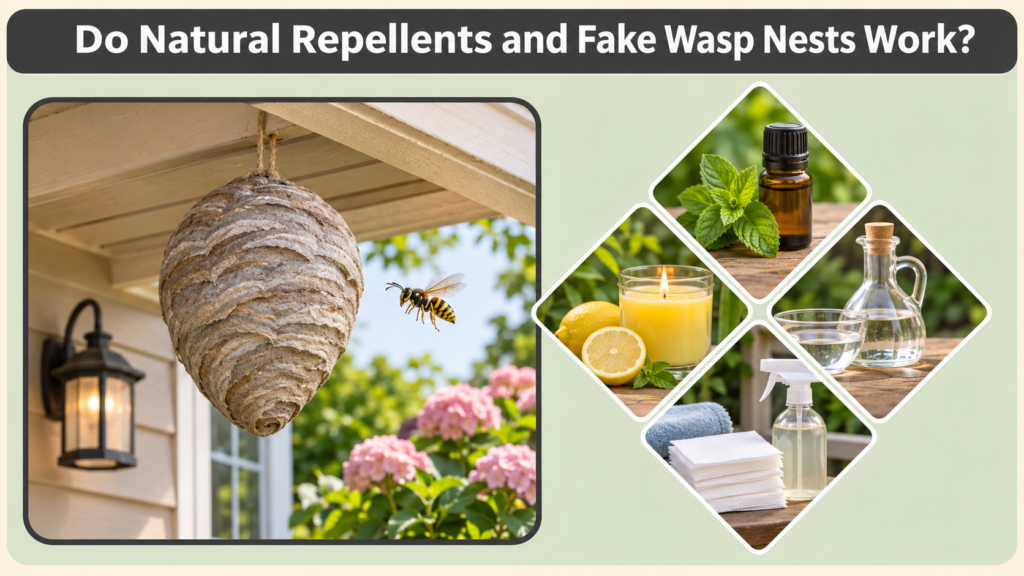
Many homeowners use peppermint oil, vinegar, citronella, or artificial wasp nests to discourage nesting. However, reliable scientific evidence supporting these methods for long-term prevention remains limited.
Are Fake Wasp Nests Effective?
Artificial nests and hanging brown paper bags are often advertised as territorial deterrents. Unfortunately, there is insufficient evidence that these products consistently prevent wasps from building nests. Wasps may still choose suitable locations nearby.
Can Essential Oils Prevent Wasp Nests?
Certain plant oils may temporarily affect insect behavior, but results vary depending on concentration, species, and environmental conditions. They should not replace physical exclusion, routine inspections, and structural maintenance.
What if Wasps Have Already Built a Nest?
Avoid burning, flooding, striking, or sealing an occupied nest. These actions can provoke defensive behavior and increase sting risks. Nests located far from people may safely remain undisturbed. For nests near entrances or busy areas, consult a qualified pest management professional.
FAQs
1. What is the best way to prevent wasp nests?
Regular inspections, sealing unoccupied structural openings, maintaining exterior surfaces, and removing food attractants are among the most practical prevention methods. Combining several approaches is generally more useful than relying on one deterrent.
2. What naturally prevents wasps from nesting?
Maintaining clean outdoor areas, repairing structural gaps, and reducing sheltered nesting opportunities can help naturally. Homemade scent repellents have limited evidence supporting their effectiveness for preventing nests.
3. How do you prevent wasp nests under eaves?
Inspect eaves regularly, maintain painted surfaces, repair damaged soffits, and close suitable openings. Early inspections help identify nesting activity before colonies become established.
4. Will wasps return to the same nest every year?
Most social wasps in temperate climates do not reuse old nests. However, new queens may select the same sheltered location the following year if conditions remain favorable.
5. When should you start preventing wasp nests?
In temperate regions, begin prevention in early spring when nesting queens become active. Continue inspecting your property throughout the warmer months to detect new nesting attempts.
