
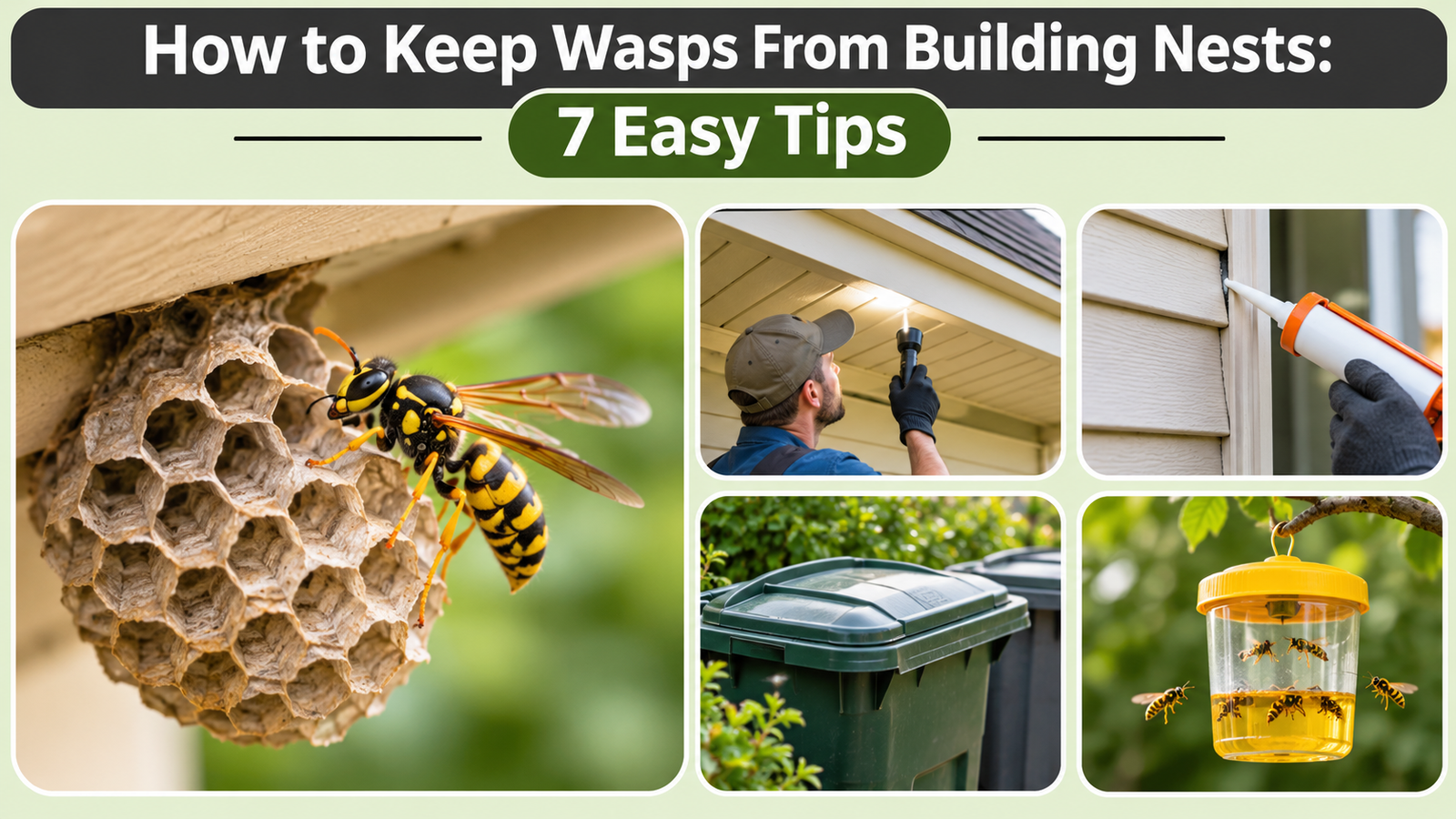
Wasps often build nests around houses, porches, roof eaves, decks, and other protected locations. While these insects help control garden pests, their nests can become a concern when they are close to doors or busy outdoor spaces.
Knowing how to keep wasps from building nests can help protect your home and reduce unwanted encounters. Regular inspections, sealing entry points, removing food attractants, and maintaining outdoor structures are among the most effective preventive measures. The best approach is to make potential nesting locations less attractive before a colony becomes established.
7 Effective Ways to Keep Wasps From Building Nests
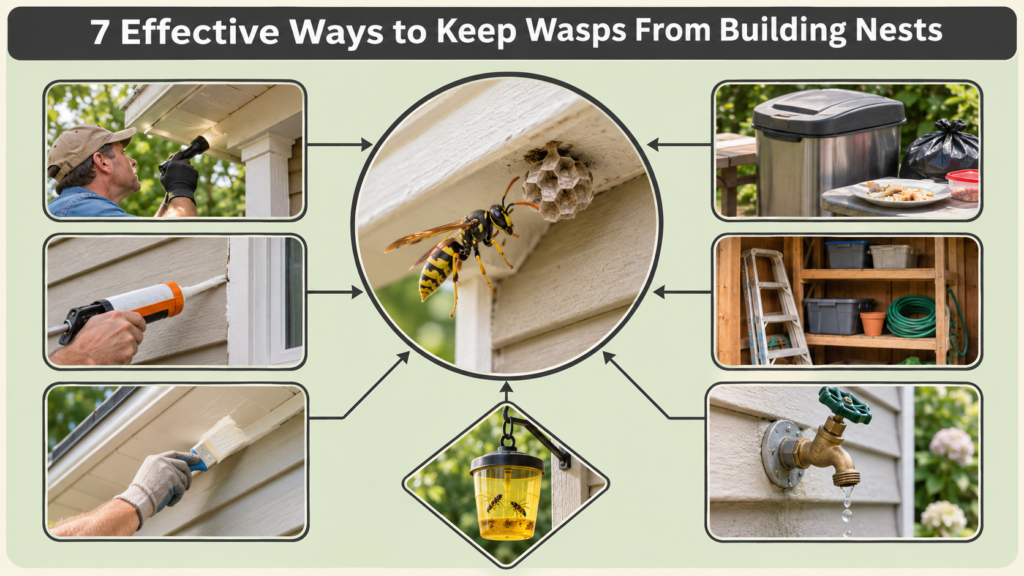
Preventing wasp nests requires a combination of regular maintenance, early detection, and reducing access to sheltered spaces. Wasps often choose locations that protect their nests from rain, wind, and disturbance. By addressing these conditions before nesting season, homeowners can significantly reduce opportunities for wasps to establish colonies around their property.
1. Inspect Common Nesting Areas Regularly
Inspect porches, roof overhangs, garage corners, sheds, and outdoor furniture during the warmer months. In temperate climates, begin checking in early spring when overwintered queens start searching for nesting locations.
Look for small paper combs, mud tubes, or wasps repeatedly visiting the same spot. Early identification makes professional removal easier and prevents a small colony from becoming a larger problem.
2. Seal Cracks and Entry Points
Wasps may enter buildings through gaps around windows, siding, rooflines, vents, and wall openings. Inspect these areas for damage and seal unnecessary openings using suitable exterior caulk or other building materials.
Install insect-resistant screening over appropriate vents without restricting required airflow. Always confirm an opening is unoccupied before sealing it because trapping active wasps inside can drive them into living spaces.
3. Maintain Eaves and Outdoor Surfaces
Paper wasps frequently attach nests beneath roof eaves, exposed rafters, and porch ceilings. Keeping these surfaces clean, painted, and well-maintained can reduce attractive attachment points.
Repair damaged wood and peeling paint. Smooth, properly finished surfaces can make nest attachment more difficult for some paper wasps, although painting alone cannot guarantee protection.
4. Remove Food and Garbage Attractants
Wasps often visit outdoor areas containing exposed food, sugary drinks, fallen fruit, or uncovered garbage. These resources may attract foraging wasps and increase their activity around your home.
Use tightly closed trash containers, clean outdoor eating areas, and remove fallen fruit. Although removing food does not directly eliminate nesting sites, it helps make patios and gathering areas less attractive.
5. Reduce Clutter Around Outdoor Structures
Unused equipment, stacked materials, empty containers, and sheltered storage spaces can provide suitable locations for wasps to build nests.
Keep sheds organized and store rarely used equipment in closed containers when practical. Regularly inspect the undersides of furniture, storage shelves, and other protected spaces without disturbing any active nests.
6. Repair Leaks and Manage Water Sources
Wasps need water for various activities, including cooling their nests. Leaking faucets, dripping outdoor pipes, and poorly maintained containers may attract visiting wasps.
Repair plumbing leaks and empty unnecessary standing water. Maintain appropriate drainage while keeping useful water sources for wildlife when possible. Water management is a supporting measure rather than a guaranteed nest deterrent.
7. Consider Species-Appropriate Wasp Traps
Certain commercial traps can capture specific yellowjacket or paper wasp species. Some traps may reduce the number of queens establishing nests early in the season.
However, effectiveness varies by wasp species and attractant. Position traps away from doors and outdoor seating, follow product instructions, and avoid assuming that trapping alone will prevent nesting.
How to Keep Wasps From Building Nests in Specific Places
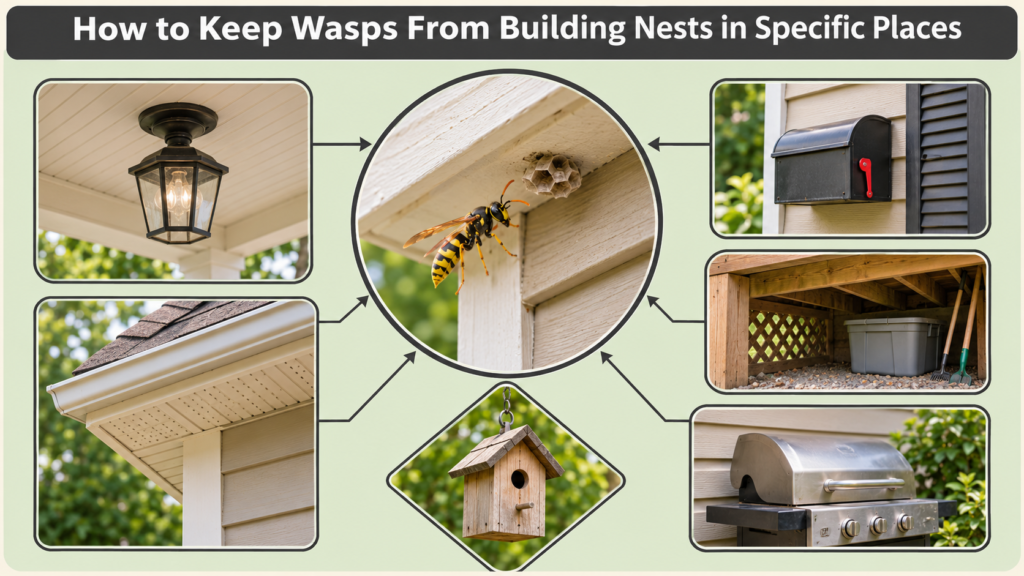
Different areas around a house offer different nesting opportunities. Rooflines provide overhead protection, while decks and sheds contain sheltered cavities. Preventing nests becomes easier when you identify which locations need maintenance, cleaning, or additional screening. The following recommendations address common nesting spots around residential properties.
How to Keep Wasps From Building Nests on Your Porch
Inspect porch ceilings, light fixtures, railings, and decorative trim regularly. Paper wasps often prefer protected corners where they can attach their small umbrella-shaped nests.
Keep porch surfaces maintained and remove unnecessary clutter. Watch for repeated wasp activity near entrances, especially during early nesting season.
How to Keep Wasps From Building Nests Under Eaves
Check roof overhangs, fascia boards, soffits, and gutter corners for early nest construction. Repair loose boards, damaged trim, and openings that provide access to hidden cavities.
Maintain painted surfaces and ensure nearby vents have appropriate screening. Avoid approaching or disturbing established nests, particularly those positioned above doorways.
How to Keep Wasps From Building Nests Under Decks and in Sheds
Decks offer shaded spaces beneath boards, railings, and support beams. Inspect these locations from a safe distance and repair unnecessary structural gaps.
For sheds, keep doors closed when not in use, maintain window screens, and organize stored items. Never block required ventilation or seal openings containing active wasps.
How to Keep Wasps From Building Nests in Mailboxes or Behind Shutters
Mailboxes and decorative shutters provide small protected spaces where some wasps may begin nesting.
Check the mailbox visually before reaching inside during nesting season. Repair gaps behind shutters when appropriate, but confirm that no wasps or other wildlife occupy the space before sealing it.
How to Prevent Wasp Nests in Birdhouses and Outdoor Equipment
Inspect unused birdhouses between nesting seasons and clean them according to birdhouse maintenance recommendations. Never disturb an occupied birdhouse or block access needed by nesting birds.
Check unused grills, cold smokers, storage boxes, and propane equipment before handling them. Use suitable covers or closures that do not obstruct essential safety vents.
How to Prevent Different Types of Wasps From Nesting
Not all wasps build the same type of nest. Some live in colonies made from paper-like material, while others construct individual mud cells. Understanding these differences helps homeowners select appropriate prevention techniques and recognize when leaving a harmless nest undisturbed may be preferable.
How to Keep Paper Wasps From Building Nests
Paper wasps commonly create exposed, umbrella-shaped combs beneath eaves, porches, and sheltered structures. Early inspections, maintaining smooth surfaces, and addressing access gaps are useful preventive measures.
Their colonies generally become more defensive as they grow, making early detection particularly valuable.
How to Keep Mud Wasps From Building Nests
Mud daubers construct nests from mud, often against walls, rafters, or sheltered surfaces. Unlike social wasps, they are solitary and generally do not aggressively defend their nests.
Maintain structures and screen suitable openings to limit nesting opportunities. Mud daubers are beneficial spider predators, so nests away from frequently used areas can usually be left alone.
How to Keep Red Wasps From Building Nests
Many wasps commonly called red wasps are reddish-colored paper wasps. They may nest under porch roofs, eaves, and other protected structures.
Use the same preventive approach recommended for paper wasps: inspect early, maintain exterior surfaces, and address sheltered entry points. Avoid approaching established colonies.
Do Fake Wasp Nests and Natural Repellents Work?
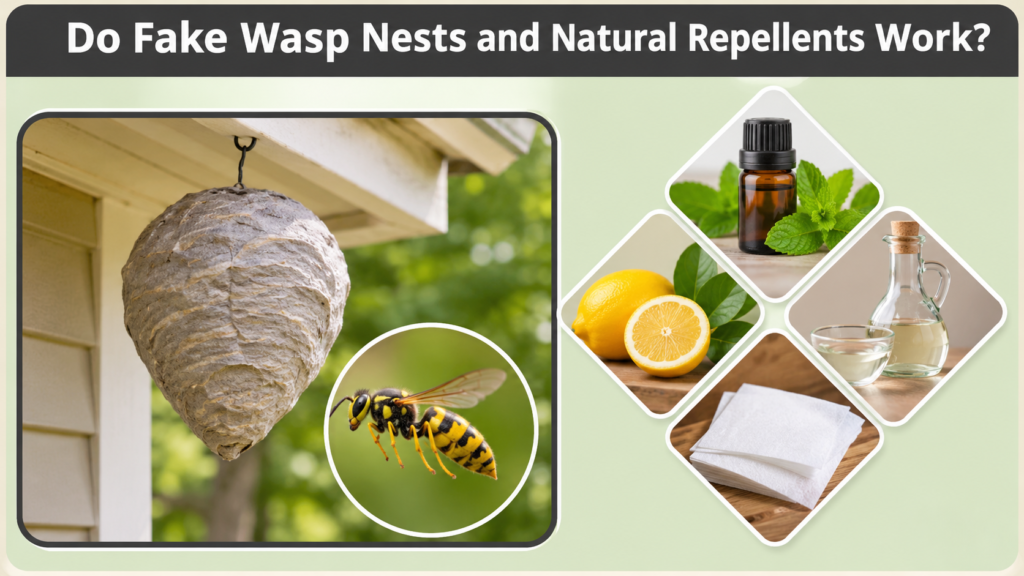
Artificial wasp nests are marketed as a way to discourage nearby colonies. However, there is no strong scientific evidence showing that hanging fake nests reliably prevents paper wasps or yellowjackets from nesting.
Peppermint oil, vinegar, dryer sheets, and other homemade repellents are also frequently recommended. Their effectiveness for preventing nest construction is uncertain, and any temporary effect should not replace structural maintenance.
For reliable prevention, focus on inspections, exclusion, and reducing attractive nesting opportunities rather than relying entirely on homemade deterrents.
What Should You Do if Wasps Have Already Started Building a Nest?
If you notice a developing nest, first determine whether it is active and whether it presents a genuine risk. A nest far from people may not need treatment because wasps help control other insects.
Avoid striking, burning, flooding, or sealing an occupied nest. These methods can provoke defensive behavior or create additional hazards.
For active nests near entrances, children, or frequently used outdoor spaces, contact a qualified pest management professional. Professional assistance is especially important for large nests, concealed wall colonies, or households with serious sting allergies.
FAQs
1. What is the best way to keep wasps from building nests?
The most dependable approach combines early-season inspections, sealing unoccupied openings, repairing damaged exterior surfaces, and maintaining sheltered structures. Removing exposed food and managing garbage also reduces wasp activity around outdoor living areas. No single method guarantees complete prevention.
2. What smells keep wasps from building nests?
Peppermint, citronella, and other strong-smelling substances are often promoted as wasp repellents. However, there is insufficient reliable evidence that these scents consistently prevent nest construction outdoors. Structural maintenance and regular inspections provide a stronger foundation for prevention.
3. Will wasps return to the same nesting spot every year?
Most temperate-climate social wasps do not reuse their old nests the following year. However, new queens may choose the same sheltered location because it remains suitable. Inspect previously occupied areas before the next nesting season.
4. How do I stop wasps from building nests on my porch?
Inspect ceiling corners, decorative fixtures, exposed beams, and railings regularly. Maintain clean, finished surfaces and repair damaged trim. If wasps establish an active nest near the entrance, avoid disturbing it and seek professional removal when necessary.
5. When is the best time to prevent wasps from nesting?
In temperate regions, early spring is usually the best time because new queens are beginning to establish colonies. Continue inspections throughout warmer months. In regions with mild winters, nesting activity may begin earlier or continue for longer periods.
