
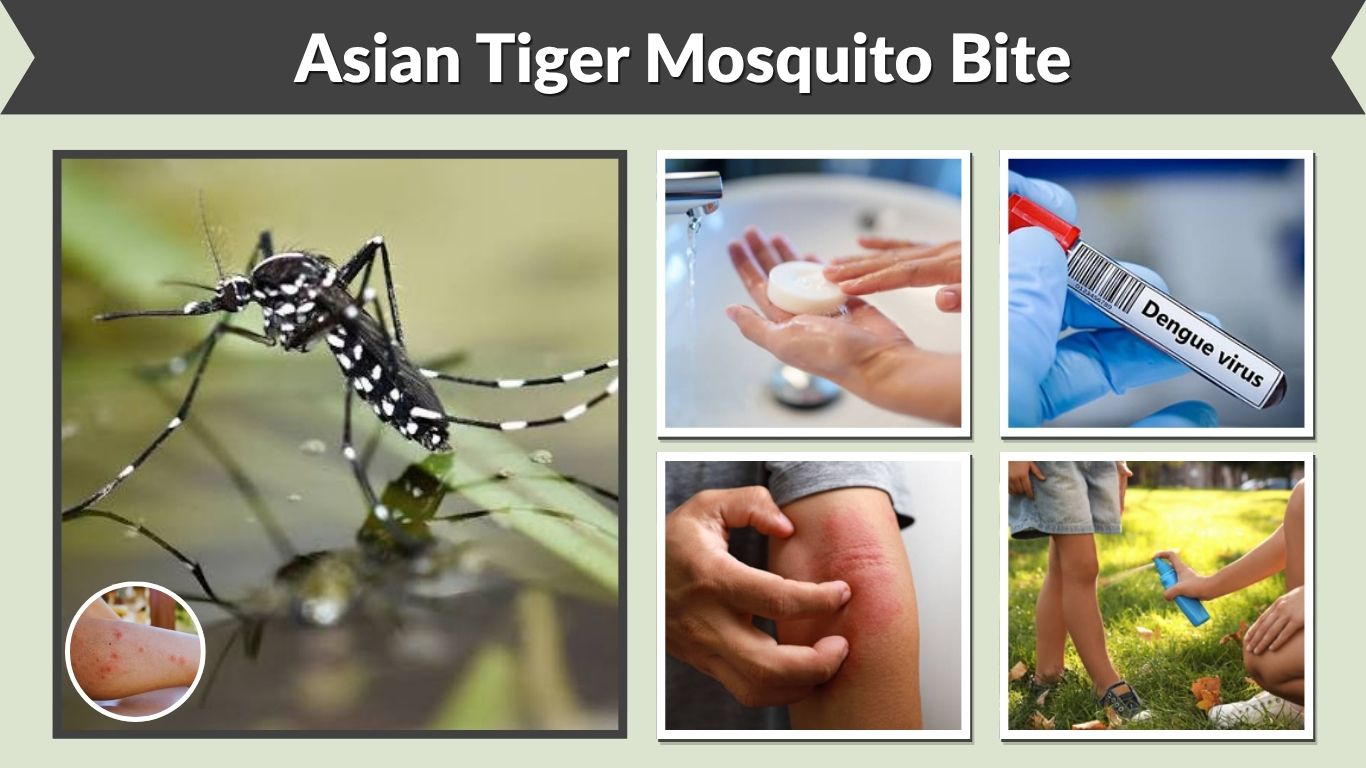
An Asian tiger mosquito bite can cause itching, redness, swelling, and uncomfortable skin irritation. This black-and-white striped mosquito, scientifically known as Aedes albopictus, is an aggressive daytime biter found in many parts of the world. Although most bites cause mild reactions, some people develop larger swollen bumps or allergic responses. Asian tiger mosquitoes can also transmit certain viral diseases when infected. Understanding what their bites look like, how to recognize symptoms, and which treatments work best can help you protect your health and recover comfortably.
What Does an Asian Tiger Mosquito Bite Look Like?
An Asian tiger mosquito bite usually resembles an ordinary mosquito bite. It may produce a small, raised bump surrounded by redness or mild swelling. The affected skin often feels itchy and sometimes becomes tender.
The appearance alone cannot reliably identify which mosquito species caused the bite. However, observing the mosquito itself can help determine whether it was an Asian tiger mosquito.
Asian Tiger Mosquito Bite Marks
Bite marks commonly appear as round, slightly swollen bumps. They may develop within minutes or several hours after feeding.
Some individuals develop hard, itchy bumps that remain noticeable for several days. Others experience larger reactions, particularly when bitten multiple times.
How to Identify an Asian Tiger Mosquito
The Asian tiger mosquito has a black body with distinctive white markings on its legs and a single silvery-white stripe along the upper surface of its thorax.
Unlike many nighttime-biting mosquitoes, this species frequently bites during daylight hours, especially around early morning and late afternoon.
Asian Tiger Mosquito Bite Symptoms
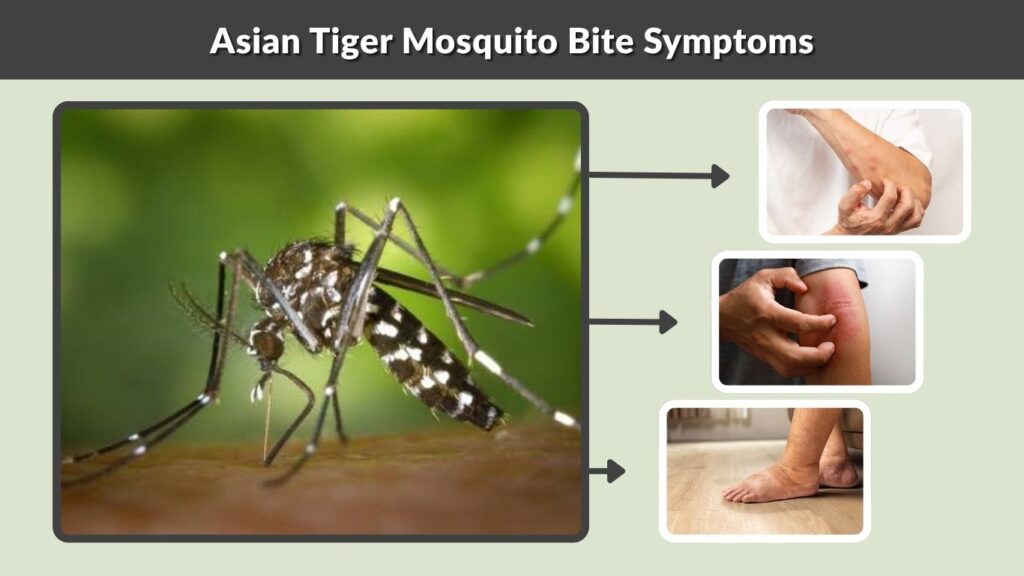
Asian tiger mosquito bite symptoms vary depending on individual skin sensitivity and immune responses. Most reactions remain localized and improve without serious complications.
The mosquito injects saliva while feeding, triggering an immune response that produces itching and inflammation.
Common Symptoms of Asian Tiger Mosquito Bites
Typical symptoms include:
- Itching: Persistent irritation around the bite.
- Redness: Pink or reddish discoloration surrounding the affected area.
- Swelling: Small raised bumps or larger swollen patches.
- Tenderness: Mild discomfort when touching the bite.
- Hard bumps: Firm, itchy areas that may develop later.
- Skin discoloration: Temporary dark marks after inflammation resolves.
Some people also develop small blisters or particularly noticeable swelling.
Why Does an Asian Tiger Mosquito Bite Hurt?
Pain or tenderness occurs because the immune system responds to proteins in mosquito saliva.
Repeated scratching can worsen inflammation and make the bite more uncomfortable. However, an Asian tiger mosquito bite is not necessarily more painful than a bite from another mosquito species.
How to Treat an Asian Tiger Mosquito Bite
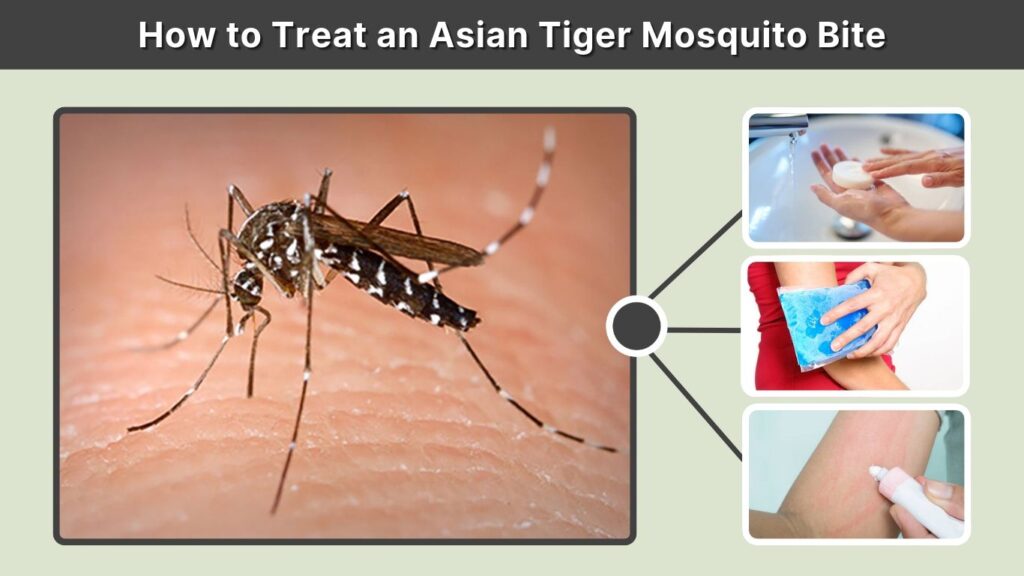
Most Asian tiger mosquito bites can be treated at home using basic skincare and appropriate anti-itch products. Treatment focuses on relieving itching, reducing swelling, and preventing infection.
The earlier you manage irritation, the easier it may be to avoid excessive scratching and additional skin damage.
First-Aid Treatment for Asian Tiger Mosquito Bites
Follow these steps for relief:
- Wash the bite: Gently clean the affected area with mild soap and water.
- Apply a cold compress: Hold a cloth-wrapped ice pack against the bite for approximately 10 minutes.
- Avoid scratching: Keep fingernails away from irritated skin to prevent infection.
- Use anti-itch cream: Apply suitable hydrocortisone cream or calamine lotion according to product instructions.
- Consider an antihistamine: An appropriate oral antihistamine may relieve persistent itching.
- Monitor the reaction: Watch for increasing redness, swelling, pain, or other unusual symptoms.
Home Remedies for Asian Tiger Mosquito Bites
A cool, damp washcloth is one of the simplest home remedies for itching and swelling.
Plain aloe vera gel may soothe irritated skin, although evidence specifically supporting its effectiveness against mosquito bites is limited.
Avoid toothpaste, undiluted essential oils, and harsh substances because they may worsen skin irritation.
Asian Tiger Mosquito Bite Allergic Reactions
Some individuals develop unusually strong local reactions after mosquito bites. These reactions may involve significant swelling, warmth, redness, and discomfort extending beyond the original bite.
A large local allergic reaction is sometimes called Skeeter syndrome. It can resemble a skin infection, although the two conditions require different management.
Asian Tiger Mosquito Bite Hard and Swollen
A hard, swollen mosquito bite commonly results from localized inflammation. The swelling may be particularly noticeable around the hands, ankles, or eyelids.
Applying a cold compress and avoiding scratching can help relieve discomfort. Seek medical advice if swelling continues to increase or becomes severely painful.
When Is an Allergic Reaction Dangerous?
Severe allergic reactions to mosquito bites are uncommon. However, difficulty breathing, fainting, or swelling of the tongue or throat requires immediate emergency medical attention.
Increasing warmth, spreading redness, pus, or worsening pain may indicate infection rather than a simple allergic reaction.
Can Asian Tiger Mosquito Bites Cause Diseases?
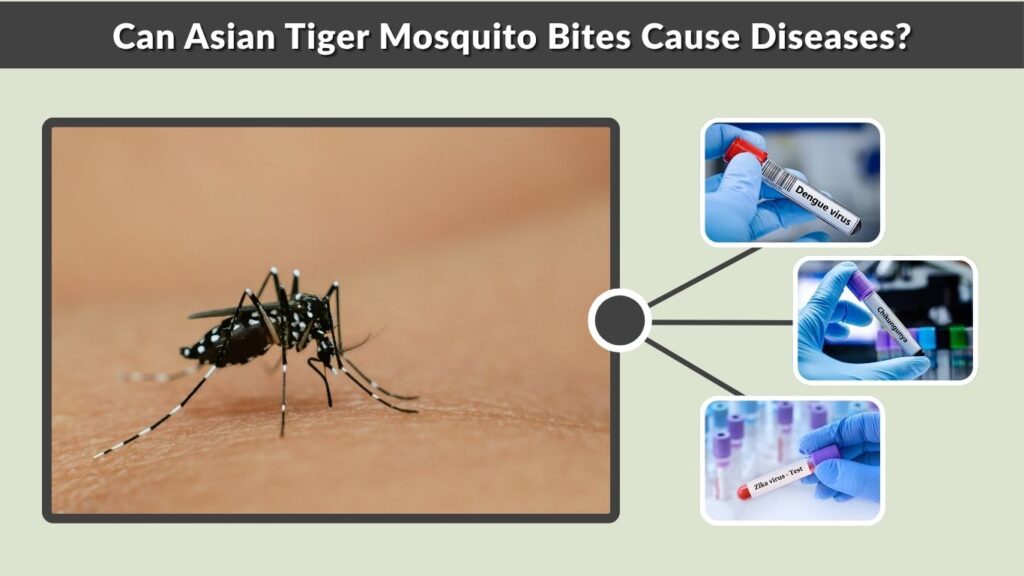
Asian tiger mosquitoes are important disease vectors because they can transmit certain viruses after becoming infected.
However, an ordinary bite does not mean that disease transmission has occurred. The risk depends on whether the mosquito carries a pathogen and whether that disease is circulating locally.
Diseases Associated With Asian Tiger Mosquitoes
Asian tiger mosquitoes can transmit several viruses, including:
- Dengue: May cause fever, severe headache, muscle pain, nausea, and rash.
- Chikungunya: Often produces sudden fever and significant joint pain.
- Zika: May cause mild fever, rash, joint pain, and red eyes. Infection during pregnancy can harm fetal development.
Their importance in transmitting each virus varies by region. Not every Asian tiger mosquito is infected.
Symptoms That May Indicate Infection
Fever, severe headache, muscle or joint pain, rash, or unusual weakness developing after mosquito exposure should not be dismissed as an ordinary bite reaction.
Medical assessment is especially important in regions experiencing mosquito-borne disease outbreaks.
Pregnant individuals with possible Zika exposure should contact a healthcare professional for appropriate advice.
How Long Does an Asian Tiger Mosquito Bite Last?
Most uncomplicated Asian tiger mosquito bites begin improving within a few days. Itching may disappear before the swollen bump completely fades.
People with sensitive skin or larger local reactions may experience symptoms for longer.
Asian Tiger Mosquito Bite Healing Time
Small bites generally settle within several days, while larger inflammatory reactions can take a week or more to resolve.
Scratching can delay recovery by damaging the skin and increasing the likelihood of infection.
Temporary dark marks may remain after the original swelling disappears, particularly when inflammation has been significant.
How to Prevent Asian Tiger Mosquito Bites
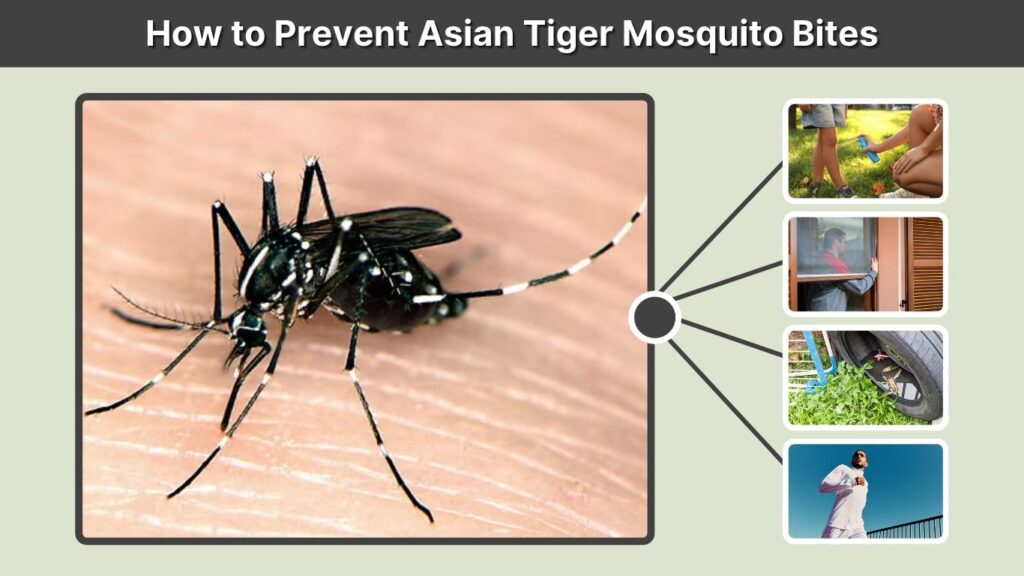
Preventing Asian tiger mosquito bites is especially important because this species frequently feeds during the daytime and breeds close to residential areas.
Using effective repellents, reducing exposed skin, and eliminating breeding sites can significantly decrease mosquito contact.
Best Ways to Prevent Asian Tiger Mosquito Bites
Practical prevention methods include:
- Use mosquito repellent: Choose an effective registered repellent containing DEET, picaridin, or another recommended active ingredient.
- Wear protective clothing: Long sleeves, trousers, and socks reduce exposed skin.
- Install window screens: Prevent mosquitoes from entering living spaces.
- Remove standing water: Empty flowerpot saucers, buckets, and uncovered containers.
- Maintain outdoor areas: Clean gutters and eliminate unnecessary water-holding objects.
- Protect children: Use age-appropriate repellents and properly fitted stroller netting.
Where Do Asian Tiger Mosquitoes Breed?
Asian tiger mosquitoes commonly lay eggs in small containers that collect water, including discarded tires, buckets, plant saucers, and garden equipment.
Regularly emptying and scrubbing these containers interrupts their breeding cycle. Even small amounts of standing water can support mosquito development.
FAQs
1. Are Asian Tiger Mosquito Bites Dangerous?
Most Asian tiger mosquito bites cause temporary itching, redness, and swelling. However, infected mosquitoes can transmit dengue, chikungunya, or Zika viruses. Seek medical attention if fever, severe body aches, unusual rash, or other concerning symptoms develop after exposure.
2. Why Is My Asian Tiger Mosquito Bite So Swollen?
Swelling occurs when your immune system reacts to proteins in mosquito saliva. Some people develop stronger local reactions than others. Applying a cold compress may help reduce inflammation, but increasing pain, warmth, or spreading redness requires medical evaluation.
3. How Do You Identify an Asian Tiger Mosquito Bite?
The bite itself cannot reliably distinguish an Asian tiger mosquito from other mosquito species. Identification depends on observing the insect, which has a black body, white-banded legs, and a distinctive white stripe running along the upper thorax.
4. Can Asian Tiger Mosquitoes Bite Through Clothing?
Asian tiger mosquitoes may bite through thin, tight-fitting fabrics when their mouthparts can reach the skin. Wearing loose-fitting, long-sleeved clothing provides better protection. Properly treated clothing and effective mosquito repellents offer additional protection against daytime mosquito bites.
5. When Should I Worry About an Asian Tiger Mosquito Bite?
Seek medical attention when a bite develops worsening swelling, spreading redness, pus, or significant pain. Fever, severe headache, joint pain, or rash after mosquito exposure also requires evaluation. Breathing difficulties or throat swelling are medical emergencies.
