
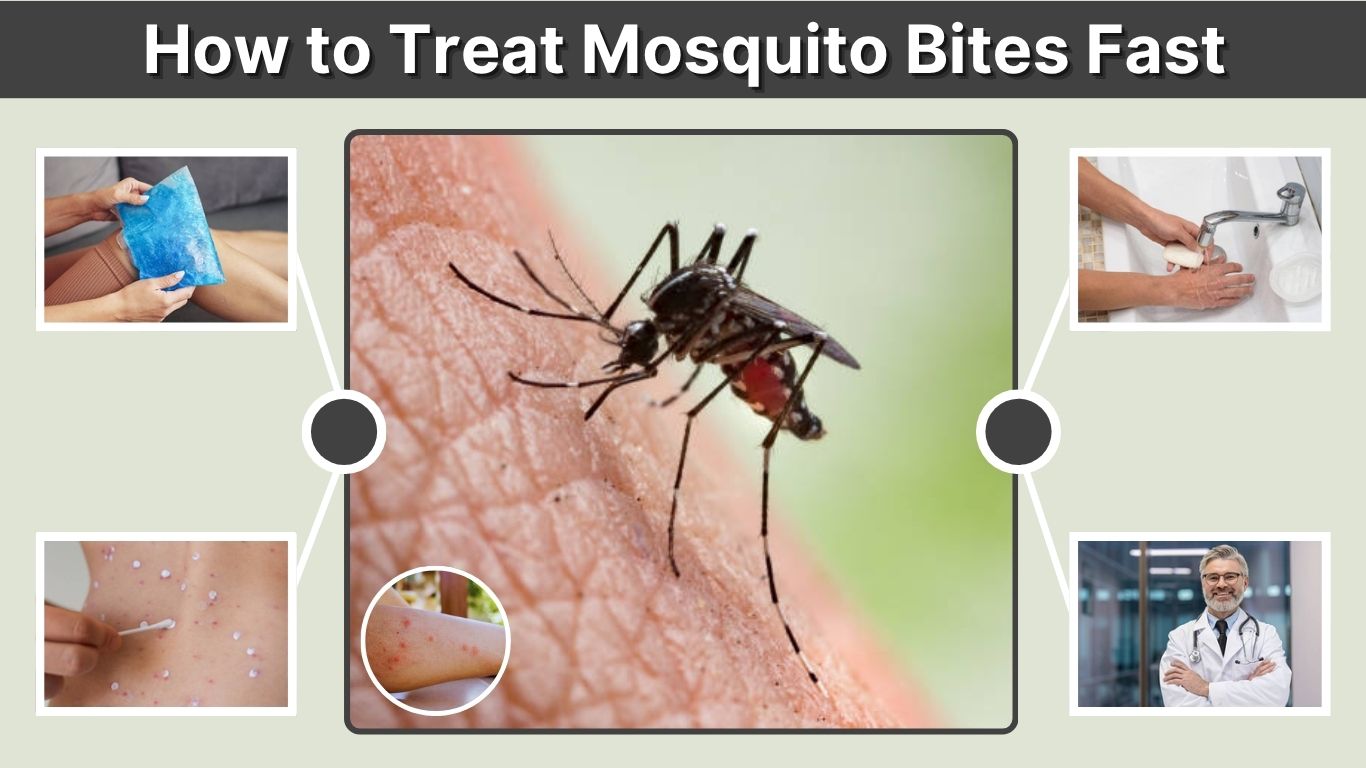
Mosquito bites can cause uncomfortable itching, redness, and swelling that sometimes lasts for several days. Fortunately, knowing how to treat mosquito bites can help reduce irritation and support faster recovery. Simple treatments such as cold compresses, anti-itch creams, and antihistamines often provide quick relief. However, infected bites or severe allergic reactions may require medical attention. This guide explains seven effective mosquito bite treatments, natural home remedies, and safe ways to manage bites on sensitive areas, including the face, legs, and eyelids.
How to Treat Mosquito Bites Fast
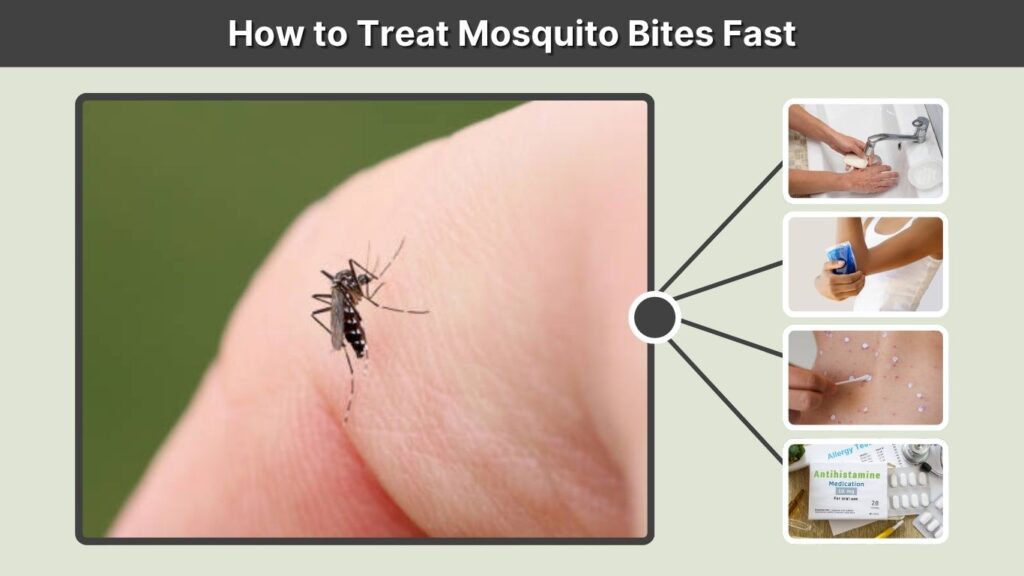
The fastest way to relieve mosquito bites is to clean the affected skin, apply something cold, and use an appropriate anti-itch treatment. Most bites improve without medical intervention, although complete healing may take several days.
1. Wash the Bite With Soap and Water
Gently clean the mosquito bite using mild soap and cool or lukewarm water. This removes dirt, sweat, and bacteria that could enter the skin through scratching.
Pat the area dry with a clean towel instead of rubbing it. Avoid harsh soaps or alcohol-based cleansers, which may irritate sensitive skin.
Cleaning is particularly important when the bite has already been scratched.
2. Apply a Cold Compress
A cold compress is one of the simplest ways to treat mosquito bites quickly. Cold temperatures help reduce swelling, temporarily numb the area, and relieve itching.
Wrap an ice pack in a soft towel and hold it against the bite for about 10 minutes. Repeat when necessary, allowing the skin to warm between applications.
Never place ice directly against the skin because prolonged exposure can cause cold injury.
3. Use Hydrocortisone Cream
Hydrocortisone cream helps reduce inflammation, itching, and redness associated with mosquito bites.
Over-the-counter 1% hydrocortisone may provide relief for uncomplicated bites. Apply a thin layer according to the product instructions.
Avoid applying it to broken skin, infected areas, or near the eyes without medical guidance. Consult a healthcare professional before using it on young children.
4. Apply Calamine Lotion
Calamine lotion can soothe irritated skin and temporarily relieve mild itching.
Apply a small amount to clean, dry skin and allow it to dry naturally. Repeat according to the product label.
Calamine is particularly useful when multiple mosquito bites cause widespread discomfort. Avoid applying it near the eyes or inside the mouth.
5. Take an Oral Antihistamine
Mosquito saliva triggers an immune response that releases histamine, contributing to itching and swelling.
Nonprescription antihistamines such as cetirizine or loratadine may help manage stronger reactions.
Follow the recommended dosage and consult a pharmacist about possible interactions, pregnancy, breastfeeding, or use in children. Some antihistamines may cause drowsiness.
6. Elevate Swollen Areas
Elevating a swollen arm or leg may help reduce fluid accumulation and discomfort.
For mosquito bites on the feet or ankles, rest with the affected leg supported on a pillow.
Combine elevation with a cold compress when appropriate. Avoid tight clothing or footwear that rubs against swollen bites.
7. Avoid Scratching the Bites
Scratching may temporarily satisfy the itch but damages the skin and increases infection risk.
Keep fingernails short and clean. If itching becomes difficult to control, use a cold compress or suitable anti-itch treatment instead.
For children, soft clothing that covers the area can discourage repeated scratching.
How to Treat Mosquito Bites at Home Naturally
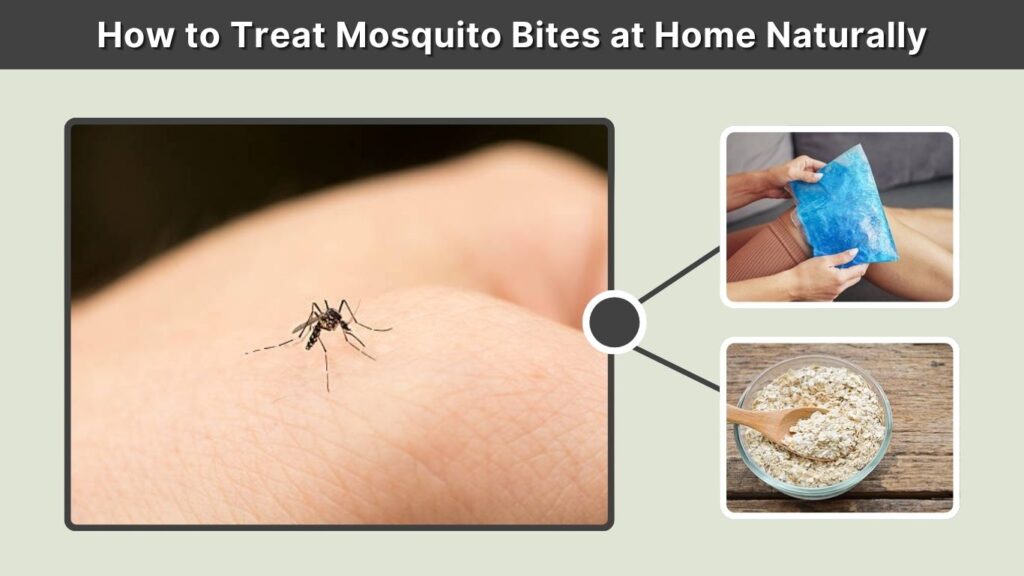
Natural approaches can provide temporary relief, especially when commercial treatments are unavailable. However, not every popular home remedy is effective or safe.
Cool Water and Cold Compresses
A clean washcloth soaked in cool water can help calm irritated skin without additional chemicals.
Hold the cloth against the affected area for several minutes. Repeat whenever itching returns.
This option is particularly useful for people with sensitive skin who cannot tolerate certain topical products.
Colloidal Oatmeal Baths
Colloidal oatmeal is commonly used to soothe irritated or itchy skin. A lukewarm oatmeal bath may provide comfort when multiple mosquito bites cover larger areas.
Follow the product instructions and avoid excessively hot water, which may increase itching.
Evidence specific to mosquito bites is limited, so oatmeal should be considered supportive care rather than a proven cure.
Avoid applying toothpaste, undiluted essential oils, or other irritating substances directly to mosquito bites.
How to Treat Swollen or Infected Mosquito Bites
Mosquito bites sometimes produce significant swelling, particularly in children or people sensitive to mosquito saliva. Severe local reactions and bacterial infections can look similar but require different management.
Treating Swollen Mosquito Bites
Localized swelling usually improves with cold compresses, appropriate anti-itch treatments, and avoiding scratching.
Large allergic reactions may create warm, raised welts that extend beyond the original bite.
If swelling becomes extensive, painful, or increasingly severe, seek medical evaluation. Some cases require prescription treatment.
Treating an Infected Mosquito Bite
An infected mosquito bite may develop when bacteria enter damaged skin.
Possible warning signs include:
- Increasing pain, warmth, and tenderness
- Spreading redness or skin discoloration
- Yellowish drainage or pus
- Red streaks extending from the bite
- Fever or worsening swelling
Wash the area gently, avoid scratching, and contact a healthcare professional promptly if infection is suspected.
A bacterial infection may require prescription antibiotics. Home remedies and hydrocortisone should not replace medical treatment.
How to Treat Mosquito Bites on Different Body Parts
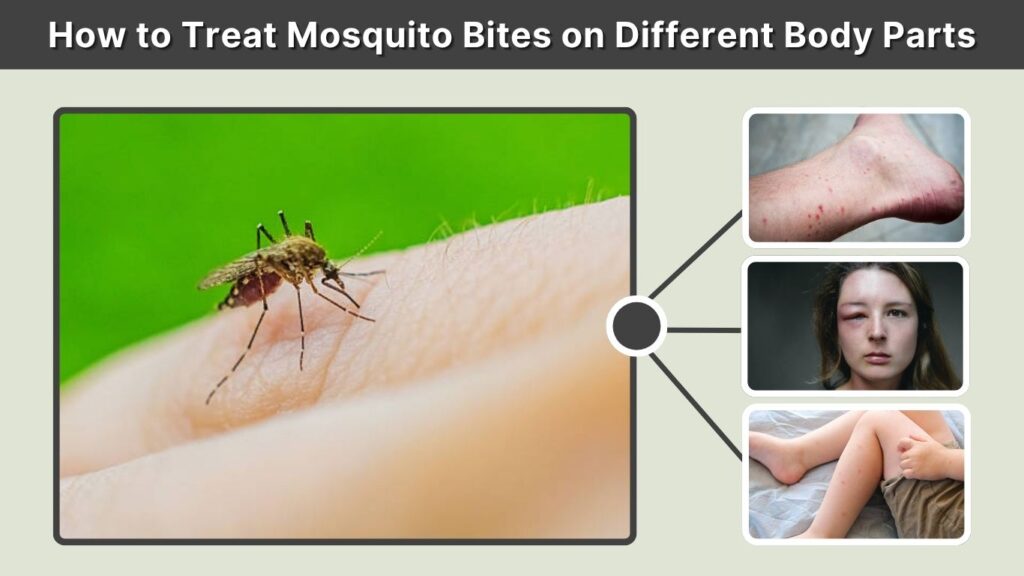
Treatment may vary depending on where the bite occurs. Sensitive areas require special precautions because certain products can cause additional irritation.
Mosquito Bites on Legs and Ankles
Legs and ankles are common mosquito bite locations, particularly when wearing shorts or sandals.
Wash the bites, apply a cold compress, and consider calamine lotion or hydrocortisone for itching.
Elevate the legs if swelling develops. Avoid tight socks and scratching, which can worsen irritation.
Mosquito Bites on the Face or Eyelid
Facial mosquito bites may cause noticeable swelling, particularly around the delicate eyelids.
Use a clean, cool compress without pressing directly on the eyeball. Avoid applying hydrocortisone, calamine, or other medicated creams near the eye unless recommended by a clinician.
Seek prompt medical advice if swelling affects vision, the eye becomes painful, or redness spreads.
Mosquito Bites on Infants and Toddlers
Young children may experience larger local reactions to mosquito saliva.
Gently wash the affected skin and apply a cool, damp cloth. Keep fingernails short to prevent scratching.
Do not give infants antihistamines or apply medicated creams without professional guidance. Seek medical advice for bites in infants younger than one year, significant swelling, fever, or worsening symptoms.
How Long Do Mosquito Bites Take to Heal?
Most uncomplicated mosquito bites gradually improve within a few days. Itching may settle before the visible bump completely disappears.
Larger allergic reactions can persist longer, sometimes approximately one week or more.
Avoid scratching while the skin heals. Mosquito bites may leave temporary dark marks, especially when scratching causes inflammation. Gentle skin care and sun protection can help prevent further darkening.
Persistent or worsening symptoms deserve medical assessment.
When Should You See a Doctor for Mosquito Bites?
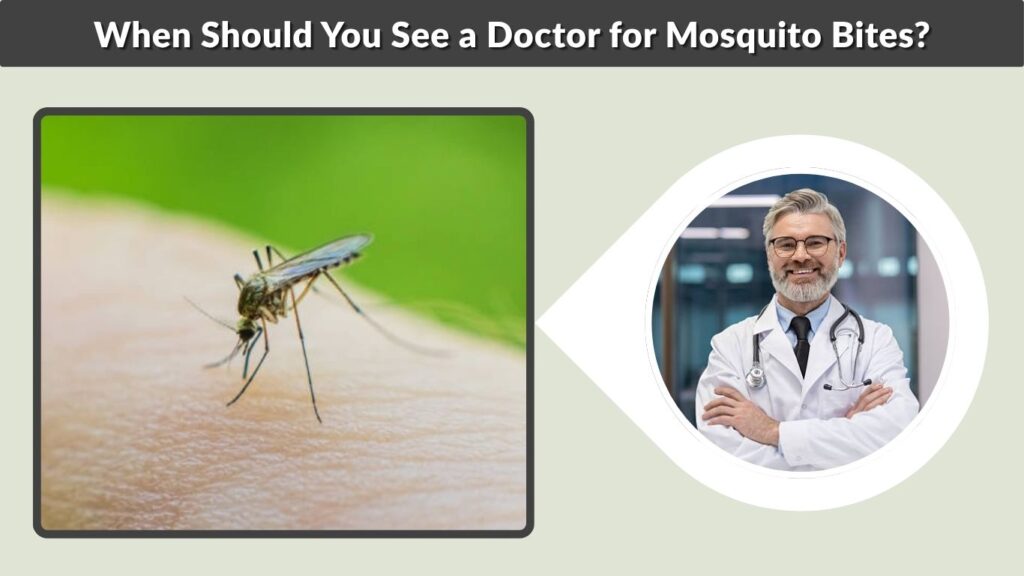
Most mosquito bites are harmless, but certain symptoms require prompt attention.
Seek medical evaluation for spreading redness, increasing pain, pus, fever, or swelling that does not improve.
Get emergency medical assistance for breathing difficulties, fainting, throat tightness, or sudden swelling of the tongue or lips.
Fever, severe headache, body aches, or a widespread rash following mosquito exposure may indicate a mosquito-borne infection rather than an ordinary bite reaction.
In areas where dengue occurs, seek medical advice if fever develops. If dengue is suspected, avoid aspirin and ibuprofen; acetaminophen (paracetamol) is generally preferred for fever when appropriate.
FAQs
1. What Is the Fastest Way to Heal Mosquito Bites?
Wash the affected area with soap and water, then apply a wrapped cold pack for approximately 10 minutes. Hydrocortisone cream or calamine lotion may relieve itching. These measures improve symptoms quickly, although complete healing usually takes several days.
2. How Do You Stop Mosquito Bites From Itching?
Cold compresses, calamine lotion, and hydrocortisone cream can reduce itching. Oral antihistamines may help with stronger reactions. Avoid scratching because it can increase inflammation, damage the skin, and potentially cause a bacterial infection.
3. Can You Treat Mosquito Bites While Pregnant?
Most uncomplicated bites can be managed with gentle washing and cold compresses. Before using medicated creams, antihistamines, or pain relievers during pregnancy, consult a healthcare professional. Fever following mosquito exposure also requires assessment, particularly where mosquito-borne infections occur.
4. Should You Pop a Mosquito Bite Blister?
No. Popping a blister breaks the protective skin barrier and increases infection risk. Keep the area clean and avoid scratching. Seek medical assessment if blisters become painful, unusually large, infected, or continue spreading.
5. What Happens if You Leave a Mosquito Bite Untreated?
Most uncomplicated mosquito bites heal naturally without medication. However, persistent scratching can damage the skin, cause temporary dark marks, and increase infection risk. Monitor bites that become increasingly painful, swollen, or warm.
