
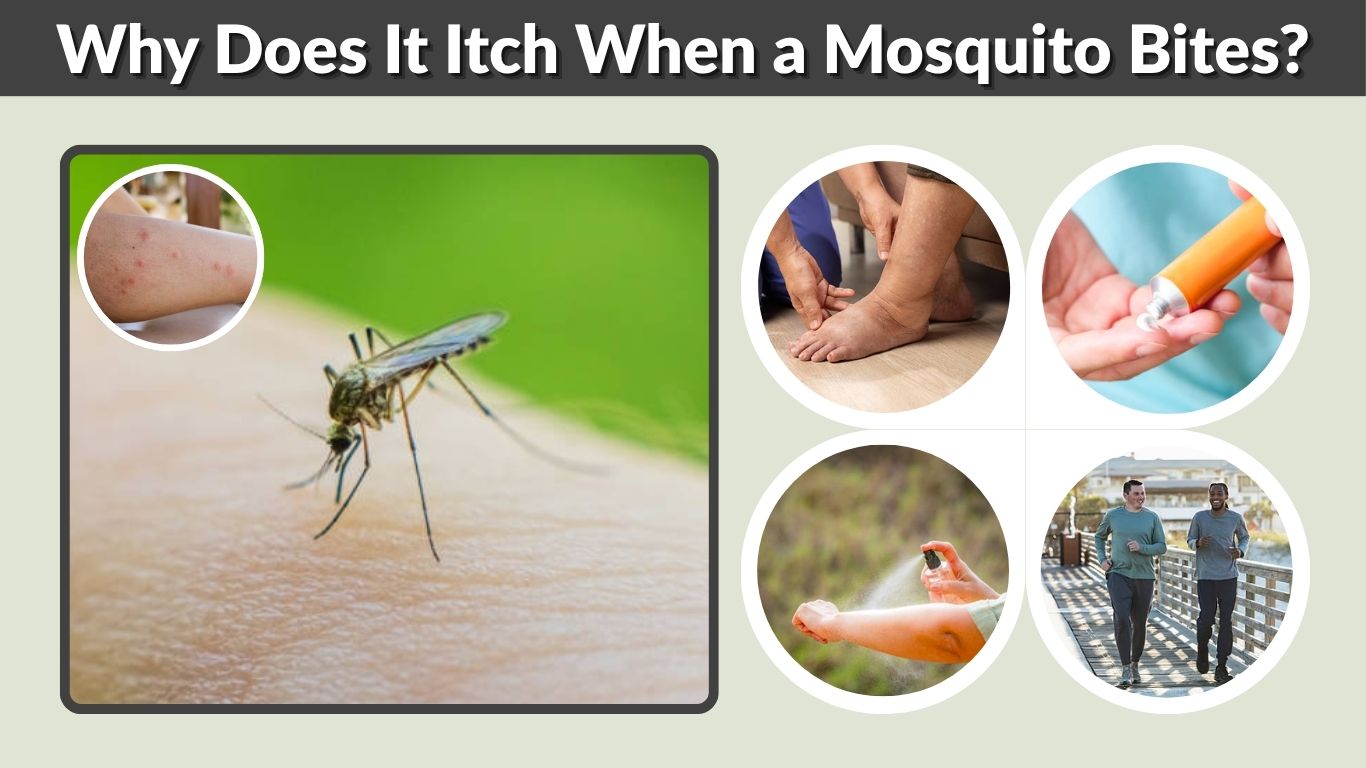
Have you ever wondered why it itches when a mosquito bites you? That tiny mosquito bite can leave behind an irritating, swollen bump that seems impossible to ignore. Surprisingly, the itching is not caused directly by the mosquito taking your blood. Instead, it happens because your immune system reacts to proteins in the mosquito’s saliva. This reaction releases chemicals that irritate nerves beneath your skin. Understanding why mosquito bites itch, how long the discomfort lasts, and what treatments work can help you find relief and avoid unnecessary scratching.
Why Does It Itch When a Mosquito Bites?
A mosquito bite itches because your immune system reacts to substances in mosquito saliva. When a female mosquito pierces your skin to collect blood, it introduces saliva containing proteins that help it feed. Your body recognizes these substances and produces an inflammatory response that causes itching, swelling, and redness.
Mosquito Saliva Triggers the Reaction
Female mosquitoes use a specialized mouthpart called a proboscis to penetrate the skin and reach small blood vessels.
During feeding, they release saliva containing compounds that interfere with normal blood clotting. This allows them to collect blood more easily.
However, your immune system recognizes components of the saliva as foreign substances. This triggers inflammation around the bite, even after the mosquito has flown away.
The saliva, rather than the loss of blood, is primarily responsible for the uncomfortable itching.
Histamine Makes Your Skin Itch
Histamine is an important chemical released during your immune system’s response to mosquito saliva.
It contributes to widening small blood vessels and increasing fluid movement into surrounding tissues. These changes cause redness and swelling.
Histamine also activates itch-sensitive nerve endings, sending signals to your brain that create the urge to scratch.
Other inflammatory chemicals and nerve pathways also contribute to mosquito bite itching. Therefore, histamine is a major cause, but not the only one.
What Happens to Your Skin After a Mosquito Bite?
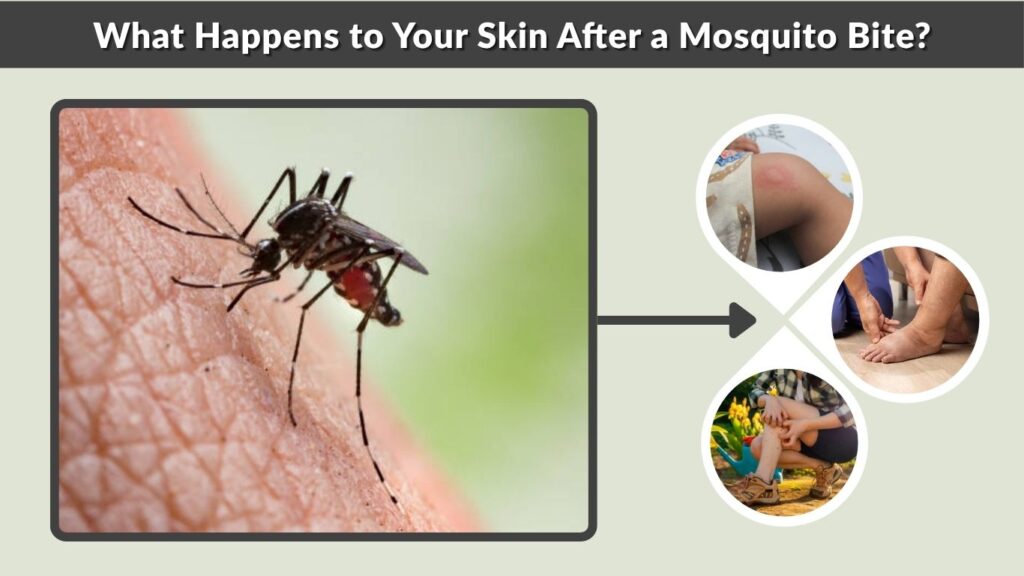
When a mosquito bites your skin, several biological reactions occur beneath the surface. These changes explain why a small bump appears and why itching sometimes continues long after the mosquito disappears.
The Immediate Skin Reaction
Within minutes of being bitten, some people develop a small, raised bump surrounded by redness or discoloration.
This immediate reaction occurs as blood vessels respond to inflammatory chemicals released by the immune system.
The swelling may feel soft, warm, or slightly tender. Itching can begin almost immediately, although some people experience little noticeable irritation.
The Delayed Itching Reaction
Sometimes mosquito bites become itchy several hours later or even the following day.
This delayed response involves additional immune processes that can produce a firmer, longer-lasting bump.
Researchers have identified different immune pathways involved in immediate and delayed mosquito bite reactions. These differences help explain why itching patterns vary between individuals.
Why Do Some Mosquito Bites Itch More Than Others?
Not everyone reacts equally to mosquito bites. Some people barely notice them, while others experience intense itching and significant swelling. The differences mainly depend on how the immune system responds to mosquito saliva and previous exposure.
Factors That Increase Mosquito Bite Itching
- Immune sensitivity: People with stronger inflammatory responses may develop larger, itchier bumps.
- Previous exposure: Repeated exposure to mosquito saliva can change how strongly the body reacts.
- Age: Children sometimes develop more pronounced reactions than adults.
- Allergic reactions: Some individuals experience excessive swelling, itching, or tenderness.
- Scratching: Repeated scratching increases skin irritation and may prolong discomfort.
Large local reactions are sometimes associated with Skeeter syndrome, a stronger inflammatory response to mosquito saliva. These reactions can produce extensive swelling and itching that lasts several days.
How Long Does Mosquito Bite Itching Last?
Most mosquito bites cause temporary itching that gradually improves as inflammation decreases. However, the duration varies depending on skin sensitivity, the strength of the immune reaction, and whether scratching damages the affected area.
Typical Mosquito Bite Itching Duration
For an uncomplicated mosquito bite, itching commonly lasts around three to four days.
Swelling may take approximately one week to disappear completely. Some larger inflammatory reactions last longer.
Repeated scratching can prolong irritation, while broken skin increases the possibility of infection.
If a bite becomes increasingly painful, warm, or swollen rather than improving, medical evaluation may be necessary.
How to Stop Mosquito Bites From Itching
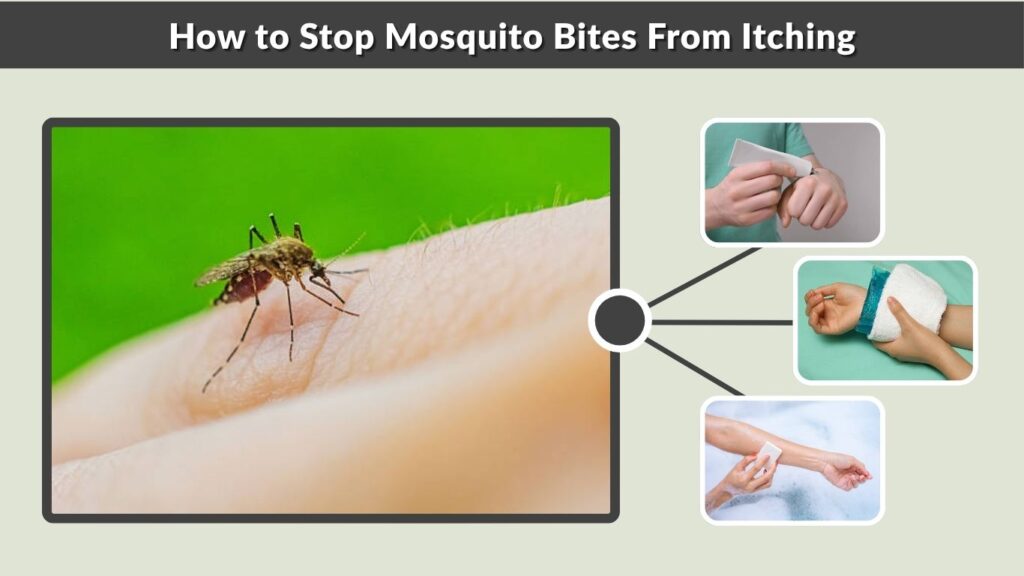
Although mosquito bites usually heal naturally, several treatments can reduce itching and swelling. The most effective options focus on cooling irritated skin, reducing inflammation, and avoiding further damage.
Effective Ways to Relieve Mosquito Bite Itching
- Apply a cold compress: Hold a cool cloth or towel-wrapped ice pack against the bite for approximately 10 minutes. Cooling helps reduce swelling and itching.
- Use hydrocortisone cream: An appropriate over-the-counter hydrocortisone product may reduce inflammation and discomfort.
- Consider an oral antihistamine: Medicines such as cetirizine or loratadine may help control itching, especially with multiple bites.
- Wash the affected area: Gently clean the bite with soap and water to reduce contamination.
- Avoid scratching: Allowing the skin to heal undisturbed helps prevent additional irritation and infection.
Always follow medication labels. Ask a healthcare professional before using medicated products on young children or when you are unsure whether a treatment is suitable.
Why Does Scratching Make Mosquito Bites Itch More?
Scratching a mosquito bite may provide temporary satisfaction, but it often makes the irritation worse. The skin is already inflamed, and additional friction can stimulate nearby nerves and damage its protective barrier.
The Itch-Scratch Cycle
When you scratch an itchy mosquito bite, the pressure temporarily changes the signals reaching your brain.
However, repeated scratching can intensify inflammation and encourage additional itching. This creates an itch-scratch cycle that becomes difficult to stop.
Damaged skin also provides an opportunity for bacteria to enter, potentially causing infection.
Instead of scratching, applying a cool compress or suitable anti-itch treatment is generally a safer approach.
How to Prevent Itchy Mosquito Bites
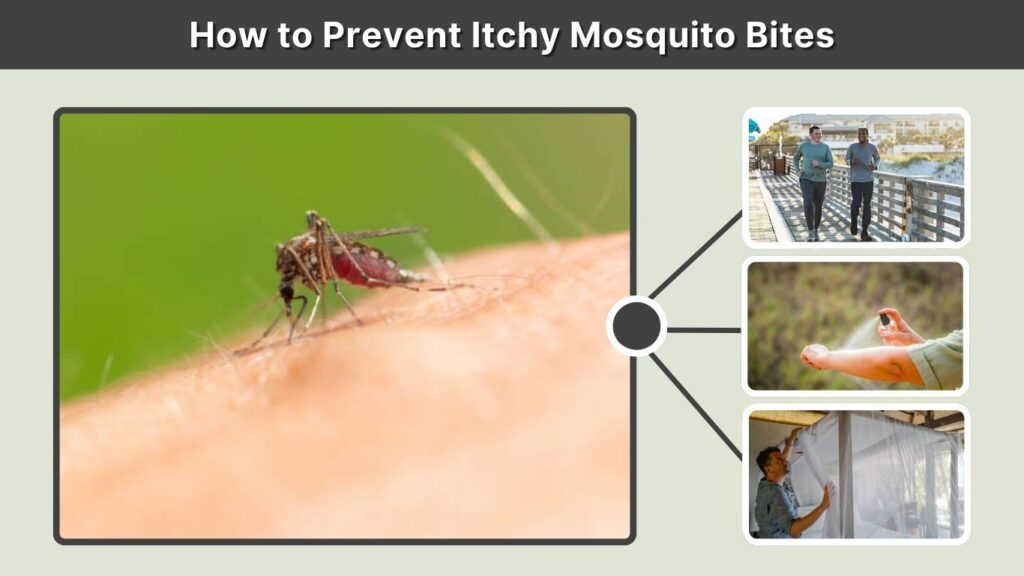
Preventing mosquito bites is the most reliable way to avoid itching. Female mosquitoes search for blood meals to support egg development, and their activity can occur during both daytime and nighttime.
Simple Mosquito Bite Prevention Tips
- Apply insect repellent: Use an appropriately registered repellent containing DEET, picaridin, or another proven ingredient.
- Wear protective clothing: Long sleeves, trousers, and socks reduce exposed skin.
- Install mosquito screens: Keep windows and doors properly screened to prevent insects from entering.
- Remove standing water: Empty water-filled containers where mosquitoes can lay eggs.
- Use mosquito nets: Protect sleeping areas, particularly where mosquito exposure is common.
Follow repellent instructions carefully. Products containing oil of lemon eucalyptus or PMD should not be used on children younger than three years.
When Is Mosquito Bite Itching a Medical Concern?
Most mosquito bite itching is harmless and resolves without medical care. However, severe allergic reactions, secondary infections, and mosquito-borne illnesses can sometimes produce symptoms requiring professional assessment.
Warning Signs to Watch For
- Increasing swelling, warmth, or pain
- Redness or discoloration spreading significantly beyond the bite
- Pus, drainage, or red streaks extending from the affected area
- Fever, headache, body aches, or unusual fatigue
- Large, painful swelling that does not improve
- Persistent itching accompanied by worsening skin changes
Seek medical attention for these symptoms, particularly if you live in or recently visited an area where dengue, malaria, or other mosquito-borne diseases occur.
Difficulty breathing, fainting, or swelling of the tongue or throat requires immediate emergency medical attention.
FAQs
1. Why do mosquito bites itch more at night?
Mosquito bites may seem itchier at night because fewer distractions make skin sensations more noticeable. Warm bedding or additional scratching may also increase discomfort. The underlying cause remains the immune response to mosquito saliva.
2. Why do mosquito bites itch days later?
Delayed itching happens because immune reactions can continue after the initial bite. Some inflammatory responses develop gradually, causing a firmer, itchy bump several hours or a day later. This does not necessarily indicate an infection.
3. Why do some mosquito bites not itch?
Some people experience very mild immune responses to mosquito saliva. Previous mosquito exposure can also influence sensitivity. Consequently, a bite may produce little itching or no noticeable bump, even though the mosquito successfully fed.
4. Does scratching mosquito bites spread the itch?
Scratching does not spread mosquito saliva to other parts of the body. However, it can irritate surrounding skin and increase inflammation. Repeated scratching may also damage the skin and increase the risk of bacterial infection.
5. Can mosquito bites itch for a week?
Yes. Although itching commonly improves within three or four days, stronger inflammatory reactions may persist for a week or longer. Seek medical advice if symptoms become increasingly painful, swollen, infected, or fail to improve.
