
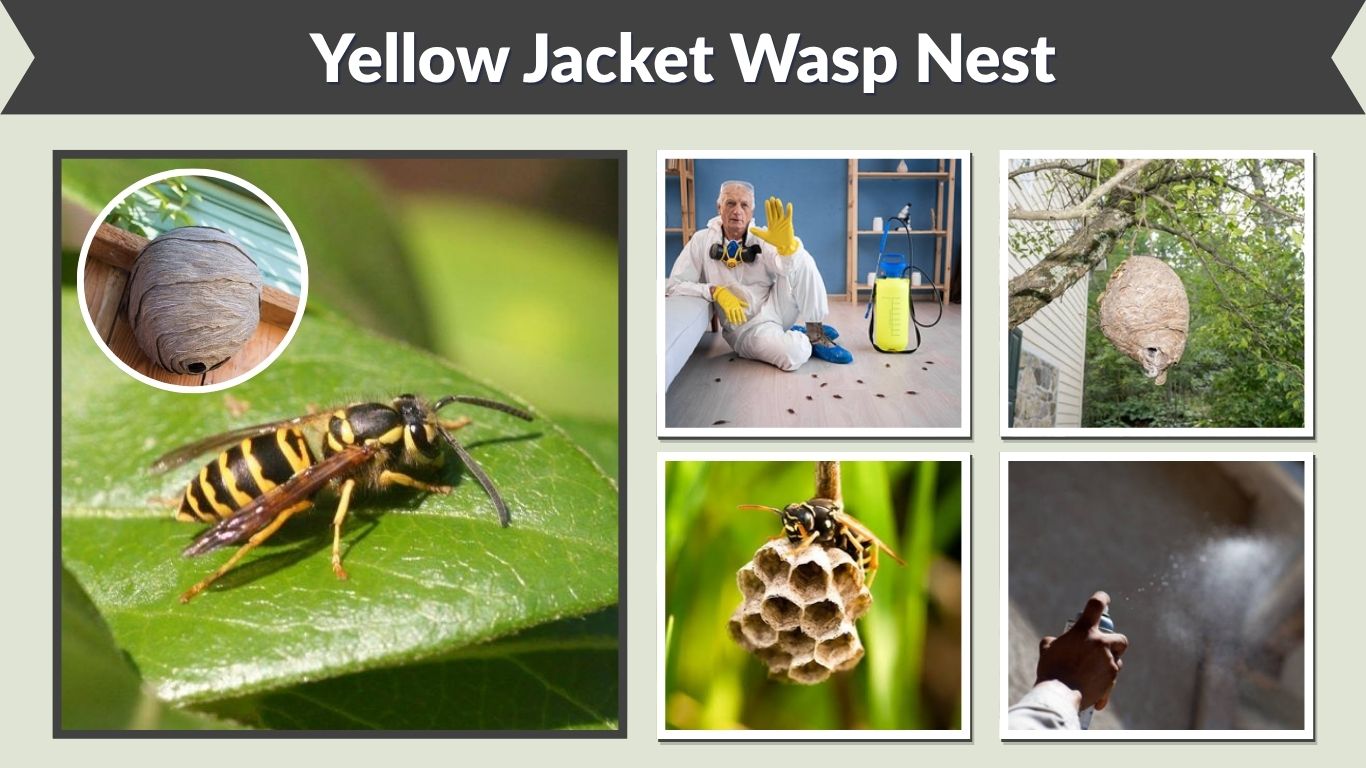
A yellow jacket wasp nest can be hidden underground, inside walls, or hanging from tree branches, making identification surprisingly difficult. Unlike paper wasps, yellowjackets generally construct enclosed nests with multiple layers of protective, paper-like material. These social insects can become aggressive when their colonies are disturbed, especially during warmer months. Understanding what a yellow jacket wasp nest looks like, where these insects build their colonies, and how their nests differ from paper wasp and hornet nests is essential. This guide explains nest identification, colony size, safe removal methods, and prevention tips.
What Does a Yellow Jacket Wasp Nest Look Like?
A yellow jacket wasp nest is made from chewed wood fibers mixed with saliva, creating a lightweight, gray or brown, paper-like structure. Inside, horizontal combs contain hexagonal cells where the colony raises developing larvae.
The nest’s appearance depends on its location. Underground colonies may be completely hidden, while aerial yellowjacket nests often resemble large, enclosed paper balls.
Common Identification Features
- Paper-like material: Gray, tan, or brown layers made from processed wood fibers.
- Enclosed structure: Multiple internal combs surrounded by a protective outer covering.
- Entrance opening: One or more openings used by worker yellowjackets.
- Frequent activity: Black-and-yellow insects repeatedly entering and exiting the same location.
- Hidden cavities: Nests commonly located underground, in trees, or inside building walls.
A mature colony may become quite large, although underground nests are often impossible to measure without excavation.
Yellow Jacket Nest vs Paper Wasp Nest
Yellowjackets and paper wasps both belong to the wasp family Vespidae, but their nest designs are noticeably different. Understanding these differences is one of the easiest ways to identify which insects are living around your property.
Open, umbrella-shaped comb with visible cells
Yellowjacket nest
Protective papery envelope surrounding internal combs
Key Differences Between Their Nests
| Feature | Yellowjacket Nest | Paper Wasp Nest |
| Structure | Enclosed paper nest | Open, exposed comb |
| Appearance | Layered, rounded, or irregular | Umbrella-shaped |
| Nest location | Ground, walls, trees | Eaves, branches, sheltered areas |
| Colony size | Often hundreds or thousands | Generally dozens |
| Defensive behavior | Strong nest defense | Defensive when disturbed |
| Comb visibility | Hidden by outer envelope | Usually visible |
Which Nest Is More Dangerous?
Both yellowjackets and paper wasps can sting repeatedly, but large yellowjacket colonies often create a greater risk because numerous workers may defend the nest simultaneously.
Paper wasps also protect their colonies, particularly when people approach their exposed combs. Neither insect should be handled or disturbed without appropriate precautions.
Yellow Jacket vs Wasp vs Hornet Nest
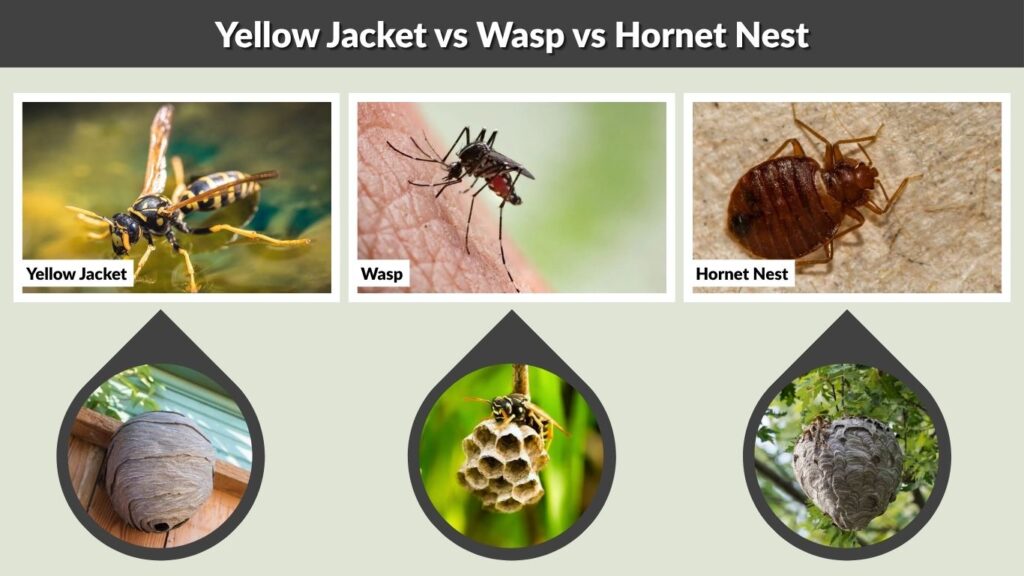
Yellowjackets, paper wasps, and hornets are closely related social wasps. However, their nest structures and preferred locations differ. These characteristics can help homeowners recognize common species without approaching an active colony.
How Are Their Nests Different?
| Nest Type | Typical Appearance | Common Location |
| Yellowjacket | Enclosed, layered paper nest | Underground, walls, trees |
| Paper wasp | Open hexagonal comb | Roof eaves, branches |
| Hornet | Large enclosed paper nest | Trees, buildings, cavities |
Some yellowjackets construct aerial nests resembling hornet nests. In fact, the bald-faced hornet commonly found in North America is an aerial yellowjacket rather than a true hornet. Therefore, nest appearance alone may not provide a definitive species identification.
Where Do Yellow Jacket Wasps Build Nests?
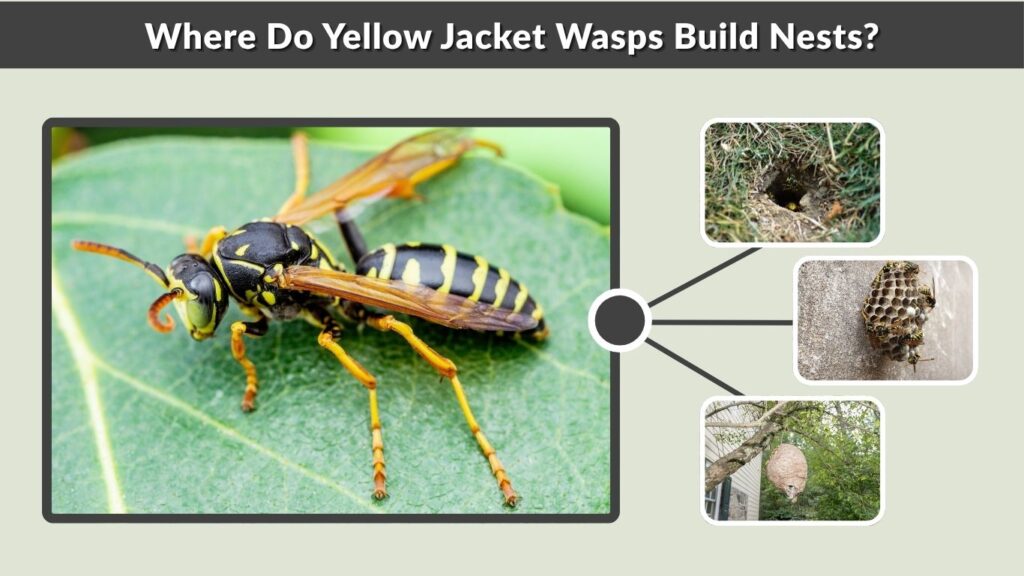
Yellowjackets prefer protected locations that provide suitable temperatures and shelter from predators. Nest placement varies by species, with some primarily nesting underground and others using trees or building cavities.
1. Yellow Jacket Wasp Nest in Ground
Underground yellowjacket nests are especially common in lawns, gardens, and abandoned rodent burrows. The main structure usually remains hidden below the soil, while a small entrance allows workers to enter and exit.
Repeated insect activity around a ground opening is a strong warning sign. Mowing or walking over an active nest can trigger defensive stinging.
2. Yellow Jacket Wasp Nest in Wall
Yellowjackets sometimes establish colonies inside wall cavities, roof spaces, and other structural gaps. Workers may enter through cracks around siding, windows, or exterior fixtures.
These nests are particularly challenging because their exact location may be difficult to determine. Never seal an active entrance, as trapped insects may find another route into occupied rooms.
3. Yellow Jacket Wasp Nest in Tree
Certain yellowjacket species construct exposed nests on tree branches or in shrubs. These nests typically have rounded or oval shapes covered with layers of gray paper.
Other species occupy hollow trees and cavities near roots. Large aerial nests may become easier to notice as surrounding leaves fall.
How Many Wasps Are in a Yellow Jacket Nest?
Yellowjacket colony size varies depending on species, climate, food availability, and seasonal development. A colony usually begins with a single overwintered queen that establishes a new nest during spring.
As workers emerge, the colony expands, and nest construction accelerates. Mature colonies often contain hundreds or thousands of individuals.
How Big Can a Yellow Jacket Nest Get?
Some colonies eventually develop nests larger than a basketball, while others remain comparatively small.
In climates with cold winters, most colonies die off seasonally, leaving newly produced queens to overwinter elsewhere. However, colonies in warmer regions may survive longer and occasionally develop unusually large nests.
How to Get Rid of a Yellow Jacket Wasp Nest Safely
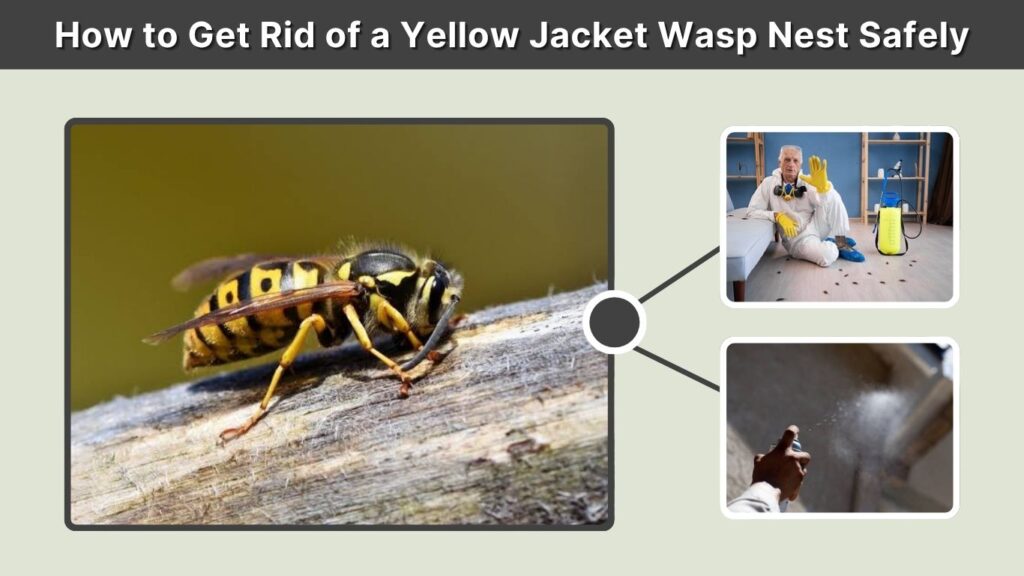
Yellowjacket nest removal can be hazardous because workers vigorously defend their colony. Appropriate treatment depends on nest location, colony size, and the likelihood of accidental disturbance.
For large colonies or nests in building cavities, professional pest control is the safest option.
Recommended Removal Methods
- Identify the nest location: Observe insect movements from a safe distance without disturbing the colony.
- Evaluate the risk: Determine whether the nest threatens people, pets, or frequently used areas.
- Choose professional treatment: Pest control specialists can apply appropriate products to concealed or difficult-to-reach nests.
- Use labeled products when appropriate: Some insecticidal dusts and foams are specifically labeled for yellowjacket nests. Follow all safety instructions and local regulations.
- Check for remaining activity: Keep clear of the area until the colony has been confirmed inactive.
Avoid using gasoline, fire, boiling water, or flooding. These methods may provoke stinging attacks or create additional hazards. For wall nests, do not close entrance holes until the colony is eliminated.
Do Fake Wasp Nests Keep Yellow Jackets Away?
Fake wasp nests are marketed as natural deterrents designed to discourage yellowjackets from establishing colonies nearby.
However, reliable scientific evidence supporting their effectiveness is lacking. Yellowjackets may establish nests close to other wasp colonies, so artificial nests cannot be considered a dependable prevention method.
Better prevention strategies include keeping outdoor garbage containers closed, removing fallen fruit, repairing structural openings, and checking sheltered areas for early nesting activity.
FAQs
1. What Is the Difference Between a Yellow Jacket Nest and a Paper Wasp Nest?
Yellowjacket nests typically have enclosed, layered paper coverings, while paper wasp nests feature exposed, umbrella-shaped combs. Yellowjackets commonly nest underground or inside walls, whereas paper wasps prefer sheltered aboveground locations such as roof eaves, branches, and outdoor structures.
2. How Many Yellow Jacket Wasps Live in a Nest?
A mature yellowjacket nest may contain hundreds or thousands of workers, depending on the species and environmental conditions. Colonies usually start with one queen during spring and gradually increase in population throughout summer, reaching their largest sizes toward autumn.
3. How Do You Find a Yellow Jacket Wasp Nest?
Observe yellowjackets from a safe distance and watch for repeated flights toward one location. Common nesting sites include underground holes, wall cracks, tree cavities, and shrubs. Never disturb a suspected nest while searching because workers may respond defensively and sting.
4. Can Yellow Jackets Build Nests Inside House Walls?
Yes, yellowjackets frequently establish colonies inside wall cavities, attics, and structural gaps. Workers enter through small exterior openings. These nests can be difficult to treat safely, so professional removal is recommended. Never seal an active entrance before eliminating the colony.
5. Do Fake Wasp Nests Deter Yellow Jackets?
There is no convincing scientific evidence that fake wasp nests reliably prevent yellowjackets from nesting nearby. Although these products imitate existing colonies, yellowjackets may still establish nests in surrounding areas. Eliminating food attractants and sealing unused structural openings provides better prevention.
