
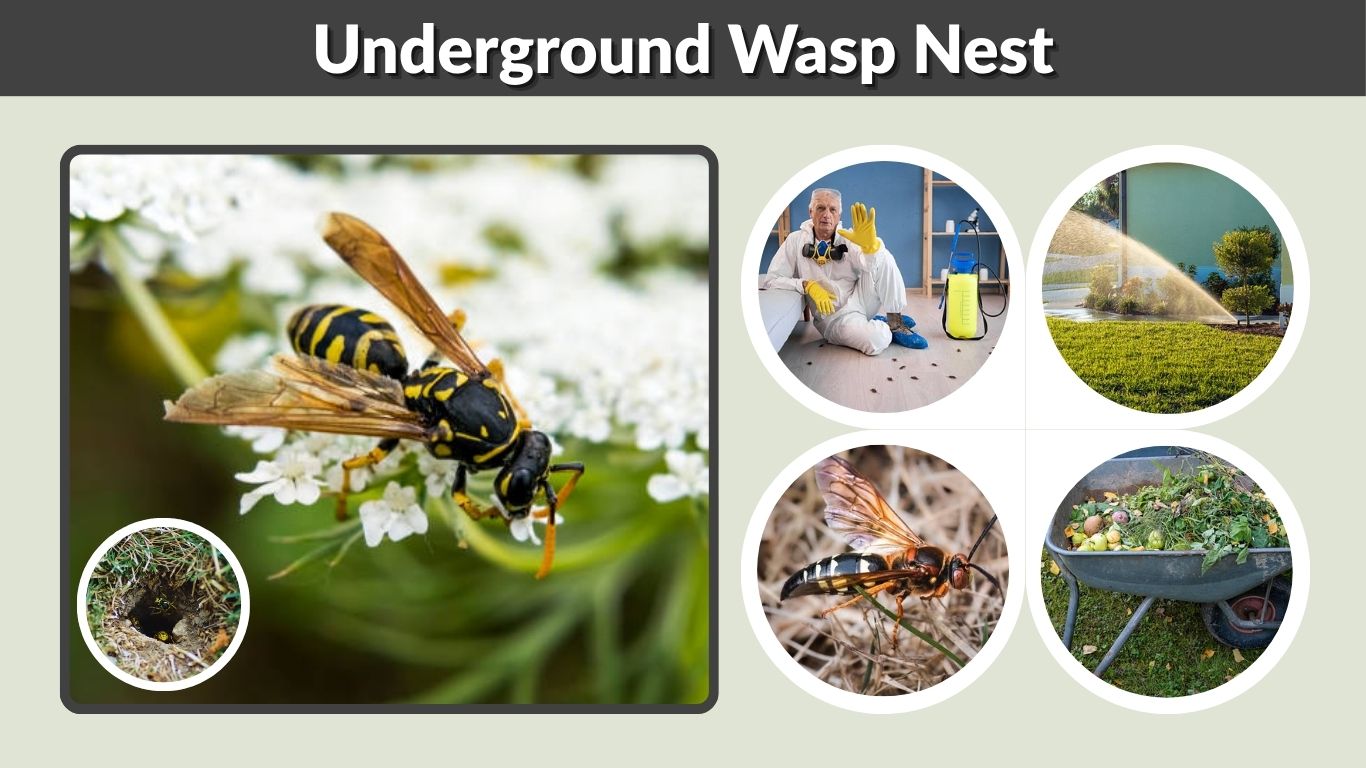
An underground wasp nest can be difficult to notice until dozens of wasps begin flying in and out of a small hole in your lawn. While some ground-nesting wasps are solitary and rarely aggressive, yellowjackets may defend their hidden colonies with painful stings. Learning how to identify an underground wasp nest, understand which wasps build them, and choose safe removal methods can protect your family and pets. This guide explains the warning signs, nest size, treatment options, and dangerous mistakes to avoid.
What Is an Underground Wasp Nest?
An underground wasp nest is a nesting structure built inside soil, abandoned animal burrows, or natural ground cavities. Some species create papery nests containing hundreds or thousands of insects, while solitary wasps construct individual tunnels for raising their young.
These nests commonly appear in lawns, gardens, flower beds, and wooded areas.
What Does an Underground Wasp Nest Look Like?
Unlike hanging paper wasp nests, underground nests are usually hidden beneath the soil. Their most noticeable feature is a small entrance hole.
Common identification signs include:
- Small ground opening: A visible hole surrounded by soil, grass, or leaves.
- Frequent wasp activity: Several wasps repeatedly entering and leaving the same opening.
- Hidden nest structure: Papery combs located inside an underground cavity in social yellowjacket colonies.
- Defensive behavior: Wasps becoming agitated when people approach or disturb the area.
- Repeated flight patterns: Workers following consistent routes between the nest and surrounding vegetation.
Avoid digging into a suspected nest to confirm its appearance.
Where Do Wasps Build Underground Nests?
Ground-nesting wasps choose locations that provide shelter, suitable soil, and access to food.
Common nesting locations include lawns, gardens, abandoned rodent burrows, tree roots, rock crevices, and spaces beneath landscaping materials.
Yellowjackets often occupy existing cavities, while solitary digging wasps may excavate their own tunnels.
What Types of Wasps Build Nests Underground?
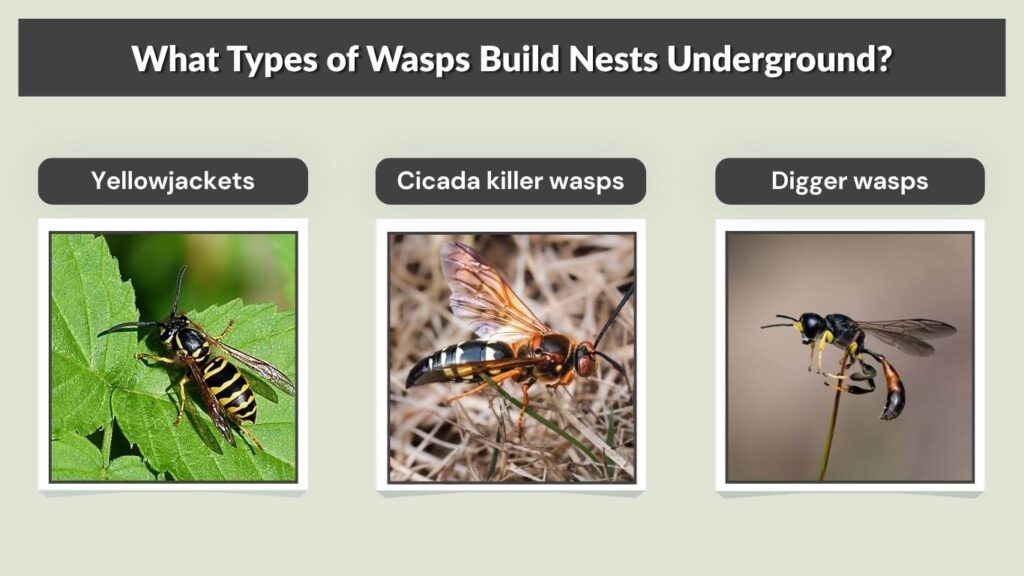
Several wasp species use underground nesting sites, but their behavior differs considerably. Some live in large colonies and aggressively protect their nests, while others are solitary insects that rarely threaten people.
Understanding the species helps determine whether removal is necessary.
| Wasp Type | Nesting Behavior | Risk Level |
| Yellowjackets | Large underground colonies | High near active nests |
| Cicada killer wasps | Individual soil burrows | Generally low |
| Digger wasps | Solitary underground tunnels | Generally low |
| Sand wasps | Individual nests in sandy soil | Generally low |
| Great black wasps | Solitary ground burrows | Generally low |
Yellow Jacket Wasp Underground Nest
Yellowjackets are among the most concerning underground-nesting wasps. They frequently use abandoned rodent burrows and establish colonies containing numerous workers.
These black-and-yellow wasps vigorously defend their nests when disturbed. Lawn mowing, digging, and accidental footsteps can trigger defensive behavior.
Black Wasps and Cicada Killer Nests
Large black wasps and cicada killer wasps also nest underground. However, most are solitary rather than social.
Cicada killers commonly create noticeable soil mounds around their burrow entrances. Despite their intimidating size, they are usually much less aggressive toward people than yellowjackets.
How Big Can an Underground Wasp Nest Be?
The size of an underground wasp nest depends on the species, available space, and colony age. Small nests may contain only a few individuals, while established yellowjacket colonies can become significantly larger.
How Many Wasps Live in an Underground Nest?
A mature yellowjacket nest may contain hundreds or thousands of workers during peak seasonal activity.
Underground yellowjacket nests typically include:
- A queen responsible for reproduction.
- Worker wasps that collect food and defend the colony.
- Developing larvae and pupae inside protected combs.
- Multiple layers of papery nesting material.
Colony populations generally increase throughout the warmer months. Large, established nests can therefore present a greater risk of multiple stings.
How to Find an Underground Wasp Nest
Finding an underground wasp nest requires careful observation rather than physically searching through the soil. Because the entrance may be almost invisible, watching wasp movement is often the easiest identification method.
Signs of an Active Underground Nest
Look for the following warning signs:
- Repeated flying activity: Wasps entering and exiting one particular area of the lawn.
- Small entrance holes: Openings near grass, roots, or landscaping materials.
- Defensive wasps: Insects flying toward people who approach the nesting area.
- Concentrated activity: Numerous wasps gathering near a single ground opening.
Observe from a safe distance during daylight. Never poke, dig, or disturb the entrance to test whether the nest is active.
How to Get Rid of an Underground Wasp Nest Safely
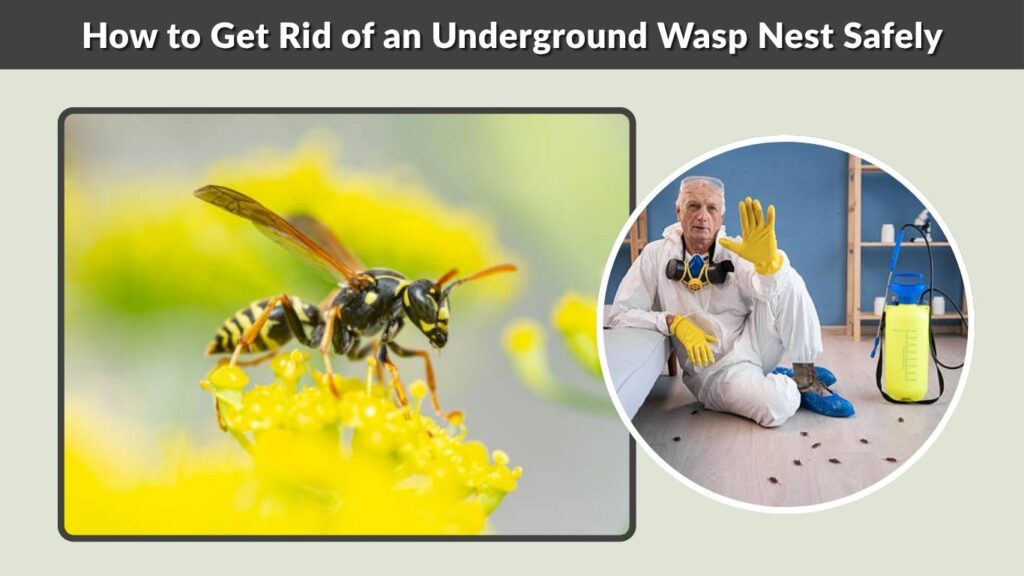
Getting rid of an underground wasp nest requires selecting an appropriate treatment method. Yellowjackets can react aggressively when their colony is threatened, making removal potentially dangerous.
Professional removal is generally the safest option for large, inaccessible, or highly active colonies.
1. Determine Whether Removal Is Necessary
Not every underground wasp nest needs removal.
Solitary wasps often provide beneficial insect control and usually pose little risk. Even a yellowjacket nest may be left undisturbed when it is far from people and pets.
However, nests near entrances, sidewalks, playgrounds, and frequently used gardens may require treatment.
2. Use an Appropriate Underground Wasp Nest Treatment
Insecticidal dusts or foams specifically labeled for underground yellowjacket nests can be effective when used correctly.
Dust formulations can be particularly useful because returning workers may carry insecticide into concealed portions of the nest. Ordinary contact sprays may not penetrate deep underground cavities.
If considering treatment yourself, follow the product label, wear the required protective equipment, and avoid approaching an active nest if you cannot do so safely.
Late evening or nighttime treatment is generally recommended because yellowjackets are usually less active, although disturbing a colony remains dangerous.
3. Consider Professional Underground Wasp Nest Removal
Professional pest control is recommended when:
- The nest contains a large, active colony.
- Someone nearby has a serious insect-sting allergy.
- The entrance is difficult to access.
- The colony is located near children, pets, or public areas.
- Previous treatment attempts have failed.
Pest control technicians can identify the species, select appropriate treatments, and assess whether further action is necessary.
4. Monitor the Nest After Treatment
After professional or properly conducted treatment, the nesting area should be monitored from a safe distance.
Some wasps may remain active for several days. Do not immediately dig into the nest or block the entrance while insects are still entering and leaving.
If activity continues, contact the pest control provider for reassessment.
Can You Destroy an Underground Wasp Nest Naturally?
Many homeowners search for natural methods to eliminate underground wasps without pesticides. However, popular home remedies are often unreliable and may increase the risk of stings.
Does Boiling Water Kill an Underground Wasp Nest?
Boiling water may kill exposed insects, but it cannot reliably reach every chamber inside a deep underground nest.
Pouring boiling water into a nest can also cause severe burns and trigger defensive wasp activity. It is not a recommended treatment.
Can You Flood an Underground Wasp Nest?
Flooding a nest with a garden hose is generally unreliable. Underground passages may prevent water from reaching the entire colony.
Attempting to drown wasps can also provoke defensive behavior, increasing the likelihood of painful stings.
Is Burning an Underground Wasp Nest Safe?
No. Burning a nest or pouring gasoline, diesel, or other flammable substances into the entrance is extremely dangerous.
These methods create serious fire hazards and may contaminate surrounding soil and water. Never attempt to burn, smoke out, or ignite an underground wasp nest.
How to Prevent Underground Wasp Nests
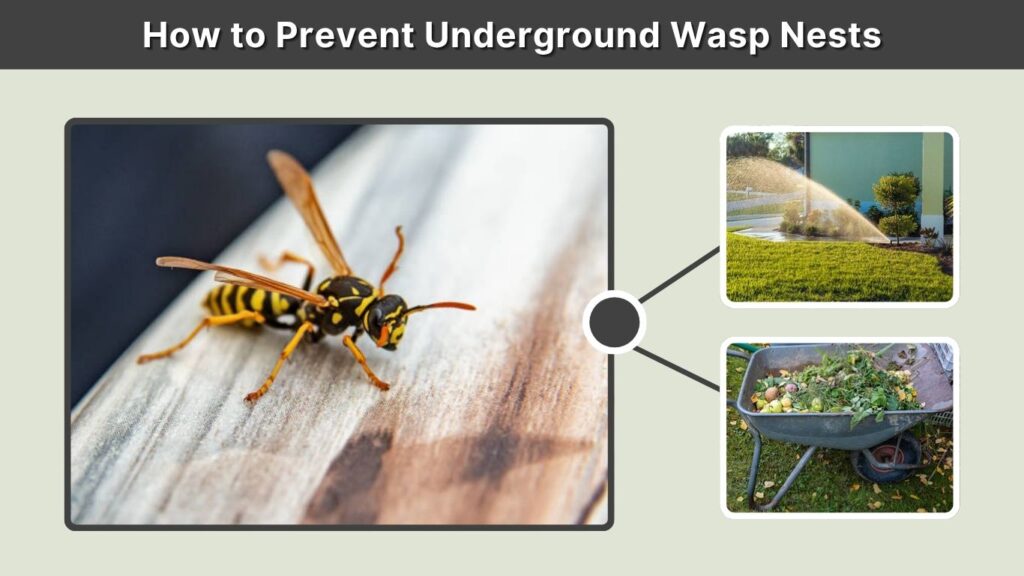
Preventing underground nesting activity involves reducing suitable nesting areas and minimizing conditions that attract wasps.
Although complete prevention is impossible, proper yard maintenance can make your property less attractive to certain ground-nesting species.
Effective Prevention Tips
- Maintain healthy grass: Thick lawns reduce exposed soil suitable for digging wasps.
- Manage abandoned burrows: Fill unused ground cavities only after confirming they are unoccupied.
- Remove food sources: Keep garbage containers closed and clean up fallen fruit.
- Inspect your yard: Watch for unusual wasp activity before mowing or gardening.
- Maintain landscaping: Address exposed soil and damaged groundcover in frequently used areas.
Remember that many solitary wasps are beneficial predators. Avoid unnecessary insecticide treatments when insects are not presenting a safety concern.
FAQs
1. Do Wasps Make Nests Underground?
Yes, several wasp species build nests underground, including yellowjackets, cicada killers, and digger wasps. Some use abandoned rodent burrows, while others dig their own tunnels. Underground nests provide protection from weather, predators, and disturbances while raising their young.
2. Are Underground Wasp Nests Dangerous?
Underground wasp nests can be dangerous, especially when occupied by yellowjackets. These social wasps aggressively defend their colonies and may sting repeatedly if disturbed. However, solitary ground-nesting wasps are generally less aggressive and rarely attack people without direct provocation.
3. What Is the Best Way to Kill an Underground Wasp Nest?
The safest option is professional pest control, particularly for large yellowjacket colonies. Professionals may use insecticidal dusts or foams labeled for underground nests. Avoid boiling water, gasoline, and fire because these methods can cause injuries and provoke defensive attacks.
4. Will Underground Wasps Go Away on Their Own?
Yes, many underground yellowjacket colonies naturally die during winter in colder climates. However, newly produced queens may survive elsewhere and establish colonies the following spring. In warmer regions, some colonies can survive longer, depending on the species and conditions.
5. Can Underground Wasps Sting Through Clothing?
Yes, underground wasps, particularly yellowjackets, can sting through thin or tightly fitted clothing. Their stingers may penetrate lightweight fabric when defending a nest. Wearing thick protective clothing reduces exposure, but professional assistance is recommended when removing large or aggressive colonies.
