
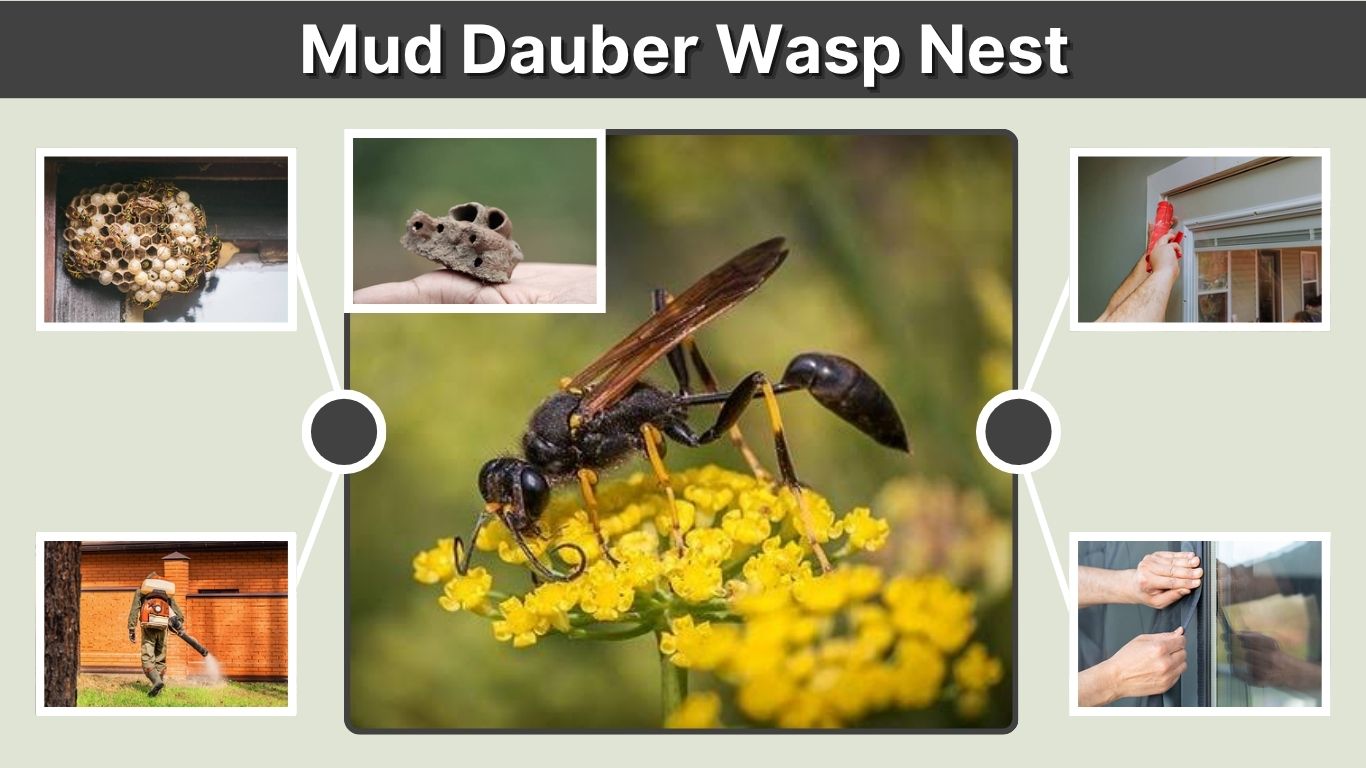
Have you noticed small, hardened mud tubes attached to your walls, porch, or roof? These unusual structures may be mud dauber wasp nests. Unlike aggressive social wasps, mud daubers are generally peaceful insects that build individual chambers for their young. Although their nests can look strange, they rarely create serious problems for homeowners. Understanding mud dauber wasp nest identification, construction, and removal can help you manage these insects safely. This guide explains different nest types, what is inside them, how to remove unwanted nests, and ways to prevent future nesting.
What Does a Mud Dauber Wasp Nest Look Like?
A mud dauber wasp nest is a hardened structure made from small portions of wet soil or clay. Female mud daubers collect mud and carefully shape it into chambers that protect their developing offspring. Depending on the species, nests may resemble small tubes, rounded lumps, or clusters of connected cells attached to sheltered surfaces.
Mud Dauber Wasp Nest Identification
Common identification features include:
- Color: Usually tan, gray, reddish-brown, or dark brown.
- Material: Hardened mud or clay with a rough, earthy texture.
- Shape: Tubular, elongated, rounded, or irregular.
- Size: Individual chambers may measure an inch or several inches long, depending on the species.
- Location: Frequently attached to walls, roof eaves, garages, and sheds.
- Openings: Small circular holes may appear after adult wasps emerge.
Unlike paper wasp nests, mud dauber nests do not have exposed hexagonal paper combs.
Where Do Mud Daubers Build Their Nests?
Mud daubers prefer sheltered locations protected from heavy rain and excessive disturbance. Common nesting spots include porch ceilings, exterior walls, garages, barns, and the undersides of roof overhangs.
Some species also establish nests inside attics, storage sheds, and openings in unused equipment.
Female wasps frequently visit damp soil, puddles, or muddy areas to collect construction material before returning to their nesting sites.
Types of Mud Dauber Wasp Nests
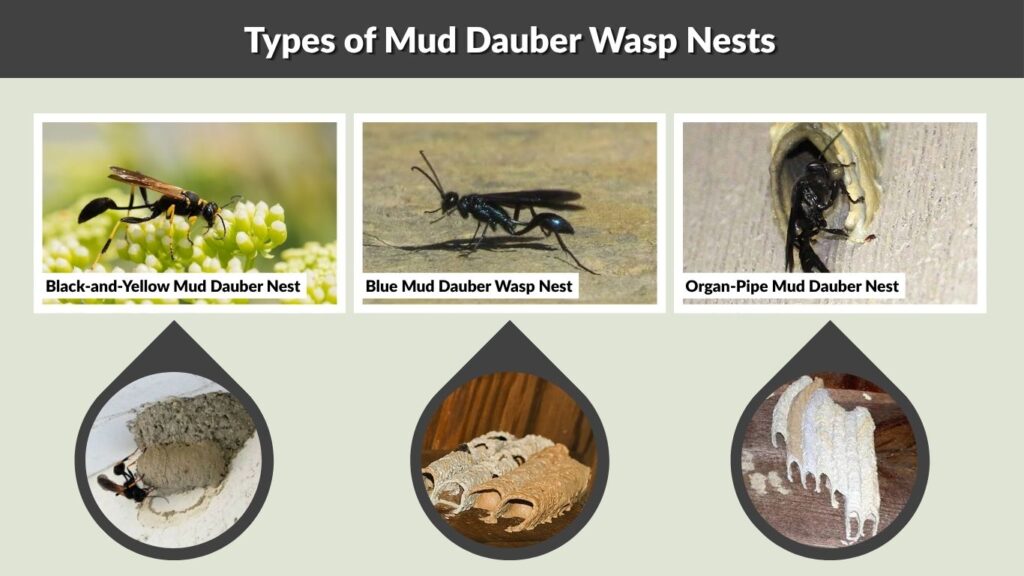
Different mud dauber species produce distinctive nesting structures. Although they share similar nesting behaviors, their mud chambers vary in shape, arrangement, and construction technique. Recognizing these differences helps homeowners identify the species responsible and avoid confusing harmless solitary wasps with more defensive social wasps.
Black-and-Yellow Mud Dauber Nest
The black-and-yellow mud dauber (Sceliphron caementarium) constructs clusters of individual mud cells that often resemble elongated lumps.
Females build the chambers one at a time and may cover multiple completed cells with an additional layer of mud, creating a rough, irregular appearance.
These nests commonly occur beneath roof eaves, inside garages, and on protected exterior walls.
Blue Mud Dauber Wasp Nest
The blue mud dauber (Chalybion californicum) has a metallic blue-black body and is known for reusing existing mud nests.
Instead of constructing a complete nest from scratch, females commonly renovate abandoned nests made by black-and-yellow mud daubers.
They remove old material, provision the chambers with spiders, and reseal them with mud. Their reused nests may appear patched or irregular.
Organ-Pipe Mud Dauber Nest
Organ-pipe mud daubers, including Trypoxylon politum, create long, narrow mud tubes that resemble the pipes of a musical organ.
Several tubes may be constructed side by side beneath sheltered overhangs or against walls.
Each tube contains individual brood chambers supplied with spiders for the developing larvae.
The arrangement of parallel tubes is one of the easiest ways to recognize these nests.
Asian Mud Dauber Wasp Nest
The Asian mud dauber, Sceliphron curvatum, produces distinctive elongated mud cells that are often constructed separately rather than covered within a large shared mud mass.
These nests may resemble small clay cylinders or miniature pots attached to protected surfaces.
Nest structure, body markings, and geographic location help distinguish this species from other mud daubers.
What Is Inside a Mud Dauber Wasp Nest?
Mud dauber nests serve as protected nurseries rather than permanent homes for large wasp colonies. Female wasps construct individual cells where their offspring develop. Each chamber contains food collected for the young, allowing the larvae to grow without continuous feeding from adults. This unusual reproductive strategy explains why mud dauber nests contain spiders and sometimes developing wasps.
Why Are Spiders Inside Mud Dauber Nests?
Female mud daubers hunt spiders and immobilize them with venom.
They carry the paralyzed spiders into their mud chambers, where the prey becomes food for developing larvae.
Different species prefer different spiders. Blue mud daubers, for example, are known to capture black widow spiders.
This behavior makes mud daubers useful natural predators in many environments.
Mud Dauber Eggs and Larvae
After gathering enough prey, the female lays an egg inside the chamber and seals the opening with mud.
The egg hatches into a larva that consumes the stored spiders.
After feeding and developing, the larva pupates and eventually emerges as an adult wasp.
Development time varies according to species, climate, and season. Some individuals remain protected within their nests throughout winter.
How Many Wasps Live in a Mud Dauber Nest?
Mud daubers are solitary wasps, meaning they do not maintain large worker colonies like yellowjackets.
A nest can contain several brood cells, each generally supporting one developing wasp.
Although numerous mud daubers may construct nests near one another, they do not form a single cooperative colony.
Mud Dauber Nest vs. Paper Wasp Nest
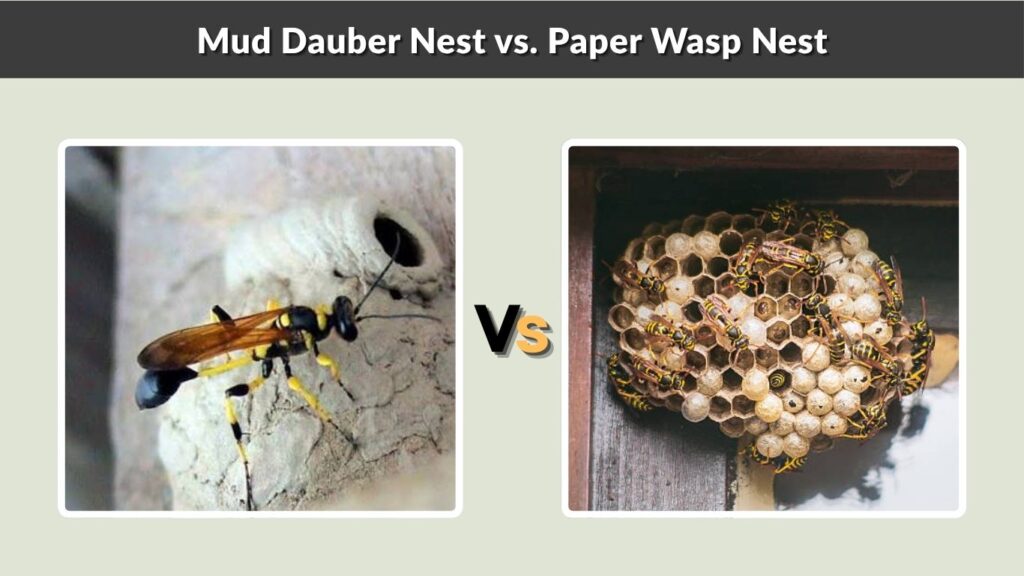
Mud dauber and paper wasp nests may appear in similar locations, particularly under eaves and porch ceilings. However, their construction materials and colony structures are very different. Recognizing these differences is important because paper wasps can respond defensively when their nests are disturbed, while mud daubers generally show little nest-defending aggression.
Key Differences Between These Nests
- Mud dauber nest: Made from hardened mud, often forming tubes or enclosed chambers.
- Paper wasp nest: Constructed from chewed wood fibers, usually forming an exposed umbrella-shaped comb.
- Mud dauber behavior: Solitary females provision individual cells and rarely defend nests aggressively.
- Paper wasp behavior: Social colonies contain adults that may collectively defend their nest.
Potter wasps are another group sometimes confused with mud daubers. Many potter wasps create small, vase-shaped mud nests, whereas familiar mud daubers generally construct tubular or clustered chambers.
Are Mud Dauber Wasp Nests Dangerous?
Mud daubers are not generally aggressive toward humans. Although females can sting, stings are uncommon unless the insects are handled or trapped.
Their nests do not normally damage structural wood, unlike insects that excavate galleries.
However, mud nests inside electrical equipment, mechanical openings, or ventilation components may create maintenance problems and should be evaluated carefully.
How to Remove a Mud Dauber Wasp Nest Safely
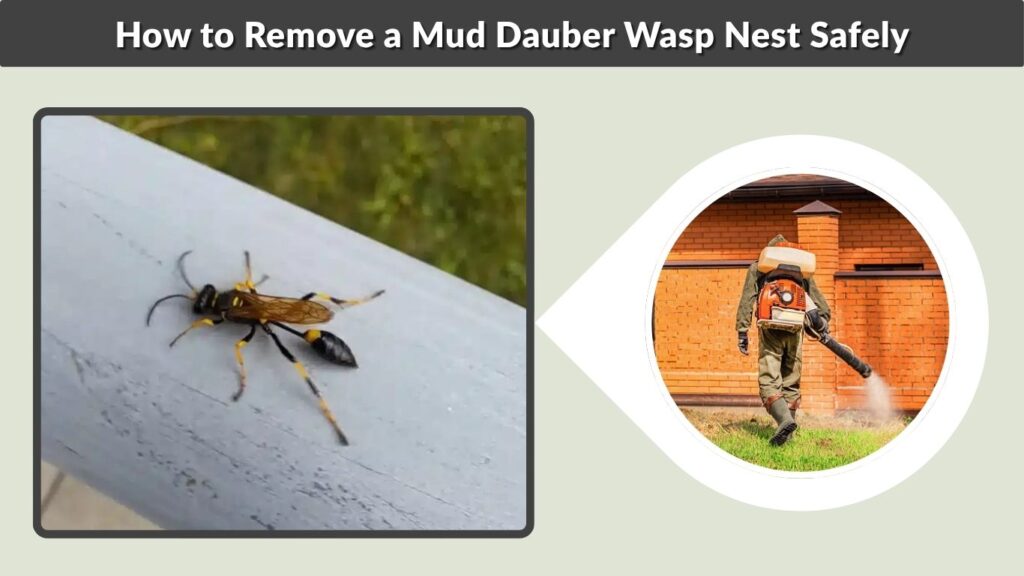
Mud dauber wasp nest removal is usually simpler than removing an active colony of yellowjackets or hornets. Because mud daubers are solitary and rarely aggressive, insecticides are generally unnecessary. However, nests may still contain developing insects, so confirming their status before removal is important, particularly when the structure is located near frequently used areas.
Check Whether the Nest Is Active
Observe the nest for ongoing construction or visiting adult wasps.
Fresh mud additions may indicate activity, while exit holes can suggest that some adults have already emerged.
However, an exit hole does not guarantee that every brood chamber is empty. Other insects may also reuse abandoned nests.
If you are unsure whether the nest is occupied, consider leaving it undisturbed until activity has ended.
Remove an Inactive Mud Dauber Nest
Once the nest is confirmed inactive, removal is generally straightforward.
Use a putty knife or similar tool to carefully separate the hardened mud from the surface.
Collect the debris in a bag and clean the remaining mud residue with water and mild soap, provided the surface can tolerate moisture.
Wear gloves and eye protection because dry mud fragments may break away unexpectedly.
Avoid removing nests from unstable surfaces or difficult-to-reach locations without appropriate assistance.
How to Remove Mud Dauber Nests From Walls
Mud nests attached to brick, concrete, or painted walls may leave stains or hardened residue.
After confirming inactivity, gently scrape away the structure without damaging the wall finish.
Warm water and mild soap can help loosen remaining mud. Use a soft brush rather than abrasive tools on delicate painted surfaces.
For nests inside soffits, attics, or mechanical equipment, inspect access and safety conditions before attempting removal.
Do You Need Insecticides?
Most mud dauber infestations do not require chemical treatment.
University extension specialists commonly recommend tolerating these beneficial insects or manually removing unwanted nests.
If an occupied nest presents a problem that cannot be managed safely, seek advice from a qualified pest control professional.
How to Prevent Mud Dauber Wasp Nests
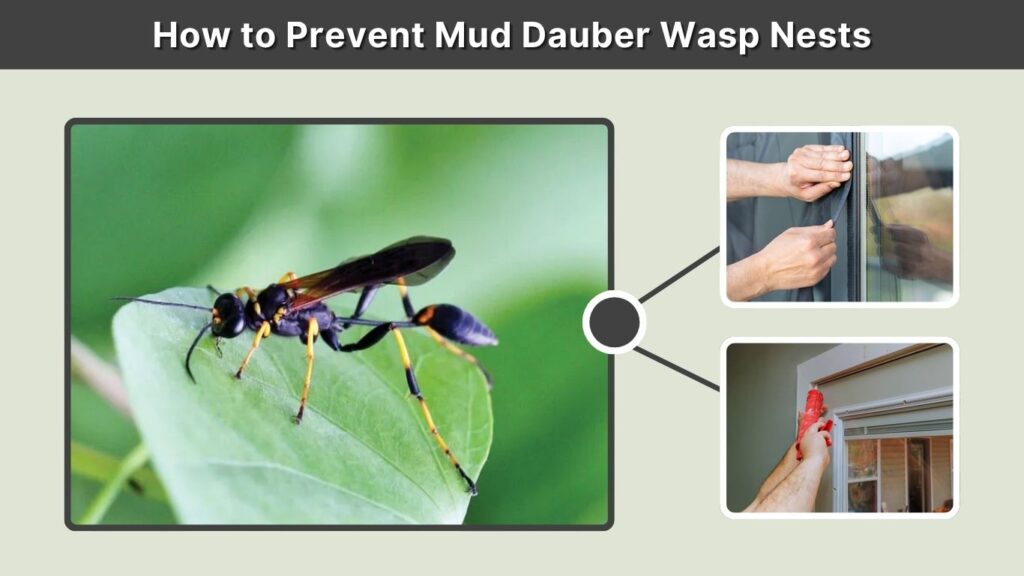
Mud daubers often return to sheltered areas that provide suitable nesting surfaces and nearby sources of mud. While completely preventing their activity can be difficult, regular property maintenance can reduce unwanted nesting. Prevention is particularly useful around doorways, window frames, stored equipment, and other locations where hardened mud structures may cause inconvenience.
Practical Prevention Tips
Consider these preventive measures:
- Inspect roof eaves, garages, and sheltered walls regularly.
- Seal unnecessary gaps around doors and window frames.
- Install suitable screens on ventilation openings.
- Keep unused equipment protected from insect entry.
- Remove confirmed inactive nests from unwanted locations.
- Reduce unnecessary clutter that creates sheltered nesting spaces.
- Maintain exterior surfaces and repair damaged building materials.
These practices may discourage nesting, although no method guarantees that mud daubers will avoid a particular location.
Do Mud Daubers Reuse Old Nests?
Some mud dauber species construct new nests for each generation, while others reuse existing structures.
Blue mud daubers are particularly well known for renovating nests created by black-and-yellow mud daubers.
Therefore, an old mud nest may still attract another wasp even after the original occupants have emerged.
FAQs
1. Should You Remove a Mud Dauber Wasp Nest?
Removal is usually unnecessary unless the nest interferes with property maintenance, equipment, or frequently used spaces. Mud daubers are beneficial predators and rarely behave aggressively.
2. Do Mud Dauber Wasps Stay in Their Nests?
Adult females visit nests during construction and provisioning. Once their chambers are completed, they typically do not remain inside continuously. Developing larvae and pupae stay protected within the sealed cells.
3. How Long Does It Take for Mud Dauber Wasps to Emerge?
Development varies by species and temperature. Some adults emerge within the same warm season, while others overwinter inside their mud chambers and emerge the following year.
4. Can Mud Dauber Nests Damage Your House?
Mud daubers generally do not excavate or consume building materials. Their nests can leave stains, create cosmetic problems, or obstruct small openings in equipment.
5. Do Mud Dauber Wasps Kill Spiders?
Yes. Female mud daubers sting and paralyze spiders before placing them inside brood chambers. Their larvae eventually consume the stored prey as they develop.
