
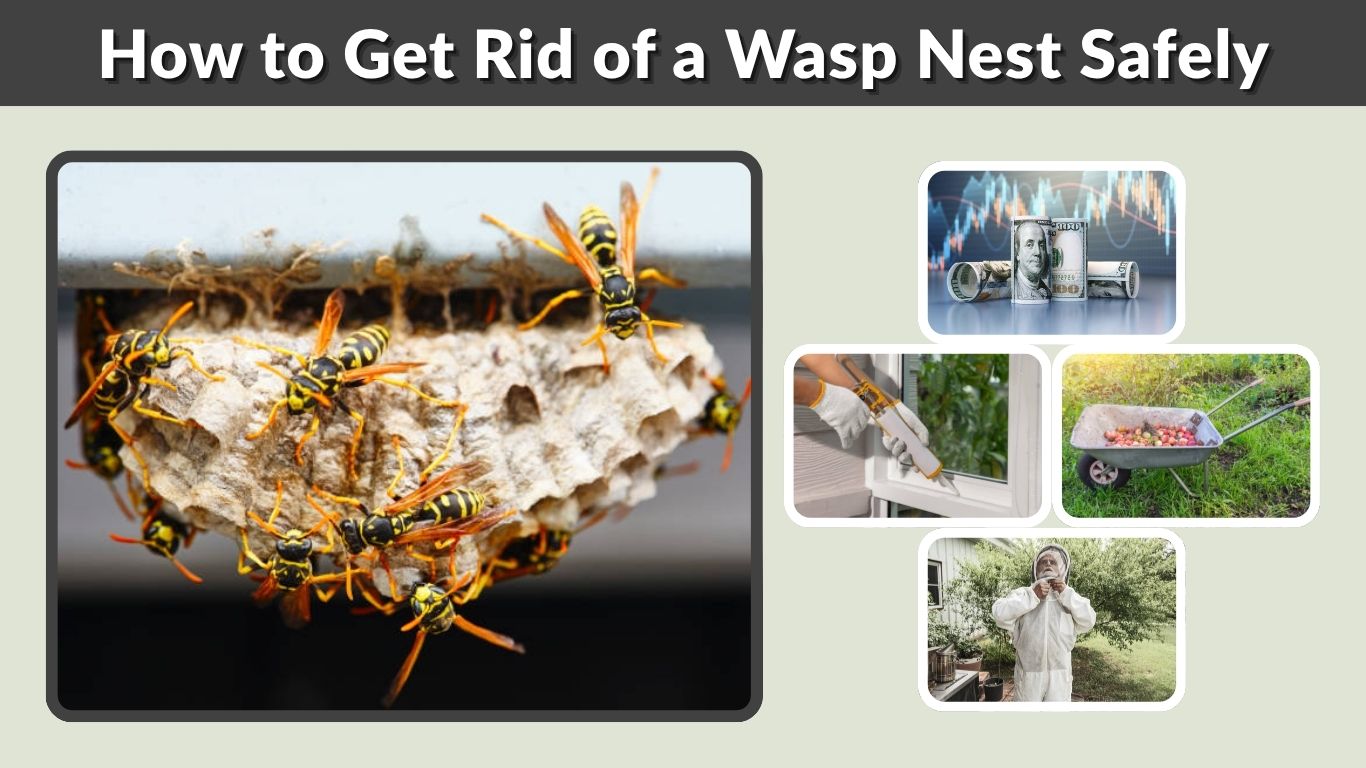
Finding a wasp nest around your home can be alarming, especially when wasps gather near doors, windows, gardens, or outdoor seating areas. Although wasps help control other insects, their nests can become dangerous when people accidentally disturb them. Learning how to get rid of a wasp nest safely begins with identifying the species, choosing the appropriate removal method, and avoiding unnecessary risks. This guide explains how to handle different nests, which natural approaches work, and when professional assistance is necessary.
What to Know Before Removing a Wasp Nest
Before attempting removal, determine whether the nest is active, how large it is, and where it is located. Different wasps build different types of nests, and some defend their colonies more aggressively than others. A small exposed nest requires a different approach from a yellowjacket colony hidden underground or inside a wall.
Identify the Type of Wasp Nest
Common wasp nests have several recognizable characteristics:
- Paper wasp nests: Open, umbrella-shaped structures with visible hexagonal cells, often beneath roof eaves.
- Yellowjacket nests: Enclosed paper nests, frequently found underground, in wall cavities, or in sheltered locations.
- Hornet nests: Large, enclosed paper structures sometimes hanging from trees or buildings.
- Mud dauber nests: Small mud tubes or hardened mud chambers attached to protected surfaces.
- Grass-carrying wasp nests: Bundles of dried grass placed inside narrow openings, including window tracks.
Correct identification helps determine whether treatment is necessary and how much protection is required.
Check Whether the Nest Is Active
Watch the nest from a safe distance during daylight. Wasps regularly entering and leaving indicate an active colony.
An abandoned nest usually has no continuing wasp activity. However, avoid assuming it is empty after watching for only a few minutes.
If you have a history of severe sting reactions, cannot identify the wasps, or cannot reach the nest without a ladder, contact a professional instead of attempting removal.
How to Get Rid of a Wasp Nest Safely
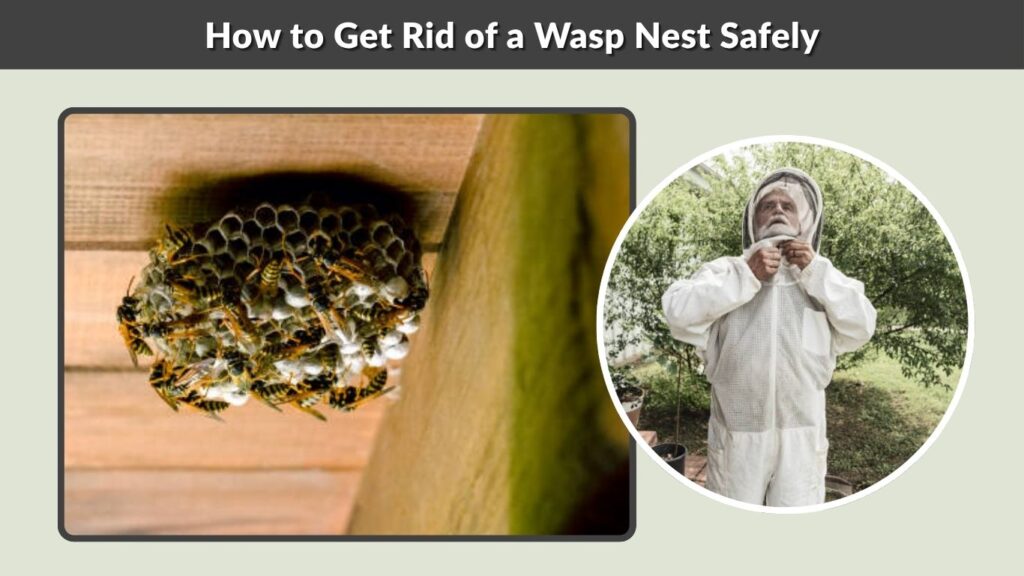
The safest removal method depends primarily on the nest’s location, activity, and size. Small exposed nests may be manageable with appropriate protective equipment and a product specifically labeled for the purpose. Large nests, hidden colonies, and nests near frequently used areas are more dangerous and generally require professional treatment.
1. How to Get Rid of a Small Paper Wasp Nest
Paper wasps commonly build nests beneath decks, porches, and roof overhangs. Newly formed nests are generally easier to manage than established colonies.
If a nest is confirmed inactive, it can usually be detached carefully and discarded. For an active nest that must be treated, only consider a do-it-yourself approach when it is small, clearly visible, accessible from the ground, and you can follow every instruction on a labeled wasp-control product.
Wear appropriate protective clothing, keep others away, and maintain a clear retreat route. Never strike or scrape an active nest.
2. How to Get Rid of a Wasp Nest in the Ground
Underground nests often belong to yellowjackets. These colonies may contain numerous defensive workers, making them particularly hazardous around lawns and gardens.
Look for repeated wasp movement through a small ground opening, but avoid approaching closely or disturbing the soil.
A pest control professional can identify the entrance and use a suitable treatment, often a registered insecticidal dust or foam. Never pour gasoline, boiling water, or other household chemicals into the opening. Flooding a nest is also unreliable and can provoke an attack.
Keep people and pets away until the colony has been eliminated.
3. How to Get Rid of a Wasp Nest in a Wall
Wasps sometimes establish colonies behind siding, inside brick cavities, around window frames, or beneath roof structures.
These nests are particularly difficult because the visible opening may be far from the actual colony. Blocking the entrance while wasps remain active can force them to find another exit, potentially into living spaces.
Avoid drilling into the wall or spraying household products into hidden cavities. A professional can identify the nesting area, treat the colony, and determine whether the nest material should be removed before repairs are completed.
4. How to Get Rid of a Wasp Nest in a Tree or Roof Eaves
Aerial nests may develop on tree branches, beneath roof eaves, or near gutters.
Small nests can become large as colonies grow, especially during warmer months. Never climb a ladder, shake a branch, or attempt to knock down an occupied nest.
For high, enclosed, or heavily populated nests, professional removal is the safest option. If the nest is far from people and pets, leaving it undisturbed may be preferable.
5. How to Get Rid of Mud Dauber and Grass-Carrying Wasp Nests
Mud daubers and grass-carrying wasps are solitary insects that generally do not defend communal colonies.
Empty mud dauber nests can be scraped from walls or outdoor fixtures. Confirm that they are inactive before cleaning the area.
Similarly, abandoned grass-carrying wasp nesting material can be cleared from window tracks or other openings.
These insects are usually beneficial and rarely require pesticide treatment. Whenever possible, leave occupied nests undisturbed until their occupants have finished developing.
How to Get Rid of a Wasp Nest Naturally
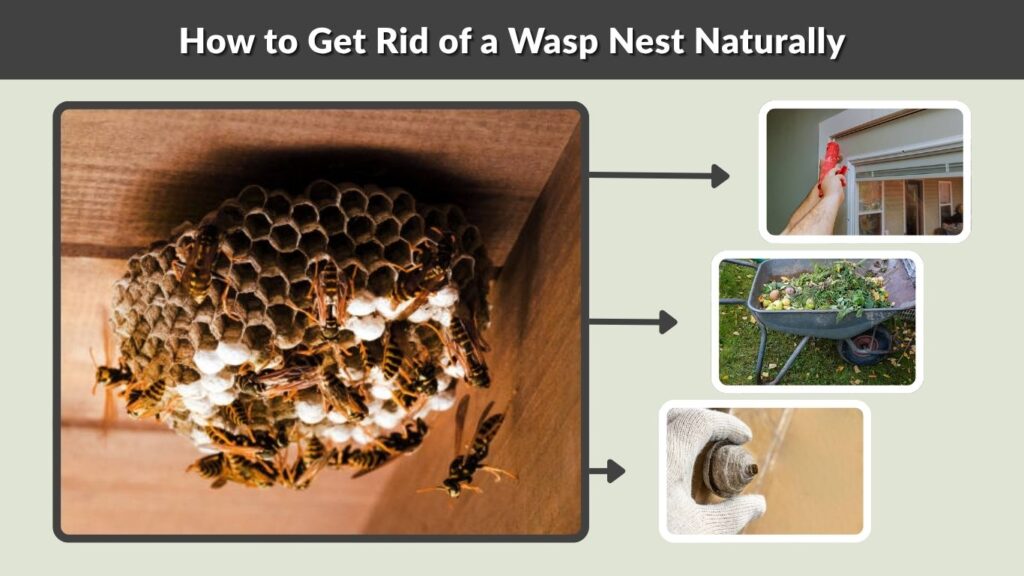
Natural wasp-control methods appeal to homeowners who want to avoid insecticides. However, many popular homemade treatments are ineffective against established colonies and may increase the risk of stings. The most reliable nonchemical approach is preventing nests from developing or waiting until an annual colony becomes naturally inactive, provided it does not threaten anyone.
Natural Methods That May Help
Consider these lower-risk approaches:
- Wait for seasonal inactivity: In areas with cold winters, many social wasp colonies die off after freezing temperatures.
- Remove abandoned nests: Once a nest is confirmed empty, carefully remove it if necessary.
- Eliminate food sources: Keep outdoor trash covered and clean up fallen fruit and leftover food.
- Prevent nesting: Repair gaps around buildings after confirming no active colony remains inside.
- Avoid disturbing beneficial wasps: Solitary species often provide natural insect control without posing a significant threat.
These measures help with prevention but do not reliably eliminate an active colony.
Natural Methods You Should Avoid
Several commonly recommended home remedies can be dangerous when used directly on a nest.
Spraying vinegar, essential oils, or soapy water is not a dependable way to eliminate an established colony. Pouring boiling water into ground nests can cause burns and provoke defensive wasps.
Never burn a nest or use gasoline, bleach, or other flammable or corrosive substances.
For occupied nests that present an immediate hazard, professional treatment is generally safer than experimenting with homemade solutions.
What to Do After Wasp Nest Removal
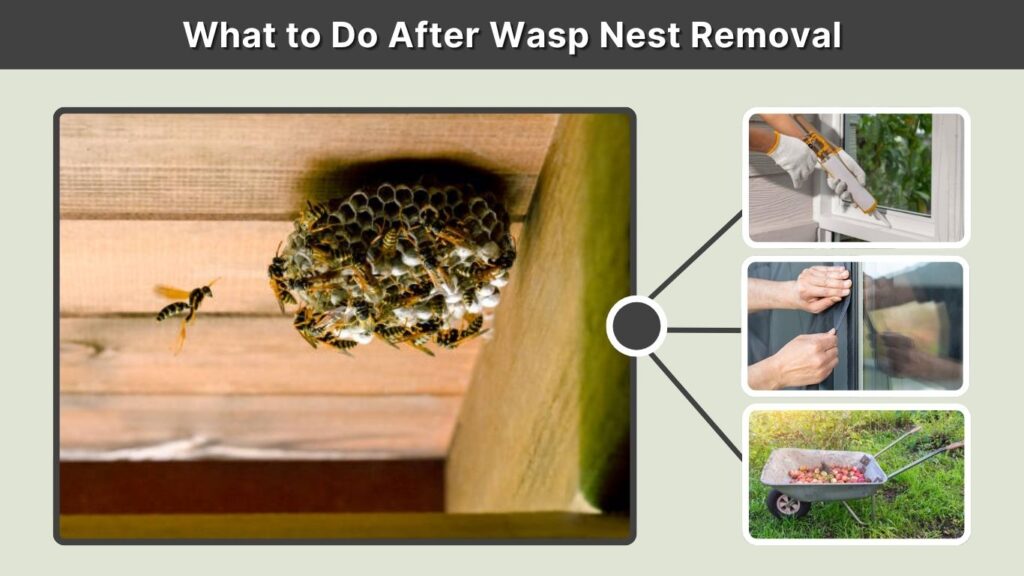
Removing the nest is only one part of controlling a wasp problem. Returning workers may remain temporarily, and suitable nesting sites can attract new colonies in later seasons. Before cleaning or repairing the area, make certain the colony is inactive. Preventive maintenance can then reduce the likelihood of another nest developing nearby.
Clean the Nesting Area
After activity has completely stopped, remove accessible nest remnants when appropriate and clean surrounding surfaces.
If insecticides were used, follow their label instructions before entering or cleaning the treated area.
Large nests inside buildings may need physical removal to prevent odors, secondary pest problems, or damaged insulation.
Prevent Wasps From Building New Nests
Simple maintenance can make your property less attractive:
- Seal cracks around window frames, siding, and exterior walls.
- Install or repair screens on windows and vents.
- Keep garbage containers tightly closed.
- Remove fallen fruit and food waste regularly.
- Inspect roof eaves, sheds, and decks during spring.
- Repair damaged exterior materials that create sheltered nesting spaces.
Do not seal any opening that still contains an active colony.
How Much Does It Cost to Get Rid of a Wasp Nest?
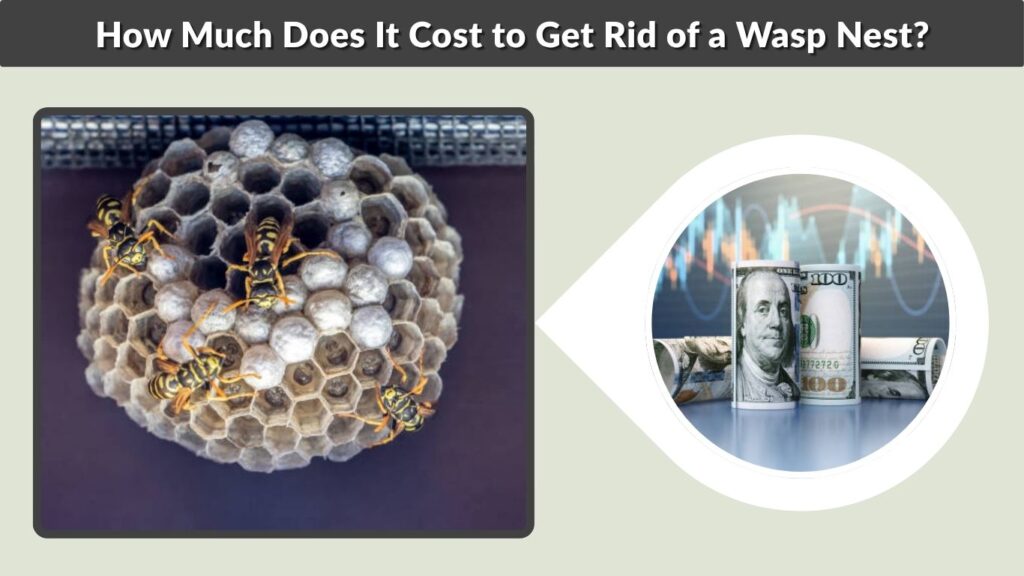
Professional wasp nest removal in the United States commonly costs approximately $300 to $700, although smaller, straightforward jobs may cost less. Large yellowjacket colonies, high nests, and nests hidden inside walls can be considerably more expensive.
Factors That Affect Removal Cost
The final price depends on the species, colony size, nest accessibility, treatment method, and whether follow-up visits are required.
Structural repairs, such as opening and repairing walls or replacing damaged insulation, may cost extra. Comparing quotes from licensed local pest control providers can help you understand the available options.
FAQs
1. What Is the Safest Way to Get Rid of a Wasp Nest?
The safest approach is to leave a nest undisturbed when it poses no threat. For active nests near people, particularly large or hidden colonies, professional pest control is generally the safest option.
2. Can You Remove a Wasp Nest at Night?
Many social wasps are less active after dark, but night removal is not risk-free. Wasps can still sting, and limited visibility introduces additional hazards. Professional assistance is preferable for occupied nests.
3. Will Wasps Return After Their Nest Is Removed?
Some workers may return temporarily to the former nesting area. Most social wasp colonies do not reuse old nests, although new queens may establish separate nests nearby in later seasons.
4. Can You Get Rid of a Wasp Nest Without Killing the Wasps?
Yes, in some circumstances. Leaving a nest undisturbed until the colony naturally dies off is one option. Specialized professionals may also offer relocation for selected small colonies, although it is not always practical.
5. Should You Remove a Wasp Nest in Winter?
In regions with freezing winters, old annual wasp nests are often inactive by winter. Removal is generally safer once inactivity is confirmed. Warmer regions may have different seasonal patterns, so inspect carefully.
