
A radioactive wasp nest discovered at a former nuclear weapons facility in South Carolina sparked widespread concern in July 2025. Workers found the contaminated nest at the Savannah River Site, where radioactive waste from decades of nuclear production is stored and processed. Further inspections revealed additional contaminated nests, raising questions about radiation exposure, environmental safety, and how wasps encountered radioactive materials. So, what exactly happened, and were the insects dangerous? This guide explores the discovery, radiation measurements, possible contamination sources, and official findings surrounding the radioactive wasp nests.
What Is a Radioactive Wasp Nest?
A radioactive wasp nest is a structure that has become contaminated with radioactive material from its surroundings. Unlike ordinary wasp nests made from natural materials, these nests contain detectable radioactive substances. The unusual discovery in South Carolina attracted international attention because the contaminated structures were found inside a former nuclear weapons production complex containing radioactive waste from historical operations.
How Does a Wasp Nest Become Radioactive?
Wasps collect materials from their environment to construct protective nests. Paper wasps typically scrape weathered wood, chew the fibers, and combine them with saliva to produce a paper-like substance.
If the insects encounter contaminated material, radioactive particles may become incorporated into their nests.
Possible contamination pathways include:
- Collecting wood fibers or other materials carrying radioactive residue.
- Contacting contaminated dust on exposed surfaces.
- Transporting particles from previously contaminated locations.
- Building nests on structures containing residual radioactive material.
The precise pathway responsible for the Savannah River Site discoveries was not publicly established in the initial investigation.
Are Radioactive Wasps Mutated Insects?
The term radioactive wasps may sound like something from a science-fiction movie, but the discovery did not establish that the insects had undergone genetic mutations.
Radioactive contamination and genetic mutation are different concepts.
An insect can carry radioactive material without becoming visibly different from an ordinary wasp. There was no reported evidence that the South Carolina wasps developed unusual size, strength, behavior, or other extraordinary characteristics.
Where Were the Radioactive Wasp Nests Found?
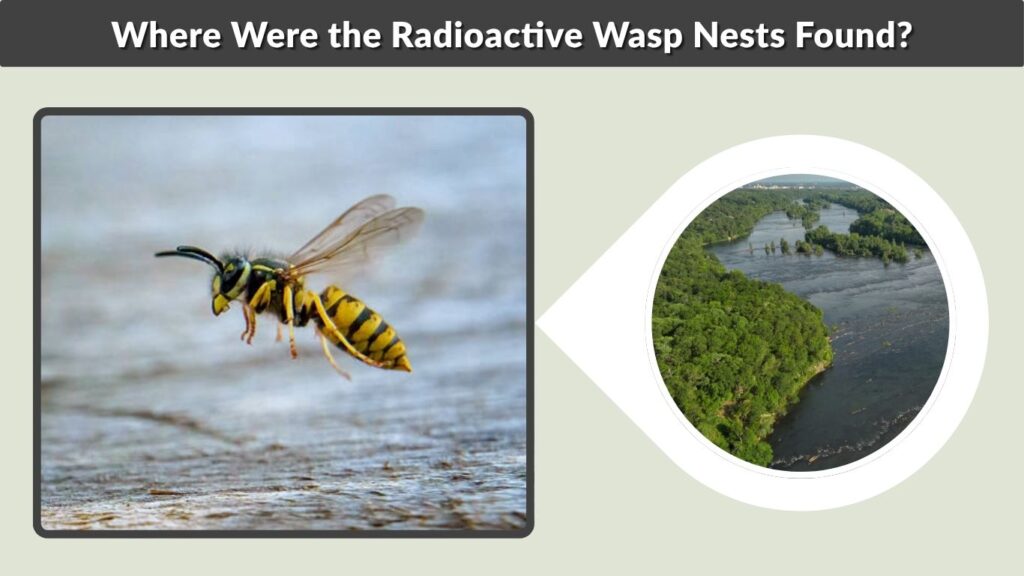
The radioactive wasp nests were discovered at the Savannah River Site near Aiken, South Carolina, in the United States. The initial discovery occurred on July 3, 2025, during routine radiological monitoring. Workers located the contaminated nest within the F-Area Tank Farm, near underground tanks holding radioactive liquid waste from historical nuclear operations.
Savannah River Site in South Carolina
The Savannah River Site is a large federal nuclear complex covering approximately 310 square miles.
Established during the early 1950s, the facility originally produced plutonium and tritium for the United States nuclear weapons program.
Following the Cold War, its responsibilities shifted toward environmental cleanup, nuclear materials management, waste processing, and research.
The facility contains underground tanks used to store radioactive waste generated during decades of operations.
Discovery of Four Radioactive Wasp Nests
The investigation developed throughout July 2025 as additional nests were identified.
- July 3, 2025: Workers discovered the first contaminated wasp nest near Tank 17.
- July 22, 2025: A Department of Energy occurrence report documented the first discovery.
- Late July 2025: Monitoring and routine work revealed three additional contaminated nests.
- By July 31, 2025: Officials had identified four contaminated nests within the F-Area Tank Farm.
The findings attracted attention because they demonstrated that insects could encounter radioactive residues within controlled sections of a nuclear facility.
How Radioactive Were the Wasp Nests?
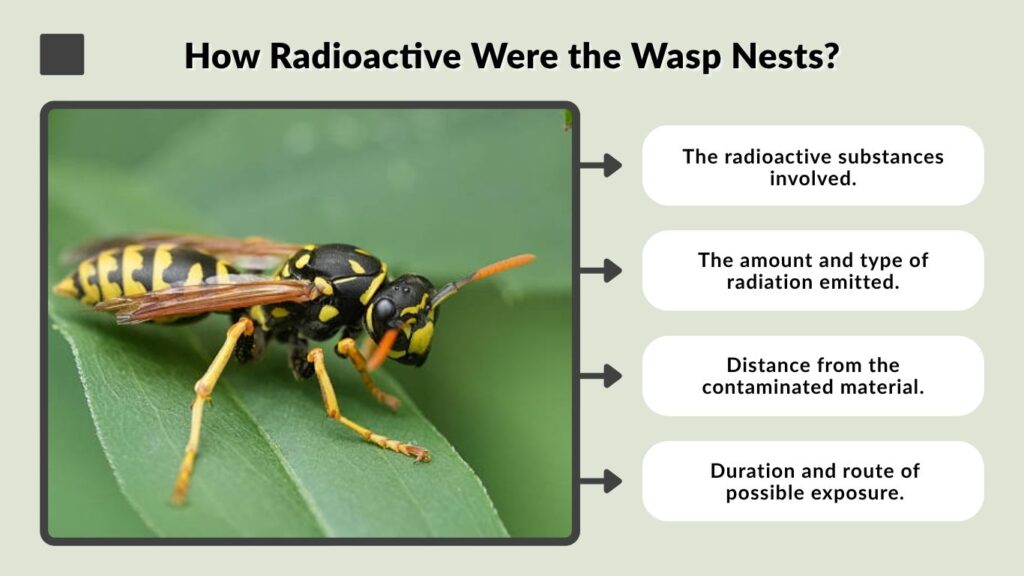
The first discovered nest produced a surface-contamination measurement exceeding a federal regulatory reference value by more than ten times. Although this figure generated alarming headlines, understanding the measurement is essential. A contamination reading indicates radioactive material present on a surface; it does not directly measure the radiation dose received by a person standing nearby.
Radiation Measurements From the First Nest
According to the Department of Energy’s July 2025 occurrence report, the first nest registered approximately 100,000 disintegrations per minute per 100 square centimeters (dpm/100 cm²) for beta/gamma contamination.
This measurement describes detected radioactive activity over a specified surface area.
The report compared the reading with contamination values established under 10 CFR 835 Appendix D, which addresses radiological contamination controls at Department of Energy facilities.
Does Ten Times the Limit Mean Extreme Danger?
Not necessarily. The reported measurement exceeded a surface-contamination control value, not a general limit on radiation exposure to the public.
Radiation risk depends on several factors, including:
- The radioactive substances involved.
- The amount and type of radiation emitted.
- Distance from the contaminated material.
- Duration and route of possible exposure.
Savannah River Site officials stated that radiation emitted from the identified nests was less than 1% of typical natural background radiation exposure.
That does not make radioactive contamination irrelevant, but it helps explain why officials distinguished the unusual measurements from an immediate public health emergency.
Why Did the Wasp Nests Become Radioactive?
The Department of Energy attributed the contaminated nests to historical radioactive residues already present at the Savannah River Site. This explanation reflects the facility’s long history of nuclear materials production and ongoing cleanup operations. However, environmental researchers and watchdog organizations questioned how the wasps encountered the material and whether further monitoring could reveal additional contaminated locations.
Historical Nuclear Contamination
The Savannah River Site operated for decades as part of the United States nuclear weapons program.
These operations generated radioactive waste and contaminated materials that require long-term management.
Officials characterized the wasp nest contamination as onsite legacy radioactive contamination, rather than evidence of a newly identified loss of contamination control.
Paper wasps could potentially transfer radioactive particles into a nest when gathering construction materials near contaminated surfaces.
However, this remains a proposed explanation for the transfer mechanism rather than a fully documented reconstruction of the insects’ activities.
Questions About the Contamination Source
Environmental advocates argued that the original report did not provide enough information about the contamination’s specific origin.
Important questions included:
- Where did the wasps collect contaminated materials?
- Which radioactive isotopes were present?
- Did the insects repeatedly visit one contaminated location?
- Could additional nests or wildlife contain radioactive particles?
Understanding these questions could help scientists evaluate how small animals transport environmental contaminants within nuclear facilities.
Were the Radioactive Wasp Nests Dangerous?
The discovery understandably raised questions about risks to workers, nearby residents, wildlife, and the surrounding environment. However, officials reported no evidence of a public health threat from the nests. Risk assessments considered the contamination measurements, the location of the structures, and the distance between the contaminated tank farm and the site’s outer boundaries.
Were Workers or Nearby Residents at Risk?
Savannah River Site officials stated that the contaminated nests did not threaten workers, surrounding communities, or the environment.
The F-Area Tank Farm is located well inside the facility’s extensive controlled property.
Personnel also surveyed the area surrounding the initial nest and reported finding no contamination on the nearby ground.
The findings supported the officials’ conclusion that the incident was localized, although researchers continued to emphasize the importance of environmental monitoring and transparency.
Could a Radioactive Wasp Sting Be Dangerous?
A wasp sting does not automatically transfer radioactive contamination into the body.
A contaminated insect could theoretically transport radioactive particles on its exterior, but this differs from delivering radioactive material through venom.
Ordinary wasp stings remain a more immediate concern because they can cause pain, swelling, and severe allergic reactions.
There was no reported evidence that stings from the Savannah River Site wasps caused radiation-related illness.
What Happened to the Radioactive Wasp Nests?
After the discoveries, site personnel followed procedures intended to prevent the spread of radioactive contamination. The nests were treated, surveyed, and removed as radiological waste. The incident also prompted questions about environmental surveillance, the movement of radioactive material through wildlife, and how nuclear cleanup facilities communicate unusual monitoring results to the public.
Removal and Disposal of the Nests
Workers treated the contaminated nests with insecticide before collecting and disposing of them under radiological waste procedures.
The initial nest contained no wasps when examined. Later reports indicated that wasps associated with additional nests were also surveyed and had lower contamination levels than the nest material.
Personnel secured and monitored the surrounding area to determine whether contamination had spread beyond the identified structures.
What the Discovery Means for Environmental Monitoring
The incident demonstrated why routine radiation monitoring is important at facilities managing historical nuclear contamination.
Even small insects can interact with contaminated materials and potentially transport particles into nearby structures.
The discovery does not establish that radioactive wasps threatened South Carolina residents. Instead, it illustrates the importance of continued site inspections, wildlife monitoring, transparent reporting, and careful management of legacy nuclear waste.
FAQs
1. Where was the radioactive wasp nest found?
The first radioactive wasp nest was discovered on July 3, 2025, at the Savannah River Site near Aiken, South Carolina. It was located within the F-Area Tank Farm, close to underground radioactive waste storage tanks. Three additional contaminated nests were reported later that month.
2. How many radioactive wasp nests were found in South Carolina?
Four contaminated wasp nests were reported at the Savannah River Site during July 2025. The first was discovered during routine monitoring, and three others were identified afterward. All four were found within the F-Area Tank Farm rather than in residential neighborhoods outside the facility.
3. What type of wasps built the radioactive nests?
The initial public reports did not identify the insects responsible. However, an August 2025 Savannah River Site Citizens Advisory Board meeting summary subsequently described them as paper wasps. These insects construct nests from chewed wood fibers, which can provide a potential pathway for transferring environmental contamination into nest structures.
4. Can radioactive wasps spread radiation to humans?
Wasps carrying radioactive particles could theoretically transfer some contamination through physical contact, but ordinary stings do not automatically inject radioactive substances. Officials reported that the contamination associated with the Savannah River Site nests did not present a health threat to workers or nearby communities.
5. Why did the radioactive wasp nests contain nuclear material?
Officials attributed the contamination to radioactive residues from historical nuclear activities at the Savannah River Site. Wasps may have collected contaminated material while constructing their nests. However, the exact material collection sites and complete transfer pathways were not fully explained in the initial public findings.
