
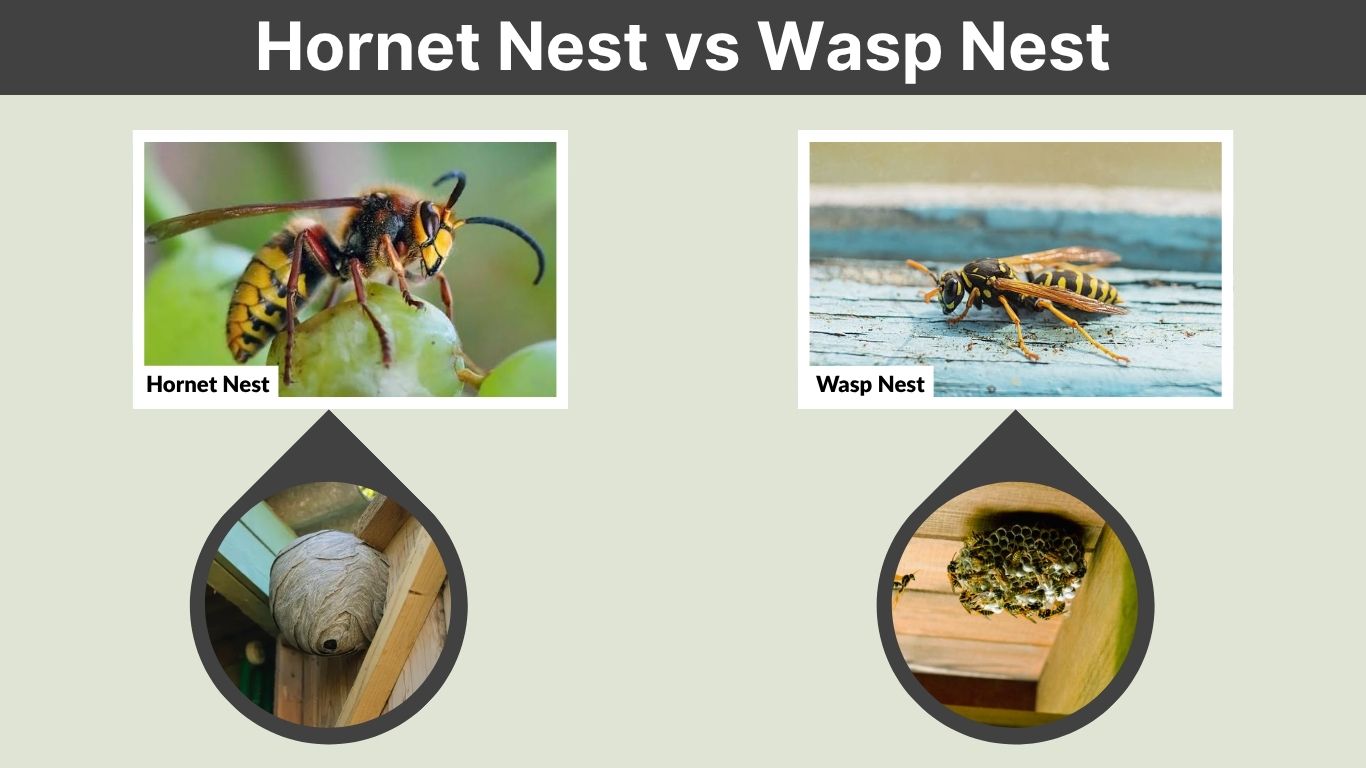
Have you discovered a strange papery nest hanging from a tree, roof, or porch? Identifying whether it belongs to hornets or wasps can help you understand the potential danger. Although hornets are actually a type of wasp, their nests often look very different from the open structures built by common paper wasps. In this hornet nest vs wasp nest guide, you’ll discover seven important differences in appearance, size, construction, location, and behavior, along with practical tips for identifying nests safely.
Hornet Nest vs Wasp Nest: Quick Identification
The easiest way to identify a hornet nest versus a paper wasp nest is by examining its shape and outer covering from a safe distance. Many aerial hornet nests are large, enclosed structures resembling gray footballs, while paper wasp nests typically resemble open umbrellas with visible hexagonal cells. However, some hornets build nests inside cavities instead.
| Feature | Hornet Nest | Paper Wasp Nest |
| Shape | Rounded, oval, or enclosed | Open, umbrella-shaped |
| Size | Often larger | Usually smaller |
| Outer covering | Papery envelope | No outer envelope |
| Nest cells | Hidden inside | Clearly visible |
| Color | Gray, brown, or tan | Grayish or light brown |
| Location | Trees, cavities, buildings | Eaves, porches, branches |
| Entrance | One or more openings | Exposed cells, no entrance tunnel |
7 Key Differences Between Hornet and Wasp Nests
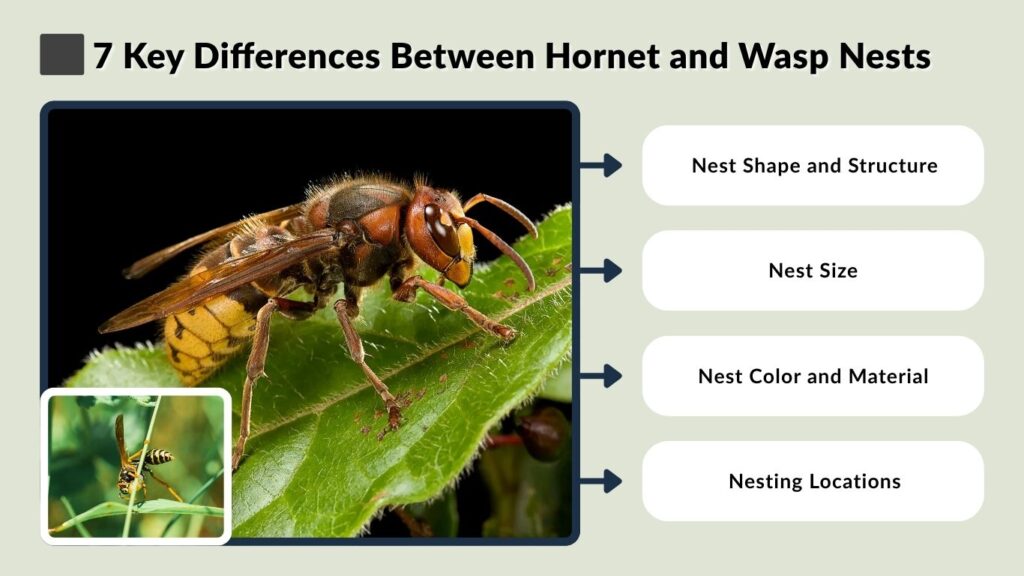
Hornets and paper wasps create nests from similar materials, but their construction methods produce noticeably different structures. Nest appearance can provide useful identification clues, especially when combined with the insects’ behavior and nesting location. Understanding these seven characteristics can help distinguish an enclosed hornet nest from an exposed paper wasp nest without approaching or disturbing the colony.
1. Nest Shape and Structure
Hornet nests commonly have rounded, oval, or football-shaped outer coverings, particularly when constructed in exposed locations. Several internal combs are protected by a surrounding paper envelope.
Paper wasp nests have an umbrella-like appearance. Their comb hangs from a short supporting stalk, with the open cells facing downward.
2. Open vs Enclosed Nest Cells
One of the clearest identification differences is whether the nest cells are visible.
- Hornet nest: Internal hexagonal cells are usually concealed within an outer envelope.
- Paper wasp nest: Hexagonal cells remain exposed and can be seen from underneath.
- Yellowjacket nest: Multiple comb layers are enclosed, often inside an underground cavity or wall.
These differences are especially useful when examining photographs.
3. Nest Size
Hornet colonies often build substantially larger nests than paper wasps. A mature aerial hornet nest may become basketball-sized or larger, depending on the species and environmental conditions.
Paper wasp nests are generally smaller, often measuring only a few inches across. However, nest size changes throughout the season, so it should not be used as the only identification feature.
4. Nest Color and Material
Both hornets and paper wasps use chewed wood fibers mixed with saliva to produce a lightweight paper-like material.
Hornet nests often display gray, tan, and brown swirling patterns. Paper wasp combs can have similar colors but lack the enclosed, layered exterior. Therefore, color alone cannot reliably distinguish the insects.
5. Nesting Locations
Hornets and paper wasps commonly select different nesting sites.
- Aerial hornets: Trees, shrubs, roof overhangs, and other elevated structures.
- European hornets: Hollow trees, wall voids, attics, and protected cavities.
- Paper wasps: Porch ceilings, eaves, deck railings, and sheltered branches.
- Yellowjackets: Underground burrows, structural voids, and sometimes exposed aerial locations.
Location helps narrow down the possibilities but does not guarantee identification.
6. Nest Entrance
An enclosed hornet nest generally has a distinct opening that workers use when entering or leaving. Some species have more than one opening.
Paper wasp nests do not have a comparable enclosed entrance. Adult wasps land directly on their exposed comb.
Watching insect activity from a safe distance may reveal the entrance without disturbing the colony.
7. Defensive Behavior
Hornets and paper wasps can both sting when their nests are threatened. Hornets and yellowjackets often defend their colonies vigorously, especially as colony populations increase.
Paper wasps may be less defensive when undisturbed, but they can still sting repeatedly. Never approach a nest simply to test the insects’ behavior.
Paper Wasp Nest vs Bald-Faced Hornet Nest
Paper wasps and bald-faced hornets are frequently compared because both build visible nests around residential properties. Despite its name, the bald-faced hornet is biologically an aerial yellowjacket rather than a true hornet. Its enclosed nest looks dramatically different from an exposed paper wasp comb, making structural identification particularly useful.
Paper Wasp Nest Identification
- Open, umbrella-shaped comb
- Visible hexagonal cells
- Usually attached by a narrow stalk
- Commonly found beneath eaves and porch ceilings
- Often occupied by a relatively small colony
Bald-Faced Hornet Nest Identification
- Large, enclosed, gray papery structure
- Rounded, pear-shaped, or football-like appearance
- Internal combs hidden beneath the envelope
- Often suspended from trees or attached to buildings
- Occupied by black-and-white social wasps
A bald-faced hornet nest may become quite large by late summer, making it conspicuous in trees once surrounding leaves begin falling.
Hornet vs Wasp vs Yellowjacket vs Bee Nests
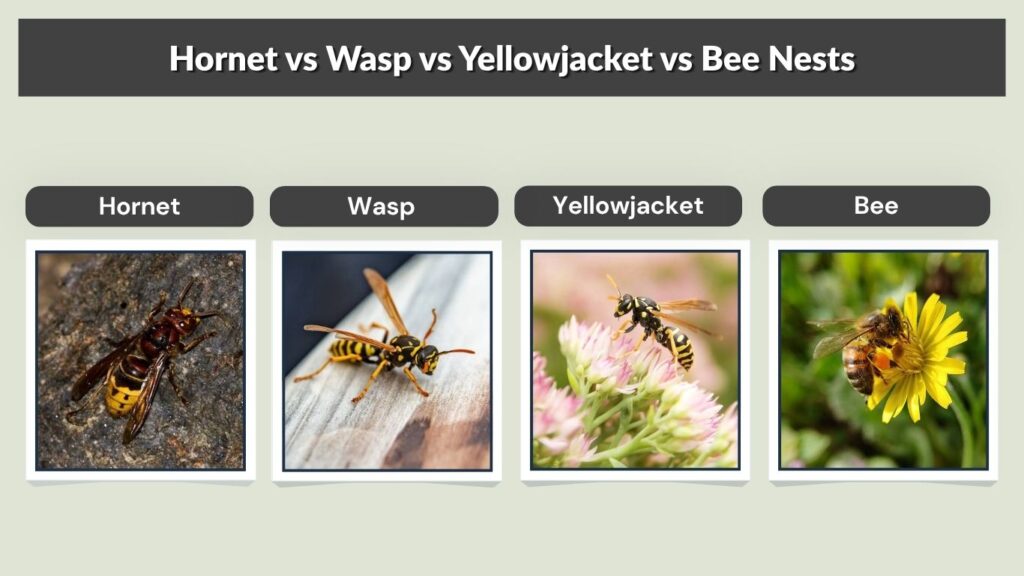
Several other stinging insects produce nests that homeowners may mistake for hornet colonies. Identifying the construction material, visible comb structure, and entrance location helps distinguish these nests. However, there are exceptions among species, and an unknown colony should always be treated cautiously until its identity is established.
Yellowjacket Nests
Yellowjackets commonly construct enclosed paper nests underground or inside structural cavities. Their nests contain multiple combs, unlike the single exposed comb typical of paper wasps. Some yellowjacket species also build aerial nests.
Honey Bee Nests
Honey bees construct wax combs rather than papery nests. Their colonies commonly occupy hollow trees, building cavities, or managed hives. Workers may cluster around an entrance, but the internal wax comb is often hidden.
Mud Dauber Wasp Nests
Mud daubers create nests from mud instead of paper. These structures often resemble narrow tubes or hardened clay clusters attached to sheltered surfaces. They are solitary wasps, unlike colony-forming hornets and yellowjackets.
Are Hornet Nests More Dangerous Than Wasp Nests?
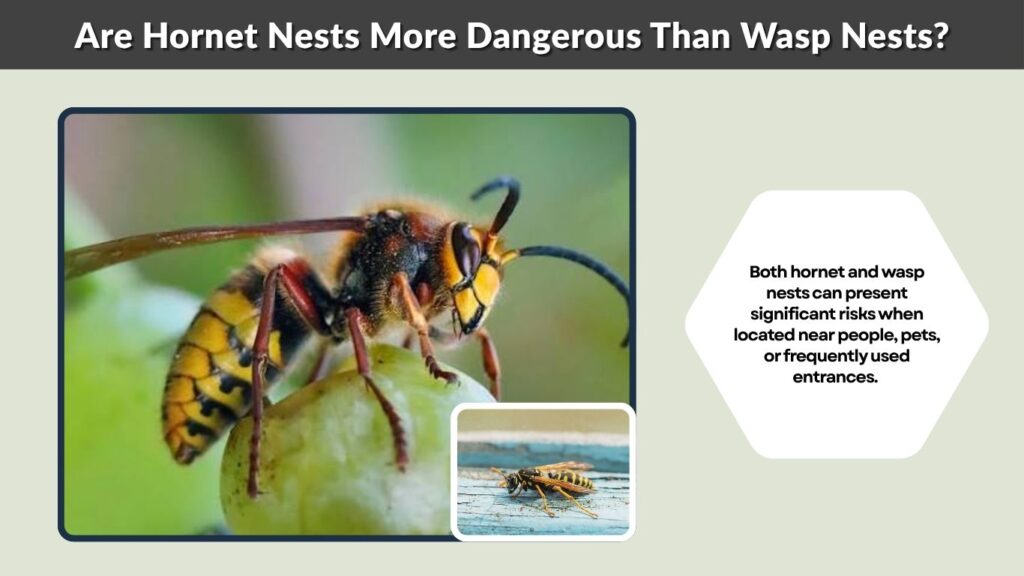
Both hornet and wasp nests can present significant risks when located near people, pets, or frequently used entrances. The level of danger depends on the insect species, colony size, nesting location, and likelihood of disturbance. Hornets are not automatically more dangerous in every situation, and even relatively small paper wasp colonies can defend their nests.
When a Nest Becomes Dangerous
Risk increases when a nest is close to doorways, playgrounds, walkways, or areas where people work. Vibrations from lawn equipment, accidental contact, and attempts to block an entrance may provoke defensive behavior.
Safe Nest Removal
Avoid striking, burning, flooding, or knocking down an active nest. Keep children and pets away, and never seal an occupied wall entrance.
For large colonies, concealed nests, or nests near frequently used areas, contact a qualified pest-control professional. Emergency medical care is necessary if a sting causes difficulty breathing, throat swelling, or other signs of a severe allergic reaction.
FAQs
1. How can you tell a hornet nest from a wasp nest?
A typical aerial hornet nest has an enclosed papery covering, while a paper wasp nest displays exposed hexagonal cells in an umbrella-shaped comb. Shape, size, location, and insect appearance all provide identification clues. Some hornets also build inside hollow trees or walls, where the nest remains hidden.
2. Are hornet nests bigger than wasp nests?
Many hornet colonies construct larger nests than common paper wasps, particularly toward the end of the growing season. However, size varies by species, colony age, climate, and available nesting space. A small enclosed nest may still belong to hornets, so size alone is not a reliable identification method.
3. Do hornets and wasps build nests in the ground?
Some true hornets build underground, while many yellowjacket species commonly occupy abandoned animal burrows and other ground cavities. Paper wasps generally prefer elevated, sheltered surfaces. An underground nest cannot be identified confidently as a hornet or yellowjacket colony without additional evidence.
4. Do hornets and wasps return to the same nest every year?
In most temperate regions, social wasp and hornet colonies die off during colder months, while newly mated queens survive in protected locations. The old nest is generally not reused by a new colony. However, queens may establish new nests near previous nesting sites when conditions remain suitable.
5. Should you remove a hornet or wasp nest?
Removal depends on the nest’s location, insect activity, and risk to people. An undisturbed nest far from frequently used areas may not require treatment. Active nests close to entrances or children should be assessed by a qualified professional rather than disturbed through unsafe removal attempts.
Research basis: University of Maryland Extension, Oklahoma State University Extension, and Penn State Extension guidance on social wasp nesting characteristics and identification.
