
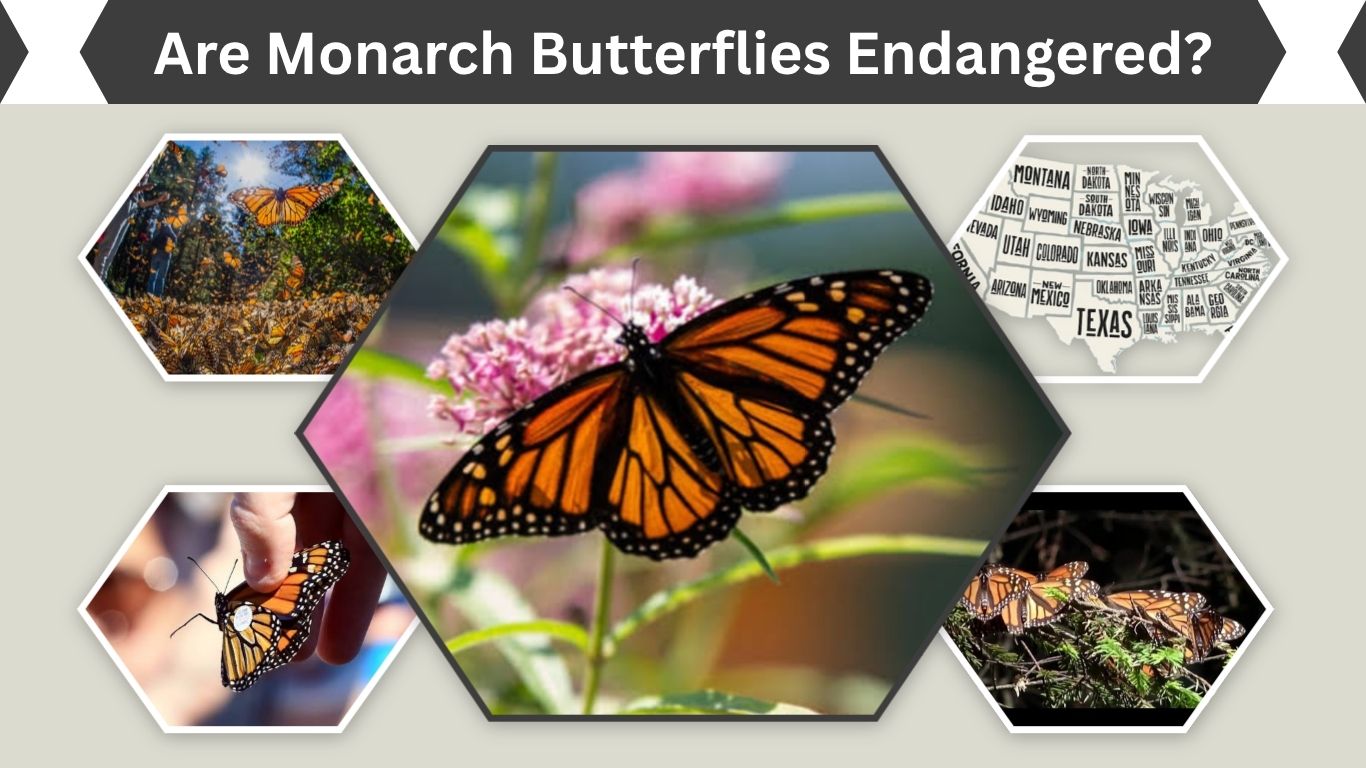
Are monarch butterflies endangered? The answer depends on where you live and which conservation system you are using. As of July 2026, monarch butterflies are federally listed as endangered in Canada. In the United States, they are not yet federally protected under the Endangered Species Act, although the U.S. Fish and Wildlife Service has proposed listing them as threatened. Internationally, the migratory monarch is classified as Vulnerable on the IUCN Red List. Despite these different labels, monarch populations continue to face serious long-term threats.
Are Monarch Butterflies Endangered in 2026?
Monarch butterfly conservation status is complicated because “endangered” can refer to a legal designation or a scientific assessment.
Here is the current situation:
| Region or system | Current monarch status |
|---|---|
| United States | Proposed for listing as threatened, but not yet federally listed |
| Canada | Federally listed as endangered |
| IUCN Red List | Migratory monarch classified as Vulnerable |
| Mexico | Protected, especially at important overwintering sites |
Therefore, it is not accurate to say that monarch butterflies are legally endangered everywhere. They are endangered under Canadian law, considered Vulnerable by the IUCN, and proposed as threatened in the United States.
Are Monarch Butterflies Endangered in the United States?
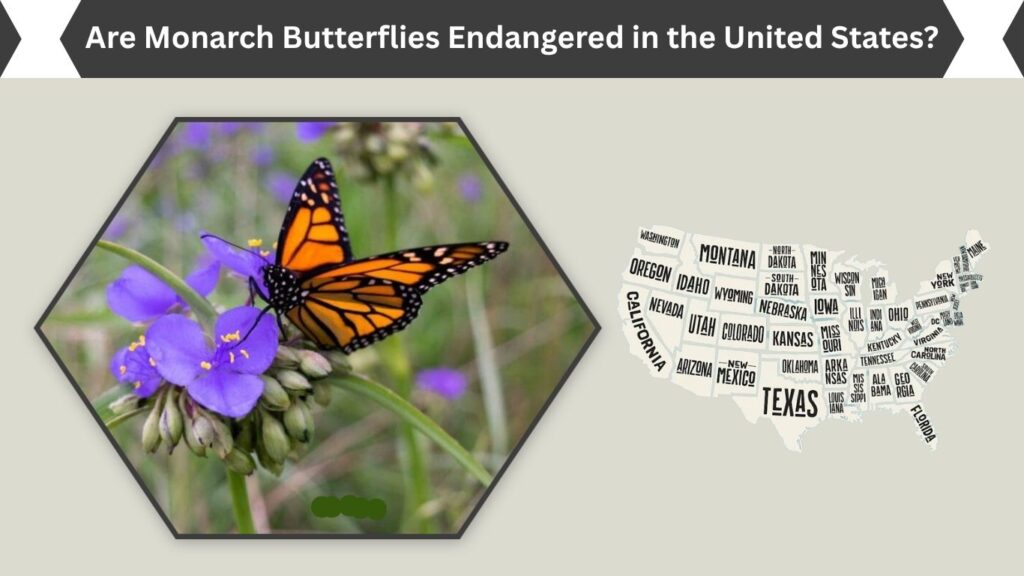
As of July 2026, monarch butterflies are not officially listed as endangered or threatened under the U.S. Endangered Species Act.
In December 2024, the U.S. Fish and Wildlife Service proposed listing the monarch butterfly as a threatened species. A threatened classification means a species is likely to become endangered in the foreseeable future throughout all or a significant portion of its range.
However, a proposal is not the same as a final legal listing. The U.S. Fish and Wildlife Service states that monarchs are not currently federally protected under the Endangered Species Act and that protections would begin only after a final rule takes effect.
Until that process is completed, the monarch remains without full federal threatened-species protection in the United States. State laws, protected lands, voluntary conservation programs, and existing environmental regulations may still provide some protection.
Are Monarch Butterflies Endangered in Canada?
Yes. Canada federally listed the monarch butterfly as an endangered species under the Species at Risk Act on December 8, 2023.
The monarch had previously been classified as a species of special concern. Its reclassification to endangered reflected the serious threats affecting its migration, breeding habitat, and overwintering areas.
Because monarchs are terrestrial animals, certain legal protections apply automatically on federal lands in Canada. These protections prohibit activities such as killing, harming, capturing, or possessing monarchs on lands covered by the federal law.
Canada supports part of the monarch’s northern breeding range. Butterflies seen there must migrate through the United States before reaching overwintering sites in central Mexico.
Is the Monarch Butterfly Endangered Globally?
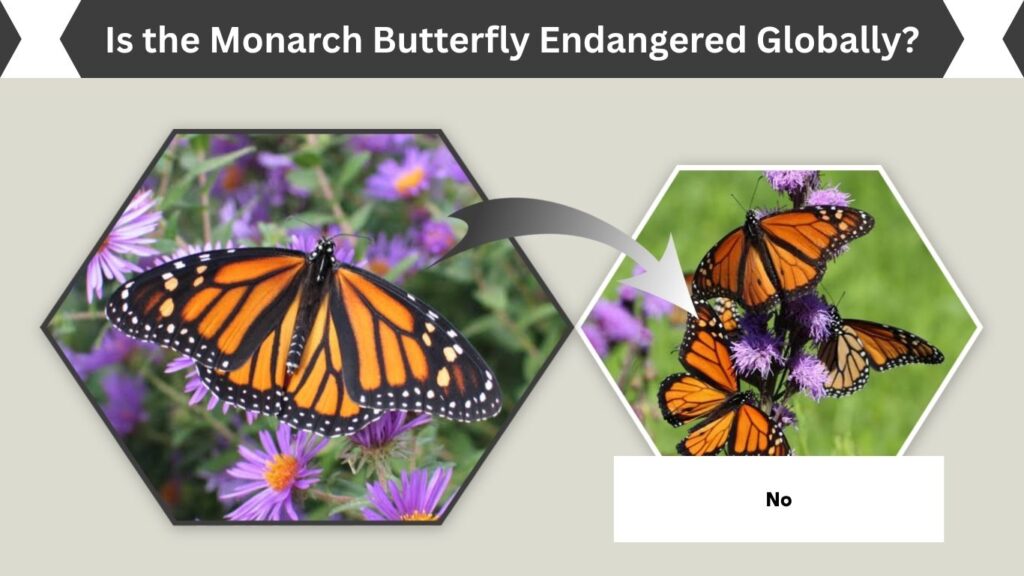
The International Union for Conservation of Nature does not currently classify the migratory monarch as Endangered.
The IUCN initially added the migratory monarch butterfly to its Red List as Endangered in July 2022. Following a reassessment of the population data and concerns about how earlier estimates had been interpreted, the classification was changed to Vulnerable in December 2023.
“Vulnerable” is still a threatened category under the IUCN system. It means the migratory monarch faces a high risk of extinction in the wild, although the assessed risk is lower than that represented by the Endangered or Critically Endangered categories.
The IUCN Red List is a scientific conservation assessment. It does not itself create legal protections in individual countries.
Why Are Monarch Butterflies Endangered or Threatened?
Monarch declines do not have one single cause. Habitat loss, pesticide exposure, climate change, severe weather, and the destruction of overwintering habitat all contribute.
Loss of Milkweed
Monarch caterpillars can survive only on milkweed and closely related host plants. Female monarchs must find milkweed on which to lay their eggs.
Milkweed has disappeared from many farms, roadsides, grasslands, and developed areas because of:
- Herbicide use
- Agricultural expansion
- Roadside mowing
- Urban development
- Changes in land management
- Conversion of grasslands
When milkweed disappears, monarchs lose breeding habitat even if adult nectar flowers remain nearby.
Loss of Nectar Plants
Adult monarchs drink nectar from flowers. They depend on nectar to fuel normal movement, reproduction, and long-distance migration.
The loss of native flowering areas reduces food availability along migration routes. Fall-blooming flowers are particularly important because monarchs traveling south must build energy reserves before reaching Mexico or coastal California.
Destruction of Overwintering Habitat
Most eastern North American monarchs spend the winter in mountain forests in central Mexico. These forests provide the cool, moist, and sheltered conditions needed for monarchs to survive for several months.
Logging, forest degradation, land conversion, and climate-related changes can damage these sites. Because millions of butterflies may concentrate within a relatively small area, the loss of even part of the habitat can affect a large portion of the population.
Western monarchs primarily overwinter in groves along coastal California. These sites face pressure from development, aging trees, drought, wildfire, unsuitable tree management, and changing climate conditions.
Pesticides
Insecticides can kill monarch eggs, caterpillars, and adults directly. Herbicides can indirectly harm monarchs by eliminating milkweed and nectar plants.
Pesticide drift can expose insects even when chemicals are not sprayed directly on butterfly habitat. Some long-lasting systemic insecticides can also enter plant tissues, pollen, and nectar.
Gardeners who want to support monarchs should avoid applying insecticides to milkweed and flowering plants used by pollinators.
Climate Change and Severe Weather
Monarch migration depends on seasonal temperatures, rainfall, wind, and the timing of plant growth.
Climate change can affect monarchs through:
- Drought
- Extreme heat
- Powerful storms
- Wildfires
- Unusual freezes
- Changes in flowering times
- Reduced milkweed growth
- Altered migration conditions
A severe weather event can kill large numbers of monarchs at an overwintering site or during migration. Canada also identifies climate change and severe weather among the major threats facing the species.
How Endangered Are Monarch Butterflies?
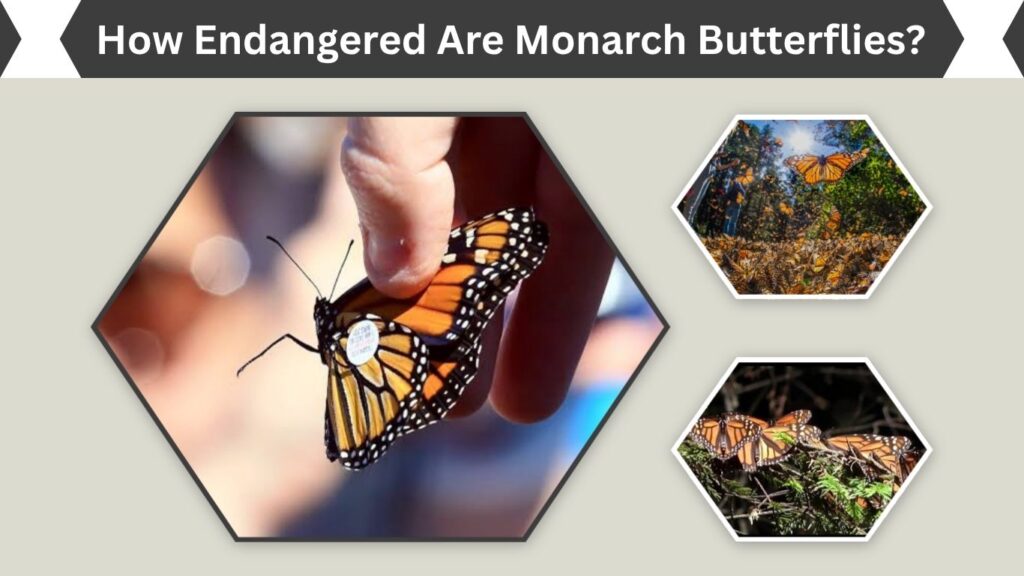
Monarch numbers naturally vary from year to year because weather and breeding conditions change. A favorable year may produce a temporary population increase, while drought or storms can cause a major decline.
These fluctuations do not necessarily mean that the long-term problem has ended. Historical monitoring shows that both eastern and western North American populations have fallen substantially compared with previous decades.
The U.S. Fish and Wildlife Service reported that the eastern monarch population fell by approximately 88 percent between 1996 and 2020, based on estimates from overwintering sites. Western monarchs have also experienced dramatic long-term declines since monitoring began.
One encouraging count cannot reverse decades of habitat loss. Conservation decisions are based on long-term trends, extinction risk, habitat conditions, and the likelihood of future threats—not only the most recent annual count.
When Did Monarch Butterflies Become Endangered?
There is no single date that applies worldwide.
Important status dates include:
- 2016: Canada’s scientific advisory committee assessed the monarch as endangered.
- July 2022: The IUCN classified the migratory monarch as Endangered.
- December 2023: Canada legally listed the monarch as endangered under its Species at Risk Act.
- December 2023: The IUCN changed the migratory monarch’s category from Endangered to Vulnerable.
- December 2024: The United States proposed listing the monarch as threatened under the Endangered Species Act.
These differences explain why online sources may appear to contradict one another. An article from 2022 may call the monarch Endangered under the IUCN system, while a newer source correctly identifies it as Vulnerable.
Are Monarch Caterpillars Endangered?
Monarch caterpillars are not classified separately from adult monarch butterflies. They are the larval stage of the same species and are covered by the monarch’s overall conservation or legal status.
Protecting caterpillars requires protecting milkweed. Without adequate milkweed, monarch females cannot successfully reproduce, regardless of how many nectar flowers are available to adults.
Eggs and caterpillars also face natural predators, parasitoids, diseases, mowing, pesticide exposure, and extreme weather. Most do not survive to adulthood, which makes abundant, high-quality habitat especially important.
Are Monarch Butterflies Becoming Extinct?
Monarch butterflies are not currently extinct or immediately disappearing from every part of their range. They are still widely recognized and may appear numerous in certain places during migration.
However, visibility does not necessarily mean the population is secure. Migrating monarchs concentrate in particular locations, making them look locally abundant even when the total population has declined.
Their dependence on a multigenerational migration also creates special risks. No individual eastern monarch completes the entire northward and southward annual cycle. Several generations must successfully reproduce and navigate connected habitats across Canada, the United States, and Mexico.
A major disruption at any point along this route can affect the entire migratory population.
How Can We Help Endangered Monarch Butterflies?
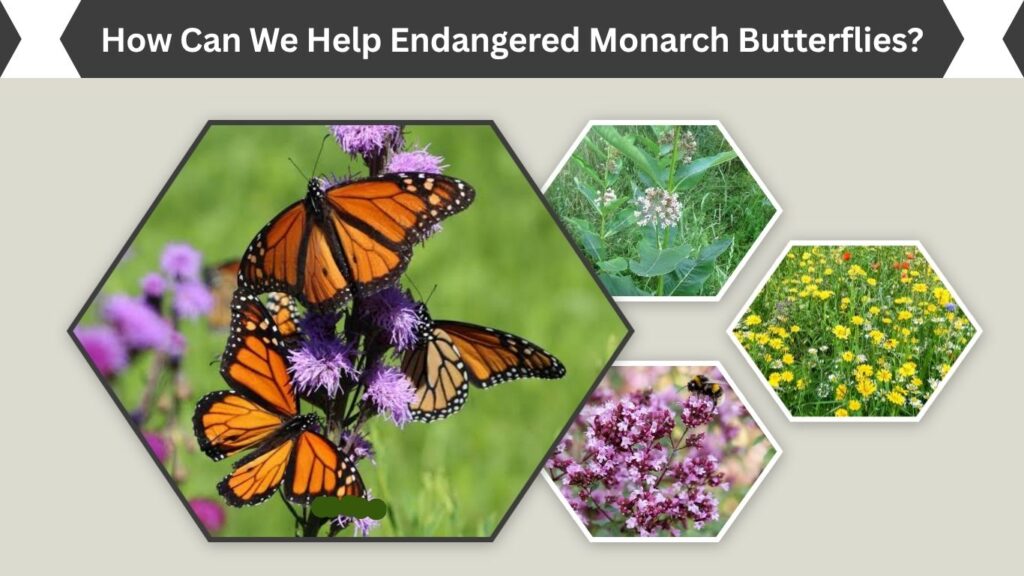
Individuals, communities, farmers, road managers, and governments can all support monarch recovery.
Plant Native Milkweed
Choose milkweed species native to your region. Milkweed provides the only suitable host plants for monarch caterpillars.
Plant several milkweed plants together when space allows. This gives females more places to lay eggs and provides growing caterpillars with a larger food supply.
Grow Nectar Flowers
Plant native flowers that bloom at different times of the year. Spring flowers support arriving monarchs, summer flowers help breeding adults, and fall flowers fuel migration.
Useful nectar plants may include:
- Goldenrod
- Asters
- Blazing star
- Coneflowers
- Joe-Pye weed
- Sunflowers
- Ironweed
- Bee balm
Select species suited to your local climate and soil.
Avoid Insecticides
Do not spray milkweed or nectar flowers with broad-spectrum insecticides. Remember that products marketed as natural or organic can still kill caterpillars and beneficial insects.
Purchase plants from nurseries that can confirm they have not been treated with persistent systemic insecticides.
Protect Existing Habitat
Delay mowing areas containing milkweed when monarch eggs or caterpillars are present. Preserve native meadows, roadside habitat, flowering field edges, and migration stopover sites.
Larger connected habitats are generally more valuable than isolated plants surrounded by heavily managed land.
Join Community Science Projects
Monarch tagging, egg and larva monitoring, migration counts, and habitat surveys help researchers track population changes.
Accurate observations can improve scientists’ understanding of migration timing, reproductive success, disease, habitat use, and annual survival.
FAQs
Are monarch butterflies on the endangered species list?
Monarchs are federally listed as endangered in Canada. In the United States, they have been proposed for listing as threatened but are not yet federally listed. The migratory monarch is classified as Vulnerable rather than Endangered on the IUCN Red List.
Are monarch butterflies endangered or threatened?
The correct description depends on the system. Canada legally classifies monarchs as endangered. The United States has proposed classifying them as threatened. The IUCN considers the migratory monarch Vulnerable, which is one of its threatened conservation categories.
Why is the monarch butterfly endangered?
Major causes include the loss of milkweed and nectar habitat, pesticide exposure, damage to overwintering forests, urban and agricultural development, drought, severe storms, and climate change. These pressures affect monarchs throughout their long migration and breeding cycle.
Are monarch butterflies critically endangered?
No. The migratory monarch is not classified as Critically Endangered by the IUCN. Its current IUCN category is Vulnerable. However, serious declines and continuing threats mean that extensive conservation efforts are still needed.
Can planting milkweed save monarch butterflies?
Planting native milkweed is one of the most useful actions individuals can take because monarch caterpillars cannot survive without it. However, monarch recovery also requires nectar flowers, pesticide reduction, protected migration corridors, and preservation of overwintering habitat.
