
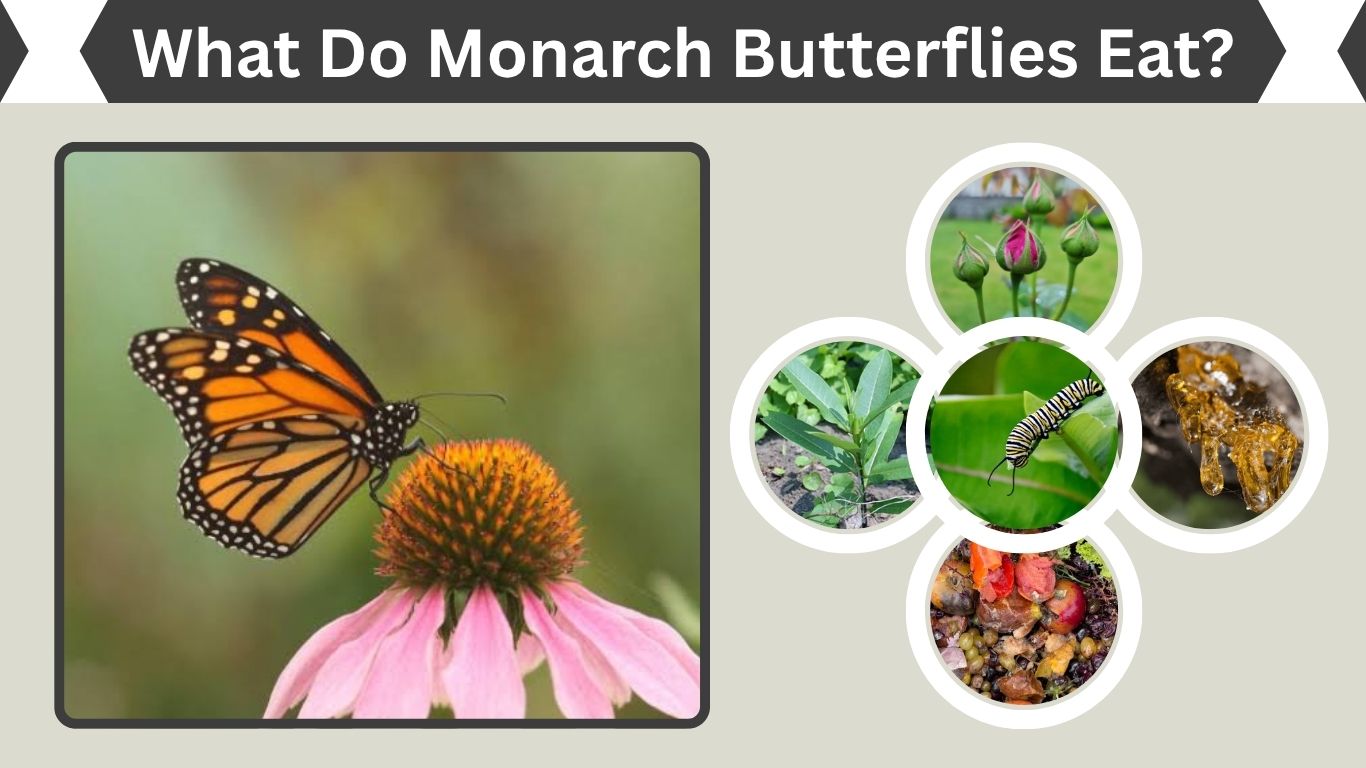
What do monarch butterflies eat? The answer depends on their life stage. Adult monarch butterflies drink nectar from many kinds of flowers, while monarch caterpillars depend on milkweed plants for food. This difference is essential to their survival: milkweed supports eggs and larvae, while nectar-rich flowers provide adult butterflies with energy for flying, reproduction, and migration. Monarchs also face predators at every stage, including ants, spiders, birds, and other insects.
What Do Adult Monarch Butterflies Eat?
Adult monarch butterflies primarily consume flower nectar. Nectar is a sugary liquid produced by flowers and supplies carbohydrates that power flight, mating, egg-laying, and migration.
Unlike their caterpillars, adult monarchs are not restricted to milkweed. They visit many flowering plants, choosing whatever suitable nectar sources are available during the season. A successful monarch habitat therefore needs both milkweed and a variety of nectar-producing flowers.
Adult monarchs commonly visit:
- Milkweed flowers
- Goldenrod
- Asters
- Blazing star
- Coneflowers
- Joe-Pye weed
- Zinnias
- Verbena
- Sunflowers
- Ironweed
- Tickseed
- Bee balm
The best plants vary by region. Native flowers are generally valuable because they are adapted to local conditions and bloom at times when local pollinators need them.
Do Monarch Butterflies Eat Milkweed?
Adult monarchs may drink nectar from milkweed flowers, but they do not eat milkweed leaves. It is the caterpillars that chew the leaves, stems, buds, and occasionally flowers.
Milkweed plays two separate roles in the monarch life cycle:
- Female monarchs lay their eggs on milkweed.
- Newly hatched caterpillars eat the milkweed plant.
- Adult butterflies may drink nectar from milkweed flowers.
Monarchs need milkweed to reproduce successfully, but adults also require many other flowers throughout spring, summer, and fall.
What Do Monarch Butterfly Caterpillars Eat?
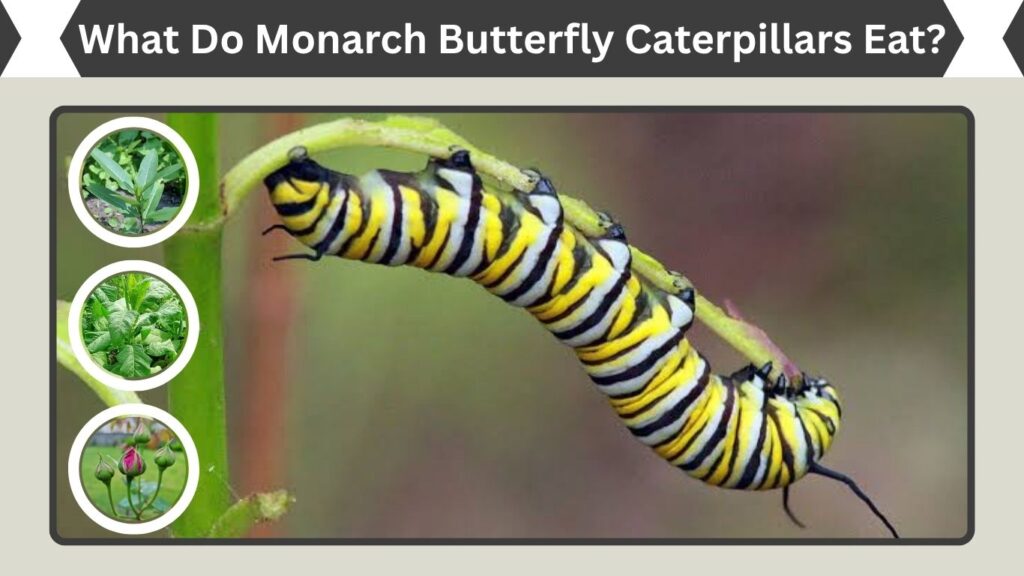
Monarch butterfly caterpillars eat milkweed. In North America, they rely mainly on plants in the genus Asclepias and a few closely related plants.
Female monarchs locate milkweed and usually place individual eggs on its leaves. After hatching, the tiny caterpillar often consumes part of its eggshell before beginning to feed on the milkweed. It then eats frequently for approximately two weeks, depending on temperature and growing conditions.
A growing caterpillar may eat:
- Young milkweed leaves
- Mature leaves
- Tender stems
- Flower buds
- Milkweed flowers
- Seedpod surfaces
Leaves are the primary food. As caterpillars grow through five developmental stages, called instars, their appetite and body size increase dramatically.
Why Can Monarch Caterpillars Only Eat Milkweed?
Monarch larvae are specialized feeders. Their bodies have evolved to tolerate defensive chemicals found in milkweed, including compounds called cardenolides.
Caterpillars store some of these compounds in their tissues. The chemicals can make monarch larvae and adults distasteful or toxic to certain predators, although they do not protect monarchs from every animal.
Plants such as parsley, dill, and fennel are not appropriate substitutes for milkweed. Those plants support black swallowtail caterpillars, not monarchs.
A monarch caterpillar placed on the wrong plant may wander without feeding and eventually starve. This is why identifying both the caterpillar and plant correctly is important.
Do Monarch Caterpillars Eat Butterfly Weed?
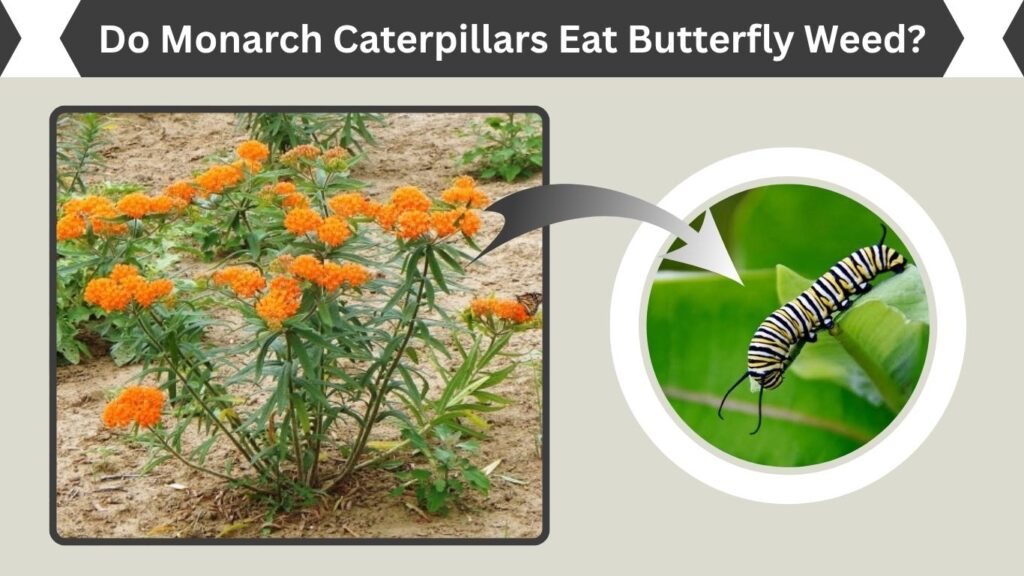
Yes. Butterfly weed, Asclepias tuberosa, is a true milkweed species and can serve as a host plant for monarch caterpillars.
Its bright orange flowers also provide nectar for adult butterflies and other pollinators. Monarch females may lay eggs on butterfly weed, and caterpillars can eat its leaves, buds, and tender growth.
Other commonly grown milkweeds include:
| Milkweed species | Scientific name | Typical conditions |
|---|---|---|
| Common milkweed | Asclepias syriaca | Sunny fields and open spaces |
| Swamp milkweed | Asclepias incarnata | Moist soil and rain gardens |
| Butterfly weed | Asclepias tuberosa | Dry, sunny, well-drained soil |
| Showy milkweed | Asclepias speciosa | Western North America |
| Whorled milkweed | Asclepias verticillata | Dry prairies and open land |
Gardeners should select milkweed species native to their region whenever possible. Native milkweeds are adapted to local climates and support monarch reproduction as well as other wildlife.
Do Monarch Butterflies Eat Anything Besides Milkweed?
Adult monarchs do; caterpillars generally do not.
This distinction answers one of the most common questions about monarch feeding:
| Life stage | Main food |
|---|---|
| Egg | Does not feed |
| Caterpillar | Milkweed foliage |
| Chrysalis | Does not feed |
| Adult butterfly | Nectar from many flowers |
Adult monarchs may visit milkweed, but they also feed on asters, goldenrod, coneflowers, blazing star, and many other nectar plants. Caterpillars remain dependent on milkweed throughout their larval stage.
How Do Monarch Butterflies Eat?
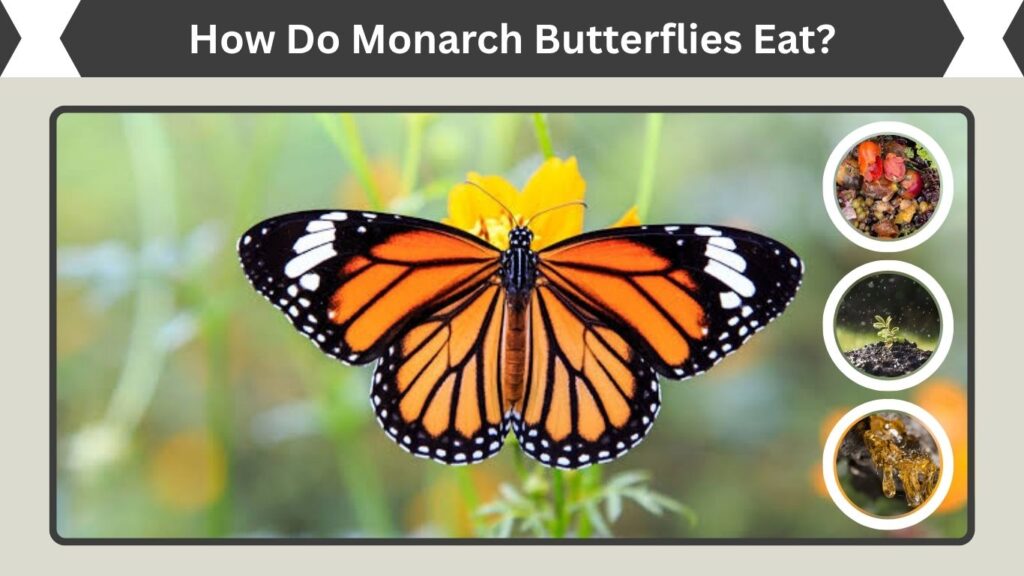
Adult monarchs eat through a long, flexible feeding tube called a proboscis. When the butterfly is not feeding, the proboscis remains coiled beneath its head.
When the monarch lands on a flower, it uncoils the proboscis and inserts it into the flower to draw up nectar. It does not chew because adult butterflies lack chewing mouthparts.
Monarchs can also obtain liquids from:
- Overripe fruit
- Moist soil
- Tree sap
- Shallow puddles
- Mineral-rich damp ground
Flower nectar remains their normal and most important energy source.
Caterpillars feed differently. They have strong chewing mouthparts that allow them to bite through milkweed leaves and other tender plant tissues.
What Do Monarch Butterflies Eat During Migration?
Migrating monarchs rely heavily on nectar-rich flowers. They must repeatedly stop and feed as they travel because flight requires substantial energy.
Fall-blooming flowers are especially important for monarchs migrating toward overwintering grounds. Nectar provides sugar that can be used immediately or stored as fat to support migration and winter survival.
Useful fall nectar plants include:
- Goldenrod
- New England aster
- Smooth aster
- Ironweed
- Blazing star
- Sunflowers
- Boneset
- Joe-Pye weed
A garden containing flowers with overlapping bloom periods can provide food from spring through fall.
What Do Newly Emerged Monarch Butterflies Eat?
A newly emerged monarch does not feed immediately. It first hangs from its empty chrysalis while pumping fluid into its wings. The wings must expand, dry, and harden before the butterfly can fly normally.
Once ready, the monarch begins looking for nectar-producing flowers. Access to flowers near the emergence site can be helpful, but a healthy adult can usually wait several hours while its wings develop.
Adults need dependable nectar access as they begin flying, mating, migrating, or searching for milkweed.
Do Monarch Butterflies Eat Fruit?
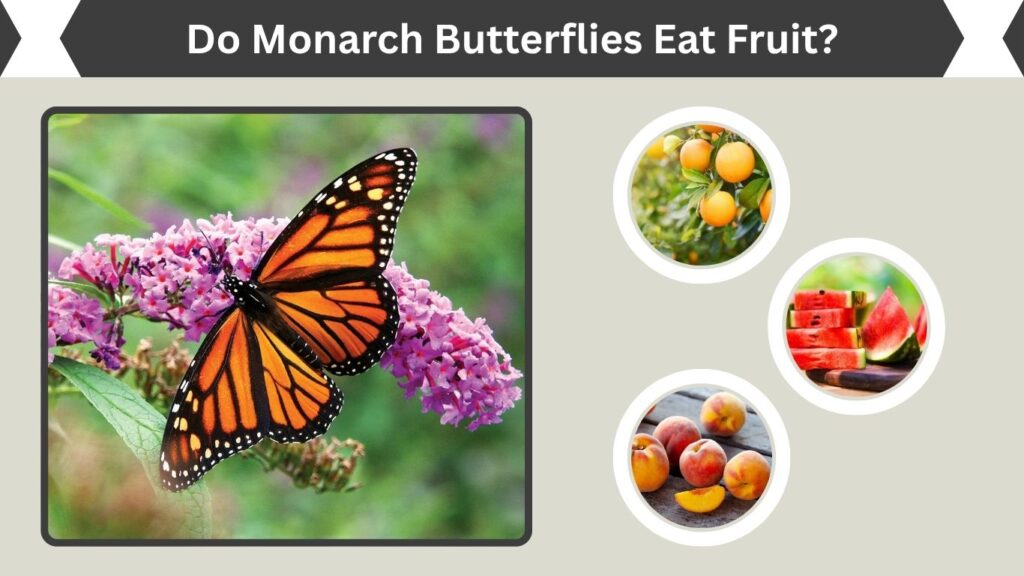
Monarch butterflies may drink juices from very ripe or damaged fruits, especially when flowers are scarce. Possible fruit sources include:
- Oranges
- Watermelon
- Bananas
- Peaches
- Plums
- Grapes
Fruit is not a substitute for a diverse supply of nectar flowers. It can ferment quickly, attract wasps and flies, develop mold, and spread microorganisms if left outside too long.
A monarch garden should focus mainly on pesticide-free milkweed and nectar-producing plants rather than fruit-feeding stations.
Do Monarch Caterpillars Eat Dill or Parsley?
No. Monarch caterpillars do not normally eat dill, parsley, fennel, or carrot leaves.
Black swallowtail caterpillars commonly feed on these plants and are sometimes mistaken for monarch caterpillars. Both may have striped patterns, but they belong to different butterfly families and require different host plants.
Monarch caterpillars usually have:
- Black, white, and yellow bands
- Two pairs of long black filaments
- A smooth-looking body
- A close association with milkweed
Monarch larvae should always be supplied with fresh, correctly identified milkweed.
What Eats Monarch Butterflies?
Although milkweed chemicals deter some predators, monarch butterflies are not completely protected. Certain animals can tolerate the chemicals, avoid the most toxic body parts, or prey on monarchs with lower toxin levels.
Potential adult monarch predators include:
- Insect-eating birds
- Spiders
- Praying mantises
- Dragonflies
- Lizards
- Frogs
- Mice and other small mammals
Some birds learn to avoid monarchs after tasting them, but others can consume them. Predation patterns can differ depending on the region, predator species, and chemical content of the individual butterfly.
What Eats Monarch Butterfly Caterpillars and Eggs?
Monarch eggs and young caterpillars are vulnerable because they are small, exposed, and unable to escape quickly.
Common predators and threats include:
- Ants
- Spiders
- Lady beetles
- Lacewing larvae
- Predatory stink bugs
- Paper wasps
- Praying mantises
- Birds
- Lizards
Tiny parasitoid flies and wasps may also develop inside monarch caterpillars or pupae. Disease, severe weather, and exposure to pesticides can further reduce survival.
Aphids often gather on milkweed but usually feed on plant sap rather than monarch eggs. However, heavy aphid infestations can weaken milkweed or alter conditions around the plant.
How Much Do Monarch Caterpillars Eat?
Monarch caterpillars eat almost continuously during their larval period, pausing mainly when they molt. Over approximately two weeks, a caterpillar passes through five instars and grows to nearly 2,000 times its original mass.
A large caterpillar can consume substantial portions of a milkweed plant. Several caterpillars may strip most leaves from a small plant.
Gardeners supporting monarchs should grow multiple milkweed plants rather than relying on a single stem. Avoid applying insecticides, including products marketed as organic, directly to monarch host or nectar plants.
What Should Monarch Butterflies Eat in Captivity?
Adult monarchs temporarily held for educational or rehabilitation purposes should have access to fresh nectar flowers when possible. Artificial nectar solutions are sometimes used, but they must be prepared and managed carefully to avoid contamination.
Caterpillars require fresh, pesticide-free milkweed. Leaves collected for captive caterpillars can be rinsed with water to remove debris and small organisms. Rearing containers must be kept clean because crowded indoor conditions can encourage disease transmission.
Long-term captive rearing is more complicated than simply providing food. Proper hygiene, ventilation, temperature, spacing, and disease management are also necessary.
Creating a Garden Where Monarchs Can Feed
A useful monarch garden contains both host plants and nectar plants.
Include:
- Several native milkweed plants
- Flowers blooming in spring, summer, and fall
- Clusters of the same flower species
- Sunny, sheltered feeding areas
- A shallow source of moisture
- Plants grown without insecticides
Milkweed alone supports caterpillars but may not provide enough nectar throughout the entire adult season. Nectar flowers alone feed adults but do not give females a place to lay eggs. Monarch habitat requires both.
FAQs
Do monarch butterflies only eat milkweed?
Monarch caterpillars eat milkweed, but adult monarch butterflies drink nectar from many flowering plants. Adults may visit milkweed flowers, goldenrod, asters, coneflowers, and other blooms. Therefore, milkweed is essential for reproduction, while diverse nectar flowers support adult feeding.
What part of milkweed do monarch caterpillars eat?
Monarch caterpillars primarily eat milkweed leaves. They may also consume tender stems, flower buds, blossoms, and parts of developing seedpods. Young larvae usually begin on softer leaf tissue, while larger caterpillars can chew through thicker, more mature growth.
Can monarch caterpillars eat butterfly weed?
Yes. Butterfly weed is a milkweed species known scientifically as Asclepias tuberosa. Monarch females may lay eggs on it, and the caterpillars can eat its foliage. Its orange flowers also provide nectar for adult monarchs and other pollinators.
Do birds eat monarch butterflies?
Some birds can eat monarch butterflies, although milkweed-derived chemicals make many monarchs unpleasant or toxic to certain predators. Predator tolerance and monarch toxicity vary, so the butterfly’s warning colors reduce attacks but do not provide complete protection.
What flowers do monarch butterflies like best?
Monarchs visit many nectar-rich flowers, particularly native plants that bloom in clusters. Milkweed, goldenrod, asters, blazing star, coneflowers, ironweed, Joe-Pye weed, and sunflowers are useful examples. The best garden offers overlapping blooms from spring through fall.
