
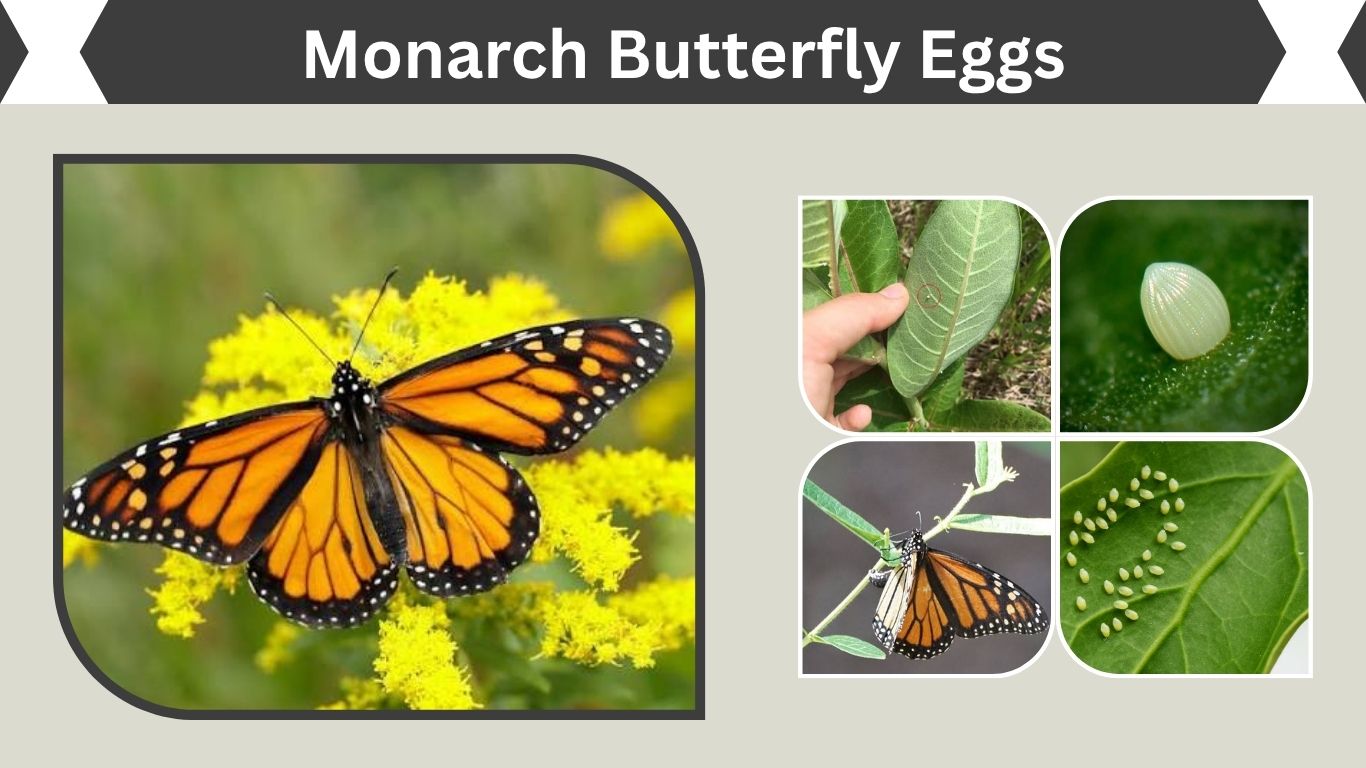
Monarch butterfly eggs are tiny, pale, and usually found on milkweed leaves. Because they are so small, many people confuse them with aphids, milkweed sap, or other insect eggs. Learning how to identify monarch eggs is helpful if you grow milkweed, raise monarchs carefully, or simply want to understand the monarch butterfly life cycle. This guide explains what monarch butterfly eggs look like, where females lay them, when they hatch, and how to protect them naturally.
What Do Monarch Butterfly Eggs Look Like?
Monarch butterfly eggs are very small, usually about the size of a pinhead. They are commonly creamy white, pale yellow, or off-white. A fresh egg looks like a tiny oval dome standing upright on the leaf surface. Under close inspection, it may show fine vertical ridges from top to bottom.
Most monarch eggs are laid singly, not in clusters. This is one of the easiest ways to separate them from many other insect eggs. A female monarch usually places one egg on a milkweed leaf, often on the underside, where it is partly protected from direct sun, rain, and predators.
Key Identification Features
- Shape: tiny oval or football-shaped dome
- Color: white, cream, or pale yellow
- Texture: fine vertical ridges
- Placement: usually one egg per leaf
- Host plant: milkweed only
- Size: very small, often hard to see without close inspection
A monarch egg may darken slightly before hatching. When the caterpillar inside develops, the top of the egg can look darker because the tiny larva is almost ready to emerge.
Monarch Butterfly Eggs on Milkweed
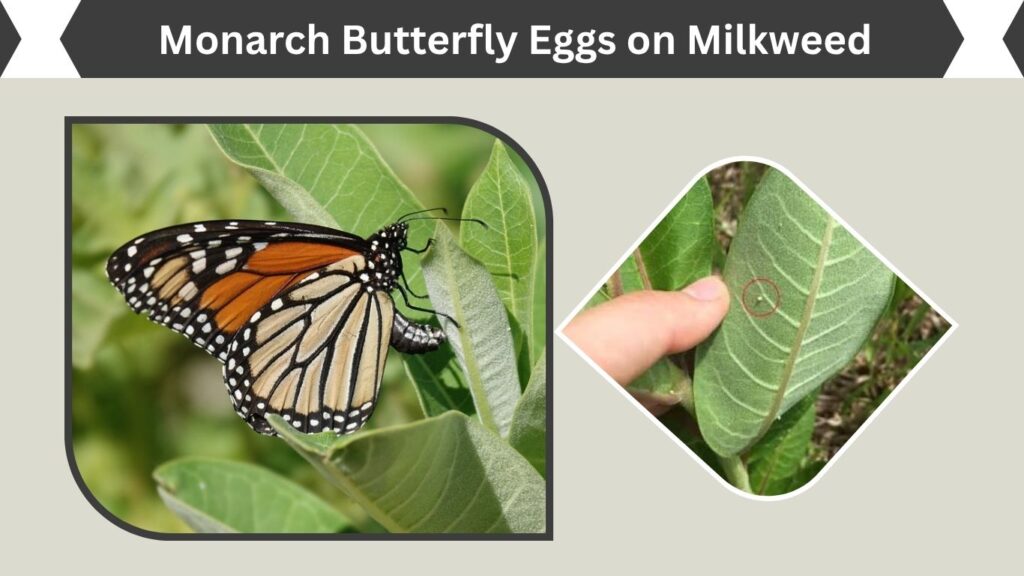
Monarch butterflies depend on milkweed because it is the only host plant their caterpillars can eat. Female monarchs lay eggs directly on milkweed, and after hatching, the tiny caterpillar begins feeding on the leaf. Monarch Joint Venture notes that females attach eggs to the plant with a small amount of glue-like secretion, and the eggs usually hatch in about four days.
Milkweed is not just a place for egg laying. It is the food source for the monarch caterpillar stage. Without milkweed, monarch eggs may hatch, but the caterpillars will not survive because they cannot switch to ordinary garden plants.
Common Places to Find Eggs on Milkweed
- Underside of young milkweed leaves
- Tender new growth near the top of the plant
- Flower buds or small stems
- Fresh leaves on healthy milkweed plants
- Hidden areas away from strong wind or direct sun
Female monarchs often inspect milkweed carefully before laying. They use sensory receptors on their legs and antennae to recognize suitable host plants.
Monarch Egg vs Aphid: How to Tell the Difference
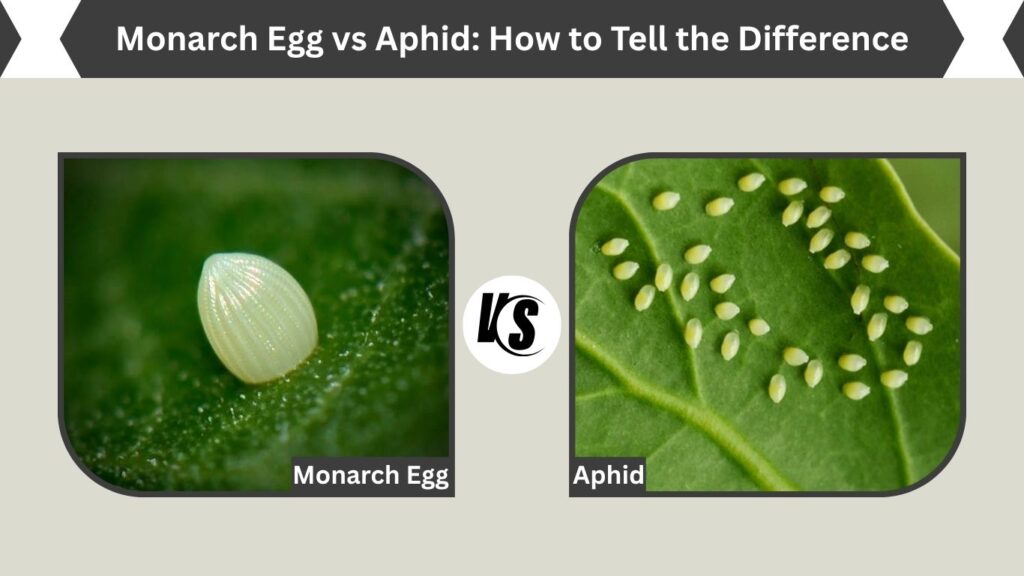
Monarch butterfly eggs and aphids are often confused because both may appear on milkweed. Aphids are usually yellow, orange, green, or black and often gather in groups. Monarch eggs are usually single, pale, and fixed to the leaf.
| Feature | Monarch Butterfly Egg | Aphid |
|---|---|---|
| Shape | Oval, upright dome | Pear-shaped insect |
| Color | Cream, white, pale yellow | Yellow, orange, green, or black |
| Grouping | Usually single | Usually in clusters |
| Movement | Does not move | May move slowly |
| Location | Often underside of leaf | Stems, buds, leaves |
| Texture | Ridged surface | Soft body with legs |
If you see many tiny yellow insects grouped together on a milkweed stem, they are probably aphids, not monarch eggs. If you see one tiny pale oval attached to the underside of a leaf, it may be a monarch egg.
When Do Monarch Butterflies Lay Eggs?
Monarch butterflies lay eggs during the breeding season when milkweed is available. The exact timing depends on region, temperature, migration patterns, and local milkweed growth. In many parts of North America, egg laying begins in spring and continues through summer. In warmer regions, monarchs may breed for a longer period.
Females usually lay eggs during daylight hours when they are active and searching for host plants. They may visit many milkweed plants in one area, placing eggs one at a time.
Factors That Affect Egg Laying
- Availability of healthy milkweed
- Warm daytime temperatures
- Local monarch migration timing
- Rain, storms, or drought
- Pesticide exposure
- Plant age and leaf quality
Healthy, chemical-free milkweed is one of the best ways to encourage monarch egg laying in a garden.
How Many Eggs Does a Monarch Butterfly Lay?
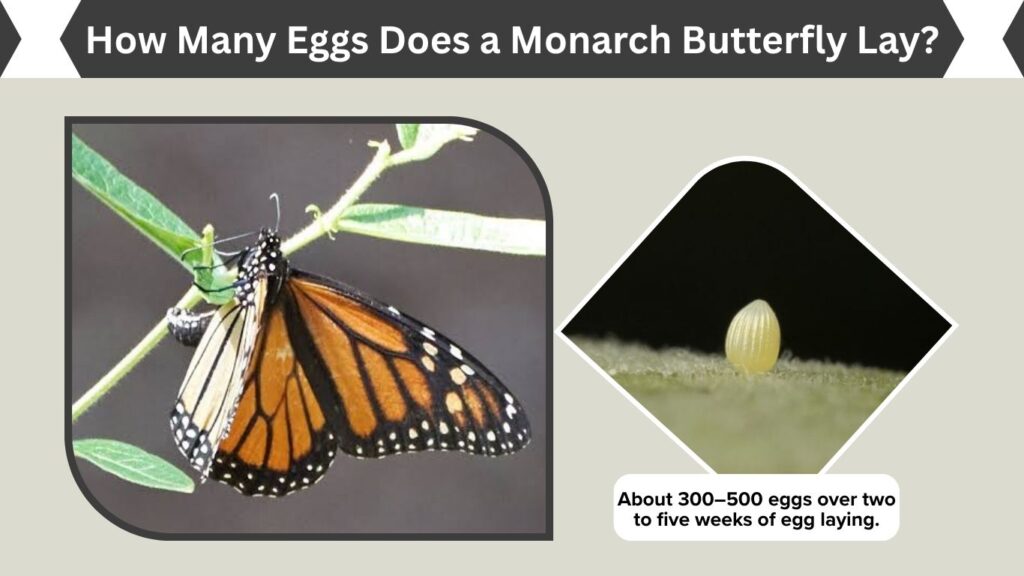
A female monarch can lay hundreds of eggs during her lifetime. Monarch Joint Venture reports that females commonly lay about 300–500 eggs over two to five weeks of egg laying. However, not all eggs survive. Many are eaten by predators, affected by weather, or lost before reaching the adult butterfly stage.
Monarchs lay many eggs because survival in the wild is difficult. Eggs and tiny caterpillars are vulnerable to ants, spiders, wasps, stink bugs, lacewing larvae, and other natural predators.
| Life Stage | Approximate Time | Main Activity |
|---|---|---|
| Egg | 3–5 days | Develops on milkweed leaf |
| Caterpillar | 9–15 days | Eats milkweed and molts |
| Chrysalis | 8–15 days | Transforms into adult |
| Adult butterfly | 2–6 weeks or longer | Feeds, mates, migrates, lays eggs |
The full egg-to-adult process often takes around one month, but temperature can speed up or slow down development. The University of Maryland Extension notes that monarch development from egg to adult is about 30 days, with timing varying by temperature.
How Long Do Monarch Butterfly Eggs Take to Hatch?
Monarch butterfly eggs usually hatch in about 3–5 days. Warm weather can speed up hatching, while cooler weather can slow it down. The University of Maine Cooperative Extension explains that a monarch caterpillar emerges from the egg after about three to five days and starts feeding on milkweed.
Before hatching, the egg may look darker at the top. The tiny caterpillar chews its way out and may eat part of the eggshell after emerging. This gives the new larva a small first meal before it begins eating the milkweed leaf.
Signs an Egg Is Close to Hatching
- Egg looks slightly darker
- Top may appear grayish or blackish
- Shape remains firm and attached
- Tiny caterpillar may be visible inside
- Hatching happens within a few days in warm weather
If an egg turns completely dark, collapses, or looks moldy, it may not be viable.
How to Find Monarch Butterfly Eggs

Finding monarch eggs takes patience because they are tiny and easy to miss. The best place to start is with healthy milkweed plants. Look closely at the underside of leaves, especially new leaves near the top of the plant.
Avoid searching too roughly because eggs can be damaged. Gently lift leaves and inspect them in good light. A hand lens or phone camera zoom can help.
Step-by-Step Egg Search
- Find milkweed plants in a safe, pesticide-free area.
- Check the underside of young leaves first.
- Look for single pale oval eggs, not clusters.
- Inspect flower buds and tender stems.
- Avoid touching eggs unless necessary.
- Recheck the plant every day during monarch season.
If you find tiny caterpillars instead of eggs, the eggs may have already hatched.
Should You Raise Monarch Butterfly Eggs?
Some people collect monarch eggs to raise indoors, hoping to protect them from predators. However, many conservation groups now advise caution. The National Wildlife Federation says collecting or purchasing monarch eggs, caterpillars, or chrysalises for rearing may not help wild populations and can cause harm if done incorrectly.
The safest way to support monarchs is usually to grow native milkweed, plant nectar flowers, avoid pesticides, and protect outdoor habitat. If you do raise monarchs, keep everything clean, avoid overcrowding, and never buy eggs from questionable sources.
How to Protect Monarch Eggs Naturally
The best protection for monarch eggs starts with a healthy habitat. A garden with native milkweed, nectar plants, and no pesticides gives monarchs a better chance of completing their life cycle.
Natural Protection Tips
- Grow milkweed native to your region
- Avoid insecticides, herbicides, and mosquito sprays
- Plant nectar flowers for adult butterflies
- Keep milkweed healthy and watered
- Do not remove all aphids with harsh chemicals
- Let some natural balance remain in the garden
The Xerces Society recommends planting locally native milkweed species and does not recommend tropical milkweed because of concerns about monarch health and ecological effects.
Monarch Butterfly Egg Predators
Many animals eat monarch eggs. This is normal in nature, but it can be disappointing if you are watching eggs on your milkweed plants. Eggs may disappear overnight because predators are active at different times.
Common predators include ants, spiders, wasps, stink bugs, lady beetles, lacewing larvae, and other small insects. Some eggs may also fail because of weather, disease, or infertility.
| Threat | What Happens |
|---|---|
| Ants | May eat eggs or tiny caterpillars |
| Wasps | May hunt larvae and eggs |
| Spiders | Catch young caterpillars |
| Stink bugs | Pierce eggs or larvae |
| Heavy rain | Can damage leaves or dislodge eggs |
| Pesticides | Can kill eggs, larvae, or adults |
Predators are part of the ecosystem, so the goal is not to remove every insect. Instead, focus on creating a healthy, chemical-free habitat.
Can You Buy Monarch Butterfly Eggs?
Some searches show interest in buying monarch butterfly eggs, but this is not always a good idea. Buying eggs can spread disease, weaken local genetics, or support poor rearing practices. It may also be restricted in some areas.
A better option is to grow native milkweed and let wild monarchs find your garden naturally. This supports local butterflies without moving eggs across regions.
FAQs
What color are monarch butterfly eggs?
Monarch butterfly eggs are usually creamy white, pale yellow, or off-white. They may become slightly darker just before hatching because the tiny caterpillar is developing inside. If the egg turns black, shriveled, or moldy-looking, it may not hatch successfully.
Where do monarch butterflies lay their eggs?
Monarch butterflies lay their eggs on milkweed plants. Eggs are often found on the underside of leaves, but they may also appear on young stems, buds, or tender new growth. Milkweed is essential because monarch caterpillars feed only on milkweed after hatching.
How long does it take monarch butterfly eggs to hatch?
Monarch butterfly eggs usually hatch in about 3–5 days. Warm temperatures may speed up hatching, while cooler weather can slow it down. Before hatching, the egg may darken slightly, and then a tiny caterpillar chews its way out.
Do monarch butterflies lay eggs on butterfly weed?
Yes, monarchs can lay eggs on butterfly weed because butterfly weed is a type of milkweed. Its scientific name is Asclepias tuberosa. It is a useful host plant in many gardens, especially when it is native to the region and grown without pesticides.
Do monarch butterflies die after laying eggs?
Monarch butterflies do not die immediately after laying eggs. A female can lay eggs over several days or weeks. Adult monarchs continue feeding on nectar, flying, mating, and laying more eggs as long as conditions allow and they remain healthy.
