
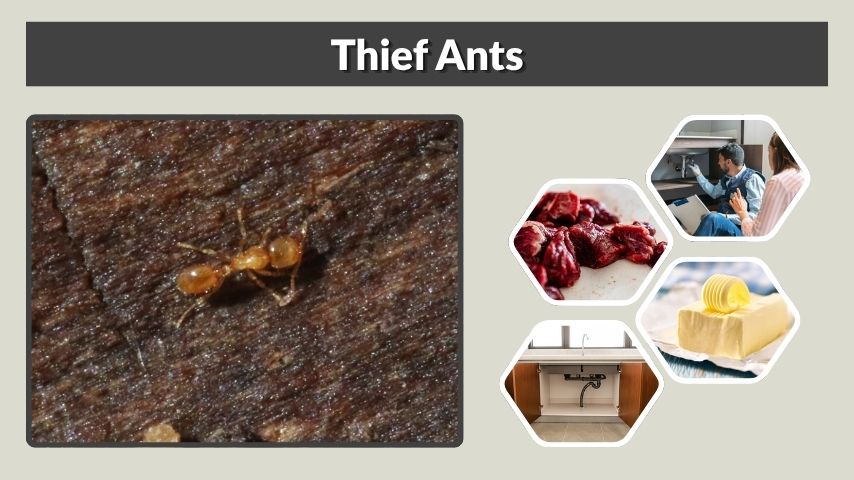
Thief ants are tiny yellow to light brown ants that often enter homes in search of greasy and protein-rich food. They are also called grease ants because they commonly feed on meat, cheese, oil, nuts, seeds, and other fatty foods. Their small size makes them difficult to notice, and they are often confused with pharaoh ants. Correct identification is important because control depends on the ant’s nesting habits and food preference.
What Are Thief Ants?
Thief ants are very small ants in the genus Solenopsis. The best-known species is Solenopsis molesta. They get the name “thief ants” because they often nest close to other ant colonies and steal food, larvae, and pupae from them. They are also known as grease ants because they are strongly attracted to greasy foods and protein.
These ants can live outdoors under soil, stones, logs, and debris, but they may also nest indoors inside wall voids, cabinet gaps, cracks, and under floors. Their tiny bodies allow them to enter food packages and move through very small openings. When they appear in kitchens or bathrooms, they may be searching for food, water, or a hidden nesting site.
Thief Ant Identification
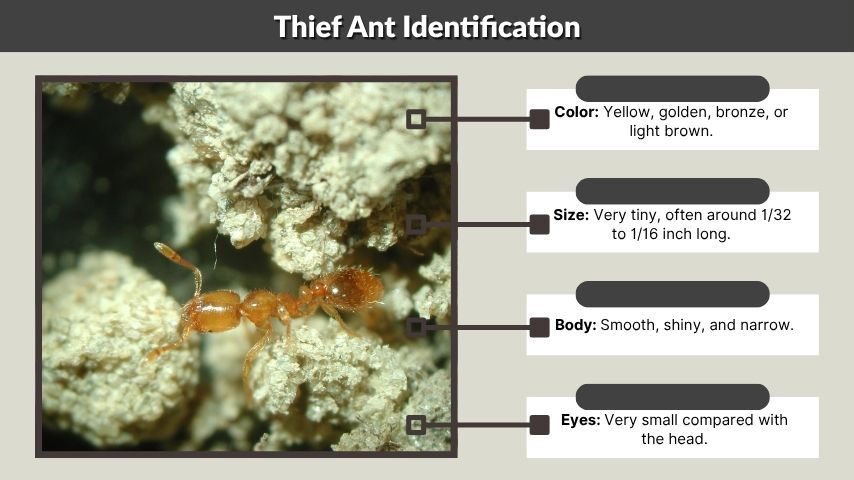
Thief ants are difficult to identify with the naked eye because they are extremely small. Workers are usually yellow, golden, bronze, or light brown. They may look almost transparent under bright light. Their eyes are very small, and their bodies are smooth and shiny.
A hand lens or microscope may be needed for reliable identification. Texas A&M Extension notes that tiny ants such as thief ants and pharaoh ants may require a quality stereo microscope because they are difficult to separate by simple appearance.
Key Characteristics
- Color: Yellow, golden, bronze, or light brown.
- Size: Very tiny, often around 1/32 to 1/16 inch long.
- Body: Smooth, shiny, and narrow.
- Eyes: Very small compared with the head.
- Antennae: 10 segments with a 2-segmented club.
- Waist: Two small nodes between the thorax and abdomen.
- Trails: Often seen in kitchens, pantries, bathrooms, and near greasy foods.
Thief ants are easy to miss because they may look like small moving specks. If you see tiny yellow ants repeatedly near food, cabinets, sinks, or pet bowls, thief ants are a strong possibility.
Thief Ant Size
Thief ants are among the smallest household ants. Workers are commonly about 1.5 to 2.2 mm long, though some sources describe them as ranging from about 0.5 mm to 3 mm. Queens are larger and may reach a little over 5 mm.
Their small size is one reason they become indoor pests. They can enter through cracks around windows, door frames, baseboards, pipes, and foundation gaps. They can also get into food containers that seem tightly closed. Because they are so small, people often notice the trail before they notice individual ants clearly.
Thief Ants vs Pharaoh Ants
Thief ants and pharaoh ants are often confused because both are tiny, yellowish ants that may appear indoors. However, they are not the same. The difference matters because treatment can vary, especially if the ants are nesting inside.
The most useful difference is in the antennae. Thief ants have 10-segmented antennae with a 2-segmented club. Pharaoh ants have 12-segmented antennae with a 3-segmented club. This detail is hard to see without magnification, but it is one of the best identification clues.
| Feature | Thief Ants | Pharaoh Ants |
|---|---|---|
| Color | Yellow to light brown | Yellow, golden, or reddish-yellow |
| Size | Very tiny | Tiny but often slightly larger |
| Antennae | 10 segments, 2-segmented club | 12 segments, 3-segmented club |
| Food preference | Grease, oil, protein, meat, cheese | Sweets, grease, protein |
| Nesting | Soil, cracks, wall voids, near other ant nests | Often indoors in warm hidden spaces |
| Control issue | Hard to reach nests | Can spread if disturbed |
Pharaoh ants are especially known for splitting into multiple colonies when disturbed. That is why sprays can make some indoor ant problems worse. For thief ants, baiting is usually preferred, but the bait should match their greasy or protein-based food preference.
Where Do Thief Ants Live?
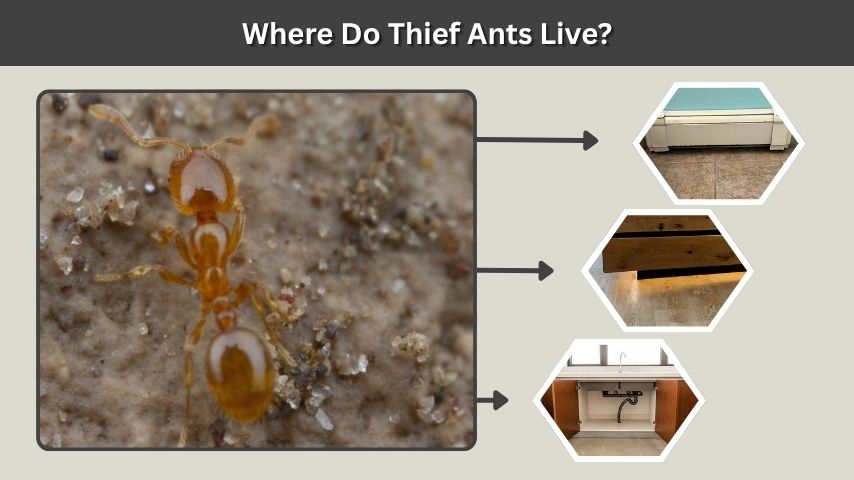
Thief ants can live in many environments. Outdoors, they nest in soil, under rocks, under logs, in rotting wood, and near the nests of other ants. Their underground galleries may connect to other ant colonies, allowing thief ants to steal brood and food while avoiding larger ants. Animal Diversity Web describes them as stealthy ants that nest near other ants and use tiny galleries to access robbed colonies.
Indoors, thief ants may nest in wall voids, behind baseboards, inside cabinet cracks, under floors, around sinks, and near warm hidden spaces. They are often found in kitchens because of grease, crumbs, meat residue, pet food, and stored pantry items. Bathrooms may attract them when moisture is available.
Common Indoor Locations
- Kitchen cabinets and pantry shelves.
- Around stoves, counters, and sinks.
- Near pet food bowls.
- Inside wall cracks and baseboards.
- Around bathroom sinks and pipe openings.
- Under flooring or behind loose trim.
- Near garbage bins and food spills.
If thief ants appear in several rooms, the nest may be hidden in a wall void or under the floor. If they appear mostly near food, they may be entering from outdoors and following a food trail.
Thief Ant Queen and Colony
A thief ant colony may contain hundreds to several thousand workers. Some colonies may have more than one queen, which can make control more difficult. The queen is larger than the workers and is responsible for laying eggs. Workers forage for food, care for larvae, and protect the colony.
Winged reproductive ants may appear during mating season. In Solenopsis molesta, nuptial flights are reported from late July through early fall.
Do Thief Ants Fly?
Worker thief ants do not fly. However, mature colonies can produce winged males and queens. These winged ants may leave the nest to mate and start new colonies. If you see tiny yellowish ants with wings, they may be reproductive thief ants or another small ant species.
Winged ants can be confused with termite swarmers, but ants have elbowed antennae, a narrow waist, and uneven wing pairs. Termites have straight antennae, a thicker waist, and wings that are similar in length.
What Do Thief Ants Eat?
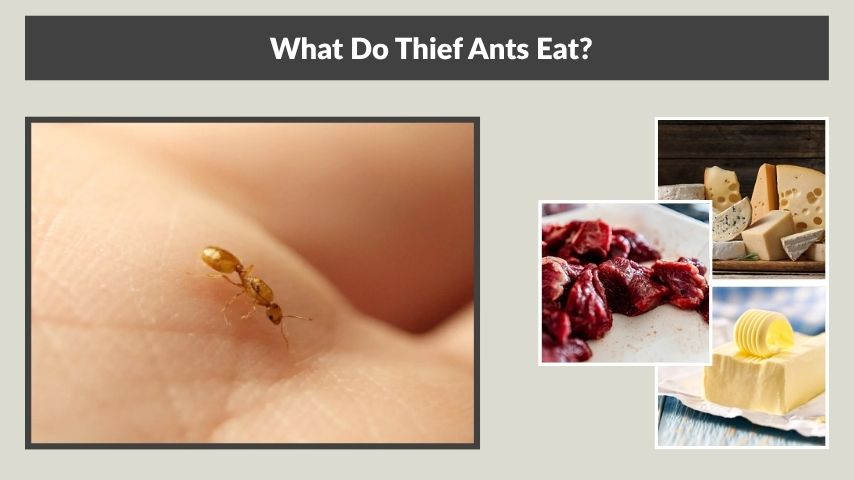
Thief ants prefer greasy and protein-rich foods. This is why they are often called grease ants. They may feed on meat, cheese, butter, peanut butter, cooking oil, nuts, seeds, dead insects, and pet food. They may also steal larvae, pupae, and food from other ant colonies.
They may still visit sweet foods, but many infestations are stronger around grease and protein than sugar. This matters for control. A sweet liquid bait may not work well if the colony is strongly feeding on grease at that time.
Are Thief Ants Dangerous?
Thief ants are mostly nuisance pests. They are not considered highly dangerous to people. They do not usually cause structural damage like carpenter ants, and they are not known for serious stinging problems. However, they can contaminate food because they crawl through dirty areas and then enter kitchens, cabinets, and food containers.
Do Thief Ants Bite?
Thief ants can bite, but their small size makes bites uncommon and usually minor. Most people are more bothered by food contamination and repeated indoor trails than by bites. If a person has skin irritation after contact with ants, the area should be washed with soap and water. Severe swelling, breathing trouble, or allergic symptoms need medical help.
Why Are Thief Ants in the House?
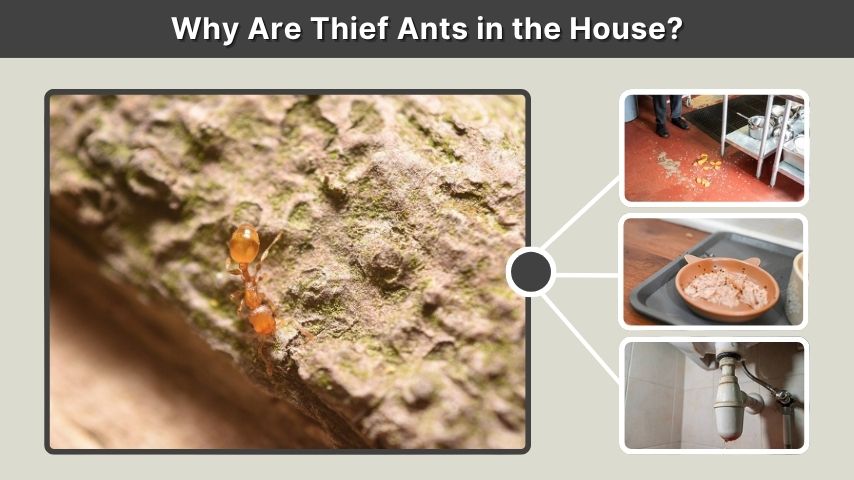
Thief ants usually enter homes for food, moisture, or shelter. Kitchens are the most common problem area because grease and protein are easy to find. Even a small amount of food residue behind the stove, under appliances, inside trash bins, or near pet bowls can attract them.
Bathrooms may attract thief ants because of moisture. If the ants appear near sinks, tubs, or plumbing, check for leaks, condensation, and wet wood. They may also nest in wall voids close to pipes.
Main Causes
- Grease or food residue on counters and floors.
- Open pet food or dirty pet bowls.
- Crumbs under appliances.
- Poorly sealed pantry items.
- Leaky pipes or damp areas.
- Tiny cracks around doors, windows, and baseboards.
- Nearby outdoor nests close to the foundation.
How to Get Rid of Thief Ants
Getting rid of thief ants can be difficult because their nests are hidden and the ants are very small. The best method is usually baiting, cleaning, sealing entry points, and reducing moisture. The University of Minnesota Extension explains that ant control depends on identifying the ant species, understanding food preferences, and treating the nest because queens must be killed to eliminate the colony.
Step-by-Step Control
- Identify the ant first: Make sure you are dealing with thief ants, not pharaoh ants or another tiny yellow ant.
- Do not spray the trail first: Sprays may kill visible workers but miss the hidden queen and colony.
- Use greasy or protein-based bait: Thief ants often prefer grease, oil, peanut butter, meat-based bait, or protein bait.
- Place bait near trails: Put bait close to where ants are actively moving, but away from children and pets.
- Keep the area clean: Remove other food sources so ants are more likely to take the bait.
- Seal cracks: Close gaps around pipes, windows, baseboards, and foundation openings.
- Fix moisture problems: Repair leaks and dry damp areas.
- Monitor for several days: Bait may take time because workers must carry it back to the colony.
Do not use too much bait at once. Small amounts placed near active trails often work better. Replace bait if it dries out or if ants stop feeding on it. If ants ignore sweet bait, try a grease-based or protein-based option.
How to Get Rid of Thief Ants Naturally
Natural control can help reduce thief ant activity, especially with small infestations. However, natural methods may not fully eliminate a hidden colony. The goal is to remove attractants and block access.
Clean greasy surfaces with soap and water. Store food in tight glass or plastic containers. Keep pet food sealed and wash pet bowls after feeding. Take out trash regularly and clean around garbage bins. Seal cracks with caulk, especially around pipes and baseboards.
Some people use vinegar or soapy water to wipe trails. This can remove scent trails, but it will not kill the hidden colony. For long-term control, baiting is usually more effective than wiping trails alone.
Thief Ant Prevention
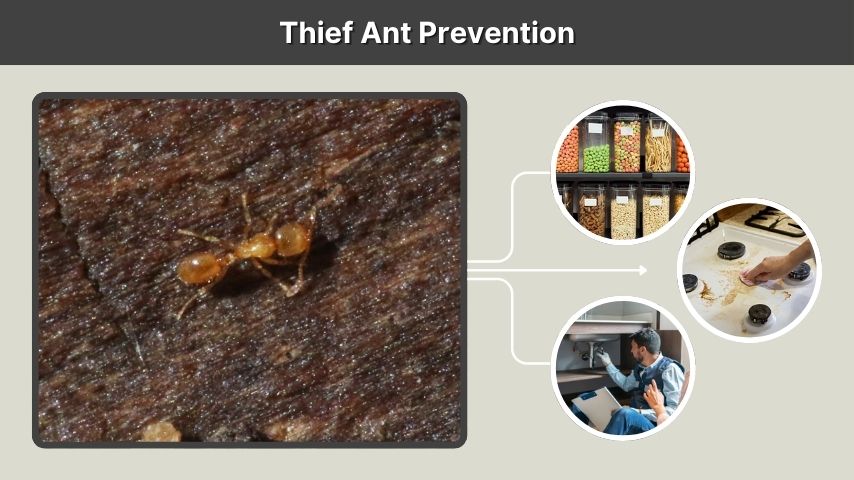
Preventing thief ants is easier than removing a large infestation. Because they are so tiny, even small cracks can become entry points. Good sanitation and sealing are the best long-term defenses.
Prevention Checklist
- Store meat, cheese, nuts, seeds, sweets, and pet food in sealed containers.
- Clean grease around stoves, ovens, counters, and floors.
- Do not leave dirty dishes overnight.
- Wash pet bowls and remove leftover food.
- Fix leaking pipes and reduce indoor moisture.
- Seal gaps around windows, doors, pipes, and baseboards.
- Keep outdoor debris, logs, and stones away from the foundation.
- Trim plants that touch the house.
- Inspect food packages before storing them.
FAQs
What are thief ants?
Thief ants are tiny yellow to light brown ants that often steal food and brood from other ant colonies. They are also called grease ants because they like oily and protein-rich foods. Indoors, they commonly appear in kitchens, pantries, bathrooms, wall cracks, and around pet food.
How big is a thief ant?
Worker thief ants are very small, usually around 1.5 to 2.2 mm long. Some sources describe them as about 1/32 to 1/16 inch. Queens are larger and may reach a little over 5 mm. Their tiny size helps them enter homes through very small cracks.
Do thief ants bite?
Thief ants can bite, but bites are uncommon and usually minor because the ants are so small. They are mainly a nuisance and food-contamination pest. If you notice skin irritation after contact, wash the area with soap and water and avoid scratching.
What is the best bait for thief ants?
The best bait for thief ants is usually grease-based or protein-based bait because they prefer oily and fatty foods. Sweet bait may not always work. Place small amounts near active trails and remove other food sources so workers carry the bait back to the colony.
Are thief ants the same as pharaoh ants?
No, thief ants and pharaoh ants are different. They look similar because both are tiny yellowish ants, but thief ants have 10-segmented antennae with a 2-segmented club. Pharaoh ants have 12-segmented antennae with a 3-segmented club. Magnification is often needed to confirm the difference.
