
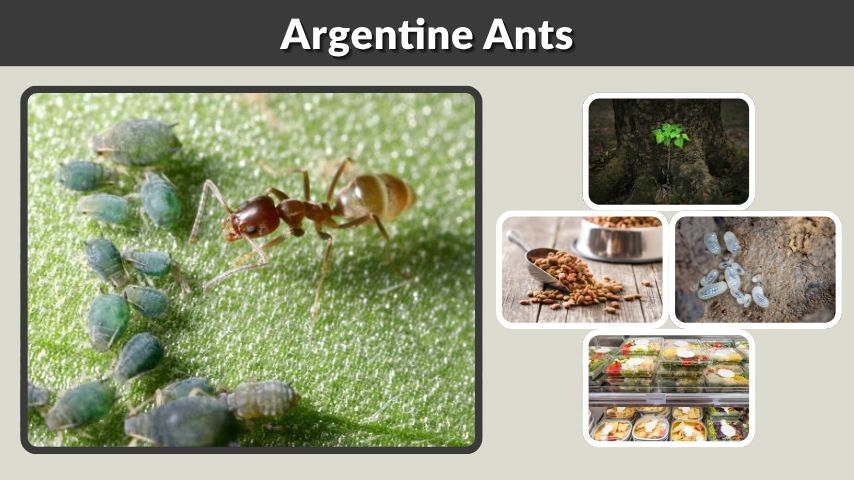
Argentine ants are small but highly invasive ants known for forming massive colonies and overwhelming homes, gardens, and commercial spaces. They often enter buildings in long trails while searching for food and moisture. Unlike many ant species, Argentine ants can cooperate across connected nests, making them difficult to control. Understanding their appearance, habits, diet, lifecycle, and prevention methods can help manage infestations more effectively.
What Are Argentine Ants?
Argentine ants are invasive ants originally from South America. Over time, they have spread to many parts of the world through global trade, landscaping materials, soil movement, and human activity. Today, they are common in warm and mild climates, especially in urban and suburban areas.
These ants are known for building large colonies with multiple queens. Instead of fighting with nearby colonies of the same species, they often cooperate. This allows them to form huge networks called supercolonies. Because of this behavior, Argentine ants can spread quickly and become very hard to eliminate once established.
They are mostly a nuisance pest indoors, but outdoors they can disrupt local ecosystems. They may outcompete native ants, protect honeydew-producing insects, and increase plant pest problems in gardens and landscapes.
Argentine Ant Identification
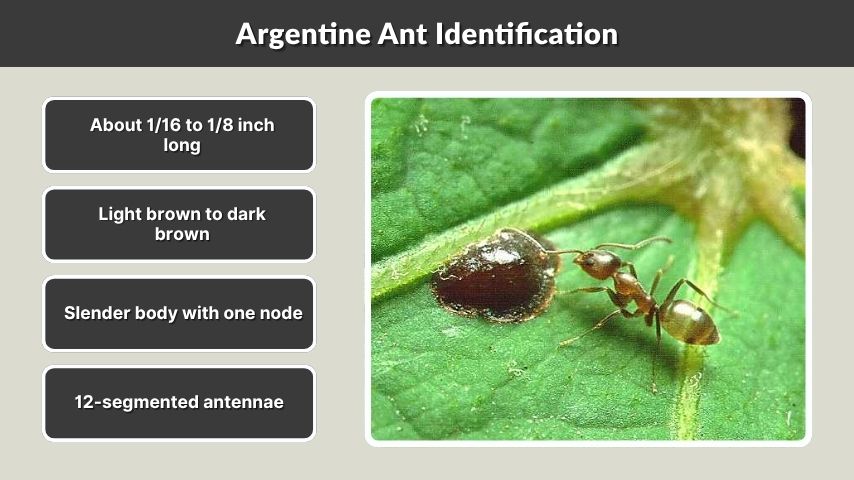
Argentine ants are small, fast-moving ants that usually travel in clear trails. They are often mistaken for odorous house ants, pavement ants, or other small brown ants. Proper identification is important because Argentine ant colonies behave differently from many other species.
| Feature | Argentine Ant Description |
|---|---|
| Size | About 1/16 to 1/8 inch long |
| Color | Light brown to dark brown |
| Body shape | Slender body with one node |
| Antennae | 12-segmented antennae |
| Movement | Fast, active, and trail-forming |
| Colony structure | Multiple queens and many connected nests |
| Common indoor areas | Kitchens, bathrooms, sinks, and food storage areas |
| Main attraction | Sweet foods, moisture, and honeydew |
Size and Color
Argentine ant workers are usually about 1/16 to 1/8 inch long. Their small size allows them to enter buildings through tiny cracks, gaps, and openings around doors, windows, pipes, and foundations.
Their color ranges from light brown to dark brown. They are not usually black, red, or yellow. Their bodies are smooth and slender, which helps separate them from some other household ants.
Body Features
Argentine ants have one node between the thorax and abdomen. This differs from ants like pavement ants, which have two nodes. They also have a smooth body shape without obvious spines.
Because these details are hard to see without magnification, homeowners usually identify them by behavior. Long trails of small brown ants moving quickly through kitchens, bathrooms, and exterior walls are a common sign.
Where Do Argentine Ants Live?
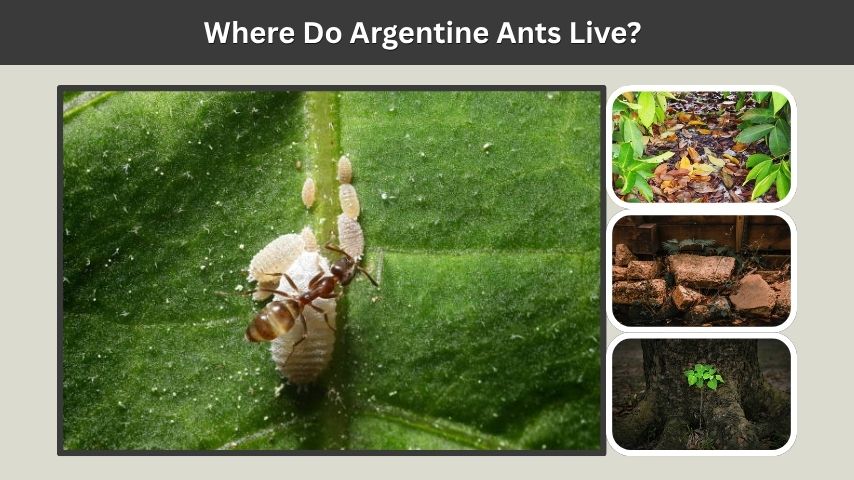
Argentine ants prefer moist environments. They often nest outdoors but can move indoors when conditions change. Heavy rain, drought, extreme heat, or lack of food can push them into homes.
Outdoor Nesting Areas
Outside, Argentine ants nest in shallow, protected areas. They do not usually build large visible mounds like fire ants. Instead, their nests are often hidden under objects or in damp soil.
Common outdoor nesting spots include:
- Under mulch and leaf litter
- Beneath stones, bricks, and boards
- Around irrigation lines
- Near tree roots and shrubs
- Under potted plants
- Along sidewalks and foundations
- In damp soil near lawns and gardens
Their shallow nesting habit makes them highly mobile. If disturbed, they can quickly move part of the colony to another nearby location.
Indoor Nesting Areas
Argentine ants usually come indoors to forage, but they may also nest inside when conditions are favorable. Indoor nesting is more likely when moisture is available.
They may nest:
- Inside wall voids
- Near plumbing lines
- Under floors
- Around sinks and tubs
- Behind kitchen cabinets
- In insulation
- Near water-damaged areas
Bathrooms and kitchens are common problem areas because they provide both moisture and food. If ants appear near sinks, dishwashers, or water pipes, moisture may be part of the problem.
Why Argentine Ants Enter Homes
Argentine ants enter homes mainly for food and water. They are especially active during weather changes. In dry periods, they may move indoors looking for moisture. During heavy rain, outdoor nests may flood, forcing ants to relocate.
They also enter homes when outdoor food sources decline. Once a worker finds food, it lays down a chemical trail. Other ants follow that trail, creating the long lines often seen across counters, walls, floors, and baseboards.
Common entry points include gaps under doors, cracks in foundations, spaces around windows, utility openings, and areas where tree branches or plants touch the house.
What Do Argentine Ants Eat?
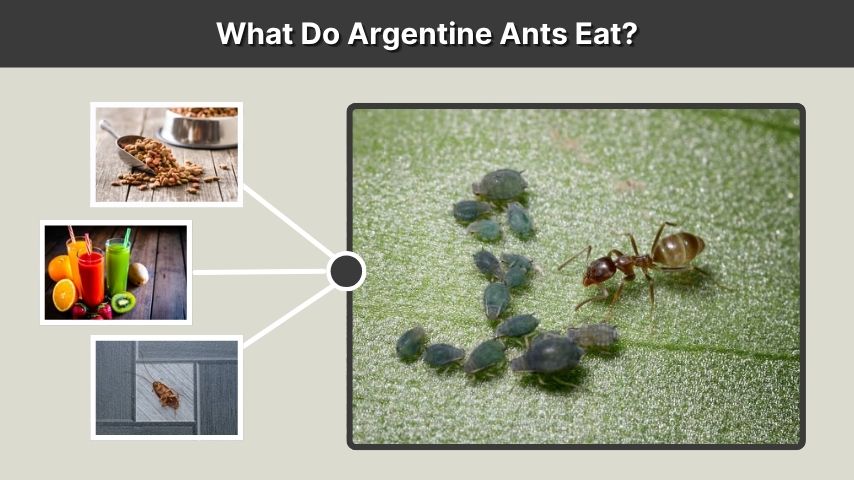
Argentine ants have a flexible diet, but they strongly prefer sweet foods. Outdoors, one of their favorite food sources is honeydew, a sugary liquid produced by aphids, scale insects, mealybugs, and whiteflies.
Outdoor Diet
In gardens and landscapes, Argentine ants commonly feed on:
- Honeydew from aphids and scale insects
- Flower nectar
- Fruit juices
- Dead insects
- Small arthropods
- Plant secretions
- Food waste around trash areas
Their relationship with honeydew-producing insects can become a problem. Argentine ants often protect aphids and scale insects from predators so they can continue collecting honeydew. This can allow plant pests to increase and damage garden plants, shrubs, and trees.
Indoor Diet
Inside homes, Argentine ants are attracted to sweet and moist foods. They may also feed on proteins and grease when colonies need different nutrients.
Common indoor food sources include:
- Sugar
- Syrup
- Honey
- Juice spills
- Fruit
- Candy
- Baked goods
- Pet food
- Grease
- Meat scraps
They may also gather around water sources. Leaky pipes, wet sponges, sink drains, condensation, and pet water bowls can attract them.
Argentine Ant Lifecycle
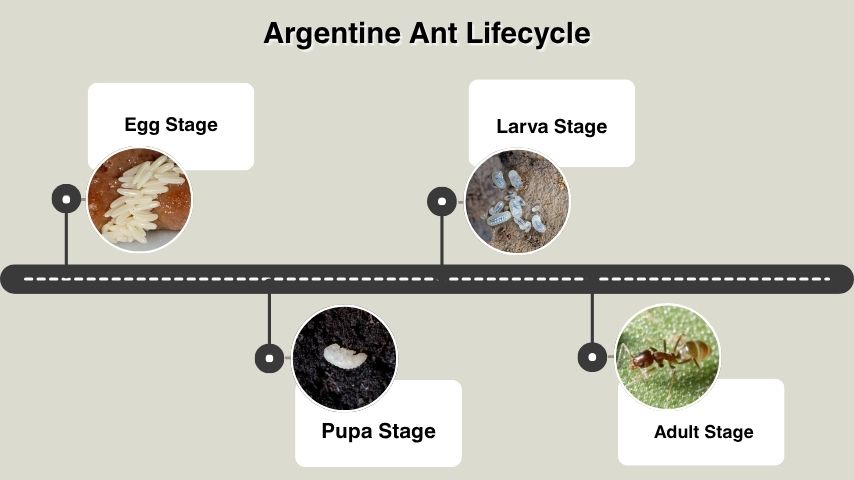
Argentine ants develop through complete metamorphosis. Their lifecycle includes egg, larva, pupa, and adult stages. The colony’s growth depends on temperature, moisture, food availability, and the number of queens.
Egg Stage
Queens lay tiny white eggs inside the nest. Since Argentine ant colonies may contain many queens, egg production can be high. Workers care for the eggs and move them to suitable areas when temperature or moisture changes.
Larva Stage
After eggs hatch, larvae emerge. Larvae are soft, pale, and unable to feed themselves. Worker ants feed them liquid and solid food. Protein is especially important during this stage because larvae need nutrients to grow.
Pupa Stage
After larvae develop, they become pupae. During this stage, they transform into adult ants. Workers continue protecting them until they mature.
Adult Stage
Adult workers care for the colony, collect food, defend nesting areas, and care for young ants. Queens continue laying eggs. New queens and males may be produced when colonies are mature and conditions are favorable.
Unlike some ant species that spread mainly by mating flights, Argentine ants often expand by budding. Budding happens when queens and workers leave an existing colony to form a new nest nearby. This is one reason infestations can spread so quickly.
Argentine Ant Behavior
Argentine ants are known for their cooperative colony behavior. Many ant species fight with nearby colonies, but Argentine ants often tolerate other nests from the same population. This allows many nests to function together as one large colony network.
Trail Formation
Argentine ants are strong trail followers. Once they find food or water, they create chemical trails that guide other workers. These trails may appear along walls, countertops, baseboards, fences, tree trunks, and foundation edges.
Trails can contain hundreds or thousands of ants. If the food source remains available, the trail may stay active for days.
Colony Budding
Colony budding makes Argentine ants difficult to control. When a colony is stressed by weather, disturbance, or certain treatments, queens and workers may split off and form new nests. This can make the infestation appear in multiple places.
Using the wrong spray treatment can sometimes make the problem worse by scattering the colony. Baiting and long-term prevention are usually more effective.
Are Argentine Ants Dangerous?
Argentine ants are not considered highly dangerous to humans. They do not usually sting, and their bites are not a major medical concern. However, they can still create serious nuisance problems.
They may contaminate food by walking through trash, soil, drains, and dirty surfaces before entering kitchens. Their large trails can be unpleasant and difficult to control. Outdoors, they can harm gardens indirectly by protecting aphids and other plant pests.
They are also harmful to native insects in some areas. Because they form large colonies and aggressively compete for food, they can reduce native ant populations and disturb natural ecosystems.
Signs of an Argentine Ant Infestation
Argentine ant infestations are often easy to notice because of their heavy trail activity. However, finding the main nesting area can be challenging because colonies may have many connected nests.
Common signs include:
- Long trails of small brown ants
- Ants around sinks, counters, or pet bowls
- Ants entering through doors or windows
- Activity near irrigation lines or damp soil
- Ants on plants with aphids or scale insects
- Repeated indoor activity after rain or drought
- Ants nesting under mulch, stones, or potted plants
If ants keep returning after cleaning, the colony is likely nearby and still active.
Argentine Ants vs Other Common Ants
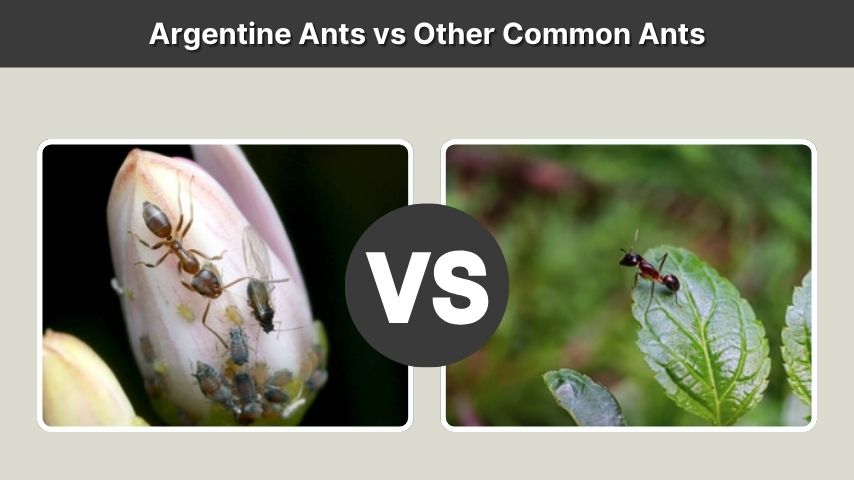
Argentine ants are often confused with other small household ants. Knowing the differences can help you choose the right control method.
Argentine Ants vs Pavement Ants
Pavement ants are usually darker and often nest under sidewalks, driveways, and concrete slabs. They may leave small soil piles near pavement cracks. Argentine ants are usually light to dark brown and prefer moist areas, mulch, and shallow outdoor nests.
Argentine Ants vs Odorous House Ants
Odorous house ants release a rotten coconut-like smell when crushed. Argentine ants do not have the same strong odor. Both species can form trails indoors, but Argentine ants are especially known for huge colony networks and moisture-seeking behavior.
Argentine Ants vs Fire Ants
Fire ants are more aggressive and can sting painfully. They often build visible soil mounds. Argentine ants are much smaller, less aggressive toward people, and usually do not create large mounds.
How to Get Rid of Argentine Ants
Argentine ants can be difficult to eliminate because of their multiple queens and connected nests. The best approach combines baiting, sanitation, moisture control, and exclusion.
Use Ant Bait
Baiting is usually better than spraying because workers carry bait back to the colony. Since Argentine ants prefer sweets, sweet liquid baits often work well. However, their food preferences can change, so protein or grease-based baits may also help.
Place bait near trails, entry points, and outdoor nesting areas. Do not place bait directly on food surfaces. Keep it away from children and pets.
Avoid Repellent Sprays
Repellent sprays may kill visible ants, but they can also cause colonies to split and move. This may spread the infestation. If sprays are used, they should be applied carefully and strategically.
Remove Food and Water
Sanitation is important because Argentine ants are persistent foragers. Clean spills, store food in sealed containers, and remove crumbs. Keep trash sealed and rinse recycling containers.
Fix leaks, dry wet areas, and avoid leaving standing water. Reducing moisture can make your home less attractive.
Seal Entry Points
After ant activity decreases, seal cracks and gaps around the home. Focus on doors, windows, foundation cracks, utility openings, and areas around pipes.
How to Prevent Argentine Ants
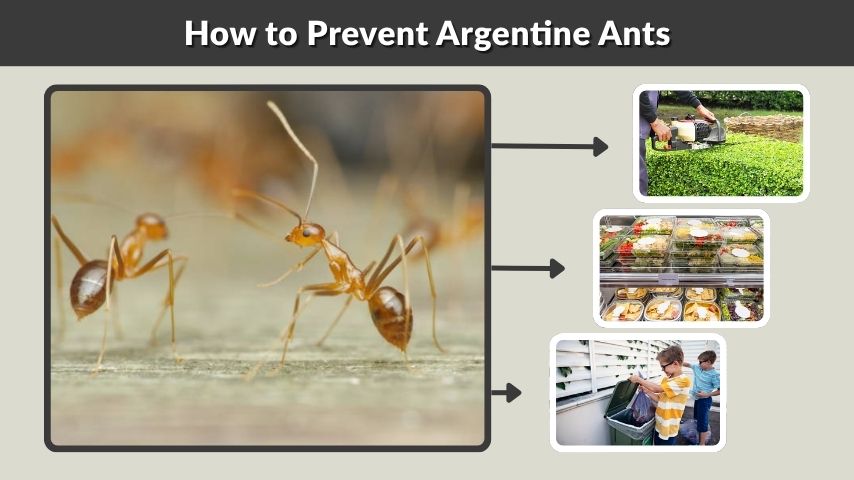
Prevention works best when indoor and outdoor conditions are managed together. Since Argentine ants often nest outdoors, exterior maintenance is very important.
Helpful prevention steps include:
- Keep mulch away from the foundation
- Trim shrubs and branches touching the house
- Repair leaks and irrigation problems
- Store food in airtight containers
- Clean kitchens and dining areas regularly
- Seal foundation and window gaps
- Remove outdoor food waste
- Inspect potted plants before bringing them indoors
In gardens, managing aphids and scale insects can also reduce Argentine ant activity. If honeydew-producing insects are controlled, ants lose an important food source.
When to Call a Professional
Professional pest control may be needed when Argentine ants keep coming back despite DIY efforts. Because these ants form large, connected colonies, surface treatments may not be enough.
Call a professional if ants appear in multiple rooms, return after baiting, nest inside walls, invade every season, or spread across the yard. A professional can identify the species, locate activity zones, and use a treatment plan designed for colony-level control.
FAQs
What do Argentine ants look like?
Argentine ants are small, slender ants that are usually light brown to dark brown. Workers are about 1/16 to 1/8 inch long and often move in fast, organized trails. They have one node between the thorax and abdomen, but this detail is hard to see without magnification.
Why are Argentine ants in my house?
Argentine ants usually enter homes searching for food or moisture. They are attracted to sweets, fruit, syrup, pet food, leaking pipes, wet sinks, and damp areas. Weather changes, such as drought or heavy rain, can also push them indoors.
Are Argentine ants harmful?
Argentine ants are not usually dangerous to people, but they can contaminate food and become a major nuisance. Outdoors, they may protect aphids and scale insects, which can increase plant damage. They can also disrupt native ant populations in some regions.
What is the best way to get rid of Argentine ants?
The best method is usually baiting combined with sanitation and moisture control. Bait allows worker ants to carry treatment back to the colony. Avoid relying only on sprays because they may scatter colonies and make the infestation harder to control.
Do Argentine ants go away on their own?
Argentine ants usually do not go away if food, water, and nesting areas remain available. They may move temporarily during weather changes, but colonies often return. Long-term control requires removing attractants, sealing entry points, and targeting the colony with bait.
