
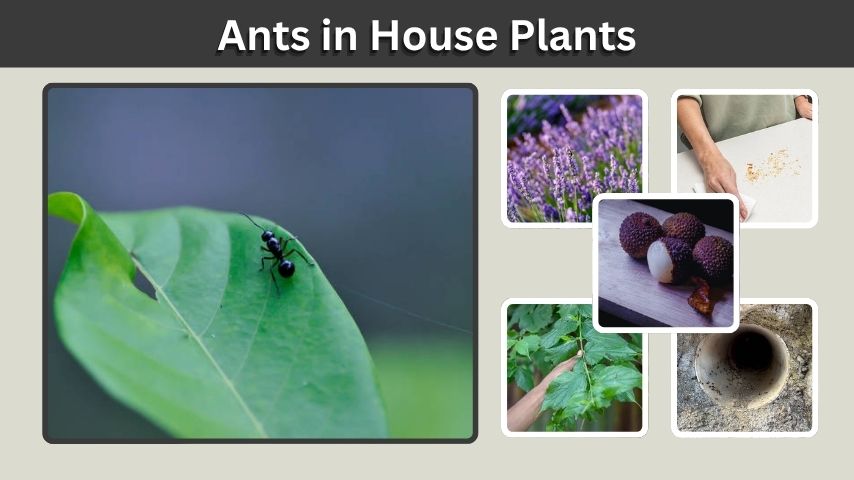
Finding ants in house plants can be frustrating, especially when they appear in the soil, crawl around the pot, or come out from the drainage holes. Ants usually enter indoor plants because they find food, shelter, moisture, or pests like aphids and mealybugs. The good news is that most ant problems in house plants can be fixed without harming your plant.
Why Are There Ants in House Plants?
Ants do not usually appear in house plants for no reason. They are often attracted by something useful inside or around the pot. Sometimes the plant has sweet residue from pests. Other times, the soil provides a dry, protected nesting space.
Understanding the reason helps you choose the right treatment. Killing visible ants may not solve the problem if there is still a food source or colony inside the pot.
Ants May Be Attracted to Honeydew
One of the most common reasons ants appear on house plants is honeydew. Honeydew is a sticky, sugary liquid produced by sap-feeding pests such as aphids, scale insects, whiteflies, and mealybugs.
Ants love honeydew. In some cases, they even protect these pests because the pests provide a steady food source. If you see ants crawling up stems or leaves, inspect your plant carefully for insects.
The Pot May Offer Shelter
Ants may nest in house plant soil if the pot provides a safe, warm, and protected space. This is more likely when soil is dry, loose, and undisturbed. Ants may also enter through drainage holes and build tunnels in the potting mix.
If ants come out of the bottom of the pot or appear after watering, there may be a small colony inside the soil.
Food Crumbs Can Attract Ants Nearby
Sometimes the plant is not the main problem. Ants may be attracted to crumbs, spilled drinks, sugar, pet food, or trash nearby. Once they enter the area, they may explore house plants for moisture or shelter.
Are Ants Bad for House Plants?
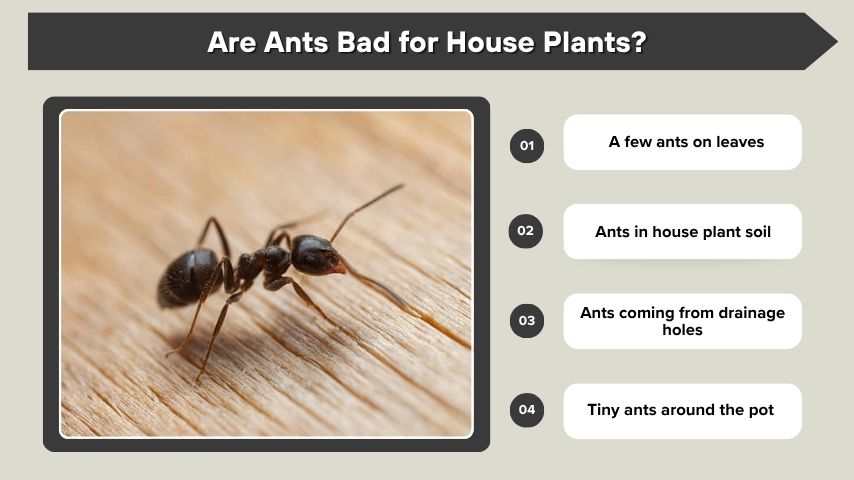
Ants are not always directly harmful to house plants. They usually do not eat plant roots or leaves. However, an ant infestation in a house plant can still create problems.
How Ants Can Affect Indoor Plants
Ants may cause issues by disturbing the soil, protecting plant pests, or moving through the home. A few ants are usually not a serious threat, but a colony inside the pot should be handled.
| Situation | What It Means | What to Do |
|---|---|---|
| A few ants on leaves | They may be searching for honeydew | Check for aphids, scale, or mealybugs |
| Ants in house plant soil | They may be nesting in the pot | Use soil treatment or repotting |
| Ants coming from drainage holes | Possible colony inside the pot | Isolate and flush or repot |
| Tiny ants around the pot | Food source may be nearby | Clean area and inspect plant |
| Ants with sticky leaves | Sap pests are likely present | Treat pests and remove honeydew |
How to Get Rid of Ants in House Plants
The safest approach is to remove the reason ants are there. Start by isolating the plant, checking for pests, and treating the soil if needed. Avoid spraying harsh indoor ant killers directly on plants unless the product label clearly says it is safe for that plant and indoor use.
Step 1: Isolate the Plant
Move the ant-infested house plant away from other plants. This helps stop ants from spreading and gives you space to inspect the pot.
Place the plant in a bathtub, sink, balcony, or protected outdoor area while you work. Make sure ants cannot easily escape into another room.
Step 2: Inspect the Leaves and Stems
Look closely at the plant for sap-feeding pests. Check the underside of leaves, new growth, leaf joints, and stems.
Common pests linked with ants include:
- Aphids
- Mealybugs
- Scale insects
- Whiteflies
- Soft-bodied plant pests
If you find these pests, removing ants alone will not solve the problem. Treat the plant pests first, because they are the food source.
Step 3: Wash Sticky Leaves
If leaves feel sticky, wipe them with a damp cloth. You can also rinse the plant gently with lukewarm water. This removes honeydew and reduces the food source that attracts ants.
For sturdy plants, a mild insecticidal soap may help with pests, but always follow label instructions. Test a small area first if the plant is sensitive.
How to Get Ants Out of House Plant Soil
When ants are living in house plant soil, you need to target the potting mix. The right method depends on the size of the infestation and the condition of the plant.
Water Flush Method
For a mild ant problem, flushing the soil can help drive ants out. Place the pot in a sink, bathtub, or outside area. Slowly water the soil until water drains freely from the bottom.
Let the pot drain completely. This can disturb tunnels and make the soil less attractive. However, avoid overwatering plants that dislike wet soil, such as succulents or cacti.
Soaking the Pot
For a stronger infestation, you can soak the pot. Place the entire pot in a bucket or tub of water so the soil is submerged. Let it sit for about 15 to 30 minutes, then remove and drain thoroughly.
This method may force ants out of the soil. It works best for plants that tolerate moisture. Do not use this method on plants that are prone to root rot unless you plan to repot afterward.
Repotting the Plant
If ants have built a nest in the pot, repotting may be the best solution. Remove the plant from the container, shake off old soil, rinse the roots gently if appropriate, and replace the potting mix with fresh soil.
Also clean the pot before reusing it. If the pot is cracked or ants are hiding inside it, replace it.
Natural Ways to Get Rid of Ants in House Plants
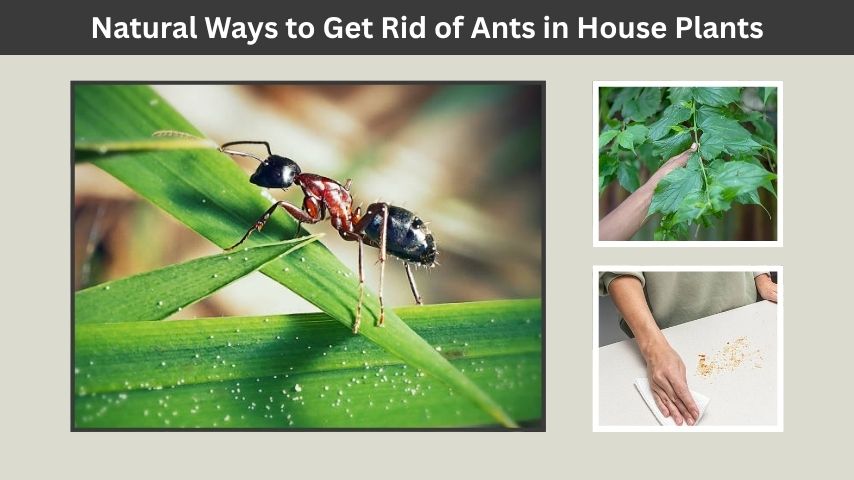
Many people search for a home remedy for ants in house plants because they want to avoid harsh chemicals indoors. Natural methods can work well for mild problems, especially when paired with cleaning and pest control.
Useful Natural Methods
Try these options:
- Wipe leaves to remove honeydew
- Rinse the plant with water
- Replace old potting soil
- Use sticky barriers around the pot stand
- Clean nearby crumbs and spills
- Move pet food away from plants
- Use indoor-safe ant bait near trails, not inside the pot
Ant bait can be effective because ants carry it back to the colony. However, keep bait away from children and pets, and do not place it directly in plant soil unless the label allows it.
Be Careful With DIY Sprays
Some home remedies can harm plants. Vinegar, strong soap mixtures, essential oils, and alcohol sprays may burn leaves or damage roots if used incorrectly. They may also make the soil unhealthy.
If you use any spray, test it on one leaf first and wait 24 hours. Avoid spraying flowers, tender new growth, or stressed plants.
How to Kill Ants in House Plants Safely
If you want to kill ants in house plants, focus on safe methods that protect both the plant and your indoor environment. The goal is to remove the colony without poisoning the plant or contaminating the home.
Safer Control Options
For indoor plants, consider:
- Repotting with fresh soil
- Soil flushing or soaking
- Removing plant pests
- Using ant bait near ant trails
- Cleaning the room thoroughly
- Sealing entry points where ants enter
Do not spray outdoor ant killer into a house plant pot. Many outdoor pesticides are too strong for indoor use and may harm plants, pets, or people.
When Ant Bait Helps
Ant bait is useful when ants are entering from outside the pot or traveling across the floor. The ants take bait back to the nest, which can reduce the colony. Place bait near the trail, not on the plant.
If ants are nesting inside the pot, repotting or soaking may work faster.
Tiny Ants and Sugar Ants in House Plants
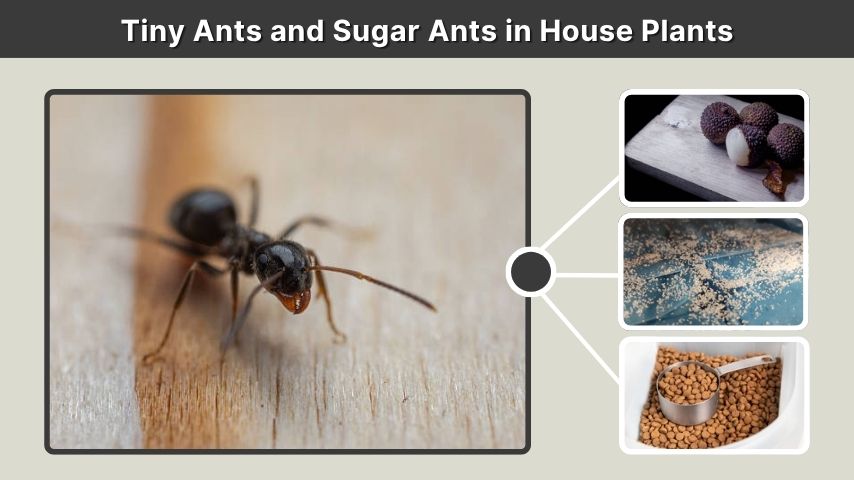
Tiny ants in house plants are often attracted to sweet substances. People may call them sugar ants because they search for sugar, honeydew, fruit residue, or spilled drinks.
Why Tiny Ants Appear
Tiny ants may be there because of:
- Honeydew from aphids or mealybugs
- Sticky leaves
- Overripe fruit nearby
- Sugar spills
- Pet food
- Damp potting soil
- Warm indoor conditions
To remove sugar ants in house plants, eliminate the sweet source first. Clean the plant, inspect for pests, and wipe nearby surfaces.
Ants Coming Out of the Bottom of a House Plant
If ants are coming out of the bottom of a house plant, they may be nesting in the soil or entering through drainage holes. This is common with potted plants that were outside and later brought indoors.
What to Do
Take these steps:
- Move the plant away from walls and furniture
- Place the pot in a sink or bathtub
- Water deeply to flush the soil
- Watch for ants leaving drainage holes
- Repot if ants continue appearing
- Clean the saucer and pot exterior
Also check the surface under the pot. Ants may be nesting beneath the saucer rather than inside the plant.
Do House Plants Attract Ants?
House plants can attract ants, but usually only when conditions are right. Healthy plants in clean pots do not automatically cause ant problems.
What Makes Plants Attractive to Ants
House plants may attract ants when they have:
- Sap-feeding pests
- Sticky honeydew
- Dry, loose soil
- Organic debris on the soil surface
- Food crumbs nearby
- Moisture sources
- Outdoor exposure before being brought inside
Keeping plants clean and healthy is the best prevention.
House Plants That Repel Ants
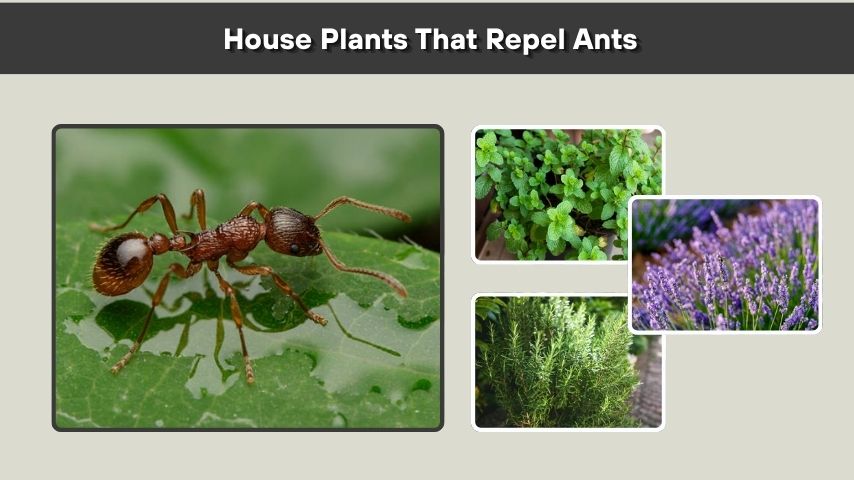
Some people search for house plants that repel ants or plants that keep ants away from the house. Certain aromatic plants may help discourage ants slightly, but they are not a complete solution.
Plants Commonly Associated With Ant Repelling
These plants are often mentioned for their strong scents:
- Mint
- Lavender
- Rosemary
- Basil
- Thyme
- Lemongrass
- Sage
These plants may help reduce ant interest in small areas, but they will not remove an established ant infestation. Ants will still come indoors if they find food, water, or a nesting site.
How to Keep Ants Out of House Plants
Prevention is easier than removal. Once ants are gone, adjust plant care and indoor habits so they do not return.
Prevention Tips
Use these simple habits:
- Check plants weekly for pests
- Wipe sticky leaves quickly
- Avoid leaving food near plants
- Keep pot saucers clean
- Remove dead leaves from soil
- Avoid overwatering
- Do not let soil stay extremely dry for long periods
- Inspect outdoor plants before bringing them inside
- Seal cracks where ants enter the home
- Use fresh, clean potting mix when repotting
Plants that spend summer outdoors should be checked carefully before coming back inside. Ants, eggs, and other pests can hide in pots.
When to Repot an Ant-Infested House Plant
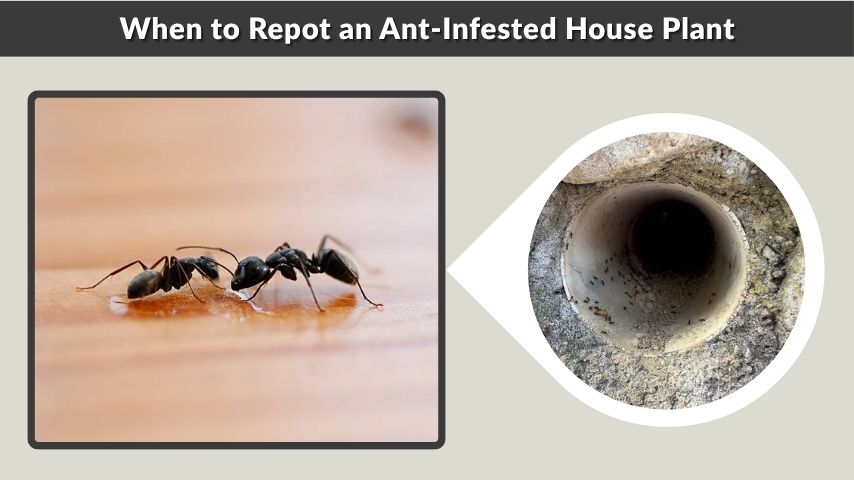
Repotting is best when the infestation is heavy, ants keep returning, or the soil is old and compacted. It is also helpful when you see ants carrying white eggs or larvae inside the soil.
Signs You Should Repot
Repot the plant if:
- Ants keep coming from drainage holes
- The pot has a visible ant colony
- Soil smells bad or stays soggy
- The plant is declining
- Pests are also present
- Ants return after flushing
- The potting mix is old and broken down
Use a clean pot, fresh mix, and proper drainage. After repotting, monitor the plant for stress and avoid fertilizing immediately unless needed.
FAQs
Are ants bad for house plants?
Ants are not always directly harmful, but they can be a sign of other problems. They may protect aphids, mealybugs, or scale insects that damage plants. Ants can also nest in dry soil and disturb the potting mix.
How do I get rid of ants in my house plants?
Start by isolating the plant, checking for pests, and cleaning sticky leaves. If ants are in the soil, flush the pot with water or repot with fresh soil. Use indoor-safe ant bait near trails if ants are entering from outside the pot.
Can I spray ant spray on indoor house plants?
Do not spray regular ant killer on house plants unless the label clearly says it is safe for indoor plants. Many ant sprays can damage leaves, contaminate soil, or harm pets. Safer options include repotting, rinsing, and targeted ant bait.
Why are ants nesting in my house plant soil?
Ants may nest in house plant soil because it is dry, loose, warm, and protected. They may also be attracted by honeydew from plant pests. Repotting or soaking the soil can help remove a colony.
What plants keep ants away from the house?
Mint, lavender, rosemary, basil, thyme, and lemongrass are often used for their strong scents. However, they only provide mild deterrence. The best way to keep ants away is to remove food sources, seal entry points, and keep plants pest-free.
