
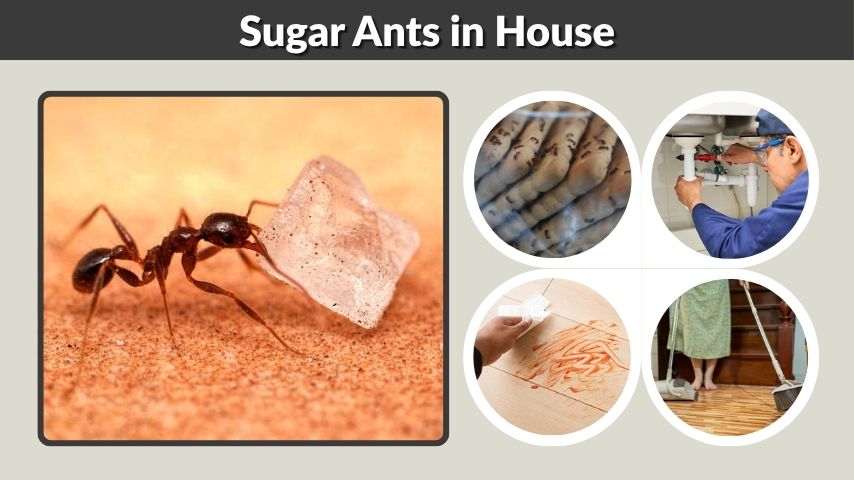
Sugar ants in the house are usually small ants searching for sweet foods, moisture, or easy shelter. They often appear in kitchens, bathrooms, pantries, and around sinks, especially after finding crumbs, syrup, fruit, or pet food. Although most sugar ants are nuisance pests rather than structural threats, they can become persistent if the colony, food source, or entry point is not addressed.
What Are Sugar Ants?
“Sugar ants” is a common household term, not always one exact species. In many places, people use it to describe any small ant attracted to sweets. Depending on your location, sugar ants may actually be odorous house ants, pavement ants, little black ants, pharaoh ants, or another small indoor ant species.
Why the Name Can Be Confusing
The name “sugar ant” is used differently in different regions. In Australia, the banded sugar ant is a real species. In the United States, homeowners often say “sugar ants” when they mean tiny ants feeding on sugar, honey, juice, fruit, or sweet spills.
That means the best control method depends on behavior, not just the nickname. If the ants are forming trails to sweet foods, liquid bait and sanitation are usually good starting points.
What Do Sugar Ants Look Like?
Most household sugar ants are small, dark brown, black, yellowish, or reddish-brown. They usually move in trails and may appear suddenly around food. Some are so tiny that people first notice them as moving dots near a sink or countertop.
Sugar ants often show up near:
- Kitchen counters
- Pantry shelves
- Trash cans
- Pet food bowls
- Fruit bowls
- Coffee stations
- Bathroom sinks
- Window frames
- Baseboards
If you see larger ants, winged ants, or ants coming from wood, you may be dealing with a different problem, such as carpenter ants.
Why Are Sugar Ants in My House?
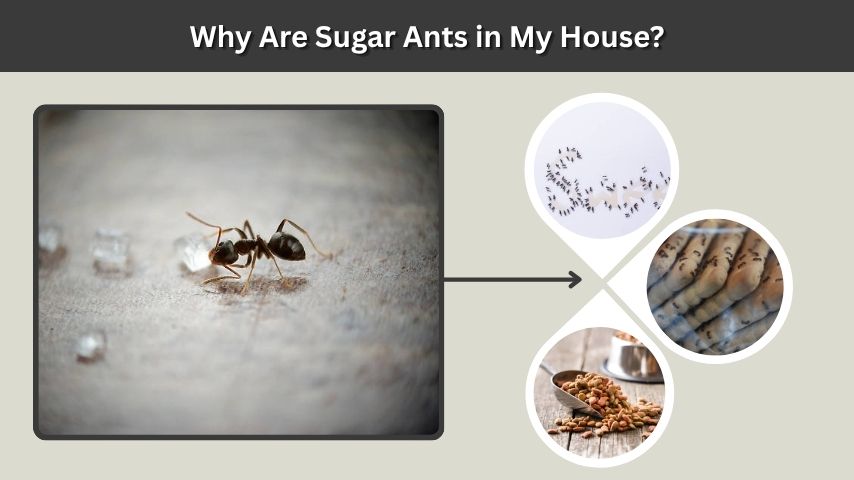
Sugar ants come inside because your home offers food, water, warmth, or shelter. Once a scout ant finds something useful, it lays a scent trail that helps other ants follow the same path. This is why a few ants can quickly turn into a long trail.
Common Causes of Sugar Ants
Sugar ants are highly motivated by easy food and moisture. Even a small spill under an appliance can attract them for days.
Common causes include:
- Sticky spills from juice, soda, syrup, or honey
- Crumbs under counters, tables, and appliances
- Open sugar, cereal, cookies, or snack packages
- Overripe fruit left on counters
- Pet food left out overnight
- Dirty trash cans or recycling bins
- Damp sinks, leaky pipes, or condensation
- Cracks around doors, windows, and utility lines
A clean-looking kitchen can still attract ants if food residue is hidden under a toaster, stove, refrigerator, or trash liner.
Are Sugar Ants Bad for Your House?
Most sugar ants are not dangerous to the structure of your home. They do not usually chew through wood like carpenter ants or cause damage like termites. However, they are still a problem because they can contaminate food surfaces, spread through cabinets, and become difficult to control once trails are established.
Can Sugar Ants Damage Your House?
Typical sugar ants do not damage wood, wiring, or foundations. Their main issue is nuisance activity. They may get into packaged food, crawl over counters, and return repeatedly if the colony remains active.
However, do not ignore every ant problem. If the ants are large, coming from walls, or appearing with sawdust-like debris, they may not be sugar ants. That situation needs closer inspection.
Do Sugar Ants Bite?
Some small ants can bite, but household sugar ants are usually more annoying than harmful. Most people notice the trails and food contamination risk more than bites. If ants are stinging, painful, or aggressive, they may be fire ants or another species.
Sugar Ants vs Odorous House Ants
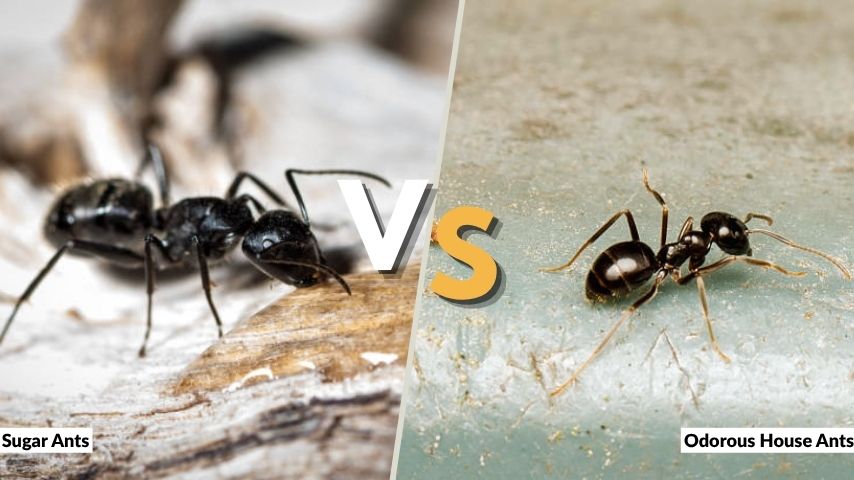
Many people searching for sugar ants are actually dealing with odorous house ants. These ants are common indoor pests and are strongly attracted to sweet foods.
| Feature | Sugar Ants | Odorous House Ants |
|---|---|---|
| Meaning | General name for sweet-seeking ants | Specific common household ant |
| Size | Usually small to tiny | Small, about 1/8 inch |
| Color | Black, brown, yellowish, or reddish depending on species | Brown to black |
| Smell | Depends on species | Rotten coconut-like smell when crushed |
| Food preference | Sweets, grease, crumbs, moisture | Sweets, honeydew, pantry foods |
| Nesting | Indoors or outdoors depending on species | Often nests in walls, voids, mulch, or outdoors |
| Control | Cleaning, baiting, sealing | Baiting is usually better than spraying |
How to Tell the Difference
The easiest clue is odor. Odorous house ants release a strong smell when crushed, often compared to rotten coconut or a sharp chemical odor. They are also known for forming persistent indoor trails and moving nests when disturbed.
Whether they are true sugar ants or odorous house ants, the same basic approach usually applies: do not just spray the visible ants. Use bait so workers can carry treatment back to the colony.
How Do Sugar Ants Get in Your House?
Sugar ants can enter through extremely small gaps. They may come from outdoor nests, wall voids, crawl spaces, or nearby landscaping. Once inside, they use scent trails to move between the nest and food.
Common Entry Points
Check the areas where trails begin. Ants often enter from structural gaps that are easy to miss.
Look around:
- Window frames
- Door thresholds
- Foundation cracks
- Utility pipe openings
- Cable and wire holes
- Gaps under siding
- Baseboards
- Vents
- Weep holes
- Spaces around plumbing
Sealing entry points helps, but timing matters. If ants are actively nesting indoors, sealing one route may push them to another room. Bait first, then seal after activity drops.
How to Get Rid of Sugar Ants in the House
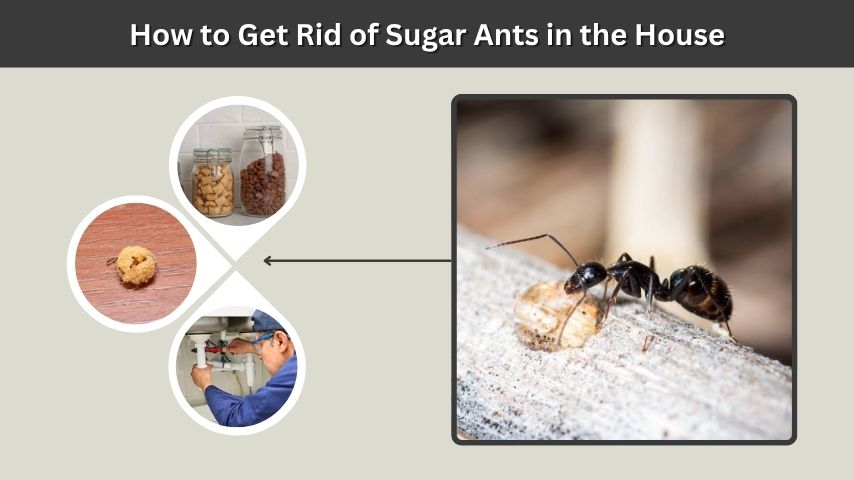
Getting rid of sugar ants requires more than wiping away the trail. The goal is to remove the attractant, feed the colony bait, and prevent new ants from entering.
Step 1: Follow the Trail
Before cleaning everything, watch where the ants are going. They may lead you to a spill, food package, sink, plant, trash can, or crack in the wall.
Follow trails near:
- Counters
- Cabinets
- Pantry shelves
- Dishwashers
- Sinks
- Windows
- Baseboards
- Pet feeding areas
Once you know the trail route, you can place bait where ants are already active.
Step 2: Remove Food and Water
Sugar ants stay where they can feed. Removing food sources makes bait more effective and reduces future activity.
Focus on these tasks:
- Wipe sticky surfaces every night
- Store sugar, cereal, and snacks in airtight containers
- Clean under the toaster, stove, and refrigerator
- Empty trash regularly
- Rinse bottles and cans before recycling
- Remove pet food after meals
- Dry sinks and counters before bed
- Fix dripping faucets or leaking pipes
Do not underestimate moisture. Some ants are drawn to water as much as sugar.
Step 3: Use Sugar Ant Bait
Bait is usually the best way to kill sugar ants because workers carry it back to the colony. Contact sprays kill visible ants but often miss the nest. Sprays can also split the colony or make ants move to another area.
Use a sweet liquid ant bait near trails. Place it close to activity but away from children, pets, and food-prep surfaces. At first, you may see more ants feeding on the bait. This can be normal.
Avoid wiping the trail immediately after placing bait. Ants need to find and share the bait. Once activity slows, clean the area thoroughly to remove scent trails.
Step 4: Try Different Bait if Needed
Ants may change food preferences. Sometimes they want sweets; other times they prefer protein or grease. If sweet bait does not work after several days, try a different ant bait type.
A mixed approach can help when ants ignore one bait. Use small placements and avoid overloading the area with too many products.
Home Remedies for Sugar Ants in House
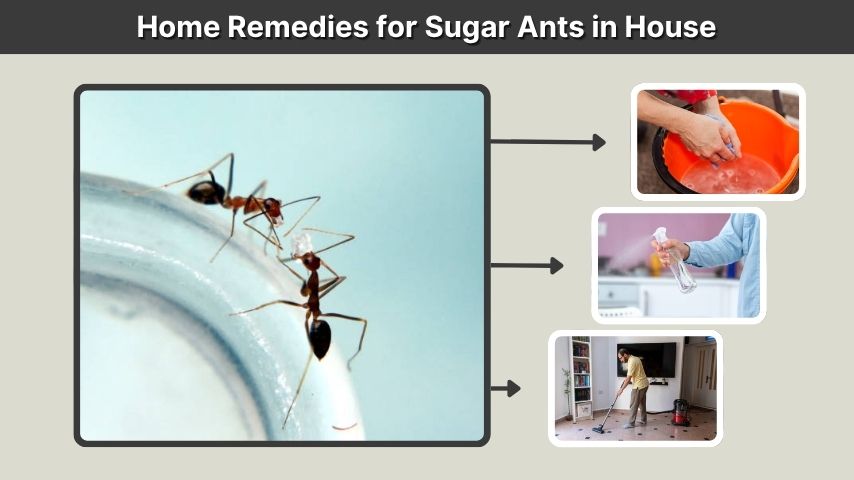
Home remedies can help reduce trails and make your house less attractive, but they may not eliminate a colony by themselves. Use them as support with sanitation and baiting.
Helpful Natural Options
Some simple remedies are useful for cleaning and prevention.
You can use:
- Soap and water to wipe trails
- Vinegar-water cleaning on hard surfaces
- Airtight food containers
- Regular sweeping and vacuuming
- Trash can washing
- Pet bowl cleanup
- Moisture reduction around sinks
These methods remove food residue and scent trails, but they usually do not kill the hidden colony.
Remedies to Use Carefully
Essential oils, cinnamon, coffee grounds, lemon juice, and similar repellents may temporarily disrupt trails. However, repellents can push ants to another area instead of solving the infestation.
Borax and sugar bait can work, but the mixture must be used carefully. Too much borax kills workers too fast, before they return to the colony. It should also be kept away from pets, children, and food surfaces.
Sugar Ant Nest in House
A sugar ant nest in the house may be hidden in walls, cabinets, insulation, appliances, or damp areas. You may not see the nest directly, but repeated trails from the same crack can suggest one nearby.
Signs of an Indoor Nest
Possible signs include:
- Ants appearing every day
- Trails from outlets, baseboards, or window frames
- Activity in multiple rooms
- Ants returning after cleaning
- Ants appearing during winter
- Ants near moisture sources
- Bait disappearing quickly but trails continuing
If you suspect an indoor nest and baiting does not work, professional treatment may be needed.
Sugar Ants in Houseplants
Sugar ants may appear in houseplants if the soil is moist or if the plant has pests like aphids, scale, or mealybugs. These pests produce honeydew, a sweet liquid that attracts ants.
How to Fix Plant-Related Ants
Inspect leaves, stems, and the underside of foliage. If you find plant pests, treat those first. Let overly wet soil dry appropriately, remove dead leaves, and consider repotting if ants are nesting in the soil.
Avoid placing ant bait directly in potting soil unless the product label allows it.
Sugar Ants in Winter, Spring, and Summer
Sugar ants can appear in any season, but the reason may change.
Seasonal Patterns
In spring and summer, ants are often active outdoors and enter homes while foraging. Rain, drought, and heat can push them inside for shelter or water.
In winter, indoor sugar ants may mean a colony is nesting in a warm protected area. If you see ants during cold months, check wall voids, sinks, bathrooms, and heated spaces.
How to Keep Sugar Ants Out of Your House
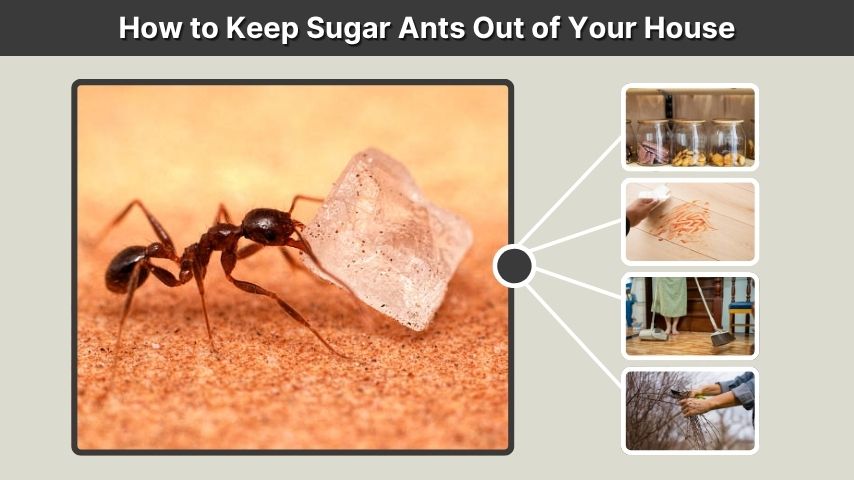
Prevention is the best long-term solution. Once the active trail is under control, make your home harder to access and less rewarding to explore.
Prevention Checklist
Good prevention habits include:
- Store sweets and pantry foods in sealed containers
- Clean sticky spills quickly
- Sweep and vacuum regularly
- Keep pet food sealed and remove leftovers
- Fix leaks and reduce moisture
- Seal gaps around windows and doors
- Trim branches away from the house
- Keep mulch and debris away from the foundation
- Rinse recycling before storing it indoors
Outdoor prevention matters because many sugar ant trails start from nests around patios, mulch, gardens, or foundations.
When to Call a Pest Professional
You can often handle a small sugar ant problem with bait and cleaning. However, professional help is useful when the ants keep returning, appear in several rooms, or seem to be nesting inside walls.
Call a professional if:
- Sugar ants are everywhere in the house
- Baiting does not reduce activity
- Ants return after several treatments
- You see winged ants indoors
- Ants appear in winter
- Trails come from walls or outlets
- You are unsure what species they are
- You rent and need documentation for the landlord
Correct identification is especially important if the ants are not actually sugar ants.
FAQs
What causes sugar ants in the house?
Sugar ants are usually caused by easy access to sweet foods, crumbs, moisture, or shelter. Sticky spills, open pantry items, fruit, pet food, trash, leaky pipes, and small entry gaps can attract them. Once scouts find food, they leave scent trails for more ants.
How do I get rid of sugar ants in the house?
Follow the trail, remove food and water sources, place sweet ant bait near activity, and avoid spraying near bait. After activity slows, clean scent trails and seal entry points. Bait works better than spray because ants can carry it back to the colony.
What kills sugar ants in the house?
Ant bait is usually the most effective option because it targets the colony. Sweet liquid bait often works well, but some ants may prefer protein or grease bait. Contact sprays kill visible ants quickly but may not reach the nest and can make trails spread.
Are sugar ants and odorous house ants the same?
Not always. “Sugar ants” is a general term for ants attracted to sweets. Odorous house ants are one common species often called sugar ants. They are small, dark ants that smell like rotten coconut when crushed and commonly form indoor trails.
How can I keep sugar ants out of my house?
Keep food sealed, clean crumbs and spills, remove pet food after meals, rinse recycling, fix leaks, dry sinks, and seal gaps around doors, windows, pipes, and foundations. After controlling active ants, prevention is the best way to stop them from returning.
