
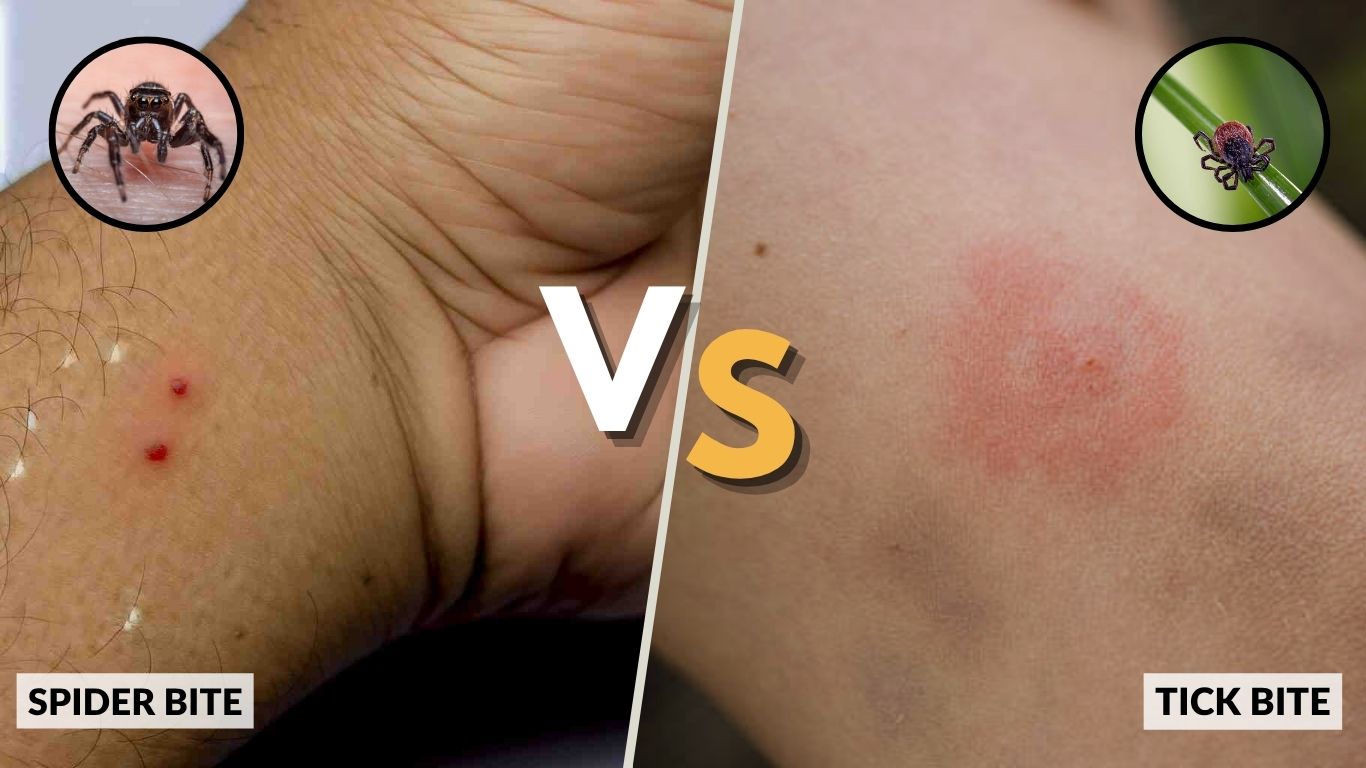
Spider bites and tick bites are often confused because they can look similar at first. Both may cause redness, swelling, or irritation on the skin. However, they are very different in how they happen, how they look over time, and the risks they carry. Understanding these differences is important, especially because tick bites can transmit diseases like Lyme disease, while most spider bites are harmless.
Spider Bite vs Tick Bite: Quick Comparison
| Feature | Spider Bite | Tick Bite |
| Cause | Spider injects venom | Tick attaches and feeds on blood |
| Pain | Often immediate | Usually painless at first |
| Appearance | Red, swollen, sometimes blister | Small bump, may develop bullseye rash |
| Itching | Mild to moderate | Common |
| Risk | Rarely serious | Can transmit diseases (Lyme) |
| Duration | Heals in a few days | May last longer |
Spider Bite vs Tick Bite Pictures (What It Looks Like)
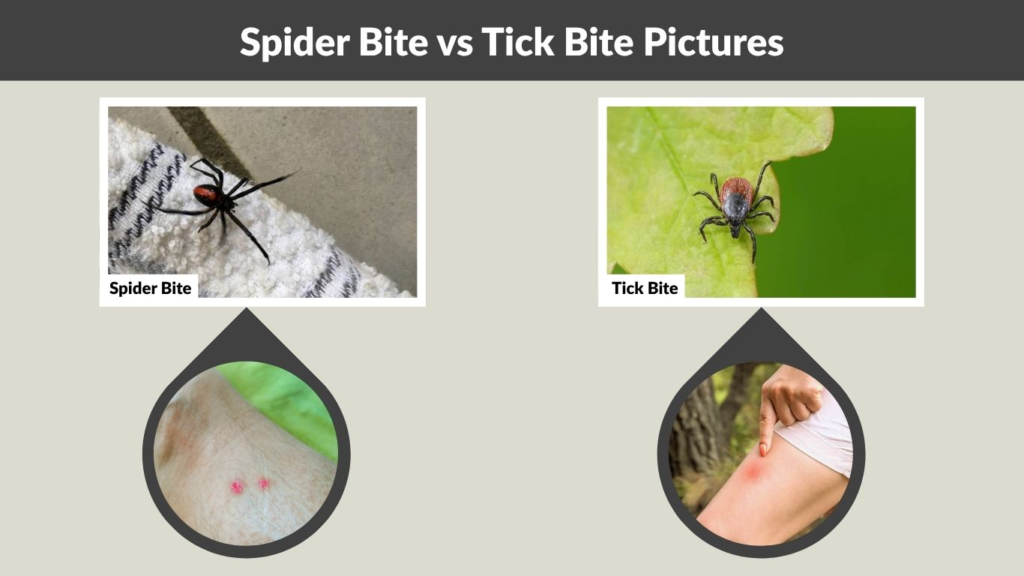
When trying to identify a bite, appearance is one of the most important clues. While both can start as small red marks, they develop differently over time.
Spider Bite Appearance
Spider bites usually appear quickly after the bite occurs. Common signs include:
- Redness and swelling around the bite area
- Possible two small puncture marks
- Blistering or a sore in some cases
In certain species, like the brown recluse, the bite may worsen over time and form a more serious wound. However, most spider bites remain mild and localized.
Tick Bite Appearance
Tick bites often go unnoticed at first because they are painless. Their appearance changes gradually:
- Small red bump at the bite site
- A bullseye-shaped rash in some cases (especially Lyme disease)
- Expanding redness over several days
The bullseye rash is one of the most important signs that the bite may be from a tick rather than a spider.
Spider Bite vs Tick Bite Symptoms
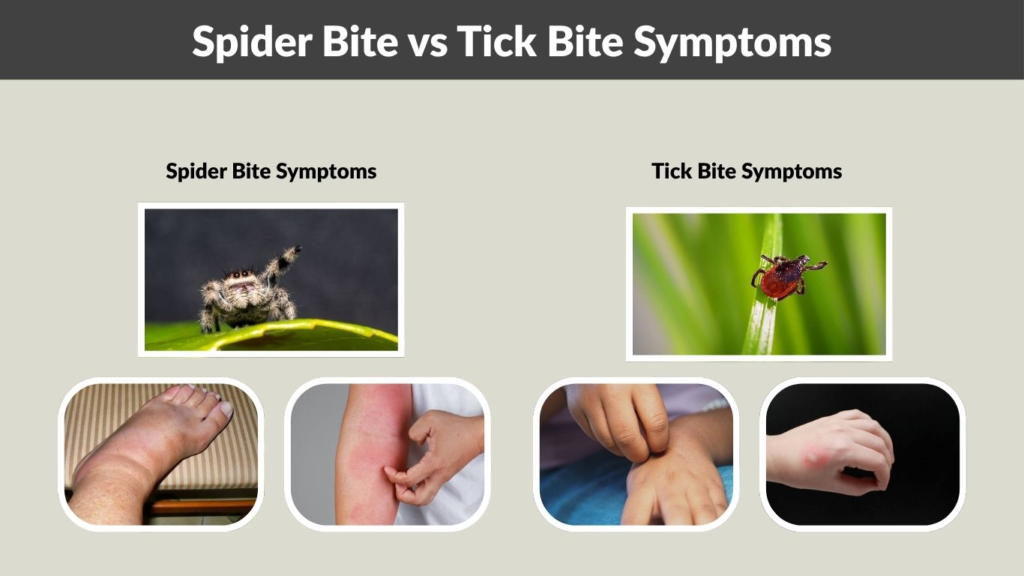
Spider Bite Symptoms
Spider bites usually cause symptoms shortly after the bite happens. These include:
- Immediate pain or burning sensation
- Redness and swelling
- Itching or mild irritation
- Sometimes blistering
In rare cases involving certain spiders, symptoms may become more severe, but this is uncommon for most species.
Tick Bite Symptoms
Tick bites often have delayed symptoms, which makes them harder to identify early. Common signs include:
- No pain at the time of the bite
- Mild itching or irritation
- Redness that may spread over time
- Bullseye rash in Lyme disease cases
Some people may also develop flu-like symptoms days or weeks later if the tick carries disease.
Tick Bite Bullseye vs Spider Bite Rash
Tick Bite (Bullseye Rash)
A bullseye rash is a strong indicator of a tick bite, especially from a deer tick. This rash:
- Has a circular shape with a clear center
- Expands gradually over time
- May not be painful but is medically important
This type of rash is commonly associated with Lyme disease and should not be ignored.
Spider Bite Rash
Spider bite rashes are usually more localized and do not spread in a ring shape. They:
- Stay around the bite area
- May become swollen or blistered
- Do not form a bullseye pattern
This difference in rash shape is one of the easiest ways to tell the two apart.
Spider Bite vs Tick Bite: Which Is More Dangerous?
Key Points:
- Most spider bites are harmless and heal quickly
- Tick bites can transmit diseases like Lyme disease
- Tick bites are generally considered more risky
While spider bites may look more alarming at first, tick bites carry a higher long-term risk due to possible infections.
Brown Recluse Spider Bite vs Tick Bite
Brown Recluse Bite
The brown recluse spider is one of the few species that can cause more serious symptoms. Its bite:
- May not hurt immediately
- Develops pain over time
- Can lead to skin damage or an open sore
This type of bite is rare but more severe than typical spider bites.
Tick Bite
A tick bite does not damage the skin in the same way. Instead:
- It remains small at first
- Risk comes from bacteria or pathogens
- Symptoms may appear later rather than immediately
This makes tick bites more dangerous in terms of disease, even if they look minor at first.
Deer Tick Bite vs Spider Bite
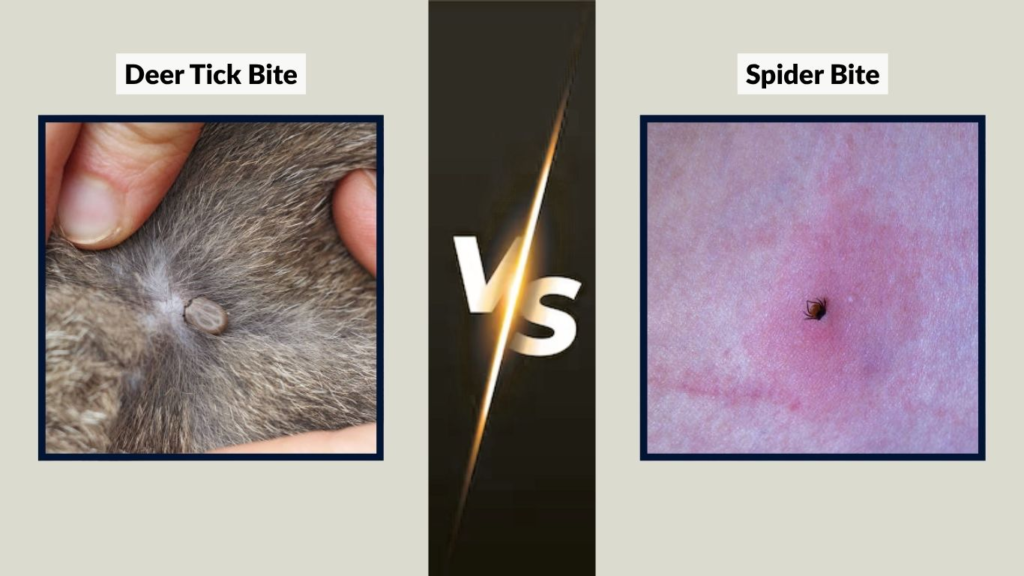
Deer Tick Bite
Deer ticks are known for spreading Lyme disease, which makes their bites more concerning. Their bites:
- Are very small and often go unnoticed
- Do not cause immediate pain
- May develop a bullseye rash after a few days
- Can lead to flu-like symptoms if infected
Because they are so small, many people don’t realize they have been bitten until symptoms appear later.
Spider Bite
Spider bites are usually easier to notice. They:
- Often cause immediate discomfort
- Stay localized to one area
- Rarely lead to serious complications
Unlike deer ticks, spider bites do not transmit diseases, which makes them less risky overall.
Spider Bite vs Tick Bite vs Mosquito Bite
Key Differences:
- Mosquito bite: Small, itchy bump that disappears quickly
- Spider bite: May be painful, swollen, or blistered
- Tick bite: Often painless but may lead to rash or illness
Mosquito bites are the least harmful, while tick bites carry the highest risk due to possible disease transmission.
How to Tell the Difference Between a Spider Bite and Tick Bite
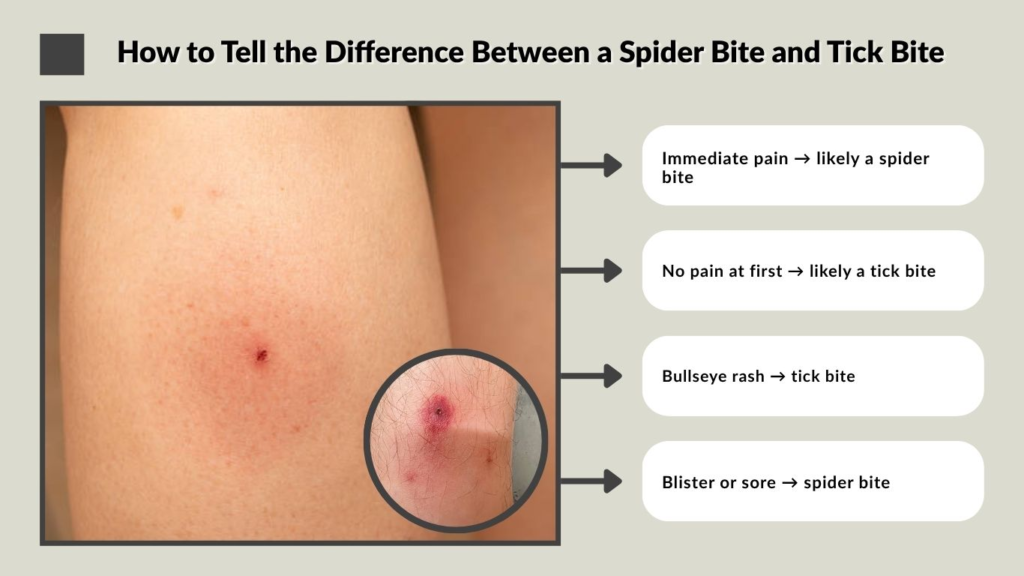
Simple Identification Tips:
- Immediate pain → likely a spider bite
- No pain at first → likely a tick bite
- Bullseye rash → tick bite
- Blister or sore → spider bite
Timing and appearance are the most reliable ways to tell the difference. Spider bites react quickly, while tick bites develop symptoms slowly.
When Should You Be Concerned?
Seek medical help if:
- A bullseye rash appears
- You develop fever or flu-like symptoms
- The bite becomes very swollen or painful
- The skin starts to break down or form an open wound
Tick bites require more attention due to the risk of disease. Early treatment can prevent complications.
Treatment Differences
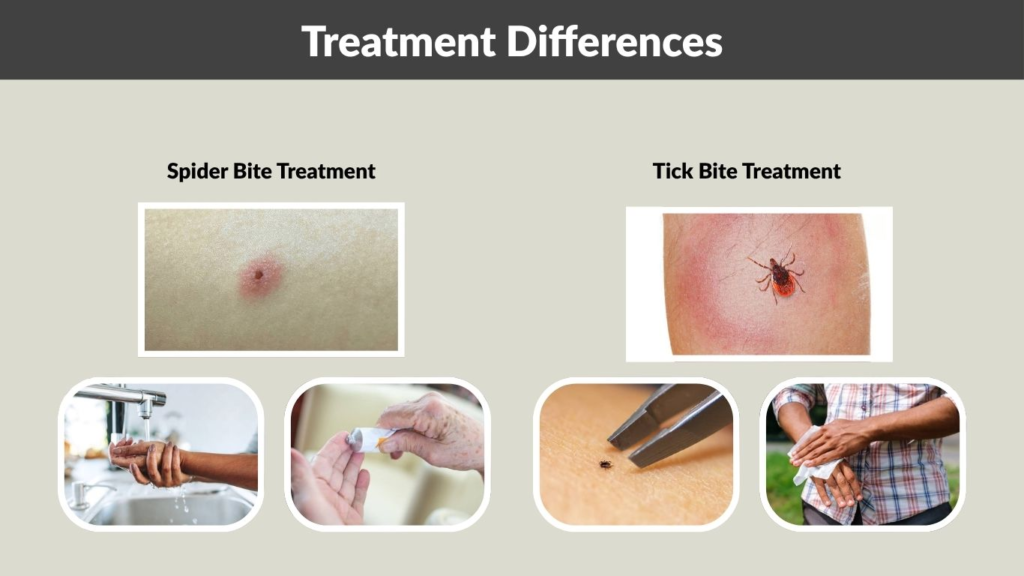
Spider Bite Treatment
- Clean the bite area with soap and water
- Apply a cold compress to reduce swelling
- Use over-the-counter creams for itching
- Monitor for unusual symptoms
Most spider bites heal on their own without medical treatment.
Tick Bite Treatment
- Remove the tick carefully using tweezers
- Clean the area thoroughly
- Watch for rash or symptoms over the next few weeks
- Seek medical advice if symptoms appear
Proper tick removal is important to reduce the risk of infection.
FAQ
What is the difference between a spider bite and a tick bite?
The main difference is how they occur and develop. Spider bites usually cause immediate pain and stay localized, while tick bites are often painless at first and may lead to a spreading rash or illness later. Tick bites also carry a higher risk due to disease transmission.
Does a tick bite look like a spider bite?
At first, both can look similar as small red bumps. However, tick bites may develop a bullseye rash over time, while spider bites tend to stay localized and may blister. The way the bite changes over time is the key difference.
How do I know if it’s a tick bite or spider bite?
You can tell by timing and symptoms. If you felt pain right away, it is likely a spider bite. If there was no pain and a rash appeared later, especially a bullseye pattern, it is more likely a tick bite.
Which is worse, a spider bite or tick bite?
Tick bites are generally worse because they can transmit diseases like Lyme disease. Spider bites may look more severe initially, but they are usually harmless and heal quickly without complications.
Can a spider bite look like a bullseye rash?
No, spider bites do not typically form a bullseye rash. This pattern is strongly associated with tick bites, especially those that may lead to Lyme disease. If you see a bullseye rash, it is important to seek medical advice.
