

Mud dauber wasps are solitary insects known for their signature mud tube nests, gentle behavior, and unique appearance. Unlike aggressive social wasps, mud daubers are generally non-threatening to humans and are even considered beneficial for pest control. But with many types—like the blue mud dauber, black and yellow variant, or yellow-legged mud dauber—it’s easy to get confused about their danger, habitat, sting, and nest removal process.
In this complete guide, you’ll learn everything about mud dauber wasps—how to identify them, the differences between mud daubers and paper wasps, their lifecycle, where they live, how to remove their nests, and whether their sting is truly dangerous. Whether you’ve spotted one near your home or just want to understand their role in the environment, this detailed article has you covered.
What Is a Mud Dauber Wasp?

Mud dauber wasps are solitary wasps that build their nests using mud—hence the name. Unlike social wasps, they do not live in colonies or swarm. They’re often found in warm, sheltered areas like walls, ceilings, porches, or sheds. While their appearance may seem intimidating, these wasps are not aggressive and rarely sting unless provoked.
Scientific Classification and Names
- Kingdom: Animalia
- Phylum: Arthropoda
- Class: Insecta
- Order: Hymenoptera
- Family: Sphecidae / Crabronidae (depending on species)
- Common Names: Mud dauber, dirt dauber, organ pipe mud dauber
Is a Wasp and a Mud Dauber the Same Thing?
Not exactly. While mud daubers are a type of wasp, they differ significantly from social wasps like yellowjackets or hornets. Mud daubers are solitary, build tube-shaped nests, and don’t aggressively defend their territory.
Are Mud Daubers Wasps?
Yes, mud daubers are classified as wasps. However, their behavior, nest style, and lack of aggression make them stand out from the typical wasps we associate with painful stings and swarms.
Identification of Mud Dauber Wasps

Mud dauber wasps can be easily identified by their slender bodies, narrow “waist,” and long legs. Their coloring and markings vary depending on the species, with some featuring metallic blue sheens and others sporting yellow or black patterns. Recognizing the type of mud dauber can help in understanding their behavior and nesting habits.
Physical Appearance and Features
- Slender, wasp-like body
- Thread-waisted segment between thorax and abdomen
- Usually 1 to 1.5 inches long
- Long, dangling legs during flight
- Color varies by species (metallic blue, black, yellow, or a combination)
Blue Mud Dauber Wasp
This species is known for its shiny metallic blue body and calm behavior. It often reuses abandoned nests made by other wasps and specializes in hunting black widow spiders.
Black Mud Dauber Wasp
These mud daubers are entirely black and commonly found across North America. They construct their own mud nests and prey on various types of spiders.
Yellow-Legged Mud Dauber Wasp
With black bodies and yellow legs, this species is highly recognizable. It prefers to build nests in protected areas like eaves, garages, and attics.
Common Blue Mud Dauber Wasp
A frequent visitor around homes and gardens, this species stands out with its steel-blue body and smooth, glossy texture. Despite its intimidating look, it’s docile and rarely stings.
Metallic Blue Mud Dauber Wasp
Known for its vibrant, iridescent blue color, this mud dauber often reuses existing nests and is efficient in spider control. It’s common in southern regions and warm climates.
Mud Dauber Wasp Behavior and Characteristics
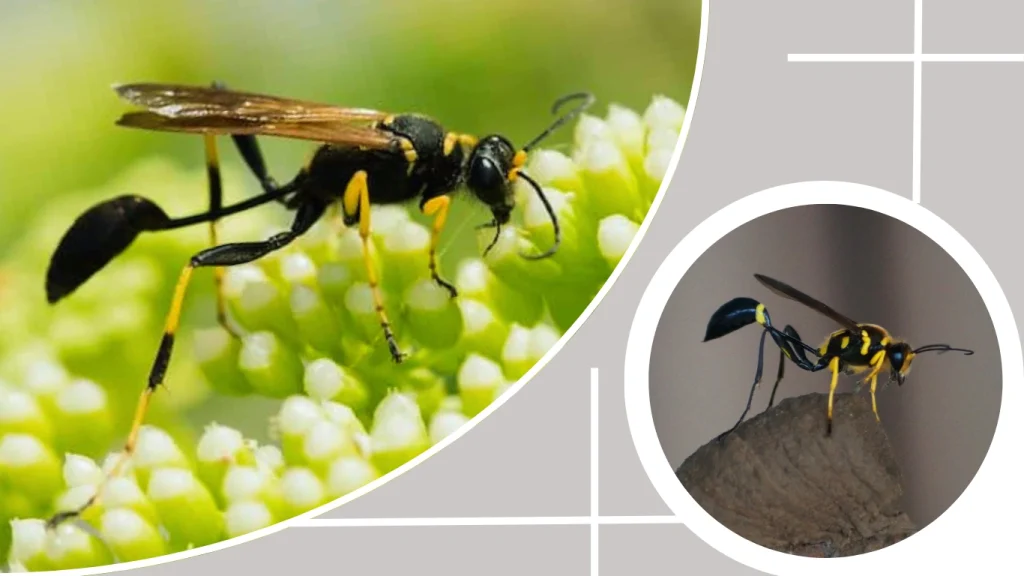
Mud dauber wasps are solitary and non-aggressive by nature. Unlike social wasps, they don’t defend their nests in large groups or actively seek out threats. Their primary focus is building nests and hunting spiders, which they use as food for their larvae. Their calm demeanor and unique mud nests make them one of the least threatening types of wasps.
Are Mud Dauber Wasps Dangerous?
Mud daubers are not considered dangerous to humans. They rarely sting and do not aggressively defend their nests. Their venom is used to paralyze spiders rather than for defense. While allergic individuals should always be cautious, most people have no reaction to a mud dauber sting.
Do Mud Dauber Wasps Sting?
Yes, but very rarely. Mud dauber wasps have the ability to sting, but they almost never use it on humans. They typically sting spiders to paralyze them before sealing them inside the nest as food for their larvae. A human would only be stung if they aggressively handled or trapped the wasp.
Mud Dauber Wasp Life Cycle

The life cycle of a mud dauber begins with a carefully crafted nest and ends with a fully developed adult emerging from it. These wasps are excellent mothers—though solitary—ensuring their young have food sealed inside their mud chambers.
From Egg to Adult: Mud Dauber Wasp Life Cycle
- Female mud dauber builds a mud nest made of several tubes.
- She captures and paralyzes spiders and stuffs them inside each tube.
- One egg is laid in each chamber with the paralyzed spiders.
- The chamber is sealed, and the egg hatches into a larva.
- The larva feeds on the spiders, then pupates.
- An adult wasp emerges after pupation and exits the nest.
Mud Dauber Wasp Larvae: Role and Diet
Mud dauber larvae depend entirely on the spiders their mother catches. The spiders are not killed, but paralyzed—keeping them fresh for when the larvae begin feeding. This spider-based diet continues until pupation.
Mud Dauber Wasp Lifespan
The average mud dauber wasp lives for about one year, with most of that time spent in the egg, larval, and pupal stages. Adults typically live a few weeks to a couple of months, enough time to reproduce and build nests.
Mud Dauber Wasp Nests

One of the most distinctive features of mud dauber wasps is their mud-made nests. These nests often resemble organ pipes, tubes, or small clay cylinders stuck to walls or under eaves. Unlike paper wasps or hornets, mud dauber nests are not used by colonies and are built by a single female.
What Does a Mud Dauber Wasp Nest Look Like?
Mud dauber nests are typically:
- Tube-like or cylindrical
- Made of dried mud
- Attached to flat surfaces like ceilings, walls, or beams
- Often clustered together in sheltered areas
Mud Dauber Wasp Nest Images
Photos of mud dauber nests often show rows of mud tubes stacked together. Some nests may look like clay pipes, while others appear as clustered lumps depending on the species. These structures can last long after the wasp has left.
Mud Dauber Wasp Tubes Explained
Each tube is a separate cell for a single larva. Inside each tube, the mother wasp places several paralyzed spiders and lays one egg before sealing the tube shut. The larva feeds inside the tube until it’s ready to emerge.
Blue Mud Dauber Wasp Nest
Blue mud daubers don’t often build new nests; they prefer to reuse abandoned nests made by other mud dauber species. When they do build, the tubes are small and neat, usually placed in sheltered outdoor spots.
Mud Dauber Nest vs Wasp Nest
- Mud dauber nest: Made of mud, solitary, tube-like.
- Paper wasp nest: Made of paper-like chewed wood, open cells, communal.
- Mud dauber nests are more permanent and heavy, while paper wasp nests are lighter and more fragile.
Organ Pipe Mud Dauber Wasp Nest
This type builds long, vertical rows of mud tubes that resemble organ pipes. These nests can contain dozens of tubes and are often found on stone walls, attics, or sheds.
Mud Dauber Wasps Nest and Pictures
Visual identification of mud dauber nests helps distinguish them from other wasps. Most nests include sealed mud tubes, often brown or gray, and may show signs of spider remains or exit holes from emerging adults.
Mud Dauber Wasp Nest Removal and Control

Although mud daubers are not aggressive, their nests can create unsightly stains and clutter on walls, stucco, or ceilings. Proper removal is essential, especially in high-traffic or indoor areas.
How to Remove a Mud Dauber Wasp Nest
- Wait until the nest is abandoned or during cooler hours.
- Wear gloves and protective clothing.
- Scrape off the nest gently with a putty knife or paint scraper.
- Clean the area with warm soapy water to remove residue.
Cleaning Mud Dauber Wasp Nests on Stucco
Use a soft-bristle brush and mild detergent. Avoid pressure washing, which may damage the stucco. Apply a vinegar-water mix to help remove discoloration left by the mud.
Remove Mud Dauber Wasp Nests Safely
Always ensure the nest is inactive. If wasps are still present, use a natural repellent spray or call a professional pest removal service.
Mud Dauber Wasp Removal Tips
- Keep outdoor areas clean and dry.
- Seal cracks or gaps in walls and attics.
- Install screens in vents and windows.
How to Repel Mud Dauber Wasps
- Use citrus or peppermint essential oils as natural repellents.
- Hang fake wasp nests to deter new nest-building.
- Maintain regular cleaning of outdoor walls and eaves.
How to Stop Mud Dauber Wasps
- Reduce their food source (spiders).
- Use insect-repellent paint in problem areas.
- Limit moisture and humidity around the house.
Mud Dauber Wasp Traps
While mud daubers are not easily attracted to standard wasp traps, spider-reduction traps and sticky boards can limit their nesting preferences.
Wasp and Mud Dauber Traps
Universal wasp traps may help reduce general wasp activity, but targeted prevention and physical removal remain the best options for mud daubers.
Mud Dauber Wasp Diet

Mud daubers are skilled hunters with a very specific diet. Unlike many wasps that feed on nectar or human food scraps, mud daubers focus primarily on spiders to feed their young. Their diet plays a crucial role in pest control, making them a helpful presence in gardens and around homes.
What Do Mud Dauber Wasps Eat?
- Adult mud daubers feed on:
- Nectar from flowers
- Honeydew produced by aphids
- Occasionally sugary liquids
- Nectar from flowers
- Mud dauber larvae feed exclusively on:
- Paralyzed spiders sealed inside their mud cells
- Common prey includes black widows, jumping spiders, and house spiders
- Paralyzed spiders sealed inside their mud cells
Feeding Habits of Adults and Larvae
Adult mud daubers do not eat the spiders they catch. Instead, they hunt and sting spiders to paralyze them. These spiders are then carried to the nest, placed inside each mud tube, and sealed with a single egg. The larva hatches and consumes the spiders while they are still fresh and paralyzed.
Habitat and Regions
Mud dauber wasps are incredibly adaptable and found in varied climates and continents. They tend to seek dry, protected environments to build their nests, often in areas close to human activity where flat vertical surfaces are available.
Where Do Mud Dauber Wasps Live?
Mud daubers can be found in:
- Barns and sheds
- Under roof eaves
- Porches and patios
- Attics and crawl spaces
- Inside garages
- Behind window shutters
- On walls, ceilings, and chimneys
In Which Country Do Mud Dauber Wasps Live?
Mud dauber wasps have a worldwide distribution, especially in warm and temperate zones. Countries where they are common include:
- United States
- Canada
- Australia
- Mexico
- Brazil
- United Kingdom
- India
- South Africa
- Japan
- Argentina
Mud Dauber Wasp Habitat Overview
These wasps prefer:
- Dry, sheltered spaces
- Places with nearby spider populations
- Structures like sheds, barns, and older buildings
- Regions with warm temperatures and minimal rainfall during nesting season
Mud Dauber Wasp in Arizona
Arizona is a common place for mud dauber sightings, especially in desert or semi-arid zones. The warm weather and abundance of spiders make it ideal for nesting.
Mud Dauber Wasp in Australia
In Australia, mud daubers are found around homes, especially in Queensland and New South Wales. They help control native spider populations and build nests under overhangs and inside sheds.
Mud Dauber Wasps in Ontario
Ontario’s warmer months (late spring to early fall) see a rise in mud dauber activity. They often build nests under decks or garage roofs.
Mud Dauber Wasp in the UK
Though less common, some mud dauber species have been found in southern parts of the UK during the warmer seasons, especially near gardens or older structures.
Texas Mud Dauber Wasp
Texas hosts several types of mud daubers, including black and yellow species and the metallic blue type. Their nests are commonly seen in barns, near water tanks, and under bridges.
Mud Dauber Wasp Eggs and Reproduction
Reproduction in mud dauber wasps is a solitary yet highly organized process. Each female independently builds, stocks, and seals her nests without any help from a colony. The cycle is focused on survival and efficiency—ensuring that each egg has enough food to develop successfully.
Mud Dauber Wasp Eggs: Where and How They’re Laid
- The female lays one egg per mud tube or cell.
- Before sealing the chamber, she fills it with several paralyzed spiders.
- Once the cell is stocked and the egg is laid, she seals it with mud to protect it.
- Eggs typically hatch within a few days and the larva begins feeding immediately.
- Multiple eggs may be laid in a series of connected tubes.
Role of the Nest in Reproduction
Mud nests are not only shelters but also nurseries and food storage units. Each carefully crafted tube ensures that the larva has sufficient food and protection. The adult wasp never returns to check on her young—the nest must support the entire development process until the adult emerges.
Comparisons with Other Wasps
Many people confuse mud daubers with other wasp species due to their body shape or nesting around homes. However, they differ significantly in behavior, aggression, and nest type. Here’s how mud daubers compare to other well-known wasps.
Mud Dauber vs Wasp
- Mud dauber: Solitary, uses mud to build nests, non-aggressive
- Typical wasp (e.g., yellowjacket): Social, builds paper-like nests, aggressive
Wasp vs Mud Dauber
The reversal of terms doesn’t change the fact: mud daubers are wasps but not all wasps are mud daubers. Mud daubers stand out due to their calm behavior and unique nesting strategy.
Difference Between Mud Dauber and Wasp
- Nest Type: Mud vs. paper
- Colony Behavior: Solitary vs. social
- Sting Risk: Low vs. high
- Purpose: Predator of spiders vs. omnivorous scavenger
Dirt Dauber vs Wasp
“Dirt dauber” is another name for a mud dauber. Unlike common wasps, dirt daubers don’t hover aggressively or seek human food. They’re shy and mostly seen near their nests or spider habitats.
Potter Wasp vs Mud Dauber
Potter wasps also build mud nests but they are round or jug-shaped. Both are solitary and beneficial for pest control. Mud daubers often build longer, tube-shaped nests.
Paper Wasp vs Mud Dauber
Paper wasps build umbrella-shaped, open-celled nests out of chewed wood pulp. They live in colonies and can sting when provoked, unlike the more peaceful mud dauber.
Red Wasp vs Mud Dauber
Red wasps are large, social, and known for painful stings. They make paper nests and can become aggressive. In contrast, mud daubers are solitary and rarely sting.
Wasp or Dirt Dauber
If you’re unsure whether you’re seeing a wasp or a dirt dauber, check the nest. Mud tubes = dirt dauber. Paper or papery comb = social wasp. Also, dirt daubers tend to fly slowly and don’t swarm.
Mud Dauber or Wasp
Use the body shape, behavior, and nest to tell the difference. Mud daubers are longer, fly more gently, and don’t show interest in food or human activity, unlike many wasps.
FAQs
Do Mud Dauber Wasps Return to the Same Nest?
No, mud daubers typically do not reuse their own old nests. However, other species—especially blue mud daubers—may reuse or repurpose abandoned nests from different mud dauber species. Once the adult emerges, the old nest often stays intact unless removed manually.
Can You Relocate a Mud Dauber Nest?
It is not practical to relocate a mud dauber nest. The nest is tightly adhered to surfaces using hardened mud, and removing it without damage is difficult. Also, mud daubers do not tend to follow their nest once moved; they will likely build a new one elsewhere.
Will Mud Daubers Chase You?
No. Mud daubers are solitary and non-aggressive. They will not chase or sting unless physically handled or threatened. In fact, they’re usually more interested in hunting spiders than in interacting with humans.
Do Mud Daubers Pollinate?
Yes, to a small extent. Adult mud daubers feed on flower nectar, which allows them to contribute to pollination. However, their role in pollination is minimal compared to bees or butterflies.
