
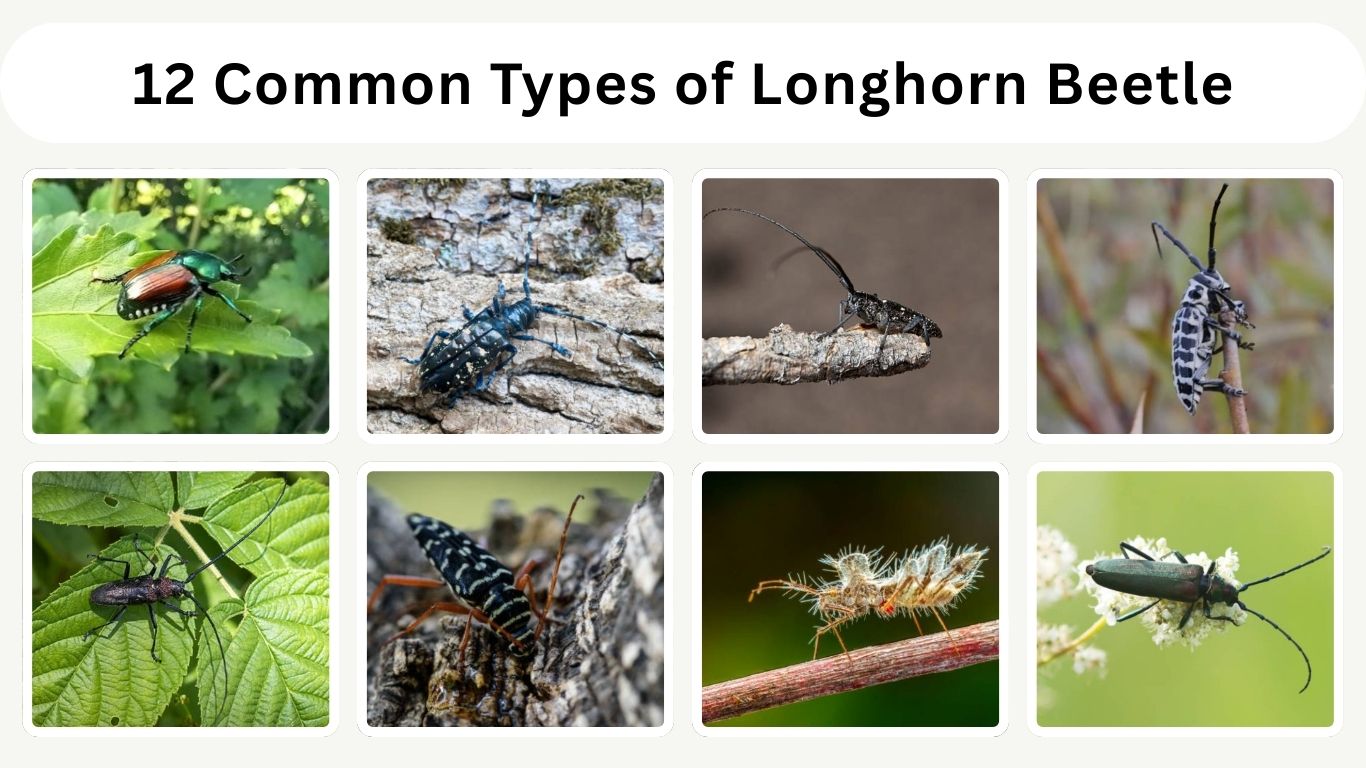
Longhorn beetles are a diverse group of wood-boring insects recognized for their unusually long antennae and close association with trees and timber. Found in forests, gardens, and even wooden structures, these beetles play both beneficial and harmful roles in nature. While many species help recycle dead wood and support forest ecosystems, others are known pests that damage living trees and processed lumber, making them important insects to understand.
1. Asian Longhorn Beetle
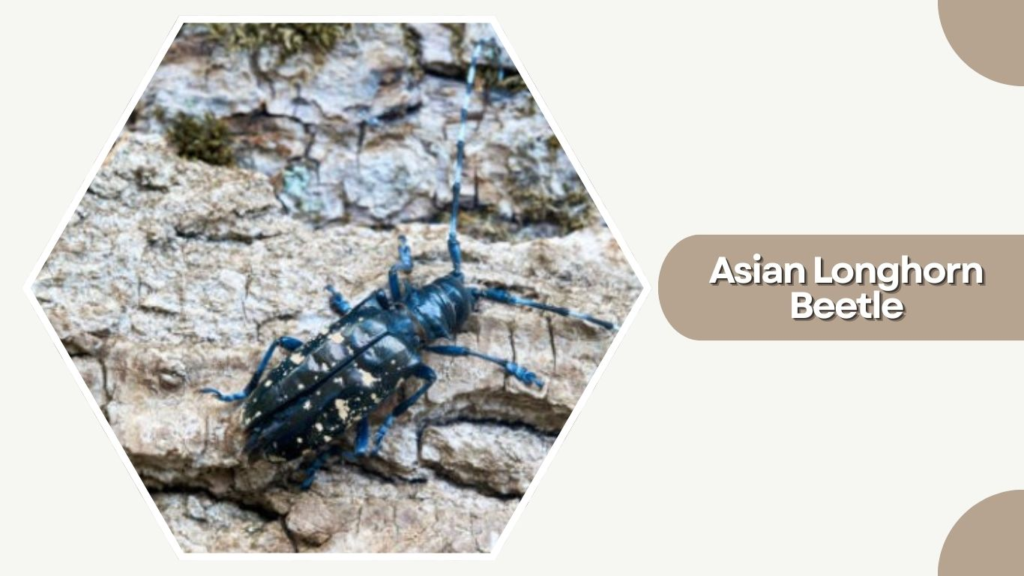
The Asian longhorn beetle is a large and destructive longhorn beetle species best known for attacking hardwood trees. Native to East Asia, it has become an invasive pest in several countries, where it causes serious damage to forests, parks, and urban landscapes. Both adults and larvae contribute to tree decline.
Identification
- Large beetle with an elongated body
- Body length typically 20–35 mm
- Glossy black body with irregular white spots
- Very long antennae with black-and-white banding
- Bluish-black legs, often with a slight sheen
Habitat
Asian longhorn beetles are commonly found in forests, city parks, orchards, and residential areas with hardwood trees. They infest species such as maple, elm, willow, and poplar. Larvae live deep inside tree trunks and branches.
Behaviors
Adults are active mainly during warm months and can be seen crawling on tree bark or foliage. Females chew small pits in the bark to lay eggs. The larvae tunnel through wood, weakening the tree structure from the inside.
Life Cycle
This beetle undergoes complete metamorphosis with egg, larva, pupa, and adult stages. Eggs hatch under the bark, larvae feed inside the wood for months to over a year, pupation occurs within the tree, and adults emerge through round exit holes.
2. Pine Sawyer Beetle
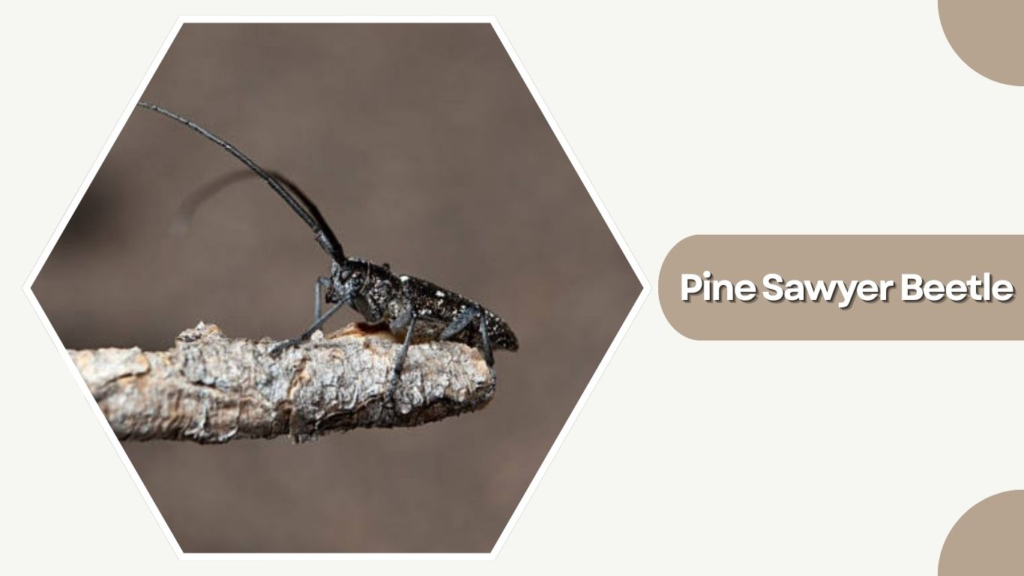
The pine sawyer beetle is a well-known longhorn beetle associated with coniferous forests, especially pine trees. It is important ecologically for breaking down dead or weakened trees, but some species are also known for spreading tree diseases. Adults are strong fliers and are often seen on freshly cut or dying pines.
Identification
- Large, elongated body shape
- Body length typically 15–30 mm
- Dark brown to black coloration with mottled markings
- Extremely long antennae, often longer than the body
- Rough-textured wing covers
Habitat
Pine sawyer beetles are commonly found in pine forests, conifer plantations, lumber yards, and areas with fallen or dying pine trees. Larvae develop inside dead or stressed conifer wood.
Behaviors
Adults are active during warm seasons and are attracted to freshly cut logs and weakened trees. They are strong fliers and can travel long distances to locate suitable host trees for egg laying.
Life Cycle
The life cycle includes egg, larva, pupa, and adult stages. Eggs are laid in cracks of bark, larvae tunnel deep into the wood for several months, pupation occurs inside the tree, and adults emerge through oval exit holes.
3. Cottonwood Borer
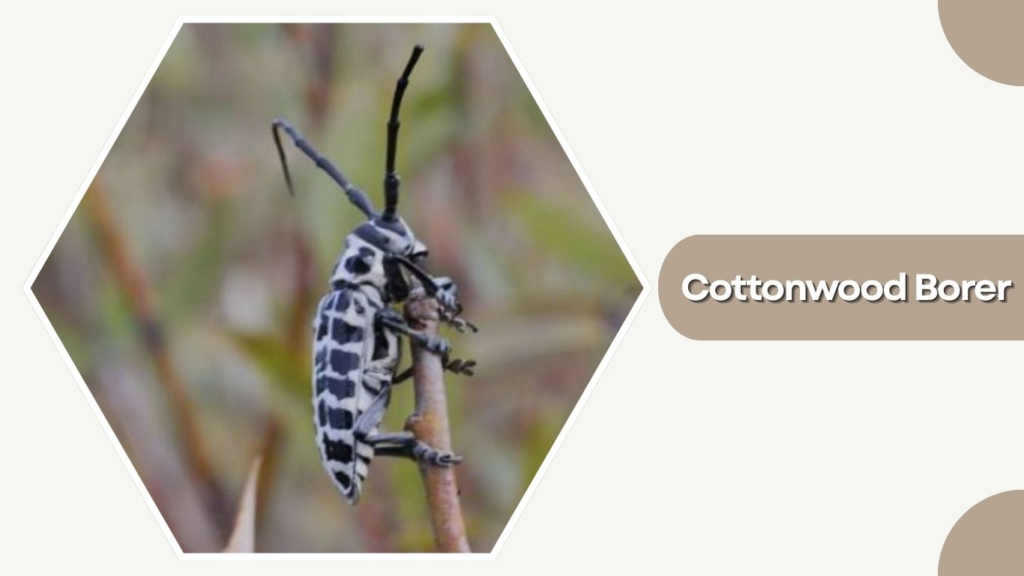
The cottonwood borer is a striking longhorn beetle known for its bold black-and-white pattern and strong association with cottonwood and poplar trees. While adults are often seen on tree trunks, the larvae can cause serious damage by tunneling into the wood, sometimes weakening or killing young trees.
Identification
- Large, robust beetle with elongated body
- Body length typically 20–30 mm
- Distinct black-and-white banded pattern
- Long antennae, often nearly body length
- Strong mandibles adapted for chewing wood
Habitat
Cottonwood borers are commonly found in riparian areas, riverbanks, forests, and parks where cottonwood, poplar, or willow trees grow. Larvae live and develop inside tree trunks and large branches.
Behaviors
Adults are usually active during summer and can be seen crawling on tree bark or near the base of host trees. Females lay eggs near the roots or lower trunk, and larvae bore deep into the wood to feed.
Life Cycle
The life cycle includes egg, larva, pupa, and adult stages. Larval development can take one to two years inside the tree. Pupation occurs within the wood, and adults emerge through large exit holes.
4. Sawyer Beetle
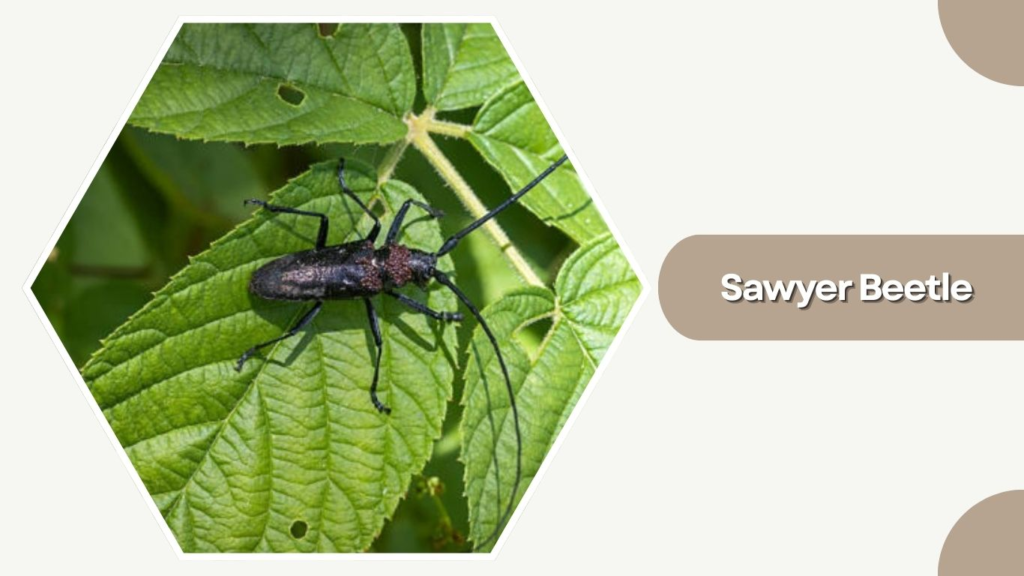
The sawyer beetle is a general name used for several large longhorn beetles known for their association with recently cut or weakened trees. These beetles play an important role in forest ecosystems by helping break down dead wood, although their larvae can reduce the quality of lumber.
Identification
- Large, elongated body
- Body length typically 15–35 mm
- Brown to black coloration, sometimes mottled
- Extremely long antennae, often longer than the body
- Strong jaws for chewing wood
Habitat
Sawyer beetles are commonly found in forests, logging areas, sawmills, and wooded regions with dead or freshly cut trees. Larvae develop inside logs, stumps, and fallen trunks.
Behaviors
Adults are active during warm months and are strong fliers. They are often attracted to freshly cut wood and can be seen resting on logs or tree trunks. When disturbed, they may produce squeaking sounds.
Life Cycle
The life cycle includes egg, larva, pupa, and adult stages. Eggs are laid in bark crevices, larvae tunnel through wood for months to over a year, pupation occurs inside the wood, and adults emerge in summer.
5. Redheaded Ash Borer
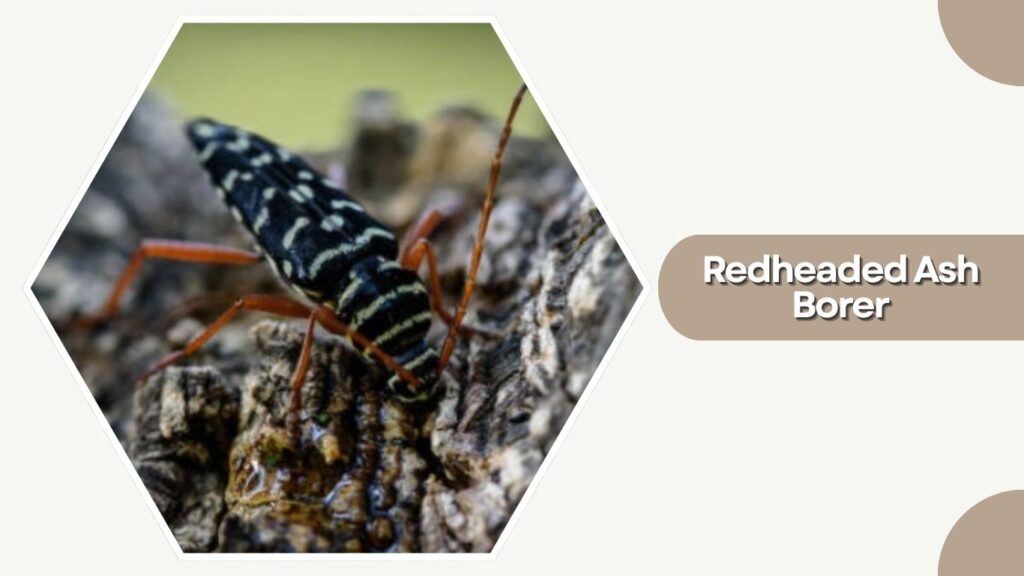
The redheaded ash borer is a slender longhorn beetle commonly found on ash and other hardwood trees. Although adults are often seen resting on tree trunks or wooden structures, the larvae are the primary cause of damage by boring into weakened or recently cut wood.
Identification
- Slender, elongated body
- Body length typically 7–18 mm
- Reddish head and thorax
- Dark blue to metallic black wing covers
- Long, thin antennae
Habitat
Redheaded ash borers are commonly found in forests, woodlands, parks, and areas with stacked firewood or lumber. They prefer ash, oak, hickory, and other hardwood trees, especially those that are stressed or freshly cut.
Behaviors
Adults are active during warm months and are often seen on logs, tree trunks, or wooden fences. They are good fliers and may be attracted to freshly cut wood. Females lay eggs in cracks or crevices of bark.
Life Cycle
The life cycle includes egg, larva, pupa, and adult stages. Larvae tunnel through wood for several months, pupation occurs inside the wood, and adults emerge by chewing small exit holes, usually in late spring or summer.
6. Old House Borer
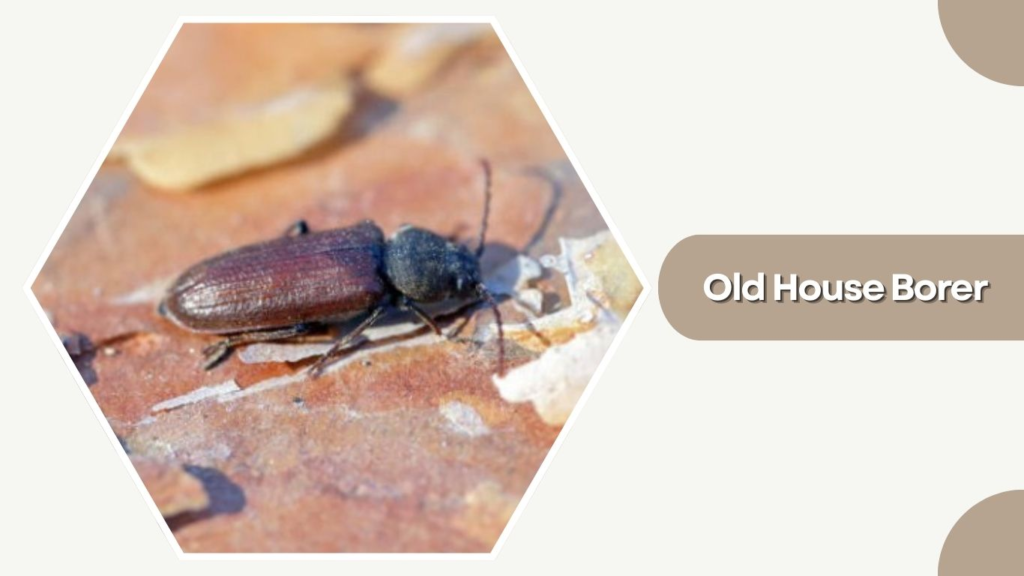
The old house borer is a well-known longhorn beetle species associated with wooden structures. It is especially important because its larvae can damage structural timber in houses and buildings. Although adults are rarely seen, larval activity inside wood can cause long-term weakening if left untreated.
Identification
- Medium-sized, elongated beetle
- Body length typically 8–25 mm
- Brown to dark brown coloration
- Fine grayish hairs covering the body
- Long antennae, about half the body length
Habitat
Old house borers are commonly found in buildings, attics, wooden beams, and furniture made from softwood, particularly pine. Outdoors, they may also occur in dead conifer wood. Larvae live entirely inside wood.
Behaviors
Adults are usually active during warm months and are mostly nocturnal. They are weak fliers and rarely leave the wood where they developed. The larvae remain hidden, feeding silently inside timber for years.
Life Cycle
The life cycle includes egg, larva, pupa, and adult stages. Eggs are laid in cracks of wood, larvae tunnel and feed for several years, pupation occurs inside the wood, and adults emerge through oval exit holes.
7. Palo Verde Beetle
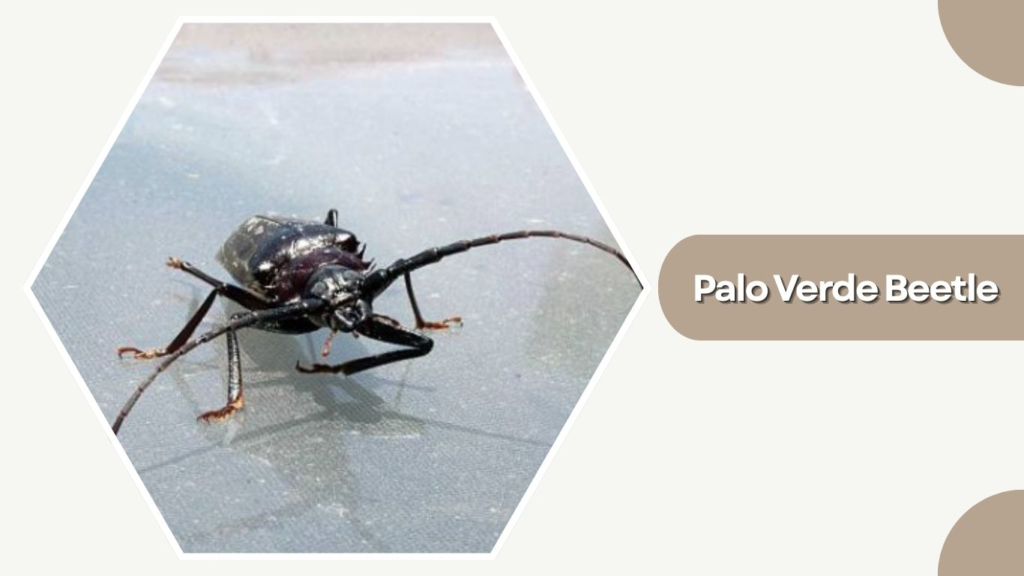
The Palo Verde beetle is one of the largest longhorn beetles in North America and is especially well known in desert regions of the southwestern United States. It is named after the Palo Verde tree, which serves as its primary host. Despite its intimidating size, this beetle is generally harmless to humans.
Identification
- Very large, heavy-bodied longhorn beetle
- Body length typically 30–55 mm
- Dark brown to black coloration
- Extremely long antennae
- Strong legs and powerful mandibles
Habitat
Palo Verde beetles are commonly found in desert areas, arid woodlands, and suburban regions where Palo Verde trees grow. Larvae develop underground, feeding on the roots of host trees.
Behaviors
Adults are mainly nocturnal and are often attracted to lights during summer monsoon seasons. They are strong fliers but usually move slowly on the ground. When handled, they may hiss or bite defensively.
Life Cycle
The life cycle includes egg, larva, pupa, and adult stages. Larvae live underground for several years feeding on roots, pupate in soil chambers, and adults emerge during warm, rainy periods.
8. Cedar Tree Borer
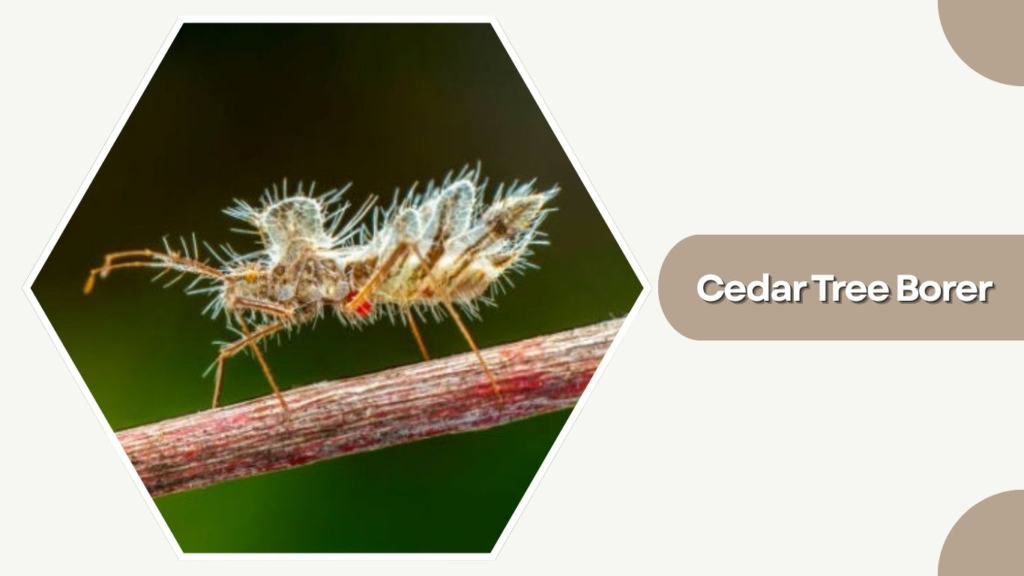
The cedar tree borer is a longhorn beetle species associated mainly with cedar and other coniferous trees. It is known for its wood-boring larvae, which can weaken trees by tunneling into trunks and branches. While it usually targets stressed or dying trees, heavy infestations can cause structural damage.
Identification
- Elongated, narrow body
- Body length typically 15–30 mm
- Brown to dark brown coloration
- Fine markings or faint banding on wing covers
- Long antennae, often nearly body length
Habitat
Cedar tree borers are commonly found in conifer forests, cedar groves, woodlands, and areas where cedar logs or lumber are present. Larvae develop inside cedar trunks, branches, and sometimes processed wood.
Behaviors
Adults are active during warm months and can be seen resting on tree bark or flying around host trees. Females lay eggs in cracks of bark, and larvae bore into the wood soon after hatching.
Life Cycle
The life cycle includes egg, larva, pupa, and adult stages. Larvae tunnel through wood for several months to over a year, pupation occurs inside the wood, and adults emerge through small exit holes.
9. Musk Beetle
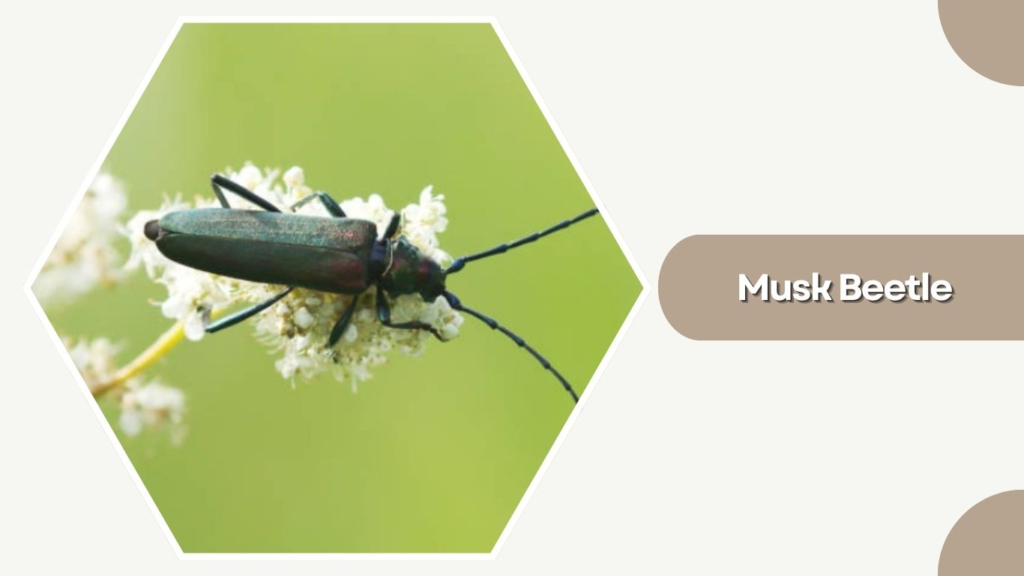
The musk beetle is a distinctive longhorn beetle best known for the strong musky odor it releases when handled. Unlike many wood-boring pests, this species is often admired for its metallic coloration and role in natural ecosystems. It is commonly found in Europe and parts of Asia.
Identification
- Elongated body with smooth surface
- Body length typically 20–35 mm
- Metallic green, blue, or bronze coloration
- Long antennae, usually shorter than body length
- Produces a noticeable musky smell when disturbed
Habitat
Musk beetles are mainly found in woodlands, riverbanks, parks, and gardens where willow and poplar trees grow. Larvae develop inside dead or decaying wood, especially fallen branches and trunks.
Behaviors
Adults are active during the day and are often seen resting on tree trunks or foliage. When threatened, they release a musky scent as a defense. They are calm beetles and do not show aggressive behavior.
Life Cycle
The life cycle includes egg, larva, pupa, and adult stages. Larvae develop slowly inside dead wood over one to two years, pupate within the wood, and adults emerge in late spring or summer.
10. White-Spotted Sawyer
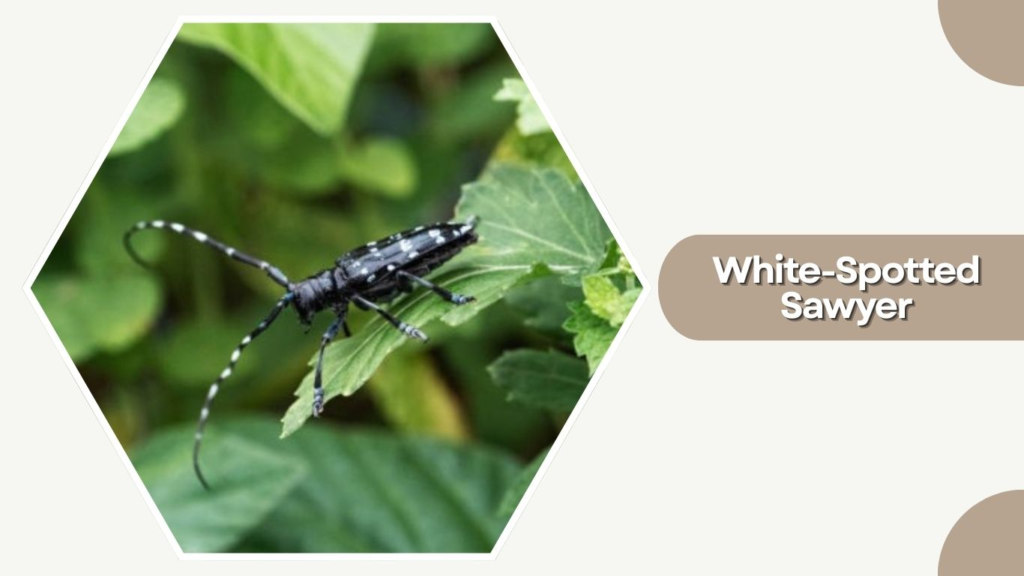
The white-spotted sawyer is a well-known longhorn beetle associated with conifer forests, especially pine and spruce trees. It is easily recognized by the white spot on its wing covers and its extremely long antennae. This beetle is ecologically important but can affect timber quality.
Identification
- Large, elongated body
- Body length typically 20–35 mm
- Dark brown to black coloration
- Distinct single white spot between the wing covers
- Very long antennae, often longer than the body
Habitat
White-spotted sawyers are commonly found in coniferous forests, logging areas, sawmills, and places with freshly cut or dying pine trees. Larvae live and develop inside conifer wood.
Behaviors
Adults are active during warm months and are strong fliers. They are often attracted to recently felled trees and fresh logs. When handled, they may produce a squeaking sound by rubbing body parts together.
Life Cycle
The life cycle includes egg, larva, pupa, and adult stages. Eggs are laid in bark crevices, larvae tunnel deeply into wood for many months, pupation occurs inside the tree, and adults emerge through oval exit holes.
11. Spotted Pine Sawyer
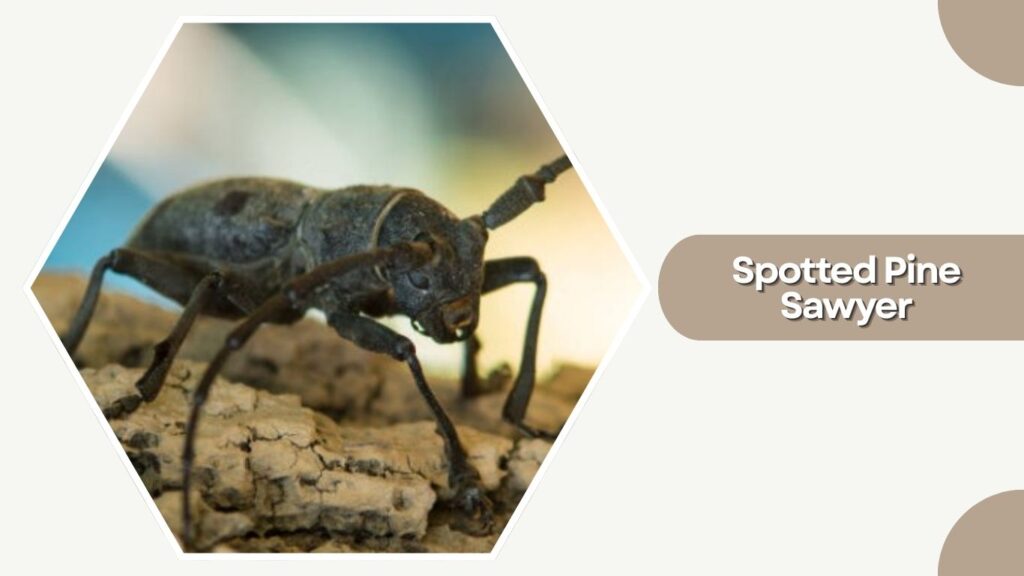
The spotted pine sawyer is a large longhorn beetle closely related to other sawyer beetles and is commonly found in pine-dominated forests. It is known for its spotted wing covers and extremely long antennae. While it mainly infests dead or weakened trees, it can affect timber quality.
Identification
- Large, elongated body
- Body length typically 20–35 mm
- Dark brown to black coloration with pale spots
- Extremely long antennae, often longer than the body
- Rough-textured wing covers
Habitat
Spotted pine sawyers inhabit coniferous forests, pine plantations, logging areas, and places with fallen or recently cut pine trees. Larvae develop inside pine logs, stumps, and weakened trunks.
Behaviors
Adults are active during warm seasons and are strong fliers. They are attracted to freshly cut or stressed pine trees and are often seen crawling on logs or tree trunks during the day.
Life Cycle
The life cycle includes egg, larva, pupa, and adult stages. Eggs are laid under bark, larvae tunnel through wood for several months to over a year, pupation occurs inside the tree, and adults emerge in summer.
12. Brown Spruce Longhorn Beetle
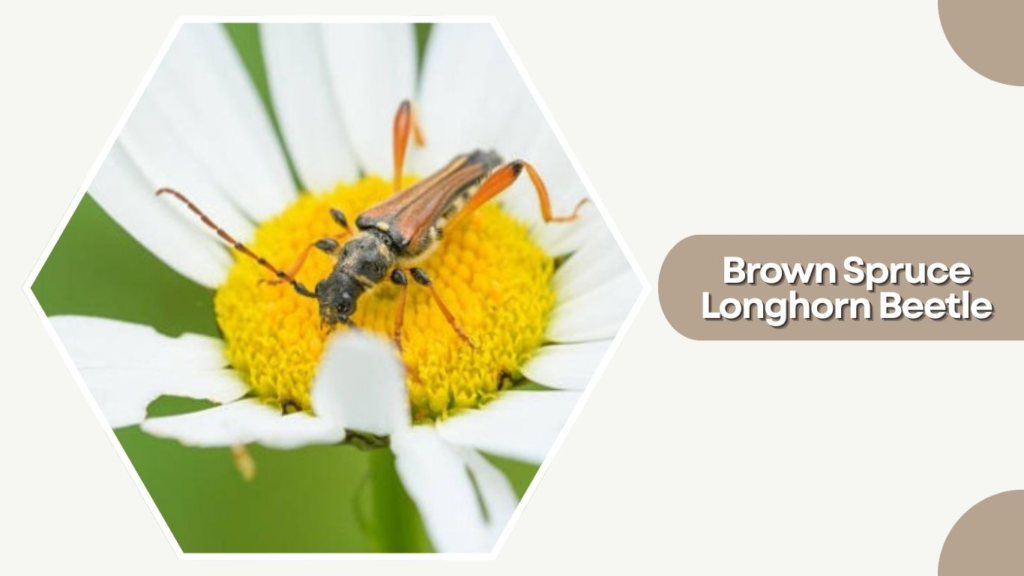
The brown spruce longhorn beetle is a forest-associated longhorn beetle primarily linked to spruce trees. It is known for its wood-boring larvae, which develop inside weakened or recently cut spruce. While part of natural forest processes, heavy infestations can reduce timber quality.
Identification
- Medium-sized, elongated body
- Body length typically 12–25 mm
- Brown to dark brown coloration
- Fine hairs covering the body surface
- Long antennae, about body length or slightly longer
Habitat
This beetle is commonly found in spruce forests, mixed conifer woodlands, logging sites, and areas with fallen or cut spruce trees. Larvae live and develop inside spruce trunks, logs, and large branches.
Behaviors
Adults are active during warmer months and are capable fliers. They are often seen on spruce bark or nearby vegetation. Females lay eggs in bark crevices, allowing larvae to enter the wood soon after hatching.
Life Cycle
The life cycle includes egg, larva, pupa, and adult stages. Larvae tunnel through spruce wood for several months to over a year, pupate inside the wood, and adults emerge through small exit holes.
FAQs
What is a longhorn beetle?
Longhorn beetles are insects belonging to the family Cerambycidae, named for their extremely long antennae that are often as long as or longer than their bodies. They are mostly wood-boring beetles whose larvae develop inside tree trunks, branches, or wooden structures.
Are longhorn beetles harmful to trees?
Some longhorn beetles can be harmful, especially when their larvae tunnel into living or recently cut trees, weakening the wood. However, many species mainly infest dead or stressed trees and help recycle wood in natural ecosystems.
What do longhorn beetle larvae eat?
Longhorn beetle larvae feed on wood. Depending on the species, they may consume dead wood, decaying timber, or living tree tissue. Their feeding creates tunnels inside wood, which can sometimes cause structural damage.
Where are longhorn beetles commonly found?
Longhorn beetles are found worldwide in forests, woodlands, gardens, and urban areas. They are especially common where trees, fallen logs, firewood, or wooden structures are present.
How long do longhorn beetles live?
Most longhorn beetles spend the majority of their life as larvae inside wood, which can last from several months to several years. The adult stage is usually short, lasting a few weeks to a few months, mainly for reproduction.
